Pietro Cavallini
( 25% )
Pietro Cavallini, whose full name appears in contemporary documents as “Petrus dictus Caballinus de Cerronibus,” represents one of the most significant yet enigmatic figures in the transition from medieval to Renaissance art in Italy. Born circa 1240-1250 in Rome, he lived an exceptionally long life by medieval standards, dying around 1330 at approximately ninety years of age. His surname “Cavallini” or more accurately “Cavallino,” meaning “Little Horse,” was likely a nickname that became permanently attached to his artistic identity. The artist consistently identified himself as “pictor romanus” in his signed works, emphasising his Roman heritage and professional standing within the artistic community of the Eternal City. His longevity allowed him to witness and participate in the profound artistic transformations that marked the late thirteenth and early fourteenth centuries, positioning him as both inheritor of Byzantine traditions and pioneer of the emerging naturalistic style that would characterise the early Renaissance.
The Cavallini family belonged to the established Roman nobility, specifically the ancient de’ Cerroni lineage that maintained residences in the vicinity of San Pietro in Vincoli. Documentary evidence from Roman archives, discovered at the beginning of the twentieth century, identifies Pietro with “Petrus dictus de Cavallinus de Cerronibus,” who witnessed a deed of sale in October 1273, establishing both his family connections and his presence in Roman legal and commercial circles during his early career. The de’ Cerroni family possessed sufficient social standing and financial resources to support Pietro’s artistic education and early career development, suggesting they were well-integrated into the sophisticated cultural milieu of thirteenth-century Rome. This aristocratic background provided Pietro with access to the humanistic learning and classical references that would profoundly influence his artistic development, distinguishing him from artists of more humble origins who lacked such educational advantages.
The family’s Roman heritage extended back several generations, positioning them within the complex web of relationships that characterised the city’s medieval aristocracy. Their residence near San Pietro in Vincoli, one of Rome’s most important basilicas, suggests the family maintained close connections with ecclesiastical institutions and the papal court, relationships that would prove instrumental in securing major commissions for Pietro throughout his career. The surname “de Cerronibus” indicates territorial holdings or ancestral connections to specific Roman localities, reflecting the family’s deep roots in the city’s social and economic fabric. These connections facilitated Pietro’s entry into the prestigious circles of Roman artistic patronage, where family reputation and social standing often determined access to the most significant and lucrative commissions.
Giovanni Cavallini, a descendant who served as a papal writer, recorded that Pietro lived to be one hundred years old, stating “Huic commemoro Petrum de Cerronibus qui centum annorum numero vitam egit”. This remarkable longevity, whilst perhaps somewhat exaggerated in the manner typical of medieval biographical accounts, nonetheless indicates Pietro’s exceptional vitality and sustained creative productivity well into advanced age. Such longevity would have been particularly notable in an era when life expectancy was significantly lower, and it may have contributed to contemporary perceptions of Pietro as a figure of almost legendary status within Roman artistic circles. The family’s pride in Pietro’s achievements is evident from Giovanni’s careful preservation of his ancestor’s memory and accomplishments for posterity.
The de’ Cerroni family’s position within Roman society provided Pietro with cultural capital that extended far beyond mere financial support. Their established relationships with ecclesiastical and secular authorities created networks of potential patrons and collaborators that proved essential to Pietro’s artistic success. The family’s commitment to maintaining their ancestral connections to specific Roman neighbourhoods and institutions demonstrates a deep understanding of how local loyalty and community engagement could translate into professional opportunities and artistic commissions. This social foundation enabled Pietro to establish himself not merely as a craftsman for hire, but as a respected member of Rome’s cultural elite, capable of working with the most distinguished patrons of his era.
Pietro’s family background also provided him with exposure to the intellectual currents that were transforming thirteenth-century European culture. The de’ Cerroni household would have been familiar with the scholastic philosophy emerging from the universities, the renewed interest in classical antiquity that characterised contemporary humanistic learning, and the theological debates that influenced contemporary artistic iconography. This intellectual environment fostered Pietro’s ability to synthesise diverse cultural influences into a coherent artistic vision that could speak to both traditional religious sensibilities and emerging humanistic concerns. The family’s social position thus served as both foundation and launching point for Pietro’s revolutionary contributions to Italian art.
The marriage alliances and social connections maintained by the de’ Cerroni family created opportunities for Pietro to encounter diverse artistic traditions and cultural influences. Through family networks, he would have gained exposure to Byzantine artistic traditions preserved in Roman churches, Gothic innovations arriving from Northern Europe, and classical Roman sculptural and architectural remains that dotted the medieval city. These varied influences, filtered through family connections and social relationships, provided Pietro with an unusually broad foundation of artistic knowledge that enabled his later synthetic achievements. The family’s investment in Pietro’s education and career development reflects their recognition of art’s potential to enhance family prestige and secure a lasting cultural legacy.
Pietro’s relationship with his extended family network appears to have remained strong throughout his career, as evidenced by their continued celebration of his achievements and careful preservation of his biographical details. This ongoing family support provided stability and continuity during periods of artistic experimentation and geographical mobility, enabling Pietro to take creative risks while maintaining essential social and financial security. The family’s pride in Pietro’s accomplishments is reflected in their careful documentation of his career milestones and artistic innovations, creating a legacy of family achievement that extends well beyond Pietro’s individual contributions to Italian art.
The de’ Cerroni family’s territorial connections within Rome provided Pietro with intimate knowledge of the city’s artistic heritage and ongoing cultural developments. Their residence near major basilicas and their integration into Roman ecclesiastical circles meant that Pietro grew up surrounded by the artistic treasures that would profoundly influence his mature style. This daily exposure to masterworks of early Christian, Byzantine, and Romanesque art provided an invaluable education that complemented whatever formal artistic training he received. The family’s position within Roman society thus served as both cultural foundation and professional launching point for one of medieval Italy’s most innovative artists.
The longevity and success of Pietro’s career reflects not only his individual talents but also the sustained support and strategic guidance provided by his family network throughout his professional development. The de’ Cerroni family’s understanding of how to navigate the complex world of medieval patronage, their maintenance of relationships with key ecclesiastical and secular authorities, and their commitment to preserving and promoting Pietro’s artistic legacy demonstrate sophisticated engagement with the cultural politics of their era. Pietro’s achievements thus represent not merely individual genius but the successful culmination of family investment in cultural capital and artistic excellence across multiple generations.
Patronage
The Stefaneschi family emerged as Pietro Cavallini’s most significant and influential patrons, fundamentally shaping both his artistic development and his career trajectory throughout the late thirteenth century. Bertoldo Stefaneschi, brother of the powerful Cardinal Giacomo Gaetani Stefaneschi, commissioned Pietro’s most celebrated surviving work, the magnificent mosaic cycle depicting scenes from the life of the Virgin Mary in Santa Maria in Trastevere, completed between 1291 and 1296. This commission represented far more than a simple artistic transaction; it established Pietro as the premier artist of contemporary Rome whilst simultaneously enhancing the Stefaneschi family’s reputation as sophisticated patrons of cutting-edge artistic innovation. The family’s investment in Pietro’s work reflected their understanding of art’s capacity to communicate both spiritual devotion and temporal power, positioning their commissions as statements of cultural authority within Rome’s competitive aristocratic milieu.
Cardinal Giacomo Gaetani Stefaneschi, one of the most influential ecclesiastical figures of his era, extended his family’s patronage of Pietro through additional commissions that further cemented the artist’s reputation. In 1295, the Cardinal commissioned Pietro to create frescoes for the apse of San Giorgio in Velabro, a project that allowed the artist to demonstrate his mastery of large-scale narrative painting whilst working within one of Rome’s most historically significant religious sites. The Cardinal’s patronage represented papal approval of Pietro’s artistic innovations, effectively legitimising the artist’s departure from traditional Byzantine stylistic conventions and encouraging further experimentation with naturalistic representation. This ecclesiastical endorsement proved crucial in establishing Pietro’s credibility among other potential patrons who might otherwise have viewed his innovations with suspicion.
The Stefaneschi family’s patronage strategy reveals sophisticated understanding of how artistic commissions could serve multiple functions simultaneously, combining genuine religious devotion with calculated enhancement of family prestige. Their decision to engage Pietro for multiple projects across different Roman churches created a network of interconnected artistic statements that collectively established both the family’s taste and the artist’s capabilities. The inclusion of donor portraits within these commissions, particularly Bertoldo Stefaneschi’s prominent appearance in the Santa Maria in Trastevere mosaics, demonstrates how patronage relationships could be memorialised within the artworks themselves, ensuring lasting recognition of the family’s cultural contributions. This practice reflected the medieval understanding of artistic patronage as a form of spiritual investment that could secure both earthly remembrance and divine favour.
Pope Boniface VIII’s relationship with the Stefaneschi family created additional opportunities for Pietro to work on projects of exceptional significance and visibility. The Pope’s plans for the 1300 Jubilee celebrations required extensive artistic enhancement of major Roman basilicas, and the Stefaneschi family’s position within papal circles positioned them to influence the selection of artists for these prestigious commissions. Pietro’s work at Santa Maria in Trastevere was conceived partly as preparation for the anticipated influx of pilgrims during the Jubilee year, reflecting how religious devotion, artistic innovation, and ecclesiastical politics intersected in medieval Rome. The success of these collaborations established Pietro as an artist capable of working effectively within the highest levels of church hierarchy while maintaining artistic integrity and creative independence.
The patronage network surrounding Pietro extended beyond individual families to encompass entire religious communities and their institutional needs. His early commission for the Basilica di San Paolo fuori le Mura, undertaken between 1277 and 1285, involved creating extensive fresco cycles depicting stories from both the Old and New Testaments. Although these works were tragically destroyed in the fire of 1823, contemporary accounts suggest they represented Pietro’s most ambitious early project, establishing his reputation as an artist capable of handling complex iconographic programmes whilst introducing innovative approaches to narrative representation. The commission’s scale and significance indicate that major religious institutions recognised Pietro’s exceptional abilities even during his early career, when his distinctive style was still evolving.
Religious patrons appreciated Pietro’s ability to balance respect for traditional iconographic requirements with subtle innovations that enhanced emotional impact and visual clarity. His work consistently demonstrated deep understanding of theological concepts whilst introducing technical and stylistic improvements that made religious narratives more accessible and engaging for contemporary audiences. This combination of orthodox religious content with progressive artistic techniques made Pietro particularly attractive to ecclesiastical patrons who sought to maintain doctrinal orthodoxy whilst embracing artistic modernity. The success of this approach is evident in the sustained pattern of religious commissions that characterised Pietro’s career, suggesting that his innovations were perceived as enhancing rather than compromising traditional religious expression.
The institutional memory preserved within Roman religious communities played a crucial role in sustaining Pietro’s reputation and generating new commissions throughout his career. Churches that had benefited from his artistic contributions became advocates for his work, recommending him to other religious institutions and secular patrons seeking similar quality and innovation. This network effect created a self-reinforcing cycle of commissions that enabled Pietro to refine his techniques whilst building an increasingly impressive portfolio of completed projects. The collaborative relationships he developed with religious communities also provided ongoing opportunities for artistic experimentation, as successive commissions allowed him to explore new approaches to familiar religious themes.
Pietro’s relationship with monastic communities reveals another dimension of his patronage network, as religious orders sought artistic programmes that could serve both devotional and educational functions. His ability to create works that functioned effectively within monastic contexts whilst appealing to broader public audiences made him particularly valuable to communities that needed to balance internal spiritual needs with external fundraising and recruitment goals. The sophistication of Pietro’s iconographic programmes demonstrates his deep engagement with contemporary theological scholarship and his ability to translate complex spiritual concepts into accessible visual narratives. This intellectual approach to religious art distinguished Pietro from more conventional decorative artists and enhanced his appeal to learned ecclesiastical patrons.
The geographic distribution of Pietro’s religious commissions reflects the extensive network of connections that linked Roman ecclesiastical institutions with religious communities throughout central Italy. His documented work in Assisi, for example, brought him into contact with Franciscan communities whose spiritual priorities and aesthetic preferences differed significantly from those of Roman secular clergy. These diverse experiences enriched Pietro’s artistic vocabulary whilst demonstrating his versatility in adapting his style to meet the specific needs of different religious contexts. The success of these varied commissions established Pietro’s reputation as an artist capable of working effectively across institutional boundaries whilst maintaining consistently high standards of technical and artistic excellence.
The longevity of Pietro’s career enabled him to work with multiple generations within the same patron families, creating relationships that evolved and deepened over time. This continuity allowed for increasingly sophisticated artistic programmes that built upon previous collaborations whilst incorporating new influences and techniques. The trust developed through sustained working relationships also provided Pietro with greater creative freedom, as established patrons became confident in his ability to balance their specific requirements with his artistic vision. These long-term partnerships represent one of the most distinctive aspects of Pietro’s career, reflecting both his personal reliability and his ability to adapt his artistic approach to changing circumstances whilst maintaining essential continuity of vision and quality.
Pietro Cavallini’s revolutionary artistic style represented the earliest significant attempt in Italian art to break decisively with Byzantine stylistic conventions whilst moving toward a more plastic and illusionistic approach to figure representation and spatial organisation. His innovative technique fundamentally transformed how light functioned within painted compositions, abandoning the decorative, symbolic lighting characteristic of Byzantine art in favour of directional illumination that served to model and reveal form rather than merely embellish surfaces. This technical breakthrough represented a profound conceptual shift from medieval understanding of light as divine emanation toward Renaissance recognition of light as a tool for creating convincing three-dimensional illusion. The unprecedented spatial clarity and sculptural solidity achieved in Pietro’s mature works established new standards for naturalistic representation that profoundly influenced subsequent developments in Italian painting.
The artist’s mastery of colour harmonies and subtle gradations of tone distinguished his work from the more rigid colour schemes typical of contemporary Byzantine and Romanesque art. Pietro developed sophisticated techniques for creating soft transitions between colours whilst maintaining the rich, luminous effects essential to effective religious art. His colour palette combined traditional materials and techniques with experimental approaches that enhanced both decorative impact and naturalistic credibility. The successful integration of vibrant local colours with nuanced modelling represented a technical achievement that required both deep understanding of traditional craft methods and willingness to explore new possibilities for expressive enhancement. This combination of technical mastery with creative innovation became a hallmark of Pietro’s mature style and a significant influence on younger artists seeking to develop their own distinctive approaches.
Pietro’s approach to human anatomy and physiognomy marked a dramatic departure from the standardised facial types and conventional gestures that characterised contemporary Byzantine art. His figures display unprecedented individualisation, with carefully observed variations in facial structure, expression, and body language that suggest direct study from life rather than reliance on established artistic formulas. This naturalistic approach extended to his treatment of drapery, where he abandoned linear Byzantine conventions in favour of rounded modelling that convincingly suggested the weight and texture of actual fabric. The sculptural quality achieved in his painted figures reflected a deep understanding of how light and shadow could be manipulated to create convincing illusions of three-dimensional form within two-dimensional compositions.
The spatial innovations evident in Pietro’s work demonstrate sophisticated understanding of how architectural settings could be used to enhance narrative clarity and emotional impact. His backgrounds move beyond decorative abstraction toward convincing representation of actual architectural spaces, with consistent perspective systems that create believable environments for his figures. This attention to spatial logic extended to the organisation of multi-figure compositions, where Pietro developed new approaches to grouping and positioning characters that enhanced both visual coherence and narrative effectiveness. The successful integration of figures with their architectural and landscape settings represented a crucial step toward the unified spatial systems that would characterise Renaissance painting.
Pietro’s technical innovations in mosaic design and execution pushed the traditional medium toward new levels of pictorial sophistication whilst maintaining the luminous qualities that made mosaic particularly effective for ecclesiastical decoration. His mosaics in Santa Maria in Trastevere demonstrate masterful control of tesserae placement and colour gradation, achieving effects of modelling and atmospheric perspective that were unprecedented in the medium. The technical precision required for such sophisticated effects reflects both exceptional craftsmanship and deep understanding of how mosaic techniques could be adapted to serve pictorial rather than merely decorative functions. This expansion of mosaic’s expressive possibilities influenced subsequent artists working in the medium while establishing new standards for technical excellence.
The artist’s treatment of religious iconography balanced respect for traditional symbolic requirements with innovative approaches to emotional expression and narrative clarity. Pietro developed techniques for enhancing the psychological impact of familiar religious scenes without compromising their doctrinal content or symbolic significance. His figures display a range of emotional states and psychological attitudes that make religious narratives more accessible and engaging for contemporary audiences whilst maintaining appropriate spiritual dignity. This synthesis of innovation and tradition required sophisticated understanding of both artistic technique and theological content, reflecting Pietro’s exceptional cultural education and professional expertise.
Pietro’s influence on the development of fresco technique extended beyond his own executed works to encompass his role as teacher and mentor to younger artists. His workshops became centres for technical innovation where new approaches to preparatory drawing, colour application, and surface treatment were developed and refined. The technical knowledge preserved and transmitted through Pietro’s teaching activities helped establish Rome as a major centre for fresco painting during the early fourteenth century. The systematic approach to technical training evident in Pietro’s workshop organisation influenced the development of artistic education throughout central Italy, contributing to the broader transformation of artistic practice during the transitional period between medieval and Renaissance art.
The decorative vocabulary developed in Pietro’s mature works synthesised influences from classical Roman art, contemporary Gothic innovation, and traditional Byzantine craftsmanship into a coherent personal style that served as a model for subsequent artistic development. His ornamental details display sophisticated understanding of how decorative elements could enhance rather than compete with figural representation, creating harmonious compositions that satisfied both aesthetic and functional requirements. The successful integration of diverse decorative traditions reflected Pietro’s exceptional ability to synthesise disparate influences whilst maintaining artistic coherence and personal authenticity. This synthetic approach became characteristic of the broader artistic developments that distinguished early Renaissance art from its medieval predecessors.
Pietro’s approach to narrative organisation and compositional structure introduced new levels of clarity and emotional effectiveness to traditional religious storytelling. His ability to distill complex theological concepts into accessible visual narratives without sacrificing intellectual sophistication made his work particularly effective for both learned and popular audiences. The compositional strategies developed in his major cycles influenced how subsequent artists approached the challenge of translating literary and theological sources into coherent visual programmes. The success of Pietro’s narrative innovations contributed to the broader transformation of religious art from primarily symbolic expression toward more naturalistic and psychologically engaging representation.
The technical legacy of Pietro’s innovations extended far beyond his immediate circle of students and collaborators to influence the broader development of Italian painting throughout the fourteenth century. His systematic exploration of naturalistic representation established methodological precedents that were refined and developed by subsequent generations of artists. The conceptual framework underlying Pietro’s technical innovations provided essential foundation for the more systematic naturalistic investigations that characterised mature Renaissance art. The sustained influence of his technical achievements demonstrates both their intrinsic merit and their historical significance as crucial steps in the evolution of European artistic practice.
The profound impact of classical Roman art on Pietro Cavallini’s artistic development cannot be overstated, as his daily exposure to ancient sculptures, architectural fragments, and early Christian mosaics throughout Rome provided an unparalleled foundation for his revolutionary synthesis of antique and contemporary elements. The spacious monumentality and classical affinities evident in fifth-century Christian frescoes that Pietro encountered during his restoration work at San Paolo Fuori le Mura had a transformative effect on his understanding of how human figures could be represented with dignity and psychological presence. These early Christian works demonstrated alternative approaches to religious art that combined spiritual significance with naturalistic observation, providing Pietro with historical precedent for his own innovations in religious representation. The classical vocabulary of gesture, proportion, and spatial organisation that Pietro absorbed from these ancient sources became fundamental elements in his mature style, distinguishing his work from the more abstract approaches favoured by his Byzantine-influenced contemporaries.
Byzantine artistic traditions, whilst ultimately transcended in Pietro’s mature work, provided essential technical foundation and iconographic knowledge that enabled his later innovations. His early training in traditional Byzantine methods of mosaic construction, colour preparation, and figure drawing gave him mastery of established techniques that he could then modify and enhance according to his developing artistic vision. The sophisticated symbolic language of Byzantine art informed Pietro’s approach to religious iconography throughout his career, even as he introduced increasingly naturalistic elements into traditional compositional schemes. The tension between Byzantine conventions and classical influences created the creative dynamic that generated Pietro’s most innovative solutions to problems of religious representation, as he sought to honour traditional requirements whilst exploring new possibilities for expressive enhancement.
The influence of contemporary Gothic art, particularly as encountered through his work with the Angevin court in Naples, introduced Pietro to alternative approaches to emotional expression and decorative elaboration that enriched his artistic vocabulary. The graceful linear rhythms and heightened emotional content characteristic of Gothic art provided Pietro with new tools for enhancing the psychological impact of religious narratives whilst maintaining appropriate spiritual dignity. His exposure to Gothic manuscript illumination and architectural sculpture expanded his understanding of how narrative content could be organised and presented for maximum effectiveness. The synthesis of Gothic expressivity with classical monumentality and Byzantine technical expertise created the unique stylistic blend that distinguished Pietro’s mature work from that of his contemporaries.
The cosmopolitan cultural environment of thirteenth-century Rome exposed Pietro to artistic influences from across medieval Europe and the Mediterranean, creating opportunities for creative synthesis that were unavailable to artists working in more provincial settings. Pilgrims, diplomats, and merchants arriving from throughout the known world brought with them artistic objects, cultural practices, and aesthetic preferences that enriched Rome’s already complex cultural landscape. Pietro’s position within Roman artistic circles provided him with access to this constant flow of international influences, enabling him to incorporate selected elements into his own developing style whilst maintaining essential coherence and artistic authenticity. The successful integration of diverse cultural influences reflected both Pietro’s exceptional artistic intelligence and Rome’s unique position as a centre of international exchange.
The scholarly and theological milieu of contemporary Rome provided Pietro with intellectual frameworks for understanding and justifying his artistic innovations within the context of Christian culture and classical learning. The renewed interest in classical philosophy and literature that characterised thirteenth-century intellectual life encouraged artistic exploration of classical themes and techniques, providing cultural legitimacy for Pietro’s synthesis of ancient and contemporary elements. His exposure to contemporary theological scholarship enhanced his understanding of how religious art could serve both devotional and educational functions, influencing his approach to iconographic programme development and narrative organisation. The sophisticated intellectual environment of Rome thus provided both inspiration and justification for Pietro’s artistic experiments.
The influence of contemporary sculptural developments, particularly the work of Arnolfo di Cambio and other artists associated with major Roman building projects, provided Pietro with new understanding of how three-dimensional form could be suggested within two-dimensional compositions. His collaboration with sculptors on various projects enabled him to study problems of spatial representation and figure modelling from multiple perspectives, enriching his approach to painted representation through cross-media dialogue and experimentation. The sculptural quality that distinguishes Pietro’s mature figures reflects this sustained engagement with contemporary developments in three-dimensional art, demonstrating how artistic innovation could benefit from interdisciplinary collaboration and exchange.
Pietro’s encounter with the artistic heritage preserved in major pilgrimage churches throughout central Italy exposed him to diverse approaches to religious art that had developed in response to different theological emphases and cultural contexts. His documented presence in Assisi brought him into contact with Franciscan artistic traditions that emphasised emotional accessibility and narrative clarity, influences that can be detected in his later work’s enhanced psychological immediacy. The variety of artistic approaches encountered through travel and professional collaboration provided Pietro with a broad foundation of technical knowledge and creative strategies that he could adapt to meet the specific requirements of individual commissions whilst maintaining his distinctive personal style.
The revival of interest in classical learning that characterised thirteenth-century intellectual culture provided Pietro with theoretical frameworks for understanding and justifying his artistic innovations. Contemporary discussions of optics, perspective, and human anatomy influenced artistic approaches to naturalistic representation, whilst renewed engagement with classical literature provided new models for narrative organisation and emotional expression. Pietro’s ability to participate in these intellectual developments whilst maintaining a practical focus on artistic production reflects the sophisticated cultural environment that fostered early Renaissance artistic innovation. The theoretical foundation provided by contemporary scholarship enhanced the credibility and influence of Pietro’s practical innovations.
The influence of contemporary musical and literary developments on Pietro’s approach to narrative rhythm and emotional pacing demonstrates the interconnected nature of cultural innovation during the late medieval period. The sophisticated approaches to temporal organisation and emotional development evident in contemporary liturgical music and vernacular poetry provided Pietro with models for enhancing the effectiveness of visual narratives through careful attention to compositional rhythm and psychological progression. His ability to translate insights from other artistic disciplines into visual terms reflects both his cultural sophistication and his understanding of art’s capacity to communicate complex emotional and spiritual content through carefully orchestrated sensory experience.
The international character of Roman cultural life during Pietro’s career provided him with exposure to artistic traditions from throughout Europe and the Eastern Mediterranean, creating opportunities for creative synthesis that were unavailable to artists working in more isolated settings. The presence of artists, craftsmen, and scholars from diverse cultural backgrounds enriched Rome’s artistic environment whilst challenging local artists to develop new approaches that could compete with international standards of excellence. Pietro’s success in this competitive environment reflects both his exceptional individual talents and his ability to synthesise diverse influences into a coherent personal style that could serve as a foundation for sustained creative development throughout his long career.
Pietro Cavallini’s documented travels between Rome, Naples, and other significant Italian artistic centres reflect the increasingly cosmopolitan nature of late medieval artistic practice, where major artists were expected to work across regional boundaries and adapt their techniques to diverse cultural contexts. His extended residence in Naples from 1308 onwards, working under the patronage of Charles II of Anjou, exposed him to the sophisticated court culture of the Angevin kingdom whilst providing opportunities to collaborate with international artists attracted to one of Europe’s most dynamic royal courts. This geographical mobility enabled Pietro to absorb influences from French Gothic art, Islamic decorative traditions preserved in Norman Sicily, and Byzantine artistic practices maintained in southern Italian Greek communities. The synthesis of these diverse influences enriched Pietro’s artistic vocabulary while establishing his reputation as an artist capable of working effectively across cultural and linguistic boundaries.
The invitation to work in Naples represented recognition of Pietro’s exceptional abilities by one of medieval Europe’s most culturally sophisticated royal courts, where artistic quality was measured against international rather than merely regional standards. Charles II of Anjou’s patronage connected Pietro to a network of cultural exchange that extended throughout the Anjou territories in France, Hungary, and the Eastern Mediterranean, exposing him to artistic traditions and techniques that would have been difficult to encounter within the more limited context of Roman artistic circles. His work on major Neapolitan projects, including decorative programmes for San Domenico Maggiore and Santa Maria Donnaregina, required adaptation of his established Roman techniques to meet the specific requirements of Angevin court culture whilst maintaining his distinctive artistic identity. The successful completion of these challenging commissions established Pietro’s reputation as an artist of European rather than merely Italian significance.
Pietro’s probable participation in the artistic programmes at the Basilica of San Francesco in Assisi brought him into contact with the most innovative artistic developments of his era, including early work by Giotto and other pioneers of the emerging Renaissance style. The collaborative nature of work at Assisi created opportunities for artistic exchange and mutual influence that profoundly shaped the development of Italian painting during the crucial transitional period between medieval and Renaissance art. Pietro’s presence at this crucial artistic crossroads enabled him to contribute to and benefit from the experimental atmosphere that characterised one of medieval Europe’s most important artistic centres. The experience of working within such an internationally diverse artistic community enhanced Pietro’s understanding of contemporary stylistic developments while providing opportunities to refine his own innovative approaches through dialogue and collaboration with other leading artists.
The geographic distribution of Pietro’s documented works reflects the extensive network of ecclesiastical and secular connections that facilitated artistic exchange throughout medieval Italy. His ability to secure major commissions in multiple cities demonstrates both his professional reputation and the effectiveness of the recommendation systems that linked artistic centres across the peninsula. The diversity of projects undertaken during his travels required continuous adaptation of artistic techniques and iconographic approaches to meet local requirements whilst maintaining overall stylistic coherence. This flexibility enabled Pietro to establish lasting relationships with patron communities in multiple locations, creating a professional network that sustained his career whilst facilitating the spread of his artistic innovations.
Pietro’s return journeys to Rome throughout his career maintained his connections with the artistic and intellectual communities that had shaped his early development, enabling him to integrate new influences acquired through travel with the classical and Byzantine traditions that remained fundamental to his artistic identity. These periodic returns to his home base provided opportunities to apply lessons learned elsewhere within familiar contexts whilst sharing new techniques and approaches with Roman colleagues and students. The cyclical pattern of departure and return that characterised Pietro’s career reflects the medieval artist’s need to balance geographic mobility with maintenance of essential local connections that provided both professional security and cultural continuity.
The logistical challenges of medieval artistic travel required Pietro to develop sophisticated strategies for transporting materials, tools, and preparatory drawings whilst maintaining the technical standards essential to his professional reputation. His successful execution of major projects in multiple locations demonstrates mastery of the practical aspects of artistic mobility, including coordination with local craftsmen, adaptation to regional material availability, and modification of established techniques to accommodate varying environmental conditions. The technical knowledge gained through these experiences enhanced Pietro’s versatility while establishing him as an expert in the practical aspects of large-scale artistic production under diverse circumstances.
Pietro’s collaboration with local artists during his travels created opportunities for mutual learning that enriched both his own artistic development and the technical knowledge available within the communities where he worked. His willingness to work with established local traditions whilst introducing innovative techniques created productive syntheses that influenced regional artistic development long after his departure. The diplomatic skills required for effective collaboration across cultural and linguistic boundaries enhanced Pietro’s reputation as an artist who could work successfully within diverse cultural contexts whilst maintaining high standards of artistic quality and professional reliability.
The documentation of Pietro’s travels within contemporary records reflects the high regard in which his services were held by ecclesiastical and secular authorities throughout Italy. His ability to command significant fees and prestigious commissions across multiple regions demonstrates the exceptional reputation he had established within artistic circles of his era. The formal invitations and official recognition that facilitated his travels indicate his standing as an artist of international significance whose work was sought by the most discriminating patrons. This professional success enabled Pietro to choose commissions that offered opportunities for creative development while providing financial security that supported continued innovation and experimentation.
Pietro’s influence on regional artistic traditions extended far beyond his direct contributions to specific projects, as local artists who worked with him carried forward techniques and approaches that continued to influence artistic development long after his departure. The educational aspect of his travels created lasting impacts on artistic communities throughout Italy, contributing to the broader transformation of Italian painting during the early fourteenth century. His role as both artist and informal teacher during his travels reflects the medieval understanding of artistic knowledge as something to be shared rather than jealously guarded, contributing to the collaborative spirit that characterised the most innovative artistic centres of his era.
The international connections established through Pietro’s travels created networks of artistic exchange that facilitated continued cultural dialogue throughout his career and beyond. His correspondence and ongoing relationships with artists and patrons in multiple cities maintained channels for sharing innovations and coordinating artistic projects across geographic boundaries. These professional relationships contributed to the increasing sophistication and international awareness that characterised Italian artistic culture during the transitional period between medieval and Renaissance art, establishing precedents for the even more extensive travel and cultural exchange that would characterise later Renaissance artistic practise.
Pietro Cavallini died circa 1330, probably in Naples where he had been working under Angevin patronage since 1308, though some sources suggest he may have returned to Rome for his final years. The exact circumstances of his death remain undocumented, but his advanced age—approximately ninety years according to contemporary accounts—suggests natural causes rather than accident or illness. His exceptional longevity for the medieval period enabled him to witness and participate in the fundamental transformation of Italian art from its Byzantine inheritance toward the naturalistic innovations that would characterise the Renaissance. Contemporary accounts describe him as achieving venerable status within artistic circles, with his advanced age contributing to perceptions of him as a figure of almost legendary significance whose career spanned the crucial transitional period in European artistic development.
The location of Pietro’s burial reflects the high regard in which he was held by his contemporaries, as Giorgio Vasari and later Ridolfino Venuti confirmed his interment in the prestigious Basilica of San Paolo fuori le Mura in Rome. This burial location, in one of Rome’s four major papal basilicas where Pietro had executed some of his most important early works, represents recognition of his exceptional contributions to Roman artistic culture. The honour of burial within such a significant religious site was typically reserved for individuals who had made extraordinary contributions to the spiritual and cultural life of the Roman community. The continuing veneration of Pietro’s memory at San Paolo suggests that his artistic legacy was recognised not merely as professional achievement but as a genuine contribution to the spiritual life of the Christian community.
Pietro’s descendants preserved detailed accounts of his exceptional longevity and professional achievements, contributing to the historical documentation that has enabled modern scholars to reconstruct aspects of his biography and career development. Giovanni Cavallini, serving as a papal writer, recorded his ancestor’s remarkable lifespan whilst noting the extraordinary productivity that characterised Pietro’s later years. This family preservation of biographical detail reflects the pride taken in Pietro’s achievements by successive generations of the de’ Cerroni lineage. The careful maintenance of Pietro’s memory within family traditions demonstrates the lasting impact of his artistic success on his immediate descendants and their continued integration within Roman cultural circles.
The immediate influence of Pietro’s artistic innovations on his contemporaries, particularly Giotto and other pioneers of early Renaissance art, established his historical significance as a crucial figure in the transformation of European artistic practice. Contemporary artists recognised Pietro’s technical achievements and stylistic innovations as representing fundamental advances in naturalistic representation that opened new possibilities for religious and secular art. His role as teacher and mentor to younger artists ensured that his technical knowledge and creative approaches were preserved and developed by subsequent generations. The educational legacy of Pietro’s workshop activities contributed to Rome’s emergence as a major centre for artistic innovation during the early fourteenth century.
Pietro’s artistic legacy extended beyond immediate influence on contemporary artists to encompass lasting transformation of how religious art could function within Christian culture. His demonstration that naturalistic representation could enhance rather than compromise spiritual expression provided theological justification for the increasingly realistic approaches that characterised later Renaissance religious art. The successful integration of classical influences with Christian iconography that Pietro achieved became a model for subsequent artists seeking to balance humanistic learning with religious devotion. His innovations thus contributed to the broader cultural synthesis that distinguished Renaissance civilisation from its medieval predecessors.
The preservation of Pietro’s major works in Roman churches has enabled continuous study and appreciation of his artistic achievements across more than seven centuries since his death. The survival of his mosaics in Santa Maria in Trastevere and fragmentary frescoes in Santa Cecilia in Trastevere provides modern scholars with direct access to his technical methods and stylistic innovations. This continuing physical presence of Pietro’s work within Rome’s urban landscape maintains his artistic legacy as a living influence on contemporary artistic development rather than merely a historical curiosity. The ongoing conservation and study of these works contributes to current understanding of medieval artistic techniques while inspiring contemporary artists exploring relationships between tradition and innovation.
The scholarly recognition of Pietro’s historical significance has grown substantially during the modern period as art historians have developed more sophisticated understanding of the transitional period between medieval and Renaissance art. Contemporary scholarship recognises Pietro as a crucial figure whose innovations provided essential foundation for the more famous achievements of Giotto and other early Renaissance masters. The reassessment of Pietro’s historical importance reflects broader scholarly recognition of artistic development as collaborative and cumulative process rather than series of individual breakthroughs. This enhanced appreciation of Pietro’s contributions has encouraged more extensive research into his surviving works and their historical contexts.
Pietro’s influence on the development of mosaic technique established lasting precedents for the medium’s artistic potential that continued to influence decorative programmes throughout the Renaissance and Baroque periods. His demonstration that mosaic could achieve sophisticated pictorial effects whilst maintaining its traditional luminous qualities inspired subsequent artists to explore the medium’s expressive possibilities. The technical innovations developed in Pietro’s workshop were preserved and transmitted through artistic training systems that maintained continuity of specialised knowledge across generations. This practical legacy ensured that Pietro’s contributions to mosaic technique continued to influence artistic production long after his death.
The cultural significance of Pietro’s career as an example of successful artistic innovation within traditional religious contexts provided important precedent for later artists seeking to balance creative freedom with institutional requirements. His ability to introduce revolutionary technical and stylistic changes whilst maintaining orthodox religious content demonstrated that artistic progress need not compromise spiritual authenticity. This model of innovative traditionalism became characteristic of the most successful Renaissance artists who managed to transform artistic practice whilst respecting cultural and religious continuities. Pietro’s example thus contributed to the development of professional models that enabled sustained artistic innovation within established cultural frameworks.
The continuing influence of Pietro’s artistic legacy on contemporary art historical scholarship reflects the ongoing relevance of questions about tradition and innovation that his career exemplified. Modern scholars studying the relationship between medieval and Renaissance art continue to find in Pietro’s work important evidence for understanding how cultural transformation occurs through individual creativity working within established institutional frameworks. The methodological questions raised by Pietro’s synthetic approach to diverse artistic influences remain relevant for contemporary discussions of artistic development and cultural exchange. His career thus maintains significance not merely as a historical example but as a continuing source of insight into fundamental questions about the nature of artistic innovation and cultural continuity.
Works
Pietro Cavallini’s most celebrated surviving masterpiece, the mosaic cycle depicting scenes from the life of the Virgin Mary in Santa Maria in Trastevere (1291-1296), represents the pinnacle of medieval mosaic art whilst simultaneously pointing toward Renaissance developments in naturalistic representation. Commissioned by Bertoldo Stefaneschi, these six magnificent scenes demonstrate Pietro’s revolutionary approach to traditional religious iconography through unprecedented attention to spatial logic, psychological characterisation, and naturalistic detail. The Birth of the Virgin establishes an intimate domestic setting where Saint Anne reclines in an elegant bedchamber whilst servants attend to the newborn Mary with touching human tenderness, creating a sense of familial warmth that transforms traditional religious narrative into emotionally accessible human drama. The sophisticated architectural setting, with its convincing perspective and luxurious furnishings, demonstrates Pietro’s mastery of spatial representation, while the psychological interaction between figures creates narrative engagement that surpasses conventional Byzantine approaches to religious storytelling.
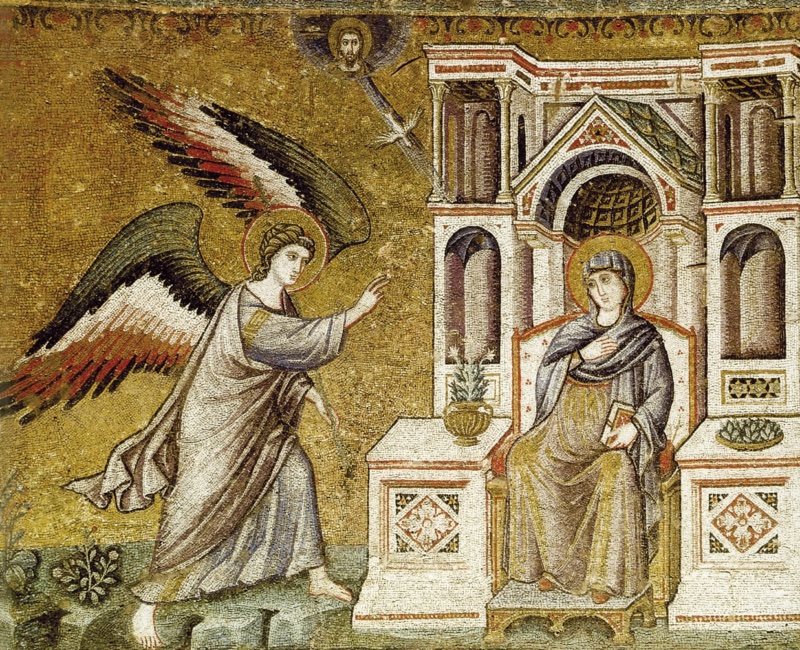
The Annunciation within the same cycle showcases Pietro’s ability to infuse traditional iconographic requirements with unprecedented emotional depth and spatial sophistication. The Virgin Mary’s response to the angelic message displays psychological complexity that makes the miraculous event comprehensible in human terms whilst maintaining appropriate spiritual dignity. The architectural framework provides convincing three-dimensional space that enhances narrative clarity whilst the subtle colour harmonies create atmospheric effects that were revolutionary in mosaic technique. The successful integration of naturalistic observation with symbolic requirements established new standards for religious art that influenced subsequent developments throughout Italy. The technical mastery evident in the precise placement of tesserae to achieve unprecedented modelling effects demonstrates Pietro’s transformation of traditional mosaic technique into a medium capable of sophisticated pictorial expression.
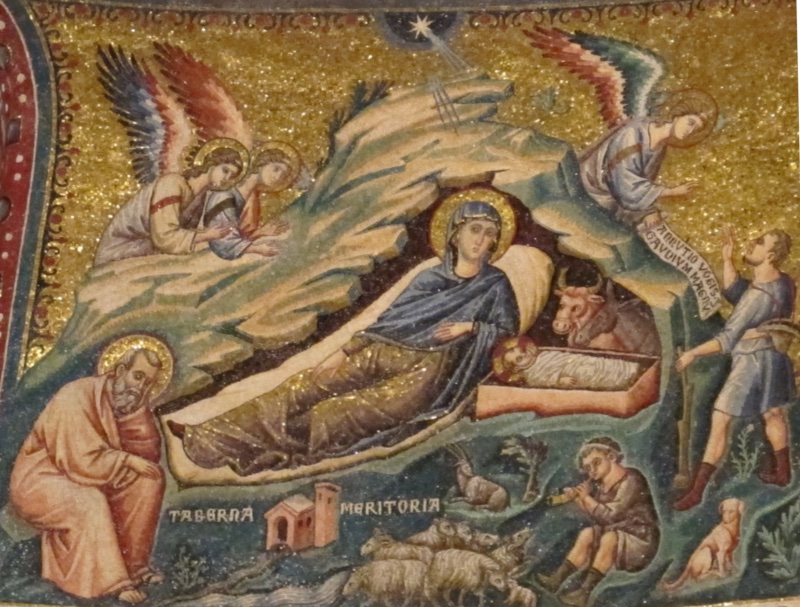
The Nativity scene within the Santa Maria in Trastevere cycle demonstrates Pietro’s innovative approach to traditional Christmas iconography through enhanced attention to human emotion and environmental detail. The intimate relationship between the Holy Family is rendered with unprecedented psychological authenticity whilst maintaining reverent spiritual tone appropriate to the sacred subject matter. The architectural and landscape elements create convincing spatial context that enhances narrative credibility whilst supporting rather than competing with the central religious message. The successful balance between naturalistic observation and spiritual significance established Pietro’s reputation as an artist capable of enhancing religious devotion through artistic innovation. The continued effectiveness of these mosaics as objects of prayer and contemplation demonstrates Pietro’s success in creating art that functions simultaneously as aesthetic achievement and spiritual inspiration.

Last but not least, Pietro’s fragmentary but magnificent Last Judgement fresco in Santa Cecilia in Trastevere (c. 1293) represents his most ambitious attempt to transform traditional eschatological imagery through revolutionary approaches to figure representation and spatial organisation. The surviving group of seated Apostles displays unprecedented individualisation and psychological presence, with each figure rendered as a distinct personality rather than conventional religious type. The sculptural solidity achieved through sophisticated use of light and shadow creates convincing three-dimensional effects that were revolutionary in contemporary fresco technique. The spatial clarity and atmospheric perspective evident in the composition established new standards for large-scale religious narrative painting that profoundly influenced subsequent artistic development. The emotional impact achieved through naturalistic representation enhanced the spiritual effectiveness of traditional religious imagery whilst demonstrating art’s capacity to serve both aesthetic and devotional functions.
The lost fresco cycles at San Paolo Fuori le Mura (1277-1285), known through contemporary descriptions and inadequate later copies, represented Pietro’s most extensive early project and established his reputation as Rome’s leading religious painter. These comprehensive programmes depicting Old and New Testament narratives demonstrated Pietro’s ability to handle complex iconographic requirements whilst introducing innovative approaches to figure representation and spatial organisation. The tragic destruction of these works in the 1823 fire represents one of the greatest losses in Italian art history, depriving modern scholars of crucial evidence for understanding Pietro’s artistic development and technical methods. Contemporary accounts suggest that these cycles established the artistic vocabulary that Pietro would refine and develop throughout his subsequent career. The influence of these lost works on contemporary artists contributed to the broader transformation of Roman artistic practice during the late thirteenth century.
Pietro’s mosaic decorations for the apse of Santa Maria in Trastevere include sophisticated donor portraiture that demonstrates his mastery of individual characterisation whilst fulfilling conventional requirements for patron memorialisation. The portrait of Bertoldo Stefaneschi displays psychological penetration and technical sophistication that elevates portraiture beyond mere documentation towards genuine artistic achievement. The successful integration of donor portraits within religious narratives required diplomatic balancing of personal commemoration with spiritual appropriateness, a challenge that Pietro handled with exceptional skill. The influence of these portrait innovations on the subsequent development of Renaissance portraiture demonstrates Pietro’s role in establishing artistic precedents that extended far beyond religious art into secular artistic practice.
The attributed apse paintings at San Giorgio al Velabro, though fragmentary and damaged, provide important evidence for Pietro’s approach to large-scale religious decoration within one of Rome’s most historically significant churches. The commission by Cardinal Giacomo Gaetani Stefaneschi in 1295 connected Pietro to the highest levels of ecclesiastical patronage whilst requiring him to work within the architectural constraints of an ancient basilica. The surviving fragments suggest sophisticated integration of figures with architectural setting that enhanced both spatial coherence and narrative effectiveness. The damaged condition of these works reflects the vulnerability of fresco technique to environmental deterioration, whilst emphasising the importance of Pietro’s better-preserved mosaic works for understanding his artistic achievement.
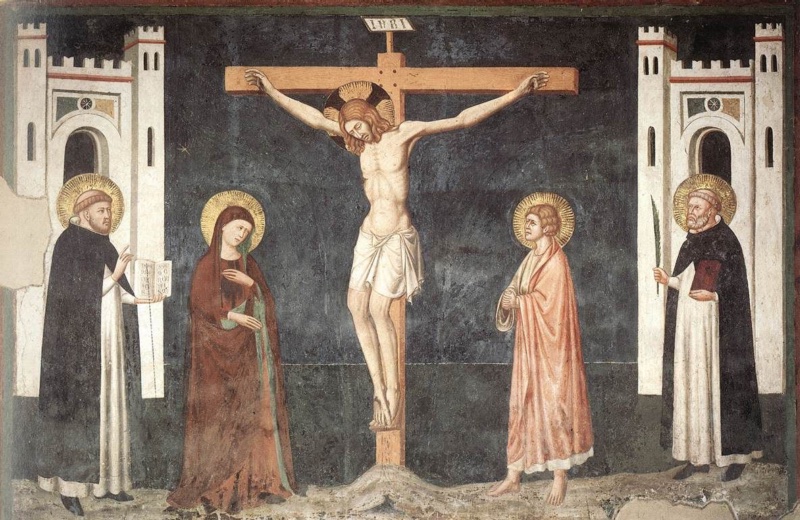
Pietro’s work in Naples, including decorative programmes for San Domenico Maggiore (1308) and Santa Maria Donnaregina (1317), demonstrates his ability to adapt his Roman-developed techniques to meet the specific requirements of Angevin court culture. These projects required collaboration with local artists including Filippo Rusuti whilst maintaining the high standards of artistic quality expected by sophisticated international patrons. The integration of French Gothic influences with Pietro’s established Roman style created synthetic approaches that influenced southern Italian artistic development throughout the fourteenth century. The successful completion of these challenging commissions established Pietro’s reputation as an artist of European significance, capable of working effectively across cultural boundaries whilst maintaining artistic authenticity and technical excellence.
The attributed mosaic of Mary with Saints Sebastian and Chrysogonus in San Crisogono represents Pietro’s contribution to the renovation of another significant Roman church whilst demonstrating his versatility in handling different scales and formats of mosaic decoration. The sophisticated colour harmonies and spatial organisation evident in this work reflect Pietro’s mature technical mastery whilst the successful adaptation to the specific architectural context demonstrates his understanding of how artistic programmes must respond to their physical settings. The continuing attribution debates surrounding this work reflect the broader scholarly challenge of distinguishing Pietro’s personal contributions from those of his workshop and followers within the larger context of early fourteenth-century Roman artistic production.
The possible attribution of the illustrated Clement Bible to Pietro or his workshop suggests his involvement in manuscript illumination, a medium that would have required adaptation of his large-scale techniques to intimate scale whilst maintaining comparable standards of artistic quality. This hypothetical connection to manuscript production would indicate Pietro’s participation in the full range of medieval artistic practise whilst demonstrating the versatility that characterised leading artists of his era. The scholarly uncertainty surrounding this attribution reflects both the collaborative nature of medieval artistic production and the difficulty of maintaining clear distinctions between individual contributions within workshop contexts. The continuing investigation of Pietro’s possible involvement in manuscript illumination contributes to a broader understanding of how major artists engaged with diverse media and formats during the late medieval period.
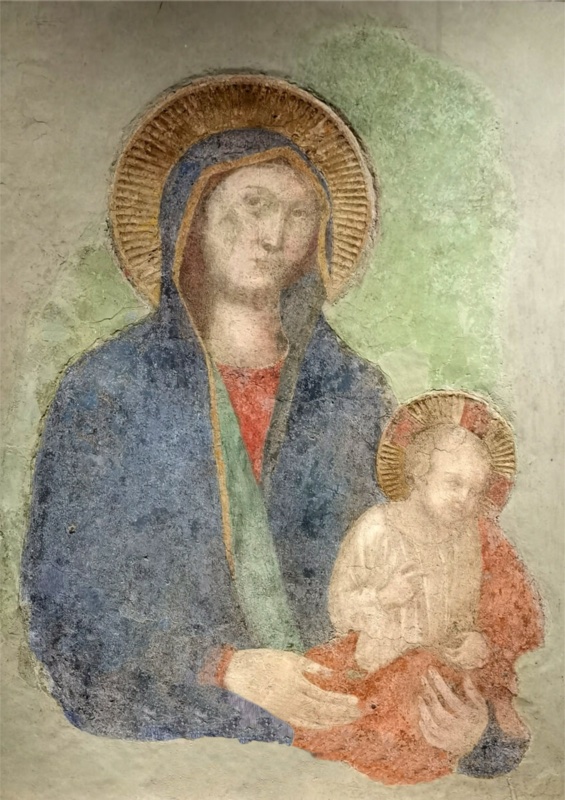
The Madonna della Bocciata , preserved in the Musei Vaticani, occupies a central place in discussions of Pietro Cavallini’s Roman production because it condenses, on a relatively intimate scale, many of the formal and spiritual innovations that define his mature language. Even where attributional debates have periodically resurfaced in modern scholarship, the panel has generally been read within the Cavallinian orbit on the basis of its volumetric construction, chromatic softness, and the monumental calm of the Virgin’s figure. Rather than relying on the linear abstraction typical of stricter Byzantine formulae, the image develops a plastic conception of form in which flesh tones are gradually modulated and drapery is articulated through weight, fold depth, and directional light.
From an iconographic perspective, the work re-elaborates the traditional Theotokos type without abandoning devotional legibility. The Virgin does not appear as a remote hieratic emblem alone; she is instead rendered with a restrained but perceptible humanity that invites affective proximity. The Christ Child participates in this relational field through gesture and bodily orientation, producing a visual dialogue between maternal authority and incarnational tenderness. This balance between doctrinal clarity and emotional accessibility is one of Cavallini’s most significant contributions to late Duecento painting and helps explain why his Roman works are often understood as crucial mediators between Byzantine inheritance and Trecento naturalism.
Technically, the panel demonstrates refined control of tonal transitions and surface pacing. The chromatic range privileges warm flesh passages, deep blues and reds, and carefully balanced highlights that model facial planes without dissolving contour structure. Gold-ground conventions remain operative as markers of sacred space, yet the figures resist flattening through subtle chiaroscuro and through the perceptible weight of bodies beneath garments. In this respect, the Madonna della Bocciata can be read as a key document for understanding how Cavallini transformed inherited Italo-Byzantine methods from within, not by rejecting tradition but by increasing its optical and psychological plausibility.
Within the broader trajectory of Roman painting, the work also clarifies Cavallini’s historical role as an innovator in devotional imagery intended for sustained contemplation. Its synthesis of monumentality, tenderness, and calibrated naturalism anticipates developments that would become central in early Trecento visual culture across central Italy. The panel therefore has value not only as an individual masterpiece but also as evidence of a larger linguistic shift: the passage from symbolic fixity toward forms capable of conveying interior presence, bodily volume, and narrative implication within a still fundamentally sacred image.
It can be said that Pietro Cavallini occupies a decisive position in the history of late medieval Italian art not because he abruptly rejects Byzantine visual culture, but because he subjects it to a process of internal transformation grounded in observation, volumetric coherence, and narrative intelligibility. Across mosaic and fresco, his work demonstrates how inherited iconographic structures could be preserved while being reconfigured through more persuasive spatial settings, more differentiated physiognomies, and a more elastic chromatic modelling of bodies and drapery. In this sense, Cavallini’s achievement is best understood as methodological as much as stylistic: he develops a pictorial logic capable of reconciling doctrinal function with heightened experiential credibility.
From a historiographical perspective, the Roman and Neapolitan phases of his career reveal the importance of interregional patronage networks in shaping early Trecento artistic language. The dialogue between papal Rome, aristocratic commissions, and Angevin court culture created conditions in which Cavallini could synthesize classical memory, Italo-Byzantine technique, and emergent Gothic expressivity into a coherent visual grammar. Even where works are fragmentary, lost, or attributionally debated, the surviving corpus confirms his central role in preparing the conceptual and technical terrain on which fourteenth-century naturalism would develop.
Ultimately, Cavallini should be read not as a peripheral precursor to better-known masters, but as one of the principal agents of transition between the monumental symbolic regimes of the Duecento and the increasingly embodied pictorial humanism of the Trecento. His production provides a critical case study for understanding how artistic innovation in medieval Italy operated through continuity, adaptation, and selective re-elaboration rather than rupture. For this reason, his oeuvre remains indispensable to any account of the longue durée transformation of Western sacred image-making at the threshold of the Renaissance.