A
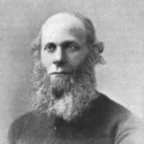
Abbott, Thomas Kingsmill
Dublin, 26 March 1829 – Killiney, 18 December 1913
Thomas Kingsmill Abbott was an Irish clergyman and scholar of extraordinary range, a fellow of Trinity College Dublin who moved with equal authority between moral philosophy, biblical Greek and Hebrew, Kantian metaphysics, and the palaeography of the college's own manuscript collections. Educated at Trinity (B.A. 1851, M.A. 1856, B.D. 1879), he was elected a fellow in 1854 and remained at the college for the rest of his working life, holding in succession the chairs of Moral Philosophy (1867–72), Biblical Greek (1875–88), and Hebrew (1879–1900).
From 1887 Abbott was also librarian of Trinity College, a post in which his cataloguing instincts found their fullest expression: by 1900 he had completed systematic catalogues of the library's manuscripts, incunabula, and coins, works of reference that remained standard tools for the collection long afterward. Outside biblical scholarship he was, with J. P. Mahaffy and other Trinity contemporaries, a central figure in the Irish reception of Kant; his English translation of the Critique of Practical Reason and other Kantian texts remained the standard version used by English-speaking students well into the twentieth century.
For the textual criticism of the Latin Gospels, Abbott's decisive contribution was his 1884 edition Evangeliorum versio antehieronymiana ex codice Usseriano … adiecta collatione codicis Usseriani alterius, which presented the pre-Hieronymian Old Latin text of the Codex Usserianus Primus (Trinity College Dublin, MS 55) together with an appended collation of "the other Usserian codex" — the Codex Usserianus Secundus, or Garland of Howth (MS 56). This was the first systematic scholarly engagement with the Garland of Howth, the study that introduced the manuscript into the mainstream of biblical textual criticism and fixed the terms — block mixture, the Old Latin character of the latter part of Matthew — in which the book has been discussed ever since. Abbott's collation was not, however, above reproach: H. C. Hoskier, editing the same manuscript more fully in 1919, judged it "deplorable" and catalogued a long list of omissions and misreadings, a criticism later scholarship has judged substantially, if intemperately, fair.
Agnello, Fabrizio
active 21st century
Fabrizio Agnello is an architect and associate professor in the Department of Architecture at the University of Palermo, where he teaches Drawing and Graphic Documentation and Architectural Drawing and Surveying Workshop. He is a scholar whose work spans the history of medieval architecture, descriptive geometry, and digital methodologies applied to cultural heritage.
Trained as an architect, Agnello holds a Ph.D. and is currently an associate professor of Drawing at the University of Palermo. He works within the Sicilian academic system, conducting research that intertwines the history of medieval architecture with surveying and graphic representation techniques, both traditional and digital.
Agnello's most significant contribution to medieval studies concerns the documentation and geometric analysis of the ceiling of the central nave of the Cappella Palatina in Palermo, the very monument at the center of Lev Kapitaikin's research. Agnello has developed highly detailed technical surveys of the ceiling's wooden muqarnas structures, producing geometric reconstructions and analyses of the paintings that constitute a fundamental tool for understanding this masterpiece of twelfth-century Norman and Islamic art. His approach combines metric and photographic surveying with the analysis of the proportional relationships of forms, offering an indispensable technical framework for anyone approaching the study of this monument.
In 2023, Agnello published the volume The Photographic Memory of Architecture: Perspective Restorations and Reconstructions with FrancoAngeli. The book explores how historical photographs can be used to reconstruct the three-dimensional form of buildings through perspective restoration, a method that allows, starting from a single image, the recovery of spatial information that would otherwise be lost.
This is a highly useful methodological tool for the history of medieval architecture, where nineteenth- or twentieth-century photographic documents often represent the only evidence of construction phases that were later altered or destroyed.
A significant part of his most recent research is dedicated to digital methods for the enhancement and dissemination of architectural heritage. Agnello thus fits into the contemporary trend of digital heritage, developing three-dimensional models and virtual representations that make the geometric complexities of Sicilian medieval architecture accessible to a wide audience. His Google Scholar profile lists approximately 291 citations, attesting to a well-established scientific impact in the field of surveying and virtual reconstructions of historical architecture.

Ahl, Diane Cole
b. 1949
Diane Cole Ahl is an American historian of Italian Renaissance painting whose work has been shaped throughout by an insistence that the meaning of a picture is inseparable from the materials, the working procedures and the devotional institutions that produced it. She took her B.A. at Sarah Lawrence College and her Ph.D. at the University of Virginia, and spent her entire teaching career at Lafayette College in Easton, Pennsylvania, where she held the Arthur J. '55 and Barbara S. Rothkopf chair in Art History and from which she retired in 2018 as professor emerita. She was named James S. Ackerman Scholar in Residence at the American Academy in Rome.
Her monograph Benozzo Gozzoli (New Haven: Yale University Press, 1996) was the outcome of a decade of research and the first comprehensive account of the painter in English for nearly a century. It reconstructed a career of some sixty years across Rome, Umbria, Florence, San Gimignano and Pisa, restored to Benozzo a substantial body of little-known work, and displaced the condescension that had attached to him since the nineteenth century as a merely decorative follower of Fra Angelico. Her Fra Angelico (London: Phaidon, 2008) treated the master himself with the same attention to Dominican observance and workshop practice. She edited Leonardo da Vinci's Sforza Monument Horse: The Art and the Engineering (1995), The Cambridge Companion to Masaccio (Cambridge: Cambridge University Press, 2002), and, with Barbara Wisch, Confraternities and the Visual Arts in Renaissance Italy: Ritual, Spectacle, Image (2000). Her Painting in Fifteenth-Century Italy: "This Splendid and Noble Art" (New Haven: Yale University Press, 2023), fifteen years in the making, gathers a lifetime's work on pigments, supports, conservation evidence and technique — matters she has argued are too often eclipsed by discussions of perspective and optical theory.
For the Camposanto her decisive contribution is the article "Camposanto, Terra Santa: Picturing the Holy Land in Pisa," Artibus et Historiae 24, no. 48 (2003), pp. 95–122, which argued that the legend of the earth brought from Golgotha, whatever its historical standing, governed the way the cemetery was decorated and understood: the galleries were conceived as a surrogate Holy Land, and the fresco cycles read as a pilgrimage in paint. The reading has proved durable precisely because it does not require the legend to be true in order to be historically consequential. With Gerardo De Simone she edited The Arts in Pisa during the Early Renaissance (2016), which set the Gozzoli campaign of 1469–1484 in its Pisan rather than its Florentine frame.

Ainaud de Lasarte, Joan
Sarria, 25 March 1919 - Barcelona, 5 November 1995
Joan Ainaud de Lasarte was one of the most important Catalan art historians and museologists of the twentieth century, a tireless champion of Catalan cultural heritage, and a leading international authority on Romanesque and Gothic art. His career spanned more than half a century, leaving an indelible mark on museums, academic institutions, and scholarly literature across Catalonia and the wider Hispanic world.
Born on 25 March 1919 in Sarria (then an independent municipality, now part of Barcelona), Ainaud de Lasarte grew up in a cultivated Catalan family: his father was Manuel Ainaud Sanchez, and his grandmother was the prominent writer and feminist Carme Karr. He received his early education at the Mutua Escolar Blanquerna and the Institut-Escola of the Generalitat de Catalunya, two institutions emblematic of the progressive Catalan educational culture of the pre-war Republic. The death of his father when Joan was only thirteen forced him to take on work early, including a stint as a topographer, but he never abandoned his intellectual vocation.
He was also actively engaged in Catalan civic life from a young age, participating in the Palestra (a Catalanist organization) and the Catalan scout movement, Minyons de Muntanya, introduced by Josep Maria Batista i Roca. These formative years planted deep roots of Catalan cultural identity that would define his entire scholarly and institutional career.
The Spanish Civil War interrupted his studies abruptly. He was conscripted into the XVIII Corps of the Popular Army of the Republic, and when the war ended in Nationalist victory, he was imprisoned and interned in a concentration camp in Betanzos, Galicia. He emerged seriously ill and debilitated, and was subsequently required to complete military service under the Francoist regime. Despite these traumatic circumstances, he studied independently (por libre) for his degree in Filosofia i Lletres at the University of Barcelona, earning his doctorate in History in Madrid in 1955.
Ainaud de Lasarte's professional life was dominated by decades of dedication to Barcelona's cultural institutions. In 1941, he began working with the Junta de Museus de Barcelona, and in 1943 he obtained a post as conservator at the Museu d'Art Modern. By 1948 he had risen to become Director General of the Municipal Art Museums of Barcelona, a position he would hold for an extraordinary 37 years, until 1985. In 1951 he was named secretary of the Junta de Museus, and in 1958 he formally joined the Institut d'Estudis Catalans, the foremost Catalan learned society, which he went on to preside from 1978 to 1982.
His institutional role was immensely creative. He oversaw the renovation and expansion of the collections of the Museu Nacional d'Art de Catalunya (MNAC), and he was directly involved in the founding of the Museu Picasso de Barcelona and the Fundacio Joan Miro, of which he served as a trustee by personal designation of the artist himself. He also played a decisive role in creating the Museu de Ceramica in 1961, and served as vice-president of the Junta de Museus de Catalunya by appointment of the Catalan Parliament. Between 1968 and 1978 he was a professor at the Universitat Autonoma de Barcelona, where he became one of the founders of the Department of Art History.
Ainaud de Lasarte was the intellectual heir of two of Catalonia's greatest humanists, having studied under Agusti Duran i Sanpere and Ferran Soldevila at the Estudis Universitaris Catalans, and collaborating closely with Josep Gudiol at the Institut Amatller d'Art Hispanic. His method was distinctive: trained as a historian, he combined an extraordinary photographic memory and mastery of archival documentation with a sophisticated stylistic and deductive analysis, an approach that gave his attributions exceptional authority.
He was an encyclopedic scholar whose primary expertise lay in Romanesque and Gothic art in Catalonia and the Crown of Aragon, but he made significant contributions to Renaissance and modern art as well, writing on Picasso, Miro, Casas, Fortuny, Nonell, Caravaggio, and Xavier Nogues. He directed the international programme of the Corpus dels Vitralls Medievals (Corpus of Medieval Stained Glass) under the Union Academique Internationale, and co-authored landmark studies on the medieval windows of Santa Maria del Mar and the Cathedral of Girona. His bibliography surpassed three hundred titles.
His published output was vast and varied. Among his most important works are Jaume Huguet (1955), a monograph on the great Catalan Gothic painter; Pinturas espanolas romanicas (1962); the guide to Romanesque art at the MNAC (1973); and his magnum opus, La Pintura Catalana in three volumes (1989-1991), which won the Premi Nacional d'Arts Plastiques de Catalunya. He co-authored El cataleg monumental de Barcelona (1947) with Josep Gudiol and Frederic-Pau Verrie, and the collaborative study Els vitralls medievals de l'esglesia de Santa Maria del Mar (1985), which was awarded the Premi Critica Serra d'Or de Recerca in 1986. He was also co-editor of the collective work L'art catala (1958) and contributed to Un segle de vida catalana (1960). A 1965 English-language volume, Romanesque Catalan Art: Panel Painting, made his scholarship accessible to international audiences, and the Skira publishing house issued his Catalan Painting in 1990.
Ainaud de Lasarte was a tireless ambassador for Catalan art on the international stage, undertaking research and lecture tours to the United States, China, Argentina, the United Kingdom, France, Italy, and the Soviet Union. As a commissioner of exhibitions, his greatest achievement was the Gran Exposicio d'Art Romanic held at the Palau Nacional in 1961 under the patronage of the Council of Europe, whose catalogue became, and remains, a standard reference work for Romanesque art in Catalonia and beyond. He also curated the major industrial heritage exhibition Catalunya, la fabrica d'Espanya in 1985.
His contributions to Catalan and Spanish cultural life were recognised by a wide array of distinctions. He received the Creu de Sant Jordi from the Generalitat de Catalunya in 1982, the same year he was awarded the Gold Medal for Merit in the Fine Arts by the Spanish Ministry of Culture. In 1993, the City of Barcelona bestowed on him the Gold Medal for Scientific Merit, specifically citing his lifelong dedication to the study, teaching, and institutional organisation of art in Catalonia. He also received the Premi d'Honor Jaume I (the Premi Lluis de Peguera) and the Gold Medal of the Foment de les Arts Decoratives. He was a member of the Reial Academia Catalana de Belles Arts de Sant Jordi, the Reial Academia de Bones Lletres de Barcelona, the Academie des beaux-arts of Belgium, the Hispanic Society of America, the Real Academia de Bellas Artes de San Fernando, and the Real Academia de la Historia, among others.
Joan Ainaud de Lasarte died in Barcelona on 5 November 1995 and is buried in the cemetery of the port of Llanca (Alt Emporda). He left behind a discipline, the systematic study of Catalan medieval art, that he had largely built, a network of museums and cultural institutions he had shaped with his own hands, and a bibliography of over three hundred works that continues to serve as a foundational reference for scholars of Romanesque and Gothic art.
Alcolea i Gil, S.
active late 20th century
S. Alcolea i Gil is the signatory of the entry "Pedret, Maestro di" in the Enciclopedia dell'Arte Medievale (1997). Nothing else about this scholar is attested in the sources consulted for this directory, and the signature is not identified here with a named person.
The entry describes the Master of Pedret as an anonymous painter, or the most important of the members of an itinerant workshop of painters, and sets his work between the end of the eleventh century and the beginning of the next, along an itinerary that would have begun at Saint-Lizier and Àger and ended at Pedret. For Sant Pere de Burgal it reports that the donor figure has been identified with Countess Lucía, who governed between 1084 and 1090; it does not state a separate date for the cycle in the passage consulted. It notes that the paintings of the central apse of Pedret are kept at Solsona (Museu Diocesà i Comarcal). Its bibliography lists, among other titles, Pagès Paretas, "Le Maître de Pedret" (1994), and Cook and Gudiol Ricart, Pintura e imaginería románicas (Ars Hispaniae, 6).
Alcoy i Pedros, Rosa
active late 20th-21st century
Rosa Alcoy i Pedros is a leading Catalan art historian and one of the foremost contemporary specialists in medieval painting in the Crown of Aragon, especially Gothic panel painting and manuscript illumination in the Catalan-speaking lands between the fourteenth and fifteenth centuries. She combines rigorous archival and stylistic research with a sustained interest in the dispersal, migration, and reuse of medieval artworks, and has been central in reconstructing Catalan altarpieces, clarifying attributions, and framing current debates on masters such as Jaume Huguet and the Vergos workshop.
Alcoy studied at the University of Barcelona, where she obtained both a Diploma in Fine Arts and a Ph.D. in Art History. She has spent her career at the same institution and is currently catedratica (full professor) of Art History in the Department of History of Art, Faculty of Geography and History, at the Universitat de Barcelona. In that context she has played key roles in doctoral programmes and advanced masters, having served on the Doctoral Commission and in the coordination of the Master of Advanced Studies in Art History.
In 1995-1996 Alcoy created the research group EMAC (Grup d'Estudis Medievals d'Art i Cultura, later EMAC. Romanic i Gotic), which was recognised as a consolidated research group by the Generalitat de Catalunya between 2005 and 2015. Under EMAC she has continuously directed funded projects since 1997 devoted to the study and cataloguing of Catalan artworks that have been displaced, exported, or fragmented, paying special attention to their original contexts, subsequent migrations, and post-medieval re-elaborations. Although her core specialisation is Romanesque and Gothic painting, she has also worked on Gothic sculpture and, more selectively, on nineteenth- and twentieth-century art, particularly in relation to funerary and modernista ensembles.
Alcoy's scholarship has significantly shaped the current overview of Gothic painting in the Catalan-speaking lands between the fourteenth and fifteenth centuries, as synthesised in her widely cited article "Gothic painting in the Catalan-speaking lands between the 14th and 15th centuries" in Catalan Historical Review. She has devoted particular attention to issues of iconography, workshop practice, and regional styles, from Lleida and the western territories to the coastal centres of Barcelona, Valencia, and the Balearics. In the field of manuscript illumination she has published important studies on the Book of Hours of Maria of Navarre and on the so-called Anglo-Catalan Psalter in Paris, analysing stylistic crossings between English and Catalan illumination and the circulation of models across the Pyrenees. Her work therefore bridges panel painting and manuscript art, situating both within a broader cultural and devotional framework.
A well-known strand of Alcoy's research concerns Jaume Huguet and the circle of artists associated with him in late fifteenth-century Barcelona. She co-authored, with Pere Baseran, a proposal for the reconstruction of the Huguetian retable of Pertegas, addressing questions of iconographic sequence, fragment dispersion, and workshop collaboration. More broadly, she has intervened in the debate about the division of hands between Jaume Huguet and Pau Vergos, a still-unresolved problem she aptly named "the Huguet-Vergos issue" (1998), which continues to animate discussions of attribution in Catalan Gothic painting. This work exemplifies her methodological interest in how historiography, documentation, and close visual analysis intersect in the formation and correction of attributions.
Alcoy is the author of numerous monographs and exhibition catalogues. Early books include El cementiri de Lloret de Mar: indagacions sobre un conjunt modernista (1990), Pintures del gotic a Lleida (1990), and Joan Mates, pintor del gotic internacional (1997), which consolidated her reputation as a specialist on late medieval Catalan painting and sculpture. She has also published El retaule de Santa Anna del castell de l'Almudaina i els seus mestres (2000), Eduard Alcoy a Mataro (2000), and San Jorge y la Princesa (2004), as well as studies connected to exhibitions she has curated. As editor and coordinator she has overseen important collective volumes emerging from international symposia, such as El Trecento en obras (2009), Contextos 1200 i 1400 (2012), and Art Fugitiu (2014), which explore respectively the Trecento in Mediterranean perspective, the thresholds around 1200 and 1400, and the phenomenon of "fugitive art" - works displaced, fragmented, or removed from their original settings.
Beyond her research, Alcoy has been active in pedagogical innovation. Between 2006 and 2008 she coordinated the project MQD "educational networks for medieval art in Catalonia," aimed at integrating medieval artistic heritage more effectively into teaching at different levels. She maintains an extensive teaching portfolio in medieval art, iconography, and Gothic painting at the University of Barcelona, and her publications and conference organisation have made EMAC and the UB a central node in international networks on medieval Catalan and Mediterranean art. Her Google Scholar profile lists hundreds of citations across languages, reflecting the wide impact of her work not only in Catalonia and Spain but also in broader European and Anglophone medievalist communities.
Alexander, Jonathan James Graham
b. August 1935
J. J. G. Alexander — the initials are how he is cited throughout the literature — is among the foremost historians of medieval manuscript illumination of the last half-century, a scholar whose career carried the connoisseurial and iconographic traditions of mid-century Oxford across to a new generation of American graduate students at New York University. His scholarship ranges, with equal authority, from the Insular Gospel books of the seventh century to the illuminated bibles of the Italian Renaissance.
Alexander was educated at Oxford, taking his B.A. in 1960, his M.A. in 1963 and his D.Phil. in 1964. His formation as a manuscript scholar was decisively shaped by his early collaboration with Otto Pächt, the Vienna-trained émigré art historian then at the Bodleian Library, with whom he co-authored the three-volume catalogue Illuminated Manuscripts in the Bodleian Library, Oxford (1966–1973). It was through Pächt that the descriptive rigour of the Vienna School — close looking, precise stylistic classification, scepticism toward unsupported attribution — was transmitted into British manuscript studies, with Alexander as one of its principal heirs. His first independent monograph, Norman Illumination at Mont St Michel, 1066–1100 (Oxford, 1970), applied that method to a single Norman scriptorium at the moment of the Conquest.
From 1971 to 1987 Alexander was Lecturer and then Reader in the History of Art at the University of Manchester. It was during these years that he conceived and began to edit A Survey of Manuscripts Illuminated in the British Isles, a multi-volume corpus, organised by period, of the illuminated manuscripts produced in England, Scotland, Wales and Ireland — a project comparable in ambition to the great continental corpora of medieval manuscript illumination. Alexander himself wrote the first volume, Insular Manuscripts, 6th to the 9th Century (London, Harvey Miller, 1978). That the Codex Usserianus Primus stands as no. 1 in that volume's sequence is not an accident of alphabetisation but an explicit editorial judgement about chronological priority: in Alexander's ordering, the whole subsequent development of Insular illumination is understood to begin with this ruined book.
The Manchester and early New York years were prolific. Italian Renaissance Illuminations (1977) and The Decorated Letter (1978) appeared alongside the first Survey volume; Illuminated Manuscripts in the Oxford College Libraries (1985), co-authored with Elżbieta Temple, extended the Bodleian cataloguing project to the wider university; and Age of Chivalry: Art in Plantagenet England, 1200–1400 (1987), the catalogue of the Royal Academy exhibition co-organised with Paul Binski, placed manuscript illumination within a full survey of English Gothic art for a general public. In 1986 Alexander joined Patrick McGurk, Simon Keynes, Bernard Barr and Nicolas Barker in producing the Roxburghe Club's commentary volume to accompany the facsimile of the York Gospels, an Anglo-Saxon Gospel book of the late tenth or early eleventh century — one of several points at which Alexander's and McGurk's work on early Gospel manuscripts converge.
In 1988 Alexander moved to New York University's Institute of Fine Arts as Professor of Fine Arts, a post he held until his retirement in 2011; he was named Sherman Fairchild Professor of Fine Arts in 2002 and is now Professor Emeritus. His New York decades produced Medieval Illuminators and Their Methods of Work (Yale University Press, 1992), a study of the practical and institutional conditions of manuscript production, and The Painted Page: Italian Renaissance Book Illumination, 1450–1550 (1994), the catalogue of a further Royal Academy exhibition that carried his range decisively into the fifteenth and sixteenth centuries.
Alexander's standing in the field is marked by his election as Fellow of the Society of Antiquaries in 1981, his tenure as Lyell Lecturer in Bibliography at Oxford in 1982–83, his election as Fellow of the British Academy in 1985, a Guggenheim Fellowship in 1995–96, an Honorary Fellowship of the Pierpont Morgan Library in 1995, and his election as a Fellow of the Medieval Academy of America in 1999. A festschrift, Tributes to Jonathan J. G. Alexander: The Making and Meaning of Illuminated Medieval & Renaissance Manuscripts, Art & Architecture, gathered essays by former students and colleagues in recognition of a career that had, by then, trained much of a generation of manuscript historians on both sides of the Atlantic.
Alidori Monti, Laura
active late 20th-21st century
Laura Alidori Monti is an Italian art historian specializing in the illuminated manuscripts of the Biblioteca Medicea Laurenziana in Florence, one of the great repositories of medieval and Renaissance book production in Italy. Her research is grounded in direct, long-term codicological and art-historical study of the Laurenziana's holdings, and she has contributed extensively to the cataloguing and contextualization of its illuminated Bibles and liturgical books.
She is a contributing author of Bibbie miniate della Biblioteca Medicea Laurenziana di Firenze (Florence, 2003), a scholarly catalogue of the library's illuminated Bibles that remains a standard reference for the study of these manuscripts, including the Codex Amiatinus, the great Northumbrian pandect that has been housed at the Laurenziana since the eighteenth century. The catalogue's description of the Amiatinus draws together codicological, decorative, and provenance evidence in the format characteristic of Italian manuscript scholarship of its period, and it continues to serve as a point of reference for the manuscript's physical description alongside the more extensive Anglo-Saxonist literature. For the fuller account of the manuscript itself, see the essay on the Codex Amiatinus in this database.
Andaloro, Maria
b. 1943
Maria Andaloro is one of the world's leading authorities on medieval and Byzantine art, a student of Cesare Brandi, and a key figure in some of the most ambitious scholarly endeavors in 20th- and 21st-century Italian medieval studies, ranging from research on the Norman mosaics of Palermo to the vast corpus of medieval Roman painting.
Andaloro graduated in 1967 from the University of Rome with a degree in Byzantine Art History, under the guidance of Cesare Brandi—the great theorist of restoration and Crocean aesthetics, founder of the Central Institute of Restoration. That choice was, in a way, unconventional: Byzantine art history was then considered by many Italian academics to be a "dead" discipline, far removed from the classical and humanistic tradition upon which the dominant art historiography was founded. Andaloro absorbed from Brandi not only critical sensibility and theoretical refinement, but above all the ability to combine art history, image theory, and restoration into a comprehensive approach to the figurative heritage.
After years of research and teaching, Andaloro became a full professor of Byzantine Art History and Medieval Art History at the University of Tuscia in Viterbo, where she remained until her retirement in November 2013. From 2003 to 2009 she served as Dean of the Faculty of Cultural Heritage Conservation, and since 2015 she has been Professor Emerita at the same university. Over the course of her career, she coordinated six successive cycles of PRIN (Research Programs of National Interest) projects funded by the Ministry of Education, all dedicated to topics in Byzantine art and iconography. Since 2015, she has also directed the University of Tuscia's scientific mission in Cappadocia, a region of central Anatolia home to one of the world's most extraordinary collections of early Christian and medieval rock art, featuring churches carved into tuff rock that preserve pictorial cycles dating from the 6th to the 16th centuries.
Andaloro's most monumental work is her direction, together with her Swiss colleague Serena Romano (University of Lausanne), of the editorial project Medieval Painting in Rome. Corpus and Atlas (312–1431), published by Jaca Book in nine volumes: six dedicated to the Corpus (edited by Andaloro and Romano) and three to the Atlas (edited solely by Andaloro). This work, begun in 2003 and still in progress, constitutes the most systematic survey ever undertaken of mural and mosaic painting produced in Rome and Lazio from the Constantinian era through the late Middle Ages, and represents an indispensable reference tool for any scholar of late antique and medieval art. For this project, Andaloro and Romano received the Borghese Prize in 2013, one of the most prestigious Italian awards in the field of art history. Andaloro also served as editor of one of the volumes of Guglielmo Matthiae's Pittura romana del Medioevo, contributing to the scholarly update of that work in its second edition of the 1980s.
A second key focus of Andaloro's research concerns the mosaics of Norman Palermo—the Palatine Chapel, Monreale Cathedral, and the Martorana—which she interprets as the most fruitful meeting point between the Greek-Byzantine mosaic tradition and the Latin-Western figurative culture in the medieval Mediterranean. Her studies, published in Storia di Palermo edited by Rosario La Duca and in numerous scholarly essays, have redefined the chronology and patronage of those cycles, highlighting the cultural complexity of Roger's court and the diversity of artisans involved. At the same time, Andaloro has devoted extensive work to the phenomenon of icons in Rome—in particular to the panel paintings preserved in Roman basilicas—analyzing them as a living instrument of devotion and religious communication far beyond their purely aesthetic function.
A theoretical thread runs through Andaloro's entire scholarly output: her interest in the phenomenon of the icon as a conceptual category, not merely as a physical object. In her view, the icon is not a passive devotional image but an instrument that "attempts to make the invisible visible," according to the formulation she herself developed. This theoretical perspective, drawing on John of Damascus's theology of the image and Brandi's philosophy of restoration, enabled her to analyze both the great apse mosaic cycles of Rome and the humblest devotional panels within a unified interpretive framework, situating medieval figurative production at the crossroads of theology, liturgy, and the history of mentalities. The volume Art and Iconography in Rome: From Late Antiquity to the End of the Middle Ages (2001), edited with Serena Romano, remains the most accessible synthesis of this approach.
Ansaldi, Giulio Romano
d. 1981
Author of the foundational twentieth-century monograph on the Galliano frescoes, published in 1949 under the title Gli affreschi della Basilica di San Vincenzo a Galliano: I restauri e l'organismo architettonico della basilica, co-authored with the architect Ambrogio Annoni and issued in the context of the restoration campaigns that were then being conducted on the building. The volume addressed, for the first time in a systematic monographic format, both the pictorial cycle itself — its iconographic content, its attributional questions, and its relationship to the broader landscape of Ottonian and Lombard painting — and the architectural fabric of the basilica as documented through the physical evidence of the restoration. Ansaldi's contribution was not limited to stylistic analysis: crucially, he was the first scholar to read and correctly interpret the Ambrosian inscription in the nave that identifies the father of Samson by name — the word MANVE (Manoah, Samson's father as named in the Book of Judges) — painted twice among the figures of the nave cycle, thereby establishing for the first time the precise iconographic source of the upper register of the right nave wall as the narrative of Samson from the Book of Judges. This philological precision is characteristic of Ansaldi's method, which combined close reading of the painted inscriptions with careful cross-referencing of biblical and hagiographic sources. He also provided the first serious discussion of Ariberto's role as not merely the financial patron but the active intellectual commissioner and program-deviser of both the frescoes and the architectural works at the basilica — a thesis subsequently developed and refined by Lampugnani. While the broader art-historical framework within which Ansaldi situated the Galliano frescoes has been substantially revised by later scholarship — particularly de Francovich's more detailed stylistic analysis of the Ottonian connections and Salvini's chronological clarifications — his monograph remains the essential documentary and iconographic foundation for all subsequent study of the cycle, and its meticulous attention to the physical condition and restoration history of the paintings constitutes an irreplaceable primary record.
Arbace, Lucia
active late 20th-21st century
Lucia Arbace (also known as Luciana Arbace) is one of Italy's leading art historians specializing in the cultural heritage of Abruzzo and Naples. Her academic profile on Academia.edu describes her as a specialist whose primary research interests include ceramics, Renaissance sculpture, landscape painting, and drawing, with particular attention to Italian historical painting.
Arbace built her career within the Ministry of Cultural Heritage and Activities (now the Ministry of Culture), holding senior management positions of major responsibility. She served as Superintendent for the Historical, Artistic, and Ethno-anthropological Heritage of Abruzzo, overseeing the protection of the region's historical and artistic patrimony. In this capacity, in 2011 she curated the exhibition People of Abruzzo - Social Realism in Painting, publicly stating the goal of spreading awareness of an art form "still unknown to many." She also held roles at the Capodimonte Museum and Royal Park in Naples, where she participated in scientific research and conferences.
The most significant chapter of her career is her directorship of the Polo Museale d'Abruzzo and the Museo Nazionale d'Abruzzo (MuNDA) in L'Aquila, a position she held for nearly eleven years. Her tenure coincided with one of the most difficult periods in the city's modern history: the reconstruction after the devastating earthquake of 6 April 2009.
Arbace guided the museum through this critical phase, coordinating restorations of works initially considered irrecoverable, including paintings by Saturnino Gatti, brought back to public display by 2015, the year of MuNDA's reopening.
In June 2020, Arbace stepped down as director of MuNDA after reaching mandatory retirement age, bidding farewell with the words: "These have been intense but very demanding years. I carry L'Aquila in my heart." Under her leadership, the museum combined high-level restoration with digital tools, including virtual tours that proved essential during COVID-19 closures. A ministerial reform then provided for two separate appointments: one director for MuNDA, moving toward institutional autonomy, and one for the regional museum network.
As an author, Arbace has produced an extensive bibliography spanning medieval painting in Abruzzo and seventeenth-century Naples. Notable publications include The Naples Art Institute and Stefano Brun (1929-1958) and The Walls of L'Aquila, presented at MuNDA, a study that reconstructs centuries of urban history through the city's walls and their defensive, social, and sacred functions. She has also curated exhibitions on seventeenth-century painting in Abruzzo between Rome and Naples, bringing works from major collections to public attention. Her profiles on platforms such as ScholarGPS and Academia.edu attest to her recognition in the Italian art-historical research community.
Ascani, Valerio
Lucca, 1962
Valerio Ascani, born in Lucca in 1962, is an Italian university researcher currently serving at the Department of Civilization and Forms of Knowledge at the University of Pisa, where he teaches Medieval Art History and coordinates the master's degree program in History of the Visual Arts.
His scholarly interests span a thematically coherent and rich range, centered on Italian medieval art from the High to the Late Middle Ages. His research focuses primarily on three areas: monastic architecture and Romanesque sculpture, with particular attention to the workshops of Lombard-Ticino sculptors active in Tuscany during the thirteenth century; liturgical manuscripts and medieval iconography; and medieval religious architecture in central and northern Italy.
One of Ascani's most original contributions concerns the Bigarelli workshop, the family of Ticino sculptors originally from Arogno, active in Pisa, Lucca, and Pistoia during the first half of the thirteenth century, on which he published a seminal study as early as 1991 titled La bottega dei Bigarelli. Ticino Sculptors in Tuscany. He has also conducted in-depth studies of the thirteenth-century artists of Arogno and their contributions to the portals of the cathedrals of Lucca and Trento, analyzing the iconographic choices, technical experimentation, and communicative strategies of these itinerant workshops of Lombard craftsmen.
A second area of great relevance for those studying medieval illuminated manuscripts is represented by his studies on medieval liturgical codices and their decoration. He has written on the relationship between liturgy and iconography in the medieval Gospel book, on the symbolic horizon of the liturgical codex in Christian civilization, and on late-antique mimesis in the figurative arts of early medieval Italy, with an essay dedicated to the theme of the Good Shepherd and to manuscript 490 of the Capitular Library of Lucca.
In the field of architecture, Ascani collaborated with the medievalist Mauro Ronzani on a monograph on the Bell Tower of Pisa Cathedral, the famous Leaning Tower, published in 2011 by Edizioni ETS in Pisa as part of the Mirabilia Pisana series, offering a historical and interpretive reinterpretation of the structure that integrates documentary sources with architectural analysis. He has also studied the Volto Santo of Lucca, the famous medieval wooden crucifix, participating in September 2020 in a study meeting organized by the Museum Complex of the Cathedral of Lucca.
Valerio Ascani is an important point of reference for anyone engaged in the study of Tuscan medieval art from the twelfth to the fourteenth century. His combined focus on sculpture, architecture, iconography, and liturgical manuscripts makes him a particularly valuable resource for research spanning multiple areas of medieval artistic production, from cathedral construction sites to the decoration of manuscripts, from the sculptor's workshop to the illuminator's scriptorium.
B
Bacci, Michele
b. 17 June 1970
Michele Bacci is one of the most prominent Italian art historians of his generation, specializing in medieval art, Byzantine iconography, and cross-cultural artistic exchanges across the Mediterranean world. He currently holds the Chair of Medieval Art at the University of Fribourg, Switzerland, a position he has occupied since 2011.
Bacci received his entire academic formation at the prestigious Scuola Normale Superiore di Pisa, one of Italy's most elite research institutions, earning both his M.A. in Art History in 1993 and his Ph.D. in 1999. After completing his doctorate, he remained at the Scuola Normale as a research fellow from 1999 to 2002, deepening his expertise in sacred images, iconography, and religious devotion in medieval Italy. In 2002, he was appointed Associate Professor of Iconography and Iconology at the University of Siena, where he taught until 2011 and supervised two doctoral students along with many graduate theses.
In 2011, Bacci received a full professorship at the University of Fribourg in Switzerland, where he has since chaired the Department of Medieval Art within the Faculty of Humanities. His institutional engagement has been extensive: he served as Director of the Institute of Medieval Studies at Fribourg from 2012 to 2014, and as Director of the Department of Historical Sciences from 2013 to 2017. He has taught seminars not only at Fribourg but also at the Scuola Normale Superiore di Pisa, Masaryk University in Brno, the University of Tokyo, and Saint Tychon's Orthodox University in Moscow, reflecting the international reach of his scholarly activity.
Bacci's scholarly contributions have been recognized by several prestigious institutions. In 2014, he was elected honorary member of the Christian Archaeological Society in Athens, and in 2015 he was elected to the Academia Europaea (The Academy of Europe) in London. In 2017, he received the Hanno and Ilse Hahn Prize for excellent research in Italian arts, awarded by the Bibliotheca Hertziana–Max-Planck-Gesellschaft in Rome. He is also an honorary associate of the International Center of Medieval Art in New York and a member of the editorial boards of several leading journals, including Convivium, Perspective (Institut national d'histoire de l'art, Paris), and Codex Aquilarensis (Spain), as well as serving since 2003 as editor-in-chief of Iconographica, the journal of the Società internazionale per lo studio del Medioevo latino.
Bacci's research focuses on three broad, interrelated areas: the materiality of sacred images and holy sites; artistic interactions and cultural exchange across the medieval Mediterranean; and the reception of Byzantine art in the Latin West. A central thread running through his career is the study of images attributed to Saint Luke — a theme he addressed in his first monograph, Il pennello dell'evangelista. Storia delle immagini sacre attribuite a san Luca (1998), which traces the legend and cult of images claimed to have been painted by the Evangelist. His 2000 monograph Pro remedio animae examined devotional imagery and religious practice in central Italy during the 13th and 14th centuries, and his Investimenti per l'aldilà (Laterza, 2003) explored the relationship between artistic patronage and the medieval theology of purgatory.
His most widely cited book in the English-speaking world is The Many Faces of Christ: Portraying the Holy in the East and the West from 300 to 1300 (Reaktion Books, 2014), which surveys how images of Christ were constructed, contested, and disseminated across Eastern and Western Christianity over a millennium. Another major contribution is The Mystic Cave: A History of the Nativity Church in Bethlehem (Masaryk University Press–Viella, 2017), which he wrote as a direct result of his involvement with the international consortium for the restoration of the Nativity Church in Bethlehem — a project he has participated in since 2010.
A distinctive feature of Bacci's scholarship is his sustained attention to the fluid artistic exchanges between Byzantium, the Latin Crusader states, Venice, Cyprus, and the broader Eastern Mediterranean. His 2021 monograph Venetian-Byzantine Interactions in Icon Painting (1280–1450), published in Greek by the Academy of Athens, provides the first comprehensive study of how icon painters creatively merged Italian and Byzantine pictorial traditions during the late medieval period. He has also produced fundamental studies on art in Famagusta (Cyprus), on sacred geography along Mediterranean pilgrimage routes, and on the art of medieval Georgia and the Caucasus, directing major SNF-funded research projects at Fribourg in these areas.
Beyond scholarship, Bacci has played an active role in the cultural life of medieval art history. He served as curator-in-chief of the major exhibition San Nicola. Splendori d'arte d'Oriente e d'Occidente held at the Castello Svevo in Bari from 2006 to 2007. He co-edits the Brill series Mediterranean Art Histories and the Akal series Visum (Madrid), and he has been a jury member for the ICMA Book Prize in New York. His scholarly output exceeds 290 items — including monographs, edited volumes, peer-reviewed articles, and exhibition catalogue essays — in Italian, English, French, Spanish, Greek, and German, making him one of the most internationally active medievalists in Europe.
In 2017 he published "Un ibrido di successo: il 'dittico Sterbini', la Madonna 'dal risvolto bianco' e la Vergine Konevskaja" (in Survivals, revivals, rinascenze, pp. 469–483), the study on which the restoration catalogue of the Sterbini Diptych (2018) bases its account of the master's corpus, reduced to four works besides the diptych. The Palazzo Venezia entry reports his explanation of the diptych's mixture of Italian and Byzantine elements as an intentional "visual hybridity", and the National Trust cites his essay of 2013, "Some Thoughts on Greco-Venetian Artistic Interactions in Fourteenth and Early-Fifteenth Centuries", for reading the Polesden Lacey triptych as the work of a Greek painter in Venice for a Venetian patron.
Bacci, Peleo
San Marcello Pistoiese, 17 May 1869 - Siena, 10 February 1950
Peleo Bacci was an Italian art historian, archivist, and monuments official whose decades of documentary research and institutional work in Tuscany did more than perhaps any single scholar to place the study of Sienese and Pisan medieval art on a secure archival footing. As superintendent of monuments, galleries, and archaeological excavations first in Pisa and then in Siena, he combined administrative responsibility for some of Italy's greatest medieval monuments with an unrelenting programme of archival excavation, publishing thousands of documents that reconstructed the working lives of the sculptors, painters, and builders of medieval Tuscany. He is to be distinguished from the present-day Fribourg medievalist Michele Bacci, an unrelated scholar of a later generation.
Bacci earned a law degree from the University of Siena in 1893, with a thesis on the influence of Dante's De Monarchia on Italian public law, but his interests had already turned toward history and art history during his student years. His early career was marked by a period of adventure and public service rather than scholarship: in 1897 he took part, alongside Ricciotti Garibaldi, in the Battle of Domokos in Thessaly during the Greco-Turkish War, and shortly thereafter he was engaged by Ferdinando Martini as a personal secretary for a colonial posting in Eritrea, where he administered the district of Cheren until his return to Italy in 1903.
In 1907 Bacci entered the Ministry of Public Instruction as an inspector of the Florentine galleries. From 1910 he served as regent of the Superintendence of Monuments in Pisa, and from 1923 to 1941 he held the post of superintendent of monuments, galleries, and archaeological excavations in Siena, a position from which he shaped the study, conservation, and display of Sienese art for a generation.
Bacci's single most consequential undertaking for the study of thirteenth-century sculpture was his direction, published as a monograph in 1926, of the complex physical reconstruction of Giovanni Pisano's pulpit in Pisa Cathedral, whose carved panels, columns, and figures had been dismantled and dispersed around the cathedral in the seventeenth century and only partially reassembled thereafter. Bacci's reconstruction restored the pulpit to something close to its original order and remains the basis for its modern installation. His archival researches into the Pisan Opera del Duomo also established the documentary record of Giovanni Pisano's abrupt departure from Siena in 1297 following disputes with the cathedral overseers over delays and the mismanagement of the works, findings he later gathered together with a lifetime of similar discoveries in Documenti e commenti per la storia dell'arte (1944).
Beyond the Pisano pulpit, Bacci's archival method — the patient cross-referencing of notarial, guild, and Opera records with the surviving works themselves — underpinned an extensive body of scholarship on Sienese art of the thirteenth and fourteenth centuries, including studies of Duccio and Trecento Sienese painting, of the workshop and following of Nicola Pisano, and of Giunta Pisano, Coppo di Marcovaldo, and Benozzo Gozzoli. In 1929 he published a major study of Jacopo della Quercia grounded in unpublished archival documents, reconstructing the sculptor's career with the same documentary rigor he brought to the Pisani.
Bacci was a longstanding member of the Sienese Accademia degli Intronati, over whose art section he presided for many years, and his scholarly papers and library passed after his death to the Biblioteca Comunale of Siena, where they remain a resource for subsequent generations of archival researchers working on Tuscan medieval and Renaissance art.
Balabanov, Kosta Lazarov
Stip, 5 April 1929 - Skopje, 6 February 2026
Kosta Lazarov Balabanov was Macedonia's foremost historian of medieval art, a central figure in the preservation, study, and international promotion of Macedonia's iconographic and fresco heritage throughout a career spanning more than seventy years. He left behind a scholarly legacy of extraordinary scope: more than 200 scholarly articles, 24 monographs, and a personal catalog of over 18,000 icons documented in more than 1,700 churches and monasteries, having visited more than 1,340 settlements in Macedonia alone.
Balabanov was born on April 5, 1929, in Stip, a city in eastern Macedonia, to a family of Armenian origin whose ancestors had undergone long migrations before settling in the Balkans. As early as 1952, while still a student, he began working as a research assistant at the then Central Institute for the Protection of Cultural Monuments. In 1954, he earned a degree in art history from the "Saints Cyril and Methodius" University in Skopje, and then completed his doctorate in 1965 at the same institution with a dissertation dedicated to icon painters and iconographic centers in Macedonia between the fifteenth and seventeenth centuries, a theme that became the central thread of his research. In 1956, the Federal Institute for the Protection of Cultural Monuments in Belgrade sent him to specialize in Vienna at the Bundesdenkmalamt.
From the early 1950s through the following decades, Balabanov built his career at the Republican Institute for the Protection of Cultural Monuments in Skopje, where he attained the rank of senior curator-researcher in 1963. Between 1974 and 1980, he served as Deputy Director General of the Institute, and between 1981 and 1989 as Director General of the Museum of Macedonia. Between 1985 and 1989, he also taught musicology and cultural heritage preservation at the Faculty of Natural Sciences and Mathematics at the "Saints Cyril and Methodius" University in Skopje. Between 1970 and 1971, he served as Visiting Professor at Merton College, Oxford, where he delivered a series of lectures on Macedonian icons.
One of the most distinctive aspects of Balabanov's approach was his dedication to direct fieldwork on monuments. He systematically traveled through villages, rock-hewn churches, and monasteries in Macedonia to photograph, measure, and document icons and frescoes in a state of neglect or deterioration, building an unprecedented scientific archive. His most sensational discovery was the reappraisal of the Vinica terracottas, panels of fired clay from the early Christian period (fifth to sixth centuries) found at the site of Vinicko Kale. With scientific rigor, Balabanov proved their authenticity and organized traveling exhibitions in Rome, Paris, Moscow, Tokyo, and Madrid, bringing Macedonian heritage to the attention of the world's cultural capitals.
The year 1967 marked a turning point in Balabanov's international career: he was commissioned to curate the exhibition "Macedonian Icons from Yugoslavia" in Japan, which began a lasting relationship with the country. He later dedicated thirty years to promoting Japanese culture in Macedonia and fostering cultural friendship between the two countries, serving as editor-in-chief of the quarterly magazine Akebono from 1995, a Macedonian-language publication devoted to Japanese society and culture. From 1994, he served as Honorary Consul General of Japan in Skopje and director of the Japanese Information Center, receiving high Japanese imperial honors. In 2001, the Japan Foundation awarded him its prestigious annual honor, citing him as one of the foremost art historians of the former Yugoslavia and an exceptional promoter of Macedonian-Japanese cultural cooperation.
In addition to his academic writing, Balabanov was also a prominent audiovisual creator. His collaboration with Vardar Film and Macedonian National Television (MRTV) produced 32 documentaries on the archaeology and medieval art of the Macedonian region, many of which were dubbed into foreign languages and distributed abroad as tools of cultural diplomacy.
Balabanov's published works span the full range of Macedonian medieval arts. Among his most important works are Icons from Macedonia (Belgrade: Jugoslavija, 1969), Frescoes and Icons of Macedonia, 4th-15th Centuries (Belgrade: Jugoslavija, 1983), Lesnovo: XIV vek / Lesnovo: 14th Century (1980), and Terracotta Icons of Macedonia and Icons of Macedonia (both Skopje: Tabernakul, 1995). His research helped establish international recognition that medieval Macedonian art, icons, frescoes, and miniatures, constitutes an autonomous tradition of the highest order within the Byzantine art world.
Balabanov is remembered as a man of extraordinary modesty, a polyglot and brilliant conversationalist, able to engage diverse audiences, from Oxford students to Japanese diplomats, with equal mastery and warmth. He died on February 6, 2026, in Skopje, at the age of 96, leaving his reputation as the foremost guardian of Macedonian medieval visual memory intact.
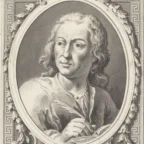
Baldinucci, Filippo
Florence, 1625 – Florence, 1696
Filippo Baldinucci was a Florentine biographer, connoisseur and lexicographer whose Notizie de' professori del disegno da Cimabue in qua extended the biographical project of Vasari's Vite into the seventeenth century and remains a principal source for Florentine and, more broadly, Italian art from the late Renaissance through the Baroque. Trained as a notary, he entered the service of Cardinal Leopoldo de' Medici, for whom he catalogued and arranged the cardinal's celebrated collection of drawings and self-portraits — the nucleus of what became the Uffizi's Gabinetto Disegni e Stampe — acquiring in the process an intimate, connoisseurial knowledge of draughtsmanship across schools and periods that distinguishes his critical judgments from purely anecdotal biography.
Published in successive volumes from 1681 and continued after his death by further instalments (the Decennali), the Notizie organise artists' lives by "centuries" in conscious emulation of Vasari's tripartite scheme, combining documentary research, oral testimony gathered from artists' descendants and pupils, and Baldinucci's own connoisseurial observation. Alongside this biographical corpus he compiled the Vocabolario toscano dell'arte del disegno (1681), the first specialised dictionary of Italian artistic terminology, defining the technical vocabulary of painting, sculpture and architecture with a precision no earlier writer had attempted. Together the two works established Baldinucci as the indispensable continuator of Vasari for the two centuries following the Vite, and later scholars mining the documentary record of Florentine art regularly measure Baldinucci's testimony against, and alongside, Vasari's own.
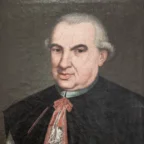
Bandini, Angelo Maria
Florence, 25 September 1726 - Florence, 1803
Angelo Maria Bandini was one of the foremost librarians and bibliographers of eighteenth-century Italy, a figure of the Tuscan Enlightenment whose decades of patient cataloguing gave modern scholarship its first systematic descriptions of some of the most important manuscript collections in Europe. Ordained a priest, he served first as librarian of the Biblioteca Riccardiana in Florence and, from 1757, as prefect of the Biblioteca Medicea Laurenziana, a post he held until his death.
Bandini's principal monument is the multi-volume Catalogus Codicum Latinorum Bibliothecae Mediceae Laurentianae (1774–1778), together with companion catalogues of the Laurenziana's Greek and Oriental manuscripts — an undertaking of extraordinary scope that remains, even after two and a half centuries, a working reference for the library's holdings. He was also a biographer and antiquarian of note, writing on figures such as Amerigo Vespucci, and he corresponded with the leading scholars of his age across Italy and beyond.
It was in the course of this cataloguing work that Bandini made the observation from which the modern history of the Codex Amiatinus begins. Examining the manuscript's dedicatory verses, he noticed that several words — Cenobium, Salvatoris, and Petrus Langobardorum — were written in a different hand and stood over erasures, that the metre of the verse had been disturbed by the substitutions, and that the phrase caput ecclesiae pointed naturally to St Peter rather than to the Saviour. He proposed, incorrectly as it turned out, that the original opening word had been Culmen; the correct reading, Corpus, would be recovered only a century later by Giovanni Battista de Rossi and Fenton John Anthony Hort. Bandini's palaeographic acuity in detecting the tampering at all, without any external evidence to guide him, was nonetheless the indispensable first step in a discovery that would eventually overturn the manuscript's presumed Italian origin. See the essay on the Codex Amiatinus in this database for the full account.
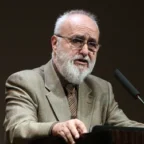
Bango Torviso, Isidro Gonzalo
Ferrol, 1946 - Madrid, 2025
Isidro Gonzalo Bango Torviso was born in Ferrol in 1946 and died in Madrid in 2025. With a scholarly output spanning more than five decades, he stands as one of the supreme authorities on Hispanic Romanesque and pre-Romanesque art, a figure whose work redefined the methodological foundations of medieval art history in Spain and whose influence extended far beyond the academy into the public life of cultural heritage.
Bango Torviso earned his doctorate from the Universidad Autónoma de Madrid, with a thesis devoted to Romanesque architecture in Pontevedra, and subsequently held the chair of Ancient and Medieval Art at that same institution. He served as Dean of the Faculty of Philosophy and Letters at the UAM between 1995 and 1998, while simultaneously directing numerous research projects. He exercised his teaching and research at the Department of History and Theory of Art of the Universidad Autónoma de Madrid until his retirement in 2018.
It is notable that both Bango Torviso and his great contemporary Joaquín Yarza Luaces were born in the same city of Ferrol, in Galicia, a remarkable coincidence that gave Spain two of its most towering figures in medieval art history from the same Galician port town. The two scholars indeed worked in close intellectual proximity; Yarza Luaces served as president of the doctoral examination committee for at least one of Bango Torviso's doctoral students.
Over the course of his long academic career, Bango Torviso dedicated the greater part of his energies to the analysis of Hispanic Romanesque art, with special attention to its social, liturgical, and institutional context. His methodological approach, always multidisciplinary and firmly grounded in historical sources, renewed the way medieval architecture and iconography were studied, moving away from purely stylistic frameworks to illuminate the function, memory, and symbolic uses of sacred spaces.
His scholarly activity centred on diverse areas of medieval culture: Hispanic pre-Romanesque art, Romanesque architecture, pilgrimage and medieval culture, images and their meaning, monastic architecture, and even the work of Hieronymus Bosch.
His rigorous and courageous work illuminated everything from the foundations of Hispanic pre-Romanesque art to the full complexity of the Romanesque, encompassing the world of relics, monastic architecture, royal iconography, and the Camino de Santiago.
One of his most sustained contributions was the systematic study of art and architecture in the Christian kingdoms of the Iberian Peninsula between the sixth and eleventh centuries. His monumental volume Arte prerromanico hispano. El arte en la Espana cristiana de los siglos VI al XI (Summa Artis, vol. VIII-II, Espasa-Calpe, 2001) remains the standard scholarly reference for this entire period, encompassing Visigothic, Asturian, Mozarabic, and early Romanesque production.
His monographs El romanico en Espana (Espasa-Calpe, 1992) and El camino de Santiago (Espasa-Calpe, 1993) always approached traditional subjects with new readings, fundamentally shaping the way medieval Spanish art and its most important buildings have been seen and understood. His last major book, Catedral de Jaca. Un edificio del siglo XI (Fundación Santa María la Real, 2020), developed the thesis of the Cathedral of Jaca as the work of "a great architect later joined by a sculptor," proposing it as the first fully Romanesque cathedral in Spain, promoted by King Ramiro I and possibly begun around 1060, a chronological revision with significant implications for the broader history of European Romanesque architecture.
Among his most original contributions to the field were his studies on the sacred treasury of the medieval Leonese monarchy and the art of reliquaries. His research on the Arca Santa of Oviedo (1072) and on the royal workshop of León revealed the profound connections between liturgical metalwork, relic veneration, and the construction of royal authority. He also published extensively on the iconography of royal unction and consecration in early medieval Hispania, tracing the visual language of sacred kingship from the Visigothic period through to the eleventh century.
His large-format study El Camino de Santiago (Banco Bilbao Vizcaya, 1998) provided a comprehensive visual and historical account of the pilgrimage route and its artistic monuments, synthesising architecture, iconography, and devotional culture in a work that both served the scholarly community and reached a broad public.
Bango Torviso was the creator and co-director of the collection Cuadernos del Arte Espanol (Historia 16) and the director of the collection Conocer el Arte (Arlanza), two influential series that made the latest scholarship accessible to non-specialist readers and played a significant role in cultivating public interest in Spanish medieval heritage.
As an exhibition curator, Bango Torviso brought the medieval world to vast public audiences with a series of landmark shows. Among the most significant were Monjes y Monasterios. El Cister en el medievo de Castilla y Leon (1998); Maravillas de la Espana medieval. Tesoro sagrado y monarquia (2000); El mundo de Carlos V. De la Espana medieval al Siglo de Oro (Mexico City, 2001); Remembering Sepharad. Jewish Culture in Medieval Spain (Washington National Cathedral, 2003); La Edad de un Reyno. Las encrucijadas de la Corona y la diocesis de Pamplona (Pamplona, 2006); Alfonso X el Sabio (2009-2010); and A su Imagen. Arte, Cultura y Religion (2014-2015).
Among these, the celebrated series Las Edades del Hombre contributed in an extraordinary way to renewing public interest in the historical and religious heritage of Castile and León.
A Selection of Foundational Works
Arquitectura romanica en Pontevedra (La Coruna, 1979); Galicia romanica (2nd ed., 1987); El romanico en Espana (Espasa-Calpe, 1992); El camino de Santiago (Espasa-Calpe, 1993); Arquitectura romanica en Castilla y Leon (Valladolid, 1995); Edificios e imagenes medievales: historia y significado de las formas (Temas de Hoy, 1995); El Camino de Santiago (Banco Bilbao Vizcaya, 1998); La cabecera de la catedral de Santo Domingo de la Calzada (Madrid, 2000); Arte prerromanico hispano. El arte en la Espana cristiana de los siglos VI al XI (Summa Artis, VIII-II, Espasa-Calpe, 2001); Emiliano, un santo de la Espana visigoda, y el arca romanica de sus reliquias (Salamanca, 2007); La Abridera de Allariz (2010); and Catedral de Jaca. Un edificio del siglo XI (Fundación Santa María la Real, 2020).
Bango Torviso was an indefatigable researcher, a promoter of decisive projects, and an intellectual reference for several generations of art historians. His doctoral teaching formed generations of historians, restorers, and heritage managers; his academic work decisively expanded our understanding of the Romanesque world; and his commitment to cultural dissemination made it possible for many citizens to discover the richness and diversity of peninsular medieval art. His output was immense, more than thirty books and more than one hundred and seventy studies.
In the historiography of Spanish medieval art, Bango Torviso stands alongside Yarza Luaces as one of the two defining scholarly presences of the second half of the twentieth century and the opening decades of the twenty-first. Where Yarza Luaces illuminated the world of illuminated manuscripts and Gothic painting, Bango Torviso gave us the fullest and most searching account yet written of the stones themselves, the abbeys, cathedrals, cloisters, and reliquary chapels that constitute the material fabric of medieval Hispanic civilisation.
Baracchini, Clara
1943 – 27 March 2021
Clara Baracchini was an Italian art historian whose career was spent almost entirely inside the state heritage administration rather than the university, and whose scholarship is inseparable from the work of protection, cataloguing and public access that occupied her for close to fifty years. She was formed under Carlo Ludovico Ragghianti, and from 1974 served in the Soprintendenza of Pisa — whose jurisdiction covered the provinces of Pisa, Lucca, Livorno and Massa-Carrara — of which she was long regarded as the animating spirit and which she directed as soprintendente reggente from 1997 to 1999. Her fieldwork was never separated from teaching: she taught at the Accademia di Belle Arti of Carrara and, from 1996, at the Scuola di Specializzazione in Storia dell'Arte of the University of Pisa.
For the monuments of the Piazza del Duomo her central work is Il Camposanto di Pisa (Turin: Einaudi, 1996), edited with Enrico Castelnuovo. That volume, which opens with Antonino Caleca's long account of the building and its decoration from the origins to the fifteenth century, remains the standard synthesis on the cemetery: it brought together the documentary history of the cantiere, the fresco campaigns, the antique collection and the twentieth-century catastrophe and restoration within a single critical frame, and it is the point of departure for all subsequent work on the site. She had earlier coordinated the exhibition and catalogue I marmi di Lasinio (Pisa, 1993), devoted to the collection of sculpture that Carlo Lasinio had gathered into the Camposanto in the early nineteenth century, and she sat on the scientific committee of Niveo de marmore. L'uso artistico del marmo di Carrara dall'XI al XV secolo (Sarzana, 1992).
She was among the earliest Italian heritage officials to grasp what computing would mean for the discipline, working with the Centro di Ricerche Informatiche per i Beni Culturali of the Scuola Normale Superiore on cataloguing systems and restoration databases, and directing a series of pioneering online projects — Medieval Art in Pisa (1998), Sacrum Luce: arte sacra nel territorio lucchese (2001) and Piazza dei Miracoli (2003). She was likewise a pioneer of the sezioni didattiche in Italian state museums. Her library passed to the University of Pisa as the Fondo Clara Baracchini, and the volume of studies Progettare le arti. Studi per Clara Baracchini, edited by Lorenzo Carletti and Cristiano Giometti, was offered in her honour.
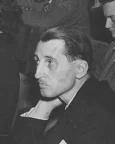
Baroni, Costantino Nicola
Milan, 12 August 1905 - Milan, 3 March 1956
Costantino Nicola Baroni was one of the most distinguished Italian art historians, archivists, and museum directors of the twentieth century, whose brief but extraordinarily productive life left an indelible mark on the cultural heritage of Milan. Born in Milan on 12 August 1905 to parents of Vicentine origin, he died in the same city on 3 March 1956, just weeks before the triumphant inauguration of the museum he had spent a decade rebuilding.
Baroni's family background was steeped in the artisan traditions of the Veneto: among his ancestors was Giovanni Baroni, a celebrated ceramist from Bassano active in the early nineteenth century, and a Vicentine tapestry weaver. This hereditary proximity to the decorative arts profoundly shaped the direction of his earliest scholarly inquiries. Around the age of twenty, serious illness forced him to abandon his preferred course of study - architecture at the Politecnico di Milano - and enroll instead in the Faculty of Law, which permitted him to study without the burden of demanding attendance obligations.
He graduated in Law in 1932, but his true intellectual vocation had never wavered. Even before completing his degree, he was a regular and devoted visitor to the artistic collections of the Castello Sforzesco, and upon graduation he began volunteering there immediately. In 1934, two years after his law degree, he obtained the diploma in palaeography, diplomatic studies, and archival doctrine - a qualification that would prove indispensable to his subsequent career of systematic documentary research into Lombard monuments and medieval sources.
Baroni's earliest published scholarship concerned Italian ceramics, a field he entered with both personal and intellectual motivations. As he wrote in his own curriculum: "For ceramics in particular, when I began to study them in earnest, very little was being done in Italy, except at the centre of studies created at Faenza. Foreign historians - Bode, Wallis, Serre, Rackham - knew far more than we did." At just twenty-five, he submitted a study on eighteenth-century Venetian ceramics to the prize competition of the Regia Deputazione di Storia Patria per le Venezie, which was commended and subsequently published in the Archivio Veneto in 1932.
In a 1933 essay in Dedalo, he disputed the conventional attribution of a significant group of embossed ceramics to Venice, reassigning them to Bassano production and backdating them by nearly a century - a revision that won broad scholarly approval and encouraged him to deepen his ceramic studies further. He also discovered the existence of a previously unknown tradition of medieval Milanese ceramics, clarifying the relationships between the various eighteenth-century city manufactories. These early contributions established him as a methodologically rigorous scholar willing to challenge received opinion through documentary verification.
His growing reputation led to a formal appointment by the Comune di Milano in April 1935, when he was officially engaged as cataloguer of the artworks at the Castello Sforzesco. Under the mentorship of Professor Giorgio Nicodemi, Superintendent of the Castle's archives and museums, Baroni undertook the new arrangement and presentation of the palaeontological and archaeological collections, the reorganization of the medieval and modern ceramics, the Art Library, and the Raccolta Vinciana - the specialist collection devoted to Leonardo da Vinci studies. He was elected secretary of the Raccolta Vinciana in 1936, reflecting his growing expertise in Leonardesque documentation.
In 1937 he declined a hard-won post as assistant at the Civici Musei di Venezia, preferring instead to remain in Milan, where the following year he was appointed Conservator of Fine Arts for the Comune di Milano through public competition. This decision to remain in his native city allowed him to deepen and expand his scholarly production and to develop lasting collegial relationships with the greatest art historians of his generation: Mario Salmi, Adolfo Venturi, Pietro Toesca, Roberto Longhi, Giuseppe Fiocco, and others.
The heart of Baroni's art-historical contribution lies in his systematic reassessment of Lombard architecture and sculpture from the Trecento to the Seicento. A decade of methodical archival exploration yielded a series of publications that dismantled many long-standing attributions and chronological assumptions. His communication to the First Lombard Historical Congress at Como in 1937, Il metodo storico e i problemi di valutazione critica dell'architettura lombarda da Bramante al Richini, laid out the programmatic lines of his entire research project: the conviction that traditional art-historical accounts of Lombard Renaissance architecture rested on uncertain documentation and attributions perpetuated by convention rather than evidence.
This argument was expanded into a full monograph, L'architettura lombarda da Bramante a Richini. Questioni di metodo (Milan, 1941), published alongside the first volume - devoted to religious buildings - of his major documentary compilation Documenti per la storia dell'architettura a Milano nel Rinascimento e nel Barocco, issued by Sansoni in Florence. Sadly, only this first of three projected parts was ever published. In 1944 he produced his most ambitious scholarly work, Scultura gotica lombarda, a comprehensive study of Gothic sculpture in Lombardy that brought new attributions and original critical solutions to long-debated problems. He later contributed essays on the same subject to volumes V and VI of the monumental Storia di Milano published by the Treccani Institute (1955).
Baroni's expertise extended to Leonardo studies, a natural complement to his architectural research and his stewardship of the Raccolta Vinciana. His work in this field was recognized when, for the major Leonardo exhibition held in Milan in 1939, he was appointed commissioner for the sections devoted to biographical documents and architecture. His contributions to Vincian scholarship were sufficiently significant to warrant a dedicated bibliography in his obituary published in the Raccolta Vinciana (1960).
When Italy entered the Second World War and the director Nicodemi was absent in Austria, it fell to Baroni - as the responsible public official - to organize and complete the enormous task of dismantling the Museo d'Arte del Castello Sforzesco and the Civica Galleria d'Arte Moderna, and transporting part of the collections to anti-aircraft shelters. This activity was documented in his essay Le operazioni di sgombero e di ricovero delle civiche raccolte d'arte (1941). He simultaneously collaborated with the Soprintendenza ai Monumenti di Milano on provisional measures to safeguard the city's artistic patrimony.
In 1945, as the Liberation of Italy approached, Baroni was one of three members of the Comitato di Liberazione Nazionale per le Arti (alongside Pacchioni and Morassi) who made contact with the Cardinal Archbishop and the Allied Authorities to signal artworks looted to Germany and others subject to war damage. From May 1945, first by the CLNAI and then by the municipal authorities, he was entrusted with the direction of the Belle Arti of the Comune di Milano, charged with organizing the recovery of displaced works of art and pressing for the restoration of monumentally damaged sites.
The most visible phase of Baroni's career was his direction of the Civic Museums of Milan in the postwar decade. He faced the immense challenge of reconstituting the Museo d'Arte Antica at the Castello Sforzesco and the Galleria d'Arte Moderna, both devastated by the Allied bombing of August 1943. His vision for the museums was guided by the most advanced museographical doctrines of the time, and he engaged the celebrated architectural group BBPR to design the new installations, resulting in displays of the highest aesthetic dignity.
His acquisitions policy was equally remarkable. Under his directorship the Castello Sforzesco acquired the Pieta Rondanini - Michelangelo's last great sculpture - securing it permanently for Milan and the nation. He also enriched the collections with twenty-seven Romanesque and Gothic sculptures from the Villa Tittoni park at Desio, the monumental fresco cycle with the Story of Griselda from the castle of Roccabianca, two rare Tusco-Lazial crucifixes of the thirteenth century and an Umbrian one of the fourteenth, paintings by Bergognone, Magnasco, and Del Cairo, groups of Coptic textiles and medieval fabrics, and the first important nucleus of a contemporary art collection featuring works by Modigliani, Morandi, Sironi, Campigli, Manzu, Martini, and Marino Marini.
In 1941 Baroni obtained the libera docenza in medieval and modern art history and in the history of architectural styles, thereafter teaching at the Università Cattolica and serving as a voluntary assistant at the chair of architectural history at the Politecnico di Milano. His teaching, which lasted from 1943 to 1951, was animated by the ambition to restore art historical instruction from a pallid institutional exercise to a rigorous and critically engaged discipline.
In parallel, from 1945 until his death, he served as art critic for the daily newspaper Il Popolo, where he wrote with directness and unflinching judgement on all aspects of the modern and ancient art worlds. He directed editorial series for the Casa Editrice Martello in Milan: I grandi maestri del disegno, Il fiore della miniatura italiana, and I sommi dell'arte italiana - the last of which is of particular relevance to the study of Italian medieval illuminated manuscripts. He also contributed to the Storia di Milano published by the Treccani Institute.
In 1948, at the Venice Biennale, Baroni was awarded the prize for art criticism, the most important Italian recognition in that field. In January 1955 he won the competitive examination for Vice-Director of the Musei d'Arte, a nomination that formally ratified the position of director he had effectively held since 1945.
His last great achievement - one that had absorbed a decade of his most devoted energy - was the complete reconstruction and reinstallation of the Museo d'Arte Antica at the Castello Sforzesco. He died on the night of 3-4 March 1956, just five weeks before the solemn inauguration of that museum in the presence of the President of the Republic. His final essay, Come risorge il Museo del Castello Sforzesco, was found on his desk, pen beside the last page: he died, it was written at the time, with the vision of the Castello Sforzesco before him and the thought of his museum in his mind. He rests in the Monumental Cemetery of Milan, and the Comune has named one of the principal streets of the Gratosoglio quarter in his honour.
Barral i Altet, Xavier
b. Barcelona, 15 January 1947
Xavier Barral i Altet is a Catalan historian of medieval art, professor emeritus of the University of Rennes 2 – Haute Bretagne, former director of the Museu Nacional d'Art de Catalunya, and the most persistent modern critic of the received historiography of Romanesque art. His work moves across an unusually wide field — late antique and early medieval mosaics, pre-Romanesque and Romanesque architecture, Catalan artistic heritage, medieval stained glass, the Bayeux Tapestry — and is united by a consistent suspicion of the interpretive commonplaces the discipline has inherited without examining.
He was born in Barcelona on 15 January 1947 and took his doctorate in art history and archaeology at the Sorbonne, where he then taught medieval art history as maître-assistant from 1974 to 1981. In 1981 he was appointed to a chair at the University of Rennes 2, where he taught until becoming emeritus in 2008; he has been a visiting professor at the Università Ca' Foscari in Venice since 2010, and has held visiting appointments and academy memberships across Europe.
From August 1991 to June 1994 he directed the Museu Nacional d'Art de Catalunya in Barcelona, during the period of its reorganisation around the great collection of Catalan Romanesque mural painting. He was elected to the Historical-Archaeological Section of the Institut d'Estudis Catalans in 1992 and is a corresponding member of the Real Academia de la Historia. He has curated a number of major international exhibitions and has written extensively for general as well as specialist readerships, including a widely translated general history of art and the synthetic study Compostelle, le grand chemin (1993).
His most influential and most contested book is Contre l'art roman ? Essai sur un passé réinventé (Fayard, 2006). The interrogative title is exact: the target is not the art of the eleventh and twelfth centuries but the modern idea of it. Barral i Altet argues that "Romanesque art" is substantially a nineteenth- and twentieth-century intellectual construction, assembled out of Romantic myth, partial evidence and restorations that have been mistaken for the medieval fabric. He works through a series of received propositions in turn — the celebrity of the named artist, the pilgrimage roads as the engine of stylistic diffusion, the treatment of polychromy and of gold, the place of women in the period — and finds each of them considerably weaker than its standing in the handbooks suggests.
That argument bears directly on Autun. Barral i Altet belongs to the revisionist current that declines to read inscriptions such as Gislebertus hoc fecit as artists' signatures in anything like the modern sense, treating the biographical reconstruction of a named Romanesque sculptor as a projection of later assumptions about authorship onto a culture organised quite differently. The sharpest form of the specific case against the Autun inscription was made by Linda Seidel in Legends in Limestone (1999), which proposed a lay benefactor rather than a carver; Barral i Altet's contribution is the broader historiographical one, showing how such identifications came to be made and why they were so readily believed.
He remains among the most widely read medievalists in Europe, and one of the few whose books are as likely to be found in a general bookshop as in a university library. His standing rests on the combination of an encyclopaedic command of the monuments themselves with a willingness to ask whether the discipline's most comfortable explanations are true.
Bartalini, Roberto
b. Florence, 1962
Roberto Bartalini is an Italian historian of medieval art, full professor of Storia dell'arte medievale at the University of Siena, and the scholar who has done most since the 1980s to rebuild the history of Gothic sculpture in Tuscany on the evidence of the building sites themselves. His work is unusual in its span: it runs from Nicola and Giovanni Pisano to Andrea Pisano and the Sienese workshops of the mid-Trecento at one end, and to Sodoma, Beccafumi and the Sienese Cinquecento at the other, and it moves with equal confidence between archival documents, technical examination of the stone, and the connoisseurship of individual hands.
He was born in Florence in 1962 and took his degree at the University of Siena (1982–86) under Luciano Bellosi, in the environment that Bellosi and Giovanni Previtali had made the liveliest centre for the study of Sienese art in Italy; he then attended the Sienese School of Specialization in Archaeology and Art History (1986–88) and took his doctorate at the Scuola Normale Superiore in Pisa (1988–91) under Paola Barocchi. He had begun publishing in Prospettiva in 1985 and directed the Musei Civici of San Gimignano in 1986–87. From 1992 he was a researcher at Siena, teaching the history of art criticism there from 1996, associate professor of medieval art history from 2001 and full professor from 2016. He was vice-dean of the Facoltà di Lettere e Filosofia (2008–11) and deputy director of the Dipartimento di Scienze Storiche e dei Beni Culturali (2012–18), and was elected an ordinary member of the Accademia degli Intronati of Siena in 2007.
Bartalini's career as an exhibition curator began early and has shaped the field as much as his books. With Alessandro Bagnoli he organised Scultura dipinta. Maestri di legname e pittori a Siena, 1250–1450 (Siena, Pinacoteca Nazionale, 16 July – 31 December 1987), the exhibition that established polychrome wood sculpture as a subject in its own right and whose catalogue won the Minda de Ginzburg prize in Paris; it grew directly out of the line of research in which Previtali had reconstructed and named the anonymous carver called the Maestro della Santa Caterina Gualino. He went on to work on Domenico Beccafumi e il suo tempo (1990) and Francesco di Giorgio e il Rinascimento a Siena, 1450–1500 (1993), to curate the goldsmiths-and-sculptors section of Duccio. Alle origini della pittura senese (Siena, Santa Maria della Scala, 2003–04) with Bagnoli, Bellosi and Michel Laclotte, to mount Omaggio a Giovanni Pisano at Pistoia in 2017, and, with Bagnoli and Max Seidel, the monographic Ambrogio Lorenzetti at Santa Maria della Scala (22 October 2017 – 8 April 2018).
His principal books are Le occasioni del Sodoma. Dalla Milano di Leonardo alla Roma di Raffaello (Donzelli, 1996); Scultura gotica in Toscana. Maestri, monumenti, cantieri del Due e Trecento (Silvana, 2005), the product of a decade's work, which runs from the Pisani to Andrea Pisano at Orvieto in 1347–48 and places a long series of chapters on Sienese sculpture at its centre; Scultura gotica senese, 1260–1350 (Allemandi, 2011), written with the collaboration of Francesco Aceto, Claudia Bardelloni and Silvia Colucci; and Il duomo nuovo di Siena. La fabbrica, le sculture, i maestri, le dinamiche di cantiere (Silvana, 2019), a reconstruction of the abandoned enlargement voted by the Sienese commune in 1339 and of the workshop practices it reveals. He has also edited the modern reissues of two of Bellosi's classics, La pecora di Giotto and Buffalmacco e il Trionfo della Morte, for Abscondita, adding an extended postface to the first.
For the sculpture of Trecento Siena his most consequential single study is the long article "Per la scultura senese del Trecento: Agostino di Giovanni," published in Prospettiva 108 (2002). Together with the chapters of the 2005 and 2011 books it reopened a question that Enzo Carli had appeared to settle in 1960 by reducing Agostino di Giovanni to the single signed Tarlati monument of 1330 and a handful of grudging possibilities. Bartalini's method there is characteristic: he sets the father's manner — an alignment of plastic volumes upon a flat ground, clear in plane and solid in body — against the atmospheric, "pictorial" relief of his son Giovanni d'Agostino, and uses that contrast as a positive criterion for dividing hands within a family workshop where documents cannot. The result has been a substantial return of works to Agostino, and a catalogue that now oscillates between father and sons rather than resting where Carli left it; Bartalini has been correspondingly firm in rejecting accretions he judges unfounded, among them the 1982 proposal to give the Gandoni and de' Bonandrei tombs in Bologna to the shop of Agostino and Agnolo di Ventura. On the effort to give Agnolo di Ventura an independent profile of his own he is equally measured: what has been recovered of that shadowy partner amounts, in his phrase, to no more than "una traccia."
Alongside the research he has carried a considerable institutional load. He sat on the scientific committee, established by the Opera della Metropolitana of Siena with the Soprintendenza, that supervised the investigation and restoration of Nicola Pisano's pulpit in Siena Cathedral in 2016–18; he collaborated for nearly thirty years (1989–2018) with the Kunsthistorisches Institut in Florenz on Die Kirchen von Siena; and he has been a member of the scientific committee of Prospettiva since 1998, and of Matèria. Revista internacional d'Art and La Diana since 2013 and 2020. He teaches in the inter-university doctoral programme in art history "Pegaso" (Florence, Pisa and Siena) and has supervised a long series of theses on Trecento sculpture and painting in central Italy.
Bartoli Langeli, Attilio
b. Rome, 1944
Attilio Bartoli Langeli is an Italian palaeographer and diplomatist, one of the leading historians of written culture in medieval Italy, whose editions of the documentary sources of communal Perugia and of the inscriptions of the Fontana Maggiore underpin the modern study of the city and its monument.
He was born in Rome in 1944 and took his degree in letters at the University of Perugia in 1969. His whole early career was spent there: assistant in Franciscan studies from 1970, then lecturer (professore incaricato) in palaeography and diplomatics from 1974 to 1982, and associate professor from 1982 to 1986. Appointed to a full chair in 1986 and confirmed as professore ordinario in 1989, he taught at Venice from 1986 to 1989, returned to Perugia from 1989 to 1997, and then moved to the Department of History at the University of Padua. He also taught palaeography and diplomatics at the University of Rome Tor Vergata and, later, at the Pontificia Università Antonianum in Rome.
From 1977 to 1992 he coordinated, with Armando Petrucci, the permanent seminar Alfabetismo e cultura scritta, the forum in which Italian palaeography turned decisively from the description of scripts to the social history of writing: who wrote, who could read, and what writing did in a society. That orientation runs through all his later work. He was president of the Deputazione di storia patria per l'Umbria from 2000 to 2012 and has been a member of the Comité international de paléographie latine since 2000. Between 2009 and 2016 he coordinated the national school for the editing of documentary sources at the Istituto storico italiano per il medio evo, and from 2015 he has presided over the Centro studi Santa Rosa da Viterbo and coordinated its school of palaeography and history. In 2014 he received the twenty-sixth Premio internazionale Ascoli Piceno for medieval studies.
His work divides between large editions and interpretive syntheses. The Codice diplomatico del Comune di Perugia. Periodo consolare e podestarile (1139-1254), published by the Deputazione in three volumes (1983, 1985, and an index volume in 1991), is the documentary foundation for the early commune whose later ambitions the fountain expresses. Gli autografi di frate Francesco e di frate Leone (Brepols, 2000) edited the autograph writings of Francis of Assisi and his companion Leo; La scrittura dell'italiano (Il Mulino, 2000) traced the written use of the vernacular; and Notai. Scrivere documenti nell'Italia medievale (Viella, 2006) remains a standard account of the notary as the central figure of Italian documentary culture. Twenty-six of his essays on medieval Umbria, written between 1973 and 2014, were collected as Studi sull'Umbria medievale (Spoleto, 2015). Later books include Tra Alcuino e Gigliola Cinquetti. Discorsi di paleografia (2020), dedicated to Petrucci's memory, and an edition of the Vita et miracula of Rose of Viterbo for the Corpus Christianorum (2021), with Eleonora Rava and Filippo Sedda.
For the Fontana Maggiore his contribution is fundamental. With the Latinist Loriano Zurli he published L'iscrizione in versi della Fontana Maggiore di Perugia (1278) (Rome, Herder, 1996; Biblioteca del "Giornale italiano di filologia", 10), the critical edition that established the text of the great verse inscription on palaeographic and philological grounds. Its best-known result is the correction of the opening line: the long-transmitted iocundum vivere fontes, which the authors called incomprehensible, gives way to iocundo murmure fontes, the fountains with their joyful murmur. In the same year, with Nicoletta Giovè Marchioli, he published a study of the fountain's incised inscriptions, "Le scritte incise della Fontana Maggiore", in the volume Il linguaggio figurativo della Fontana Maggiore di Perugia edited by Claudio Santini (Perugia, 1996). He returned to the subject in 2013 with Sonia Merli, in an essay on public commissions of fountains in medieval Italian towns, noting that the old reading of the first verse still circulates.
Becherucci, Luisa
Florence, 29 May 1904 – Florence, 19 March 1988
Luisa Becherucci was an Italian art historian and museologist whose career was built almost entirely around the museums and monuments of her native Florence. She trained under Pietro Toesca, writing a degree thesis on the sculptures of Florence Cathedral, and completed a diploma in advanced studies in Rome under Adolfo Venturi — placing her, by formation, within the two dominant schools of early twentieth-century Italian art history. Her early research followed from this training and concentrated on fifteenth-century Florentine architecture and sculpture, before extending to the architecture and sculpture of the sixteenth century and, in particular, Mannerism, the subject of her 1944 book Manieristi toscani.
She entered the Soprintendenza in 1933, serving first as an inspector in Naples and then in Emilia-Romagna, where she collaborated on the landmark 1938 exhibition on Melozzo da Forlì organised under Roberto Longhi's direction. She returned to Florence's Soprintendenza ai Monumenti in 1939. In 1955 she directed the reorganisation of the Museo Nazionale di San Marco, and in 1957 she succeeded Roberto Salvini as director of the Galleria degli Uffizi, a post she held until 1969. Her scholarship on Trecento Florentine painting engaged directly with the workshop of Andrea di Cione: with Anna Padoa Rizzo, she was among the modern scholars who firmly reaffirmed Orcagna's authorship of the Santa Croce murals — the Triumph of Death, the Last Judgement and the Hell — first recorded by Ghiberti, while additionally identifying the hand of Nardo di Cione in their execution.
Becherucci's directorship at the Uffizi coincided with the catastrophic flood of the Arno on the night of 3–4 November 1966. She went to the gallery as the waters rose, helping to coordinate the rescue of paintings and archival material from the flooded lower rooms, and in the aftermath she organised the exhibition Dipinti salvati dalla piena dell'Arno, which presented recovered works to the public and documented the first campaigns of emergency restoration — an episode now widely regarded as a turning point in the modern history of art conservation.
After museology was established as a university discipline in Italy in 1967, Becherucci was among its first teachers, lecturing at the International University of Art and at the universities of Pisa, Florence and Urbino. In 1972 she founded, and co-directed with Luciano Berti, the journal Museologia. She had earlier co-founded the Soroptimist International Club of Florence in 1949, serving as its vice-president and then, from 1952 to 1955, its president. She died in Florence in 1988; her university lectures were published posthumously as Lezioni di museologia, 1969–1980.
Beckwith, John
Whitby, 2 December 1918 - London, 20 February 1991
John Gordon Beckwith was an English museum curator and art historian who spent his entire career at the Victoria and Albert Museum, where he became one of the twentieth century's leading authorities on Byzantine and early medieval ivory carving and on early Byzantine art more generally, publishing accessible synthetic surveys alongside close curatorial studies of individual objects.
Born in Whitby, North Yorkshire, on 2 December 1918, Beckwith was abandoned by his father at the age of two and raised in Whitby by his paternal grandmother; his Roman Catholic faith won him a scholarship to Ampleforth College, the Benedictine boarding school in Yorkshire. He went up to Exeter College, Oxford, to read History, but his studies were interrupted by the Second World War, in which he served in the infantry with the Duke of Wellington's Regiment and was severely wounded during the Normandy invasion, sustaining a permanent injury to his right hand; his brother was killed in the war. Returning to Oxford after his recovery, he completed his degree in modern history and, through his friendships there with the historian Gervase Mathew and the art historian Otto Pächt, developed the interest in Byzantine and medieval art that would define his career, though he never went on to take a doctorate.
In 1948 Beckwith was appointed an assistant keeper in the Department of Textiles at the Victoria and Albert Museum, where he specialised in medieval and Byzantine textiles, before transferring in 1955 to the Department of Architecture and Sculpture under John Pope-Hennessy to take up the study of medieval ivory carving that became his principal scholarly identity. He was promoted Deputy Keeper of the department in 1958 and Keeper in 1974, a post he held until his retirement in 1979; he also served as Slade Professor of Fine Art at the University of Oxford in 1978-79.
His publications combined broad, vividly written synthesis with detailed attributional work on individual carvings and their patronage. They include The Andrews Diptych (London: H.M. Stationery Office, 1958); Caskets from Cordoba (London: Victoria and Albert Museum, 1960); The Art of Constantinople: An Introduction to Byzantine Art, 330-1453 (London: Phaidon, 1961); Early Medieval Art: Carolingian, Ottonian, Romanesque (London: Thames and Hudson, 1964); Early Christian and Byzantine Art (Harmondsworth: Penguin, 1970, in the Pelican History of Art series); and his most substantial original contribution, Ivory Carvings in Early Medieval England (London: Harvey Miller and Medcalf, 1972). His attributions of individual ivories to specific workshops and periods, including his proposals on the Codex Aureus of Echternach's treasure binding, were confident and often influential, but also, in the judgement of later specialists, controversial and not always borne out by subsequent scholarship.
Beckwith was elected a Fellow of the Society of Antiquaries of London in 1968 and a Fellow of the British Academy in 1974. He died in London on 20 February 1991, and an obituary appeared in The Times on 27 February 1991.
Bellosi, Luciano
Scandicci, 7 July 1936 – Florence, 26 April 2011
Luciano Bellosi was one of the most distinguished Italian art historians of the twentieth century, renowned for his scholarship on medieval and early Renaissance painting, especially the Tuscan tradition from the Duecento to the Quattrocento. His work combined connoisseurial sharpness with rigorous historical method, placing him in the lineage of the major Italian historians of style and attribution.
Born in Scandicci near Florence, Bellosi studied at the University of Florence and graduated in 1963 under Roberto Longhi with a thesis on Lorenzo Monaco. Longhi's teaching shaped Bellosi's method: primacy of direct visual analysis, close formal comparison, and reconstruction of artistic personalities through works themselves before documentary confirmation. After military service (1963-1964), he began the institutional and academic path that would define his career.
From 1969 to 1979 Bellosi worked at the Soprintendenza alle Gallerie di Firenze, gaining sustained firsthand contact with major public collections. In 1979 he moved to the University of Siena, where he taught medieval art history, directed the Department of Archaeology and Art History (1983-1986), and trained generations of scholars until his early retirement in 2002. He often described his method as detective-like: reading paintings with the eye first, then testing hypotheses against texts and archives.
His first major book, Buffalmacco e il Trionfo della Morte (Einaudi, 1974), was a landmark reconstruction and won the Premio Viareggio Opera Prima di Saggistica the same year. He later published La pecora di Giotto (Einaudi, 1985), with influential arguments on Giotto's workshop and attribution, and Cimabue (Federico Motta, 1998), still a standard reference for the painter's oeuvre and historical position. His collected essays, "I vivi parean vivi": scritti di storia dell'arte italiana del Duecento e del Trecento (2006), brought together decades of core research on thirteenth- and fourteenth-century painting.
Bellosi's scholarship also extended beyond Tuscany. He published an influential 1975 Prospettiva study on the Limbourg Brothers and the Tres Riches Heures, and in later years wrote important work on the young Giovanni Bellini in relation to Andrea Mantegna. He contributed regularly to journals including Paragone, Prospettiva, Bollettino d'Arte, The Burlington Magazine, and Revue de l'Art.
He was also a major exhibition curator, responsible for projects such as Lorenzo Ghiberti: Materia e ragionamenti (Florence, 1978), Pittura di luce (Florence, 1990), Una scuola per Piero (Florence, 1992), Francesco di Giorgio e il Rinascimento a Siena (Siena, 1993), and in 2003 both Masaccio e le origini del Rinascimento (San Giovanni Valdarno) and Duccio. Alle origini della pittura senese (Siena), the latter a major international event. Active in scholarly institutions and conferences, including the 1985 international conference on Simone Martini, Bellosi was a member of the Accademia degli Intronati. After his death in 2011, his library of about 8,000 volumes and his archive were donated to the University of Siena, where they remain an enduring resource for research.
Belting, Hans
Andernach, 7 July 1935 - Berlin, 10 January 2023
Hans Belting was one of the greatest art historians of the twentieth century: a German scholar trained in medieval studies, he became, over the course of his career, one of the most original and influential theorists of Bildwissenschaft - the "science of the image" - capable of reformulating the methodological foundations of art history from an anthropological, cultural, and global perspective.
Belting was born on July 7, 1935, in Andernach, Rhineland, at a time when the region was still in the shadow of World War II. He studied art history at the universities of Mainz and Rome - a choice that would prove decisive for his deep connection to Italian medieval art - and earned his doctorate at the University of Mainz in 1959, with a dissertation on the early medieval frescoes of the Basilica of the Holy Martyrs in Cimitile, near Naples. His Habilitation, the postdoctoral qualification required in the German university system, was dedicated to medieval Beneventan painting. Shortly thereafter, he received a fellowship at the Center for Byzantine Studies at Dumbarton Oaks in Washington, an institute affiliated with Harvard and still today one of the world's leading centers for medieval and Byzantine studies.
Returning to Germany in 1965, Belting founded the Department of Byzantine Art at the University of Hamburg before being appointed professor at Heidelberg. From 1980 to 1992, he held the chair of Art History at the Ludwig-Maximilians-Universitat in Munich - the same chair once held by Heinrich Wolfflin and Hans Sedlmayr, two of the greatest art theorists of the German tradition. It was a clear signal: Belting was not merely a specialist in the Middle Ages, but a continuator of that tradition of theory and method that had made German Kunstwissenschaft a global model.
In 1992, he left Munich to take on an even more ambitious intellectual challenge: he was among the founders of the Hochschule fur Gestaltung (University of Art and Design) in Karlsruhe, where he established a new doctoral program in Kunstwissenschaft und Medientheorie (Art History and Media Theory) from scratch, in close collaboration with the renowned ZKM - Zentrum fur Kunst und Medientechnologie. In this cutting-edge context, Belting was able to engage with photography, video, and digital art, expanding his research from medieval miniatures to contemporary media. He remained in Karlsruhe until his retirement in 2002.
After his formal academic retirement, his activity did not slow down. From 2002 to 2003, he held the European Chair at the College de France in Paris. From 2004 to 2007, he directed the Internationales Forschungszentrum Kulturwissenschaften (IFK) in Vienna, an international center for cultural studies. A member of the Heidelberg Academy of Sciences and the Academia Europaea, he was elected an Honorary Fellow of the American Academy of Arts and Sciences in 1992 and was a recipient of the Ordre Pour le Merite fur Wissenschaften und Kunste, Germany's highest honorary distinction for scientists and artists.
The cornerstone of Belting's thought is the monumental Bild und Kult. Eine Geschichte des Bildes vor dem Zeitalter der Kunst, published in German in 1990 and translated into English in 1994 as Likeness and Presence: A History of the Image before the Era of Art. The central thesis of the work is as simple as it is revolutionary: before the Renaissance, sacred images - icons, altarpieces, figurative reliquaries - were not works of art in the modern sense of the term, but rather living presences, objects of worship endowed with miraculous power, perceived by the faithful as direct interfaces with the divine. The history of Western art, according to Belting, begins precisely when this cultic dimension separates from the aesthetic one: with the Renaissance, the sacred image becomes a work of art - that is, an object of aesthetic and authorial contemplation - and loses its function as a transcendent presence. The transition is not progress, but a profound transformation of the relationship between image, body, and religious community. The book also redefined the origins of easel painting and profoundly influenced studies of Italian and Byzantine medieval iconography.
In 1987, Belting published Das Ende der Kunstgeschichte? (The End of the History of Art?), in which he challenged the Hegelian teleology that dominated the discipline: the idea that art history advanced along a linear path toward modern art as its culmination. For Belting, the contemporary no longer lent itself to being narrated with the old historical-artistic tools, and art criticism was slowly replacing art history in discourse on the present. The question posed by the title remained programmatic: not a declaration of the discipline's death, but an invitation to re-establish its foundations.
This invitation took systematic form in Bild-Anthropologie (2001), translated as An Anthropology of Images: Picture, Medium, Body. Here Belting proposed a general theory of the image that transcended Western art history: images do not exist in a vacuum, but always in relation to a medium (the surface that bears them) and a body (the human body that perceives and produces them). This triad - image, medium, body - became the backbone of his Bildwissenschaft and also profoundly influenced cognitive studies and international visual studies.
In 2008 (German edition) and 2011 (English edition with Belknap/Harvard), Florenz und Bagdad: Eine westostliche Geschichte des Blicks (Florence and Baghdad: Renaissance Art and Arab Science) was published, one of the most original and debated works of his mature period. In it, Belting demonstrated how the linear perspective of the Italian Renaissance - from Brunelleschi to Alberti - was not an autonomous European invention, but derived crucially from the mathematical theory of vision developed by the Arab optician and mathematician Ibn al-Haytham (Alhazen, 10th-11th centuries). Perspective was thus the product of an encounter between cultures, not the triumph of a Western genius. The book openly engaged in the debate on the need for a truly global art history, capable of overcoming Eurocentrism.
In 2013, Belting received the I Tatti Mongan Prize from the Harvard University Center for Italian Renaissance Studies (Villa I Tatti) in Florence, an award that once again celebrated his Italian medievalist roots. In 2015, he was awarded the prestigious Balzan Prize for European art history (1300-1700), with a citation highlighting his unique contributions to the study of the visible, the function of images in the Western world, and his innovative interpretations across cultures and eras. The Courtauld Institute of Art had already awarded him an honorary doctorate in Literature from the University of London in 2003.
Hans Belting died in Berlin on January 10, 2023, at the age of 87, after a long illness. He left behind a bibliography of over thirty books translated into numerous languages, an international school of thought, and a series of methodological questions - on the nature of images, the significance of the Middle Ages for modernity, and the relationship between European art and Islamic culture - that continue to shape the debate in contemporary art history.
Benati, Daniele
Bologna, 1955
Daniele Benati is an Italian art historian and one of the leading specialists in painting in Emilia and Romagna from the fourteenth to the seventeenth century. His research has concentrated on fourteenth-century Bologna and Rimini, on Late Gothic and Renaissance Bologna, and on late Mannerism and the reform of painting carried out by the Carracci.
He graduated in modern letters at the Università di Bologna with a thesis supervised by Carlo Volpe, and in 1986 he obtained a doctorate in art history. From 1980 to 1982 he held a fellowship at the Fondazione di Studi di Storia dell'Arte Roberto Longhi in Florence. After teaching at the Università Cattolica in Milan (1989–90), he became a researcher at the Università di Udine in 1991. He moved to the Università "G. d'Annunzio" of Chieti-Pescara, as associate professor from 1999 and as full professor of the history of modern art from 2001. In 2007 he moved to the Università di Bologna, where he directed the Department of Visual Arts from 2009 to 2012.
For the study of the Riminese Trecento his work of the mid-1990s is fundamental. He curated the exhibition Il Trecento riminese. Maestri e botteghe tra Romagna e Marche, held at the Museo della Città in Rimini in 1995–96, and his catalogue essay "Disegno del Trecento riminese" described the school as a matter of family workshops sharing models and patterns rather than of masters and pupils. In the same year his entry on Giuliano da Rimini in the Enciclopedia dell'Arte Medievale gave the most concise critical account of the painter. It judged Boskovits's attribution of the Norfolk triptych "impeccable" and rejected a collaboration between Giuliano and Pietro da Rimini at Tolentino. In 2022 he published "Decorazione pittorica e liturgia in Sant'Agostino a Rimini", a chapter in Gli spazi del sacro nell'Italia medievale (Bologna University Press, pp. 233–245), that examines the iconographic programme underlying the fourteenth-century decoration of that church, with attention to the liturgical function of its spaces.
His other books include monographs on Jacopo Avanzi, on the Erri brothers of Modena, on Francesco Bianchi Ferrari and on Alessandro Tiarini. He has curated or co-curated exhibitions on Guido Cagnacci (1993 and 2008), on the drawings (1999) and the painting (2007) of Annibale Carracci, on Melozzo da Forlì (2011), on Giovanni da Modena (2015) and on Piero della Francesca (2016). He has sat on the editorial boards of Nuovi studi and Paragone. Arte and on the scientific committees of the Fondazione Roberto Longhi, of which he became vice-president in 2014, and of the Fondazione Federico Zeri. From 2009 to 2015 he was president of the Bologna section of Italia Nostra.

Benazzi, Giordana
Ferrara - Perugia, 4 February 2026
Giordana Benazzi was one of Italy's most dedicated art historians in the fields of medieval and Renaissance art, and a central figure in the protection and interpretation of Umbria's cultural heritage. After her death in Perugia on 4 February 2026, she was widely remembered for combining rigorous scholarship with a long and concrete commitment to conservation practice in the region.
Born in Ferrara, she completed her university formation in Florence, earning a Laurea in Filosofia at the Università degli Studi di Firenze between 1967 and 1971 under Eugenio Garin. She later specialized in art history with Mina Gregori. This dual formation, philosophical and art-historical, shaped the interdisciplinary method that marked her scholarship on medieval and Renaissance works.
Benazzi later settled in Perugia, where she served for approximately thirty years as a funzionario at the Soprintendenza per i Beni Architettonici, il Paesaggio, il Patrimonio Storico, Artistico e Etnoantropologico dell'Umbria. In that role she supervised major restoration campaigns involving the Duomo and Rocca of Spoleto, pictorial cycles and artworks in Gubbio, and the Palazzo Trinci complex in Foligno. Her work after the 1976, 1979, and 1997 earthquakes was repeatedly described as an exemplary case of technical competence and dedication under difficult conditions.
Her publications and curatorial activity made her a major reference point for Umbrian medieval and Renaissance studies. She curated the exhibition on Nicolo Alunno in Foligno (2004) and "Gubbio al tempo di Giotto" in Gubbio, and co-edited with Francesco Federico Mancini the major volume Il Palazzo Trinci di Foligno (Perugia, Quattroeme, 2001, 729 pp.). Her collaboration with Vittorio Sgarbi on Marchigian artistic culture, including "Da Giotto a Gentile / Pittura e scultura a Fabriano tra Due e Trecento" (Fabriano, 2014), further confirmed her specialization in medieval sculpture, especially scultura lignea. She also contributed to projects linked to the Museo Diocesano in Foligno and to the exhibition Segni di Croce.
Among her most noted contributions was the study of a gonfalon in Gubbio that she identified as a probable early work by Raphael; after its presentation in Gubbio, the work entered major national and international exhibitions. Even after retirement, she remained active in cultural life: in 2018 she was among the founders of the Associazione Umbra Federico II di Svevia Hohenstaufen in Perugia, and she supported projects such as "Castelli eugubini sulla Via di Francesco" (Gubbio, 2024; reprised in Valfabbrica, 2025), alongside documentary initiatives on Umbrian history and art from Antiquity to the Renaissance. Her funeral was held on 6 February 2026 in the Cattedrale di San Lorenzo (Duomo di Perugia), a monument emblematic of the heritage she had spent her life preserving.
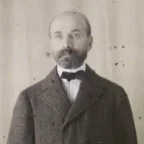
Berenson, Bernard
Butrimonys (Lithuania), 26 June 1865 - Fiesole, 6 October 1959
Bernard Berenson was one of the most influential art historians and connoisseurs of the twentieth century and, during his lifetime, the most authoritative international voice on Italian Renaissance painting. Born Bernhard Valvrojenski into a Jewish family in Lithuania, he later became a central figure in the way European and American scholars, collectors, and museums identified, valued, and interpreted early Italian art.
His family emigrated to Boston in 1875 after severe financial losses, and the surname was changed to Berenson. From early youth he demonstrated extraordinary linguistic ability and broad humanistic interests. He studied at Harvard, graduating in 1887 with training in literature and history, and initially moved toward literary criticism. Financial support from Boston patrons, especially Isabella Stewart Gardner and Thomas Sergeant Perry, enabled extended travel in Europe, where his intellectual focus shifted decisively from literature to painting.
Berenson developed a method of attribution that combined Giovanni Morelli's comparative analysis of recurring anatomical details with a psychological reading of artistic personality associated with John Addington Symonds. This synthesis made his connoisseurship unusually systematic while preserving interpretive nuance, and helped define modern attribution practice in Italian art history.
His major early books established his authority rapidly: The Venetian Painters of the Renaissance (1894), The Florentine Painters of the Renaissance (1896), and Lorenzo Lotto: An Essay in Constructive Art Criticism (1895). He became especially known for rigorous reattribution lists that reduced inflated traditional catalogues and imposed stricter standards of authorship. His monumental The Drawings of the Florentine Painters (1903), later expanded in 1938, remains one of the landmark works of twentieth-century art-historical scholarship.
Berenson's influence extended beyond academia into the international art market. As adviser to Lord Duveen and to major American collectors, including Isabella Stewart Gardner and Henry Walters, he shaped acquisitions that would become foundational holdings in American museums. At the same time, his financial arrangements with the trade, particularly undisclosed commissions linked to authentication, generated lasting controversy over the relationship between scholarship and the art market. His authority was also publicly tested in the famous La belle ferronniere litigation associated with Duveen and Andree Hahn.
In 1900 he married Mary Whitall Smith; in the following years they established themselves at Villa I Tatti near Fiesole, transforming it into a major center of study, collecting, and intellectual sociability. During the Second World War, Berenson remained at I Tatti under increasingly dangerous conditions due to anti-Jewish persecution. His wartime observations were later published in Rumour and Reflection, 1941-1944 (1952).
At his death in 1959, Berenson bequeathed Villa I Tatti, together with its collections, gardens, and extraordinary library, to Harvard University. It became the Harvard Center for Italian Renaissance Studies, one of the most important institutions in the world for Renaissance scholarship. Through his writings, attributions, and institutional legacy, Berenson decisively shaped modern understanding of Italian Renaissance art.
Berger, Samuel
Beaucourt, 1843 - Paris, 1900
Samuel Berger was a French Protestant theologian and one of the founding figures of the modern historical study of the Latin Bible. He taught church history at the Faculté de théologie protestante de Paris, and his scholarship combined the philological rigor of French érudition with a Protestant scholar's close attention to the history of the biblical text as such.
His major work, Histoire de la Vulgate pendant les premiers siècles du moyen âge (Paris, 1893), remains a foundational study of how Jerome's Latin Bible was transmitted, corrupted, and revised across the early medieval West, and it is still cited as a point of departure for the textual history of the Vulgate more than a century after its publication.
Berger's contribution to the study of the Codex Amiatinus was precise and consequential. In examining the recovered original dedication verses transcribed in the anonymous Vita Ceolfridi — the text that Fenton John Anthony Hort had brought to bear on the manuscript's erased dedication — Berger corrected an early reading of the abbot's people as Britonum ("of the Britons") to the correct Anglorum ("of the English"), a small but important emendation for the manuscript's Northumbrian identification. He also noted the comparative textual weakness of the Amiatinus's rendering of Wisdom and Ecclesiasticus, an observation that remains part of the standard account of the manuscript's uneven textual quality across its different books. See the essay on the Codex Amiatinus in this database for further detail.
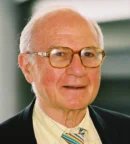
Bertelli, Carlo
Rome, 1930
Italian art historian and former public official, widely recognised as a leading specialist in late antique and medieval art, with significant contributions to conservation, photography as historical evidence, and institutional reform in Italy's cultural heritage management. Bertelli studied literature at the University of Rome (La Sapienza), graduating in 1954, and pursued advanced specialisation at the Warburg Institute in London, where he trained under Pietro Toesca, Otto Pächt, Richard Krautheimer, and Mario Salmi. This interdisciplinary formation equipped him to bridge iconographic analysis with material history, particularly in early Christian and medieval painting. He married Ilaria Toesca, herself an art historian, and was the brother of the historian Sergio Bertelli.
From 1956 to 1977 Bertelli edited entries for Treccani's Enciclopedia dell'arte antica, while serving as inspector at the Istituto Centrale per il Restauro from 1958, focusing on unpublished medieval icons and Roman early medieval painting, including the Madonna di Santa Maria in Trastevere (1961). As director of the Gabinetto Fotografico Nazionale (1963–1973), he elevated photography to a rigorous historical tool, a project crystallised in L'immagine fotografica: 1845–1945 (1979). He subsequently directed the Calcografia Nazionale (1973–1975), merging it into the Istituto Nazionale per la Grafica.
Appointed Superintendent for Artistic and Historical Heritage in Milan and Western Lombardy (1978–1984), Bertelli spearheaded the modernisation of the Pinacoteca di Brera and the critical restoration framework for Leonardo's Last Supper. His tenure emphasised systematic recovery of Lombard medieval sites, aligning administrative duties with the scholarly rigour inherited from Cesare Brandi. These efforts earned him honours including the Sanseverino Prize for his Piero della Francesca monograph and gold medals from Italian cultural ministries.
Transitioning to academia after 1984, Bertelli taught at the University of Lausanne until 1995 and subsequently at the Accademia di Architettura in Mendrisio, Switzerland, as professor emeritus of art history at the Università della Svizzera italiana. His principal monographs include Il ciborio della Basilica di Sant'Ambrogio (1981), Piero della Francesca (1991), Lombardia medievale (2003), and Wolvinio e gli angeli (2006). He also curated the major exhibition Il futuro dei Longobardi (2000). His work integrates paleochristian iconography, Renaissance attribution, and archival photography, and constitutes an essential methodological framework for understanding artists such as the Maestro di Galliano and the broader tradition of Lombard monumental painting.
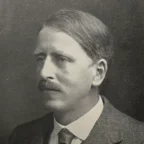
Best, Richard Irvine
Derry, 17 February 1872 – Dublin, 25 September 1959
Richard Irvine Best was an Irish Celtic scholar, bibliographer and civil servant, one of the central figures of early twentieth-century Irish manuscript studies. Largely self-trained, he began his career cataloguing manuscripts at the National Library of Ireland, rising to become its Director from 1924 to 1940. In 1903 he helped found, with Kuno Meyer, the School of Irish Learning in Dublin, and he worked closely for decades with Osborn Bergin on the editing and facsimile publication of early Irish literary manuscripts, including the Book of Leinster and Lebor na hUidre.
Best's decisive contribution to the study of the Book of Dimma was his article "On the Subscriptiones in the 'Book of Dimma,'" published in Hermathena (volume 44) in 1926. By close examination of the manuscript's four gospel colophons, Best demonstrated that in three of them the name Dimma had been written over an erasure, substituted for an earlier scribe's name in a deliberate later alteration, while the intact colophon at the end of Luke preserved the original name Dianchride. The discovery overturned centuries of belief that the book was a seventh-century relic of Saint Crónán's own scribe, and it remains the founding study of the manuscript's modern, critical historiography.
Best was also a formidable bibliographer, compiling successive volumes of the standard Bibliography of Irish Philology and of Printed Irish Literature, works that remained essential research tools for Celtic studies for much of the twentieth century.
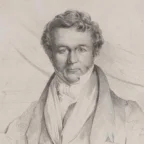
Betham, William
Suffolk, England, 22 May 1779 – Dublin, 26 October 1853
William Betham was an English-born genealogist, antiquary and heraldic official who spent most of his career in Ireland, serving as Ulster King of Arms from 1820. An indefatigable collector, he amassed one of the largest private accumulations of genealogical and manuscript material in nineteenth-century Ireland, much of it later dispersed through sale.
Betham acquired the Book of Dimma sometime before 1826, in the chain of ownership recorded by Trinity College Dublin that runs from the Roscrea priest William Meagher through Henry Monck Mason to Betham himself. He attempted to sell the manuscript at auction as lot 444 on 4 July 1830; it failed to find a buyer at that sale and was purchased directly from him by Trinity College Dublin on 29 March 1836. Betham's own publications, notably Irish Antiquarian Researches (1826–27), are characteristic of the antiquarian scholarship of the period, combining genuine documentary transcription with speculative and often unreliable etymological and historical argument. His chief importance to the study of the Book of Dimma lies not in interpretation but in provenance: he is the last private owner through whose hands the manuscript passed before entering institutional custody.
Bieler, Ludwig
Vienna, 20 October 1906 – Dublin, 2 May 1981
Ludwig Josef Georg Bieler was born in Vienna on 20 October 1906 and educated at the Landstrasser Gymnasium before reading classical philology at the Universities of Vienna, Tubingen, and Munich under Ludwig Radermacher, Otto Weinreich, and Paul Kretschmer. He took his doctorate at Vienna in 1929 with a dissertation on the sixth-century St Samson of Dol — an early sign of the interest in the Latin hagiography of the Celtic-speaking world that would define his career. He remained at Vienna as a lecturer in classical philology through the 1930s.
The day after the Anschluss, on 12 March 1938, Bieler left for Switzerland. He was Catholic and, under the racial categories of the Nuremberg Laws, classified as "Aryan," so his departure was a matter of principle rather than persecution in the narrowest legal sense: he judged, correctly, that a scholar committed to intellectual freedom could not continue to work under National Socialism. His opposition to Nazi ideology led to his suspension and formal expulsion from the university the following month. In 1939 he married Eva Uffenheimer, a Froebel-trained teacher and Jewish refugee from Vienna, and in 1940 the couple settled in Ireland.
Bieler joined the National University of Ireland, teaching palaeography and medieval Latin, fields for which his Viennese training and his early thesis on an Insular saint had prepared him unusually well. Except for a single year, 1947–48, spent at the University of Notre Dame, he remained in Ireland for the rest of his working life, retiring in 1977. In 1954 he declined an offer of a professorship at Graz: Ireland, adopted in flight from Vienna, had become the permanent centre of his scholarly world, and neither the University of Vienna nor any other Austrian institution ever recovered him, notwithstanding his election as a corresponding member of the Austrian Academy of Sciences in 1964.
It was above all Bieler who, in the second half of the twentieth century, established Hiberno-Latin literature as a rigorous field of classical philology rather than an antiquarian sideline of Irish studies. He applied to early medieval Irish Latin texts the same exacting methods of textual criticism that Central European scholarship applied to classical authors, and in doing so brought the subject to international scholarly attention. His output included Theios Aner, a study of the late-antique concept of the divine man, editions such as the Four Latin Lives of St Patrick and, for the Scriptores Latini Hiberniae series of the Dublin Institute for Advanced Studies, The Irish Penitentials (1963).
His culminating achievement was The Patrician Texts in the Book of Armagh (Scriptores Latini Hiberniae X, Dublin Institute for Advanced Studies, 1979), with a contribution by Fergus Kelly — the standard critical edition of Muirchu's Vita, Tirechan's Collectanea, the Liber Angeli, the Additamenta, and the Notulae. Where John Gwynn's 1913 diplomatic edition had transcribed the whole codex, Bieler's edition subjected the hagiographical core of the Patrician dossier to full critical apparatus, translation, and commentary, and it remains the point of departure for all serious work on the texts. On the vexed question of how many hands wrote the manuscript, his judgement — formed primarily from the texts rather than from the letterforms — was that Ferdomnach worked with one or two assistants, an intermediate position between John Gwynn's view of a single scribe and E. A. Lowe's attribution of three.
Bieler died in Dublin on 2 May 1981, having done more than any other twentieth-century scholar to place the critical study of Hiberno- Latin literature on a secure philological footing. The dual itinerary of the Book of Armagh's two great modern editors — an Irish clergyman-scholar born within sight of Trinity College, and a Viennese classicist who found in Ireland the refuge that let his scholarship flourish — is itself a fitting emblem of how thoroughly the field he founded has always depended on exchange across national and confessional lines.
Bietti, Monica (Bietti Favi, Monica)
Florence, 1953
Monica Bietti, known in the academic publications of the early phase of her career as Monica Bietti Favi, was born in Florence in 1953. She graduated in 1978 from the University of Florence with a degree in art history, summa cum laude, under the supervision of Mina Gregori, one of the most authoritative art historians of 20th-century Italy, specializing in 17th-century Lombard and Tuscan painting. Her training with Gregori instilled in Bietti a rigorous method based on documentary analysis and attributionism, a tradition characteristic of the school of Roberto Longhi. It is no coincidence that, after graduation, she received a fellowship at the Roberto Longhi Foundation for Art History Studies in Florence, one of Italy's most exclusive centers for advanced training, which has educated generations of world-class art historians.
In the early phase of her career, Bietti signed her contributions with the compound name Monica Bietti Favi. The article "Gaddo Gaddi: a hypothesis," published in Arte Cristiana, LXXI, no. 694 (1983), pp. 49-52, dates from this period; it presented new documentary evidence supporting the identification of the Florentine painter and mosaicist Gaddo Gaddi, active between the late 13th and early 14th centuries. The article, still cited today in the international critical bibliography, including the entry Taddeo Gaddi in the Dizionario Biografico degli Italiani (Treccani) and studies published by Cambridge University Press, marked her entry into the debate on 14th-century Florentine painting. During this same period, she contributed to the collective publication La Misericordia di Firenze: Archivio e raccolta d'arte (1981), also signed under the name Bietti Favi.
Between 1982 and 1983, Bietti served as director of the Civic Museum of Modena, a position that conferred upon her, at an early stage, management and curatorial responsibilities of national significance. This was a transitional phase between her academic and institutional careers, which would be definitively consolidated in 1983, the year she joined the Ministry of Cultural Heritage and Activities.
From 1983 onward, Bietti spent her entire career as an art historian with the Superintendence of Archaeology, Fine Arts, and Landscape for the metropolitan city of Florence and the provinces of Pistoia and Prato. Starting in 1986, she oversaw the preservation of the Val di Sieve region, the city of Florence, and the Municipal Museums, a role that involves not only the supervision of works of art but also the oversight of construction projects in areas of historical and artistic interest. From 2000 to 2015, she directed the Museum of the Last Supper at Ognissanti, which houses one of Domenico Ghirlandaio's absolute masterpieces, the Last Supper from 1480, as well as frescoes by Botticelli.
One of Bietti's most significant institutional achievements was the reopening and revitalization of the Casa Martelli Museum, a Florentine noble residence that had been closed for decades. Bietti coordinated the complete restoration, cataloging, and inventory of the collections, leading to the museum's public opening in 2009. Casa Martelli houses paintings by Piero di Cosimo, Pontormo, Luca Giordano, and Salvator Rosa, and its restoration was considered one of the most successful projects to transform a historic home into a museum in Florence during the 2000s.
Since 2004, Bietti has served as director of the Medici Chapels Museum, the monumental complex attached to the Basilica of San Lorenzo that houses the Medici tombs designed and partially sculpted by Michelangelo, the New Sacristy with its famous allegories of Day, Night, Dawn, and Twilight, and the magnificent Chapel of the Princes. In this capacity, she has curated internationally acclaimed exhibitions, including the one dedicated to Ferdinando I de' Medici (2009), marking the 400th anniversary of the Grand Duke's death, and the one on Leo X (2012), on the 500th anniversary of his election to the papal throne, organized in collaboration with Nicoletta Baldini.
Since 2010, she has also been entrusted with the stewardship of the Laurenzian Complex, the Basilica of San Lorenzo, the Laurentian Library, and the adjoining museums, one of the world's most concentrated collections of artistic and literary heritage.
The catalog of exhibitions curated by Bietti is extraordinarily rich and diverse. Among the most important exhibitions are: Saved from the Waters. Works of Art Restored and to Be Restored Thirty Years After the Flood (Florence, 1996), dedicated to the recovery of the artistic heritage flooded in 1966; From Pontormo & for Pontormo (Florence, 1996); Death and Glory. Medici Funeral Apparatus for Philip II of Spain and Margaret of Austria (Florence and Valladolid, 1999); and the traveling exhibition Pinocchio from Birth to the Present, which toured six Japanese national museums in 2004-2005 before being presented at Palazzo Pitti in 2006-2007. She also organized the international conference Around Filippo Lippi's Martelli Annunciation. Reflections Following the Restoration, whose proceedings were published by Mandragora.
Bietti has overseen major restorations of works and spaces under her care. These include the restoration of Sagrestia Nuova by Michelangelo, which restored the legibility of the complex's marbles and frescoes, and numerous interventions on the paintings in the Ognissanti Last Supper and the Medici Chapels.
Her bibliography includes contributions to exhibition catalogs, specialized journals, and monographs. Among her major works are: Ferdinando I de' Medici (1549-1609) (exhibition catalog, 2009); The Casa Martelli Museum in Florence; On Filippo Lippi's Martelli Annunciation; the anthology Grand Duke Cosimo I de' Medici and the Dynastic Political Program in the San Lorenzo Complex in Florence (Florence University Press), which she edited; and the very recent San Lorenzo in Florence: the Basilica, the Museums, the Library (Mandragora, 2026), previewed at the Opera Medicea Laurenziana.
In 2018, she was elected Honorary Academician of the Accademia delle Arti del Disegno di Firenze, the oldest art academy in the Western world, founded in 1563 by Cosimo I de' Medici and Giorgio Vasari. She has also received the Award from the National Museum of Women in the Arts in Washington, D.C., the title of Grand Dame of the Supreme Order of the Knights Hospitaller of Saint Martin de Tours (March 10, 2010), and the "Pinocchio di Carlo Lorenzini" Award in 2011. She has been a supporter of Advancing Women Artists (AWA) since the association's founding in 2006, contributing to the recovery of works by women artists from the storage facilities of Florentine museums.
Bigaroni, Marino
Izzalini di Todi, 27 March 1919 - Santa Maria degli Angeli, 4 April 2016
Born Luigi Bigaroni in the hamlet of Izzalini near Todi, he entered the Order of Friars Minor in 1934, taking the religious name Marino, and took a degree in classical letters at the Sapienza University of Rome. Ordained priest, he celebrated his first Mass on 4 July 1943 in the parish church of his native Izzalini. For decades he taught classical literature in Franciscan secondary schools, notably at the liceo of Assisi, before retiring from teaching on grounds of age.
Freed from the classroom, Bigaroni devoted his final decades to the Biblioteca Francescana at the Chiesa Nuova in Assisi, which he directed as librarian and expanded from some 4,000 to 24,000 volumes, all catalogued and eventually computerised — turning a modest conventual collection into a working research library for Franciscan studies. From this base he produced more than forty essays and editions on the topography, architecture and cult sites of Franciscan Umbria, among them Montesanto di Todi da monastero a rocca dell'Albornoz (1981), San Damiano - Assisi, la chiesa prima di San Francesco (1983), Contributi per la biografia ed il culto di Iacopone da Todi (1985), La Chiesa di San Giorgio in Assisi ed il primo ampliamento della cinta medievale (1990), and La "Domus comunis Assisii" (2001).
His most consequential editorial work was Compilatio assisiensis, the collection of testimony by Brother Leo and his companions on the life of Francis, transmitted in a Perugia manuscript and previously circulated under titles such as Legenda Antiqua and Legenda Perugina; Bigaroni's first edition appeared in 1975, followed in 1992 by a complete critical edition with facing Italian translation that remains a standard reference among the early Franciscan sources. He is also credited with recovering the melody transmitted for the Cantico di frate Sole. Alongside Hans-Rudolf Meier and Elvio Lunghi, he co-authored the standard modern monograph La basilica di Santa Chiara in Assisi (Quattroemme, Perugia, 1994), contributing the reconstruction of the church's documented origins and building history on which the current scholarly chronology of the basilica rests. In the aftermath of the 1997 earthquake he took part in explorations beneath Santa Chiara that brought to light a wooden coffin associated by tradition with the bodies of Francis and Clare; study of the discovery remained unfinished at his death in 2016.
Bikiaris, Dimitrios Nikolaos
Milea, Larisa, 20 July 1965
Dimitrios Nikolaos Bikiaris was born on 20 July 1965 in Milea, Larisa, Thessaly, Greece. He obtained his degree in chemistry and then his Doctor of Philosophy from the Aristotle University of Thessaloniki in 1988, with a thesis on the synthesis of diepoxy derivatives and their application in tuning the properties of polyesters — doctoral work that established the core vocabulary of his scientific career: a vocabulary rooted in the synthesis and characterisation of polymeric materials across a remarkably wide range of applications, from industrial plastics to pharmaceutical drug carriers, from biodegradable packaging to the binding media of Byzantine frescoes.
Bikiaris became Assistant Professor in the Chemistry Department of the Aristotle University of Thessaloniki in 2000 and has since risen to the rank of full Professor, currently holding the chair of Professor of Polymer Chemistry and Technology and directing the Laboratory of Chemistry and Technology of Polymers and Colors. The laboratory name — combining polymers and colours — reflects a research identity that from the outset brought together the synthesis and characterisation of macromolecular materials with the scientific analysis of colouring substances, a combination that made Bikiaris a natural partner for the Byzantine heritage science programme at Ormylia. In the second half of the 1990s, working simultaneously at the Aristotle University and at the newly established Diagnostic Research Centre for Icons at the Sacred Convent of the Annunciation in Ormylia — his institutional affiliation in these publications given as the Diagnostic Centre for the Research and Study of Byzantine Hagiography — he joined the founding team of the Ormylia Art Diagnosis Centre alongside Sister Daniilia and Sophia Sotiropoulou.
The first and most methodologically influential of his contributions to Byzantine heritage science appeared in 2000: "Ochre-differentiation through micro-Raman and micro-FTIR spectroscopies: application on wall paintings at Meteora and Mount Athos, Greece," published in Spectrochimica Acta Part A: Molecular and Biomolecular Spectroscopy, with Bikiaris as first author and co-authored by Sister Daniilia, Sotiropoulou, Katsimbiri, Pavlidou, Moutsatsou, and Chryssoulakis. The most widely used inorganic pigments of Byzantine and post-Byzantine painting are earth pigments called ochres — red and yellow ochres, limonite, goethite, raw and burnt sienna, caput mortuum, and hematite. The paper proposed a technique of differentiation allowing one to distinguish among all the different kinds of iron oxides used as pigments, calculating ratios between the main spectroscopic peaks from micro-Raman spectra and confirming elementary composition through SEM-EDS. This paper is today one of the most widely cited references in the entire literature of Byzantine wall painting analysis, appearing in the bibliography of virtually every subsequent study that employs vibrational spectroscopy to characterise iron oxide pigments in Orthodox sacred art: its methodological contribution was to transform the identification of ochre-family pigments from a qualitative art-historical judgement into a quantitative, reproducible chemical procedure. In the same year Bikiaris was listed among the authors of the landmark Protaton study — the systematic technical examination of the frescoes attributed to Manuel Panselinos — published in the Journal of Cultural Heritage, which established the mixed binding media technique as the foundation of Palaiologan monumental workshop practice.
Bikiaris extended the analytical chemistry of his Byzantine work into the study of post-Byzantine and modern Greek painting, including an investigation of old varnishes from six paintings in the collection of the Teloglion Foundation of Arts at the Aristotle University of Thessaloniki, and a diagnostic study of the artistic technique and materials of Nikolaos Gyzis — the nineteenth-century Academic painter — published in 2008 in collaboration with Sotiropoulou and others.
While his contributions to Byzantine heritage science represent a significant and internationally influential strand of his work, they form only a fraction of a scientific output of extraordinary scale and range. His research interests include the synthesis and characterisation of polyesters, copolymers, biobased polymers, composites, and nanocomposites, as well as 3D printing, polymer recycling, the modification of natural polymers, the use of polymers for contaminant removal, microplastics, and the application of new biocompatible polymers in tissue engineering and pharmaceutical technology. A particular focus is the synthesis and characterisation of novel polymers from monomers derived from biomass — especially polyesters from FDCA (furan-2,5-dicarboxylic acid), bio-derived polymers that offer a potential substitute for petroleum-based PET with improved barrier properties and full biodegradability — and the preparation and optimisation of biodegradable polymeric drug carriers for sustained release.
The scale of Bikiaris's scientific output places him among the most internationally productive chemists in Greece: more than 550 papers in international scientific journals, over 25,000 citations, an h-index of 85 (Scopus), four chapters in international scientific books, 15 international patents, and participation in more than 60 research projects. He is included in the top 2% of cited scientists worldwide and ranks first at the Aristotle University of Thessaloniki in the Stanford University global ranking of scientists. In 2017 he was awarded the Prize of Excellence in Research on Natural Sciences by the Aristotle University of Thessaloniki. He serves as Section Editor-in-Chief for the Biobased and Biodegradable Polymers section of the MDPI journal Polymers and sits on the editorial boards of several international publications in polymer chemistry and materials science.
Bikiaris's position in the intellectual landscape of Byzantine heritage science is that of the materials chemist whose early engagement with the Ormylia team provided the quantitative, reproducible analytical backbone for a field that was, in the late 1990s, still finding its methodological footing. His ochre-differentiation paper in particular has achieved the status of a reference standard, cited reflexively in Byzantine painting analyses across Europe, Russia, the Balkans, and the Middle East wherever iron oxide pigments are identified by vibrational spectroscopy. The connection between his primary polymer chemistry programme and his heritage science work is not incidental: the chemistry of binding media in Byzantine frescoes — egg proteins, animal glues, oil glazes — involves exactly the kind of macromolecular characterisation that his laboratory specialises in, and his ability to bring the full technical arsenal of a modern polymer chemistry department to bear on medieval sacred art gave the Ormylia team a scientific depth that few comparable heritage institutions could match.
Binaghi Olivari, Maria Teresa
d. 20 August 2021
Maria Teresa Binaghi Olivari was an Italian art historian and heritage official whose career was bound up with the study and conservation of Lombard art, and in particular with the Pinacoteca di Brera and the wider Milanese Soprintendenza. A word of caution at the outset: biographical documentation on her is thin. The fullest single source is the obituary Franco Moro published in Il Giornale dell'Arte in September 2021, supplemented by her own professional self-description and her bibliographic footprint. Her date and place of birth are not recorded in the sources available, and this gap is best flagged rather than filled with conjecture.
By her own account, Binaghi Olivari served as a funzionario storico dell'arte (art-historical officer) at the Soprintendenza per i Beni Artistici e Storici in Milan from 1969 to 1998, rising eventually to the rank of soprintendente aggiunto (deputy superintendent) over what her obituarist counted as more than forty years of service. Moro records that she trained under, and was shaped by, the examples of Gian Alberto Dell'Acqua, Franco Russoli, and Carlo Bertelli - three dominant figures in mid-twentieth-century Milanese museum culture and Brera scholarship. That lineage situates her firmly within the Brera-Poldi Pezzoli axis of Lombard connoisseurship rather than the academic university system.
Her published interests were unusually wide, spanning roughly six centuries, though the center of gravity lay in the Lombard Renaissance. According to Moro, her earliest work, from 1965, addressed the thirteenth-century sculptor Guido Bigarelli da Como; she then turned to Bernardino Luini - a projected monograph that, tellingly, she never brought to completion - and to the Lombard woodcarvers (intagliatori). In her later years her attention shifted toward subjects often neglected as marginal: the history of Milanese embroiderers and of the first museum restorers. One fruit of this late direction was her 2018 identification, in the parish church of Caglio above Lake Como, of four canvases painted in 1776 by the young Andrea Appiani - the pursuit of a restorer's biography leading to an attributional discovery.
Her most cited contributions belong to the study of painting in Milan around 1500. She was among the authors of the landmark catalogue Zenale e Leonardo. Tradizione e rinnovamento della pittura lombarda (Museo Poldi Pezzoli, 4 December 1982 - 28 February 1983), where her attributional arguments - for instance connecting works to Bernardo Zenale's circle and tracing Bramantino's and Luini's inflections in provincial cycles such as those at Gravedona - are still engaged with by specialists today. She also wrote on the artistic and cultural situation of Milan under French occupation, in her essay I francesi a Milano (1499-1525): arti figurative e moda (1979), and, reflecting her interest in textiles, co-edited studies of lace and its symbolism with Alessandra Mottola Molfino (I pizzi: moda e simbolo). She authored a well-known guide to the Brera picture gallery (The Pinacoteca of Brera, with a preface by Carlo Bertelli). In 1992 she supervised the celebrated restoration of Luini's Pelucca frescoes, carried out by Pinin Brambilla. Decades on, she was still active as a member of the working group for the 2010-11 exhibition Il Rinascimento nelle terre ticinesi. Da Bramantino a Bernardino Luini at Rancate.
Moro's obituary is candid about a professional disappointment - that the top superintendency she was equipped for never came - and warm about her personality, remembering her sharp wit and the cropped, jaunty haircut by which colleagues had known her since the 1980s. The portrait that emerges is of a rigorous heritage professional who did much of her most valuable work on precisely the unglamorous, archival edges of the discipline: restorers, embroiderers, and provincial attributions.

Bioletti, Susie
active early 21st century
Susie Bioletti is a conservator and conservation scientist who has led preservation and conservation work at the Library of Trinity College Dublin, with particular responsibility for the library's collection of early Irish manuscripts. Her work sits at the intersection of conservation practice and technical art history, applying non-destructive scientific analysis to questions that have traditionally been addressed only through connoisseurship or documentary inference.
With Allyson Smith, Bioletti carried out pigment analysis of the Book of Dimma and related pocket gospel books as part of Trinity's early Irish manuscripts project of the 2010s, published as "Shining a Light on the Pigments of Early Irish Manuscripts" in An Insular Odyssey: Manuscript Culture in Early Christian Ireland and Beyond (2017). Their analysis overturned the long-held assumption that the intense blue found in these manuscripts derived from imported lapis lazuli, showing instead that the illuminators achieved a comparable effect with an indigo blue mixed with gypsum — a finding that substantially revised scholarly understanding of the materials, trade networks and technical resourcefulness of early Irish scriptoria.
Bischoff, Bernhard
Altendorf (Altenburg), 20 December 1906 - Munich, 17 September 1991
Bernhard Bischoff was born on 20 December 1906 in Altendorf, an administrative division of Altenburg in Thuringia, and died in Munich on 17 September 1991. He was the son of Emil Bischoff and Charlotte von Gersdorff, who died giving birth to him. He received a Pietistic education during his youth, a background that shaped both his ethical seriousness and his familiarity with the Christian textual tradition from which medieval Latin culture drew its deepest sustenance. He married Hanne Oehler in 1935 and lived the majority of his life in Bavaria.
Bischoff studied under Paul Lehmann at the Ludwig-Maximilians-Universitat Munchen, the third successive holder of the chair in Medieval Latin Philology inaugurated by Ludwig Traube. The Munich tradition of palaeography thus formed an unbroken three- generation lineage from Traube to Lehmann to Bischoff. Each generation deepened the science established by its predecessor: Traube created the philological foundations, Lehmann built the bibliographical infrastructure of medieval library catalogues, and Bischoff developed comprehensive control of the manuscript record itself.
Before completing his doctorate in 1933 under Lehmann, Bischoff was recruited by E. A. Lowe as an assistant for Codices Latini Antiquiores (CLA). He worked on the project until 1972 and conceived his later ninth-century cataloguing work as its continuation beyond CLA's chronological boundary. Lowe's project covered pre-ninth-century manuscripts; Bischoff's contribution focused on the Carolingian period, the most productive era of Latin manuscript production before the twelfth century. In 1982 he received the gold medal of the Bibliographical Society and reflected publicly on this formative collaboration.
From 1947 until retirement in 1974, Bischoff held the chair for Medieval Latin Philology at Munich, succeeding his teacher Lehmann. Between 1953 and 1975 he trained generations of medievalists from across Europe and North America in manuscript methods. He was especially renowned for mastery of Carolingian manuscripts, and students who studied with him in Munich understood they were entering an unusually exacting and influential palaeographical school.
Among those shaped by his teaching were Rosamond McKitterick, who studied with him in 1974-75 before finishing her Cambridge doctorate, David Ganz, and a wide international network that transmitted Munich methods into universities and research institutes across Britain, Ireland, Germany, France, Italy, and North America. In 1953 Bischoff was elected to the central board of the Monumenta Germaniae Historica (MGH), contributing especially to the Antiquitates series.
His first major independent achievement was Die sudostdeutschen Schreibschulen und Bibliotheken in der Karolingerzeit: Part I on Bavarian dioceses (1940; revised 1960 and 1974) and Part II on predominantly Austrian dioceses (1980). This work established a systematic map of Carolingian scriptoria and libraries in the southeast German sphere, including Regensburg, Freising, Salzburg, Augsburg, and Passau. The method combined close analysis of hands, localisation of undated manuscripts, and reconstruction of scriptorial networks as historical geography.
The three volumes of Mittelalterliche Studien (1966, 1967, 1981) represent the broadest expression of his scholarship. These essays range across Latin exegesis, Carolingian transmission of the Fathers, diffusion of Isidore, Greek learning in the early Middle Ages, Insular scholarship on the Continent, Merovingian minuscule, Alcuin and liturgical reform, and localisation of major classical and patristic manuscripts. Two studies were especially influential: his work on Greek knowledge in the Carolingian world and "Wendepunkte in der Geschichte der lateinischen Exegese im Fruhmittelalter" (Sacris Erudiri 6, 1954).
Bischoff's handbook Latin Palaeography: Antiquity and the Middle Ages, translated into English by Daibhi O Croinin and David Ganz and into French by Jean Vezin and Hartmut Atsma, became the standard introduction to the history of Latin script. It integrates technical script analysis with the cultural history of books, schools, churches, and courts, moving from writing materials and codicological form to Roman, national, Carolingian, Gothic, and humanist script traditions. The English edition appeared in 1990, one year before his death.
His largest late project was the Katalog der festlandischen Handschriften des neunten Jahrhunderts (mit Ausnahme der wisigotischen), the continental ninth-century continuation of CLA. Bischoff worked over decades to examine nearly every relevant manuscript witness, ultimately documenting close to 7,000 codices. The four published volumes appeared in 1998, 2004, 2014, and 2017, with posthumous editorial completion by Birgit Ebersperger.
This catalog transformed the field. References to the relevant Katalog entry became standard practice in Carolingian manuscript scholarship because Bischoff's descriptions provide the baseline for dating, localisation, and scriptorial comparison. His photographic memory and long direct experience in libraries enabled him to identify scribal hands, reunite membra disiecta, and test hypotheses at a level of precision rarely equaled.
His books and papers are now divided principally between the Bayerische Staatsbibliothek in Munich, the MGH, and the Universitatsbibliothek Leipzig. The Leipzig library preserves his personal research collection of approximately 5,700 volumes.
The English volume edited and translated by Michael Gorman (Cambridge, 1994) assembled seven of Bischoff's major Carolingian essays, including studies of cultural transmission from the sixth to ninth centuries, the court libraries of Charlemagne and Louis the Pious, and centres of learning beyond court. These essays remain fundamental for reconstructing Carolingian intellectual infrastructure from manuscript evidence.
Bischoff received extensive international recognition: membership in the Bavarian Academy of Sciences (1956), Royal Irish Academy (1957), Medieval Academy of America (1960), German Archaeological Institute (1962), American Academy of Arts and Sciences (1968), and American Philosophical Society (1989), as well as honorary doctorates from Dublin, Oxford, Cambridge, and Milan. The Dublin honor had particular symbolic significance given his sustained work on Insular script and Irish learning on the Continent.
Bischoff's historical position is exceptional: he was not only the leading Latin palaeographer of the twentieth century, but the scholar who gave Carolingian studies its most reliable manuscript foundation. Because Carolingian civilisation is known primarily through surviving codices, his command of script, transmission, and localisation profoundly influenced neighbouring disciplines including medieval theology, liturgy, philology, and the history of learning.
For historians of medieval art and illuminated manuscripts, his work remains indispensable at every level. The Schreibschulen established key scriptorial geographies; Latin Palaeography supplied analytical tools; Mittelalterliche Studien clarified intellectual contexts; and the ninth-century Katalog became the practical entry point for identifying and dating Carolingian codices. No sustained work on Carolingian manuscripts, illuminated or otherwise, can proceed without his framework.
Blume, Dieter
Hildesheim, 1952
Dieter Blume is a German art historian of medieval and Renaissance painting and sculpture. His work has concentrated on the functions of images, on the formation of visual traditions, and on the way religious orders and communes used painted programmes to state who they were.
He studied art history, history and ethnology at the Universität Heidelberg and took his doctorate there in 1981 with a dissertation on the painted programmes in the choirs of Franciscan convents in Italy down to the middle of the fourteenth century, published as Wandmalerei als Ordenspropaganda (1983). He completed his habilitation at the Ludwig-Maximilians-Universität in Munich in 1991. From 1994 to 2018 he was professor of medieval art history at the Friedrich-Schiller-Universität Jena, and he has also taught at Munich, Frankfurt, Heidelberg, Zurich and Johns Hopkins University in Baltimore.
His habilitation, on the history of constellation imagery, appeared in 2000 as Regenten des Himmels, and it led to a long research project on star imagery and science in pictures (from 1996) and to the two volumes of Sternbilder des Mittelalters (2012, 2016). He took part in the Michael of Rhodes project at MIT (2002–2009), and with Matthias Werner he led the research group that prepared the Thuringian state exhibition Elisabeth von Thüringen – Eine europäische Heilige (2007). His later work includes a study of Petrus Berchorius and the ancient myths (2021) and research on the reception of Ovid in Trecento Italy.
With Dorothee Hansen he published the article Agostino pater e praeceptor di un nuovo ordine religioso (1992) on the pictorial propaganda of the Augustinian hermits, which is the study behind the dating of the Fabriano frescoes of the Maestro di S. Agostino to before about 1280 and their association with a refectory.
Bocchi, Francesco
Florence, 1548 – Florence, 1618
Francesco Bocchi was a Florentine writer and critic whose Le bellezze della città di Fiorenza (1591) is among the earliest works in the modern genre of the art guidebook, describing the paintings, sculptures and buildings of Florence church by church and quarter by quarter for the benefit of the cultivated visitor. Trained in Florence and active in its literary academies, Bocchi brought to the description of art a rhetorical and theoretical seriousness unusual for a topographical guide, treating individual works as objects worthy of sustained critical argument rather than mere itemised notice.
That seriousness is most fully realised in his earlier Eccellenza della statua del San Giorgio di Donatello (1584), a monographic treatise devoted entirely to a single sculpture at Orsanmichele — one of the first instances in European literature of a whole critical essay built around one work of art. Bocchi's Bellezze was substantially expanded, corrected and brought up to date by Giovanni Cinelli Calvoli in a much enlarged 1677 edition, commonly cited as "Bocchi–Cinelli," which nearly doubled the original text with new documentary and topographical material and became the standard reference edition for the following century. Because it records the location, condition and attribution of works before the redecorations, demolitions and losses of later centuries, the Bocchi–Cinelli guide remains a primary source for reconstructing the original disposition of Florentine church decoration, including campaigns that no longer survive in situ.
Bogaert, Pierre-Maurice
active late 20th-21st century
Pierre-Maurice Bogaert is a Belgian Benedictine monk of the abbey of Maredsous and one of the leading contemporary historians of the Latin Bible in the Middle Ages. Long associated with the Revue Bénédictine, the scholarly journal published by his own monastic community and a central venue for research on patristic and early medieval biblical scholarship, he has built a career on the close study of the biblical text's transmission, translation, and canonical status across the Latin West.
His work ranges widely across the history of the Vulgate and the Vetus Latina, with particular attention to the Book of Baruch and to the formation of the biblical canon in Latin Christianity. His synthetic chapter, "The Latin Bible, c. 600 to c. 900," in The New Cambridge History of the Bible (Cambridge, 2013), is among the most authoritative recent overviews of the subject and situates individual manuscripts, including the Codex Amiatinus, within the broader currents of early medieval biblical scholarship.
Bogaert's chapter is particularly valuable for its account of the three principal Latin psalter traditions — the Roman, the Gallican, and Jerome's iuxta Hebraeos — and of the Amiatinus's position among them as a rare and imperfect witness to the Hebraicum version, a distinction frequently blurred in general literature on the manuscript. See the essay on the Codex Amiatinus in this database for the fuller discussion.
Bologna, Ferdinando
L'Aquila, 27 September 1925 – Ocre, 3 April 2019
Ferdinando Bologna was one of the greatest Italian art historians of the twentieth century, a student of Pietro Toesca and a collaborator of Roberto Longhi, whose career spanned over sixty years across the fields of medieval and modern art and the theory of art historiography, always characterized by philological rigor and a broad historical perspective.
Born in L'Aquila on September 27, 1925, Bologna earned his degree in Rome under the guidance of Pietro Toesca, the great systematizer of medieval Italian painting, from whom he absorbed the attribution method based on rigorous stylistic analysis and archival documentation. At just twenty-five years old, in 1950—the very year of its founding—he joined the editorial staff of the journal Paragone, established by Roberto Longhi as an instrument of cultural struggle and the renewal of Italian art historiography. His association with Longhi was decisive: Bologna absorbed his ability to combine philology and critical sensibility, but over time developed an independent vocation for the historical-social analysis of art, distancing himself from his mentor's pure aesthetics in favor of an interpretation more materialistically rooted in the conditions of production and patronage.
After a brief stint as a young official at the Superintendency of Naples—a city that would remain at the center of his interests throughout his life—Bologna rapidly advanced through the university ranks, becoming a full professor of Medieval and Modern Art History at the University of Naples in 1965. He later taught at the universities of Salerno, Messina, and Siena, where he was among the founders of the School of Specialization in Art History established by Giovanni Previtali. In 1984, he assumed the chair of Medieval and Modern Art History at the University of Rome Tor Vergata, of which he was one of the founders, holding that position until his retirement and remaining professor emeritus until his death. The city of Naples conferred upon him honorary citizenship in 1997, an extremely rare honor that attests to the deep bond between the scholar and the southern region he had loved most.
Bologna's most enduring contribution to medieval studies is undoubtedly La pittura italiana delle origini (1962, reprinted in 1978), a seminal work in which he reconstructs, with a broad perspective, the roots of the Italian pictorial tradition, from early medieval cycles to the emergence of the Romanesque and Proto-Gothic styles, situating Italian painting within the broader context of the late medieval Mediterranean. This is complemented by crucial studies on the Angevin court of Naples—the volume I pittori alla corte angioina di Napoli (1969) remains an indispensable reference for anyone studying 14th-century art in southern Italy—and on the relationship between Naples and the major Mediterranean routes of painting, analyzed in the volume Napoli e le rotte mediterranee della pittura (1977). Also significant were his contributions on Giotto (Novità su Giotto, 1969) and on Simone Martini, of whom he presented a historiographically more accurate portrait than the prevailing interpretations.
A common thread runs through Bologna's entire scholarly output: the historiographical vindication of the art of southern Italy, traditionally neglected by criticism centered on Florence and Rome. His study of the ceiling of the Sala Magna at the Steri in Palermo (The Ceiling of the Sala Magna at the Steri in Palermo and Sicilian Feudal Culture in the Late Middle Ages, 1975, now in its fourth edition) is a paradigmatic example of this approach: Bologna decodes the complex figurative program of the 14th-century ceiling as a mirror of Sicilian feudal culture at the moment of its decline, interweaving art history, political history, and the history of mentalities with a methodology that was pioneering at the time. Similarly, his studies on Francesco Solimena (1958), on Roviale Spagnolo and 16th-Century Neapolitan Painting (1959), and on Gaspare Traversi in the European Enlightenment (1980) demonstrate a constant focus on modern Neapolitan art, in the conviction that it deserved the same critical standing reserved for the northern schools.
Bologna was also a theorist of historiographical method, author of some of the most stimulating contributions on the problem of art history as a discipline. In the volume From the Minor Arts to Industrial Design: History of an Ideology (1972), he investigated the genesis of the concept of "decorative arts" and its ideological function within the capitalist system, anticipating issues that would become central to the international debate of the 1980s. With Methods of Studying Italian Art and the Methodological Problem Today (1979, for Einaudi's Storia dell'arte) and La coscienza storica dell'arte d'Italia (1982), he took a clear stand against what he called Warburgian-derived iconological "mentalism"—the, in his view, casual use of iconology as an interpretive key independent of the material history of the works. He edited the ambitious UTET series Storia dell'arte in Italia (eight volumes, 1980–1988), which remains a standard reference work in Italian university libraries.
In the 1990s, Bologna explored the theme of naturalism in painting with the volume L'incredulità del Caravaggio e l'esperienza delle "cose naturali" (1992), in which he interpreted Caravaggio's realism not as an individual aesthetic choice but as a response to a collective cultural need of post-Tridentine Catholicism, rooted in the tangible concreteness of Franciscan preaching and in the Lombard tradition of observing nature. He also curated the exhibition Battistello Caracciolo and Early Naturalism in Naples (1991), a further contribution to the appreciation of the Neapolitan Caravaggio period. Ferdinando Bologna passed away on April 3, 2019 in Ocre, Abruzzo, at the age of ninety-four, leaving behind a scientific library of extraordinary scope and a school of students who have continued his southern-focused approach to the history of Italian art.
Bonaini, Francesco
Livorno, 20 July 1806 – Collegigliato (Pistoia), 28 August 1874
Francesco Bonaini was an Italian jurist, legal historian and archivist, the effective founder of the modern Italian state archive system and the theorist of the metodo storico that still governs archival arrangement in Italy. Born at Livorno in 1806 to Domenico Bonaini, a broker from a converted Jewish family, and Giuseppa Carboni, daughter of the captain of the port, he was directed towards an ecclesiastical career and studied theology together with canon and civil law at the University of Pisa, graduating in both laws in 1825 and in theology in 1826. He was invested with the second chair of canon law in the university's theological college in the same year and held it from 1827, teaching first canon law and afterwards the history of law.
His lasting achievement lies in the archives. Bonaini was the architect and first director of the Archivio di Stato di Firenze, established in 1852, and subsequently superintendent of the Tuscan archives as a whole. Against the eighteenth-century habit of rearranging documents by subject, he insisted that a collection must be ordered according to the way it had actually accumulated: each fund is indivisible and must faithfully reflect the structure and the history of the body that produced it. This principle of provenance, which he called the metodo storico, made the history of institutions the precondition of archival work and became a point of reference for generations of archivists in Italy and abroad. He died in 1874 in a health facility at Collegigliato, near Pistoia.
For the study of Trecento painting Bonaini matters above all as the editor of Memorie inedite intorno alla vita e ai dipinti di Francesco Traini e ad altre opere di disegno dei secoli XII, XIII e XIV (Pisa, 1846), in which he published payment records from the Camposanto of Pisa. Among them was the entry of 3 October 1377 settling the balance due to a "maestro Andrea di Firenze" for painting the story of San Ranieri. That notice detached the Camposanto cycle from the Sienese masters to whom Vasari had assigned it and gave art history its first firm documentary hold on the painter now known as Andrea di Bonaiuto; the identification was completed by Gaetano Milanesi in 1878 and confirmed by Innocenzo Taurisano in 1916.
Boskovits, Miklós
Budapest, 1935 – 2011
Hungarian-born Italian art historian renowned for his rigorous scholarship on Tuscan painting from the Duecento through the early Trecento, establishing himself as a pivotal figure in the attribution of anonymous masters and the refinement of chronologies of Sienese and Florentine primitives. Born in Budapest on October 11, 1935, Boskovits fled Hungary amid the 1956 revolution and settled in Italy, where he pursued classical studies and art history at the Università Cattolica del Sacro Cuore in Milan. Working within the intellectual legacy of Pietro Toesca and under the influence of Cesare Brandi, he developed a method that blended connoisseurship, archival rigour, and close stylistic analysis. He later held a professorship at the same university, where he taught courses on Giotto and the Florentine primitives.
Boskovits revolutionised attributions in medieval Tuscan painting and worked in close collaboration with Luciano Bellosi as one of the foremost experts on the period. Their analyses underpinned the reattribution of Cimabue's Castelfiorentino Madonna (c. 1283–1284), distinguishing it from Duccio's Crevola Madonna through nuanced comparisons of drapery, halo treatment, and iconographic detail. His seminal article Su Niccolò di Buonaccorso, Benedetto di Bindo and Sienese Painting in the Early Fifteenth Century (Paragone, 1980) dissected Trecento Sienese developments, while broader studies on Bartolomeo Bulgarini and Niccolò di Buonaccorso clarified workshop practices and stylistic evolutions in the aftermath of the Black Death. His oeuvre emphasised the interplay of Florentine innovation — Giotto's naturalism — with Sienese Gothic elegance, reshaping understandings of figures such as the Master of the Bambino Vispo.
As professor emeritus at the Università Cattolica, Boskovits contributed to catalogues for major exhibitions and institutions, influencing the restoration and museum display of Duecento–Trecento panels. His methodology bridged Brandi's restoration theory with the iconographic precision associated with Carlo Bertelli, as seen in collaborative contexts on Lombard and Sienese heritage. His multi-volume Italian Paintings before 1400 for the National Gallery of Art in Washington remains a fundamental reference tool. He died in 2011, leaving a corpus that continues to guide scholars navigating the anonymous masters of medieval Tuscany.
Bottari, Stefano
Fiumedinisi, 6 March 1907 - Bologna, February 1967
Stefano Bottari was an Italian art historian and critic, the leading twentieth-century interpreter of Norman and Swabian art in Sicily and the Italian South, and — at the end of his life — of Nicola Pisano.
He was born at Fiumedinisi, in the province of Messina, on 6 March 1907, and remained attached throughout his life to the nearby village of Itala, where he carried out some of his earliest fieldwork: his first publication, in 1931, concerned figured plaster fragments of Arab-Norman work found there. He began his studies with a course in architecture at the University of Messina before transferring to letters at Catania, where he graduated on 5 November 1931 with a thesis on Michelangelo.
The architectural training is not incidental. It shows in everything he later wrote about buildings — the Norman churches of Sicily and Calabria, the cathedral of Messina, the Swabian castles — where the analysis is structural before it is decorative, and where plan and section carry as much argument as ornament.
His first books were not monographs but methodological essays: La critica figurativa e l'estetica moderna (Bari, 1935) and I miti della critica figurativa (Messina, 1936). The lineage here runs from Benedetto Croce and from Matteo Marangoni, and it commits him early to a position — that the critical act and the historical act are the same act — which he never abandoned.
The corollary was a lifelong concern with teaching. His Storia dell'arte (Milan: Principato, 2 vols., 1937-40) became one of the most widely used Italian secondary-school manuals of its generation and was still being reissued and expanded twenty years later, as Storia dell'arte italiana (3 vols., 1954-57). He wrote repeatedly on the method and the efficacy of teaching art history in schools, sharing much of his methodological ground with Carlo Ludovico Ragghianti; in the mid-1960s he argued publicly for the renewal of the istituti d'arte along lines rooted in the material traditions of Italian artistic culture. Among Italian art historians of the interwar generation he was one of the most seriously engaged with the school as an institution — a strand of his work recovered in recent scholarship by Simonetta Nicolini.
He also worked on cataloguing and restoration, notably as consultant to the Pinacoteca Zelantea at Acireale, and between 1945 and 1946 published a considerable body of political and civic journalism in La Sicilia, La Nuova Europa, L'Opinione, La Città libera and Risorgimento liberale — the liberal and Actionist press of the immediate post-war.
He held teaching appointments at Messina from 1935 and at Catania from 1937, entering the university roll as professor of art history in 1939, with the chair at Catania. The Sicilian phase lasted two decades.
On 1 November 1956 he took over the direction of the Institute of Medieval and Modern Art History at Bologna — the institute named for Igino Benvenuto Supino — and from 1 February 1957 held the chair of medieval and modern art history in the Faculty of Letters, a post he retained until his death. From the academic year 1957-58 he also taught in the Faculty of Magistero, and from 1 November 1959 directed the Scuola di perfezionamento in medieval and modern art history.
He arrived at Bologna into a particular vacuum. Roberto Longhi had left the Bologna chair in 1949 for Florence, having transformed it; the Longhian lesson needed to develop on its own terms. In 1958 Bottari founded, with the archaeologist Luciano Laurenzi, the journal Arte antica e moderna, which became the central organ of art-historical study at Bologna in those years.
The scholarship
The Norman and Swabian South. This is the body of work for which he is indispensable:
- Chiese basiliane della Sicilia e della Calabria (1939)
- Il Duomo di Messina (1939)
- I mosaici della Sicilia (1943)
- L'architettura della Contea. Studi sulla prima architettura normanna nell'Italia meridionale e in Sicilia (Catania: Muglia, 1948)
- Monumenti svevi di Sicilia (1950; reprinted Catania: Pellicanolibri, 1984)
L'architettura della Contea is the fundamental study of the first Norman building campaigns in the South and in Sicily — the architecture of the county before the kingdom — and remains the point of departure for the subject.
Sicilian painting and Antonello. Antonello da Messina (Messina, 1939), revised as Antonello (1953); La pittura del Quattrocento in Sicilia (1954); La cultura figurativa in Sicilia (1954). Together these effectively constituted Sicilian Quattrocento painting as a field.
Nicola Pisano and Bologna. The last phase of his work turned to thirteenth-century sculpture. He published "L'arca di San Domenico in Bologna" in the Salmi Festschrift of 1961 and then the monograph L'arca di S. Domenico in Bologna (Bologna, 1964). Alongside this he was accumulating a series of studies on Nicola Pisano which he intended to draw together into a single monograph. He died before doing so. The Faculty of Letters at Bologna gathered the scattered essays and published them posthumously as Saggi su Nicola Pisano (Bologna, 1969), stating in its preface that death had interrupted a project which would have given a complete image of the artist and of what it called a fundamental knot in Italian art.
That trajectory — three decades on the Norman and Swabian monuments of the Mezzogiorno, then the Arca di San Domenico, then Nicola — is worth registering in itself. Bottari came to Nicola from the South, which is to say from the sculptural and architectural culture in which the sculptor's own formation is most plausibly to be sought.
He died at Bologna in February 1967, at fifty-nine. He was commemorated by Francesco Arcangeli before the Accademia delle Scienze dell'Istituto di Bologna for the academic year 1966-67, and by Cesare Gnudi in the Atti e Memorie of the Deputazione di Storia Patria per le Province di Romagna in 1968. A collection of his shorter and more personal writings appeared as Schegge di varia umanità, which carries a bibliography of his work.
Bourke, Cormac
Dublin, active late 20th-21st century
Cormac Bourke is an Irish archaeologist born in Dublin, specialising in medieval studies, early church history, and insular Christianity. His career has been defined by an unusually sharp methodological focus: rather than broad historical surveys, he works at the precise intersection of material culture and religious practice, reading saints' relics, liturgical objects, and metalwork as primary historical documents. He is currently based in Belfast and is recognised as one of the foremost authorities on early medieval Irish sacred objects.
Bourke served for twenty-six years as Curator of Medieval Antiquities at the Ulster Museum, Belfast, a tenure that gave him unparalleled hands-on access to the collections of early insular metalwork and relics held in Northern Ireland. Following his retirement from the Ulster Museum, he moved to the antiquities department of the National Museum of Ireland, where he has continued his active research and curatorial work. In both institutions he has combined object-based scholarship with public engagement, participating in lectures and interpretive projects that bring early medieval material culture to wider audiences.
The intellectual core of Bourke's work is the archaeology of saints' relics and the devotional objects associated with them. His publications range across early Irish hand-bells, insular croziers, Celtic brooches, crucifixion plaques, and cumdachs (elaborate book-shrines). His magnum opus in this field is The Early Medieval Hand-bells of Ireland and Britain (Wordwell Books, 2020; revised 2022), a 708-page study that the National Museum of Ireland described as "the most authoritative study ever undertaken on medieval hand-bells" and "an immense achievement both nationally and internationally". Hand-bells were emblematic objects of early Irish monastic life, and Bourke's exhaustive catalogue and analysis of surviving examples transformed a relatively under-studied category of object into a richly documented chapter in the history of insular Christianity.
In the field of Columban scholarship specifically, Bourke edited the landmark volume Studies in the Cult of Saint Columba (Four Courts Press, 1997), which brought together twelve original essays by leading specialists covering the saint's life, the history of Iona, and the wider Columban monastic federation. He has also published directly on Adomnan's Vita Columbae, including the article "A play on a letter in Adomnan's Life of Saint Columba" (Innes Review, 2019), which examines a subtle textual detail within the primary hagiographic source. His essay "Peregrinatio Columbae" (2004) explored the theology and practice of holy pilgrimage in the Columban tradition, contributing to the broader debate about Irish peregrinatio pro Christo as a form of spiritual exile.
One of the more distinctive threads in Bourke's scholarship is his attention to the transmission of Irish sacred objects beyond Ireland and Britain. His article "The early Irish reliquary in Bobbio" (Archivum Bobiense, 1994-95) examined an Irish relic container preserved at the monastery of Bobbio in northern Italy, founded by St. Columbanus - a find of direct relevance to the study of Irish monastic influence on the Continent. His work on "Clonmore and Bobbio: two seventh-century shrines" (2001-02) extended this line of inquiry, comparing Irish shrine-making traditions with surviving Lombard-era parallels. More recently, in 2025, he published a major article in the Proceedings of the Royal Irish Academy reinterpreting the Shrine of St. Brigid's Shoe, a metalwork object from County Galway that had been misunderstood since the eighteenth century, providing its first complete description and historical interpretation.
Though Bourke's primary expertise is material rather than textual, his scholarship intersects meaningfully with the world of illuminated manuscripts. His 2024 article "Stolen by night in 1007: a crux in the history of the Book of Kells" (Riocht na Midhe, 2024) addressed a key episode in the transmission history of the Columban codex, re-examining the documentary evidence for the famous theft of the manuscript. This work situates him as a valuable voice in the broader scholarly debate about the Book of Kells' origins and custody within the Columban monastic network.
His article output has appeared consistently in the Ulster Journal of Archaeology, the Proceedings of the Royal Irish Academy, the Journal of the Royal Society of Antiquaries of Ireland, and in major edited volumes published by Brill, Four Courts Press, and Yale University Press. He contributed the entry on St. Patrick to the Dictionary of Irish Biography (Royal Irish Academy / Cambridge University Press, 2009), and the entry on liturgical staves to The Eerdmans Encyclopedia of Early Christian Art and Archaeology (2017). His Academia.edu profile lists over seventy-seven research papers and has accumulated more than 15,000 public views, placing him in the top 3% of researchers on the platform.
Brandi, Cesare
Siena, 1906 – Vignano, 1988
Born on April 8, 1906, in Siena, Brandi graduated in literature from the University of Florence in 1928, following studies that also included law at the University of Siena. He began his career in the Administration of Antiquities and Fine Arts, starting in Siena in 1930 where he catalogued paintings for the Academy of Fine Arts, and later moving to Bologna in 1933 as an inspector, during which he organised early restoration workshops and exhibitions such as the Exhibition of Riminese Painting of the Fourteenth Century in 1935. These formative roles immersed him in practical conservation challenges, shaping his later theoretical innovations amid Italy's rich medieval and Renaissance heritage.
In 1939, Brandi became the inaugural director of the Istituto Centrale per il Restauro (Central Institute for Restoration) in Rome — a position he held until 1959 — transforming it into a global benchmark for conservation science. Proposed for the role by fellow critic Giulio Carlo Argan, he designed the institute to integrate phenomenological philosophy with hands-on techniques, addressing postwar damages to frescoes in places like Mantua and Viterbo. His tenure extended to UNESCO collaborations from 1948, international consultancies, and the role of Superintendent of Antiquities and Fine Arts from 1953, earning honours such as the Feltrinelli Prize for art criticism in 1958, shared with Argan.
Brandi's enduring legacy stems from his theory of restoration, first outlined in the 1963 book Teoria del Restauro, which posits that restoration must respect an artwork's historical authenticity, aesthetic unity, and material integrity — often summarised as the "duality of matter and form." Drawing from philosophers including Heidegger, Husserl, Hegel, and Croce, he argued for interventions that reveal rather than replace the object's temporal patina, influencing Italy's 1972 restoration charter and worldwide conservation practice. Major publications such as Le due vie (1966) and Teoria generale della critica (1974) further explored aesthetics and criticism, sparking debates with thinkers including Roland Barthes.
As a professor of medieval and modern art history — first as a free lecturer at the University of Rome from 1934, then holding chairs at Palermo (1961) and Rome's La Sapienza — Brandi mentored generations of scholars while producing essays on artists such as Filippo de Pisis and catalogues of Tuscan collections. He founded journals including L'Immagine (1947–1950) and the institute's Bollettino, blending criticism with travelogues and poetry that reflected his phenomenological approach to art's encounter with time. He died on January 19, 1988, in Vignano, leaving an adopted son, Vittorio Brandi Rubiu, who also pursued art history.

Bretholz, Berthold
Freiberg, 9 July 1862 – Brno, 27 November 1936
Berthold Bretholz was born on 9 July 1862 in Freiberg, Moravia, then part of the Austrian Empire, into a Jewish family with deep roots in the region's mercantile community. His father Sigmund was a wool merchant and his mother Henriette the daughter of a merchant from Tysmenitz. He died on 27 November 1936 in Brno, Czechoslovakia; his son Wolfgang Bretholz (1904–1969) became a journalist.
After studying history and law at the University of Vienna, Bretholz worked for two years at the Institut für Österreichische Geschichtsforschung and then for five years as a collaborator on the Monumenta Germaniae Historica in Berlin, where he worked on the Concilia volumes. The Institut für Österreichische Geschichtsforschung — founded by Theodor von Sickel and modelled on the French École des Chartes — was the principal training ground for diplomatic and palaeographic method in the Habsburg Empire, and Bretholz's passage through it gave his subsequent archival and editorial work a rigorous technical foundation. On the recommendation of Sickel, he was appointed Landeshistoriker — state historian — of Moravia in 1892.
From 1895 Bretholz directed the Brno city archive and from 1897 the Moravian provincial archive, of which he was director from 1909 until his retirement in 1926. Under his stewardship he rebuilt the provincial archive into the central archival centre of Moravia. From 1909 he taught as honorary and later extraordinary professor at the German Technical University in Brno, and was a corresponding member of the Academy of Sciences in Vienna. From 1905 he belonged to the Commission for the Recent History of Austria, and from 1907 to the Austrian Archive Council as a full member.
His most forensically significant archival achievement was the exposure of his predecessor's fraudulent documentary corpus. Antonín Boček, who had served as Moravian archivist in the early nineteenth century, had fabricated a substantial number of medieval documents pertaining to Moravian history, presenting them as authentic charters. Bretholz applied the diplomatic and palaeographic methods acquired in Vienna and Berlin to demolish the evidentiary basis on which earlier Moravian historiography had partly rested. This exposure was not merely a scholarly correction; it required the methodical dismantling of a legacy deeply embedded in Moravian historical self-understanding, and it demonstrated a critical independence that Bretholz maintained throughout his career.
The contribution for which Bretholz occupies a permanent place in the historiography of medieval Central Europe is his critical edition of the Chronica Boemorum — the Chronicle of the Czechs — by Cosmas of Prague, published in the Monumenta Germaniae Historica in 1923 as volume 2 of the new series Scriptores rerum Germanicarum (MGH SS rer. Germ. n.s. 2), produced in collaboration with W. Weinberg. Cosmas was born around 1045, educated in Liège, and upon his return to Bohemia became a priest and, from 1086, a prebendary at Prague. He completed the first book of the Chronicle in 1119, starting with the creation of the world and the earliest deeds of the Czechs up to Saint Adalbert; the second and third books carry the history of Bohemia forward to 1125, the year of his death.
The Chronicle of the Czechs is a masterwork of medieval historical writing — deeply erudite, consciously researched, and narrated in high rhetorical style, at times slipping into rhymed prose or verse. Regarded as the foundational narrative of Czech history, it is the source of the oldest stories about the land, people, and rulers of Bohemia and Moravia, and its Latin demands not only textual but also literary and philological competence in an editor. Bretholz's edition, with its apparatus of manuscript variants, its forty-page prolegomena examining the chronicle's manuscript tradition and identifying Cosmas's classical and biblical sources, and its discussion of the provost Severus of Mělník, the master Gervase, and the abbot Clement of Břevnov — the dedicatees of the individual books — supplied the text on which all modern scholarship on Bohemian medieval history has subsequently rested. The edition remains the standard critical text, reprinted without substantial revision and cited as the reference edition in all subsequent translations, including the recent bilingual Latin-English edition published by Central European University Press.
Parallel to his archival directorship, Bretholz produced an extensive body of historical writing on the Bohemian and Moravian lands. From 1893 he published a detailed history of Moravia and edited an enormous quantity of archival sources, including the Codex Diplomaticus et epistolaris Moraviae (volumes XIV–XV, 1903) and the Libri citationum et sententiarum (volume VII, 1911). In 1912 he published Geschichte Böhmens und Mährens bis zum Aussterben der Přemysliden 1306, followed by the ambitious four-volume Geschichte Böhmens und Mährens (1921–1925), covering the period up to the modern era.
It was in these works that Bretholz advanced the argument that would mark his historiographic legacy with deep ambiguity. The "Bretholz theory," expounded mainly in the four-volume history, ascribed the descent of the Bohemian and Moravian Germans not to medieval colonists but to Teutonic tribes who had settled the area before the advent of the Czechs — a continuous inheritance from a pre-Slavic Germanic population that had never departed. The theory was empirically insupportable and its rejection by specialists on both sides of the ethnic divide was swift, including by German historians at the Prague German University such as Wilhelm Wostry. Yet its political consequences outlived its scholarly rebuttal: the theory became an important argument of extremist German nationalists in Czechoslovakia, and the Nazi regime incorporated it into its own ideology while simultaneously erasing Bretholz's name from the historiography on account of his Jewish origin. Few ironies in the history of Central European scholarship are more pointed.
On 1 December 1892, the year of his appointment as state historian, Bretholz converted to Lutheranism of the Augsburg Confession — a step common among Central European Jewish professionals seeking entry into public academic life under the late Habsburgs. This conversion did not dissolve his attachment to Jewish culture and history, which reasserted itself with force in the final years of his career. He wrote Geschichte der Juden in Mähren im Mittelalter (1934) and edited Quellen zur Geschichte der Juden in Mähren (1935), and contributed to the yearbooks of the Jewish historical society. These works, produced as the political situation in Central Europe darkened catastrophically, constituted an act of scholarly restitution — a recovery of the documentary and narrative record of Moravian Jewish life in the medieval period, carried out with the same archival precision that had characterised his entire career.
Bretholz's scholarly output spans three distinct but interconnected areas. As an archivist he transformed the Moravian provincial archive into a modern research institution and produced critical editions of documentary sources that underpinned the entire subsequent study of Moravian medieval history. As a textual critic his edition of Cosmas of Prague for the MGH remains, a century after its publication, the authoritative text of the most important medieval Bohemian chronicle. And as a historian — however contested his settlement thesis — he produced a comprehensive narrative history of Bohemia and Moravia whose documentary apparatus set the standard for the field. For medievalists working on Central European history, hagiography, or the transmission of Latin historiographic culture eastward from the Carolingian heartlands, Bretholz's work remains a constant point of reference: as editor, as archivist, and as a figure whose career was shaped — and ultimately deformed — by the intersection of scholarship and political identity in the last decades of the Habsburg world.

Brogi, Francesco
active Siena, 1862–1897
Italian scholar active in Siena in the second half of the nineteenth century, compiler of the Inventario generale degli oggetti d'arte della provincia di Siena, the first systematic survey of the paintings, sculptures, and liturgical furnishings preserved in the churches, confraternities, and public collections of the Sienese contado. Brogi carried out the fieldwork underlying the inventory between 1862 and 1865, travelling through the towns and parishes of the province to record, describe, and attribute works then still largely undocumented; the survey was not published until 1897, when it appeared in Siena as a single volume that remains a standard reference for provenance research.
Little is recorded of Brogi's own biography, but the inventory itself testifies to a conscientious and encyclopedic method: entries proceed town by town and building by building, noting condition, attribution as then understood, and location, so that many works later moved, dispersed, or destroyed can be traced back to a specific altar or chapel. It was Brogi, for instance, who first recorded the Montepulciano panel now known as the Coronation of the Virgin with Eleven Angels — later reattributed across four painters' names before settling, provisionally, on Jacopo di Mino del Pellicciaio — noting it in the Cappella della Concezione of the Arciconfraternita della Misericordia as a work "in the manner of Simone Martini," the earliest attributional judgment on record for that panel. For this reason the Inventario has retained a documentary value out of proportion to its modest, list-like format, and it continues to be cited wherever a nineteenth-century witness to the state and early attribution of Sienese paintings is needed.
Brown, Michelle P.
b. 1959
Distinguished British scholar specialising in medieval manuscripts, Professor Emerita of Medieval Manuscript Studies at the School of Advanced Study, University of London, and formerly Curator of Illuminated Manuscripts at the British Library (1986–2004), where she managed, preserved, and promoted access to the Library's holdings of illuminated manuscripts, including contributions to digitisation projects. At the University of London she taught on the History of the Book MA programme and supervised doctoral research on palaeography, book history, and medieval art; she has also held visiting professorships at University College London and Durham University, and was awarded the Sandars Readership in Bibliography at Cambridge (2008–2009). Additional roles include Lay Canon at St Paul's Cathedral and director of the Hereford Mappa Mundi Trust; she remains active as an independent scholar.
Her research spans the transition from Late Antiquity to the Early Middle Ages — the Conversion period, biblical and liturgical manuscripts, Anglo-Saxon and Celtic cultures, and early East–West relations, including ongoing work on manuscripts at St Catherine's Monastery on Sinai. Her principal publications include Understanding Illuminated Manuscripts (1994), The Lindisfarne Gospels: Society, Spirituality and the Scribe (2003) — the standard monographic treatment of Eadfrith's manuscript, which established the eremitic devotional interpretation of its creation — The Luttrell Psalter facsimile (2006), Manuscripts from the Anglo-Saxon Age (2008), and Bede and the Theory of Everything (2021). A Fellow of the Society of Antiquaries (FSA), she also works as a historical consultant and on-screen expert for radio and television, making manuscript studies accessible to broader audiences.
Brown, Thomas Julian
24 February 1923 – 19 January 1987
Thomas Julian Brown, FBA, FSA, FKC, known as Julian Brown, was an English palaeographer, celebrated above all for his work on Insular and Anglo-Saxon script. He held the chair of Palaeography at King's College London from 1961 until his retirement in 1984.
He was born on 24 February 1923, the son of a land agent and of Helen Brown, who received the MBE for wartime service in the WRVS. His half-sister by his father's first marriage, Mabel Raven "Betty" Brown (later Gilson, 1909–1965), became a botanist and fellow of Newnham College, Cambridge. He was educated at Westminster School and at Christ Church, Oxford, where he read Classics, graduating in 1948 after wartime service with the Border Regiment from 1942 to 1945.
In 1950 he became an Assistant Keeper in the Department of Manuscripts at the British Museum, where he remained until 1960, developing his expertise through direct work with the manuscripts themselves. In 1953 the Museum launched the project to publish a facsimile of the Lindisfarne Gospels with a volume of commentary; because the other departmental staff were overcommitted, the palaeographical commentary fell to Brown, who had had no formal training in the subject and had been in post only three years. It appeared in 1960 in the second volume of Evangeliorum Quattuor Codex Lindisfarnensis, and made his reputation.
He was elected a Fellow of the Society of Antiquaries in 1956 and a Fellow of King's College London in 1975. In 1977 he delivered the James P. R. Lyell Lectures in Bibliography at Oxford, on "The Insular System of Scripts, c.600–c.850"; he served as President of the Bibliographical Society in 1986–87, and was elected a Fellow of the British Academy in 1982.
Brown's importance lies in having given Insular palaeography a coherent developmental framework. Working outward from the Lindisfarne commentary, he proposed a phased account of how the Insular grades of script — half-uncial, the various minuscules — arose and interrelated across Ireland, Northumbria, and Pictland, and he insisted that codicological evidence (parchment preparation, ruling, pricking, quire structure) be read alongside letter-forms as historical testimony. Two of his most cited papers are "The Irish Element in the Insular System of Scripts to c. AD 850" (1976), given at the International Conference on Ireland in Early Medieval Europe and published in Die Iren und Europa im früheren Mittelalter, and "Tradition, Imitation and Invention in Insular Handwriting of the Seventh and Eighth Centuries" (1983). He understood and articulated the continuity from Late Antiquity into the early Middle Ages, and sought to show that the study of manuscripts could yield a broader picture of learning in Northumbria, Ireland, and the land of the Picts in the early Christian centuries.
A Palaeographer's View: The Selected Writings of Julian Brown, edited by Janet Bately, Michelle P. Brown, and Jane Roberts with a preface by Albinia C. de la Mare, was published posthumously by Harvey Miller in 1993 (371 pp., ISBN 0-905203-20-8). Its contents include his inaugural lecture in the London chair, Latin Palaeography since Traube; "Names of Scripts: A Plea to All Medievalists"; the four-part "Aspects of Palaeography" (on the definition of the discipline, an overview, Latin and Western European vernacular, and punctuation); "Northumbria and the Book of Kells"; "The Distribution and Significance of Membrane Prepared in the Insular Manner"; and an historical introduction to the use of Classical Latin authors in the British Isles from the fifth to the eleventh century. The volume also brought previously unpublished material into print, including the 1977 Lyell Lectures and the 1978 R. W. Chambers Memorial Lecture.
The standard memoir is J. J. G. Alexander, "Thomas Julian Brown, 1923–1987", Proceedings of the British Academy 75 (1989), pp. 341ff.
Bruce-Mitford, Rupert
1914 - 1994
Rupert Bruce-Mitford was a leading British archaeologist of the twentieth century, best known for directing the excavation, study, and eventual full publication of the Sutton Hoo ship burial, the seventh-century East Anglian royal grave whose treasures transformed understanding of early Anglo-Saxon England. He served as Keeper of Medieval and Later Antiquities at the British Museum, where the Sutton Hoo finds are held, and his three-volume publication of the site (1975–1983) remains the definitive scholarly account.
Bruce-Mitford's expertise extended beyond archaeology proper into the study of early medieval manuscripts and metalwork as related bodies of evidence for Anglo-Saxon material culture and artistic practice. In his Jarrow Lecture of 1967, The Art of the Codex Amiatinus, he offered the first sustained modern art-historical treatment of the manuscript's decoration, and it remains a foundational text in the field even where its central thesis has since been contested.
That thesis concerned the celebrated Ezra miniature. Bruce-Mitford argued that the image essentially reproduced an author-portrait of Cassiodorus taken over from the lost Codex Grandior of Vivarium, with the nine volumes visible in the bookcase behind the seated figure representing Cassiodorus's own novem codices, and the scholar himself merely relabelled as Ezra when the image was copied at Wearmouth-Jarrow. The position was influential for decades and was sharply contested by Paul Meyvaert in 2005, who argued instead for a miniature newly conceived in Northumbria; the debate between the two positions remains, in current scholarship, formally unresolved. See the essay on the Codex Amiatinus in this database for the fuller discussion of the Ezra portrait and its contested identity.
Burresi, Mariagiulia
active late 20th-21st century
Mariagiulia Burresi is one of the leading historians of medieval art in central Italy, recognized nationally for her studies on painting, sculpture, and the artistic heritage of Pisa between the twelfth and fifteenth centuries.
Burresi earned a degree in Humanities with a specialization in Art History from the University of Pisa in 1970, graduating with highest honors. She furthered her academic training with a postgraduate course in Art History at the University of Florence between 1974 and 1975. Between 1968 and 1976, she taught at the Ministry of Education.
In 1977, she began her long career as Coordinating Director of Art History at the Ministry of Cultural Heritage and Activities, a role she held for over thirty years, until 2010. In this capacity, she served as an official at the Superintendence for Artistic and Historical Heritage of Pisa and Livorno and held the position of Director of the National Museum of San Matteo in Pisa, one of the most important museums for medieval Tuscan painting. In 2011-2012, she was again called upon as an expert consultant by the same Superintendence.
Her scholarly work has focused primarily on medieval Pisan art, with particular attention to mural painting, Gothic sculpture, religious architecture, and art collections. One of her most celebrated contributions is the monograph Santa Maria della Spina in Pisa (Silvana Editoriale, Milan, 1990), in which she addressed, with philological rigor, the issues related to the construction phases of this extraordinary Gothic chapel, combining historical-critical analysis with previously unpublished photographic documentation.
In collaboration with Antonino Caleca, an internationally renowned scholar, Burresi edited the volume Medieval Frescoes in Pisa (2003), a fundamental resource on the city's mural painting featuring the publication of numerous previously unpublished works. Together with Caleca, she also edited the catalog for the exhibition Cimabue in Pisa: 13th-Century Pisan Painting from Giunta to Giotto (2005), which brought together over a hundred works of painting, sculpture, and goldsmithing from thirteenth-century Pisa at the Museum of San Matteo.
Burresi served as editor of numerous exhibition catalogs of high scholarly merit. In 1983, she edited Andrea, Nino, and Tommaso: Pisan Sculptors (Pontedera), dedicated to the great masters of Pisan Gothic sculpture. In 1992, she edited Nel secolo di Lorenzo: restauri di opere d'arte del Quattrocento. She then worked on Il modello e la copia: dai quadroni del Duomo di Pisa tra Settecento e Ottocento (1993-1994, Museo dell'Opera del Duomo) and the essay Alla ricerca di un'identità: le pubbliche collezioni d'arte a Pisa fra Settecento e Novecento (1999), a contribution of great historiographical interest on the reception of the Pisan "primitives" in public collections.
Also noteworthy is her editing of the Inventario dei beni artistici nel Compartimento di Pisa (1860-1863) by the painter Marianini, published in 2007, a nineteenth-century inventory of extraordinary documentary value for reconstructing the original locations of many works that were later dispersed. In 2017, she edited the volume Di antichissima fondazione: il Palazzo del Governo di Pisa (Pacini Editore), confirming her commitment to promoting the city's architectural heritage.
Her contribution to the historiography of medieval Pisa is recognized as indispensable by the academic community. Laura Fenelli, in the critical review Fifteen Years of Art-Historical Studies on the Medieval Period in Pisa published in Predella, ranks Burresi among the leading figures in research on medieval art in Pisa, emphasizing how her works have "for decades shed light on key moments in the history of medieval art in the city." The CNR journal RiMe cites her in connection with studies on the Sacre Passioni and the Deposition of Christ in Pisa Cathedral, attesting to the iconographic breadth of her research.
Burresi thus embodied with rare consistency the dual vocation of the art historian in the service of both scientific research and the public preservation of heritage, leaving a lasting mark on the knowledge and safeguarding of medieval art in Pisa.
Bury, John Bagnell
Clontibret, County Monaghan, 16 October 1861 – Rome, 1 June 1927
John Bagnell Bury was born on 16 October 1861 at Clontibret, County Monaghan, the son of the Reverend Edward John Bury, an Anglican rector, and Anna Rogers. Educated at Foyle College, Londonderry, he proceeded to Trinity College Dublin, where he was elected a scholar in 1879 and graduated with honours in classics in 1882. He was elected a Fellow of Trinity in 1885, the same year he married his second cousin Jane Bury, with whom he had one son. His younger brother, Robert Gregg Bury, became a classicist and translator of Plato in his own right.
Bury's early scholarship was classical rather than medieval: as an undergraduate he edited Euripides' Hippolytus (1881), and he went on to edit Pindar's Nemean Odes (1890) and Isthmian Odes (1892), works that established him as a classical philologist of the first rank before he had turned thirty. But his ambitions widened quickly. At Trinity he held, in remarkable simultaneity, the Erasmus Smith's Professorship of Modern History from 1893 and the Regius Professorship of Greek from 1898, both until 1902, when he was appointed Regius Professor of Modern History at the University of Cambridge and a Professorial Fellow of King's College, a chair he held until his death.
Bury did more than any English-language historian of his generation to establish Byzantine history as a serious field of academic study in Britain, above all through his monumental History of the Later Roman Empire (1889, substantially revised in a two-volume edition covering 395–800) and his multi-volume History of the Eastern Roman Empire and History of the Later Roman Empire from the Death of Theodosius I to the Death of Justinian. He produced a landmark scholarly edition of Gibbon's History of the Decline and Fall of the Roman Empire (1896–1900, revised 1909–1914), annotating Gibbon's text with the century of subsequent scholarship the eighteenth-century original could not have known, and he co-founded and helped launch the Cambridge Ancient History in 1919. His History of Greece to the Death of Alexander the Great (1900) remained a standard student text for decades. Later works, including A History of Freedom of Thought (1913) and The Idea of Progress (1920), display the same preoccupation with tracing the long-term movement of ideas that runs through all his historical writing.
Bury's guiding conviction, stated with characteristic bluntness in his 1902 Cambridge inaugural lecture, was that "history is not a branch of literature" but "simply a science, no less and no more" — a programmatic rejection of the belletristic tradition of historical writing in favour of rigorous, source-critical method. That method he turned directly on the Patrician dossier in The Life of St Patrick and His Place in History (1905), a critical study that subjected Muirchu's Vita, Tirechan's Collectanea, and the associated hagiographical material preserved in the Book of Armagh to the same sceptical historical analysis he applied to imperial Rome and Byzantium. On the abbreviated text of Patrick's own Confessio as it survives in the Book of Armagh, Bury held, together with John Gwynn, that the Armagh scribe himself was responsible for the omissions — a view later contested by Ludwig Bieler, who argued instead that the abbreviation was already present in Ferdomnach's exemplar.
Bury was elected a Fellow of the British Academy and received honorary doctorates from Glasgow (1901), Oxford (1902), and Aberdeen (1905). Privately an agnostic of firm conviction, he maintained throughout his career a historian's insistence on evidence over inherited authority, whether the subject was the fifth-century Roman frontier or the fifth-century Irish church. Among those who came under his influence at Cambridge was the future Byzantinist Steven Runciman. Bury died in Rome on 1 June 1927 and is buried in the city's Protestant Cemetery; his widow, Jane, saw several of his works through posthumous publication.

Bussagli, Marco
Rome, 9 December 1957 -
Marco Bussagli was born in Rome on December 9, 1957. He holds a degree in Art History and is a full professor at the Academy of Fine Arts in Rome. A fellow at the Warburg and Courtauld Institute in London in 1989, he collaborated with the Italian Encyclopedia Institute from 1985 to 2009.
His teaching profile is broad and multidisciplinary: he has taught Art History and Iconology at the Universities of Macerata, La Sapienza in Rome, and L.U.M.S.A. in Palermo. He has held the chair of Artistic Anatomy at the Academy of Fine Arts in Rome since 1997.
He has more than 200 publications to his credit, including scientific texts, encyclopedia entries, popular articles, and books, translated into English, French, German, Polish, Russian, Japanese, and Korean.
Among his most significant works is The History of Angels: A Tale of Images and Ideas, a seminal work on medieval religious iconography. In this essay, Bussagli explores archaeology, the Scriptures, and art in search of the ancestral imagery from which the first depictions of angels emerged, creatures mediating between the particular and the Absolute, who have populated religious spaces since the eras preceding the Babylonian captivity.
In the realm of large-scale publishing, he served as Scientific Director and author of I Grandi Temi della Pittura for De Agostini, a 60-volume work. He has also collaborated with RAI and contributes regularly to Il Giornale dell'Arte.
Bussagli has curated some of the most significant exhibitions of recent decades.
In 2000, with Mario D'Onofrio, he curated the exhibition Le ali di Dio (Bari and Mont-Saint-Michel).
In 2008, with Claudio Strinati, he curated Il '400 a Roma (Museo del Corso).
In 2011, with Maria Grazia Bernardini, he curated Il Rinascimento a Roma nel segno di Michelangelo e Raffaello (Fondazione Roma).
He then curated the three most recent exhibitions on Maurits Cornelis Escher in Italy, including the one in Rome at the Chiostro del Bramante and the one in Reggio Emilia with Piergiorgio Odifreddi. He published the volume Bosch. Tavole di diverse bizzarrie with Giunti Gruppo Editoriale.
In addition to his scholarly work, Bussagli is also a visual artist: as a painter, he exhibited at the 1986 Venice Biennale. He finds time to draw, paint, write essays and articles, and curate exhibitions throughout Italy.
C
Calabresi, Ilio
Montepulciano, 8 July 1931 – Sarteano, 27 February 2014
Italian medievalist, palaeographer, and philologist, and the foremost twentieth-century historian of Montepulciano and the Valdichiana. Calabresi devoted his scholarly life to the institutional and legal history of the late medieval commune, working from the documentary record of Montepulciano's own archives; his principal and most ambitious undertaking, the Glossario giuridico dei testi in volgare di Montepulciano, occupied him for decades and was left incomplete at its fourth volume. His book Montepulciano nel Trecento: contributi per la storia giuridica e istituzionale (1987) remains a standard reference for the town's fourteenth-century institutions, and he published widely on regional history, guild organization, and Tuscan folk tradition. Alongside this historical work, Calabresi was a linguist of note: he collaborated with Piero Fiorelli on the phonetic transcriptions introduced in the tenth edition (1970) of the Zingarelli dictionary, the first large-scale application of that transcription system to the Italian language.
Calabresi's command of the Montepulciano archives also made him the natural discoverer of documents bearing on the town's artistic history. In 1981 he brought to scholarly attention, in a notice in the newspaper La Nazione, a payment recorded in the Apodisse dei Priori of 1374–1375 to "magistro Jacobo de Senis pictore" for a now-lost fresco of a Maestà with saints in the Palazzo Nuovo dei Priori — the documentary anchor for Jacopo di Mino del Pellicciaio's activity in Montepulciano, and one of the pieces of evidence connecting the painter to the town that also preserves his celebrated Coronation of the Virgin. He died in Sarteano in 2014; his personal library and archive, recognized as an irreplaceable resource for the history of the Valdichiana, passed to the Comune di Montepulciano, and the Fondazione Ilio Calabresi was established in his honor in Acquaviva in 2010.
Caleca, Antonino
Italian scholar of art history and visual culture, particularly active in the study of medieval and Renaissance Tuscan art, image theory, and the history of Pisa. Describing himself as a researcher in art history and in the philosophy of visual language, he combines close empirical work on monuments, paintings, and objects with sustained reflection on how images shape perception and meaning.
Caleca began his professional life in heritage and museum practice, serving as conservator of artistic heritage in western Tuscany, especially in the province of Pisa. This institutional experience gave him direct and prolonged contact with collections, archives, and local cultural bodies, and it informed the curatorial and archival sensitivity visible throughout his later publications. In the early 2000s he also taught in the Department of Communication Science at the University of Pisa and later at the University of Siena, where he offered courses in art history and urban history that linked visual form to broader social and political processes.
His scholarship spans several connected fields: Pisan Romanesque and Gothic architecture; civic and religious monuments as instruments of power, identity, and urban memory; and the visual construction of the city through maps, views, and narrative imagery from the Middle Ages to the early modern period. He has also studied objects and ornament, and has addressed the philosophical and hermeneutic implications of visual representation, particularly in relation to memory, mediation, and the image of the city. In the 1990s he served as co-director of Critica d'Arte and later its new series, collaborating with Giuseppe Cuscito and Giovanni C. F. Villa; as co-director of the Storia dell'arte series (Viella, Rome), he helped shape volumes that connect Italian and international scholarship on the long duration of image-making in Italy and the Mediterranean. Alongside journal essays and conference papers, he has contributed to exhibition catalogues and collective volumes on Tuscan art, establishing a profile that moves fluently between museum practice, urban visual history, and theory of the image.
The state catalogue records that the studies of Antonino Caleca (1972, 1987) and the volume Le croci dipinte (Pisa, 1993), written with Burresi, are the basis for attributing to the master of cross no. 20 the fragment of a head from a lost cross of Santa Cecilia; that the same volume sets the Santo Sepolcro cross in the stylistic current of the Umbro-Roman Bibles; and that in 1994 Caleca referred it, with the cross of Santa Cristina now in Siena, to the period and stylistic area of the upper layer of the San Frediano cross.
Cameron, Alan
13 March 1938 - 31 July 2017
Alan Cameron was one of the most formidable classical scholars of the late twentieth and early twenty-first centuries, a historian and philologist whose work ranged from Hellenistic poetry to Byzantine circus factions, with the whole cultural and political world of late antiquity in between. His scholarship is especially notable for its recurring impact on the study of late antique intellectual, religious, and artistic culture, where he repeatedly used exacting philology to dismantle entrenched interpretive narratives.
He was born on 13 March 1938 and educated at St Paul's School in London between 1951 and 1956. There he and Martin West, later one of the other great classical philologists of the generation, founded an astronomical society, an early sign of the minute observational habits that would mark both men's careers. Cameron later paid explicit tribute to the formidable schoolmaster W. W. Cruickshank, a teacher he regarded as central to his formation. He went on to New College, Oxford, where he took firsts in Honour Moderations in 1959 and in Literae Humaniores in 1961. At Oxford he attended Eduard Fraenkel's celebrated and intimidating seminars, while Arnaldo Momigliano took a direct interest in his earliest papers. He later named Fraenkel, Momigliano, and Cruickshank together in the preface to his book on Callimachus. He never completed a doctorate, a fact he later recalled with some pride and amusement.
Cameron's academic career moved quickly and internationally. He began as Lecturer at Glasgow in 1961, then became Lecturer and later Reader in Latin at Bedford College, London, from 1964 to 1972. From 1972 to 1977 he held the Chair of Latin at King's College London. In 1977 he crossed to Columbia University as Charles Anthon Professor of Latin Language and Literature, remaining there until his retirement in 2008. His honors reflect the exceptional range of his authority: Fellow of the British Academy in 1975, Fellow of the American Academy of Arts and Sciences in 1978, Fellow of the American Philosophical Society in 1992, and recipient of the British Academy's Kenyon Medal for Classical Studies and Archaeology in 2013. In 1998 he married Carla Asher, who survived him. He died in New York on 31 July 2017 at the age of seventy-nine, while being treated for complications of ALS.
The range of his scholarship was extraordinary. His essential books include Claudian: Poetry and Propaganda at the Court of Honorius (1970), which made the late antique poet a historical source rather than a literary ornament; Porphyrius the Charioteer (1973); Bread and Circuses (1974); Circus Factions: Blues and Greens at Rome and Byzantium (1976), where he demolished the long-popular idea that the circus factions were simply fronts for organised religious or political parties; Barbarians and Politics at the Court of Arcadius (1993, with Jacqueline Long); The Greek Anthology from Meleager to Planudes (1993); Callimachus and His Critics (1995); Greek Mythography in the Roman World (2004); The Last Pagans of Rome (2011); and Wandering Poets and Other Essays on Late Greek Literature and Philosophy (2015). Across these works the method is strikingly consistent: exact philology used to overturn a widely accepted but, in his view, weakly supported orthodoxy.
His most consequential intervention for late antique cultural history was The Last Pagans of Rome, an immense and combative book in which he attacked the still-popular narrative of a heroic, self-conscious pagan senatorial resistance in the fourth-century West, culminating in the battle of the Frigidus. Cameron argued instead that no such organised final stand existed, that the paganism of the Roman aristocracy was often social, cultivated, and antiquarian rather than ideologically militant, and that the Christianisation of the elite was both earlier and less dramatically contested than standard narratives had allowed. The book is exemplary of his historical style: patient, overwhelming in documentation, and openly revisionist.
For scholars of late antique art, Cameron's importance lies partly in this broader dismantling of inherited narratives, but also in his repeated engagement with visual and material culture as evidence. His work on late antique ceremonial, elite self-representation, public spectacle, and literary-historical context bears directly on the world in which ivories, manuscripts, inscriptions, consular diptychs, and monumental imagery were produced and read. Even when writing as a philologist rather than as an art historian, he persistently altered the historical framework within which late antique art must be interpreted.
Camón Aznar, José
Zaragoza, 1898 - Madrid, 1979
Spanish art historian, critic, and writer, and one of the most prolific and wide-ranging figures in twentieth-century Spanish art history. Born in Zaragoza in 1898, he took a degree in law at the University of Zaragoza but never practised, turning instead to Philosophy and Letters, in which he took his doctorate; in 1924 he won the chair of Theory of Literature and the Arts at the University of Salamanca. He taught at Zaragoza from 1939 and in 1942 obtained the chair of Art History at the Universidad Complutense in Madrid, where he became dean of the Faculty of Philosophy and Letters. He was elected to the Royal Academy of Fine Arts of San Fernando, to the Royal Academy of History (1963), and to the Royal Academy of Moral and Political Sciences.
From 1951 until his death Camón Aznar directed the Fundación Lázaro Galdiano in Madrid, and in the summer of 1954 he founded its art journal Goya, which remains one of the principal Spanish periodicals in the field. His published work ranges across the whole of Spanish art, with monographs on El Greco, Velázquez, and Goya — the last including the posthumous Goya, cinco estudios (1978) — alongside broad surveys such as Pintura medieval española. His own collection formed the nucleus of the museum opened in Zaragoza in 1979, known since 2015 as the Museo Goya – Colección Ibercaja – Museo Camón Aznar.
Within the study of the Beatus manuscripts, Camón Aznar is remembered chiefly for his reading of the cryptic date in the colophon of the Morgan Beatus (New York, Pierpont Morgan Library, MS M.644), which he argued yielded a date of 958. This is the latest of the several datings that the ambiguous arithmetical formula has generated, standing against both the literal reading of Spanish Era 964 (AD 926) and the stylistic dating of about 940–945 advanced by John Williams and now generally preferred. His proposal is chiefly valuable as a demonstration of how unstable the cryptogram is as evidence for the manuscript's date.
Campbell, Caroline
active 21st century
Caroline Campbell is a British art historian, curator, and museum director whose career has moved across three of the United Kingdom's leading collections of European art. Trained in art history at the Courtauld Institute of Art, she built her early career as a curator of Italian and Spanish paintings before 1500 at the National Gallery, London, where she organised exhibitions on subjects including Andrea Mantegna and the visual culture of Renaissance marriage and the domestic interior, before being appointed the Gallery's Director of Collections and Research.
In 2017 Campbell became Director of the Courtauld Gallery, overseeing its reopening after a major renovation, and in 2023 she moved to Oxford as Director of the Ashmolean Museum. Alongside her curatorial and administrative career she has continued to publish on early Italian Renaissance painting; she co-edited, with Joanna Cannon and Stephan Wolohojian, the catalogue accompanying Siena: The Rise of Painting, 1300–1350, the exhibition shown at the Metropolitan Museum of Art and the National Gallery, London, in 2024–25, that reasserted the centrality of Sienese painting to the origins of the Italian Renaissance tradition.
Cannon, Joanna
active late 20th-21st century
Joanna Cannon is a British art historian and professor whose work has profoundly shaped the study of late medieval Italian art, especially the painting and architecture of thirteenth- and fourteenth-century Italy. She has been a central figure at the Courtauld Institute of Art in London for decades, influencing several generations of scholars working on communal Italy, mendicant orders, and the intersection of art, spirituality and technical analysis.
Joanna Cannon studied both as an undergraduate and a postgraduate at the Courtauld Institute of Art, completing her PhD there in 1980. She began teaching at the Courtauld in 1977, an unusually early appointment that underlines how quickly she established herself as a specialist, and she has remained there throughout her career. In 2014 she was appointed Professor in the History of Art, consolidating her long-standing role in the institution's teaching and research culture. Within the Courtauld she served as Head of the Classical, Byzantine and Medieval Section from 2004 to 2008 and later as Head of Examinations between 2012 and 2014, roles that reflect her leadership in curriculum and institutional governance.
Her influence extends beyond formal titles. She has been a convenor of the seminar group "Giotto's Circle," an important forum for medieval art historians, and has been heavily involved in organizing research events, including acting as local organizer of the annual "ICMA at The Courtauld" lecture and co-organizing workshops such as "Art, Architecture and the Indulgence." A festschrift, "Late Medieval Italian Art and Its Contexts: Essays in Honour of Professor Joanna Cannon," attests to the depth of her impact on her students and colleagues, many of whom contributed essays reflecting the breadth of topics she has helped open up in early Italian art history.
Cannon's research focuses on the art and architecture of Italy in the thirteenth and fourteenth centuries, with a strong emphasis on the ways visual evidence can be used as a historical source. She is particularly interested in how historical circumstances - political, social, religious - shape the formal development of art, and conversely how artistic forms can illuminate civic religion and lay spirituality in the Italy of the communes. Another hallmark of her work is the integration of technical art history into interpretive narratives: she has been concerned with how detailed knowledge of materials, techniques and physical condition can inform questions of dating, authorship and function.
This methodological orientation has led her to collaborate closely with conservators and scientists. Together with Aviva Burnstock and Caroline Campbell she directed an Andrew W. Mellon Foundation-funded project to create a research website on the Master of the Fogg Pieta/Maestro di Figline, focusing on technical aspects of works attributed to this problematic figure across international collections. She is also a trustee of the Caroline Villers Research Fellowship, which specifically promotes research in technical art history, reinforcing her commitment to bridging connoisseurship, historical inquiry and scientific investigation.
Among Cannon's most important publications is the monograph Religious Poverty, Visual Riches, published in 2013, which examines how richly endowed visual programmes coexisted with and articulated ideals of religious poverty in late medieval Italy. This work has been described as seminal in showing how images and architectural settings mediated civic religion and religious experience, especially among the laity, emphasizing the role of visual culture in communal devotion. Her overall output spans more than fifty publications over roughly six decades, consistently returning to the intersection of art and spirituality.
More recently, she has been closely associated with the research and exhibition project Siena: The Rise of Painting, 1300-1350, undertaken with Caroline Campbell and Stephan Wolohojian for the National Gallery, London. This project, culminating in a 2024-2025 catalog and exhibition, explores a crucial turning point in Italian art through masterpieces by Duccio, Simone Martini, the Lorenzetti brothers and their contemporaries, situating Sienese painting within broader artistic and devotional contexts. Reviews highlight its "important new scholarship," suggesting that Cannon's long engagement with Sienese art has fed directly into a synthetic reappraisal accessible to both specialists and a wider public.
Cannon's teaching has been central to her reputation. The essays gathered in Late Medieval Italian Art and Its Contexts: Essays in Honour of Professor Joanna Cannon are all written by scholars who completed their doctorates under her supervision, indicating the scale of her influence as a doctoral supervisor. The volume's contributions span panel and wall painting, architecture, sculpture, metalwork, manuscripts and gilded glass across the thirteenth to fifteenth centuries, reflecting the range of media and topics she encourages her students to explore. Commentators note that her scholarship and teaching together have "shaped the historical study of thirteenth- and fourteenth-century Italian art," and the festschrift explicitly positions itself as a response to her "extraordinary contribution" to early Italian art studies.
Beyond her immediate students, Cannon has been active in broader scholarly networks. She has been closely associated with initiatives in medieval and Byzantine studies, and recent notices, such as a 2026 announcement by the Society for the Promotion of Byzantine Studies on the death of her husband, the art historian John Lowden, underline her position within an international community of medievalists. Through seminars, public lectures, exhibition collaborations and research networks, she has helped keep Trecento studies at the forefront of methodological innovation and interdisciplinary dialogue.
Cardwell, Emily
active 21st century
Emily Cardwell is a scholar of early medieval Northumbrian intellectual and manuscript culture whose recent work has extended the roster of identifiable scribes and exegetes associated with the twin monastery of Wearmouth-Jarrow, the community that produced the Codex Amiatinus. Her research is characteristic of a current strand of scholarship that reopens apparently settled questions about the scale and organization of the Wearmouth-Jarrow scriptorium through fresh palaeographic and codicological analysis.
In her 2025 article "Biblical Exegesis at Wearmouth-Jarrow before Bede? The Hereford Commentary on Matthew," published in Early Medieval Europe, Cardwell examines a fragmentary commentary and its palaeographic relationship to the Amiatinus and its sister pandects. She argues that, beyond the seven scribal hands conventionally identified in the Amiatinus itself, an eighth and a ninth hand can be distinguished among the surviving leaves of the companion Bibles, with a possible tenth in the related Hereford fragment. The finding reinforces the picture of Wearmouth-Jarrow as a house that trained a substantial cohort of scribes to a common, exacting standard, rather than relying on one or two exceptional calligraphers. See the essay on the Codex Amiatinus in this database for the fuller context.
Carli, Enzo
Pisa, August 20, 1910 - Siena, September 26, 1999
Enzo Carli was one of the leading Italian art historians of the twentieth century, an authority on the study of medieval Sienese and Pisan art, as well as a museum director, curator, and extraordinarily prolific writer.
He graduated from the University of Pisa, where he was first a student of Mario Salmi, one of the founders of modern Italian medieval art history, and later of Matteo Marangoni. His thesis was dedicated to the Sienese sculptor Tino di Camaino (1285-1337), a choice that perfectly foreshadowed the two geographical and stylistic poles around which his entire research would revolve: Pisa and Siena, and the thirteenth and fourteenth centuries. Alongside his university studies, he cultivated music, studying piano and composition, and poetry with equal passion, two dimensions that accompanied his intellectual life until the end.
From 1933, he taught art history in Florentine high schools, gaining experience through direct contact with Tuscany's artistic heritage. In 1937, he was appointed Superintendent in L'Aquila, and in 1939 he was transferred to Siena, the city that became his permanent home and the center of his work for over sixty years. In Siena, he directed the Pinacoteca Nazionale until 1952 and the Museo dell'Opera Metropolitana del Duomo until 1973, two institutions that housed the masterpieces of medieval Sienese painting, from Duccio to Simone Martini, and from Pietro to Ambrogio Lorenzetti. That long tenure at the helm of Siena's museums allowed him to develop a direct, daily, and inexhaustible knowledge of the original works, which translated into a level of meticulousness in attribution and description that was rare indeed.
In 1942, he obtained a teaching qualification in Medieval and Modern Art History, which he exercised at the Faculty of Letters of the University of Pisa. In 1962, he won a university competition and was appointed to the Faculty of Letters of the University of Genoa; subsequently, he taught Art History at the University of Siena, thus combining his museum work with his academic career.
His approach to the study of artistic phenomena was always rooted in a historicism of Crocean descent: rigorous formal analysis, historical contextualization, and attention to the expressive quality of the work, without veering into formalism or sociological interpretations.
His bibliographic output was vast, over 500 titles, including monographs, specialized essays, catalogs, and popular texts. His fundamental contributions primarily concern Sienese art: I capolavori dell'arte senese (Milan, 1946), La pittura senese (Milan, 1955), and numerous monographs on individual masters, including Duccio, Simone Martini, the Lorenzetti, Giovanni di Paolo, and Sassetta. On the Pisan front, he dealt with equal depth with Romanesque sculpture, the Camposanto Monumentale, and Duecento painting. In collaboration with Gian Alberto Dell'Acqua, he edited Storia dell'arte ad uso dei licei, a textbook published in multiple volumes and editions between 1952 and 1986, which educated generations of Italian students.
In 1980, he received the President of the Republic Award as an emeritus member of the Accademia dei Lincei. In 1995, the Accademia dei Lincei awarded him the Feltrinelli Prize for Art and Poetry Criticism, one of the most prestigious honors in Italian culture, crowning a career of exceptional consistency and breadth. He died in Siena on September 26, 1999, and is buried in the Monumental Cemetery of Pisa. In his memory, his children established the Enzo Carli Fund at the University of Siena Library, which houses his books, papers, and scholarly correspondence.
Carr, Annemarie Weyl
active late 20th–21st century
Annemarie Weyl Carr, University Distinguished Professor of Art History Emerita at Southern Methodist University in Dallas, Texas, has worked on the history of Middle Byzantine art, especially manuscripts; on art and issues of cultural interchange in the eastern Mediterranean Levant in the era of the Crusades, above all on the island of Cyprus; and on women artists in the Middle Ages. Her career, spanning more than five decades, constitutes perhaps the single most sustained and wide-ranging body of English-language scholarship on Byzantine Cypriot art produced in the modern era.
Carr received her BA from Swarthmore College and her MA and PhD from the University of Michigan. Her doctoral thesis, "The Rockefeller McCormick New Testament: Studies Toward the Reattribution of Chicago, University Library, MS. 965" (1973), systematically revisited the attribution of a richly decorated 12th-century Byzantine Gospel manuscript through detailed art-historical analysis of its miniatures, engaging codicology, iconographic analysis, stylistic comparison across the corpus of Middle Byzantine illumination, and provenance history. It was a doctoral thesis that announced, from the first page, a scholar committed to working at the intersection of object analysis and cultural history. She served on the SMU faculty from 1972 to 2008, becoming University Distinguished Professor Emerita, and also taught as visiting professor at the universities of Chicago, Michigan, Pittsburgh, and Delaware, and as Visiting Professor at Dumbarton Oaks (autumn 2009) and Yale (autumn 2008). She is a member of the Institute for Advanced Study, Princeton. In 2006 she received the Lifetime Achievement Award for Teaching from the College Art Association of America.
What distinguishes Carr's approach throughout her career is a consistent preoccupation with the reception of images — not merely what Byzantine objects looked like or how they were made, but what they did: how they were used devotionally, how they moved across cultural boundaries, what happened to them when they passed from a Greek Orthodox community into a Crusader one, and what their afterlives — their continued veneration, their theft, their rescue, their return — reveal about the communities that made and treasured them. Her work focuses on the object but considers the audience, looks at the copy for retention or rejection of the original form and meaning, and always seeks to understand the relationship between intent and perception, examining the elusive nature of "centre" and "periphery" across manuscript production, icons, and the dissemination of style and meaning.
Her first book, developed from doctoral research and subsequent work on the corpus of Middle Byzantine manuscripts, remains indispensable for the study of provincial illumination during the Komnenian period. Byzantine Illumination, 1150–1250: The Study of a Provincial Tradition (University of Chicago Press, 1987) established Carr as the leading Anglophone authority on manuscript production in the Middle Byzantine provinces — the same cultural world and historical moment as the Enkleistra frescoes of 1183 and the Lagoudera cycle of 1192. The book's central argument — that provincial manuscript illumination develops distinctive local characteristics that cannot be reduced to dependence on Constantinopolitan models — challenged a long-standing tendency to treat metropolitan production as normative and provincial work as merely derivative.
The most dramatically narrative of Carr's scholarly engagements concerned the 13th-century frescoes of the church at Lysi, Cyprus, looted after the 1974 Turkish invasion and subsequently acquired by the Menil Foundation in Houston to prevent their further dispersal on the international art market. In 1991 she published A Masterpiece of Byzantine Art Recovered: The Thirteenth-Century Murals of Lysi, Cyprus (with Laurence J. Morrocco; University of Texas Press) in association with the Menil Foundation, which had built a special Byzantine Fresco Chapel in Houston to house the rescued frescoes under a twenty-year loan agreement with the Church of Cyprus. When the loan period expired, the frescoes were returned to Cyprus — an act of restitution Carr had consistently advocated. She wrote the essay "The Byzantine Fresco Chapel: Lysi in the Art of Cyprus" for Art and Activism: Projects of John and Dominique de Menil (Menil Collection / Yale University Press, 2010), pp. 158–67, and edited and contributed "How Icons Look" to Imprinting the Divine: Byzantine and Russian Icons from the Menil Collection (Menil Foundation / Yale University Press, 2011), pp. 18–33.
Cyprus and the Devotional Arts of Byzantium in the Era of the Crusades (Ashgate, 2005) collects Carr's major articles on Cypriot Byzantine art across several decades, including "Byzantines and Italians on Cyprus: Images from Art," Dumbarton Oaks Papers 49 (1995): 339–57. This Variorum volume represents the most comprehensive assembly of her arguments about Cyprus as a site of cross-cultural artistic exchange — a place where Greek Orthodox, Latin Catholic, and Armenian Christian traditions intersected under Crusader and Lusignan rule, producing hybrid objects and practices that neither tradition alone could have generated. Her most recent edited book, Famagusta: Art and Architecture (Brepols, 2014), extended this engagement into the architectural and artistic culture of the greatest Lusignan-era city.
The work that most directly places Carr at the intersection of every biographical thread in this series is her co-editorship, with Andréas Nicolaïdès, of Asinou Across Time: Studies in the Architecture and Murals of the Panagia Phorbiotissa, Cyprus (Dumbarton Oaks / Harvard University Press, 2012), to which she contributed three chapters and an appendix. The volume also contains Ioanna Kakoulli, Christian Fischer, and Jeffrey Mazurek's technical examination of the Asinou murals. Nicolaïdès is the author of the foundational 1996 Dumbarton Oaks Papers study of Lagoudera. The Asinou volume thus assembles, within a single publication, virtually the entire scholarly network traced through this biographical series — art historians, conservation scientists, iconographers, and materials analysts, united by a common devotion to a single mountain church in the Troodos range.
Carr has been editor of the journal Gesta, President of the International Center of Medieval Art, and a long-standing trustee of the Cyprus American Archaeological Research Institute in Nicosia — the same institution of which Ioanna Kakoulli was a Board member from 2011. Carr is the natural closing figure for this biographical constellation. Her work encompasses every dimension of the world it has traced: the illuminated Byzantine manuscript that was her doctoral object; the Komnenian wall paintings of Cyprus whose context she has spent a career elucidating; the Crusader political framework within which those paintings were commissioned; the post-1974 cultural heritage crisis whose victims she has documented and mourned; and the scholarly community — Hawkins, Mango, Nicolaïdès, Kakoulli, Fischer, Winfield — whose work on the Troodos churches she has sustained, supported, and co-edited across five decades. No single scholar has done more to make the painted world of medieval Cyprus legible to the international scholarly community.
Carver, Martin
b. 8 July 1941
Martin Oswald Hugh Carver, FSA, Hon FSA Scot, FBA — who publishes as M.O.H. Carver — was born on 8 July 1941 to Colonel John Hobart Carver and Jocelyn Louisa Grace Carver (nee Tweedie), and is the grandson of the Olympic rower Oswald Carver. He was educated at Ladycross School, Seaford, and Wellington College, Berkshire.
Carver's early career was in the Army rather than academia. After Sandhurst he was commissioned into the Royal Tank Regiment in July 1961, was made lieutenant in 1963 and captain in 1967, and by 1969 was Adjutant of the 4th Royal Tank Regiment. He left the Army in the rank of captain on 1 July 1972, counting fifteen years as an army officer. He characteristically notes that he holds no degree in archaeology — his formal training in the discipline was at Shrivenham and Durham.
He practised as a freelance archaeologist from 1973 to 1986, founding the Birmingham University Field Archaeology Unit (BUFAU, later Birmingham Archaeology) to undertake contract work, and was the first secretary of the Institute of Field Archaeologists. In 1992 he created Field Archaeology Specialists Ltd (FAS, now FAS Heritage), which he chairs. This period produced his urban-archaeology work, summarised in Underneath English Towns (1987) and Arguments in Stone (1993). Throughout, he championed evaluation and project design as the key elements of a "value-led" archaeology — a methodological position later developed in Archaeological Investigation (2009) and Making Archaeology Happen: Design versus Dogma (2011).
Carver is best known for directing a new campaign of research at Sutton Hoo from 1983, excavating over a hectare between 1983 and 1993 using a then-innovative approach to evaluation, project design, and integrated fieldwork. The project produced the edited volume The Age of Sutton Hoo (1992), the popular Sutton Hoo: Burial Ground of Kings? (1998), the full report Sutton Hoo: A Seventh-Century Princely Burial Ground and Its Context (British Museum Press, 2005), and later The Sutton Hoo Story: Encounters with Early England (Boydell, 2017). From 1986 he presented four episodes of BBC2's Chronicle, and he is now a director of The Sutton Hoo Ship's Company, which is building a full-size seaworthy replica of the Mound 1 ship.
Carver was Professor of Archaeology at the University of York from 1986, serving as Head of Department from 1986 to 1996, and has been Emeritus since 2008. He introduced courses in World Archaeology and Field Archaeology and has served on UK, Irish, Danish, and European research councils, including the AHRC, the Irish Research Council, Denmark, Sweden, and ERC Panel H6 (2009-2015). He edited Antiquity from 2002 to 2012, personally handling some 800 articles.
From 1994 to 2007 he led excavations at Portmahomack on Tarbat Ness, Easter Ross, centred on a sixth- to tenth-century Pictish settlement and monastery, co-directed with Justin Garner-Lahire and Cecily Spall. As at Sutton Hoo, the project was framed as a study of shifting ideology and allegiance, feeding into the edited volume The Cross Goes North: Processes of Conversion in Northern Europe, AD 300-1300 (Boydell, 2003). It resulted in Portmahomack: Monastery of the Picts (Edinburgh University Press, 2008; 2nd ed. 2016) and the full monograph, co-authored with Garner-Lahire and Spall, Portmahomack on Tarbat Ness: Changing Ideologies in North-east Scotland, Sixth to Sixteenth Century AD (Society of Antiquaries of Scotland, 2016), which is available open-access.
Since 2008 Carver has worked as a full-time writer, speaker, and broadcaster. In 2014 he launched Sicily in Transition (SICTRANSIT, ERC 693600) with Alessandra Molinari (Roma Tor Vergata) and Girolamo Fiorentino (Lecce), examining the experience of farmers and merchants under successive Byzantine, Islamic, and Norman regimes. His career synthesis, Formative Britain: An Archaeology of Britain, Fifth to Eleventh Century AD (Routledge, 2019, xxix + 735 pp.), is organised around three "Formative" phases (fifth-seventh, seventh-ninth, and ninth-eleventh centuries) and four themes: personhood; settlement and economy; cemeteries as ritual places; and monumentality, sculpture, churches, and illuminated books.
Carver was elected FSA on 8 January 1981, was made Hon FSA Scot on St Andrew's Day 2011, and became FBA on 23 July 2020. He lives at Ellerton, East Yorkshire, with the archaeologist, translator, and editor Madeleine Hummler.
Carver's excavated monastery at Portmahomack is the archaeological foundation of Victoria Whitworth's 2025 hypothesis, set out in The Book of Kells: Unlocking the Enigma (Head of Zeus, October 2025). Whitworth argues that Portmahomack is the most likely place of manufacture of the Book of Kells, citing the site's vellum production, elaborate inscribed carving matching the manuscript, and a fine sculptor's chisel found in the vellum workshop, against the "plainness and legibility" of Iona's lettering.
Casazza, Ornella
Rezzoaglio (Genoa), 1943 – Florence, March 2020
Ornella Casazza was one of the most celebrated and respected Italian restorers of the twentieth century, widely recognized as a leading authority in the conservation of pictorial heritage. Although born in Rezzoaglio in Liguria in 1943, she spent almost her entire professional life in Florence, where she developed the career that would place her at the center of postwar restoration culture in Italy and abroad.
Her formation unfolded in a decisive historical context. Living in Florence at the time of the catastrophic flood of 4 November 1966, she experienced directly the emergency that transformed the discipline of conservation and brought her into contact with Umberto Baldini and the restoration environment that later shaped the Opificio delle Pietre Dure's post-flood methodologies. After a long workshop apprenticeship, she entered the Opificio officially in 1974, following a national competitive examination.
The range and quality of her interventions are exceptional. Her work on Cimabue's Crucifix in Santa Croce became a key site for the refinement of lacuna reintegration methods, while the restoration of Botticelli's Primavera was presented as a methodological landmark in the 1982 exhibition Method and Science. The most internationally celebrated project of her career, however, was the direction of the restoration of the Brancacci Chapel frescoes by Masaccio, Masolino, and Filippino Lippi in Santa Maria del Carmine, a campaign considered exemplary for both technical innovation and historical results. She also directed the restoration of Masaccio's San Giovenale Triptych, a fundamental work for early fifteenth-century Florentine painting.
Casazza's contribution was as theoretical as it was practical. Through sustained work on flood-damaged paintings and on major medieval and Renaissance panels, she helped define and stabilize the methods of chromatic selection and chromatic abstraction, approaches that made visual reintegration possible without falsifying the original. In this sense, her work belongs to the broader methodological transformation associated with the Florentine school of restoration in the second half of the twentieth century. Antonio Paolucci would later remember her as a restorer of exceptional standing with international recognition.
After advancing through further competitive appointments, Casazza also held major institutional roles, including leadership of advanced-technology research for conservation in Florence and direction of the Museum of Silver and Porcelain at Palazzo Pitti. She curated projects that connected restoration, decorative arts, and modern production, and remained active as a teacher and author in Italy and abroad, with publications on conservation, iconography, and painting techniques that remain widely cited. She died in Florence in March 2020. The 2021 volume L'eredità culturale di Ornella Casazza, edited by Lura Felici, stands as the principal collective tribute to her life and legacy.
Casciaro, Raffaele
b. 1962
Raffaele Casciaro is an Italian art historian and one of the leading specialists in polychrome wood sculpture, from the Gothic crucifix to the Baroque statue. His career has been divided between Apulia, where he was trained and now teaches, and Milan, where he did his graduate work. He took his degree in modern letters, in the art-historical track, at the University of Lecce in 1986, with a thesis on the church and convent of Santa Maria degli Angeli at Presicce, in the Salento. He then moved to the University of Milan. There he completed the postgraduate Scuola di Perfezionamento in archaeology and art history (1988–91) with a thesis on the illuminator Antonio da Monza, supervised by Alessandro Conti, and the doctorate in the history and criticism of artistic and environmental heritage (1991–94). His doctoral thesis, I Del Maino e la scultura lignea lombarda del Rinascimento, defended in 1995, dealt with the Del Maino family of Milanese carvers, and it set the direction of everything that followed: sculpture in wood, studied as much through its technique and polychromy as through its style.
Research fellowships took him to the Metropolitan Museum of Art in New York (1997) and the Getty Research Institute in Los Angeles (2000), and he held a postdoctoral fellowship in art history at the University of Macerata from 1998 to 2000, after teaching there on contract in the applied arts. He joined the University of Salento in Lecce as a researcher in the history of modern art in 2002, became associate professor of museology, art criticism and restoration in 2011, and by 2024 was full professor in the same field. He chaired the degree courses in art history and cultural heritage, and from 2020 to 2024 he was director of the university's Department of Cultural Heritage. He sits on the scientific committee of the Annuario of the Società Italiana degli Storici della Critica d'Arte, and since 1997 he has presided over the association "Sala delle Asse" at the Castello Sforzesco in Milan.
For the art of the Marches, his most important contribution is the paper he gave at Matelica on 20 November 1999, at the conference whose proceedings were published as Nuovi contributi alla cultura lignea marchigiana (Sant'Angelo in Vado: Editrice Grafica Vadese, 2002), pp. 31–56. His own list of publications gives it as "Un'ipotesi sul Maestro dei Beati Becchetti e qualche spunto sulla questione dei crocifissi tedeschi medioevali tra Marche e Umbria"; the literature usually cites it under a slightly different title, which speaks of "crocifissi gotici dolorosi" rather than "tedeschi medioevali". The printed text has not been consulted, and none of the secondary sources available summarises its argument, so what the hypothesis proposes is not reported here. The paper is cited as a standard reference for the Umbro-Marchigian branch of the problem of the dolorous crucifix. He returned to the region's wood sculpture as curator of the exhibition Rinascimento scolpito. Maestri del legno tra Marche e Umbria (Camerino, Museo di San Domenico, May– November 2006), and co-edited the proceedings of the study days held alongside it. In 2008 he co-curated at Ripatransone an exhibition on traces of Tuscan sculpture between Emilia and the Marches, centred on Jacopo della Quercia.
His other work covers a wide field. In Lombardy he curated the section on the later fifteenth century of the exhibition Maestri della scultura in legno nel Ducato degli Sforza (Milan, 2005–06). In the South he has worked on Neapolitan Baroque sculpture in wood and its export to Apulia, Spain and the Americas, co-curating Sculture di età barocca tra Terra d'Otranto, Napoli e la Spagna (Lecce, 2007–08). He has also done much to establish papier-mâché sculpture as a serious subject, with the exhibition La scultura in cartapesta. Sansovino, Bernini e i maestri leccesi tra tecnica e artificio (Milan and Lecce, 2008). The conference he organised at Lecce in 2007, La statua e la sua pelle, sums up his approach: the painted surface of a statue, its "skin", is treated as part of the work, to be read with the tools of technical study as well as those of connoisseurship.
Cassidy, Brendan
active late 20th–21st century
Brendan Cassidy is an Irish-born art historian whose career moved from Trecento Florentine sculpture to Anglo-Saxon stone crosses to the Grand Tour, three fields that share little beyond the fact that he wrote a standard reference work in each of them. Before any of that he taught chemistry in Ghana, West Africa — an interlude seldom omitted from accounts of his career, since it sits so oddly beside the medievalism and eighteenth-century connoisseurship that followed.
He returned to university study to take an M.A. in art history at Edinburgh and a Ph.D. at Cambridge, where his dissertation was devoted to Andrea Orcagna's tabernacle at Orsanmichele. That research, expanded and reworked, became "Orcagna's Tabernacle in Florence: Design and Function," Zeitschrift für Kunstgeschichte 55 (1992), 180–211 — still, alongside the Fabbri–Rutenburg article of a decade earlier, one of the two studies named as essential in the modern literature on the monument.
Cassidy was a Research Associate at the Warburg Institute, University of London, from 1985 to 1988, and then Director of the Index of Christian Art at Princeton University from 1988 to 1995 — a post that put him at the centre of Anglo-American iconographic scholarship rather than at its Italian Trecento margin. In that capacity he edited The Ruthwell Cross: Papers from the Colloquium Sponsored by the Index of Christian Art, Princeton University, 8 December 1989 (Princeton: Index of Christian Art, Department of Art and Archaeology, Princeton University, 1992), the volume that remains a standard point of reference on the Northumbrian high cross and its inscriptions, and a second colloquium volume on iconographic method, Iconography at the Crossroads (1993).
In 1996 he joined the University of St Andrews, where he was Professor of Art History until his retirement in 2018, teaching late-medieval and early Renaissance Italian art alongside a second, later-acquired specialism in the cultural relations between Italy and Britain in the eighteenth century. The Trecento work culminated in Politics, Civic Ideals and Sculpture in Italy, c. 1240–1400 (Turnhout: Harvey Miller/Brepols, 2007), a wide-ranging study of Italian public sculpture — from the Holy Roman Empire and the Angevin kingdom of Sicily to the central and north Italian communes — read as an instrument of civic and political self-presentation, the same interpretative question, applied more broadly, that had organised his reading of the Orsanmichele tabernacle two decades before.
The Grand Tour side of his output is anchored by The Life & Letters of Gavin Hamilton (1723–1798): Artist & Art Dealer in Eighteenth-Century Rome (London: Harvey Miller, 2012), a two-volume edition, in 855 pages, of an introductory biographical essay and a corpus of more than three hundred annotated letters by and to the Scottish painter, antiquarian and dealer who supplied British collectors from Rome for half a century. A shorter synthesis of the same territory, "The Lure of 'Magick Land': British Artists and Italy in the Eighteenth Century," appeared as a chapter in A Companion to Nineteenth-Century Art (Chichester: Wiley-Blackwell, 2016).
Castaldi, Lucia
active late 20th-21st century
Lucia Castaldi is an Italian philologist specializing in medieval Latin literature and the transmission of early medieval texts, associated with the University of Cagliari and with the broader Italian tradition of filologia mediolatina — the rigorous, manuscript-based study of Latin textual transmission across the Middle Ages. Her work addresses the hagiographic and exegetical traditions of the early medieval West, with particular attention to questions of authorship, attribution, and the material history of the manuscripts that preserve these texts.
Castaldi was a co-editor, with Luigi G. G. Ricci and Rosanna Minello, of La Bibbia Amiatina: Riproduzione integrale su CD-ROM del manoscritto Firenze, Biblioteca Medicea Laurenziana, Amiatino 1 (Florence, 2000), the complete digital facsimile of the Codex Amiatinus that made the manuscript's every page available for close study without recourse to the fragile original. The facsimile has been an important research tool, not least for the study of the disordered opening quire and the offsets — the ghostly impressions left by painted surfaces on facing leaves — that bear on the reconstruction of the quire's original order. See the essay on the Codex Amiatinus in this database for the fuller discussion.
Castelfranchi Vegas, Liana
Milan, 1924 - 2013
Liana Castelfranchi, who published chiefly as Liana Castelfranchi Vegas, was an Italian art historian and for over a decade holder of the chair of medieval art history at the Università degli Studi di Milano, where her wide-ranging synthetic studies of medieval and early Renaissance art - from Ottonian goldsmiths' work and manuscript illumination to Trecento and Quattrocento panel painting - reached a broad Italian readership through the Milanese publisher Jaca Book over more than three decades.
Born in Milan in 1924, she studied at the Università degli Studi di Milano and took her degree under Maria Luisa Gengaro, the medievalist and Byzantinist who helped shape the Milanese school of medieval art history in the mid-twentieth century. She began her teaching career at the Università di Verona, where she taught medieval art history, before returning to Milan, where from 1986 she held the chair of medieval art history at the Università statale for twelve years.
Her research interests were unusually broad within the medieval field. Much of her early work concerned Trecento and Quattrocento painting and, in particular, the artistic exchange between Italy and the lands north of the Alps, as well as the grafting of Tuscan pictorial culture onto Trecento Lombardy; in 1966 Roberto Longhi invited her to contribute the volume Il gotico internazionale in Italia to his series La pittura italiana, an early mark of scholarly recognition. She wrote extensively on manuscript illumination of the Visconti period and on Michelino da Besozzo, and produced the study of Italo-Flemish exchange Italia e Fiandra nella pittura del Quattrocento (1983).
In her later career she turned increasingly to the early Middle Ages and to the so-called minor arts - goldsmiths' work, ivory carving, enamelling and manuscript painting - publishing the synthesis L'arte ottoniana intorno al Mille (Milan: Jaca Book, 2002), a survey of Ottonian art around the year 1000 that treats the extraordinary vitality of these luxury media as the era's supreme artistic achievement and situates the Echternach scriptorium's golden Gospels, including the Codex Aureus of Echternach, within the wider panorama of Reichenau, Trier, Cologne and the Lombard centres; and Lo splendore nascosto del Medioevo: arti minori (2005), which extended the same argument across the medieval centuries. Her other books include L'arte del Medioevo (1994) and L'arte medievale in Europa, both widely used as general surveys in Italian university teaching.
Liana Castelfranchi Vegas died in 2013, leaving a body of synthetic scholarship, largely published through Jaca Book, that remains a standard Italian-language point of reference for medieval and early Renaissance art across a wider chronological and geographical range than most of her specialist contemporaries attempted.
Castelnuovo, Enrico
Rome, 26 May 1929 - Turin, 15 June 2014
Enrico Castelnuovo (1929-2014)
Enrico Castelnuovo was one of the most influential Italian art historians of the twentieth century and, arguably, the scholar who did most to renew the study of medieval art in Italy after the Longhian generation. Trained as a connoisseur under Roberto Longhi, he moved decisively beyond connoisseurship toward a storia sociale dell'arte - a social history of art nourished by the Annales school, by economic and institutional history, and by Pierre Bourdieu's sociology of the artistic field. His enduring contribution is a way of asking questions: about artistic geography, about the status and working conditions of the medieval artist, and about the frontier zones where distinct figurative cultures collide.
Note on homonyms. He is not to be confused with Enrico Castelnuovo (1839-1915), the Venetian novelist (I Moncalvo), nor with Guido Castelnuovo (1865-1952), the mathematician. His own son, Guido Castelnuovo, is a historian of the late medieval period at the Universite d'Avignon.
Early life and formation
Castelnuovo was born in Rome on 26 May 1929. His formative academic years were spent in Turin, where he graduated in Lettere in 1951 with a thesis on Andrea Pisano, supervised by Anna Maria Brizio (then holder of the chair of medieval and modern art history) with Aldo Bertini as co-supervisor. That first subject is worth noting: he entered the discipline through Trecento sculpture.
In 1954 he took his perfezionamento at Florence under Roberto Longhi, with a thesis on the Sienese painter Matteo Giovannetti and his activity at the papal court of Avignon. In the same year Brizio appointed him assistente volontario at Turin. The Longhian training in the discipline of the eye never left him, but he came to treat it as a starting point rather than a destination.
The Avignon thesis became the book that made his name - Un pittore italiano alla corte di Avignone: Matteo Giovannetti e la cultura in Provenza nel sec. XIV - published in the early 1960s and reissued in a substantially expanded edition in 1991. It already contains the seed of his whole method: an Italian painter at a transalpine court, working at the meeting point of two cultures, studied as much through the mechanisms of patronage and mobility as through style.
Academic career
- Lausanne, 1964-1983 (academic years 1964-65 to 1982-83): his longest tenure, and the base from which he built a European rather than merely Italian network. His Lausanne pupils became a school in their own right.
- Geneva, 1970-1971.
- Turin, from 1979 to 1982-83: he returned to hold the chair of medieval and modern art history for roughly four years.
- Scuola Normale Superiore di Pisa, from 1983 (academic year 1983-84) until his retirement at the statutory age limit in 2004, as professor of medieval art history. He was subsequently made professor emeritus.
- Ecole Normale Superieure, Paris, 1994: invited to teach on the chaire Condorcet.
He sat on the editorial board of Paragone - the Longhi journal - and contributed to a wide range of Italian and international periodicals.
Method: artistic geography and the social history of art
Centro e periferia (1979)
Castelnuovo's single most consequential text is the long essay written jointly with the historian Carlo Ginzburg, Centro e periferia, published in Giovanni Previtali's volume of the Einaudi Storia dell'arte italiana (Materiali e problemi. Questioni e metodi, Parte I, vol. 1, Turin 1979, pp. 285-352).
The essay dismantles the assumption - inherited from Vasari onward - that Italian art history is the story of a few dominant centres from which quality radiates outward, with everything else understood as delay, provincialism, or decline. Castelnuovo and Ginzburg reframe the centre/periphery relation as a structure of symbolic domination: peripheries are not merely belated, they resist, select, reinterpret, and sometimes generate. Artistic geography becomes a historical problem rather than a map of rankings.
Its diffusion marks its importance: French translation in Actes de la recherche en sciences sociales 40 (1981) as Domination symbolique et geographie artistique dans l'histoire de l'art italien; German as Zentrum und Peripherie (Berlin 1987); English as Symbolic Domination and Artistic Geography in Italian Art History, Art in Translation 2 (2009). Officina Libraria reissued it as a standalone volume in 2019, forty years on.
Related methodological work
- Arte delle citta, arte delle corti tra XII e XIV secolo, in Federico Zeri (ed.), Storia dell'arte italiana (Einaudi, 1983), pp. 167-227 - the civic workshop and the courtly commission as two distinct systems of production.
- Arte, industria, rivoluzioni: temi di storia sociale dell'arte (Einaudi) - extending the social history of art into the modern era and industrial design.
- Sustained work on the status of the medieval artist, the portrait and its social function, and on frontier cultures and artistic geography.
Medieval subjects
- Stained glass: Vetrate medievali. Officine, tecniche, maestri (1994) - a study of workshops, techniques, and masters that treats glass as a craft system rather than a minor art.
- Alpine figurative culture: Il Gotico nelle Alpi 1350-1450, the major Trento exhibition of 2002 (with Francesca de Gramatica), the fullest application of his centre/periphery thinking to a real territory. Earlier, Giacomo Jaquerio e il Gotico internazionale (Turin, Palazzo Madama, 1979, with Giovanni Romano).
- The medieval artist: Artifex bonus. Il mondo dell'artista medievale (2004), a collective portrait of the artist as craftsman, contractor, and social actor.
- Syntheses: with Giuseppe Sergi he directed the four volumes of Arti e storia nel Medioevo (Einaudi, 2002-2004), an attempt to integrate art history with general medieval history rather than run them in parallel.
- Historiography: with Alessio Monciatti, Medioevo/Medioevi. Un secolo di esposizioni d'arte medievale (2008) - how the Middle Ages have been constructed through exhibitions.
He also directed major reference works: the Il Duecento e il Trecento (1986) and Ottocento (1990) volumes of Electa's La Pittura in Italia; the Storia del disegno industriale (1989-1991); and the Larousse-Einaudi Dizionario della pittura e dei pittori (1989-1994).
The Camposanto of Pisa
With Paola Barocchi he promoted the programme of study and restoration of the Camposanto Monumentale of Pisa, whose frescoes had been catastrophically damaged in 1944. The resulting volume, Il Camposanto di Pisa, was edited in collaboration with Clara Baracchini (1996). It is a model of the kind of project he favoured: technical, collaborative, and institutionally grounded.
Why he matters for Trecento sculpture
For work on Giovanni di Balduccio, Castelnuovo is not a source of attributions but of framing. A Pisan sculptor formed in the orbit of Giovanni Pisano and Tino di Camaino, who transplants a Tuscan sepulchral language to Visconti Milan, is precisely the phenomenon Centro e periferia was written to explain - not "Tuscan quality exported to a lesser northern centre," but a negotiated encounter in which Lombardy selects, adapts, and redirects what it receives. Likewise, Arte delle citta, arte delle corti supplies the distinction between communal and signorial patronage that the Arca di San Pietro Martire at Sant'Eustorgio sits astride. And his beginnings with a thesis on Andrea Pisano place him, at the outset, in exactly the sculptural milieu at issue.
Honours and legacy
- Premio Feltrinelli for art criticism, Accademia Nazionale dei Lincei, 1991, jointly with Paola Barocchi.
- Corresponding member of the Accademia dei Lincei; member of the Accademia delle Scienze di Torino, the Accademia di San Luca, and the Accademia del Disegno of Florence.
He died in Turin on 15 June 2014. In 2016 his son Guido donated his archive, photographic collection (fototeca), and personal library to the University of Turin, where they are held in the Archivio Storico. A commemorative conference held at Lausanne on 13 May 2015 produced the volume Per Enrico Castelnuovo. Da Losanna, le vie della storia dell'arte (Viella), with contributions from his Lausanne, Turin, and Pisa pupils.
Castiñeiras, Manuel
active 21st century
Manuel Castiñeiras is the author of the entry "Pedret, Mestre de" in Magistri Cataloniae & Mediterranei. Nothing else about this scholar is attested in the sources consulted for this directory.
The entry gives the activity of the Master of Pedret as c. 1090–1117. It takes the representation of Llúcia of Pallars at Sant Pere de Burgal, who governed the county between 1081 and 1090, as the terminus post quem, and the consecration of the cathedral of Saint-Lizier de Couserans in 1117 as the terminus ante quem. It dates Santa Maria d'Àneu after 1087–1088 and Sant Pere de Burgal after 1095, without stating in the text consulted the argument for either, and it describes the author of the ensemble as "a painter or a workshop". Its bibliography lists Castiñeiras 2008, 2009 and 2010 among other titles.
Cavalcaselle, Giovanni Battista
Legnago, 22 January 1819 - Rome, 31 October 1897
Giovanni Battista Cavalcaselle was an Italian writer, critic, and art historian, born at Legnago on 22 January 1819 and dead in Rome on 31 October 1897, who is widely regarded as one of the founders of modern Italian art history and art criticism. He is especially famous for his long collaboration with Joseph Archer Crowe, with whom he produced major histories of Italian and Flemish painting that remained influential well into the twentieth century.
Cavalcaselle studied at the Accademia di Belle Arti in Venice, but from an early stage his real formation came from direct travel and close observation of artworks across Italy rather than from academic routine alone. Treccani describes him as moving from town to town on foot, visiting churches, convents, palaces, and collections, and recording newly seen works in sketches and notes that became the foundation of his later method.
In 1846-47 he traveled through Germany, especially Munich, Dresden, Leipzig, and Berlin, expanding his knowledge of northern collections and meeting the English art enthusiast Joseph Archer Crowe. When the revolutions of 1848 broke out, he returned to Italy, took part in the anti-Austrian uprising, later fought for the Roman Republic, and was eventually condemned to death in absentia by the Austrians, forcing him into exile. By 1850 he was living in London in difficult circumstances, supported only modestly by relatives and by the network of friends he had formed abroad.
In London, Cavalcaselle renewed his connection with Crowe, and together they published Early Flemish Painters in 1856, followed by the major History of Painting in Italy beginning in 1864. Their partnership later produced A History of Painting in North Italy, as well as substantial studies on Titian and Raphael, and these works helped establish a more empirical and comparative way of writing art history in English. Even though many of their individual attributions have since been revised, modern scholars still cite them because of the extraordinary breadth of firsthand looking on which their books were based.
Cavalcaselle's reputation rested above all on his powers of attribution and connoisseurship, and Italian scholarship has often treated him as a founder of modern art criticism for that reason. His sketchbooks and notes, preserved in Venice, are considered vital evidence of both his visual method and his vast range of knowledge. He also contributed to the development of restoration thinking, proposing more updated criteria at a time when the conceptual basis of restoration was still unsettled in Italy.
After Italian unification, Cavalcaselle entered public service and from 1875 to 1893 worked in Rome as a central inspector in the state administration responsible for excavations, museums, antiquities, and fine arts. In that role he traveled widely through the newly unified kingdom, advising on museum organization, acquisitions, and urgent restorations, and in some cases personally supervising interventions. For a scholar of medieval and early Renaissance art, his importance lies not only in the books he wrote, but in the union he forged between travel, archival diligence, visual analysis, attribution, and cultural administration.
Cavallucci, Francesco
active late 20th–21st century
Francesco Cavallucci is a Perugian local historian and photographer, for many years a librarian at the Biblioteca Comunale Augusta of Perugia, and the author of a book-length study of the Fontana Maggiore whose proposed division of hands between Nicola and Giovanni Pisano is regularly cited in the documentation of the fountain's sculpture. He is not an academic art historian, and no biographical details beyond his library career are published.
His Fontana Maggiore study first appeared as La fontana Maggiore di Perugia. Voci e suggestioni di una comunità medievale (Ponte San Giovanni, Quattroemme, 1993), and was reissued in a revised and enlarged form as La Fontana Maggiore di Perugia. Diario di una comunità del XIII secolo (Perugia, Morlacchi, 2019), illustrated with photographs by Francesco and Paolo Cavallucci. In the 1993 edition he assigned to Nicola Pisano the personifications of the Chiugi and of Lake Trasimeno, Rome and Perugia, Saint Herculanus, Saint Benedict, Saint Michael, Victory, Saint Paul, John the Baptist, Salome and the month of May on the lower basin; and to Giovanni the Roman Church, Theology, the Liberal Arts, the eagles and the labours of October and December. The passage is quoted, with its page reference, in the catalogue records of the Fondazione Ragghianti photographic archive for the fountain's statues, which is the channel through which it most often reaches later descriptions. Like every division of hands on the unsigned fountain, it is a judgement of style, not a documented attribution.
His other books are devoted to the history and landscape of Perugia and its territory: a study of Marsciano (Electa, 1984), San Sisto da territorio a quartiere (1990), Marsciano, segni e voci dell'uomo (2005), Viaggio in Umbria. Percorsi e mete del sacro (2006), Il Lago Trasimeno. Le acque, il territorio, l'uomo (2010), and Perugia tra Ottocento e Novecento (2012).
Cecchetti, Bartolomeo
Venice, 2 September 1838 - Rome, 16 March 1889
Bartolomeo Cecchetti was born in Venice on September 2, 1838, to Rosa Pancrazio and Pietro Cecchetti, a cultivated man active in local periodicals. He grew up in an intellectual environment open to the influence of writers and scholars.
From 1848 to 1855 he attended the S. Caterina high school, then left at seventeen to begin as an apprentice at the General Archive of the Frari. He soon attended the paleography school established in 1854 and directed by C. Foucard, whose technical training and liberal-patriotic outlook deeply shaped his method and historical interests. He earned a diploma as a judicial paleographer and a teaching qualification.
After a brief period in the Registry Office of the Lieutenancy and the State Accounting Office (January 1857 to October 1861), he returned to the Archives in 1860 to replace Foucard, dismissed for excessively liberal views, as professor of paleography. He held the post until 1872, adding lectures on Venetian history. From 1863 he worked permanently in the Archives, directed the historical-diplomatic section, and quickly advanced. In 1876 he became director of the Venice State Archives, remaining in office until his death.
One of the most dramatic episodes of his life came in 1866, when he opposed the transfer to Vienna of major archival holdings ordered by Austrian authorities. Arrested during the night of August 7-8, he was imprisoned on San Giorgio and deported to Trieste, where he remained until September 23, when he was released through diplomatic intervention. Back in Venice, he immediately resumed duty, and the Italian government later recognized his role by appointing him to a commission charged with identifying documents and artworks removed from the Veneto up to 1866.
As official and then director, Cecchetti pursued two main goals: reordering the Republican-era fonds and expanding holdings through new acquisitions, while also pressing the ministry for better staffing and improved conditions at the Frari. Among his enduring institutional achievements were the creation, with R. Tredelli, of the Paleographic Museum of the Veneto Region and the Regina Margherita Diplomatic Hall, the reorganization of the Legislative Library, and the acquisition of the Venetian Republic's collection of weights and measures.
From 1871 he contributed to Archivio Veneto, becoming its director in 1884. The journal became the principal vehicle of his scholarly production and a crucial medium for publishing Venetian documentary sources. Active in Venice's liberal cultural circles and a contributor to Il Pensiero di Venezia, he met his wife Anna Mander there, poet and journalist, with whom he shared a life devoted to archival work, historical research, and civic ideals.
Cecchetti published more than 150 titles spanning archival theory, paleography, political-institutional history, and medieval Venetian social life. Key works include Program of the I.R. School of Paleography in Venice (1861-62), The Royal General Archive of Venice (1873, with T. Toderini), The State Archive of Venice in the Decade 1866-1875 (1876), and Statistics of the Archives of the Venetian Region 1820-1880 (1881). For political and institutional history, The Doge of Venice (1864) and The Republic of Venice and the Court of Rome in Religious Relations (1874) are central references.
His studies on everyday medieval life, especially The Life of the Venetians in 1300, published in installments in Archivio Veneto between 1884 and 1887, are still valuable source repositories for later scholarship. He also contributed to The Basilica of St. Mark in Venice (1880), edited by Camillo Boito and published by Ferdinando Ongania. Bartolomeo Cecchetti died in Rome on March 16, 1889; he was succeeded at the Frari by Federico Stefani, and his archival legacy continued through students such as Giuseppe Giomo and Riccardo Predelli.
Chatzidakis, Manolis
Heraklion, 1909 – Athens, 1 March 1998
Manolis Chatzidakis (Greek: Μανόλης Χατζηδάκης) was born in 1909 in Heraklion, Crete, and died on 1 March 1998 in Athens. He was a Greek Byzantinist who made significant contributions to the history of art in Greece, specialising in Byzantine and post-Byzantine painting. He is buried at the First Cemetery of Athens.
He studied at the University of Athens, graduating in 1933, and was associated with Antonis Benakis, the Greek industrialist and founder of the Benaki Museum, who offered him a scholarship to study at the École du Louvre in Paris. There he studied under Gabriel Millet and André Grabar — two of the most influential figures in twentieth-century Byzantine art history. Millet had established the systematic photographic survey of Byzantine monuments across Greece and the Balkans, while Grabar was redefining the very interpretive frameworks of early Christian and medieval art. At the École du Louvre, Chatzidakis also obtained a degree in Islamic art, and additionally received a degree in classical Arabic at the School of Oriental Languages — a breadth of linguistic and cultural formation that set him apart from most of his contemporaries and gave his work an unusually wide comparative range.
Chatzidakis served as director of the Benaki Museum from 1941 to 1973 — a tenure of more than three decades that transformed the institution into one of the foremost centres for Byzantine and post-Byzantine studies in the world. Simultaneously, he served as director of the Byzantine Museum of Athens and held the positions of head of Byzantine Antiquities and General Superintendent of Antiquities, a remarkable concentration of curatorial authority reflecting the degree to which Greek cultural institutions had come to depend on his expertise. He helped organise and structure the framework of museums in Greece during the twentieth century and was instrumental in founding the Hellenic Institute of Byzantine and Post-Byzantine Studies in Venice and the National Hellenic Research Foundation.
Chatzidakis's most enduring scholarly achievement lies in his systematic reconstruction of Greek painting in the centuries following the fall of Constantinople. His most notable contribution to Greek art history was the magisterial Greek Painters after the Fall of Constantinople (1450–1830), in which he documented hundreds of hitherto almost unknown Greek painters. The volumes were published in 1987 and 1997, with a third volume completed by Eugenia Drakopoulou in 2010; the encyclopaedia features biographical details and an index of artistic works cataloguing portable icons, church frescoes, and other artistic productions. This work earned him the comparison, in the critical literature, to Giorgio Vasari — the Renaissance biographer of artists — for the sheer ambition of its documentary scope. His pivotal publications on post-Byzantine Cretan icon painting in the 1970s laid the foundation of a now well-established research field that has consolidated the contribution of Venetian Crete's artistic production to European culture.
He was a major contributor to uncovering and researching the early Cretan work of El Greco relative to the Cretan School. His studies helped situate Domenikos Theotokopoulos firmly within the tradition of Venetian Crete before his departure for Italy and Spain, providing the art-historical context that transformed the understanding of El Greco's formation as a painter.
Among his most celebrated monographic studies is his investigation of Theophanes the Cretan, the major fresco painter of sixteenth-century Mount Athos. Chatzidakis published The Cretan Painter Theophanes: The Final Period of his Art in the Frescoes in Stavronikita Monastery (Mount Athos, 1986), as well as an earlier essay on the painter in Nea Estia (1963) and multiple contributions to the comprehensive volumes of Greek national history. In this detailed study, Chatzidakis assessed Theophanes's work with particular attention to what he called the anthropocentric quality of the painter's art, stressing his ceaseless concern for the human figure within the devotional space of the monastery.
Chatzidakis also edited and contributed to the landmark series Byzantine Art in Greece, producing comprehensive monographs on individual monuments including Hosios Loukas, Naxos, Kastoria, Patmos, and Mystras. His Mystras: The Medieval City and the Castle (Athens, 1992) and The Great Meteoron: History and Art (Athens, 1990, with D. Sofianos) exemplify his ability to combine archaeological precision with accessible historical narrative, making his books indispensable reference tools for both scholars and museum visitors.
Throughout his lifetime Chatzidakis was awarded the Order of the Phoenix, the Herder Prize (1965), and the Order of George I. He received honorary doctorates from the Universities of Brussels and Athens. He was an associate member of the Academy of Sciences of Vienna, secretary of the Society of Byzantine Studies, secretary and later president of the Christian Archaeological Society, and a member of the German Archaeological Institute. He is considered the twentieth-century Giorgio Vasari and Bernardo de' Dominici of Greek art history — scholars who, in their respective eras, gave systematic and lasting form to biographical and critical knowledge of their national artistic traditions. His work remains the essential point of departure for any serious study of Byzantine and post-Byzantine painting in Greece.
Chazelle, Celia
active late 20th-21st century
Celia Chazelle is an American historian of the early medieval West, Professor Emerita of History at The College of New Jersey, and one of the leading specialists in the intersection of theology, liturgy, and visual art in the Carolingian and Anglo-Saxon periods. Her work is distinguished by a consistent methodological commitment: reading images and diagrams not as illustrations of a text fixed in advance but as arguments in their own right, produced within specific theological controversies and institutional settings and meant to be read against them.
Chazelle built her early reputation with a sustained study of Carolingian responses to the Crucifixion, culminating in her monograph The Crucified God in the Carolingian Era: Theology and Art of Christ's Passion (Cambridge University Press, 2001). The book traces how ninth-century debates over the nature of Christ's suffering and the theology of the Eucharist — including the dispute between Paschasius Radbertus and Ratramnus of Corbie — shaped, and were shaped by, contemporary depictions of the crucified Christ, and it established Chazelle as a scholar capable of moving fluently between doctrinal history and the close reading of images. She co-edited, with Simon Doubleday, Felice Lifshitz, and Amy G. Remensnyder, the collective volume Why the Middle Ages Matter: Medieval Light on Modern Injustice (Routledge, 2012), which argued for the relevance of medieval studies to contemporary questions of poverty, race, gender, and violence.
Chazelle's most sustained later project has been the Codex Amiatinus, the great single-volume Bible produced at the Northumbrian monastery of Wearmouth-Jarrow around the year 700 and sent, unsuccessfully in its original intention, as a gift for the tomb of St Peter in Rome. Her article "Ceolfrid's Gift to St Peter: The First Quire of the Codex Amiatinus and the Evidence of Its Roman Destination," published in Early Medieval Europe 12 (2003), argued that the manuscript's celebrated Ezra portrait and the surrounding prefatory apparatus were designed with the papacy specifically in view, presenting the image of the restorer and custodian of Scripture to the pope who was to receive the book. A further essay, "Christ and the Vision of God: The Biblical Diagrams of the Codex Amiatinus" (2006), extended this reading to the manuscript's schematic diagrams of the biblical canon, treating them as vehicles of theological argument about the structure of revelation and the vision of God rather than as neutral scholarly apparatus.
This body of work reached its culmination in The Codex Amiatinus and its "Sister" Bibles: Scripture, Liturgy, and Art in the Milieu of the Venerable Bede (Leiden: Brill, Commentaria 10, 2019), a monograph of more than 650 pages that is now the standard comprehensive treatment of the manuscript and of the two lost companion pandects commissioned alongside it by the abbot Ceolfrith. The book draws together the codicological, textual, art-historical, and liturgical evidence bearing on the three Bibles, situates them within the intellectual world of Bede and the library of Wearmouth-Jarrow, and has become the indispensable point of reference for subsequent scholarship on the manuscript, including its complicated modern historiography — the erased dedication, the nineteenth-century recognition of the codex's true Northumbrian origin by Giovanni Battista de Rossi and Fenton John Anthony Hort, and the long misattribution to sixth-century Italy that preceded it. For the fuller narrative, see the essay on the Codex Amiatinus in this database, which draws extensively on Chazelle's findings for its account of the manuscript's scale, its prefatory quire, and the current state of the field.
Chelazzi Dini, Giulietta
active 20th–21st century
Giulietta Chelazzi Dini is an Italian art historian and museum official whose long career was centred on the study, conservation, and public presentation of Sienese art. For many years she held senior responsibility within the Italian state superintendency for the artistic and historical heritage of Siena and its province, a position that gave her direct custodial and scholarly access to the city's museums, churches, and archives across a career spanning several decades.
Her most influential contribution to the study of Sienese Gothic painting was as editor of Il Gotico a Siena, the catalogue of the landmark 1982 Siena exhibition that reassessed the Sienese Trecento school and, in the specific case of Luca di Tommè, reversed the long-standing view of him as a subordinate hand, granting him autonomy of language and a distinctive chromatic sensibility. She also contributed the entry on Luca di Tommè to the Enciclopedia dell'Arte Medievale (1997), a standard reference synthesis of the documentary and critical literature on the artist.
Chiappelli, Alessandro
Pistoia, 20 November 1857 - Florence, 4 November 1931
Alessandro Chiappelli was an Italian philosopher, historian of ideas, and senator of the Kingdom of Italy whose principal scholarly life was devoted to the history of ancient and modern philosophy, but who also contributed, through a family enterprise of local erudition centred on his native Pistoia, occasional but consequential pieces of documentary art history. It is in this latter, more incidental capacity that he enters the present database: his 1900 article on early paintings in the Pistoiese church of San Giovanni Fuorcivitas published the mid-fourteenth-century document recording a debate over the finest painter "from Giotto onward," a text that names several Sienese masters among the best and remains a key piece of evidence for the extra-Sienese reputation of painters such as Jacopo di Mino del Pellicciaio.
Born into a Pistoiese family of some intellectual distinction—his father, Francesco Chiappelli, was a noted physician and physiologist—Alessandro was educated at the Liceo Forteguerri in his native city before proceeding to the Istituto di Studi Superiori in Florence, where he read philosophy and letters under the neo-Kantians Felice Tocco and Francesco Fiorentino and studied ancient thought with the classicist Domenico Comparetti. This formation set the course of his career: a philosopher trained in the German idealist tradition but equally attentive to classical philology and to the history of early Christian literature.
Chiappelli's academic career took him first to Padua (1883) and then to Florence (1885), before he was called, in 1887, to the chair of the history of philosophy at the University of Naples, where he also taught pedagogy and directed an attached museum. He held the Naples chair until 1908, when he resigned it to devote himself entirely to research and writing, though he continued to lecture on the history of the Christian church at Pisa, Bologna, and Florence. In recognition of his scholarly standing he was made a national member of the Accademia dei Lincei in 1899 and was elected to the Società Reale di Napoli, the Accademia delle Scienze di Torino, the Accademia Pontaniana of Naples, and the Accademia della Crusca of Florence. On 30 December 1914 he was named a senator of the Kingdom of Italy, taking his seat in the twenty-fourth legislature the following March.
His published output ranged across ancient Greek philosophy—Plato, the Stoics, the pre-Socratics—early Christian literature and thought, the modern idealist and "theistic" reaction to positivism and Marxism, and studies of Dante and of Renaissance and nineteenth-century literary figures including Leopardi. Among his books are Studi d'antica letteratura cristiana (1887), Guerra, amore ed immortalità (1916), and La crisi del pensiero moderno (1920).
The Pistoiese art-historical strand of his work is best understood through his family. His brother Luigi Chiappelli, a historian of medieval law, founded the Società Pistoiese di Storia Patria in 1898 together with a third brother, Alberto, and from 1901 directed its journal, the Bullettino Storico Pistoiese; Alessandro collaborated closely in this civic scholarly project and served for many years as the society's president, and it was in the Bullettino's inaugural volumes that he placed his 1900 notice on Taddeo Gaddi and the early paintings of San Giovanni Fuorcivitas. His personal papers, including correspondence with Benedetto Croce, Antonio Fogazzaro, and Antonio Salandra, are held at the Biblioteca Comunale Forteguerriana in Pistoia.
Chiappori, Maria Grazia
Italy, active late 20th–21st century
Maria Grazia Chiappori is an Italian art historian whose work centres on the cultural and figurative traffic between Europe and Asia in the Middle Ages. Trained in letters with a specialization in Oriental archaeology, she took a doctorate in European history at the Sapienza University of Rome and has taught the history of art in Rome since the early 1990s. Her abiding subject is what she calls the interference between East and West: the routes, objects and images by which Asia entered the European visual imagination, and the traces that contact left in medieval Italian painting and sculpture.
Her publications include I re magi, written with the orientalist Mario Bussagli, which received the Fiuggi prize for historical writing in 1986; entries for the Treccani encyclopedias; the edited volume Orienti; and, with others, a study of the art of the eastern Adriatic in Rome and Lazio from the fifth century to the present, awarded the Tanzella prize in 2020. With Donatella Schürzel she devised the Dante Adriaticus project, which received a medal from the President of the Italian Republic.
In a study of 1983 Chiappori proposed that a group of three figures in the Ecclesia Militans of the Spanish Chapel at Santa Maria Novella represents the Venetian traveller Marco Polo together with his father Niccolò and his uncle Maffeo, celebrated there as merchants, ambassadors and missionaries to the East. The reading is reported with approval in the standard Italian art-historical encyclopedia and is characteristic of her attention to the Italian visual record of contact with Asia; it remains, however, an interpretation of anonymous figures rather than a documented identification.
Chiodo, Sonia
active late 20th-21st century
Sonia Chiodo (full name: Stella Sonia Chiodo) is one of Italy's leading historians of medieval art, specializing in Tuscan painting and miniature art from the 12th to the 15th centuries. She currently serves as Associate Professor of Medieval Art History (SSD L-ART/01) in the SAGAS Department (History, Archaeology, Geography, Art, and Performing Arts) at the University of Florence.
Chiodo graduated in 1992 from the University of Florence with a thesis on late-Gothic Florentine painting, titled The Master of the Madonna Straus. Continuities and Innovations in Florentine Painting at the Turn of the Fifteenth Century, under the guidance of the renowned art historian Mina Gregori, earning the highest honors with distinction.
In 1996, she earned a diploma from the School of Archival Science, Paleography, and Diplomatics at the State Archives of Florence, thereby refining the documentary and paleographic skills essential for research on medieval art. The following year, in 1997, she also earned a diploma with highest honors from the School of Specialization in Art History at the University of Florence.
In 2004, she earned her Ph.D. with a dissertation titled The Master of the Accademia's Misericordia. Trends in Florentine Painting of the Third Quarter of the Fourteenth Century, a work that would lay the groundwork for some of her most important monographic studies on post-plague Florentine painting. Between 1994 and 1996, she was a fellow at the prestigious Roberto Longhi Foundation for Art History Studies in Florence, a leading institution for the training of Italian art historians.
From 1999 to 2001, and then from 2004 to 2006, Chiodo was a research fellow at the University of Florence; on September 1, 2006, she became a Researcher in Medieval Art History at the same university.
On October 1, 2018, she was promoted to the position of Associate Professor of Medieval Art History, a role she still holds today. Since 2021, she has directed the Graduate School of Art Heritage at the University of Florence, further solidifying her role in training new generations of art historians.
She is head of the Corpus of Florentine Painting Laboratory within the LIEC (Interdisciplinary Laboratory on Cultural Heritage) of the SAGAS Department, and is a member of the editorial board of the journal Paragone. Arte. She served on the Executive Board of the University Council of Art Historians (CUNSTA) from 2018 to 2023.
One of the most significant scholarly achievements associated with Chiodo's name is her direction of the Corpus of Florentine Painting, the monumental cataloging project initiated by Richard Offner between 1930 and 1965, and subsequently continued by Miklos Boskovits from 1984 to 2011.
From 1997 to 2011, Chiodo actively collaborated with Boskovits on numerous volumes of the project, publishing in 2011 the volume Painters in Florence after the "Black Death": The Master of the Misericordia and Matteo di Pacino (Section IV, vol. IX), which sheds new light on little-studied aspects of Florentine painting of the late 14th century. In 2012, she took over the direction of the entire project, succeeding Boskovits, within the association chaired by Andrea De Marchi.
Starting in 2013, Chiodo designed and coordinated the creation of the Corpus's digital photo library (www.corpuspitturafiorentina.it), a pioneering initiative in the field of Digital Humanities applied to medieval art history, which made the historical archive's photographic collection accessible online.
Medieval miniatures represent one of the most fruitful areas of Chiodo's research. In 2009, she received PRIN (Project of National Interest) funding for the study of the illuminated manuscripts of Santa Croce in Florence.
In 2016, she curated the exhibition Ad usum fratris. Miniatures in the Laurentian Manuscripts of the Santa Croce Library (10th-13th Centuries), accompanied by a scholarly reference catalog. In her studies of miniatures, Chiodo pays particular attention to the relationship between text and images, the cultural context of production, and patronage, applying a rigorous method that combines philological analysis and archival research.
In 2020, she curated the exhibition Storie di pagine dipinte. Miniature recuperate dai Carabinieri at the Galleria Palatina in Florence, dedicated to ancient illuminated manuscripts stolen and recovered by the Carabinieri's Cultural Heritage Protection Unit. The exhibition, organized in collaboration with the University of Florence's School of Specialization, drew attention to the fragility of the historical and artistic heritage and the need for its protection.
As part of the 2021 Dante celebrations, Chiodo curated, together with Luca Azzetta and Teresa De Robertis, the exhibition "Honorable and Ancient Citizen of Florence": The Bargello for Dante at the Bargello National Museum, dedicated to iconographic representations of the poet.
Among her most cited contributions is the essay A Tribute to Dante: The Giottesque Portrait in the Palazzo del Podesta in Florence, published in the anthology New Horizons in Trecento Italian Art. From 2013 to 2019, she served as a member of the scientific committee of the Ente Nazionale Giovanni Boccaccio, overseeing the project Boccaccio visualizzato, and from 2019 to 2022, she served on the board of directors of the same organization.
The international dimension of her work is also evident through her affiliation with the Kunsthistorisches Institut in Florenz (KHI), the prestigious German institute for art research based in Florence, where the Corpus of Florentine Painting is headquartered.
She is regularly invited to leading international conferences, including the symposium Siena: The Rise of Painting, 1300-1350 (2025), and actively contributes to the international debate on medieval Italian painting. Her academic profile on Academia.edu has over 300 followers and 46 published works, reflecting a broad international research network.
Ciatti, Marco
Prato, 1955 – Prato, 2024
Italian art historian and one of the most influential figures in twentieth- and early twenty-first-century Italian restoration and conservation, whose career combined institutional leadership, scholarly publishing, and hands-on direction of major campaigns at the Opificio delle Pietre Dure in Florence. He graduated with honours in Literature, specialising in art history, from the University of Florence, and from 1980 served as an art historian within the Ministry of Cultural Heritage and Activities. From 1981 he worked within the Superintendence for Artistic and Historical Heritage in Siena, in the restoration team, an experience that grounded his later theoretical positions in the practical demands of monumental and panel painting conservation. In 1984 he joined the Opificio delle Pietre Dure, where he eventually became head of the restoration workshops for paintings on canvas and panel and for textile artefacts, supervising campaigns on major works by Beato Angelico, Botticelli, Caravaggio, Giotto, Raphael, Mantegna, and others — many of them damaged by the catastrophic 1966 Florence flood. From 2012 to 2022 he served as Superintendent of the Opificio, consolidating its international standing as one of Europe's foremost centres for the scientific study and technical restoration of portable paintings and textiles.
Ciatti's contribution to the scholarly literature on restoration methodology was substantial and sustained. From 1997 he edited the annual journal OPD Restauro and coordinated the Opificio's two principal publication series, Storia e teoria del restauro and Problemi di conservazione e restauro, through which he promoted a rigorous integration of conservation science, art-historical analysis, and restoration theory that distinguished the Florentine school from more purely technical or aesthetic approaches. He taught History and Theory of Restoration and History of Artistic Techniques at the universities of Florence, Siena, Bologna, and Milan, as well as at the Polytechnic, training successive generations of restorers and art historians in the interdisciplinary framework that characterised his own practice. He was elected a member of the Accademia delle Arti del Disegno and a corresponding member of the Accademia Nazionale dei Lincei, recognitions that affirmed his standing within Italian academic culture alongside his institutional achievements. He died in Prato on 20 April 2024.
Clermont-Ganneau, Charles
Paris, 19 February 1846 – 15 February 1923
Charles Simon Clermont-Ganneau was a French orientalist, archaeologist and diplomat. He was born in Paris on 19 February 1846, the son of the sculptor and mystic Simon Ganneau, who died in 1851; the writer Théophile Gautier then took the boy under his protection. He studied at the Institut national des langues et civilisations orientales and entered the diplomatic service as a dragoman, first at the consulate in Jerusalem and later at Constantinople.
His reputation was made in the Near East. He was involved in the recovery and study of the Mesha Stele (the Moabite Stone), the oldest known Semitic inscription, he discovered the Temple Warning inscription in Jerusalem (1871) and identified biblical Gezer with Abu Shusha. In 1873–1874 he led an archaeological expedition to Palestine funded by the British government; its results appeared in English as Archaeological Researches in Palestine 1873–1874 (2 vols., London, 1896), translated for the Palestine Exploration Fund. He also made the first archaeological soundings at Emmaus-Nicopolis.
Clermont-Ganneau was equally known as a detector of forgeries. He denounced the Moabite antiquities offered by Moses Wilhelm Shapira in 1873, was the first in England to challenge the authenticity of the Shapira strips shown at the British Museum in 1883, and later took a prominent part in the inquiry into the Tiara of Saitaferne bought by the Louvre in 1903. His Les Fraudes archéologiques en Palestine (1885) gathered this experience. Recent scholarship has questioned the consensus verdict on the Shapira strips, but his place in the history of archaeological criticism is secure.
His diplomatic career ran in parallel with his scholarly one: vice-consul at Jaffa in 1880–1882, consul-general in 1896 and minister plenipotentiary in 1906. He became a correspondent of the Académie des Inscriptions et Belles-Lettres in 1880 and a full member in 1889, and held the chair of epigraphy and Semitic antiquities at the Collège de France from 1890 until his death in 1923. Among his many publications are Palestine inconnue (1876), Mythologie iconographique (1878), the Recueil d'archéologie orientale (from 1885) and the Album d'antiquités orientales (from 1897).
His connection with the Codex Egberti is indirect. In his 1884 edition of the manuscript, F. X. Kraus recorded Clermont-Ganneau's conjecture that the name Stephaton, given to the sponge-bearer on the Crucifixion page (fol. 83v), arose from a misunderstanding of a Greek word, in the same way as the names of the two thieves.
Coakley, John W. (John Wayland Coakley)
active late 20th-21st century
John W. Coakley is an American historian of Christianity whose scholarship has done much to shape the modern study of medieval religious women, hagiography, and the vexed question of female spiritual authority within a clerical, male-dominated Church. He held the L. Russell Feakes Memorial Professor of Church History chair at New Brunswick Theological Seminary in New Jersey, where he taught for some three decades before his retirement, and where he remains Professor Emeritus.
Coakley earned his bachelor's degree from Wesleyan University before pursuing graduate theological training at Harvard Divinity School, where he took both the M.Div. and the Th.D.; he also holds an M.L.I.S. from Rutgers University. Before turning to academic life he served for several years as a parish minister in Massachusetts, an experience of pastoral practice that informed his later scholarly attentiveness to the practical, day-to-day dynamics between religious women and the male clergy who guided, confessed, and wrote about them.
His scholarly path toward the study of medieval holy women began with the essay "Friars as Confidants of Holy Women in Medieval Dominican Hagiography," contributed to the influential collective volume Images of Sainthood in Medieval Europe, edited by Renate Blumenfeld-Kosinski and Timea Szell (Cornell University Press, 1991), which examined the collaborative and often uneasy textual partnerships between female mystics and their male confessor-scribes. He then co-edited, with E. Ann Matter, Creative Women in Medieval and Early Modern Italy: A Religious and Artistic Renaissance (University of Pennsylvania Press, 1994), a volume that brought together historians of religion and of art to reassess the creative agency of Italian women, both religious and lay, across several centuries.
Coakley's central and most widely acclaimed contribution is Women, Men, and Spiritual Power: Female Saints and Their Male Collaborators (Columbia University Press, 2006), a study of nine female mystics active between the twelfth and fourteenth centuries, read through the writings composed about them, and sometimes with them, by the male clerics who served as their confessors and hagiographers. Among the case studies at the heart of the book is Angela of Foligno, whose Memoriale was set down by an anonymous Franciscan "frater scriptor," a textual relationship of collaboration and mediation that Coakley treats as paradigmatic of the larger problem the book addresses: how spiritual authority could be claimed by women whose voices reached posterity chiefly through male-authored texts. Coakley works from the text established in Giovanni Pozzi's critical edition of the Memoriale, Il libro dell'esperienza (1992), the standard modern edition of Angela's book. The book was met with strong critical praise; Barbara Newman, writing in the Catholic Historical Review, called it "the capstone of a well-established scholarly edifice and a spur to further research," concluding that "Coakley's elegant study belongs in every medievalist's library," while Donna Trembinski, in the Canadian Journal of History, praised it as "a well-researched and insightful exploration" that "fills a void in the research on female mystics."
Alongside his work on medieval sainthood, Coakley pursued a parallel scholarly interest in the history of American Reformed Protestantism. He co-edited, with Renee S. House, Patterns and Portraits: Women in the History of the Reformed Church in America (Eerdmans, 1999), and edited on his own Concord Makes Strength: Essays in Reformed Ecumenism (Eerdmans, 2002). With Andrea Sterk he co-edited Readings in World Christian History, Volume I: Earliest Christianity to 1453 (Orbis Books, 2004), a sourcebook designed to accompany global histories of the early and medieval Church and notable for its deliberate inclusion of women's voices, still rare in general church histories of the period. He later wrote New Brunswick Theological Seminary: An Illustrated History, 1784-2014, a history of the institution where he spent his teaching career, tracing its evolving relationship with the Reformed Church in America.
Taken as a whole, Coakley's scholarship occupies a distinctive place in the historiography of medieval religious women: rather than treating hagiographical texts as transparent windows onto female mystical experience, or dismissing them as mere instruments of clerical control, he reads them as sites of genuine, if unequal, collaboration between women seeking spiritual expression and the men charged with authenticating and transmitting it. This approach has proved especially productive for the study of figures such as Angela of Foligno, whose textual legacy, like that of many of her contemporaries, cannot be separated from the confessors and scribes who set it in writing.
Cole, Bruce
Cleveland, Ohio, 1938 – Indianapolis, Indiana, 2018
American art historian whose career traced an arc from the intimacy of Trecento Florentine and Sienese panel painting to the highest levels of American cultural policy — a trajectory that made him, in the words of the National Endowment for the Humanities, both a prolific scholar of the Italian Renaissance and a consequential public servant. He died on 8 January 2018 in Indianapolis, aged seventy-nine.
Born in Cleveland, Ohio, in 1938, Cole did not in his early years have much interest in art. His conversion came suddenly and memorably during his undergraduate years at Case Western Reserve University, where a chance encounter with a reproduction in a classroom book changed the direction of his life. Cole could remember the day in class that he opened a book and saw The Meeting of Saint Anthony and Saint Paul — a fifteenth-century narrative painting depicting the monastic Saint Anthony on a long journey as he seeks out Saint Paul the Hermit. While looking at this picture, Cole was bitten by the art-history bug.
Cole earned a bachelor's degree from Case Western Reserve University, a master's from Oberlin College, and a doctorate from Bryn Mawr College. His dissertation examined the work of the fourteenth-century Florentine painter Agnolo Gaddi (c.1350–1396). The choice of subject was characteristic: not one of the canonical giants of the period, but a major workshop master whose relationship to Giotto's inheritance and to his own father Taddeo Gaddi raised precise questions about continuity, workshop practice, and the transmission of style — questions that placed Cole squarely within the tradition of Florentine Trecento connoisseurship.
The biographical intersection with Florence was formative, and it came at a historic moment. He was in Florence in 1966 as a fellow at the Kunsthistorisches Institut, a research library for Renaissance art, when the Arno River flooded the city. Fifty years later, reflecting on that catastrophe, Cole recalled "conservators and scholars from all over the world who flocked to the city, bringing their technical know-how to rescue the city's art. It was an international rescue mission that affirmed the universal importance of art for all humanity, something worth recalling in these days of its wanton destruction by the enemies of civilization."
The event placed Cole — like Erling Skaug, who was also present in Florence that November — at the epicentre of one of the twentieth century's defining encounters between the scholarly community and the fragility of the cultural heritage it studied. For two years, Cole was the William E. Suida Fellow at the Kunsthistorisches Institut in Florenz.
Cole was appointed Assistant Professor of art history at the University of Rochester, NY in 1969 before joining the faculty at Indiana University in 1973. There he was appointed Professor in 1977 and Distinguished Professor in 1988. In 1971, Cole received a research fellowship from NEH, followed by grants and fellowships from the Guggenheim Foundation, the American Council of Learned Societies, the Kress Foundation, the American Philosophical Society, and the Center for Medieval and Renaissance Studies at UCLA. At Indiana, one of the largest art history graduate programmes in the country, he became one of the most productive scholarly presences in the field of Italian medieval and Renaissance art.
Cole's bibliography of fifteen books constitutes one of the most comprehensive bodies of accessible scholarship on Italian art of the period from Nicola Pisano to Titian produced by an American scholar of his generation. It ranges from focused monographs on individual artists to broad synthetic surveys intended for students and general readers.
His published dissertation, Agnolo Gaddi (Clarendon Press, 1977), remains the standard monograph on its subject. Giotto and Florentine Painting, 1280–1375 (Harper and Row, 1976) established the scholarly framework within which he would operate throughout his career — a focus on the critical decades from Cimabue's generation to the consolidation of Giotto's legacy in the hands of the major Trecento workshops. Two volumes on Siena followed: Sienese Painting from Its Origins to the Fifteenth Century (1980) and Sienese Painting in the Age of the Renaissance (1985), together constituting a comprehensive survey of the Sienese school from Duccio to Sodoma.
Masaccio and the Art of Early Renaissance Florence (1980) addressed the pivotal generation of the early Quattrocento, while The Renaissance Artist at Work: From Pisano to Titian (1983) — telling how the artists learned their craft, the organization of their workshops, and the guilds they belonged to; how their customers or patrons treated them and where their work was displayed; how art was made — tempera, oil, panel, canvas, fresco; and surveying the characteristic types of Renaissance art: altarpieces, portraits, tombs, busts, doors, fountains, medals — became one of the most widely used introductions to the material culture of Renaissance artistic production. Italian Art, 1250–1550: The Relation of Renaissance Art to Life and Society (1987) provided chapters on Italian Renaissance art in relation to domestic life, worship, civic life, death and afterlife, and Renaissance images and ideals, firmly situating objects within the social fabric that had generated them.
Piero della Francesca: Tradition and Innovation in Renaissance Art (1991), Giotto: The Scrovegni Chapel (1993), and Studies in the History of Italian Art, 1250–1550 (1996) continued the series, while The Informed Eye: Understanding Masterpieces of Western Art (1999) extended his range beyond Italian art to the broader canon of Western painting. His work was used by PBS as the basis for a television series — a measure of his capacity to communicate scholarly knowledge to wide audiences long before he assumed public office.
Cole was a founder and co-president of the Association for Art History and a member of the Accademia Senese degli Intronati, the oldest learned society in Europe.
The trajectory of Cole's career changed decisively in the autumn of 2001. Shortly after the terrorist attacks of September 11, 2001, Cole left the University to become Chairman of the National Endowment for the Humanities. He would go on to occupy the role for over seven years between December 2001 and early 2009, becoming the institution's longest-serving chair.
His NEH chairmanship was defined by two signature initiatives. The first, We the People, sought to place the treasures of American heritage before all Americans, establishing an annual Heroes of History lecture, an essay contest for high school students, and a programme to distribute classic children's books to libraries and schools across the country.
The second, Picturing America, was its visual complement: Cole's love of the masterpieces of Western art inspired him to create the enormously successful Picturing America initiative, which brought reproductions of forty important works of American art to K-12 classrooms and libraries, accompanied by humanities-rich educational and curricular resources for teachers. The programme reached some 80,000 classrooms and public libraries across the country.
Cole also left an institutional legacy of considerable forward vision: he was an early champion of the digital humanities, establishing the NEH Office of Digital Humanities during his tenure. Under his leadership, the NEH also developed the Chronicling America online database of historic American newspapers and established a partnership with the National Science Foundation to document endangered languages.
In 2008, President Bush awarded Cole the Presidential Citizens Medal "for his work to strengthen our national memory and ensure that our country's heritage is passed on to future generations." The Presidential Citizens Medal is the second-highest civilian honour the President can confer. In the same year, he was decorated as a Knight of the Grand Cross, the highest honour of the Republic of Italy — a distinction that acknowledged a life's work in the service of Italian cultural heritage and its transmission to American students and readers.
Following his departure from NEH in 2009, Cole served as President and CEO of the American Revolution Center, and in 2012 joined the Ethics and Public Policy Center as a Senior Fellow. In 2013, President Barack Obama appointed Cole to the Eisenhower Memorial Commission.
In 2017, in one of his final acts of public generosity, Cole donated his personal library of 2,000 volumes of special and rare books to Christopher Newport University. A scholar of Italian Renaissance and American art, Cole had spent over sixty years amassing a collection that began when he was a young man in Cleveland, Ohio.
Bruce Cole belongs to a generation of American art historians — alongside Millard Meiss, John Pope-Hennessy, Frederick Hartt, and later John T. Paoletti — who built the university-level study of Italian medieval and Renaissance art in the United States into a mature and methodologically sophisticated discipline. His particular contribution was the consistent accessibility of his scholarship: rigorous in its archival and connoisseurial foundations, but always oriented toward the reader who needed a reliable guide through the complex terrain of Trecento and Quattrocento Italy. The breadth of his bibliography — covering Giotto, the Gaddi workshop, the Lorenzetti, Masaccio, Piero della Francesca, and Titian — reflects not intellectual dilettantism but an unusually systematic ambition to map the entire span of Italian panel painting from its medieval origins to its Cinquecento culmination. In the specific field of Sienese Trecento painting, his two surveys remain indispensable introductions for English-language readers. The coincidence of his scholarly formation in Florence during the 1966 flood, at the very institution where Erling Skaug was also at work, places him within the same remarkable generation of scholars whose encounter with the city's art — in conditions of emergency — forged a lifelong personal and professional bond with the Italian cultural heritage.
Coletti, Luigi
Treviso, 1886 – Treviso, 1961
Luigi Coletti was one of the most important Italian art historians of the twentieth century, specializing in medieval and Venetian art, with a particular focus on fourteenth-century painters and the so-called Italian primitives. His work became a central reference for scholarship on Italian painting between the Romanesque and Gothic periods.
Born in Treviso to a family from Cadore with a long-standing local tradition, Coletti entered the city's intellectual world early, coming into contact during his school years with figures such as Luigi Bailo and Augusto Serena. His academic formation followed an unusual path: he completed a law degree at the University of Padua in 1909, while already publishing studies on local art. Friendships formed after the First World War, especially with Giuseppe Fiocco and later Carlo Gamba Ghiselli, decisively shaped his methodological and critical orientation.
In 1919, Coletti was appointed chair of the commission for the reorganization of the Treviso Civic Museum, and in 1932 he obtained a lectureship in art history, succeeding Abbot Bailo as curator of the Museum and Civic Art Gallery. His curatorial activity was both scholarly and operational: he led the reordering of civic collections, promoted conservation campaigns for the walls of Fra Giocondo and the Loggia dei Cavalieri, and initiated restoration work at San Francesco. He also acquired the Bampo manuscript on local art for the Municipal Library and founded the Museo della Casa Trevigiana in Ca' de Noal.
The high point of his scholarship was the trilogy on the Italian Primitives: Dal romanico a Giotto (1941), I senesi e i giotteschi (1946), and I padani (1947). Together these volumes offered a systematic account of medieval Italian painting from Romanesque beginnings to the Gothic developments of the mid-fourteenth century, combining stylistic analysis, regional comparison, and historical framing of the Sienese, Florentine, and Padanian schools.
In 1946, Coletti accepted a university chair in Trieste, deliberately choosing the city during a politically sensitive phase to contribute to its cultural and institutional consolidation within the Italian sphere. Elected dean, he is remembered for balancing academic leadership with a commitment to ideological pluralism in teaching. During the Second World War he had already played a key role in the protection of Treviso's artistic patrimony, coordinating the evacuation and safeguarding of artworks between 1940 and 1943.
Author of more than 150 publications, including articles, essays, and monographs, Coletti worked across medieval and Venetian Renaissance art, with important studies on Lorenzo Lotto, Tommaso da Modena, Veronese, and Canova. He served on the editorial board of Arte Veneta, on the board of the Institute of Art History of the Cini Foundation, and as chairman of the board of trustees of the Trieste Museum. Retiring from university teaching in 1957, he remained active in Treviso, continuing to supervise the final reorganization of the Civic Museums until his death.
Colgan, John
c. 1592, County Donegal – 15 January 1658, Louvain
John Colgan was an Irish Franciscan friar and hagiographer, a member of the community of Irish Franciscans at St Anthony's College, Louvain, in the Spanish Netherlands — the principal continental centre of Irish Counter-Reformation scholarship in the seventeenth century. He continued the great manuscript-collecting and historical project begun at Louvain by Brother Michael O'Clery, compiler of the Annals of the Four Masters, and Hugh Ward, drawing on materials gathered from religious houses and private collections throughout Ireland and the Irish diaspora.
Colgan's major publications were Acta Sanctorum Hiberniae (Louvain, 1645), covering the lives of Irish saints commemorated between January and March, and Triadis Thaumaturgae Acta (the Trias Thaumaturga, 1647), collecting the lives of Patrick, Brigid and Columba. It was through Colgan's compilation, and its later popularisation in English by writers such as William Betham, that the legend of Saint Crónán, the scribe Dimma, and the forty-day miracle of the gospel book's copying reached the wide antiquarian and popular readership from which it entered general circulation as fact.
Colgrave, Bertram
Derry, 1889 - Cambridge, 13 January 1968
Bertram Colgrave was one of the twentieth century's foremost authorities on the Latin hagiographic literature of early Anglo-Saxon England, best known for his critical editions of the lives of saints Cuthbert, Wilfrid, Guthlac, and Gregory the Great, and above all for his landmark edition of Bede's Ecclesiastical History of the English People.
Colgrave was born in 1889 in Derry, Ireland, and pursued a distinguished academic formation at two of England's leading universities. After completing his first degree, he went on to study Anglo-Saxon and Middle English at Clare College, Cambridge, where he developed the deep philological training in Old and Middle English that would underpin his entire scholarly career. He taught briefly at Merchiston Castle School near Edinburgh from 1916 to 1918, before moving into the full-time academic life that defined him.
Colgrave spent the central decades of his career at Durham University, and his close association with Durham was not merely institutional but deeply personal. Durham Cathedral is the resting place of Saint Cuthbert, and Colgrave wrote in the preface to his edition of the Two Lives of Saint Cuthbert that editing those texts was "almost a pious duty for one who lives under the shadow of Durham Cathedral". He became one of the university's leading scholars of early medieval hagiography, wrote the official guide to the city and diocese of Durham, and on his retirement in 1954 was celebrated as one of the institution's most distinguished figures.
His most enduring contribution to medieval studies was the preparation of scrupulously edited, bilingual Latin-English critical editions of foundational texts of early Northumbrian Christianity. His edition of the Two Lives of Saint Cuthbert, presenting both the anonymous Life composed by a monk of Lindisfarne between 698 and 705 and Bede's polished prose Life of 721, remains a standard scholarly reference. Taken together, the two texts illuminate the golden age of Northumbrian monasticism and the ecclesiastical tensions between Celtic and Roman practice, resolved in the generation after Whitby.
He also prepared editions of the Latin Life of Wilfrid by Eddius Stephanus, the Life of Guthlac by Felix, and the earliest Life of Gregory the Great by the anonymous monk of Whitby, works that form the core corpus of early Anglo-Saxon hagiography. His greatest posthumous achievement was the monumental critical edition of Bede's Ecclesiastical History, co-edited with R. A. B. Mynors and published by Oxford University Press in 1969, the year after his death. In the Oxford Medieval Texts series, with facing Latin text and Colgrave's English translation, it has remained continuously in print and is cited in virtually all anglophone scholarship on early medieval England.
Beyond editorial work, Colgrave served from 1950 to 1963 as the founding editor-in-chief of Early English Manuscripts in Facsimile, a landmark series that made major Anglo-Saxon manuscripts accessible to scholars internationally. This role placed him at the intersection of palaeography, codicology, and literary history, the same intersection in which illuminated manuscript studies are grounded. After retiring from Durham in 1954, he held visiting professorships at the University of North Carolina, the University of Texas, the University of Kansas, the University of Colorado, and Mount Holyoke College, carrying the study of Bede and early English hagiography to American audiences.
Colgrave died on 13 January 1968 in Cambridge. His editions remain indispensable tools for scholars working on early medieval England, Northumbrian Christianity, and the Latin literary culture of the seventh and eighth centuries, a body of work whose care, erudition, and longevity place him among the major medievalists of the twentieth century.
Constable, Giles
London, 1 June 1929 – Princeton, 17 January 2021
Giles Constable FBA, born on 1 June 1929 in London, was one of the most distinguished and influential medieval historians of the twentieth century, whose prolific scholarship fundamentally reshaped the study of religious and intellectual life in the eleventh and twelfth centuries. He died on 17 January 2021 in Princeton, New Jersey, at the age of 91.
Constable came from a family already distinguished in the world of art and scholarship: his father, William George Constable, was a noted art historian, and his mother was Olivia Roberts. This cultivated background nurtured in him a lifelong sensitivity to the interconnections between religious culture, material art, and intellectual history — a sensibility that would prove enormously productive throughout his career. He received his undergraduate degree (A.B.) from Harvard University in 1950, spent 1952–53 at Cambridge, and returned to Harvard to complete his Ph.D. in 1957.
Constable's teaching career began at the University of Iowa (1955–58), before he joined the faculty of Harvard University in 1958, where he remained for over two decades. At Harvard he rose to hold the prestigious Henry Charles Lea Professorship of Medieval History from 1966 to 1977 — the oldest and most distinguished chair in medieval studies at an American university. His Harvard years were enormously productive, establishing him as the preeminent American authority on the religious history of the central Middle Ages.
From 1977 to 1984 he served as Director of Dumbarton Oaks Research Library and Collection in Washington D.C., the Harvard-affiliated research institute devoted to Byzantine, pre-Columbian, and garden studies. This role gave him both administrative authority and the resources to pursue wide-ranging collaborative scholarship, and it deepened his already considerable familiarity with Byzantine history and culture. In 1985 he joined the permanent faculty of the Institute for Advanced Study in Princeton — one of the world's most celebrated centers of pure research — as Professor in the School of Historical Studies, a post he held until becoming Professor Emeritus in 2003.
The animating center of Constable's scholarship was the religious and cultural history of the eleventh and twelfth centuries, a period he regarded as one of the most creative and transformative in the entire history of Western Christianity. He was particularly fascinated by the Abbey of Cluny and its great abbot Peter the Venerable (c. 1092–1156), whose intellectual and spiritual world he explored with a depth and precision that no previous scholar had matched. Cluny, as the head of the largest monastic network in medieval Europe, represented for Constable the fullest expression of the Benedictine ideal — and also its most productive tensions with the newer religious movements of the age.
His most celebrated single work is The Reformation of the Twelfth Century (1996), a sweeping and erudite synthesis that interpreted the explosion of new religious orders, hermit movements, and spiritual experiments in the 1100s as a coherent reforming impulse comparable in scope to the Protestant Reformation of the sixteenth century. The book became a standard reference for all students of medieval religious history. His two-volume critical edition of Peter the Venerable's letters, published by Harvard University Press in 1967, remains the authoritative text. Together with Robert Benson he edited the landmark collaborative volume Renaissance and Renewal in the Twelfth Century (1982), a collection that brought together the finest medievalists of the era and consolidated the scholarly argument for a genuine "twelfth-century renaissance".
His scholarly range extended well beyond monasticism. Together with Alexander Kazhdan he co-authored People and Power in Byzantium (1982), an introduction to Byzantine studies that opened a productive dialogue between Western medieval history and the Byzantine tradition. He also wrote authoritatively on the Crusades, on the history of monastic tithes, on medieval attitudes to wealth, poverty, and social order, and on the methodological and historiographical challenges of medieval studies itself.
Constable devoted enormous energy to the infrastructure of the discipline. For twenty years, from 1958 to 1978, he served as Assistant Editor of Speculum, the flagship journal of the Medieval Academy of America — work that shaped the intellectual standards of the field for a generation. He sat on the editorial boards of the Journal of Ecclesiastical History, Medievalia et Humanistica, and the Revue Mabillon, among others. He also served on the scientific council of the Revue d'Histoire Ecclésiastique.
As a visiting professor he lectured at Saint John's University in Collegeville, the Catholic University of America, Georgetown University, Princeton University, and Arizona State University — bringing his scholarship to a wide range of academic communities.
The breadth and depth of Constable's contributions were recognized by learned societies across the world. He was elected a Fellow of the Medieval Academy of America, the American Historical Association, the American Philosophical Society, the British Academy (FBA), the Royal Historical Society, the Académie des Inscriptions et Belles-Lettres in Paris, the Bavarian Academy of Sciences, and two of Italy's most prestigious scholarly institutions: the Instituto Lombardo and the Accademia Nazionale dei Lincei. Honorary doctorates were conferred upon him by the University of Paris I, Georgetown University, Longwood University, and the Pontifical Institute of Medieval Studies in Toronto.
Giles Constable's legacy rests on his extraordinary capacity to combine meticulous archival and textual scholarship with broad synthetic vision. He did not merely edit documents or compile facts: he asked large questions about the nature of medieval religious experience, the meaning of monastic reform, and the relationship between institutional structures and individual spirituality, and he answered those questions with lucidity and authority. For scholars engaged in the study of medieval manuscript culture, religious iconography, and the ecclesiastical world of the twelfth and thirteenth centuries, Constable's work remains an indispensable intellectual companion — a guide to the spiritual and cultural landscape within which the great artists and illuminators of the medieval centuries worked and believed.
Conti, Alessandro
Florence, 1946 - Siena, 5 May 1994
Alessandro Conti was an Italian art historian and the founding figure of the modern history of restoration as a scholarly discipline. He trained in one of the most demanding lineages of Italian connoisseurship, studying under Francesco Arcangeli, Paola Barocchi, Roberto Longhi, and Giovanni Previtali.
His academic career moved across three chairs that reflected the full range of his method: scienza e tecnica del restauro at Bologna, Storia dell'arte moderna at Milan, and finally Storia della critica d'arte at Siena, where he was teaching at the time of his death at only forty-eight.
His signal contribution was Storia del restauro e della conservazione delle opere d'arte (Electa, 1973; revised and expanded in 1988), the book that made the history of restoration a fully legitimate field of study. The project was undertaken at Roberto Longhi's urging, and Longhi provided the introductory essay for the first edition. Conti traced both the evolution of restoration theory and its concrete application, following debates through nineteenth-century Italy into the criteria that shaped twentieth-century conservation. The volume remains a standard reference. He complemented it by editing the Einaudi anthology Sul restauro (1988), which brought together key theoretical texts.
What set Conti apart was his refusal to separate connoisseurship and material science. He insisted on the physical reality of the artwork, combining archival and literary-source research with the study of workshop recipes, pigment and varnish alteration, and the damage left by poorly executed restorations. A physicist who knew him described his method as genuinely scientific in a systems-theory sense: each object treated as a unicum, to be understood in its own context.
His range was wide. Major works include La miniatura bolognese. Scuole e botteghe, 1270-1340 (1981), a rigorous account of Bolognese illumination in its most creative half-century; Michelangelo e la pittura a fresco. Tecnica e conservazione della Volta Sistina (1986), published while the Sistine cleaning was under way; Guida agli artisti del Quattrocento a Firenze (1989); I dintorni di Firenze (1983); and a monograph on Pontormo, published posthumously in 1995. His 1969 Paragone note on a Trecento drawing also remained important in later Pacino di Bonaguida scholarship.
The measure of his standing is visible in the memorial literature: Paola Barocchi wrote ricordi of him in both Prospettiva and Anagke; the Scuola Normale of Pisa dedicated a volume of the Quaderni del Seminario di Storia della Critica d'Arte to him, Ad Alessandro Conti (1946-1994) (1996); and Massimo Ferretti later framed the history of restoration itself as a line running "from Alessandro Conti to Roberto Longhi."
Cormack, Robin Sinclair
b. 27 September 1938
Robin Sinclair Cormack, FSA (born 27 September 1938) is one of Britain's foremost classicists and art historians, internationally recognized for his groundbreaking scholarship in Byzantine art, icon studies, and the cultural history of the Eastern Christian world. His career, spanning more than five decades, placed him at the heart of the Courtauld Institute of Art and cemented his reputation as a leading authority on the visual culture of Byzantium.
Cormack received his secondary education at Bristol Grammar School before reading classics at Exeter College, Oxford. He then pursued graduate study at the Courtauld Institute of Art, University of London, where he completed his doctoral dissertation on the art of Thessaloniki in the aftermath of iconoclasm. The dissertation was supervised by two giants of Byzantine studies, Hugo Buchthal and Cyril Mango, and it was Mango who first encouraged Cormack to extend his research at Dumbarton Oaks, the pre-eminent research center for Byzantine studies in Washington, D.C.
Cormack joined the Courtauld Institute as a lecturer in 1966, a position he held until 1982. During this period he took a formative leave of absence in the academic year 1972-73, when he became a visiting fellow in Byzantine studies at Dumbarton Oaks, an experience that profoundly shaped his research trajectory. He subsequently spent three years as a reader at the Warburg Institute, another prestigious center for cultural and classical studies, and also held a fellowship at Robinson College, Cambridge between 1984 and 1985.
He returned to the Courtauld as reader and then professor, eventually being appointed to a full Chair in the History of Art in 1991, a position he held until his retirement in 2004. During his tenure, he also served as the Institute's deputy director from 1999 to 2002. His photographs documenting architectural monuments are preserved in the Courtauld's Conway Library, currently being digitized as part of the broader Courtauld Connects project.
Rather than retreating from academic life, Cormack's retirement in 2004 opened a new phase of active scholarship. He was awarded a Leverhulme Emeritus Fellowship (2004-2006) and a scholarship at the Getty Research Institute in Los Angeles (2005-06), followed by an appointment as Special Professor in Classics at the University of Nottingham (2005-2008). He returned to Dumbarton Oaks once more as a visiting scholar in 2011. Since then, he has been an invited lecturer in the Faculty of Classics at the University of Cambridge, where his wife, the classicist Mary Beard, is Professor of Classics, and holds the title of Professor Emeritus in the History of Art at the University of London, as well as Senior Academic Visitor at Wolfson College, Cambridge.
His ongoing research centers on the cultural history of Saint Catherine's Monastery on the Sinai Peninsula, one of the oldest and most important repositories of Byzantine icons and manuscripts in the world, tracing its significance from Late Antiquity to the present.
Beyond his scholarly writing, Cormack made a significant contribution to the public understanding of Byzantine art through his curatorial work. His interest in exhibitions began in his student years, when he worked at the Institute of Contemporary Arts (ICA) under Roland Penrose and Herbert Read. His first independent exhibition featured Bulgarian icons in Edinburgh in the 1970s. He later served as a consultant to the Royal Academy of Arts, London for the landmark exhibitions From Byzantine to El Greco (1987) and The Art of Holy Russia: Icons from Moscow 1400-1660 (1998). His most celebrated curatorial achievement was co-curating, with Professor Maria Vassilaki of the University of Thessaly and the Benaki Museum, the Royal Academy's monumental exhibition Byzantium 330-1453 (2008-2009), which brought together iconic works from across the former Byzantine world.
Cormack's bibliography reflects a career dedicated to making Byzantine art accessible to both scholars and general readers. His debut monograph, Writing in Gold: Byzantine Society and its Icons (Oxford University Press, 1985), set a new standard for contextualizing icons within Byzantine social and religious life and was translated into French. Painting the Soul: Icons, Death Masks, and Shrouds (Reaktion Books, 1997) won the Runciman Award in 1998. His volume Byzantine Art (Oxford University Press, 2000), part of the Oxford History of Art series, became an essential introductory text for students of the field.
He also authored Icons (British Museum Press, 2007) and co-edited the Oxford Handbook of Byzantine Studies (2008) with Elizabeth Jeffreys and John Haldon. Together, these works constitute a body of scholarship that has shaped how Byzantine art is studied, taught, and appreciated internationally.
Cormack married Annabel Shackleton in 1961; they had a daughter, Sophia, and a son, Justin. After the dissolution of that marriage, he married the classicist and public intellectual Mary Beard in 1985; together they have a daughter, Zoe, and a son, Raphael Cormack (born 1987), who has himself become a scholar and translator. Cormack is a Fellow of the Society of Antiquaries of London (FSA).
Corrie, Rebecca
Rebecca Corrie is Phillips Professor of Art and Visual Culture at Bates College, where she has taught since 1982. She works on Crusader, Islamic, Italian and Byzantine art and is a specialist in thirteenth- century Italian art.
Among her studies are "Siena and the Levant in the Later Dugento" and two articles on Coppo di Marcovaldo's Madonna del Bordone in Siena, one on its political meaning and one on the bare-legged Christ Child in Siena and the East.
In 2005 she published "The Polesden Lacey Triptych and the Presence of Greek Painters in Italy" (Proceedings of the Ernst Kitzinger Memorial Colloquium), and in 2006 "The Polesden Lacey Triptych and the Sterbini Diptych: A Greek Painter between East and West" (Proceedings of the 21st International Congress of Byzantine Studies, vol. III). She linked the triptych to the Sterbini Diptych as the work of a single travelling Greek painter; the National Trust reports that she proposed it was painted for the royal court of Naples, a patronage that the restoration catalogue of the diptych (2018) does not accept.
Corsano, Karen
active late 20th century
Karen Corsano is the author of one of the most influential single articles in the modern study of the Codex Amiatinus's prefatory quire: "The First Quire of the Codex Amiatinus and the Institutiones of Cassiodorus," published in Scriptorium 41 (1987). The article argued for a close and direct dependence of the Amiatinus's opening images and diagrams on material drawn from Cassiodorus's sixth-century monastery of Vivarium in Calabria, reconstructing in detail how the lost Codex Grandior and its accompanying apparatus might have shaped the Northumbrian book's design.
Corsano's argument set the terms for much of the subsequent debate on the question of the Amiatinus's models. Paul Meyvaert's major studies of 1996 and 2005 both engaged directly and critically with her conclusions, qualifying the degree of direct Cassiodoran dependence she proposed while accepting the broader Vivarium connection her work had helped to establish. The disagreement between the two positions — a closer transcription of Cassiodoran material against a more thoroughly Northumbrian redesign — remains one of the genuinely open questions in current scholarship on the manuscript's opening quire. See the essay on the Codex Amiatinus in this database for the fuller account of this debate.
Crowe, Joseph Archer
London, 25 October 1825 – Gamburg an der Tauber, 6 September 1896
Joseph Archer Crowe was an English journalist, diplomat, and art historian whose work with Giovanni Battista Cavalcaselle helped give art history in English a more rigorous, evidence-based method. Born in London on 25 October 1825 and dead at Gamburg an der Tauber, in present-day Germany, on 6 September 1896, he belonged to that rare nineteenth-century generation whose careers moved easily between politics, letters, and scholarship.
Crowe was born into a cultivated and cosmopolitan family as the son of the journalist Eyre Evans Crowe, and he spent much of his boyhood in France, especially in Paris, where his father worked as a correspondent and where the family home became a meeting place for liberal and artistic circles. His education was directed largely by his father, and this early exposure to languages, journalism, and continental culture gave him an unusually international outlook for an English writer of his time. He was also the brother of the painter Eyre Crowe, so the visual arts were part of his family world from the beginning.
After returning to England in the 1840s, Crowe entered journalism, working for the Morning Chronicle and the Daily News before serving as a correspondent for the Illustrated London News during the Crimean War. He later reported for The Times during the Indian Mutiny and the Austro-Italian War, and he was present at the Battle of Solferino, an experience that placed him close to one of the defining military events of nineteenth-century Europe. This journalistic training sharpened the habits of close observation and factual scrutiny that later marked his writing on painting and attribution.
In 1860 Crowe entered the British diplomatic service as consul-general for Saxony at Leipzig, beginning a second career that ran alongside his scholarly work for decades. He later served at Dusseldorf, then as commercial attache in Berlin and Vienna, and eventually held responsibility for commercial affairs across Europe; he also represented Britain at the Danube Conference in 1883, the Samoa Conference in 1889, and the Telegraph Congress in Paris in 1890. His public service was recognized with appointment as Companion of the Bath in 1885 and Knight Commander of the Order of St. Michael and St. George in 1890, and his private life included a marriage in 1861 to Asta von Barby, with whom he had a large family.
Crowe's lasting fame rests above all on his partnership with Giovanni Battista Cavalcaselle, the Italian critic and connoisseur with whom he collaborated on a series of major works that transformed the study of European painting. Their first major book, The Early Flemish Painters of 1856, was followed by A New History of Painting in Italy from the Second to the Sixteenth Century and then by A History of Painting in North Italy, as well as substantial monographs on Titian and Raphael. In these works, Crowe supplied much of the prose structure and literary form, while the collaboration as a whole depended on sustained travel, firsthand viewing, stylistic comparison, and the attempt to reconstruct the historical development of individual artists.
What made Crowe important was not simply the number of books he wrote, but the method those books embodied: a disciplined reliance on direct visual examination, chronology, and connoisseurship rather than on inherited tradition alone. Even though many individual attributions made by Crowe and Cavalcaselle have been revised by later scholars, their work still stands near the beginning of modern art-historical writing in English because it treated painting as something to be studied critically, comparatively, and historically. Crowe published his memoirs, Reminiscences of Thirty-Five Years of My Life, in 1895, one year before his death, leaving behind the image of a Victorian scholar whose authority was built as much on travel and observation as on reading and theory.
Cuppini, Luciano
active second half of the 20th century
Luciano Cuppini was an Italian art historian active in Verona during the second half of the twentieth century, serving as a key link between the great tradition of Longhian criticism and local research on Venetian medieval and Renaissance art. Although he never held a university chair, his influence was exerted with extraordinary effectiveness through his teaching and scholarly contributions, leaving a lasting mark on Veronese art historiography.
Cuppini trained as a direct student of Roberto Longhi, the greatest Italian art historian of the twentieth century, known for his method based on close examination of works and a stylistic analysis of extraordinary acuity. This apprenticeship left an indelible mark on Cuppini's method: his ability to interpret pictorial and sculptural forms, to identify individual artists and workshops, and to link archival documents to anonymous artistic figures directly reflects the Longhi school. The correspondence preserved at the Longhi Foundation in Florence documents a letter-writing relationship between the two dating back at least to 1950, attesting to an intellectual association that continued even after their formative years.
Upon returning to Verona, Cuppini began a career as a teacher of art history at the Liceo Classico Scipione Maffei, one of the city's most prestigious schools, historically linked to Verona's antiquarian and literary culture. His teaching was instrumental in shaping a generation of art historians: among his students was Paola Marini, who would later direct the Civic Art Museums of Verona from 1997 to 2015 and subsequently the Gallerie dell'Accademia in Venice until 2018. Cuppini was thus not only a researcher but also an educator capable of transmitting the rigor of the attribution method to future professionals in Italian cultural heritage.
On the scholarly level, Cuppini focused on two major thematic areas. The first concerns medieval painting and sculpture in Verona: together with Maria Teresa Cuppini, presumably a close collaborator or family member, he developed in the 1950s and 1960s the critical identification of the sculptural corpus of Giovanni di Rigino, the leading fourteenth-century Veronese sculptor and creator of signed works, thereby contributing to defining the artistic character of Verona under the Scaliger dynasty. His studies on the Arca di Cangrande I della Scala proposed specific attributions for the equestrian statues and funerary reliefs that subsequent critics would debate and, in part, revise.
The second area concerns thirteenth-century Italian painting in the broadest sense. In 1952, he published the essay Ranieri di Ugolino (Commentari, vol. 3, pp. 7-13), in which he identified the Pisan painter Ranieri di Ugolino with the so-called Master of San Martino, the creator of the large panel preserved at the National Museum of San Matteo in Pisa. This proposal, shared by Garrison and supported by Battisti in 1963, did not gain definitive acceptance from subsequent critics, but it attests to the breadth of Cuppini's interests, which ranged from local Veronese painting to thirteenth-century Pisan panel paintings.
A little-known but significant aspect of Cuppini's life is his collecting. In 1993, he donated to the Castelvecchio Museum in Verona a substantial private collection of ancient drawings, which remains a valuable documentary resource for the study of Venetian graphic art. This donation, likely made shortly before his death, was an act of returning to the Veronese community the heritage he had accumulated over decades of study and research.
Luciano Cuppini's legacy can be measured on two distinct yet complementary levels. As a researcher, his contributions to our understanding of Scaliger sculpture and thirteenth-century Pisan painting remain key references in the scholarly literature, cited in major studies on medieval art in Verona and Tuscany. As a teacher and mentor, his influence lives on in the careers of his students and in the direction of art studies in Verona during the second half of the twentieth century, at a time when the city was establishing its own museums and cultural institutions. He epitomizes the figure of the high-profile local scholar who, despite not holding a university chair, worked with a methodological rigor fully comparable to that of his academic colleagues.
Curzi, Gaetano
b. Rome, 29 April 1967
Gaetano Curzi is an Italian medievalist who teaches at the Università "G. d'Annunzio" of Chieti-Pescara. He took his doctorate in art history in 1999 through a consortium of the Universities of Rome "La Sapienza", Florence and Parma, with a thesis on the painting of the military orders in Europe and the Holy Land, focused on the Templar case.
His career began outside the university. From 1990 to 1999 he was an editor of the Enciclopedia dell'Arte Medievale at the Istituto della Enciclopedia Italiana — for which he wrote entries including those on Crusader religious architecture and sculpture and on Templar painting and sculpture. From June 1999 to November 2001 he served at the Soprintendenza ai Beni Artistici e Storici di Napoli as a funzionario storico dell'arte, with responsibility as curator of the early paintings at the Museo di Capodimonte.
He became a researcher in medieval art history in October 2002, based at Chieti-Pescara until 2008 and at the University of Siena from 2008 to 2011, then associate professor from March 2011 to May 2018. He now teaches Byzantine art history and comparative medieval art history in Europe at Chieti-Pescara.
His work runs along two main lines. The first is the visual culture of the crusades and the military orders: his monograph La pittura dei Templari (Silvana, 2002) was the first systematic treatment of the pictorial decoration of Templar buildings, covering cycles at Cressac, Montsaunès and San Bevignate in Perugia and fragments and documented lost works across France, Spain and Italy. He has published later essays on crusades, military orders and warrior saints, and on figurative graffiti in Tarquinia.
The second is the art of Abruzzo and the Regno — a field directly relevant to this site. Key titles include Arredi lignei medievali. L'Abruzzo e l'Italia centromeridionale. Secoli XII–XIII (Silvana, 2007), and a series of studies and edited volumes on Abruzzese medieval art, codices, and regional architecture and patronage.
He has sat on scientific committees for exhibitions such as Tavole miracolose. Le icone medievali di Roma e Lazio (Palazzo Venezia, 2012–13) and Calabria angioina (1266–1382) (Altomonte, 2023–24), and co-edited the Festschrift for Alessandro Tomei, Storia dell'arte on the road.
D
Dalarun, Jacques
Boulogne-Billancourt, 1 November 1952
Jacques Dalarun is a French medievalist, one of the leading living historians of medieval religious life, hagiography, and the Franciscan movement. A member of the Institut de France (elected to the Académie des inscriptions et belles-lettres in 2013) and a Corresponding Fellow of the Medieval Academy of America since 2018, he built his career largely within the French research system rather than a conventional university chair.
Trained at the Université Paris-I Panthéon-Sorbonne, Dalarun passed the agrégation in history in 1975 and earned his doctorate in medieval history in 1984 under the direction of Pierre Toubert, with a thesis on the reforming hermit-preacher Robert of Arbrissel, founder of the abbey of Fontevraud. He was a member of the École française de Rome from 1986 to 1989 and returned there as director of medieval studies from 1990 to 1997. In 1997 he joined the Centre national de la recherche scientifique (CNRS) as a director of research, a position he held until 2018, serving also as director of the Institut de recherche et d'histoire des textes (IRHT) and, from 1998 to 2004, vice-president of the governing council of the École nationale des chartes. He has held visiting professorships in Italy, the United States (notably St. Bonaventure University, New York), Japan, Australia, Lebanon, New Zealand, and Togo, and was awarded the Franciscan Institute Medal in 2016 and made a Chevalier de la Légion d'honneur in 2017.
Dalarun's scholarship moved from the Gregorian reform movement in western France — beginning with his prize-winning study of Robert of Arbrissel, L'impossible sainteté (1985) — to the study of female religious experience in thirteenth- to fifteenth-century Italy (Clare of Rimini, Micheline of Pesaro), and finally to a sustained, decades-long reexamination of Francis and Clare of Assisi. His method combines social and cultural history, philology, codicology, and a sharply critical historiographical eye toward the layered, often self-serving textual traditions surrounding medieval saints. He has identified numerous previously unknown medieval sources, most famously announcing in 2014 the rediscovery of Thomas of Celano's Vita brevior of Francis of Assisi — hailed by André Vauchez as "a major event for Franciscan history" and, on Dalarun's advice, subsequently acquired by the Bibliothèque nationale de France.
For the study of Angela of Foligno, Dalarun is a central and provocative voice. His 1995 essay "Angèle de Foligno a-t-elle existé?" — a title he later described as a deliberate boutade — reframed the central historiographical problem not as doubt over a historical tertiary's existence but as the uncertain relationship between the woman and the Liber attributed to her, subjecting the traditional Ferré chronology of her life to sharp critique. With Romana Guarnieri he convened the December 1995 Roman round table that produced the essential collective volume Angèle de Foligno: Le dossier (co-edited with Giulia Barone, École française de Rome, 1999), which remains the standard critical reassessment of her manuscript tradition, authorship, and cult.
Daniilia, Sister
active late 20th–21st century
Sister Daniilia is a Greek Orthodox nun and conservation scientist affiliated with the 'Ormylia' Art Diagnosis Centre at the Sacred Convent of the Annunciation in Ormylia, Chalkidiki, northern Greece. The Convent of the Annunciation — one of the most significant women's monasteries in Greece, founded in 1974 as a dependency of the Holy Monastery of Simonopetra on Mount Athos under the spiritual guidance of Elder Aimilianos Simonopetritis — combines Orthodox faith with scientific work and social outreach. The Art Diagnosis Centre was founded in 1996 under the auspices of the Sacred Convent and operates as a branch of the non-profit ORMYLIA Foundation, conducting interdisciplinary research in the analytical investigation, documentation, and preservation of artworks and monuments of cultural heritage, with particular expertise in Byzantine iconography. Sister Daniilia has been, from the earliest years of the Centre's existence, its leading scientific figure and the principal author of its foundational publications. She has collaborated with researchers from the Aristotle University of Thessaloniki, the National Technical University of Athens, the University of Ioannina, and European institutions including the CNR in Perugia.
Sister Daniilia's scholarly contribution belongs to a discipline that did not exist before the late twentieth century and that she has helped to define: the systematic application of analytical chemistry and materials science to the study of Byzantine and post-Byzantine sacred art. Her research applies an arsenal of techniques — micro-Raman spectroscopy, Fourier-transform infrared spectroscopy (μFTIR), X-ray diffraction (XRD), scanning electron microscopy with energy-dispersive X-ray analysis (SEM-EDS), gas chromatography-mass spectrometry (GC/MS), ultraviolet fluorescence microscopy, and high-performance liquid chromatography (HPLC) — to answer questions that neither art historians nor conservators alone could resolve: what pigments did Byzantine painters use, what binding media held those pigments to wood and plaster, how have these materials degraded over time, and can we determine whether a given work is authentic and, if so, by whom?
The most celebrated of her early publications — and the one that established her international reputation — is the technical examination of the frescoes of the Protaton Church at Karyes on Mount Athos: "Panselinos' Byzantine wall-paintings of the Protaton Church, Mount Athos, Greece: a technical examination" (Journal of Cultural Heritage 1(2), 91–110, 2000), co-authored with Sotiropoulou, Bikiaris, Chryssoulakis, Salpistis, Karagiannis, Price, and Carlson. The paper presents an examination and technical analysis of fifteen representative thematic scenes covering approximately 65 square metres of these monumental works, documenting both original and subsequently restored areas through visible and ultraviolet photography, infrared reflectography, and colour measurements, while identifying pigments, binders, and layer stratigraphy through micro-Raman spectroscopy, μFTIR, X-ray diffraction, and SEM-EDS. The most consequential finding — established through gas chromatography-mass spectrometry — was that egg together with a modest amount of animal glue served as the organic binding media, and that the scenes were initially begun on wet plaster but completed after drying using these protein binding media. In other words, the workshop responsible for the Protaton frescoes used a mixed al fresco/al secco technique that defied the binary categories into which Byzantine painting had previously been placed, a finding of the first importance for both conservation strategy and the understanding of medieval Greek workshop practice. This study established the methodological template for all subsequent work at the Ormylia Centre. A complementary study followed in 2007 — "The Byzantine wall paintings from the Protaton Church on Mount Athos, Greece: tradition and science," Journal of Archaeological Science 34 (2007) — extending the investigation to the Chapel of St. Euthymios in Thessaloniki, stylistically attributed to the School of Panselinos, through a MOLAB project combining XRF, mid-FTIR, and UV-vis diffuse reflectance spectroscopy with laboratory study of selected cross-sections. The connection between the Protaton frescoes and the Chapel of St. Euthymios — both associated with the Macedonian School workshop of Michael Astrapas — means that Sister Daniilia's scientific work intersects directly with the attribution debates explored by art historians including Vapheiades and Marković: where they approach the question through signatures and stylistic analysis, she approaches it through material fingerprints.
One of the most significant applications of Sister Daniilia's methodology came through her collaboration with Robin Cormack and Maria Vassilaki on the technical analysis of El Greco's Baptism of Christ. By observing cross-sections under the optical microscope and analysing the materials through μRaman and μFTIR spectroscopies and HPLC, it was possible to reveal the "fingerprints" of the artist's brushwork, demonstrating that El Greco succeeded in combining traditional techniques of Byzantine icon-painting with the innovative practices of Venetian Renaissance art. The study, published in the Benaki Museum Journal in 2005, provided the first scientific corroboration of the attribution that art historians had long argued on stylistic grounds.
Sister Daniilia's research extends beyond monumental painting to the equally fragile medium of the illuminated manuscript. Her 2007 paper in the Journal of Raman Spectroscopy presents the results of research on two full-page medieval miniatures painted on isolated sheets of paper, establishing methodology for in-situ examination that avoids the need for micro-sampling — a critical consideration given the exceptional fragility and sanctity of the objects. A major methodological consolidation came in 2004 with a chapter in the authoritative Elsevier volume on non-destructive microanalysis: "Diagnostic methodology for the examination of Byzantine frescoes and icons: non-destructive investigation and pigment identification," in Non-Destructive Microanalysis of Cultural Heritage Materials, vol. XLII, Janssens and Van Grieken, eds. (Elsevier, Amsterdam, 2004), pp. 565–604 — a chapter that drew together the methodology developed at the Ormylia Centre across its first decade and has served as a primary reference for heritage science laboratories working on Byzantine material across Europe and beyond. Her 2010 review in Accounts of Chemical Research, co-authored with Sophia Sotiropoulou, brought the scientific study of Byzantine art to the attention of the international chemical research community through one of the flagship journals of the American Chemical Society. Her research further encompasses the analytical investigation of Cretan School icons and a study of the old katholikon of St. Stephen's Monastery at Meteora, tracing the technical transition from Byzantine to post-Byzantine painting methods in the Ottoman-period monasteries of Thessaly.
Sister Daniilia occupies a position in Byzantine studies that is, in the most literal sense, unique: she is the only scientist working at the intersection of Orthodox monastic life and peer-reviewed analytical chemistry who has built a sustained research programme specifically focused on Byzantine and post-Byzantine sacred art. The Ormylia Art Diagnosis Centre she represents has become one of the most cited laboratories in the heritage science literature dealing with Greek Orthodox material culture, and her publications appear in journals ranging from the Journal of Cultural Heritage and the Journal of Archaeological Science to the Journal of Raman Spectroscopy and Accounts of Chemical Research. Her work demonstrates that the Orthodox tradition of monastic service — of placing knowledge and skill at the disposal of the community and the sacred — can, in the right institutional context, produce scientific contributions of genuine international significance.
Darby, Peter
active 21st century
Peter Darby is a British historian of early medieval England associated with the University of Nottingham, specializing in the intellectual and theological world of the Venerable Bede, particularly Bede's engagement with biblical chronology and eschatology. His monograph Bede and the End of Time (Farnham: Ashgate, 2012) reassessed Bede's apocalyptic thought against the background of Insular computistical and exegetical traditions, and he co-edited, with Faith Wallis, the collective volume Bede and the Future (2014).
Darby's article "The Codex Amiatinus Maiestas Domini and the Gospel Prefaces of Jerome," published in Speculum 92 (2017), analyses the great image of the enthroned Christ that stands at the head of the New Testament in the manuscript, arguing that its composition — fusing Old Testament prophetic vision with New Testament fulfilment through the surrounding evangelist symbols — answers closely to the prefatory statements Jerome himself supplied for the Gospels. The reading exemplifies the broader shift in Amiatinus scholarship toward treating its images as exegetically motivated arguments rather than as decorative or merely reproductive elements. See the essay on the Codex Amiatinus in this database for the fuller discussion.
De Angelis, Luigi
Citta della Pieve, 1759 - Siena, 13 August 1832
Luigi De Angelis was one of the most significant figures in Sienese culture at the turn of the eighteenth and nineteenth centuries: theologian, librarian, scholar, and art historian, he played a decisive role in preserving Siena's artistic and literary heritage during the Napoleonic period.
Born in 1759 in Citta della Pieve (Perugia), where his father held a papal office, he moved with his family in 1764 to Piancastagnaio, in the Sienese area. Orphaned young, he found support with the Preti Ricci family of Abbadia San Salvatore. On 17 February 1775, still a teenager, he entered the convent of San Francesco in Siena as a novice, beginning a solid Franciscan ecclesiastical career.
After advanced theological studies, he earned a degree in Dogmatic Theology at the College of Saint Bonaventure in Rome in 1786. From 1791 he taught Philosophy and Moral Theology in the seminaries of Foligno and Florence, and in 1792 returned to Siena as custodian of the Franciscan custody.
His ascent in the Franciscan hierarchy was rapid: guardian of the monastery in 1798, examiner of clergy for the Diocese of Siena in 1801, and definitor for the Province of Tuscia in 1802. His scholarly prestige and ties with ruling elites led to his appointment, on 14 April 1803, to the chair of Dogmatic Theology at the University of Siena by Maria Luisa of Bourbon, regent queen of the Kingdom of Etruria. In 1805 he was also charged with reviewing librettos for operas and theatrical performances in Siena.
When the French administration abolished the University of Siena in 1808, De Angelis lost his chair but reoriented his career with remarkable diplomatic skill. On 11 March 1810 he was appointed librarian of the Public Library of Siena, reopened on 4 April 1810 as an institution of the Civic Community. In that office he transformed the library into a major center for collecting manuscripts, incunabula, and artworks from Napoleonic suppressions, expanding holdings from roughly ten thousand to more than forty-five thousand volumes.
His impact on art preservation was equally decisive. Paintings gathered from suppressed religious institutions, together with earlier collections assembled by Giuseppe Ciaccheri, formed the founding nucleus of what became the National Art Gallery of Siena. De Angelis can therefore be regarded as the effective founder of Siena's first public art museum.
With the reopening of the University in 1814, he resumed teaching theology while also serving as curator of the Cabinet of Fine Arts. In Sienese art historiography, he continued the municipal scholarly tradition associated with figures such as Giulio Mancini and Guglielmo Della Valle, promoting the reevaluation of Sienese painting against the dominant Florentine model. He devoted special attention to Fra Giacomo da Torrita (Jacopo Torriti), authoring Notizie istorico-critiche and praising him as a master of the renewal of Italian mosaic art and a precursor to Simone Martini.
He was also the first scholar to recognize the historical and artistic value of the Biccherna Panels, at a time when they were still largely neglected by critics.
Among his principal publications are Discorso storico su l'Università di Siena (Siena, 1810), Ragguaglio del nuovo Istituto delle Belle Arti stabilito in Siena con la descrizione della sala nella quale sono distribuiti cronologicamente i quadri dell'antica Scuola Senese (Siena, 1816), and Capitoli dei Disciplinati della venerabile Compagnia della Madonna sotto le volte dell'Imperiale e Reale Spedale di Santa Maria della Scala di Siena (Siena, 1818), which includes on pages 153-282 an important catalogue of Italian-language manuscripts in the Siena Municipal Library that remains a key reference for researchers. He also left an unpublished manuscript, Di Giulio Mancini elogio, later published and studied as evidence of his commitment to revaluing Sienese art history.
In 1825 he was appointed provost of the collegiate church of Santa Maria in Provenzano in Siena. The following year he purchased, with his own funds, the ruined chapel of San Francesco all'Alberino, restored it, and dedicated to it the monograph Dell'albero di San Francesco vicino alle mura di Siena (Siena, 1827). He died in Siena on 13 August 1832 and was buried in that same chapel. His biography has been comprehensively reconstructed by Alessandro Leoncini in Luigi De Angelis. A Life Between University, Library, and Art Gallery (University of Siena, 2014), presented at the Biblioteca degli Intronati in March 2015.
De Benedictis, Cristina
active from the 1970s; Professor of Museology, University of Florence
Cristina De Benedictis is an Italian art historian whose career divides, with unusual clarity, into two phases: an early formation as a specialist in Sienese Trecento painting, and a subsequent career-defining shift into museology and the history of collecting, the field in which she taught for over thirty years as professor of Museologia e critica artistica e del restauro at the University of Florence.
Her early work belongs to the connoisseurial tradition of Sienese studies. La pittura senese 1330-1370 (Florence, 1979) surveyed the generation of painters active between the death of the Lorenzetti and the last quarter of the century, Luca di Tommè among them, and remains a point of reference in the bibliography on the period notwithstanding the more specialised monographs that followed it, such as Sherwood A. Fehm's 1986 catalogue of Luca's own work.
From the 1990s De Benedictis's principal published work moved toward museology and the history of collecting. Her manual Per la storia del collezionismo italiano: fonti e documenti (first published 1994; 2nd ed., Milan, 1998; reissued Florence, 2015) traces the phenomenon of collecting from the Trecento to the eighteenth century, from Medicean taste and artists' workshops to the formation of the modern museum gallery. She edited a modern edition of Marco Antonio Michiel's Notizia d'opere del disegno (Florence, 2000) and, with Maria Grazia Marzi, the digitised Epistolario of the antiquarian Anton Francesco Gori (Florence, 2004), and she directed the Florentine monograph series Le voci del Museo. A festschrift, Scritti di museologia e di storia del collezionismo in onore di Cristina De Benedictis (Edifir, 2013), gathered essays by colleagues and former students in recognition of her thirty years of teaching in the discipline.
De Francovich, Géza
Gorizia, 1902 – Rome, 1996
Géza de Francovich was one of the most wide-ranging and methodologically rigorous Italian art historians of the twentieth century, whose scholarly interests spanned from Romanesque sculpture to the art of the ancient Near East.
De Francovich was born on August 28, 1902, in Gorizia — then part of the Austro-Hungarian Empire — into an aristocratic family of Hungarian origin. He attended the German-language section of the Staatsgymnasium in Gorizia before the First World War disrupted his youth. After the conflict, he moved to Florence, where he completed his university degree in 1925. His formation thus combined Central European cultural sensibility with a deep immersion in the Italian art historical tradition, an unusual and productive duality that would shape his entire career.
Following his graduation, de Francovich took up a post as inspector at the Soprintendenza of Perugia from 1926 to 1928. He was subsequently recruited by the philosopher Giovanni Gentile to serve as a contributor to the Enciclopedia Italiana, where he worked alongside some of the leading art historians of the time — Pietro Toesca, Lionello Venturi, and Mario Salmi — whose assistant he also became at the University of Rome. He obtained his libera docenza (the Italian qualification for independent university teaching) from 1937, and from 1956 to 1972 he held the chair of medieval art history at the Università degli Studi di Roma "La Sapienza".
De Francovich's research was characterized by a rigorous historical method that placed artistic objects firmly within their broader ideological and cultural contexts. His thematic range was exceptional: he moved from Lombard Carolingian and Ottonian art to Romanesque wood sculpture, from Byzantine ivory carving to Achaemenid and Sasanian art, always grounding his analysis in direct examination of the monuments themselves. His 1937 article "A Romanesque School of Wood Carvers in Central Italy," published in the Art Bulletin, established an early international reputation. His most celebrated work remains the monumental two-volume Benedetto Antelami, architetto e scultore e l'arte del suo tempo (1952), a landmark study of the great Romanesque sculptor, sponsored by Bernard Berenson.
De Francovich traveled extensively throughout his career, conducting fieldwork not only across Europe but throughout the former Byzantine Empire and the Middle East. In 1966, he coordinated a team of Italian scholars from La Sapienza in a series of study trips to the historic regions of Armenia, resulting in extensive photographic documentation of medieval churches and monasteries. For the Italian National Research Council (CNR), he directed the multi-volume projects Studi di architettura medievale armena (4 vols., 1971–73) and Studi sulla pittura medievale campana (3 vols., 1974–81). His intellectual journey concluded with Santuari e tombe rupestri dell'antica Frigia (1990), a study of rock-cut sanctuaries in ancient Phrygia (modern Turkey), published when he was nearly ninety years old. He died in Rome on November 24, 1996.
De Lagarde, Paul
Berlin, 2 November 1827 - Göttingen, 22 December 1891
Paul de Lagarde (born Paul Anton Bötticher, and known for most of his career under the name he adopted from a great-aunt) was a German orientalist and biblical philologist who held the chair of Oriental Languages at the University of Göttingen from 1869 until his death. He was a pioneer of the critical study of the Septuagint and of the Syriac and Latin biblical versions, and his editorial and text-critical work on these traditions was, by the technical standards of his own field, genuinely important and influential on later scholarship.
It is necessary to record, without euphemism, that Lagarde was also a virulent German nationalist and antisemitic polemicist whose political writings — calling, among other things, for the exclusion and destruction of Jews from German national life — were influential on later völkisch and National Socialist ideology and are rightly remembered as a discreditable and dangerous body of work, wholly separate from and not excused by his technical contributions to biblical philology.
In the context of the Codex Amiatinus, Lagarde is remembered for a much narrower matter: an isolated early dissent from the confident nineteenth-century consensus that the manuscript was a sixth-century Italian production. This dissent did not, by itself, dislodge the prevailing attribution or supply the positive evidence needed to establish the manuscript's true Northumbrian origin; that demonstration required the convergence of physical examination and textual recovery achieved by Giovanni Battista de Rossi and Fenton John Anthony Hort in the 1880s. See the essay on the Codex Amiatinus in this database, which notes Lagarde's dissent as one isolated voice within the longer historiography of the manuscript's misattribution and its correction.
De Marchi, Andrea
Biella, 1962
Andrea De Marchi is one of Italy's leading scholars of medieval art history and currently serves as Full Professor of Medieval Art History at the University of Florence. Trained in Siena under Luciano Bellosi, he developed within one of the most rigorous traditions of Italian medieval art criticism, combining close stylistic reading with documentary and liturgical contextualization.
After serving as an inspector at the Soprintendenza of Pisa (1994-1995), he was researcher at the University of Lecce (1995-2000) and then professor at the University of Udine (2000-2006), before moving to Florence. He is affiliated with the SAGAS Department (History, Archaeology, Geography, Art, and Performing Arts), based at Via Gino Capponi 9, Florence.
De Marchi's research focuses primarily on painting, drawing, and miniature art from the Gothic to the Renaissance, with particular attention to the decoration of mendicant churches, especially Franciscan contexts, in the fourteenth and fifteenth centuries. A further central axis of his work is the evolution of the altarpiece from Gothic to Renaissance forms, examined through workshop practice, patronage, and the liturgical functions of images.
He has also made significant contributions to philological and attributional questions, especially in the reconstruction of fragmented contexts and dismembered works. His method repeatedly links objects to their original spatial and devotional settings, clarifying how artistic programs were read and used inside ecclesiastical spaces.
His first major monograph, Gentile da Fabriano. Viaggio nella pittura italiana alla fine del gotico (1992; reissued 2006), remains a fundamental reference for late Gothic painting. He later published major studies on fifteenth-century painting in the Marche, including Pittori a Camerino nel Quattrocento (2002) and, with Matteo Mazzalupi, Pittori ad Ancona nel Quattrocento (2008). He was also co-author, with Francesco Caglioti, of the exhibition project on Verrocchio at Palazzo Strozzi (Florence, 2019).
Since 2015, De Marchi has chaired the Association "Corpus of Florentine Painting," the long-term project dedicated to digitizing and critically updating the historic corpus of medieval and Renaissance Florentine painting begun in the early twentieth century. He also supervises doctoral research on late Gothic and early Renaissance Sienese painting, reflecting an active and ongoing role in advanced scholarly training.
Particularly relevant for manuscript and materials-based studies is his 2016 essay Aureola e grandine. La materia che cattura la luce e la trasfigura: esperienze nella pittura tardogotica, in which he investigates the relationship between matter, light, and spiritual transfiguration in late Gothic painting.
In 2007, in a catalogue entry on a work of the Terruzzi collection, he proposed that the Primo Maestro della Beata Chiara da Montefalco, the leading hand of the frescoes of the Cappella di Santa Croce at Montefalco (1333), is the late phase of the Maestro di Cesi; the Fondazione Zeri catalogue records the proposal. In his introduction to Delpriori's La scuola di Spoleto (2015) he reads the chapel as a system of images placed for two audiences, the clergy before the altar and the enclosed nuns behind the grilles. He calls the identification with the Maestro di Cesi "incontrovertibile" and asks, tentatively, whether the second master of the chapel is the Maestro di Sant'Alò, adding that the hypothesis would need further evidence.
On the Maestro di Cesi he reads the Stella triptych and the painted cross of Spoleto as early masterpieces, "capolavori giovanili", made as a pair for the enclosed nuns of Santi Stefano e Tommaso, the cross showing a living Christ like the one that spoke to Francis and was venerated in the choir of the Poor Clares of Assisi. He places the Dormition scenes of the triptych before those of Duccio's Maestà, forms the painter on the scaffolding of the Franciscan cycle at Assisi around 1290, and sets him beside the Master of the Trevi Cross as one of the two poles of early Giottesque painting in the Duchy of Spoleto.
De Rossi, Giovanni Battista
Rome, 23 February 1822 - Castel Gandolfo, 20 September 1894
Giovanni Battista de Rossi was the foremost Italian archaeologist and epigrapher of the nineteenth century and the founder, in any disciplined modern sense, of Christian archaeology. His rediscovery and systematic exploration of the catacombs of Rome, and his decipherment and publication of the city's Christian inscriptions, placed the study of the early Church on an evidentiary footing it had not previously possessed, and his methods — patient topographical reconnaissance, exhaustive collation of texts, and a refusal to publish beyond what the material itself could support — became the working standard of the field.
Born in Rome on 23 February 1822 into a family of the professional middle class, de Rossi showed an early and abiding fascination with the physical remains of the ancient and early Christian city. As a young man he came under the influence of Giuseppe Marchi, a Jesuit scholar of Christian antiquities, and it was in the company of Marchi that de Rossi made, in 1849, the discovery that determined the direction of his life's work: a fragment of an inscribed marble slab, found in a vineyard on the Via Appia, that he correctly identified as part of the tombstone of Pope Cornelius and as evidence for the long-lost location of the catacomb of Callixtus. Systematic excavation of the site began in 1854 and continued, under de Rossi's direction, for decades.
De Rossi's principal scholarly monument is the Inscriptiones Christianae urbis Romae septimo saeculo antiquiores, a corpus of the dated and datable Christian inscriptions of Rome down to the seventh century, published in two volumes (1857 and 1861, with later supplements) and still a foundational reference for the epigraphy of early Christian Rome. In parallel he produced the three-volume La Roma sotterranea cristiana (1864–1877), a comprehensive topographical and historical account of the catacombs that combined excavation reports, inscriptions, and early Christian art into a single synthetic argument about the organization and beliefs of the Roman Church in its first centuries. He founded and for many years edited the Bullettino di archeologia cristiana, the journal that gave the new discipline its regular forum. Pope Pius IX created for him the post of custodian of the sacred cemeteries, and Leo XIII, under whom de Rossi's authority in matters of Christian antiquity was unrivalled, drew on his expertise repeatedly for the Vatican's own scholarly enterprises.
It was in service of one such enterprise that de Rossi made his contribution to the study of a manuscript far removed, on its face, from the Roman catacombs: the great Bible then known as the Codex Amiatinus and universally assigned, on the strength of its script and its dedication page, to sixth-century Italy. Working from the eighteenth-century observation of the Laurentian librarian Angelo Maria Bandini that the manuscript's dedicatory verses had been altered, and connecting this with Bede's statement that the Northumbrian abbot Ceolfrith had carried a pandect of Jerome's version to Rome as a gift for the tomb of St Peter, de Rossi proposed in 1886, and set out formally two years later in a contribution to the jubilee volume presented to Leo XIII by the Vatican Library (Al sommo pontefice Leone XIII omaggio giubilare della Biblioteca vaticana, Rome, 1888), that the codex was in fact Ceolfrith's gift, its dedication tampered with to disguise an Anglo-Saxon origin behind the name of a Lombard abbot. The proposal, though not yet proof, redirected attention to the erased verses and to the neglected Vita Ceolfridi, and it was on this foundation that Fenton John Anthony Hort shortly afterward demonstrated the case conclusively by recovering the manuscript's original wording. See Fenton John Anthony Hort for the completion of the argument, and, for the fuller account of the episode, the essay on the Codex Amiatinus in this database.
De Rossi held no university chair for most of his career, working instead within the ambit of the Vatican Library and the papal antiquities administration, but his influence on the academic study of early Christianity was pervasive, and he corresponded and collaborated with the leading historians, theologians, and archaeologists of his generation across Europe. He died at Castel Gandolfo on 20 September 1894, honored as the scholar who had given Christian Rome back its own documented history, and his identification of the true origin of the Amiatine Bible stands as one of the more unexpected extensions of that lifelong project into the manuscript culture of Anglo-Saxon Northumbria.
Del Migliore, Ferdinando Leopoldo
Florence, 1628 – Florence, 1696
Ferdinando Leopoldo Del Migliore was a Florentine antiquarian and genealogist whose Firenze città nobilissima illustrata (1684) is a systematic topographical description of Florence's churches, palaces, streets and monuments, organised quarter by quarter in the erudite antiquarian manner of the later seventeenth century. Drawing on archival research, inscriptions, and direct inspection of the buildings themselves, Del Migliore recorded the location, patronage and, where known, authorship of paintings, sculptures and tombs across the city with a documentary thoroughness that places his work alongside Bocchi–Cinelli and, a generation later, Richa among the indispensable topographical sources for Florentine art history.
The value of Del Migliore's testimony lies precisely in its descriptive comprehensiveness at a fixed moment before the eighteenth- and nineteenth-century remodellings, demolitions and dispersals that altered or destroyed so much of what he saw: church interiors subsequently reordered, altarpieces moved or lost, decorative campaigns overpainted or removed. For the reconstruction of the original setting and condition of Trecento and later Florentine church decoration, his Firenze illustrata remains, alongside the other great topographical guides of the period, a primary point of reference for modern scholarship.
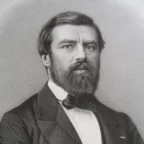
Delisle, Léopold
Valognes, 24 October 1826 - Paris, 22 July 1910
Léopold Victor Delisle was born on 24 October 1826 in Valognes, a small Norman town in the Manche department of northwestern France, into a family of modest provincial bourgeoisie with deep roots in the Norman countryside. This origin proved formative in ways that went beyond mere geography: Normandy, with its extraordinary density of medieval abbeys, its rich documentary heritage stretching back to the Carolingian era, and its particular place in the history of French feudalism, provided the young Delisle with his first intellectual landscape and would remain a central preoccupation of his scholarship throughout his life.
His early education at the collège of Valognes and subsequently at Caen distinguished him as a student of exceptional memory and philological aptitude. On the advice of local scholars who recognized his unusual gifts, he was directed toward Paris and the institution that would definitively shape his career: the École nationale des Chartes, the specialized school founded in 1821 for the training of archivists, palaeographers, and historians capable of working directly with primary medieval sources.
Delisle entered the École des Chartes in 1844 and graduated in 1847, submitting as his thesis a study that already announced the scope and seriousness of his historical ambitions: Études sur la condition de la classe agricole et l'état de l'agriculture en Normandie au Moyen Âge (published in expanded form in 1851). This work — a systematic analysis of medieval agrarian structures in Normandy based on direct examination of charters, cartularies, and administrative records — was immediately recognized as a contribution of lasting value to the economic and social history of medieval France. Its methodology, grounded in exhaustive archival research and a refusal to speculate beyond what the documents could support, established the characteristic virtues of all Delisle's subsequent scholarship.
At the École des Chartes, Delisle benefited from the teaching of Jules Quicherat, one of the founding figures of French medieval archaeology, and from the broader intellectual atmosphere of an institution devoted to what the French called érudition in its most rigorous sense: the patient, meticulous, deeply learned study of primary sources without concession to eloquence at the expense of accuracy. This formation instilled habits of mind — archival thoroughness, critical scepticism toward received attributions, the systematic comparison of witnesses — that Delisle would deploy at an almost incomprehensible scale of productivity over the following six decades.
In 1852, Delisle was appointed to the Bibliothèque nationale in Paris — then housed in the Palais Mazarin on the rue de Richelieu — as an assistant in the manuscript department. He would remain in that institution for the rest of his professional life, ascending through successive positions until his appointment as Administrateur général (Director General) in 1874, a post he held with distinction until his retirement in 1905. For more than half a century, Delisle and the Bibliothèque nationale were virtually synonymous in the minds of European scholars.
His most enduring institutional achievement was the three-volume (plus atlas) Le Cabinet des manuscrits de la Bibliothèque nationale (1868–1881), a work of extraordinary scope that constituted the first systematic history of the formation of the manuscript collections held by France's national library. Drawing on decades of archival investigation, Delisle traced the provenance of thousands of manuscripts — their monastic, royal, and private origins; their paths of acquisition through the upheavals of the Renaissance, the Wars of Religion, the Revolution, and the Napoleonic confiscations; and the history of the cataloguing efforts that had preceded his own. The Cabinet des manuscrits remains to this day the indispensable starting point for any inquiry into the history of French manuscript collections, and a model of what institutional bibliographical history can achieve.
Among the most dramatic episodes of Delisle's career was his central role in addressing the consequences of one of the most audacious manuscript thefts in modern history. Guglielmo Libri, an Italian mathematician and bibliophile who had served as Inspector General of French Libraries under the July Monarchy, had systematically stolen hundreds of manuscripts and rare books from French provincial libraries and archives during his official inspection tours in the 1830s and 1840s. Libri, having been exposed and forced to flee to England, had sold a large portion of his fraudulently acquired collection to Lord Ashburnham, the English bibliophile, who thus became the unsuspecting possessor of stolen French national heritage.
Delisle undertook the painstaking work of identifying the stolen items by systematically comparing Libri's sale catalogues against the records of French libraries and archives, matching individual manuscripts to their original institutional homes through codicological analysis, ex-libris, and the evidence of older catalogues. His report, produced with meticulous documentary precision, constituted an irrefutable indictment and provided the legal and scholarly basis for the French government's eventual negotiation for the repatriation of the Ashburnham-Libri collection in 1888. A parallel inquiry into the Barrois collection, another assemblage of manuscripts of partly dubious provenance held at Ashburnham Place, resulted in the return of further materials. Delisle published his findings in the Catalogue des manuscrits des fonds Libri et Barrois (1888), transforming a legal and diplomatic affair into a permanent scholarly resource.
This episode illustrated a characteristic of Delisle's intelligence rarely found in combination: the ability to bring the full resources of palaeographical and codicological scholarship to bear on questions with immediate practical and juridical consequences.
For historians of medieval art and book illumination, Delisle's most consequential contributions lie in his systematic study of the great manuscript libraries of medieval French royalty and nobility, and in his foundational work on the identification and dating of illuminated manuscripts of the thirteenth and fourteenth centuries.
His Recherches sur la librairie de Charles V (2 volumes, 1907) reconstructed, from inventory records, accounts, and surviving manuscripts, the extraordinary royal library assembled by Charles V of France (1338–1380) — a collection of some 1,200 volumes, mostly housed in the Louvre, that constituted the most important secular library in fourteenth-century Europe and the direct ancestor of the Bibliothèque nationale itself. Delisle's reconstruction identified the surviving manuscripts from this dispersed collection, analysed the illuminators and scribes who had worked for the royal workshop, and situated Charles V's patronage within the broader context of late fourteenth-century Parisian book culture. The work provided the essential framework within which subsequent art historians — from Henri Martin to François Avril — would develop the detailed study of Parisian Gothic illumination.
His Notice de douze livres royaux du XIIIe et du XIVe siècle (1902) presented in meticulous detail twelve manuscripts of exceptional quality from the royal French collections, including liturgical books, Books of Hours, and Psalters, analysing their decoration, their scribal hands, and their relationship to royal patronage. This work exemplifies Delisle's approach to illuminated manuscripts: grounded always in documentary evidence (inventory entries, colophons, heraldic identification), proceeding from the particular to the general, and attentive to the relationship between the material object and its historical context.
Of particular importance for the history of Flemish and Franco-Flemish illumination was Delisle's early recognition of the exceptional significance of the Très Riches Heures du Duc de Berry, the magnificent Book of Hours produced for Jean, Duke of Berry by the Limbourg Brothers around 1410–1416. Delisle's analysis of the duke's inventories and his identification of the manuscript's place within the broader context of Berry's extraordinary patronage laid the groundwork for all subsequent scholarship on this supreme monument of late medieval illumination.
Alongside his work at the Bibliothèque nationale, Delisle maintained throughout his life an intense commitment to the documentary history of medieval Normandy, producing a series of studies that transformed the understanding of Norman institutional, ecclesiastical, and cultural history.
His Cartulaire normand de Philippe-Auguste, Louis VIII, saint Louis et Philippe le Hardi (1852) edited a fundamental collection of royal acts relating to Normandy under the Capetian monarchy. His work on the Catalogue des actes de Philippe-Auguste contributed to the monumental enterprise of editing the royal French charters. His studies of Norman abbeys — including Saint-Wandrille, Jumièges, and Mont-Saint-Michel — illuminated the role of Norman Benedictine monasticism in the preservation and production of manuscripts from the Carolingian era onward.
The Rouleaux des morts du IXe au XVe siècle (1866), an edition of the extraordinary medieval mortuary rolls circulated among monasteries to announce the deaths of abbots and request prayers, was both a significant contribution to liturgical history and a palaeographical achievement of the first order, requiring the analysis of documents from dozens of different scriptoria across a period of six centuries.
Among Delisle's most technically demanding contributions to palaeography was his systematic study of Carolingian manuscripts, and in particular his investigation of the great pandect Bibles produced under the influence of Alcuin of York at Tours in the early ninth century. His essay on Les Bibles de Alcuin and his broader work on Tours manuscripts established essential criteria for distinguishing the output of the Touraine scriptoria from related Carolingian centres, and contributed to the understanding of the role of Alcuin's reform in the standardization of the Carolingian minuscule — the script that would become the foundation of all Western book hands through the medieval period and, via humanist revival, of modern Roman typography.
This work situated Delisle within the broader tradition of Carolingian palaeographical scholarship that extended from Mabillon through Traube and into the twentieth century, and demonstrated his command of the earliest stratum of the medieval Latin manuscript tradition as well as its later developments.
In 1856, at the age of thirty, Delisle was elected a member of the Académie des inscriptions et belles-lettres — France's premier learned society for historical, philological, and archaeological scholarship — a recognition of the extraordinary maturity and authority of his early work. He would eventually serve as the Academy's Secrétaire perpétuel (Permanent Secretary), the most senior administrative position in the institution, from 1876 to 1907, transforming it into a major centre for the coordination of collaborative scholarly enterprises.
In this role, Delisle oversaw and contributed to a series of monumental collective projects that defined the infrastructure of French medieval studies for generations: the continuation of the Recueil des historiens des Gaules et de la France, the Notices et extraits des manuscrits de la Bibliothèque nationale, and the broader programme of cataloguing French manuscript collections in provincial libraries — an enterprise that would eventually produce the multivolume Catalogue général des manuscrits des bibliothèques publiques de France, still an essential reference tool.
Delisle's published output — exceeding 800 items by the end of his life, ranging from brief notices to multi-volume monographs — is distinguished by qualities that reflect both his formation and his temperament. He combined an almost supernatural memory for manuscript details with a principled refusal to claim more than the evidence could support. His prose, though never elegant in the French literary sense, is a model of scholarly exactitude: every assertion documented, every attribution argued from physical evidence, every identification supported by multiple converging criteria.
His approach to illuminated manuscripts was pioneering in its insistence on the codicological totality of the object: script, parchment quality, quire structure, rubrics, calendar saints, heraldry, ownership inscriptions, and binding evidence were all brought to bear in establishing date, origin, and provenance — a method that anticipates the systematic codicological analysis that would be theorized by scholars such as Léon Gilissen and Albert Derolez in the twentieth century.
He was also exceptional among nineteenth-century scholars in the breadth of his international scholarly relationships. He corresponded regularly with English, German, Italian, Belgian, and Dutch medievalists, contributed to foreign learned journals, and participated in the international congresses of orientalists, bibliographers, and historians that were a feature of late nineteenth-century intellectual life. His international standing was recognized by election to numerous foreign academies and by honorary degrees from universities across Europe.
Delisle retired from the Bibliothèque nationale in 1905, after more than fifty years of service, but continued to work with undiminished energy. His last major publication, the Recherches sur la librairie de Charles V, appeared in 1907, when he was eighty years old, and demonstrated no diminution of the analytical power that had characterized his work half a century earlier.
He died in Paris on 22 July 1910, aged eighty-three, mourned by the entire community of European medieval scholarship as the greatest librarian and manuscript scholar of his era. His funeral at the Institut de France brought together historians, philologists, archivists, and diplomats from across the continent in tribute to a career of extraordinary length, breadth, and sustained excellence.
The legacy of Léopold Delisle operates on several distinct levels, each of lasting significance.
As an institutional figure, he transformed the Bibliothèque nationale from a relatively passive repository into an active research institution, establishing cataloguing standards, accessioning procedures, and curatorial practices that continue to shape the library to this day. His conception of the national library as a centre of scholarship rather than merely a storehouse of books influenced the development of major research libraries across Europe.
As a palaeographer and codicologist, his systematic analysis of Latin script traditions and his development of provenance methodology established criteria and approaches that remain foundational. His work on Carolingian manuscripts, royal French libraries, and the Norman documentary tradition defined entire subfields of medieval studies.
As a historian of illuminated manuscripts, his reconstructions of the libraries of Charles V and the Duke of Berry, and his identification of key illuminated manuscripts through documentary analysis, provided the essential framework within which the art history of French and Flemish Gothic illumination was subsequently developed by Henri Martin, Paul Durrieu, François Avril, and Miranda Snijders, among many others.
For anyone working today in medieval manuscript studies — whether as palaeographer, codicologist, art historian, or archivist — Delisle's work remains a constant point of reference: a standard of scholarly rigour, archival thoroughness, and interpretive restraint that the intervening century of methodological development has refined but not superseded.
Della Valle, Guglielmo
Moncalvo, 1746 - Turin, 1805
Guglielmo della Valle was an Italian art writer and Conventual Franciscan friar, now regarded as a key figure in eighteenth-century Italian art historiography. His importance for medieval art studies lies in his pioneering archival research on early Sienese and Tuscan painting, carried out well before the discipline assumed its modern academic form.
Likely born in 1745-1746 in Moncalvo, in the Monferrato region, to Guglielmo Antonio Della Valle and Anna Maria De Ferrari, he entered the Franciscan convent in Pinerolo in 1762 at a young age. As a Conventual friar he traveled extensively across Italy, studying firsthand the works of the major schools of Florence, Siena, and Pisa. In Rome, he became assistant to the Order and general secretary in 1783, and in 1784 he was appointed prior of the convent of the Twelve Apostles.
His principal achievement is the three-volume Lettere sanesi sopra le belle arti (Rome, 1782-1786), a monumental publication of enduring value for its documentary and archival content. The first volume addresses general methodological and historical issues; the second, composed of twenty-three monographs, concentrates largely on Sienese painting; and the third, with thirty-three letters, examines specific painters and sculptors, mostly Sienese, including a foundational letter to Abbot Lanzi on the Tuscan schools.
Della Valle advanced an original and controversial historiographical thesis, arguing that the Sienese school was older and more autonomous than the Florentine one, and that Florentine painting had effectively declined after Cimabue while Sienese traditions endured longer. Although later scholarship rejected this larger framework for lack of sufficient documentary support, several of his insights proved remarkably prescient: he identified the influence of Giunta Pisano on Cimabue, that of Nicola and Giovanni Pisano on Giotto, and emphasized the Roman component in Giotto's formation through figures such as Pietro Cavallini and Jacopo Torriti.
In 1791 he edited an important version of Vasari's lives, revising and updating descriptions through his own research. This edition remained a significant bibliographic reference for art criticism well into the late nineteenth century and confirms his role as a transitional figure between antiquarian erudition and modern historical method.
Delpriori, Alessandro
Fabriano (Marche), active 21st century
Alessandro Delpriori is one of Italy's most active art historians in the field of medieval and late Gothic painting in central Italy, with particular attention to the schools of Umbria and the Marche between the thirteenth and fifteenth centuries. Originally from Fabriano, a city central to the history of Italian late Gothic painting, he has developed a scholarly profile in which local artistic traditions are read within broader interregional networks of production, patronage, and stylistic exchange.
He completed his secondary studies at the "V. Volterra" scientific high school in Fabriano (diploma, 1996), then earned a degree in History and Conservation of Cultural Heritage at the University of Macerata (2004). He subsequently obtained a PhD in Art History at the University of Florence between 2008 and 2010. This training consolidated his specialization in medieval and late Gothic visual culture, with a focus on attributional issues, workshop dynamics, and the reconstruction of regional artistic identities in central Italy.
Delpriori is currently Professor and Researcher in Art History at the University of Camerino, where since 2015 he has taught in the Bachelor's program in Technology and Diagnostics for Conservation and Restoration. He has also taught at the University of Macerata and at the University of Florence. Alongside academic teaching, he has held significant institutional roles: from 2008 to 2011 he served as director and curator of the collections of the Cariverona Foundation and the Domus Foundation for Modern and Contemporary Art in Verona; from 2011 to 2014 he was curator of the Frascione Collection in Florence, overseeing research, cataloging, and restoration projects.
He collaborates with the Cini Foundation in Venice on the updating of catalogues of works and is a member of the Board of Directors of the Museum System of the Province of Macerata. His principal research interests include medieval painting and sculpture in central Italy, with specific studies on Gentile da Fabriano, fourteenth-century wooden sculpture in Umbria and the Marche, the Master of the Fabriano Crucifix, Luca di Paolo, Lorenzo d'Alessandro, and the early activity of Raphael in the Marche context. His scholarly output includes monographs, essays, and papers, including approximately thirty-three contributions published on his Academia.edu profile.
Among his best-known publications are volumes such as The School of Spoleto, Masterpieces of the 14th Century, Luca di Paolo and the Renaissance in the Marche, Lorenzo d'Alessandro, and Capriccio and Nature. He has curated major exhibitions, including Masterpieces of the 14th Century. Giotto's Workshop, Spoleto, and the Apennines, and has participated in public scholarly forums such as the Passaggi Festival (2023). Between 2014 and 2019 he also served as Mayor of Matelica, combining academic research with civic and administrative responsibility. His profile is therefore notable for the integration of specialist art-historical scholarship and sustained commitment to local cultural governance.
In La scuola di Spoleto. Immagini dipinte e scolpite nel Trecento tra Valle Umbra e Valnerina (2015) he devotes a chapter, "Dal Maestro di Cesi al Primo Maestro della Beata Chiara da Montefalco: un percorso unitario?", to De Marchi's proposal that the two names designate one painter. He supports the identification and presents it, with the question mark of the title, as a thesis; the Palazzo Venezia entry reports that he placed the reliquary panels of that museum at the end of the 1320s, and De Marchi reports that the book identifies wooden sculptures painted, and probably carved, by the Maestro di Cesi.
He calls the Maestro di Cesi "il primo dei giotteschi spoletini" and takes up and develops a thesis of Corrado Fratini (1998), that in the Duchy of Spoleto the workshops of painters and wood-carvers coincided, which starts from the inscription of Machilone and his son on the Madonna of Bugnara, signed in 1262. His Florentine doctoral thesis of 2010 became La scuola di Spoleto, and he co-curated the exhibition Capolavori del Trecento (2018), which brought the Stella triptych back from Paris.
Delucca, Oreste
Rimini, 24 September 1939
Oreste Delucca is a historian of Rimini and its territory, self-taught and working from archival sources. For more than forty years he has used notarial and institutional records to document the city's environment, economy, urban development, art and social structures, above all in the late Middle Ages, under the Malatesta lordship and in the Renaissance. He has published more than forty monographs and many essays in journals and collective volumes. He is a member of the Deputazione di Storia Patria per le Province di Romagna, and in 2013 the city of Rimini awarded him the Sigismondo d'Oro for his cultural work.
For the study of the Riminese Trecento his fundamental contribution is I pittori riminesi del Trecento nelle carte d'archivio, published in Rimini by Luisè in 1992. Before it the Riminese painters were known from only about twenty documents. The systematic search of the notarial archives roughly quintupled that base. It established that Giovanni, Giuliano and Zangolo were brothers, sons of a certain Martino, while leaving much less certain whether an elder painter, Foscolo, belonged to the same family. The acts, almost all concerning leases, rents and houses in the contrada of San Giovanni Evangelista, show a family of craftsmen who shared a household and at times acted jointly, and the volume suggested that the brothers may for a time have combined painting with farming their leased plots. By turning the relations between Giovanni and Giuliano from a question of master and pupil into one of a family workshop, the book changed the terms in which the school has been studied since.
Demus, Otto
1902 – 1990
Otto Demus was an Austrian art historian and Byzantinist widely regarded as one of the towering figures of twentieth-century medieval art scholarship. Hans Belting famously described him as "the eye" of art history in his areas of study, in recognition of Demus's exceptional visual acuity and connoisseurship.
Demus studied art history at the University of Vienna between 1921 and 1928 under Josef Strzygowski and received his doctorate summa cum laude. He is generally considered part of the second Vienna School of Art History, rooted in the theoretical legacy of Alois Riegl and committed to understanding the artwork as a functional perceptual whole rather than as a merely documentary object. In keeping with this approach, Demus consistently analyzed how figures, architecture, and light operated together in decorative programs to produce a unified visual and spiritual experience.
After the annexation of Austria in 1938, Demus refused to cooperate with the Nazi regime and emigrated to England in 1939. During the war years in London, he worked on what became his most theoretically foundational book, Byzantine Mosaic Decoration (1947), a project first conceived during his earlier fieldwork in Greece, Sicily, and Venice in the 1920s and 1930s.
Among Demus's most original and lasting contributions is the concept of the space icon (Raum-Ikone). In his analysis of middle Byzantine mosaic programs, he argued that Byzantine artists did not rely on Western linear perspective, which draws the eye into illusionistic depth, but instead employed a "negative perspective" in which figures seem to project outward toward the beholder. In this reading, curved apses, vaults, and domes become active collaborators with mosaic imagery, producing a strong sense of presence in the real space of the worshipper and fundamentally reframing the image-viewer relationship in Byzantine art.
Two monument groups occupied decades of his research: the Basilica of San Marco in Venice and the Norman churches of Sicily. His four-volume The Mosaics of San Marco in Venice remains the authoritative study of the basilica's decoration, and he was the first scholar to assess fully the central role of mosaic as San Marco's most indigenous and aesthetically accomplished medium. In The Mosaics of Norman Sicily (1949), he examined the transfer of Byzantine craftsmen and models into the Norman kingdom and the resulting hybrid artistic language.
In 1966 Demus delivered the Metropolitan Museum of Art lectures in New York that became Byzantine Art and the West (1970), widely regarded as a major work of twentieth-century Byzantine scholarship. The book traces, from the seventh to the thirteenth century, the sustained dialogue between Byzantine and Western artistic models.
After returning to Vienna, Demus was appointed Professor of Art History at the University of Vienna in 1963. Together with manuscript specialist Otto Pacht, the pair known as die zwei Ottos transformed the Vienna Institute into what contemporaries described as a Mekka der Mittelalterkunstgeschichte, an international center for medieval art historical study spanning both monumental and manuscript traditions.
Devlin, Mary Aquinas
Denver, Colorado, 27 January 1891 – Dubuque, Iowa, 14 May 1966
Sister Mary Aquinas Devlin, of the Order of Preachers, was an American Dominican medievalist and literary historian. Born in Denver in 1891, she took her bachelor's degree at Saint Clara College in 1912, a master's at the University of Wisconsin–Madison in 1914, and a doctorate at the University of Chicago in 1925 with a dissertation on the date of the C-version of Piers Plowman. She taught at Sacred Heart Academy and the St. Clara Female Academy from 1912, at Saint Clara College from 1921, and from the later 1920s at Rosary College in River Forest, Illinois, where she was professor of English from 1928 until her death and headed the department from about 1930.
A Guggenheim Fellowship in 1930 took her to England for the research that produced her major scholarly monument, the two-volume edition of The Sermons of Thomas Brinton, Bishop of Rochester, 1373–1389, published in the Camden Third Series in 1954, together with a series of articles on Brinton and his preaching. Her command of the political and ecclesiastical world of later fourteenth-century England lies behind her one venture into Italian art history.
That venture was the article "An English Knight of the Garter in the Spanish Chapel in Florence," published in Speculum 4 (1929), 270–81. In it Devlin identified the conspicuous knight in white with gold embroidery who stands near the emperor in Andrea di Bonaiuto's Via Veritatis as an English Knight of the Garter, and specifically as Edward le Despenser, who served the papacy in Italy in exactly those years. The proposal was taken up by standard English biographical reference works before being challenged in 1972 by Anthony Luttrell, who read the same figure as a Knight Hospitaller; the identification remains contested.
Diebold, William J.
b. 1958
William J. Diebold is an American historian of medieval art, Jane Neuberger Goodsell Professor of Art History and Humanities Emeritus at Reed College, whose work divides between the art of the early Middle Ages and the uses to which the Middle Ages have been put by the modern world. He was educated at Yale College and took his M.A. and Ph.D. at Johns Hopkins.
Word and Image: An Introduction to Early Medieval Art, 600–1050 (2000) is the book by which he is most widely known. Organised around the relation between text and image rather than around dynasties or regions, it is capacious enough to hold both the oral culture behind the Sutton Hoo treasure and the emphatically literate art of the Carolingian and Ottonian courts, and it traces the fortunes of Gregory the Great's dictum on images from the seventh century through to the Romanesque. Alongside it stands a long series of studies of Carolingian and Ottonian manuscripts and ivories and of medieval writing about art.
His second field is the modern reception of the medieval, and in particular the appropriation of medieval art in twentieth-century Germany — work published under titles such as "The Nazi Middle Ages" and in the volume Medieval Art, Modern Politics, co-edited with Brigitte Buettner. It is scholarship about scholarship and about the political conditions under which objects acquire their meanings, a preoccupation that connects him to the historiographical turn in medieval studies more broadly.
That preoccupation explains his role in the Autun debate. Reviewing Linda Seidel's Legends in Limestone in The Medieval Review (2000), he gave the most substantial specialist assessment the book received: he granted that, on ordinary medieval conventions, the Gislebertus of the inscription might perfectly well have been a patron rather than an artist, and observed that the displacement of the artist by the patron was in any case familiar to medievalists rather than the scandal some general readers took it to be — a judicious separation of the book's genuine historiographical contribution from the specific identification it proposed.
Diehl, Charles (Michel-Charles)
Strasbourg, 4 July 1859 - Paris, 1 November 1944
Charles Diehl, whose full name was Michel-Charles Diehl, was the most important French Byzantinist of his generation and one of the key figures in the history of Byzantine art and civilization studies. Born in Strasbourg on July 4, 1859, his academic and scholarly career spanned more than half a century of tireless research.
Diehl completed his secondary education in Strasbourg, Nancy, and Paris with brilliant results, and in 1878 he was admitted to the prestigious École Normale Supérieure in Paris. His doctoral thesis, published in 1888 under the title Études sur l'administration byzantine dans l'exarchat de Ravenne, marked his official entry into Byzantine studies and remains to this day a benchmark for the history of the Exarchate of Ravenna, a subject of great importance for those interested in the medieval art of northern Italy.
In 1899, when the first chair of Byzantine History in France was established at the Sorbonne, Diehl was appointed to fill it, holding the position until 1934. From this position of exceptional influence, he trained generations of French, Italian, Greek, and Romanian scholars, thereby founding a true school of European Byzantine studies. In 1910, he was elected a member of the Académie des inscriptions et belles-lettres, of which he served as president in 1920-1921.
Diehl's scholarly output was extraordinarily vast and touched on every aspect of Byzantine civilization. His Manuel d'art byzantin (1910, second edition 1915) was the first systematic handbook on Byzantine art and remained an indispensable reference work for decades. The essay Byzance. Grandeur et décadence (1919), translated into Italian as La civiltà bizantina in 1962 and into English by Naomi Walford in 1957, cemented his international fame.
Among the popular works that made him well known even outside the academic world, Figures byzantines (1906-1908, in two series) and Theodora, impératrice de Byzance (1904) stand out; these works of elegant historical prose evoked the personalities of the Eastern Empire with a literary vividness rare among professional historians. Diehl also wrote an important volume on the history of Venice, Une république patricienne (1915), which demonstrates his ability to look beyond strictly Eastern boundaries.
Diehl was not an armchair scholar: he conducted field research campaigns in Greece, North Africa, and Ravenna. Between 1907 and 1909, he directed the restoration of the Byzantine church of Hagia Sophia in Thessaloniki, and the Greek city honored his work by naming a street after him near that very church. His study L'Afrique byzantine (1896) opened new perspectives on the legacy of Byzantium throughout the Mediterranean.
Charles Diehl died in Paris on November 1, 1944. In his will, he bequeathed 240,000 francs to the Académie des inscriptions et belles-lettres for the establishment of a prize for the best works on Byzantine history and culture, a gesture that encapsulates his lifelong dedication to the discipline he had helped to found. His work, combining the rigor of archival research with accessible prose and a comprehensive vision of Byzantine civilization, remains a model of how medieval art history can be both science and literature.
Dionysios of Fourna
Fourna (Agrafa), c. 1670 - c. 1745
Dionysios was born around 1670 in Fourna, in the mountainous Agrafa region of central Greece, then under Ottoman control. Little is known about his family background, but Agrafa was culturally significant: relatively isolated from direct Ottoman administration, it served as a refuge for Greek Orthodox monastic and intellectual life during the centuries of Turkokratia.
He entered monastic life at a young age and formed within the living tradition of Byzantine ecclesiastical art preserved in monasteries of mainland Greece and Mount Athos. The name Dionysios was common among Orthodox monks; "of Fourna" distinguishes him from other bearers of the same monastic name.
The decisive phase of his artistic development unfolded on Mount Athos, the monastic peninsula that for centuries functioned as a spiritual and artistic center of Orthodox Christianity. There he encountered the post-Byzantine painting tradition associated with figures such as Manuel Panselinos of Thessaloniki and the masters of the Cretan School, whose idiom had shaped Athonite fresco production since the sixteenth century.
Dionysios is believed to have worked under, or at minimum studied closely, the legacy of Georgios and Frangos Katelanos and related Athonite-Cretan workshop practice. He painted extensively, though attribution remains difficult because of the collaborative and often anonymous structure of Byzantine and post-Byzantine workshops.
He eventually became a monk at the Skete of Karyes and later at Esphigmenou, one of the twenty ruling monasteries of the Holy Mountain.
Dionysios's major contribution is the Hermeneia tes zographikes technes (Explanation of the Painter's Art), commonly known as the Painter's Manual or simply the Hermeneia. Compiled between approximately 1728 and 1733, it synthesizes earlier written sources, workshop oral transmission, and his own practical experience.
The treatise is encyclopedic and constitutes the most systematic surviving codification of Orthodox iconographic and technical knowledge from the Byzantine and post-Byzantine tradition.
I. Theological and Doctrinal Foundations
The opening sections justify the legitimacy and spiritual function of sacred images, citing the Seventh Ecumenical Council (Nicaea II, 787) and patristic authorities. The icon painter is presented not merely as a craftsman, but as a theological witness.
II. Technical Instruction
The manual provides detailed instruction on practical workshop methods, including:
- wall preparation for fresco, in both al fresco and al secco methods
- preparation of wooden panels, including linen and gesso (levkas)
- grinding and preparation of pigments from mineral and organic colorants
- use of egg tempera for panel icons
- gold leaf application and burnishing for halos and backgrounds
- chrysography (gold linear highlights on drapery)
- sinopia underdrawing and transfer of cartoons to wall surfaces
III. Iconographic Programmes
At its core, the Hermeneia prescribes subjects, compositions, and identifying attributes for virtually every major category of image used in Orthodox church decoration, including saints, narrative biblical cycles, the Dodecaorton (Twelve Great Feasts), Passion scenes, Last Judgment imagery, and zone-specific decoration for the sanctuary, nave, narthex, and dome.
Dionysios states explicitly that he draws on earlier written hermeneiai, some now lost or fragmentary, and on workshop oral transmission. The text is therefore not purely original but a large-scale synthesis that preserves a living technical and iconographic tradition.
He positions himself in continuity with Manuel Panselinos, whom he treats as a supreme authority. Modern scholarship has debated whether this canonical status reflects historical continuity or retrospective idealization. This tension is central to the work's cultural function: the Hermeneia does not only describe practice, it seeks to stabilize and authorize it.
After compiling the manual, Dionysios continued to paint and direct church decoration in the Agrafa region. He is generally believed to have died around 1745, though the exact date and place remain uncertain.
The Hermeneia circulated in manuscript for over a century before publication. Adolphe-Napoleon Didron encountered a copy on Mount Athos in 1839 and brought it to wider Western attention; a French translation appeared in 1845. The first critical Greek edition was prepared by A. Papadopoulos-Kerameus (St Petersburg, 1909). The standard modern English translation, by Paul Hetherington, appeared in 1974 as The "Painter's Manual" of Dionysius of Fourna.
In art-historical terms, the Hermeneia is often compared to Cennino Cennini's Libro dell'Arte: both are written from within workshop practice, but Dionysios's treatise is more explicitly theological and normative, oriented toward regulating sacred image production for a confessional community.
Major areas of scholarship include reconstruction of Dionysios's sources, comparison between the manual's prescriptions and surviving monuments, interpretation of the text as an eighteenth-century act of cultural conservation, and continued attempts to identify works attributable directly to his hand.
Dodwell, Charles Reginald
1922 – 1994
English art historian of medieval painting and manuscript illumination whose career combined the archival discipline of the textual scholar with the visual intelligence of the connoisseur, producing a body of work that defined the study of Romanesque art in the English-speaking world. Educated at Pate's School in Cheltenham and Gonville and Caius College, Cambridge, he served in the Royal Navy, 1941–45. He was shaped by the work of David Knowles (1896–1974), whose monumental The Monastic Order in England reinforced Dodwell's conviction that the visual arts could only be understood within the institutional, liturgical, and literary context of the monasteries that produced them.
After completing his PhD at Cambridge, Dodwell held a senior research fellowship at the Warburg Institute, London, 1950–53, where he absorbed the rigorous iconographic and textual methods of the German art-historical tradition from colleagues including Hugo Buchthal and Hanns Swarzenski. In 1953 he was appointed Librarian at Lambeth Palace, providing daily, hands-on contact with one of the most significant collections of medieval manuscripts in England. In 1958 he became librarian, fellow, and lecturer at Trinity College, Cambridge, and in 1966 was appointed to the Pilkington Chair in the History of Art at the University of Manchester and Director of the Whitworth Art Gallery, a post he held until his retirement in 1989. He was elected a Fellow of the British Academy in 1973 and served as Chairman of its section on History of Art and Music, 1987–90.
His first monograph, The Canterbury School of Illumination: 1066–1200 (1954), a rewrite of his doctoral dissertation, was the first systematic scholarly account of any English school of manuscript art. It traced the classical, Carolingian, and Anglo-Saxon sources of Canterbury illumination with a breadth and visual precision that set new standards, and its conclusions have not been overturned. The Great Lambeth Bible (1959) gave that supreme masterpiece of English Romanesque illumination its definitive stylistic and iconographic treatment. His contribution to the collaborative three-volume study of the St Albans Psalter (1960), undertaken with Otto Pächt and Francis Wormald, addressed the illuminated initials of that exceptional manuscript and remains the standard reference for the volume.
Among his most consequential contributions was his translation of the De Diversis Artibus of Theophilus Presbyter, published as The Various Arts (1961; revised Clarendon edition, 1986). This twelfth-century technical treatise on painting, metalwork, and stained glass — the most comprehensive practical manual of medieval artistic technique to survive from the period — was made accessible to English-speaking scholars through Dodwell's translation, which established the definitive scholarly text. Otto Lehmann-Brockhaus paid tribute to this mastery of medieval Latin art-technical writing by dedicating his five-volume Lateinische Schriftquellen zur Kunst in England (1955–60) to Dodwell.
His 1965 Warburg Institute Survey, Reichenau Reconsidered (with Derek Turner), argued that most decorated manuscripts traditionally ascribed to the Reichenau school — including the Gospels of Otto III and the Pericopes of Henry II — were in fact produced at Trier. The reassignment challenged decades of received wisdom in German scholarship on Ottonian illumination and substantially changed the terms of subsequent debate. His most synthetic work, Pictorial Arts of the West: 800–1200 (1971), published in the Pelican History of Art series, covered manuscript, panel, fresco, and mosaic painting across the entire European medieval world from the Carolingian period to the threshold of Gothic — a comprehensive survey that no single scholar had previously attempted with consistent analytical depth. Anglo-Saxon Art: A New Perspective (1982) exploited saints' lives, wills, poems, and monastic chronicles to reconstruct the extent of a material culture of which the physical remains are only a residue, and asserted the importance of Rhine-Maas metalwork as the impetus for the hardening line of late Romanesque draughtsmanship.
Despite a stroke in his final years that left him partially sighted, Dodwell completed a full rewrite of Pictorial Arts of the West, published in 1993 and described by The Guardian as a tour-de-force of the synoptic art-history survey genre. He was working on Anglo-Saxon Gestures and the Roman Stage at the time of his death; the text was completed and published posthumously by his colleagues (Cambridge University Press, 2000), opening a new line of enquiry into the survival of classical theatrical gesture in medieval manuscript representation. Within the tradition of English medieval art history running from Montague Rhodes James through Francis Wormald and Otto Pächt, Dodwell occupies a singular position as the scholar who synthesized the German iconographic and stylistic tradition with the English archival and textual tradition to produce the most comprehensive account of Western medieval painting from the Carolingian period to the coming of Gothic.
Donati, Pier Paolo
active Florence, 1960s–1990s
Florentine art historian, editor, and organologist, active from the 1960s within the circle of Roberto Longhi's journal Paragone. Donati served for many years as editor-in-chief of the Sansoni publishing house in Florence and later as an editor of Paragone Arte, the journal through which much of the mid-twentieth-century reconstruction of anonymous Trecento and Quattrocento painters — the connoisseurial method associated above all with Longhi himself — was carried out. Within this tradition, Donati's 1968 contribution "Aggiunte al 'Maestro degli Ordini'" enlarged the stylistic grouping that Longhi had assembled three years earlier around the vault frescoes of the founders of the religious orders in San Francesco at Pisa, adding further panels and fragments to the anonymous master's corpus in the years before Luciano Bellosi's 1972 identification of that master with the documented Sienese painter Jacopo di Mino del Pellicciaio.
Donati pursued a second, largely separate scholarly career as a historian of the organ. He founded and, until 1993, directed the Gabinetto per il Restauro degli Organi Storici at the Palazzo Pitti, within the Soprintendenza per i Beni Artistici e Storici di Firenze, and organized, in 1979–80, the first Italian exhibition devoted to restored historic organs, publishing in its catalogue an extensive body of previously unpublished documentary material on Italian organ-building from the fifteenth to the seventeenth century. The two strands of his career — connoisseurship of Trecento panel painting and the archival study of musical instruments — share a common method: the patient reconstruction of an object's history, and of a craftsman's individual hand, from scattered documentary and material evidence.
Donati, Piero
La Spezia, 1948
Italian art historian best known for his studies on religious art, medieval devotions, and the iconographic culture of Lunigiana and northern Tuscany. Born in La Spezia in 1948, he graduated in 1971 and continued his formation at the Università Cattolica del Sacro Cuore in Milan before entering the cultural-heritage administration of Liguria. He worked for many years as an official of the Soprintendenza per i Beni Artistici e Storici della Liguria, where his responsibilities brought together scholarly research, heritage protection, and the close study of the artistic patrimony of historic Lunigiana. Alongside his work on medieval and devotional subjects, he also devoted sustained attention to seventeenth-century Genoese painting, publishing on figures such as Domenico Fiasella, Cornelio de Wael, and Orazio De Ferrari. His curatorial activity included major exhibitions, among them the 1990 exhibition dedicated to Fiasella and exhibitions on the arts in Levanto between the fourteenth and sixteenth centuries, which helped situate local artistic production within broader regional networks.
In his writings for journals including Bollettino d'Arte, Arte Lombarda, Arte Cristiana, and the Quaderni del Centro Studi Lunensi, Donati has consistently combined philological precision with historical-iconographic analysis. His more recent research has focused on subjects such as the Volto Santo of Bocca di Magra, Trecento images of the Maestà, and the circulation of sacred images between Tuscany, Liguria, and Lucca, offering reinterpretations of widely diffused devotional objects and clarifying the channels through which forms, cults, and workshop practices moved across the northern Tyrrhenian region. Through essays, catalogue entries, and exhibition scholarship, he has helped refine chronologies, reconstruct workshop trajectories, and illuminate the devotional dynamics that shaped both late medieval and post-medieval art in this territory. For these reasons, Donati remains a leading point of reference for scholars working on the religious imagery and artistic exchanges of Lunigiana, Liguria, and northern Tuscany.
Donato, Maria Monica
Pisa, 30 March 1959 – Pisa, 14 September 2014
Maria Monica Donato was one of the most original Italian medievalists of her generation, a scholar who did more than any other to make the self-consciousness of the medieval artist a documented historical problem rather than a Renaissance prerogative. Trained at Pisa and at the Scuola Normale Superiore, she was a researcher there in the 1990s, taught at Pisa, Siena and Parma — where she became associate professor — and returned to the Normale in 2005 as professor of medieval art history, a chair she held until her death in 2014.
Her work turned on three intertwined themes. The first was the political image: her studies of Ambrogio Lorenzetti's frescoes in the Palazzo Pubblico of Siena, and of civic iconography more broadly, read communal painting as an argument addressed to citizens rather than as illustration of a text. The second was the survival and reception of antiquity in the Middle Ages, pursued not through the familiar categories of spolia and typology but through the evidence of medieval viewers actually looking at ancient objects. The third, and the one with which her name is now most firmly associated, was the signature: the names, inscriptions and self-descriptions by which medieval artists recorded their authorship.
From this last interest grew the research project and repertory Opere firmate nell'arte italiana / Medioevo, which she directed at the Scuola Normale and which gathered, catalogued and interpreted the signed works of Italian medieval art; the project won an Italian Heritage Award, and generated in turn the online journal Opera · Nomina · Historiae, founded in 2009, and a related enquiry into bells and their founders from the Middle Ages to the Renaissance. The undertaking has since become a standard reference for questions of medieval artistic authorship, and is cited as such in entries elsewhere in this directory.
For the history of taste her single most consequential essay is "Un 'savio depentore' fra 'scienza de le stelle' e 'sutilità' dell'antico: Restoro d'Arezzo, le arti e il sarcofago romano di Cortona," published in the Annali della Scuola Normale Superiore di Pisa, Classe di Lettere e Filosofia. Quaderni, ser. 4, 1–2 (1996), pp. 51–78. There she reconstructed the artistic culture of the author of the Composizione del mondo — the "savio depentore," the wise painter — and argued that his chapter on the ancient Aretine vases records a genuine aesthetic response to classical art and the existence of a circle of conoscitori capable of it, two centuries before the humanists. In the same study she proposed that Restoro also gave the first description of the Roman sarcophagus with the combat of Dionysus and the Amazons at Cortona, the marble later admired by Donatello and Brunelleschi: a hypothesis that has entered the museological literature on the piece.
Donnini, Giampiero
active late 20th–21st century
Giampiero Donnini is a historian of Marchigian painting whose work on Fabriano spans more than two decades, and who represents the third stage in the critical history of the Maestro di Sant'Emiliano — the stage that, after Federico Zeri's reduction of 1950, restored the anonymous master and dated him early. His essay "Tra Romanico e Gotico" appeared in Gentile e i pittori di Fabriano, which he co-edited with a senior historian of Marchigian painting (Florence: Nardini, for the Cassa di Risparmio di Fabriano e Cupramontana, 1992). The volume is divided into three parts — "La pittura a Fabriano dal Duecento al Trecento", "Gentile da Fabriano" and "La pittura a Fabriano dopo Gentile" — and its structure is itself an argument: Gentile is framed as the culmination of a local tradition that begins with the Duecento and early Trecento masters. It is the "1992 survey" to which the later literature refers.
In 1998 the Fabriano Gothic chapels received a monographic treatment in which his essay "Le cappelle gotiche di Fabriano: devozione e propaganda" appeared, in the volume Il Maestro di Campodonico. Rapporti artistici fra Umbria e Marche nel Trecento (Camerano: Conerografica, 1998), which he edited. The subtitle names the double function he read into the chapel programmes: private and communal devotion on one side, and the institutional self-assertion of a mendicant order in a competitive urban setting on the other. He went on to curate, with a specialist in Marchigian art, the volume published after the restoration financed by the Fondazione Cassa di Risparmio di Fabriano e Cupramontana, Le cappelle gotiche in Sant'Agostino e in San Domenico di Fabriano. La fondazione Carifac restaura l'antica pittura fabrianese (Fabriano, 2006). Its chapter titles include "I capelli della Maddalena", "La forza di persuasione di Sant'Agostino" and, significantly, "Lo stile degli autori" — the style of the authors, in the plural: an early and independent sign of the multi-hand reading of the chapels that later work made explicit.
In 2014 he was a co-editor of the catalogue of Da Giotto a Gentile. Pittura e scultura a Fabriano fra Due e Trecento (Florence: Mandragora, September 2014) and sat on the exhibition's scientific committee. That exhibition set out to establish the coordinates of a Fabrianese school developed on the legacy of Giotto, and it is there that the Maestro di Sant'Emiliano is called precocious and autonomous, with the year 1311 attached parenthetically to the Sant'Agostino chapels. Two cautions belong with this record. The specific attributional conclusions of the 1998 essay could not be consulted in the preparation of the entry on the Maestro di Sant'Emiliano; and the quotations from the 2014 catalogue now in circulation rest on an online copy that appears to be unauthorised, and should be checked against a library copy.
Douglas, Robert Langton
Davenham, 1864 – Fiesole, 1951
Robert Langton Douglas was an English art critic, dealer, lecturer, writer, and museum director, widely regarded as one of the most authoritative early twentieth-century voices on medieval and early Renaissance Italian painting, with a particular focus on Siena and the Sienese school. Born on March 1, 1864, in Davenham, England, he died on August 14, 1951, in Fiesole, Tuscany, after a life spent between Britain and Italy.
His career was unusually varied. After early ecclesiastical posts, he moved in 1900 to Australia as Professor of Modern History at the University of Adelaide, before returning to Italy in 1901. It was in this period that he deepened his knowledge of Tuscan painting and developed the research trajectory that made him a major specialist in Sienese art. In 1903, he was nominated three times for the Nobel Prize in Literature.
Douglas's most enduring scholarly contribution was his critical edition of Crowe and Cavalcaselle's History of Painting in Italy (1903 and subsequent volumes), which he expanded with updated research on Umbrian, Florentine, and Sienese painting from late antiquity to the sixteenth century. His principal publications include Fra Angelico (2nd ed., 1902), A History of Siena (1902), La Maioliche di Siena (1904), and the Catalogo Illustrato delle Opere d'Arte di Siena (1904). He also organized major exhibitions, notably the 1904 Exhibition of Sienese Art at the Burlington Fine Arts Club in London.
Across his studies of Duccio and related Duecento and Trecento masters, Douglas helped establish "primitive Italian" painting as a serious field in the Anglo-Saxon world, while also extending his interests to the High Renaissance through his monograph Leonardo da Vinci: His Life and His Pictures. His edition of Crowe and Cavalcaselle remains a fundamental bibliographic tool, and his work continues to be cited in scholarship on medieval and Renaissance Italian painting.
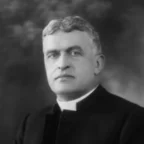
Dudden, Frederick Homes
28 December 1874 - 21 June 1955
Frederick Homes Dudden was an English theologian, church historian, Oxford college head, and royal chaplain whose reputation rests on two careers that only occasionally intersect: the public life of a major Anglican academic administrator and the scholarly life of a patristic biographer. He is remembered above all as the author of large-scale English studies of Gregory the Great and Saint Ambrose, works that for decades remained standard points of entry into the Latin Fathers for students of late antique and early medieval Christianity.
Educated at Bath College, Dudden matriculated at Pembroke College, Oxford, in 1893, took a first in Classics in 1897, and received his M.A. from Lincoln College in 1900. He then became Fellow, Lecturer in Theology, and Chaplain of Lincoln College from 1898 to 1914, the decisive formative phase of his scholarly life. These were the years in which his patristic interests took definite shape and in which he developed the combination of classical training, ecclesiastical history, and theological reading that marks all his major books.
His best-known work is Gregory the Great: His Place in History and Thought (Longmans, Green, 1905), published in two volumes under the name F. Homes Dudden, B.D., Fellow of Lincoln College, Oxford. Written when he was only thirty, the book is a monument of the older English tradition of narrative church history: expansive, carefully sourced, judicious in tone, and occasionally marked by the moralising cadence of late Victorian scholarship. Dudden traced Gregory I's early life, papal elevation, consolidation of the Roman see as a political as well as spiritual power, and major theological writings, setting the whole within a broad historical frame drawn from the primary sources. For medievalists, the book mattered not only as biography but as a synthesis of Gregory's role in transmitting Roman order into the medieval West.
That Gregory is the Gregory of the Moralia, the Dialogi, the Augustinian mission to Kent, and the letter to Serenus of Marseilles on sacred images. Dudden treated that letter at length, and in doing so helped shape later English-language readings of Gregory as a key authority for the didactic function of pictures for the illiterate. For historians of manuscripts, church decoration, and medieval image theory, this aspect of Dudden's Gregory remained particularly influential, because it underwrote generations of argument about the legitimacy and pedagogical use of sacred imagery in the Latin West.
Alongside scholarship, Dudden built a substantial ecclesiastical and academic career. He became Vicar of Holy Trinity, Sloane Street, in London, and in 1918 was elected Master of Pembroke College, Oxford, a post he held until his death in 1955. He was Canon of Gloucester from 1918 to 1937, Chaplain to Kings George V and George VI from 1929 to 1952, a member of the Hebdomadal Council from 1924 to 1945, Pro-Vice-Chancellor in two long phases between 1925 and 1949, and Vice-Chancellor of Oxford from 1929 to 1932. His friendship with Lord Nuffield was important for Pembroke's institutional history, since it helped produce the endowment that freed the Mastership from the old canonical link with Gloucester, and he was also the first Master to live in the Lodgings after the previous Master's house had been turned into undergraduate rooms.
Dudden returned to patristic scholarship in 1935 with another substantial two-volume study, The Life and Times of St. Ambrose (Oxford University Press). Like the Gregory book, it is expansive and documentary in method, treating its subject not only as theologian and bishop but as a force in the making of late Roman Christian public life. The long interval between the two books did not alter his fundamental method: large narrative construction grounded in close reading of the sources and intended for a learned but broad Anglophone audience.
His final major work moved away from patristics altogether. In 1952 he published the two-volume Henry Fielding: His Life, Works, and Times (Clarendon Press), valued especially for its account of the social world around Fielding: poverty, criminal justice, and the failures of the eighteenth-century courts. By the final years of his mastership Dudden had become physically frail, and R. B. McCallum was effectively carrying much of the office before formally succeeding him in 1955. Dudden died on 21 June of that year, leaving behind a legacy divided but coherent: administrator of great endurance, and author of patristic biographies that long shaped English understanding of Gregory the Great and Ambrose.

Dufour Bozzo, Colette
Genoa, 1933
Colette Dufour Bozzo is one of the most prominent figures in the history of medieval art within Italian academia, particularly associated with the University of Genoa, where she taught in the Faculties of Education and of Letters and Philosophy for many decades.
For many years, Dufour Bozzo was the undisputed authority on the study of medieval art in Genoa: her teaching career was practically synonymous with the discipline itself in the city. Her most distinctive trait as an academic was her ability to train generations of students, to whom she imparted not only a rigorous method of historical-artistic analysis, but also a genuine intellectual curiosity and a scientific and human generosity that have profoundly shaped her legacy.
Her scholarly contributions span a broad chronological range, from late antiquity to the Romanesque and Gothic periods. She is universally known for her studies on Roman sarcophagi, early medieval sculpture, the reuse of ancient marble in medieval monuments, city gates, and Romanesque architecture in Genoa and Liguria.
Among her most celebrated works is Il Sacro Volto di Genova (1974), dedicated to the icon preserved in the convent of San Bartolomeo degli Armeni, one of the city’s most venerated relics. She has also edited important collective works on the restoration and demolition of medieval Genoese buildings, contributing to the systematic documentation of the medieval urban heritage.
On the occasion of her 80th birthday, colleagues and students dedicated the collective volume Images of the Middle Ages: Studies in Medieval Art for Colette Dufour Bozzo (2013) to her, edited by Anna Dagnino, Clario Di Fabio, Mario Marcenaro, and Luigina Quartino. The volume covers historical-artistic, archaeological, and historical themes spanning the period from the 6th to the 15th century, faithfully reflecting the breadth and depth of the scholar’s research interests. She also contributed to the Corpus della Scultura Altomedievale, with a volume dedicated to the Diocese of Genoa, a fundamental work for the cataloging and study of early medieval Ligurian sculpture.
Dufour Bozzo remains a seminal figure for anyone studying medieval Genoese and Ligurian art and architecture, and her work is an indispensable starting point for research on medieval heritage in Liguria.
E
Edgell, George Henry
1887 – 1954
George Henry Edgell was an American art historian and director of the Fogg Art Museum at Harvard University (1927–1946) whose systematic connoisseurial investigations of medieval Italian panel painting established rigorous scholarly standards in American academic circles. Through his meticulous comparative analysis of formal features and technical procedures in Giunta Pisano's works, Edgell demonstrated to American audiences the extraordinary formal sophistication of Duecento crucifix painting.
His institutional position at Harvard enabled him to integrate the study of medieval panel painting, particularly Giunta's innovations in representing human suffering and theological complexity, into the American university curriculum, establishing enduring traditions of medieval art historical scholarship in North America.
F
Fabbri, Nancy Rash
Louisville, Kentucky, 19 November 1940 – 13 March 1995
Nancy Rash Fabbri — later Nancy Batson Nisbet Rash, and, after her second marriage, Nancy Rash Turner — was an American art historian who taught at Connecticut College for the whole of her career and published, twice, at ten years' distance, on subjects as far apart as a Florentine Trecento tabernacle and an American genre painter of the mid-nineteenth century. The surname under which the earlier work appeared, Fabbri, was a married name she had already ceased to use by the time of the later book; the entry here is filed under the form of the name given in the 1981 citation, since that is the publication for which she is relevant to this database.
She took a bachelor's degree at Radcliffe College in 1962, and a master's (1965) and doctorate (1971) at Bryn Mawr, whose art history program was, in those years, a principal training ground for American medievalists; the subject of her dissertation has not been established from the sources consulted here. She joined the faculty of Connecticut College in 1972 and remained there until her death in 1995, holding the Lucy C. McDannel '22 professorship and chairing the art history department for two separate terms, 1980–84 and 1987–93.
With her student Nina Rutenburg she published "The Tabernacle of Orsanmichele in Context," The Art Bulletin 63, no. 3 (1981), 385–405 — still, over four decades later, one of the two studies named as essential in the modern literature on Andrea Orcagna's tabernacle. The article's governing argument is not the one it is sometimes cited for: rather than reading the monument as propaganda for a confraternity accused of embezzling plague bequests, Fabbri and Rutenburg traced its unusual features to the history of the miraculous image it housed and to confraternal practice already in place before 1348, arguing for continuity across the Black Death rather than a rupture caused by it — a position framed in direct opposition to the reading of the period advanced by Millard Meiss.
A decade later, publishing as Nancy Rash, she brought out The Painting and Politics of George Caleb Bingham (New Haven: Yale University Press, 1991), a monograph on the Missouri painter and thirty-year officeholder that reads his major canvases against his recorded positions on slavery, the Union, and civil liberties. The shift in subject, from a fourteenth-century Florentine confraternity to nineteenth-century Missouri electoral politics, is real, but the two books share a method: both ask what a work of art was doing institutionally and politically for the people who paid for it, rather than treating it as a self-sufficient formal object.
She married the Yale historian Frank M. Turner on 29 July 1984. She died in 1995, and the Nancy Batson Nisbet Rash Research Award, endowed in her memory by her father, General Dillman Rash, and by Turner, is given annually at Connecticut College to a faculty member for scholarly or artistic achievement.
Falk, Ilse
born 1906; dates uncertain
Ilse Falk, later Ilse Falk Silvers, was a German-born art historian of the Trecento remembered chiefly for a single monograph and a single article, both on Andrea Pisano and both still cited today. Her work is better documented than her life, and any honest biography has to say so.
She was born in 1906. In 1940 she published Studien zu Andrea Pisano (Hamburg: Niemann & Moschinski), 211 pages with plates. The imprint, format, and inclusion of a Lebenslauf identify it as a doctoral dissertation, probably submitted in Hamburg, though the university and the exact year of acceptance still need verification. The date matters: the Hamburg art-historical seminar had belonged to the Warburg-Panofsky milieu until 1933, and by 1940 that world was gone.
The book's central thesis outlived it. Falk argued that Andrea Pisano's historical importance lay in his transposition of the principles of monumental painting worked out by Giotto into relief, and that in doing so he gave the decisive impetus toward the weightiness of the Renaissance standing figure with its organically related drapery. That formulation - sometimes quoted directly as "Falk 1940" - passed into the Grove/Macmillan article on Andrea and from there into a wide body of later literature. In the standard citation chain she stands alongside Schlosser, Toesca, Valentiner, Ilaria Toesca, Pope-Hennessy, and Wundram, in the pre-Kreytenberg layer of Andrea scholarship.
By the early 1940s Falk was in New York. There she collaborated with Jenő Lányi on The Genesis of Andrea Pisano's Bronze Doors, published in The Art Bulletin 25, no. 2 (June 1943), pp. 132-153, with both authors listed as "New York City." The article takes up the long-standing relation between medieval Italian art and Byzantium and the place of that relation in the passage from Duecento to Trecento. It appeared posthumously for Lányi, who had drowned in the sinking of the City of Benares in September 1940. Whether the article was already substantially complete before his death, or whether Falk brought the material to publication herself, remains an open question.
Ulrike Wendland's Biographisches Handbuch deutschsprachiger Kunsthistoriker im Exil lists her as "Falk Silvers, Ilse" and classifies her as an emigrant. The compound surname is explained by her 1944 marriage to the sculptor Herbert Ferber, born Herbert Ferber Silvers, a leading figure of the New York School and one of the first American sculptors to win major architectural commissions. They later separated, and Ferber remarried in 1967. The identification of the Andrea Pisano scholar with Ferber's second wife rests on the Wendland entry's compound name together with the New York chronology; it is persuasive, but still an inference rather than an explicit source statement.
After 1943 her published output on Trecento sculpture appears to stop. That silence is familiar in the history of emigrant women scholars, and Wendland's handbook exists in part because so many such careers were truncated. But the bibliography alone cannot say what she did or did not do after that point.
Faranda, Franco
active late 20th - 21st century
Franco Faranda is an Italian art historian whose career has been spent in the state heritage administration of Emilia-Romagna. As an art-historical official of the Soprintendenza for the historical, artistic and ethno-anthropological heritage of Bologna, Ferrara, Ravenna, Forlì-Cesena and Rimini, he served as acting superintendent (soprintendente reggente) from 2004 to 2007 and as director of the Pinacoteca Nazionale di Bologna, and has taught medieval and modern art history on contract at the University of Bologna.
His research ranges widely across the major and minor arts. He has written on Florentine painting of the Counter-Reformation, and in particular on Ludovico Cigoli, on Renaissance sculpture in Emilia and Romagna, and on the votive paintings and the dome of the abbey of the Madonna del Monte at Cesena; he is also the author of the first monographic study of sacred goldsmiths' work in Romagna from the Middle Ages to the eighteenth century. More recent books include Le arti e la peste a Bologna. Il baldacchino votivo del 1634 (Il Mulino), written during the coronavirus pandemic, and a study of the icon of the Madonna di San Luca in Bologna.
In a series of articles in Commentari d'Arte Faranda turned to the iconography of the painted crucifix in the thirteenth century. The most cited of them, "La perduta croce di Assisi dipinta da Giunta Pisano nel 1236" (Commentari d'Arte, 50, 2011, pp. 7-20), reassesses the sources for the lost cross commissioned by Frate Elia for San Francesco at Assisi, known from Vasari's indirect mention and from the accounts that followed the discovery of the painter's and donor's names in 1623. Faranda proposed that the kneeling figure of Elia at the foot of the cross was paired with Saint Francis kneeling at Golgotha and drawing nourishment from the body of Christ, an arrangement comparable to the one the Poor Clares of Assisi adopted for the cross bearing the figure of Abbess Benedetta.
Farr, Carol
active late 20th-21st century
Carol Farr is an American art historian specializing in the study of Insular manuscript illumination and its relationship to liturgy, exegesis, and monastic function. Her monograph The Book of Kells: Its Function and Audience (London: The British Library, 1997) reoriented study of that manuscript around questions of liturgical use and audience rather than style alone, and her work more broadly has emphasized reading Insular manuscript decoration as functionally and theologically motivated rather than purely ornamental.
Her 1999 study of the diagram pages of the Codex Amiatinus, "The Shape of Learning at Wearmouth-Jarrow," examines the manuscript's three schematic divisions of Scripture — after Hilary and Epiphanius, after Augustine, and after Jerome — as evidence for how biblical learning was structured and taught at the Wearmouth-Jarrow scriptorium. Her reading treats the decision to set three competing canonical schemes side by side, rather than presenting a single authoritative division, as itself a historically significant choice about how Scripture's structure was to be studied. See the essay on the Codex Amiatinus in this database for the fuller discussion of the prefatory quire.
Fattorini, Gabriele
active late 20th-21st century
Gabriele Fattorini is an Italian art historian, associate professor of modern art history at the University of Florence since March 2020. He trained under Luciano Bellosi at the University of Siena, where he graduated with honours in 1995 with a thesis on Francesco di Valdambrino, and took a doctorate at the University of Turin in 2003 with a thesis on the early work of Andrea Sansovino. His research concerns central Italian art of the fourteenth to sixteenth centuries, with a preference for Tuscan and Sienese art, and attends to patronage, provenance and function as well as to style. Since 2009 he has been scientific director of the Museo Diocesano di Pienza.
For medievalists his importance rests on one catalogue entry. In the eighteenth edition of the Restituzioni restoration programme (2018) he wrote the historical-artistic entry on the painted cross of San Pietro in Villore, now at Pienza. There he gave the name Maestro di San Pietro in Villore to the painter of that cross and of the cross from Sant'Antimo, concluding that both belong to one painter or, at most, a workshop. The entry also assembled the cross's documentary history from 1813 and left open the questions of the master's origin and of the links between the relics of the Holy Blood and the iconography of the cross. See the essay on the Maestro di San Pietro in Villore in this database.
Federici, Vincenzo
Monterotondo, 12 August 1871 - Rome, 20 November 1953
Vincenzo Federici was the leading Italian paleographer and diplomatist of the first half of the twentieth century, a full professor at Sapienza University of Rome for over thirty years, director of the Institute of Paleography, and a prominent figure in Italian cultural life. He is credited with the scholarly organization of some of the most important collections of medieval Italian documents, and his work, ranging from Carolingian minuscule to papal chancelleries, from Benedictine monasteries to medieval epigraphy, has left a lasting mark on the discipline.
He was born in Monterotondo, in the Lazio region north of Rome, on August 12, 1871, to Gregorio Federici and Francesca Moreschi. He completed his high school studies in Rome and enrolled in the Faculty of Letters at Sapienza University, where he graduated in 1895 with a thesis on the thirteenth-century Florentine comic poet Rustico di Filippo, under the guidance of the great Romance philologist Ernesto Monaci. His intellectual partnership with Monaci, founder of the Gabinetto di Paleografia and the Archivio Paleografico Italiano, was decisive in steering the young Federici toward paleography and diplomatics, disciplines to which he would devote his entire life.
As early as 1899, Federici obtained his qualification to teach paleography and diplomatics, and in 1901 he began teaching at the University of Rome as an adjunct professor. In 1905 he was promoted to associate professor, and on July 1, 1910, he became full professor of paleography and diplomatics, a position he held until 1942, when, due to delays caused by the war in announcing the competition for his successor, Aldo Cerlini, he continued for one final year as an adjunct. In this capacity, he assumed responsibility for the Cabinet of Paleography, founded by Monaci in January 1887, which Federici developed in an extraordinary manner: the collection of facsimiles and reproductions of manuscripts reached such a level that it aroused admiration even at the Parisian École des chartes. From 1935 to 1942 he served as director of the Institute of Paleography at the new Sapienza campus, and from 1918 to 1952 he oversaw the Archivio Paleografico Italiano, the publication of facsimiles originally envisioned by Monaci.
Among his most significant works stands out the monumental study I Monasteri di Subiaco (1904), a two-volume work that systematically investigated the libraries and archives of the Benedictine monasteries of Santa Scolastica and Sacro Speco. The second volume, dedicated to the library and the archive, catalogs the medieval parchments and provides a documentary repertoire of extraordinary breadth. In those pages, Federici also classified the Subiaco manuscripts into three paleographic categories: those in Roman minuscule, those in Romanesque minuscule, and those in Gothic script, making a significant contribution to the understanding of the scribal traditions of central Italy. It was precisely in these same pages that Federici transcribed the name of the fourteenth-century painter as "Consulus," reading it as the Latin form of "Console" in the third declension, a paleographic oversight corrected only in 1960 by G. Salvi, who demonstrated that "Consulus" belonged instead to the second declension and that the painter who signed "Conxolus" at the Sacro Speco and the "Benedictus Consuli" in the documents were the same person.
His most famous and widely consulted work is La scrittura delle cancellerie italiane dal secolo XII al XVII (1934), a collection of facsimiles intended for the paleography schools of the Italian State Archives, published under the patronage of Cesare Maria de Vecchi. The volume provides a systematic overview of the graphic evolution of documentary scripts in Italian chancelleries over the course of five centuries, and for decades remained the standard textbook for the teaching of documentary paleography in Italy.
The editorial masterpiece of his mature years was the critical edition of the Chronicon Vulturnense by the monk Giovanni, the medieval chronicle of the monastery of San Vincenzo al Volturno compiled in the eleventh century, published in four volumes between 1925 and 1940 in the Fonti per la storia d'Italia series of the Italian Historical Institute, and reprinted in 1995. The edition, which combines a paleographic study of the manuscript with a historical and diplomatical analysis of the sources, is considered a model of medieval documentary philology.
Federici's body of work is vast and multifaceted. He published the Regesto di Sant'Apollinare Nuovo (1907) and the Regesto della Chiesa di Ravenna (1911-1931), two fundamental registers for medieval ecclesiastical history. Together with Pietro Egidi and Francesco Tomassetti, he edited the Statuti della Provincia Romana (1910), which included the statutes of Subiaco, Viterbo, Anagni, and other municipalities in Lazio. He also worked on medieval epigraphy, chronology, and the origins of the Saracen colony of Lucera (1911-1914). His contribution to the question of the origin of Carolingian script (1908) placed him at the center of the international scholarly debate that engaged the greatest European paleographers of the time.
In the final years of his life, Federici was called upon to hold positions of high cultural responsibility: from 1943 he served as president of the Deputazione Romana di Storia Patria, and in 1947 he was elected a national member of the Accademia dei Lincei. Among his most distinguished students was Giorgio Cencetti, who would become one of the leading Italian diplomatists of the twentieth century and his ideal successor in teaching. Vincenzo Federici passed away in Rome on November 20, 1953, at the age of 82.
Fehm, Sherwood A., Jr.
active from the 1970s
Sherwood A. Fehm, Jr. is an American art historian who wrote the standard modern monograph on Luca di Tommè. His doctoral dissertation, completed at Yale University in 1970, laid the groundwork for a sequence of studies through the 1970s that reconstructed the painter's corpus and its internal chronology, including The Collaboration of Niccolò Tegliacci and Luca di Tommè, published by the J. Paul Getty Museum in 1973, an altarpiece reconstruction published the same year in The Burlington Magazine, and a 1976 article on Luca's followers in the Mitteilungen des Kunsthistorischen Institutes in Florenz.
This body of work culminated in Luca di Tommè: A Sienese Fourteenth-Century Painter (Southern Illinois University Press, 1986), which established the four-phase periodisation of the artist's career still followed by subsequent scholarship and remains, decades later, the only full-length catalogue of his work.
Filippini, Francesco
art historian and documentary scholar of Bolognese medieval painting and manuscript illumination (active c. 1911-1947; d. before 1968)
Francesco Filippini was an Italian art historian whose enduring contribution lies in the systematic archival documentation of painters and illuminators active in Bologna during the Duecento, Trecento, and Quattrocento. Working principally in the documentary-philological tradition rather than the connoisseurial one, he assembled, most famously in collaboration with the Bolognese architect and scholar Guido Zucchini, the regesti of notarial and archival records that remain an empirical foundation for the modern study of the scuola bolognese and its miniatore workshops.
His name is cited constantly in the standard reference literature on the period. Entries in the Enciclopedia dell'Arte Medievale and the Dizionario Biografico degli Italiani for Vitale da Bologna, Andrea da Bologna, Iacopo (Jacopo) Avanzi, Oderisi da Gubbio, and the Pseudo Jacopino all rely, at documentary level, on Filippini's work.
The scholar's own life dates are not securely established in the accessible reference literature. What can be stated with confidence is that his active scholarly career spans at least 1911-1912 (his first major study) to the material behind the 1947 documentary corpus, and that he had died before 1968, when the companion Miniatori e pittori a Bologna volume on the Quattrocento and Cinquecento appeared posthumously under the Accademia Nazionale dei Lincei with later editorial revision. A birth in the 1870s-1880s is a plausible inference from publication chronology, but not a documented fact.
Filippini belonged to the generation of Bolognese erudits who, in the first decades of the twentieth century, mined the city's notarial and communal archives to recover names, contracts, and payments attached to medieval artists known previously mostly through attributions. His method was archival and prosopographical: transcribing and dating documents (including the venticinquine, painters' guild matriculation records, notarial rogiti, and payments), and only then relating them to surviving works.
This placed him in a complementary relationship with the connoisseurial renewal associated with Roberto Longhi from 1934-1935 onward. Where Longhi, and later Francesco Arcangeli, supplied the stylistic framework for reconstructing Bolognese Trecento painting as an autonomous tradition, Filippini provided much of the documentary scaffolding on which those reconstructions relied. At least one of Filippini's early intuitions in the 1911-1912 Avanzi study was later taken up and developed by Arcangeli.
Documentary corpora (central achievement)
F. Filippini - G. Zucchini, Miniatori e pittori a Bologna. Documenti dei secoli XIII e XIV, Firenze, 1947 (xv + 262 pp.): his magnum opus and still the first point of reference for archival evidence on Bolognese illuminators and painters of the thirteenth and fourteenth centuries.
F. Filippini - G. Zucchini, Miniatori e pittori a Bologna. Documenti del secolo XV (with sixteenth-century materials), Roma, Accademia Nazionale dei Lincei, 1968: companion volume published posthumously, with later editorial revision and correction.
Earlier studies (Bolognese Trecento painting)
"Iacopo Avanzi pittore bolognese del Trecento," Atti e memorie della R. Deputazione di Storia Patria per le Province di Romagna, s. IV, vol. II (1911-1912), pp. 397-432.
"Andrea da Bologna. Miniatore e pittore del Sec. XIV," Bollettino d'Arte (early study; exact year to be verified before final citation).
"Per la storia dell'antica pittura bolognese," Il Comune di Bologna, XVIII (1931), p. 817.
Documentary contributions on Vitale da Bologna (cited in specialist literature as "Filippini, 1912"), including the transcription of 1340 payments to Vitale pro picturis foresterie in San Francesco.
Filippini's regesti became a shared reference apparatus for medieval Bologna and retain that status today. Their use in scholarship is critical rather than unqualified: A. I. Pini (1981) published explicit integrations and additions to the Filippini-Zucchini documentary regesti, and individual misdatings in the 1947 corpus have been corrected in specialist literature (for example, a document later shown to belong to 13 November rather than the printed 3 November). These corrections are the expected evolution of large transcription enterprises and do not diminish Filippini's standing as documentary bedrock for Bolognese medieval art history.
Fillitz, Hermann
Vienna, 20 April 1924 – Vienna, 14 June 2022
Hermann Fillitz was an Austrian historian of medieval art, the leading modern authority on the treasury arts — Schatzkunst — of the early and high Middle Ages, and for eight years the head of the Kunsthistorisches Museum in Vienna. His subject was the class of objects that art history has always found hardest to place: imperial insignia, reliquaries, book covers, carved ivories, goldsmiths' work made for courts and cathedral treasuries rather than for the open market, and valued in their own time for material and function as much as for style.
He was born in Vienna on 20 April 1924, completed the humanistic Gymnasium in Kundmanngasse in 1942, and read art history, history and archaeology at the University of Vienna, taking his doctorate in 1947. He entered the scientific service of the Kunsthistorisches Museum in 1948 and directed its Kunstkammer — the collection of sculpture and decorative arts — from 1958 to 1964. He was then director of the Austrian Cultural Institute in Rome (1965–67) and professor of art history at the University of Basel (1967–74), before returning to Vienna in 1974 as successor to Otto Pächt in the chair of early medieval art history, which he held until 1994. From 1982 to 1990 he was First Director of the Kunsthistorisches Museum and of its Gemäldegalerie, presiding over a programme of restoration and modernisation and over exhibitions including Von El Greco bis Goya (1982), Prag um 1600 (1988) and the 1990 exhibition on the courts of the Renaissance.
His first book, Die Insignien und Kleinodien des Heiligen Römischen Reiches (Vienna, 1954), remains the standard account of the imperial regalia, and the crown of the Holy Roman Empire was a subject he returned to throughout his life. He was for decades Austria's most effective representative in international scholarly bodies — he brought the congress of the Comité International d'Histoire de l'Art to Vienna in 1983, 110 years after the first, and used the occasion to open exchange between colleagues from either side of the Iron Curtain — and he directed the multi-volume Geschichte der bildenden Kunst in Österreich, published by the Austrian Academy of Sciences between 1998 and 2003. He advised the collectors Werner and Margaret Abegg and Peter and Irene Ludwig, and was instrumental in establishing the Museum moderner Kunst Stiftung Ludwig in Vienna. He was a member of the Austrian Academy of Sciences and of the Polish Academy of Learning in Kraków, and received the gold medal of the Council of Europe in 1996, the Cardinal Innitzer Prize in 1998 and the Austrian Decoration for Science and Art in 2003.
For the Codex Aureus of Lorsch he is one of the two indispensable recent voices on the ivory covers. His essay of 2000, "Habens tabulas eburneas," written for the commentary volume edited by Hermann Schefers, is the point from which any modern discussion of the plaques begins, and he returned to them at the Trier colloquium of October 2018 in what remains their fullest recent treatment. His position on the relation between the ivories and the miniatures is deliberately cautious: he held that cross-connections between the painting of the Court School and the ivory sculpture can scarcely be demonstrated — a restraint that sets him against the unitary reading argued by Adrian Papahagi, Paul Williamson, Giuseppa Zanichelli, Anne-Orange Poilpré and Lawrence Nees, and which is one of the genuinely open questions of the subject.
Fischer, Christian
active late 20th–21st century
Christian Fischer is a French-trained geochemist and conservation scientist who, for two decades, has worked alongside Ioanna Kakoulli at UCLA as one of the world's leading specialists in the non-invasive scientific analysis of archaeological materials — including the Byzantine wall paintings of Cyprus that form the artistic core of this biographical series. Where Kakoulli's career began in painting conservation studios in Florence and Rome before moving toward materials science, Fischer's path ran in the opposite direction: from geochemistry into the analysis of art, stone, and pigment.
Fischer holds a PhD in Geochemistry and Physical Chemistry, awarded in 1993 by Louis Pasteur University (Université Louis Pasteur, Strasbourg, France). This grounding in hard geochemistry — rather than art history or conservation practice — gave him a distinctive analytical toolkit: training in mineralogy, spectroscopy, and the physical chemistry of materials that he would subsequently apply to objects of immense art-historical and archaeological significance. He serves as a director, alongside Kakoulli and Sergey Prikhodko, of the Archaeomaterials Group at UCLA, holding a joint appointment in the UCLA/Getty Conservation Interdepartmental Degree Program and the Cotsen Institute of Archaeology — making him not merely an occasional collaborator in Kakoulli's research enterprise but a co-architect of it. His research specialisations encompass the archaeological and conservation science of stone and ceramics, non-invasive and portable spectroscopy, weathering mechanisms, sourcing and provenance, and ancient Khmer material culture.
The methodological cornerstone of Fischer's career — and of his long partnership with Kakoulli — is a 2006 review article that became one of the most cited papers in the field of imaging science for cultural heritage. "Multispectral and Hyperspectral Imaging Technologies in Conservation: Current Research and Potential Applications," published in Studies in Conservation 51 (2006), reviewed the published literature on the application of multispectral and hyperspectral imaging for the study and conservation of works of art. The article noted that spectral imaging technology — which records spectral and spatial information simultaneously — had been initially developed for remote sensing before being applied to conservation, and that this non-invasive method had already produced promising results in the analysis of paintings and written documents, the characterisation of materials, and digital documentation. This paper effectively set the research agenda that Fischer and Kakoulli would pursue together for the following two decades.
Fischer's most direct connection to the figures examined elsewhere in this series lies in his sustained work on the wall paintings of the Enkleistra of St. Neophytos — the cave hermitage above Paphos whose frescoes were first studied by Cyril Mango and Ernest Hawkins in 1966, and whose patron Bishop Basil Kinnamos commissioned the painter Theodoros Apseudis in 1183. Kakoulli and Fischer received a Dumbarton Oaks project grant for 2008–2009 for "An Innovative Noninvasive and Nondestructive Multidisciplinary Approach for the Technical Study of the Byzantine Wall Paintings in the Enkleistra of St. Neophytos in Paphos, Cyprus," noting that only a small number of non-invasive techniques and very few entirely portable instruments were then available for in-situ applications in cultural heritage. A second phase of in-situ analysis followed, involving selective sampling from representative areas of the paintings for micro-analysis; samples were prepared as polished cross-sections and examined using polarized light microscopy and scanning electron microscopy with energy dispersive X-ray spectroscopy. Their findings were presented at the 1st International Conference on St. Neophytos the Recluse (Paphos) and published by the Holy Royal and Stavropegic Monastery of Agios Neophytos. A particularly significant finding concerned an unexpected material discovered in the painting layers: Kakoulli, Prikhodko, King, and Fischer's "Earliest Evidence for Asbestos Composites Linked to Byzantine Wall Paintings Production," Journal of Archaeological Science 44 (2014), pp. 148–153, identified asbestos fibres — a material known from Cyprus since antiquity, mentioned by Pedanius Dioscorides in his first-century De Materia Medica — as a structural component of the Enkleistra's painting technology, a discovery invisible to centuries of art-historical observation and recoverable only through geochemical cross-section analysis.
Beyond the Enkleistra, Fischer was a core collaborator in Kakoulli's broader programme on Cypriot painted monuments. Kakoulli, Fischer, and Michaelides's "Painted Rock-Cut Tombs in Cyprus from the Hellenistic and Roman Periods to Byzantium: Material Properties, Degradation Processes and Sustainable Preservation Strategies" appeared in Studies in Conservation 55, Supplement 2 (2010), pp. 96–102, and Radpour, Fischer, and Kakoulli's "New Insight into Hellenistic and Roman Cypriot Wall Paintings: An Exploration of Artists' Materials, Production Technology, and Technical Style" appeared in Arts 8/74 (2019), pp. 1–33. Fischer was also a core collaborator on the technical examination chapter of the Dumbarton Oaks monograph on the Panagia Phorbiotissa at Asinou.
Parallel to his Cypriot work, Fischer developed an independent research strand on the petrography and provenance of Khmer stone sculpture and architectural elements — work drawing directly on his geochemical training in sedimentary petrology — co-authored with Janet Douglas and Federico Carò of the Freer Gallery of Art and Arthur M. Sackler Gallery, producing the first systematic geological framework for the carved lintels and decorative elements of Khmer temples. Fischer's collaborations with Kakoulli's group also extended into forensic bioarchaeology: Prikhodko, Fischer, Boytner, Lozada, Uribe, and Kakoulli's "Beyond Death: Forensic Investigations of Pre-Columbian Mummies from the Tarapacá Valley, Chile, Using Variable Pressure SEM and Raman Spectroscopy" appeared in Microscopy Today 15, no. 6 (2007), pp. 6–10.
Fischer represents a model of conservation science that complements rather than duplicates the path exemplified by Kakoulli. While her career moved from hands-on painting conservation toward materials science, his moved from pure geochemistry toward the applied analysis of cultural objects — and the two trajectories met at UCLA in a partnership lasting from at least 2006 through the 2014 asbestos discovery and beyond. Their joint work on the Enkleistra of St. Neophytos closes a loop that began with Mango and Hawkins's 1966 study of the same frescoes: where Mango and Hawkins worked through connoisseurship, archival research, and careful visual restoration, Fischer and Kakoulli's generation returned to the same cave walls with cross-sectional microscopy, X-ray spectroscopy, and terahertz imaging — different tools applied, across half a century, to the same irreplaceable monument.
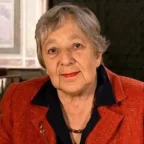
Flores d'Arcais, Francesca
b. 1935
Francesca Flores d'Arcais was born in 1935. She completed her studies in Padua under the guidance of Professors Sergio Bettini and Rosolfo Pallucchini, two pillars of twentieth-century Italian art history: Bettini, an expert on Byzantine and Venetian art; Pallucchini, a leading authority on Venetian painting. From this school, Flores d'Arcais drew the rigorous method and deep knowledge of the figurative culture of northeastern Italy that characterize her entire scholarly output.
She served as a full professor of Medieval and Modern Art History, and later of Medieval Art History, at the Universities of Padua, Verona, and the Catholic University of Milan, where she was director of the Department of Medieval and Modern Art History from 2006 to 2010. She also served as director of the Graduate School of Art History at the Catholic University of Milan.
Her academic career thus spanned three of the most important universities in Veneto and Lombardy, establishing her as an internationally recognized authority in the field.
Flores d'Arcais's scholarly work is structured around four main areas: fourteenth-century Paduan painting (with studies on Giotto, Guariento, Altichiero, and Avanzo); fourteenth-century Venetian painting (notably her essay La pittura in Storia di Venezia, 1994, and the Paolo Veneziano exhibition, Rimini 2000); fourteenth-century miniature painting between Padua and Bologna; and Venetian painting of the seventeenth and early eighteenth centuries, especially Sebastiano Ricci.
Among her major publications, her first major monograph was dedicated to Guariento (1965, in the series Profili e Saggi di Arte Veneta, with a preface by Sergio Bettini), later reissued in 1974 as Guariento: tutta la pittura. Her monograph on Giotto offers an exhaustive reconstruction of the master's oeuvre, from his training to his late period, and includes important reattributions and new conclusions on chronology, execution, and restoration evidence, including reflections after the 1997 earthquake damage in Assisi. The study, accompanied by more than three hundred illustrations, has been translated into several languages.
She curated the exhibition on Paolo Veneziano (Rimini, 2000), with the corresponding scholarly catalog, and edited the eighth volume of the series Painting in the Veneto, titled Painting in the Veneto. The Origins (Mondadori Electa, 2004-2005). The volume combines a territorial reading, from Venice to the mainland, with thematic investigations on miniature painting and mosaics, and situates painting within a broader material context that includes sculpture, goldsmithing, textiles, and wall hangings.
Among her curated exhibitions, a central place is held by Guariento and Carrarese Padua (Padua, 2011), known as Guariento. The Master of the Angels, curated with Davide Banzato and Anna Maria Spiazzi. The exhibition reunited and compared nearly all of Guariento's dispersed angel figures within a wider Gothic framework including Venetian, Bolognese, and Bohemian counterparts.
Flores d'Arcais's stature within Italian art history is further attested by the Studies in Honor of Francesca Flores d'Arcais, which inaugurated the Quaderni di Storia dell'arte, a new periodical publication promoted by the Institute of Art History at the Catholic University of the Sacred Heart.
Flury-Lemberg, Mechthild
Hamburg, 21 February 1929
Mechthild Flury-Lemberg trained first in textile design in Hamburg and then studied art history at the universities of Kiel and Munich, beginning but not completing a doctoral dissertation. She worked as a textile conservator at the Bavarian National Museum and then at the Historical Museum of Bern before settling permanently in Switzerland in 1957. In 1963 she moved to the Abegg-Stiftung, the private textile-research foundation in Riggisberg, where she built up and headed a dedicated department of textile conservation until her retirement in 1994 — a department that, under her direction, trained more than a hundred conservators and effectively defined the modern discipline of textile conservation in the second half of the twentieth century.
Among her best-known projects at the Abegg-Stiftung was the reconstruction, published in 1988, of the liber linteus Zagrabiensis, a roughly 2,200-year-old Etruscan linen book that had been cut into strips and reused as mummy wrappings; by piecing the strips back into their original sequence she made the text legible again, recovering a substantial share of the Etruscan vocabulary known today. She also worked on the Great Lenten Veil of Zittau and on liturgical and devotional textiles associated with Anthony of Padua, Sigismund of Bohemia, and Francis of Assisi. In 1987 she received the German Federal Cross of Merit, and in 1989 the University of Bern awarded her an honorary doctorate in its philosophical-historical faculty for her contributions to textile research; the town of Zittau made her an honorary citizen in 2004.
Called out of retirement in 2002, Flury-Lemberg led the conservation of the Shroud of Turin, removing the sixteenth-century backing cloth and the patches added after the 1532 fire and examining the cloth's weave and stitching at first hand. She identified a three-to-one herringbone twill she judged exceptional for antiquity, and a seam joining a narrow reinforcing strip to the main panel that she found technically comparable to hems recovered from the Jewish fortress of Masada, datable between 40 BC and AD 73; on this technical basis she concluded that the weaving and sewing of the shroud displayed no feature inconsistent with a first-century origin — a judgement she set alongside her long-standing skepticism toward the 1988 radiocarbon dating, which she believed had been compromised by centuries of handling and surface contamination. She published her findings in Sindone 2002 (2003) and, more broadly, in Textile Conservation and Research (1988) and the memoir Fünf Jahrzehnte Textilkonservierung ("Five Decades of Textile Conservation," 2009).
It was this same textile connoisseurship that Flury-Lemberg brought to the patched tunic of Francis of Assisi preserved in the Basilica di San Francesco. Building on research first published by the Abegg-Stiftung in 1988 and largely unnoticed for two decades, she examined the thirty-one patches sewn onto the garment and identified nineteen of them as cut from a single piece of cloth, a woollen mantle roughly 356 by 55 centimetres; comparing weave, thread and stitching, she argued that this mantle had belonged to Clare of Assisi and that a single hand had performed the mending, raising the possibility that Clare herself repaired Francis's habit. The finding was made public in the Basilica di San Francesco's own review, San Francesco, Patrono d'Italia, in 2019.
Folda, Jaroslav
active late 20th-21st century
Jaroslav Folda e uno storico dell'arte americano, a lungo professore presso il Department of Art History dell'Università della North Carolina a Chapel Hill (UNC-Chapel Hill), dove ha trascorso la maggior parte della sua carriera accademica. La sua formazione si svolse nei principali centri di studi medievali degli Stati Uniti, e si specializzo precocemente nell'intersezione tra arte bizantina, arte crociata e pittura italiana del Duecento e Trecento.
Specializzazione sull'arte crociata
Folda e riconosciuto a livello internazionale come il massimo esperto di arte crociata, ovvero la produzione artistica dei regni latini d'Oriente sorti a seguito delle Crociate, tra cui il Regno di Gerusalemme, il Principato di Antiochia e il Regno di Cipro. Sin dai suoi primi lavori degli anni Settanta, come il fondamentale saggio del 1973 sui manoscritti della Historia di Outremer di Guglielmo di Tiro pubblicato su Scriptorium, Folda dimostro un'attenzione filologica straordinaria per i manoscritti miniati e la loro circolazione nell'Oriente crociato.
Opere principali
La sua opera piu celebre e monumentale e Crusader Art in the Holy Land: From the Third Crusade to the Fall of Acre, 1187-1291 (Cambridge University Press, 2005), che rappresenta la sintesi definitiva sull'arte prodotta nei regni crociati nel periodo della loro massima fioritura. In precedenza aveva pubblicato The Art of the Crusaders in the Holy Land, 1098-1187 (Cambridge University Press, 1995), che copre il periodo formativo dei regni latini. A queste si aggiunge la monografia Byzantine Art and Italian Panel Painting: The Virgin and Child Hodegetria and the Art of Chrysography (Cambridge University Press, 2015), opera di straordinaria importanza per i suoi studi sulla pittura su tavola italiana del XIII secolo, nella quale analizza il rapporto tra la tradizione iconografica bizantina della Madonna Hodegetria e la nascente scuola pittorica toscana, dedicando ampia attenzione a opere come la Madonna del Museo Pushkin di Mosca del Maestro della Croce 434.
Contributi alla storia della miniatura crociata
Folda ha dedicato decenni allo studio dei manoscritti miniati prodotti negli scriptoria dei regni crociati, in particolare quelli legati alla corte di San Giovanni d'Acri nel XIII secolo. I suoi studi sui manoscritti di Guglielmo di Tiro, sulle Bibbie degli Atelier di San Giovanni d'Acri e sulle icone bizantine di area crociata hanno ridefinito la comprensione degli scambi artistici tra Oriente e Occidente nel Medioevo. Ha anche approfondito i legami tra gli ordini mendicanti, Domenicani e Francescani, e la committenza artistica nei territori crociati.
Riconoscimenti e influenza
Folda e stato visiting professor e conferenziere in numerose istituzioni europee e americane, ed e membro di comitati scientifici della Society for the Study of the Crusades and the Latin East, per la quale ha partecipato a convegni internazionali tra cui quello tenuto a Nicosia nel 1994 su Cipro e le Crociate. Il suo metodo combina la rigorosa analisi stilistica e iconografica con la ricerca archivistica e documentaria, un approccio che ha influenzato generazioni di medievisti americani ed europei. La sua opera sulla crisografia e sulla pittura italiana del Duecento resta un riferimento imprescindibile per chiunque studi la pittura di Cimabue, del Maestro della Croce 434 e dei maestri anonimi della prima scuola fiorentina e senese.
Fontana, Giovanni
Padua, c. 1395 - after 1454
Giovanni Fontana was an Italian scholar, physician, engineer, and humanist active in the early fifteenth century, especially in Padua and the Venetian world. He belongs to that generation of pre-Renaissance polymaths who combined scholastic learning with experimental curiosity, mechanical design, and a sustained interest in cryptography and hidden writing systems.
Born around 1395 in Padua, from a Venetian family (his father was Michele da Venezia), Fontana studied at the University of Padua and is documented there between 1417 and 1421; in 1421 he also served as Rettore delle Arti. His education stood at the intersection of late medieval Aristotelian culture and the emerging humanism of the Veneto. He later practiced medicine in multiple cities, while repeatedly noting how difficult it was to access books outside major intellectual centers.
His writings draw on Greek, Latin, and Arabic traditions and range across mechanics, optics, hydraulics, natural philosophy, and mnemonic theory. He is among the earliest Latin authors to refer to firearms (bombarde), indicating a concrete interest in contemporary military technology. Some scholars, including Lynn Thorndike, have argued that Fontana should be identified as the real author of the Liber de omnibus rebus naturalibus, traditionally linked to Pompilio Azalio, further strengthening his profile as a synthetic and inventive thinker.
Fontana is best known for the Bellicorum instrumentorum liber cum figuris et fictitiis litteris conscriptus, composed around 1420 in Venice. This extraordinary illustrated manuscript, now preserved in Munich (Bayerische Staatsbibliothek, Cod. Icon. 242), contains roughly 140 pages of machine drawings accompanied by commentary in a cipher he devised. The designs include siege devices, hydraulic pumps and fountains, lifting mechanisms, drag-boats, locks, ratchets, gear systems related to horology, and a range of automata and pyrotechnic contrivances.
Among the most celebrated features of the codex is the earliest known representation of a magic-lantern-like projection device, along with theatrical and devotional special-effects machinery. This blend of practical engineering, military applications, visual illusion, and staged spectacle shows that Fontana did not draw strict boundaries between technology, natural magic, and performative invention.
His use of ciphered text reflects more than secrecy. It points to a broader reflection on signs, communication, and the encoding of knowledge through text and diagram. In this respect, Fontana's work anticipates later humanist and early modern debates on symbolic systems and technical representation. He also contributed to the study of the camera obscura and image formation, positioning him within the long prehistory of projection and optical experimentation.
Although long overshadowed by later figures such as Leonardo da Vinci, Fontana is now increasingly recognized as a crucial precursor. He predates Leonardo by decades and demonstrates that sophisticated design drawing, mechanical imagination, and experimental problem-solving were already strongly developed in early fifteenth-century Italy. For historians of technology and visual culture, he stands as a key bridge between late medieval scholastic science and the drawing-based engineering culture of the early Renaissance.
Franz, Gunther
b. Strasbourg, 5 February 1942
Gunther Franz is a German theologian, historian and librarian. He was born in Strasbourg on 5 February 1942, the son of the historian Günther Franz and the brother of the archivist Eckhart G. Franz. He studied Protestant theology at Tübingen from 1961 to 1967, with some semesters at Heidelberg and Mainz, and took his doctorate in theology at Tübingen in 1969. In 1971 he passed the civil-service examination for the higher library service.
He worked at the Universitätsbibliothek Tübingen until 1982, serving as library director from 1980. From 1982 to 2007 he was chief library director of the Stadtbibliothek and Stadtarchiv Trier, the institution that holds the Codex Egberti. He taught history and book history at the University of Trier from 1984 to 1999, added art history from 1990–1991, and became honorary professor of cultural and regional history there in 1999.
His research covers the cultural and regional history of south-west Germany and Luxembourg in the early modern period, manuscripts, book and library history, and church and legal history, together with studies of Caspar Olevian and Friedrich Spee. He edited the series Cimelia Trevirensia and Bibliotheca Trevirensis and the collection Armaria Trevirensia (1985) on the history of the Trier library; his writings on the history of the city library were collected in Bibliotheca publica civitatis Trevirensis (2022).
For the Codex Egberti he was co-author, with Franz J. Ronig, of the commentary to the partial facsimile of 1983 (Wiesbaden, Reichert), and editor of the commentary volume accompanying the 2005 facsimile of the Faksimile Verlag, Lucerne, which gathered the technical and art-historical studies on the division of hands. In 2010 he received the Friedrich Spee-Plakette of the Heimat- und Bürgerverein Kaiserswerth.
Fratini, Corrado
active late 20th-21st century
Corrado Fratini is an Italian art historian specializing in medieval and early Renaissance painting in Umbria, and widely regarded as a leading authority on the artistic culture of southern Umbria, especially the Terni-Narni-Amelia-Orvieto axis.
Fratini has taught Storia dell'arte medievale at the University of Perugia and spent much of his professional life in close relation to the Umbrian soprintendenza system. His scholarly profile reflects the territorial connoisseurship of a funzionario who knows the regional patrimony church by church, a method that defines his publications. This approach places him in the Umbrian school developed by Federico Zeri, Pietro Scarpellini, and above all Bruno Toscano: attributive, source-based, and attentive to minor centers outside the main Perugia-Assisi corridor.
Fratini's central contribution has been to provide southern Umbria, long treated as peripheral to the Perugino-centered narrative, with its own art-historical map. Recurring lines of research include:
- Late-Gothic and early-Renaissance painting in the Ternano: his study Pittori dell'area ternana fra la fine del '300 e l'inizio del '400, in the Zeri-edited proceedings Dall'Albornoz all'eta dei Borgia (Amelia conference 1987, published 1990), is a foundational reference for the region.
- The Umbria-Marche comparison: in Pittura fra Marche e Umbria: primi passi per una storia comparata (in Il Maestro di Campodonico, Fabriano, 1998), part of a sustained focus on the porous artistic frontier between the two regions.
- Duecento painting and Franciscan context: his essay La pittura "umbra" del Duecento: cio che "vide" o che avrebbe potuto vedere la beata Angela, in Enrico Menesto's L'Umbria nel XIII secolo (Spoleto, 2011), reconstructs the visual world available to Angela da Foligno.
- Sculpture in the age of Piermatteo d'Amelia: including Scultori e pittori nell'Umbria meridionale al tempo di Piermatteo d'Amelia (in the Fra' Carnevale volume, 2004) and Nuove acquisizioni per la scultura "umbra" trecentesca (Foligno, 2000).
- Territorial cataloguing: co-edited with Caterina Bon Valsassina, the catalogue of works of art at Collazzone (Todi, 1999), representative of the granular local catalogo tradition that underpins Umbrian scholarship.
He also contributed the entry La cultura figurativa, secoli XIV-XV to the volume Perugia (Electa, 1993), and his attributions are cited as standard reference points in the Treccani encyclopedia of medieval art.
Freuler, Gaudenz
active 20th–21st century
Gaudenz Freuler is a Swiss art historian associated with the Kunsthistorisches Institut of the University of Zurich, and one of the principal modern authorities on Sienese painting of the fourteenth and early fifteenth centuries. His scholarship combines archival research with close technical examination of panels, gilding, and punchwork, an approach that has allowed him to reconstruct dismembered altarpieces and to trace the material connections — shared tools, shared workshop practices — between painters previously studied only in isolation.
Freuler's publications on Luca di Tommè and his Sienese contemporaries, including a 1991 study of Trecento and Quattrocento Italian panels in Swiss and Liechtenstein collections, his 1994 monograph on Bartolo di Fredi, and a 1997 article on the legacy of Pietro Lorenzetti after 1350, established much of the documentary and technical evidence underlying the modern hypothesis that leading Sienese painters of the post-plague generation worked within loosely structured cooperative arrangements rather than strictly hierarchical workshops.
Frey, Karl
Berlin, 26 November 1857 - Berlin, 11 March 1917
Karl Frey was one of the most important German art historians at the turn of the twentieth century, specializing in the critical edition of medieval and Renaissance sources on Italian art. His philological work on primary texts, from Ghiberti's writings to the Commentarii, from Vasari's correspondence to the Codice Magliabechiano, opened new lines of inquiry for the discipline and remains a fundamental scholarly tool.
Frey studied at the University of Berlin, where he earned his doctorate in 1881 in medieval history with the dissertation Die Schicksale des koniglichen Gutes in Deutschland unter den letzten Staufern. His transition from general historical studies to art history was gradual: beginning in autumn 1885, he taught art history on a temporary basis at the Academy of Fine Arts in Dusseldorf; by spring 1887 he had returned to Berlin as extraordinary professor of art history at the university, a position he held until his death.
His academic path reflects a trait common to many art historians of his generation: a strong historical-philological formation systematically applied to Italian pictorial and documentary sources. Frey's most enduring contribution was the critical edition of the Codice Magliabechiano (Berlin, 1892), the sixteenth-century Florentine manuscript preserved in the National Library of Florence. This edition made possible, for the first time, a systematic comparison of textual traditions in sixteenth-century Florentine art historiography and helped launch decades of debate on the interrelationships among Vasarian and pre-Vasarian sources.
Complementary to this undertaking was his edition of Giorgio Vasari's correspondence (from 1563 to 1565), completed after Frey's death and published between 1923 and 1940 by his son Herman-Walther Frey. Frey also acquired Vasari's autograph manuscript of the Ricordanze, which he used directly in his source-based research.
Frey also devoted substantial effort to Michelangelo's drawings, publishing the three-volume Die Handzeichnungen Michelangelo Buonarroti between 1909 and 1911; a fourth posthumous volume was later completed by Fritz Knapp from Frey's unfinished preparatory materials. He also published Michelangelo's Youth, a significant contribution to the study of the master's formative years.
Within the methodological debates of his time, Frey was not free from criticism. As early as 1901, Georg Dehio remarked that some of Frey's positions on stylistic criticism (Stilkritik) should be treated as curiosities, highlighting a persistent tension between his predominantly philological source criticism (Quellenkritik) and attributional methods based on visual stylistic analysis.
Frey's intellectual stature lies in his conception of art history as a discipline grounded above all in the critical and comparative study of primary documents. Working at a moment when art history was seeking autonomy from history tout court, he stands as a transitional figure: deeply formed by medieval philology, yet applying that rigor to the specific problems of late medieval and Renaissance Italian art. His work belongs to the broader methodological renewal associated with the German Kunstkenner era, though he remained distinct for consistently prioritizing written sources over purely visual stylistic analysis.
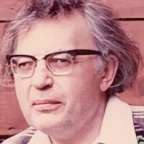
Frinta, Mojmir Svatopluk
Prague, 28 July 1922 - New York City, 21 January 2015
Mojmir Svatopluk Frinta was a Czech-American art historian, conservator, and educator whose work bridged technical practice and scholarly analysis in ways unusual for his generation. Beginning as a painter and restorer in postwar Prague and Paris, he became one of the world's leading authorities on later medieval painting and sculpture, particularly on the punched decoration of gilded surfaces in Trecento and Quattrocento Italian panel painting and manuscript illumination. He pursued that specialization systematically over more than three decades, and his 1998 catalogue raisonne became a standard reference tool across the field.
Frinta was born on 28 July 1922 in Prague, the son of Antonin Frinta, a founding member of the Prague Linguistic Circle, the structuralist research group around Roman Jakobson and Nikolai Trubetzkoy that transformed European linguistics. He and his brother Jeronym grew up in Vinohrady, a Prague district known for its academic and professional families, and he developed an early ambition to become a painter.
Between 1941 and 1943 he attended the School of Graphic Arts and the School of Applied Arts in Prague. After the liberation in 1945, he pursued both studio work and academic training simultaneously, studying art history at Charles University in Prague from 1945 to 1947. He then won a French government exchange scholarship (Bourse d'Echange du Gouvernement Francais) to Paris, where he attended the Academie Andre Lhote, enrolled in fresco and lithography courses at the Ecole Nationale Superieure des Beaux-Arts, and took courses at the Ecole du Louvre. Crucially, he also trained as a restorer at the renowned Parisian atelier of Chauffrey et Muller, acquiring the manual and technical expertise that would distinguish his later scholarly work.
While in Paris he met Irena Altmanova, also an artist and student, and the two married in 1948. As political conditions in Czechoslovakia deteriorated under the new Communist government, their families urged them to remain in the West. Sponsored by a distant cousin in Michigan, they emigrated to the United States in 1951.
Settling in Ann Arbor, Frinta continued his studies at the University of Michigan, where he received an M.A. in 1953 and a Ph.D. in the History of Art in 1960. His doctoral dissertation addressed the sculpture of the Beautiful Style (Schoner Stil) in Central Europe around 1400, the late Gothic manner of refined, elegantly draped figures that flourished in Bohemia, Austria, and the Rhineland at the turn of the fourteenth to fifteenth centuries.
Even before completing his doctorate, Frinta joined the staff of the Metropolitan Museum of Art in New York in 1955, where his background as a trained restorer gave him immediate entry into the Medieval Department and The Cloisters, the museum's medieval branch in Fort Tryon Park. He served there as senior restorer until 1963. Conservation scholars Lucretia Kargere and Michele Marincola later observed that Frinta combined the manual skill required for restoration work with a thorough scholarly education in art history and an unusual capacity for independent research. He employed scientific techniques including X-ray radiography in his investigations, and was notably progressive in resisting over-restoration: at The Cloisters Lamentation he deliberately left areas of loss distinguishable from original paint rather than painting them over, a position rooted in his conviction that the integrity of a work demanded honesty about what was original and what was not.
In 1963 Frinta moved his family to Altamont, a village near Albany, New York, having received an appointment at the State University of New York at Albany. He was the first art historian in the university's expanding Art Department. He became an associate professor in 1965 and full professor in 1969, remaining on the faculty for thirty years before retiring as Professor Emeritus in 1993. In the autumn of 1991 he returned to Charles University in Prague as a visiting professor. Among his students at Albany were Michael Oatman and Ken Johnson, later an art critic for the New York Times.
He was fluent in Czech, English, French, German, and Italian, and could read Latin, Spanish, and several other Slavic languages, a breadth that enabled his research to engage primary literature across the full geographic sweep of his interests.
Frinta's research centred on three interlocking areas: the sculpture and painting of the Beautiful Style in late fourteenth-century Central Europe; early Netherlandish painting and the attribution problems surrounding the Master of Flemalle; and above all the punched decoration of gilded surfaces in Italian Trecento and Quattrocento panel painting and manuscript illumination.
His first book, published by Mouton & Co. at The Hague in 1966, addressed one of the most contested attribution problems in Northern European painting: the identity and oeuvre of Robert Campin (c. 1375-1444), the Tournai painter long associated with the anonymous Master of Flemalle, whose relationship to the young Rogier van der Weyden had divided scholars since Max Friedlander's foundational study. Frinta argued for a more expansive attribution to Campin of certain works that others had assigned to Rogier, drawing on technical and stylistic evidence. The book was reviewed in the Art Bulletin in 1970 and generated discussion, though its specific attributions were not broadly adopted by later scholarship.
From the mid-1960s onward Frinta devoted the bulk of his research to a problem that few scholars had systematically addressed: the identification, cataloguing, and art-historical exploitation of the motif punches used by medieval painters and manuscript illuminators to decorate gilded surfaces, including halos, backgrounds, and borders, with small repeated impressions of leaves, flowers, rosettes, and geometric patterns. Each punch head, typically of hardened metal, produced a unique impression whose shape and wear profile could in principle be linked across objects, establishing connections between workshops, artists, or patrons.
Frinta published a foundational article on the subject in the Studies in Conservation proceedings of the IIC Lisbon Congress in 1972. Subsequent articles appeared in the Burlington Magazine, in the National Gallery of Art's Studies in the History of Art, and in major international congress proceedings including the CIHA meetings in Budapest and Vienna. A notable early contribution was his article on punchmarks in the Ingeborg Psalter, published in the proceedings of the Metropolitan Museum's Year 1200 symposium, among the first analyses extending the punch methodology explicitly to manuscript illumination.
After approximately thirty-five years of fieldwork in Italian and Northern European collections, Frinta published the results as Punched Decoration on Late Medieval Panel and Miniature Painting. Part I: Catalogue Raisonne of all Punch Shapes (Prague: Maxdorf, 1998, 556 pp.). The volume catalogs punch impressions from Italian panel painting and book illumination of the fourteenth and fifteenth centuries, and from regions north of the Alps, particularly Bohemia, as well as some early Byzantine material. Photographs of each impression are enlarged threefold and accompanied by a metric scale for precise measurement. Below each punch image, a list identifies every known painting or manuscript on which that punch appears. The book received the Millard Meiss Publication Grant from the College Art Association.
The companion volume, Part II: History of the Procedure, remained unfinished at his death, and a third book was completed in manuscript and awaiting corrections for a Belgian publisher when he died, suggesting that his research programme remained active into his early nineties.
Frinta's punch methodology is now understood as a foundational tool for Trecento attribution studies, comparable in ambition to Erling Skaug's parallel catalogue of Tuscan punch marks, Punch Marks from Giotto to Fra Angelico (1994), which focused narrowly on Tuscany. The two projects are complementary: Skaug's work is geographically restricted but presents comparative charts in greater analytical detail, while Frinta's is geographically wider, covering Italy broadly and extending into Central Europe, Bohemia, and Byzantine material. Museum catalogues at the National Gallery of Art, the Harvard Art Museums, the Yale University Art Gallery, and many other institutions routinely cite Frinta 1998 in the technical literature on individual Trecento and Quattrocento panels.
Frinta received research grants from the National Endowment for the Humanities in 1977-78 and again in 1982-84, was a Senior Fellow at the Center for Advanced Study in the Visual Arts at the National Gallery of Art in 1984-85, and held a Fulbright Fellowship in 1987. He was a member of the Medieval Academy of America, the International Center of Medieval Art, and the College Art Association, and participated in the Czechoslovak Society of Arts and Sciences in America from its founding congress in Washington in 1962.
The Frintas settled permanently in Altamont, New York, where Mojmir and Irena lived for over thirty years, raising their three children, Daniel, Dagmar, and Richard. The family spent two extended sabbatical years in Florence, travelling widely across European collections in the course of Frinta's research. In later life, despite quadruple bypass surgery in 2001, he continued fieldwork and writing with undiminished energy.
Mojmir Frinta died in New York City on 21 January 2015 at the age of 92. His wife Irena, who had supported and accompanied his research throughout, survived him; they had been married for sixty-six years. For researchers working on Italian Trecento and early Quattrocento panel painting, and on the connection between panel painting workshops and manuscript illumination, Frinta's 1998 Catalogue Raisonne remains an essential technical reference. His punch analysis has been applied directly to attributions involving Pietro Lorenzetti, Bartolo di Fredi, Bernardo Daddi, Andrea di Bartolo, and many other Sienese and Florentine painters. The catalogue also extends to miniature painting, making it directly relevant to the study of Italian illuminated manuscripts in which gilded surfaces were decorated by related punch methods and occasionally with the same tools found in panel painting.
In "Searching for an Adriatic Painting Workshop with Byzantine Connection" (Zograf 18, 1987) he suggested, according to the Palazzo Venezia entry, that the anonymous Master of the Sterbini Diptych was possibly active on the Dalmatian coast.
Frugoni, Chiara
Pisa, 4 February 1940 - Pisa, 9 April 2022
Chiara Frugoni was an Italian medieval historian who made images a primary source for the history of medieval society and mentality, and who became, through her books on Francis of Assisi, Giotto and daily life in the Middle Ages, one of the most widely read Italian historians of her generation.
She was born in Pisa on 4 February 1940, the daughter of the medievalist Arsenio Frugoni, who taught at the Scuola Normale Superiore from 1954 to 1962 and died in a car accident in 1970 together with her brother Giovanni; with him she wrote Storia di un giorno in una città medioevale (Laterza, 1997), and to their relationship she devoted the memoir Perfino le stelle devono separarsi (Feltrinelli, 2013). She took her degree at the University of Rome La Sapienza in the mid-1960s with a thesis on the theme of the Three Living and the Three Dead in Italian medieval tradition, published in the Memorie of the Accademia Nazionale dei Lincei in 1967, and then followed the postgraduate course of the Scuola Normale in Pisa. Her earliest work appeared under the name Chiara Settis Frugoni, from her first marriage to the archaeologist Salvatore Settis.
From 1974-75 she taught the exegesis of the sources of medieval history in the Faculty of Letters at Pisa; in 1980 she won the national competition for a full chair, and until 1988 she held the third chair of medieval history at Pisa, alongside Cinzio Violante and Emilio Cristiani. From 1988 to 2000 she was professor at the University of Rome Tor Vergata, and she also taught at the University of Paris VIII. In 2000 she resigned her chair to devote herself to research and to writing for a wide public, contributing to la Repubblica and il manifesto and to RAI programmes. From 2012 she was the founding president of the Associazione Amici della Biblioteca Universitaria di Pisa. She died in Pisa, at the Cisanello hospital, on 9 April 2022, after a long illness.
Her method treated the image not as illustration but as a document with its own evidentiary weight, to be read against texts and against the society that commissioned it. Una lontana città. Sentimenti e immagini nel Medioevo (Einaudi, 1983; English translation A Distant City, Princeton, 1991) followed the representation of the city from late antiquity to the fourteenth century. Her work on Francis of Assisi transformed the field: Francesco e l'invenzione delle stimmate (Einaudi, 1993), which won the Premio Viareggio for non-fiction in 1994, traced how the stigmata were constructed in text and image down to Bonaventure and Giotto, and Vita di un uomo: Francesco d'Assisi (Einaudi, 1995, with a preface by Jacques Le Goff) became a standard life. She wrote on the Lorenzetti (Pietro e Ambrogio Lorenzetti, Scala, 1988, and articles on the Sienese frescoes of Good Government in 1979 and 1980), on the Scrovegni Chapel (L'affare migliore di Enrico, Einaudi, 2008), and on the Franciscan cycle at Assisi (Le storie di San Francesco, 2010; Quale Francesco?, 2015). Medioevo sul naso (Laterza, 2001), on spectacles, buttons and other medieval inventions, opened a late series of books on daily life for Il Mulino, from Vivere nel Medioevo (2017) to Donne medievali (2021).
Her interest in the labours of the months ran through several studies — on the Church and agricultural labour in texts and images (1979), on the months of the Porta della Pescheria at Modena Cathedral (1991), and on Antelami's months in the Baptistery of Parma (1992) — and it is in this perspective that she discussed the Fontana Maggiore of Perugia, in Una lontana città. She is cited for the observation that the fountain's calendar stands far from the biblical view of work as an individual punishment: the labours of the Perugian year are presented instead as a shared activity of the whole community, and the reading has become a reference point in the interpretation of the lower basin.
Fuchs, Robert
b. 1949
Robert Fuchs is a German analytical chemist and, alongside the art historian Doris Oltrogge, one half of the most productive chemist/art-historian partnership in the technical study of medieval book illumination. For nearly three decades he held the chair for the restoration and conservation of written material, graphics, photographs and book painting at the Fachhochschule Köln - later the Technische Hochschule Köln - where he built the non-destructive analytical laboratory that underlies most modern technical scholarship on the materials of medieval manuscripts.
Fuchs studied chemistry and Egyptology at the Eberhard Karls Universität Tübingen, deliberately pairing his science coursework with seminars in art history and archaeology; he felt most at home in Egyptology, then chaired by the noted Egyptologist Helmut Brunner. He completed his Diplom in 1980 with a thesis on the structure and properties of the green pigments antlerite and Casselmann's green, and took his doctorate in 1983 in chemistry with Egyptology as a subsidiary subject - an unusual combination that reportedly gave the science faculty's board some difficulty in approving. His dissertation, supervised by Joachim Strähle, was on the structure and properties of lanthanide acetates, solving the single-crystal structures of highly coordinated organometallic rare-earth-metal acetates; the electrical conductivity of the chain structure of scandium acetate proved of particular interest for further research.
As a fellow of the Fritz Thyssen Foundation at the University of Würzburg, Fuchs took on the scientific and technical entries for the Lexikon der Ägyptologie, contributing more than twelve articles on materials used in ancient Egypt, from ochre to tin; his entry on "Technik" (technique), summarising the technical and technological achievements of five thousand years of ancient Egyptian civilisation, ran to forty-five columns and was the longest single article in the entire reference work.
In 1984 Fuchs realised a project he had originally planned in Würzburg with the art historian Heinz Roosen-Runge, the leading authority on the technique of medieval book painting as recorded in historical sources: an interdisciplinary research centre devoted to that subject. Roosen-Runge's sudden death forced a change of venue, and under the auspices of the Nobel laureate Manfred Eigen of the Max Planck Institute, the DFG-funded project found a new home at the University of Göttingen as the Forschungsstelle für Technik mittelalterlicher Buchmalerei (Research Unit for the Technique of Medieval Book Painting), with Oskar Glemser supervising the chemistry, Karl Arndt the art history, and Helmut Vogt the library side of the work. Fuchs was its lead researcher from 1984 to 1989, paired throughout with an art-historical partner - first Solange Michon, then, from 1986, Doris Oltrogge - in what was for a long time the only DFG-funded interdisciplinary research team combining the humanities and the natural sciences. The unit's method, which became the template for Fuchs's later career, was to collect and interpret medieval recipes and technical instructions, reconstruct the pigments and paint samples they described, compare the samples non-destructively against original manuscripts, artificially age the samples through climate testing to study damage mechanisms, and only then test candidate conservation treatments on the samples before ever applying them to an original.
That final step - the move from laboratory reconstruction to practical conservation - found an institutional home in 1989, when the Fachhochschule Köln established a chair for the restoration and conservation of written material, graphics, photographs and book painting within its department of restoration and conservation of art and cultural property. Fuchs held this chair from 1989 to 2017 and succeeded in integrating the Göttingen research unit into it, bringing with it the specially built, DFG-funded instrumentation for wholly non-destructive analysis that became the foundation of the Laboratory for the Non-Destructive Analysis of Works of Art, expanded continuously since. He directed the Cologne Institute of Conservation Sciences (CICS) itself from 2009 to 2015, and sat on the Senate of the Technische Hochschule Köln from 2011 to 2016. Over his active career he trained more than 172 students to the diploma, BA and MA levels and guided a number to the doctorate, and he published the results of his research in more than 200 scholarly contributions.
Since 1984 Fuchs's research has centred on book painting and coloured graphic art, and on writing and ink materials and their conservation; since 1986 this work has been carried out with Oltrogge and other collaborators as a continuous interdisciplinary programme on medieval book painting, art-technological written sources, and historical materials. Their joint publications include technical studies of the Master of the Registrum Gregorii, of manuscripts from Ottonian Hildesheim associated with Bishop Bernward, of the World Chronicle of Rudolf of Ems, and - the study for which Fuchs is most cited in the literature on the Codex Aureus of Echternach - Die Maltechnik des Codex Aureus aus Echternach: ein Meisterwerk im Wandel (Nuremberg: Verlag des Germanischen Nationalmuseums, 2009), the systematic technical examination of every painted and ornamental page of the Nuremberg manuscript.
Fuchs was a Getty Foundation fellow in 1991, chaired the Arbeitskreis Archäometrie (Working Group on Archaeometry) within the Analytical Chemistry division of the German Chemical Society (GDCh) from 2002 to 2014, and served on advisory boards including those overseeing fire-damage management at the Herzogin Anna Amalia Bibliothek in Weimar and, after the catastrophic 2009 collapse of the Historical Archive of the City of Cologne, the archive's own advisory board and the board of trustees of the city's Stiftung Stadtgedächtnis. He is also active in the working group Antike Pigmente (Ancient Pigments), devoted to translating ancient pigment-recipe texts from Theophrastus to Heraclius. Fuchs was emeritated on 1 September 2017. In retirement he continues to research nineteenth- and twentieth-century colour materials under the BMBF-funded programme WELTBUNT, and works as an expert witness in the investigation of art forgeries and in damage assessments for archives and libraries destroyed by disaster; in 2018/2019 the GDCh named him its Fresenius Lecturer.
G
Galatariotou, Catia
active 1984–1993 and beyond
Catia Galatariotou is a British Byzantine scholar whose work, concentrated in roughly a decade of exceptional productivity between 1984 and 1993, made a lasting and methodologically innovative contribution to the study of Byzantine hagiography, monastic culture, gender, and social history. She is best known as the author of The Making of a Saint: The Life, Times and Sanctification of Neophytos the Recluse (Cambridge University Press, 1991), which remains the standard monograph on the saint. Her work connects directly to the wider scholarly constellation assembled here — she cites Mango and Hawkins's 1966 Dumbarton Oaks Papers study of the Enkleistra frescoes as a cornerstone reference throughout her research.
Galatariotou completed her doctoral thesis, "Neophytos the Recluse: A Cultural Study of a Byzantine Holy Man," at the University of Birmingham, Centre for Byzantine and Modern Greek Studies, in 1985–1986. Her first articles appeared in print even before her thesis was complete, indicating a scholar whose ideas were already fully formed at a precocious stage. Alongside work by Alexander Kazhdan, her articles on Byzantine sexuality were recognised as among the pioneering contributions to the use of hagiographic material for the social history of Byzantium.
What distinguished her scholarship from the first was a commitment to reading Byzantine hagiographic texts not merely as pious narratives or historical chronicles, but as windows into Byzantine mentality, social structure, and cultural construction. She brought to bear on medieval Greek sources the theoretical tools of Western social history and gender studies — above all the work of Peter Brown on holy men and Evelyne Patlagean on family and social structures — and applied them with rigour and sensitivity to the peculiarities of the Byzantine Orthodox world.
Her first major article, "Holy Women and Witches: Aspects of Byzantine Conceptions of Gender" (Byzantine and Modern Greek Studies 9, 1984–85, pp. 55–94), opened a domain — Byzantine women's history — that she recognised as almost entirely unexplored, examining the binary structure of female representation in Byzantine religious literature and arguing that these oppositions mapped onto fundamental anxieties in Byzantine patriarchal culture.
In 1987 she published two landmark studies simultaneously. "Byzantine Ktetorika Typika: A Comparative Study" (Revue des Études Byzantines 45, 1987, pp. 77–138) presented a comprehensive list of monastic foundation charters and established a typology distinguishing "aristocratic" from "non-aristocratic" typika, each containing clauses that reveal distinct attitudes towards spirituality, the lay world, the ephoros, administration, and the individual monk. This typology, rigorously argued from the full corpus of surviving documents, has proved durable and continues to structure scholarly discussion of Byzantine monastic foundation charters. In the same year she published "Structural Oppositions in the Grottaferrata Digenes Akrites" (Byzantine and Modern Greek Studies 11), a structuralist analysis of the Byzantine epic demonstrating the range of her methodological interests beyond hagiography.
Her most daring article, "Eros and Thanatos: A Byzantine Hermit's Conception of Sexuality" (Byzantine and Modern Greek Studies 13, 1989, pp. 95–138), examined the conception of sexuality of one Byzantine individual as reconstructed from his voluminous writings: Neophytos the Recluse of Cyprus. Galatariotou argued that focusing on Neophytos offered the rare opportunity of examining the thought-patterns of a Byzantine man from close quarters concerning a subject as important, as intimate, and as elusive as sexuality — for very few Byzantines discussed it in writing, and even fewer in a manner as personal, direct, and extensive as Neophytos. "Travel and Perception in Byzantium" (Dumbarton Oaks Papers 47, 1993, pp. 221–241) extended her inquiry into a new domain, using Byzantine literary and hagiographic sources to reconstruct how Byzantines conceptualised movement through physical and cultural space — a subject closely related to the biography of a hermit whose enforced rootedness became the ground of his spiritual life.
The Making of a Saint (Cambridge University Press, 1991; xvi + 310 pp., thirteen plates) poses the central question: how does an individual become a saint? The book operates on multiple levels simultaneously: it is a biography of Neophytos drawing on his own extensive corpus of writings; a social history of twelfth- and thirteenth-century Cyprus at the intersection of Byzantine administration, Latin Crusader rule, and an assertively Orthodox monastic culture; an analysis of the mechanisms by which sanctity was constructed and validated in the Byzantine world; and a study of the psychological and cultural formation of a remarkable individual self. Galatariotou reads Neophytos's texts — his Typikon, his homilies, his scriptural commentaries, his historical chronicle — with the sensitivity of a literary critic and the analytical rigour of a social historian, extracting from them a portrait of Byzantine mentality of singular intimacy and depth. The book was reviewed in Church History, the Journal of Ecclesiastical History, and the American Historical Review — an unusually wide reception for a Byzantine monograph.
Galatariotou's work belongs to the intellectual moment when Byzantine studies opened decisively to the methods of French Annales social history, British women's and gender history, and the anthropologically-inflected study of holy men pioneered by Peter Brown. Her typology of ktetorika typika remains a standard reference in the study of Byzantine monastic institutions. Her work on Neophytos established the saint as a central figure for the study of Byzantine subjectivity, sexuality, and cultural identity. Her current research interests — Pope Leo the Great, Gregory the Great, and Evagrius Ponticus — suggest a trajectory that has moved from Byzantine studies into the broader field of late antique Christian thought, leaving her Byzantine publications standing as a self-contained and formidable body of work, complete in itself.
Gameson, Richard
active late 20th-21st century
Richard Gameson is a British historian of the medieval book, Professor at Durham University, and one of the most prolific contemporary scholars of Anglo-Saxon manuscript culture. He has served as general editor of the multi-volume Cambridge History of the Book in Britain and has published extensively on the manuscripts associated with Canterbury, on the St Augustine Gospels, and on the broader material and economic conditions of early medieval book production.
His article "The Cost of the Codex Amiatinus," published in Notes and Queries in 1992, remains the standard study of the resources required to produce the Codex Amiatinus and its two lost sister pandects. Building on figures proposed by Rupert Bruce-Mitford, Gameson calculated that the three books together required some 1,545 animal skins, and — against the popular impression of a ruinously expensive undertaking — argued that the enterprise was well within the sustainable capacity of a monastery holding at least 150 hides of land, given that a slaughtered animal yielded far more than parchment alone. His careful, unsensational arithmetic remains the foundation for how the manuscript's material cost is now understood, correcting a good deal of loose popular claim in the process. See the essay on the Codex Amiatinus in this database for the fuller discussion, including the corrected account of the Aldfrith land grant that Gameson's work helps to contextualize.
Ganz, David Michael
Welwyn, 1952 -
David Michael Ganz FSA was born in Welwyn in 1952 and educated at Merton College, Oxford, where he received a BA in History in 1973 and a DPhil in 1980. His doctoral dissertation examined the monastery of Corbie and its intellectual and scribal culture in the Carolingian period, a subject that remained central throughout his career and placed him directly in the methodological line opened by Bernhard Bischoff's work on scriptoria and manuscript localization.
He served as a research assistant at the University of St Andrews (1979-1980), then moved to North America. From 1980 to 1997 he taught in the Department of Classics at the University of North Carolina at Chapel Hill, where he became associate professor in 1989. Those years provided the institutional context in which he brought his major study of Corbie to completion and established a durable presence in the international Carolingianist community.
One of Ganz's most consequential contributions came in 1990 with the English translation of Bischoff's Paläographie des römischen Altertums und des abendländischen Mittelalters, produced with Daibhi O Croinin and published by Cambridge University Press as Latin Palaeography: Antiquity and the Middle Ages.
The impact of this translation was immediate and long-lasting. Bischoff's handbook had already become the standard introduction to Latin palaeography in German and French, but Anglophone students were still largely dependent on older manuals. By making the most advanced synthesis of Latin script history available in English, Ganz and his co-translator transformed palaeographical training across Britain, Ireland, North America, and beyond.
Ganz's role in the translation was not merely linguistic. As a specialist trained in manuscript method and deeply engaged with Carolingian material, he ensured technical precision across difficult passages involving script typology, dating criteria, and codicological terminology. For generations of readers, his name on the volume served both as assurance of reliability and as an introduction to his own scholarship.
In the same year he published his principal monograph, Corbie in the Carolingian Renaissance (Beihefte der Francia 20, Sigmaringen: Jan Thorbecke Verlag, 1990), expanding his Oxford doctoral research into the most complete English-language study of a single Carolingian scriptorium.
The Abbey of Corbie, founded in the seventh century on the Somme near Amiens, was crucial for the history of medieval writing because it produced an exceptionally large surviving manuscript corpus and because it preserves the earliest datable experiments in Caroline minuscule, the script that became dominant in the medieval Latin West and foundational for later Roman typeforms.
Under Abbot Maurdramnus (771-781), Corbie developed the so-called Maurdramnus script, among the earliest securely datable Caroline minuscule forms. Ganz's study integrates institutional history, palaeography, textual transmission, and library reconstruction to show how the scriptorium functioned as both a production center and an intellectual laboratory.
A distinctive strength of the monograph is its attention to reading practices: marginal annotations, glosses, quotation habits, and manuscript use. Through evidence tied to figures such as Ratramnus of Corbie and Hadoard, Ganz demonstrated that the physical and textual dimensions of manuscripts are inseparable and that marginalia are themselves primary witnesses to Carolingian thought.
In 1997 Ganz moved to King's College London as the fourth holder of the Professorship of Palaeography, established in 1949 after Francis Wormald and subsequently held by Julian Brown and Albinia de la Mare. The post was the only dedicated professorship of palaeography in the English-speaking world. Appointed jointly in English and Classics, he developed and taught major courses in the History of the Book with sustained manuscript teaching in London collections.
He held the chair until its abolition in 2010, a decision that prompted substantial international protest from manuscript scholars and Carolingian historians. The episode became a widely cited case in debates over the institutional marginalization of technical auxiliary disciplines, especially those requiring prolonged direct work with original manuscripts.
Ganz's scholarly relationship to Bischoff remained explicit throughout his career. His work on Corbie extended the framework of scriptorial analysis developed in Bischoff's Schreibschulen and later catalog projects, while his reviews of the Katalog der festlandischen Handschriften des neunten Jahrhunderts modelled rigorous engagement that combined high praise for its foundational achievement with careful critical observation.
He also taught at the Ecole des Chartes in Paris and as Visiting Professor at the Medieval Institute of the University of Notre Dame, and held research fellowships from the John Simon Guggenheim Foundation, the Institute for Advanced Study in Princeton, and the Manuscripts Department of the Staatsbibliothek Preussischer Kulturbesitz in Berlin. He was elected to the Comite internationale de paleographie latine (1997) and became a Corresponding Member of the Monumenta Germaniae Historica (2016).
Among his influential essays, "Mass production of early medieval manuscripts: The Carolingian Bibles from Tours" in The Early Medieval Bible: Its Production, Decoration, and Use (Cambridge, 1994) examined how the Tours scriptorium organized large- scale production of pandect Bibles in the first half of the ninth century, addressing logistical questions of parchment supply, scribal labor, and distribution central to Carolingian book culture.
His broader publication record includes chapters in the New Cambridge Medieval History, Cambridge History of the Book in Britain, Cambridge History of Libraries in Britain and Ireland, the New Cambridge History of the Bible, and the Oxford Handbook of Latin Palaeography. His translation Two Lives of Charlemagne: Einhard and Notker the Stammerer (Penguin Classics, 2008), with a substantial introduction, made the two principal narrative sources for Charlemagne accessible to a wide readership. In the same year he co-edited with Paul Fouracre Frankland: The Franks and the World of the Early Middle Ages (Manchester University Press, 2008).
David Ganz's place in manuscript studies rests on three intersecting achievements: opening Bischoff's palaeographical synthesis to the English-speaking world through translation; producing the definitive English study of Corbie as a Carolingian intellectual and scriptorial center; and representing, as the final holder of the King's chair, the institutional high point of palaeography as a distinct discipline in Anglophone higher education. For art historians of illuminated manuscripts, his work remains foundational because it provides the technical dating and contextual tools required for secure visual and codicological analysis.
Gardner, Julian
Dumfries, 6 May 1940
Julian Richard Gardner is a British art historian of late medieval and Renaissance Italy, and one of the leading modern authorities on artistic patronage in the papal and cardinalatial orbit. Born at Dumfries in Scotland and brought up at Ebbw Vale in Wales, he read history at Balliol College, Oxford, graduating in 1961, then took the diploma of the Courtauld Institute of Art. A Rivoira fellowship at the British School at Rome preceded his Oxford master's degree in 1966, and he took a doctorate at the University of London on papal and cardinalatial patronage and the Gothic style in medieval Rome.
After eight years lecturing at the Courtauld, Gardner became foundation professor of the history of art at the University of Warwick in 1974 and held the chair until his retirement in 2008, afterwards continuing as honorary professor in the university's Centre for the Study of the Renaissance. He was elected a Fellow of the Society of Antiquaries in 1977, was Max-Planck Research Professor in Rome from 1983 to 1985, and held the Andrew W. Mellon senior fellowship at the National Gallery of Art in Washington in 1999 and the Samuel H. Kress professorship there in 2011–12. His books include The Tomb and the Tiara, a study of curial tomb sculpture in Rome and Avignon, and Giotto and his Publics, on the paradigms of Giottesque patronage.
His article "Andrea di Bonaiuto and the Chapterhouse Frescoes in Santa Maria Novella," in Art History 2 (1979), 107–38, remains one of the essential modern treatments of the Spanish Chapel, setting the cycle in relation to the institutional needs of the Dominican community that commissioned it and to the wider patterns of mendicant patronage that Gardner has done most to clarify.
Garibaldi, Vittoria
Rome, 5 February 1950
Vittoria Garibaldi is one of Italy's most distinguished art historians, renowned for her expertise in medieval and Renaissance painting, her long stewardship of Umbria's cultural heritage, and her role in bringing Central Italian art to international audiences. Born on 5 February 1950 in Rome, she pursued her academic formation at the Sapienza University of Rome, where she also taught.
Garibaldi obtained a degree in Modern Letters in 1974 and subsequently a degree in Art History from the University of Rome "La Sapienza" in 1977, where she also taught between 1974 and 1977 before entering the Italian Ministry of Cultural Heritage. She later won the competitive "Art Historians" examination of the MiBAC (Ministero per i Beni e le Attività Culturali) in 1991, consolidating her position within Italy's state heritage administration.
Garibaldi's career at the intersection of scholarship and institutional responsibility defined several decades of cultural life in Central Italy. From 1988 to 2011, she served as Director of the Galleria Nazionale dell'Umbria in Perugia, simultaneously holding the position of Superintendent for the Historical, Artistic, and Ethno-Anthropological Heritage of Umbria. Between 2008 and 2011 she also served as Director of the Galleria Nazionale delle Marche in Urbino.
The Galleria Nazionale dell'Umbria, housed in the Palazzo dei Priori, houses one of the most important collections of art in Italy, comprising nearly three thousand works: paintings, sculptures, ceramics, ivories, bronzes, textiles, drawings, and prints, both displayed and held in reserve.
Following her formal superintendency, she continued her engagement with Umbrian cultural heritage as technical-scientific director of the diagnostics laboratory for cultural heritage in Spoleto, and as coordinator of ICOM Umbria.
Garibaldi's scholarship is characterized by rigorous archival research combined with deep connoisseurship, with a particular focus on the Umbrian School from the 13th through 16th centuries. She co-curated a series of landmark exhibitions, often in collaboration with Francesco Federico Mancini, professor of Modern Art History at the University of Perugia.
Among these were Benedetto Bonfigli e Perugia (Galleria Nazionale dell'Umbria, 1996-97), a monographic exhibition on the fifteenth-century Perugian master; Perugino il divin pittore (2004), a major retrospective at Perugia, co-edited with Francesco Federico Mancini and published by Silvana Editoriale; Arnolfo di Cambio: una rinascita nell'Umbria medievale (Perugia and Orvieto, 2005-06), co-curated with Bruno Toscano; Pintoricchio (Perugia and Spello, 2008), a comprehensive retrospective co-edited with Mancini; Piermatteo d'Amelia e il Rinascimento nell'Umbria meridionale (2009-10), co-curated with Francesco Federico Mancini; Luca Signorelli "de ingegno et spirto pelegrino" (Perugia, Orvieto, Città di Castello, 2012), co-edited with F. De Chirico, T. Henry, and F.F. Mancini; and Le Pérugin, maître de Raphaël (Musée Jacquemart-André, Paris, 12 September 2014 - 19 January 2015), for which she served as general commissioner, co-curating with Nicolas Sainte-Fare Garnot.
Her monumental scholarly project, the Catalogo generale della Galleria Nazionale dell'Umbria, resulted in a foundational reference work. The catalogue, conceived and realized by Garibaldi, follows the path traced by two earlier volumes by Francesco Santi (1969 and 1985), but substantially revises, deepens, and expands the historical, technical-scientific, and documentary understanding of the museum's holdings in light of current research. The first volume, Dipinti e sculture dal XIII al XV secolo, was presented in December 2015 at the Sala dei Notari of the Palazzo dei Priori in Perugia, published by Quattroemme Editore.
Garibaldi's interests span the full arc of Umbrian artistic production, from its Romanesque roots through the Renaissance, with particular sensitivity to the Giottesque tradition and its Umbrian diffusion. In a 2021 lecture for the network of Umbrian ecclesiastical museums, she discussed the works of the Maestro di Cesi, a follower of Giotto, preserved in the Museo Diocesano di Spoleto, observing that Giotto's arrival in Umbria in the 1290s was revolutionary, decisively departing from the Byzantine tradition and reshaping the region's visual culture permanently.
Garibaldi is a descendant of the legendary Giuseppe Garibaldi, the nineteenth-century military hero and architect of Italian unification, a lineage that lends a particular symbolic resonance to her lifelong dedication to Italy's national cultural patrimony.
Selected publications include: Perugino (with Simonetta Innamorati), Silvana, Milan, 2004; Perugino, Giunti (Dossier d'arte series); Perugino, Scala Group (Pittori del Rinascimento series), 2004; Arnolfo di Cambio: una rinascita nell'Umbria medievale (with Bruno Toscano), Silvana, 2005; Pintoricchio (with F.F. Mancini), Silvana, 2008; Piermatteo d'Amelia e il Rinascimento nell'Umbria meridionale (with F.F. Mancini), Silvana, 2009; Galleria Nazionale dell'Umbria: Dipinti e sculture dal XIII al XV secolo. Catalogo generale, Vol. 1, Quattroemme, 2015.
Vittoria Garibaldi stands as a pivotal figure in the historiography of Umbrian art, bridging meticulous connoisseurship, institutional responsibility, and public engagement over a career spanning more than four decades. For anyone researching anonymous medieval masters of Central Italy, as in work on the Maestro di San Felice di Giano, her catalogue and exhibition work remain indispensable primary references.
Garrison, Edward B.
Chicago, 1900 – London, 1981
American art historian who made foundational contributions to the study of medieval Italian painting, particularly through his meticulous documentation of Romanesque panel paintings and twelfth-century manuscripts from central Italy. Born in Chicago in 1900, Garrison initially pursued a business career before pivoting in 1945 to art history, earning an MA from New York University's Institute of Fine Arts. He then immersed himself in Italy, collaborating with Richard Offner on the Corpus of Florentine Painting (Volume V, 1943–1945), which honed his expertise in Duecento and Trecento primitives. This transition reflected a broader postwar scholarly migration to Italy's artistic heartland, where Garrison's independent research thrived without institutional ties.
His breakthrough came with Italian Romanesque Panel Painting: An Illustrated Index (1949), a pioneering catalogue that systematically inventoried surviving panels from the eleventh and twelfth centuries, providing scholars with their first comprehensive visual reference for styles bridging Byzantine and proto-Renaissance forms. Between 1953 and 1962 he issued four volumes of Studies in the History of Medieval Italian Painting, featuring photographs of Tuscan and Papal States miniatures, wall paintings, and initials — unprecedented in scope and enabling precise stylistic comparisons across regions including Umbria and Latium. Later compilations, such as Early Italian Painting: Selected Studies (1984, posthumous, 2 vols.), consolidated his essays on panels, frescoes, and manuscripts, emphasising iconographic and formal evolutions. His 1953 identification of connections between the Sarzana Cross and the Passionary P+ manuscript initiated the scholarly programme of reconstructing the broader artistic activity of Maestro Guglielmo.
Travelling extensively in Italy, Garrison amassed a vast photographic archive of medieval artworks, donated in 1962 to the Courtauld Institute of Art in London, where he served as honorary curator of the Garrison Collection. This resource — now undergoing digitisation as part of the Conway Library project — captured details often overlooked in earlier studies, supporting attributions of anonymous masters and illuminating workshop practices in Romanesque illumination. His method integrated visual analysis with historical context, influencing successors such as Miklós Boskovits in their pursuit of chronological clarity for Tuscany's early painting schools. An honorary member of the Courtauld from 1979, Garrison died in London on October 16, 1981; his indices remain an indispensable reference for any researcher working on Italian Romanesque and early Duecento painting.
His index includes the Sterbini Diptych (no. 247), which the Fondazione Zeri records among his anonymous Adriatic "group C"; the Palazzo Venezia entry credits him with being the first to emphasise the Adriatic culture of its painter.
The state catalogue records that Garrison attributed the diptych from Santa Chiara in Lucca, now in the Uffizi, to the Master of the Oblate Cross, with a date of 1255-65; the Fondazione Zeri lists his index of 1949, no. 402, for the Saint Francis dossal signed and dated 1235 by Bonaventura Berlinghieri at Pescia.
Gelli, Giovan Battista
Florence, 12 August 1498 – Florence, 24 July 1563
Giovan Battista Gelli was born in Florence on 12 August 1498 and died there on 24 July 1563. He came from an artisan family and was trained as a shoemaker — a biographical fact his contemporaries never let him forget, and which he turned to advantage in the plain-spoken, vernacular manner of his writing. Essentially self-taught, he made his way in the 1520s into the Orti Oricellari, the Florentine literary circle that preceded the Accademia Fiorentina and counted Machiavelli among its members, and there began delivering lezzioni of his own on literary, historical and philosophical questions. He joined the Accademia Fiorentina on 25 December 1540 and became, with Pierfrancesco Giambullari and Carlo Lenzoni, one of its dominant figures under the patronage of Cosimo I.
His literary reputation rests on the dialogues of the 1540s: I capricci di Giusto bottaio (1548) and La Circe (1549), both ethical and philosophical in cast, together with the comedies La sporta (1543) and L'errore. He also translated Euripides' Hecuba from Latin, and lectured publicly on Dante's Commedia before the Academy — a body of commentary later gathered as the Letture edite e inedite... sopra la Commedia di Dante (ed. C. Negroni, 1887). His writing on Florentine antiquity is more compromised: his account of the city's origins depends on the forgeries of Annio da Viterbo, which claimed to demonstrate that Tuscany had been settled by Noah and his descendants after the Flood.
For art history his significance lies in a small manuscript work, the Vite d'artisti fiorentini. Published by Girolamo Mancini in 1896 as Venti vite d'artisti (Florence, M. Cellini), it runs from Cimabue and Giotto through Maso, Stefano, Taddeo and Agnolo Gaddi, Orcagna, Buonamico, Starnina, Lippo and Dello Delli to Ghiberti and Brunelleschi. Mancini identified his exemplar with the codex Salvino Salvini had recorded in the Strozzi library as no. 952, containing a dedicatory letter to Francesco di Sandro and the same twenty lives. Composed before Vasari's Vite, the text belongs with Antonio Billi's Libro and the Anonimo Magliabechiano among the Florentine sources that transmitted — and shaped — the memory of Trecento painting; Peter Murray argued that Gelli may have used a lost second copy of Ghiberti's Commentarii for his life of that artist.
Standard citation: G. B. Gelli, Vite d'artisti, ed. G. Mancini, «Archivio Storico Italiano», XVII (1896), pp. 32–62.
Gill, Meredith J.
active late 20th-21st century
Meredith J. Gill is an American art historian specializing in Italian art and architecture of the late Middle Ages and the Renaissance, with a particular focus on the relationship between image, theology, and philosophy. She is Professor Emerita in the Department of Art and Archaeology at the University of Maryland, College Park.
Gill earned her Ph.D. in art history from Princeton University, one of the most rigorous centers for the study of Italian Renaissance art in the United States. She built her academic career at the University of Maryland, where she taught fifteenth- and sixteenth-century Italian art and supervised numerous doctoral dissertations, including that of Caroline Dubinsky, which focused on medieval art history. In addition to teaching, her interdisciplinary approach - which encompasses social history, religion, the history of science, and gender in the history of images - has made her a mentor to generations of students. She is a member of the board of directors of the Digital Art History Association, affiliated with the College Art Association.
Gill's interests focus on the connections between art and spirituality in late medieval and Renaissance Italy, with a special focus on Augustinian theology, Neoplatonic philosophy, and religious iconography. A central question running through her research is how images - frescoes, altarpieces, pictorial cycles - functioned as vehicles for philosophical and theological thought, rather than merely as illustrations of sacred texts. This perspective places her in close methodological affinity with art historians such as Hans Belting, whose study of the cultic and anthropological function of medieval images constitutes a fundamental theoretical reference point.
Gill's first major book, Augustine in the Italian Renaissance: Art and Philosophy from Petrarch to Michelangelo (Cambridge University Press, 2005), traces the visual and intellectual legacy of Saint Augustine in Renaissance Italy from the fourteenth to the sixteenth century. The work demonstrates how Augustine's legacy - his philosophy of time, memory, and grace - permeated not only Petrarch's literature and the theology of the mendicant orders, but also the visual language of artists such as Michelangelo and Botticelli. The volume helped redefine Augustinianism as a key interpretive framework for the Italian Renaissance.
The second major work, Angels and the Order of Heaven in Medieval and Renaissance Italy (Cambridge University Press, 2014), examines angelic iconography from Dante to Raphael, analyzing how the figure of the angel functioned as an intellectual marker to define Renaissance conceptions of the cosmos, grace, and divine order. Gill carefully distinguishes the medieval angelological tradition - rooted in Dionysius the Areopagite, Thomas Aquinas, and scholastic theology - from the Renaissance tradition, in which the angel takes on Neoplatonic and humanistic connotations stemming from the rediscovery of the thought of Pico della Mirandola and Ficino. From Fra Angelico's cycle of angel musicians to Raphael's angels, the book has been hailed by critics as a contribution of great methodological elegance, capable of weaving together visual and textual sources with rare precision.
She also co-edited, together with the classicist Karla Pollmann, the interdisciplinary volume Augustine Beyond the Book (Brill), which brings together studies on the reception of Augustine in medieval, Renaissance, and modern contexts. She contributed important essays to the collective volume Rome: Artistic Centers of the Italian Renaissance, edited by Marcia Hall for Cambridge University Press, where she focused on the fourteenth and fifteenth centuries, and to The Renaissance World, edited by John Jeffries Martin for Routledge.
Gill has published articles in international scholarly journals, including Renaissance Studies, where she serves on the advisory board. A notable essay, co-authored with William E. Wallace, appeared on JSTOR and explores the relationship between the late Michelangelo and religious piety, a topic in which the two scholars examined the artist's final paintings and sculptures in light of Reformation spirituality. Her articles cover topics ranging from Augustinian theology in Tuscan art to monastic patronage, from Marian iconography in fifteenth-century Rome to the relationship between Humanism and patristic thought in Italian visual culture.
Given her specialization in Italian medieval art, religious iconography, and manuscripts as vehicles for philosophical and theological texts, her research serves as a particularly significant point of reference for the study of thirteenth- and fourteenth-century authors active in central Italy.
Gillis, John
active early 21st century
John Gillis is a book conservator whose work at the Library of Trinity College Dublin has focused on the physical care and technical study of the library's early Irish manuscripts. As part of Trinity's early Irish manuscripts project of the 2010s, he disbound, conserved and rebound the Book of Dimma in 2016, work that involved close first-hand examination of the manuscript's quire structure, parchment and multiple scribal hands.
With Bernard Meehan, Gillis co-authored "Examining the Book of Dimma, the Scribe Dianchride and the Gospel of John," a chapter in An Insular Odyssey: Manuscript Culture in Early Christian Ireland and Beyond (2017). Their study identified five distinct scribal hands responsible for the manuscript, established that the gospels of Matthew and Mark were largely the work of one scribe and Luke of another, and gave the fullest modern codicological account of the manuscript, including the case for treating John as a once physically separate unit. Their conclusions, and the debate they subsequently attracted from scholars such as Bart Jaski, represent the most substantial advance in Book of Dimma scholarship since Richard Irvine Best's exposure of the colophon forgery in 1926.
Giorgi, Silvia
active 21st century
Silvia Giorgi is an Italian art historian specializing in medieval panel painting, with particular scholarly focus on the thirteenth and fourteenth centuries. Her research concentrates on the study of Italian panel painting across multiple geographical centers — Bologna, Siena, Spoleto — and on the broader artistic transitions of the Romanesque-Gothic period. She is recognized as a specialist in attributional analysis and stylistic chronology during this formative era of Italian art.
Giorgi's scholarly work has been cited in major publications on thirteenth-century Sienese painting, particularly in studies devoted to the work of Guido da Siena. She contributed to the exhibition catalog Duccio: Alle origini della pittura senese, a comprehensive volume that examines the development of Sienese painting from its earliest manifestations. Through this and related publications, she has established herself as a reference point in the literature on Duecento Italian art and the emergence of regional stylistic identities in central Italy.
Giorgi's most significant contribution to medieval art history is her entry on Rainaldetto di Ranuccio, written for the General Catalog of the National Art Gallery of Bologna. In this work, she advances a major chronological hypothesis through rigorous comparative analysis. Giorgi argues that the Fabriano Cross predates the documented Bolognese cross — which is dated to April 1265 — by approximately five years, placing it around 1260. This dating represents a revival and refinement of a hypothesis originally formulated by the American scholar Edward B. Garrison in 1949.
Her methodology exemplifies high-level Italian medieval art-historical scholarship, grounded in precise formal analysis and close visual comparison. The dating of the Fabriano Cross rests on detailed stylistic examination of Christ's abdomen and a cross-reading of the inscriptions appearing on both crosses, demonstrating the kind of disciplined connoisseurial work that has long characterized Italian studies in panel painting. Through arguments of this type — combining technical observation with documentary evidence and comparative methodology — Giorgi contributes to the ongoing refinement of chronologies for early Italian panel painting and helps illuminate the networks of artistic exchange between regional centers during the critical period of the Duecento.

Girelli, Francesca
active 21st century
Francesca Girelli is an Italian medieval art historian trained at the University of Genoa, where she took her degree and completed her doctorate in art history in 2019. She belongs to the Genoese school of medieval sculpture studies formed around Clario Di Fabio, with whom, together with Gianluca Ameri, she co-authored the 2020 Art & Dossier monograph on Giovanni Pisano. She is currently a research fellow (assegnista di ricerca) at Genoa, working on the PRIN project MemId: Memoria e Identità - a study of the reuse, reworking, and re-display of medieval sculpture in the early modern period, run in partnership with the universities of Trento and Naples Federico II. She has also begun teaching at Genoa, holding the graduate course Arti Monumentali del Medioevo europeo and lecturing on Italian Gothic sculpture within the university's Scuola di Specializzazione in Beni Storico-Artistici.
Her principal field is Italian Gothic sculpture between the Duecento and Trecento, with a particular focus on the Pisan and Genoese milieux and on artists who moved between Tuscany, Liguria, and Lombardy; alongside this she works on Romanesque wooden sculpture in France (twelfth-thirteenth centuries). Her scholarship has appeared in leading journals including the Bollettino d'Arte, Paragone, Convivium, Sculpture Journal, and Arte Lombarda.
Her signature contribution to date is the 2023 monograph Giovanni di Balduccio prima di Milano. La scalata al successo, 1326-1335 (Perugia, Aguaplano), the first book-length study of the Pisan sculptor's Tuscan years before the Milanese commissions — most famously the Arca di San Pietro Martire in Sant'Eustorgio — that made his reputation. It reconstructs the patronage networks that propelled his early career, and she has pursued the same figure in related essays, including a study of the Arca di Sant'Agostino in Pavia and its authorship. Other attributional work includes essays on Goro di Gregorio and, in Arte Lombarda (2021), a Madonna assigned to the workshop of the anonymous Master of the Loggia degli Osii.
On the museum side, between 2021 and 2024 she served as a scientific consultant for the reinstallation of the monumental tomb of Cardinal Luca Fieschi at the Museo Diocesano di Genova and for the partial reopening of Genoa's Museo di Sant'Agostino. Her interest in the afterlife of medieval objects - how sculpture was reused, recut, and recontextualised in later centuries to serve civic and family memory - is now the connective thread of much of her output. She is also a co-editor of the recent Festschrift for her mentor, Sulla scultura. Studi in onore di Clario Di Fabio (Milan, Dario Cimorelli, 2025).
Gnoni Mavarelli, Cristina
Perugia, 1957 – Florence, 10 November 2023
Cristina Gnoni Mavarelli was an Italian art historian and state museum official who, across four decades of service within the Italian Ministry of Culture, pursued a career of remarkable range and intellectual consistency — moving between scholarly research, monumental restoration, museum direction, and exhibition curatorship with the same characteristic combination of precision, generosity, and passion. Born in Perugia in 1957, she adopted Florence as her home, and it was to Florentine and Tuscan art — above all the Quattrocento, the circle of Filippo Lippi, and the devotional heritage of medieval Siena — that she returned throughout her professional life. She died in Florence on 10 November 2023, aged sixty-five, while still in active service. The announcement of her death was made by Eike Schmidt, director of the Gallerie degli Uffizi.
Gnoni graduated from the University of Florence under the supervision of Maria Grazia Ciardi Dupré, with an initial scholarly interest focused on French and Flemish Books of Hours — the devotional object par excellence of late medieval lay piety, where Flemish naturalism and French elegance converge in a miniature space. This training in illuminated manuscripts gave her scholarly formation a richly material and cross-cultural dimension that would inform her later curatorial sensibility throughout her career.
Gnoni entered the roles of the Soprintendenza Beni Storico Artistici as a funzionario storico dell'arte, with a first posting at Mantua, then at Siena, where she was responsible for the protection and valorization of monumental complexes including Sant'Agostino and the Contrada oratories with their related museums, as well as nine municipalities of the Province of Grosseto. The Sienese years were foundational: working within the dense web of medieval and Renaissance monuments concentrated in that city and its territory, she developed the close familiarity with Sienese painting that would later inform her direction of the Pinacoteca Nazionale.
From 2000, Gnoni Mavarelli transferred to the Soprintendenza for the provinces of Florence, Prato, and Pistoia, where she also held the post of Director of the exhibitions office and of the stolen art archive. The defining undertaking of this period was monumental: together with Isabella Lapi Ballerini, she directed the restoration of the fresco cycle by Filippo Lippi in the Duomo of Prato, completed in 2007. The Lippi frescoes in the choir of Prato Cathedral — depicting the lives of St. John the Baptist and St. Stephen, painted between 1452 and 1465 — are among the supreme achievements of Florentine narrative painting in the Quattrocento. Her leadership of this project established her as one of the foremost living authorities on Filippo Lippi, a distinction the Uffizi's director acknowledged at the time of her death.
The decades of her oversight of Prato produced a sustained engagement with the city's artistic patrimony that went well beyond the cathedral. She served as a member of the museum commission for the new Museo Civico, co-editing with Maria Pia Mannini the scientific catalogue Il museo di Palazzo Pretorio a Prato (Giunti, 2015). During the years of the museum's closure she brought its collections before international audiences through touring exhibitions — at the Musée du Luxembourg in Paris (2009), CaixaForum in Barcelona (2008), and museums in Tokyo and Hiroshima (2005–06). In collaboration with Andrea De Marchi she conceived and curated the exhibition Da Donatello a Lippi: Officina pratese (2013–14), which marked the Palazzo Pretorio's reopening. She also curated Legati da una cintola (Mandragora, Florence, 2017), dedicated to the sacred cult of the Prato relic, the Holy Belt of the Virgin, and its extraordinary artistic consequences.
In parallel, she took on wider institutional responsibilities: serving by ministerial appointment on the commission for the patrimonial evaluation of the Richard-Ginori museum at Sesto Fiorentino (2012), contributing to the volume La fabbrica della bellezza (Mandragora, 2017). From 2015 she entered the Polo Museale Regionale della Toscana, directing the Cenacolo d'Ognissanti, the Cenacolo di Andrea del Sarto, the Galleria Mozzi-Bardini, the Villa Medicea di Cerreto Guidi, and the Museo della Caccia e del Territorio.
From 2018 she assumed the direction of the Pinacoteca Nazionale di Siena — a significant homecoming after her earlier years in the territory. Under her aegis was presented the restoration she had promoted of the Croce del Carmine by Ambrogio Lorenzetti, one of the most significant rediscoveries of Sienese panel painting to emerge in recent years. In the final chapter of her career, at the Gallerie degli Uffizi–Palazzo Pitti, she became Curator of seventeenth-century painting. At the time of her death she was preparing, jointly with Anna Maria Guiducci, a major exhibition on seventeenth-century Sienese art for the Uffizi diffusi programme.
Her bibliography reflects the full range of her institutional commitments. Her monographic works include Restauri e recuperi in terra di Maremma (Il Leccio, 2003), Il museo Bandini di Fiesole (Polistampa, 2011), and the elegant Falchi, girifalchi e astori al tempo di Pisanello e Leonardo (Edifir, 2019), at the intersection of natural history, court culture, and the visual arts. From 2013 she was a member of CIHA — the Comité International de l'Histoire de l'Art — and in the year of her death was appointed an Honorary Academician of the Accademia delle Arti del Disegno. She remained professionally active until the very end: in the spring of 2023 she accompanied paintings to an exhibition in Madrid, and in September delivered a final text.
Gnudi, Cesare
Ozzano dell'Emilia, 9 July 1910 - Bologna, 19 January 1981
Cesare Gnudi (1910-1981) was an Italian art historian and heritage official whose career combined rigorous connoisseurship with a major institutional role in the protection and presentation of Italian art. He served as Superintendent of the Galleries of Bologna and as director of the Pinacoteca Nazionale, and he is remembered for a body of scholarship that ranged from Romanesque and Gothic sculpture to Bolognese Trecento painting and the Emilian Baroque.
Born on 9 July 1910 at Ozzano dell'Emilia, near Bologna, he was the son of Rinaldo Gnudi, a pharmacist, and Rosa Rimondini. He graduated in art history at the University of Bologna in 1932 under Igino Benvenuto Supino, whose historical-philological method left a lasting mark on him. He then continued his formation in Rome at the Scuola di perfezionamento in storia dell'arte, the school founded by Adolfo Venturi for the training of scholars in heritage care and university teaching, where Pietro Toesca was director during Gnudi's attendance.
His early outlook combined historicism and Crocean idealism with a firm democratic and anti-fascist conviction. That dual formation - Supino's connoisseurship on one side, Croce's sensitivity to style and quality on the other - remained visible throughout his career and informed both his scholarship and his public role.
Gnudi built his career inside the Italian heritage administration. In the early 1950s he became Superintendent of Fine Arts in Bologna and devoted exceptional energy to the reorganization of the Pinacoteca Nazionale di Bologna, which he rethought on modern historical-critical lines. His superintendency also drove a broad campaign of restoration across Emilia and Romagna, bringing renewed attention to the Riminese painters, Vitale da Bologna, the frescoes of Palazzo Schifanoia, and later Emilian masters from Niccolo dell'Abate and Pellegrino Tibaldi to the Carracci.
His most influential institutional invention was the cycle of Biennali d'Arte Antica, exhibitions mounted at two-year intervals, chiefly in the Archiginnasio, that paired scientific rigor with real public appeal. Beginning with Guido Reni in 1954 and continuing with the Carracci, the ideal of classicism in seventeenth-century Italy, and Il Guercino in 1968, these exhibitions did as much as his books to reshape the twentieth-century reception of Bolognese and Emilian art. The cycle followed the model of public scholarship demonstrated by Roberto Longhi and helped consolidate Bologna as a major centre for art-historical exhibition making.
For medievalists, Gnudi's central contribution lies in sculpture. His monograph Nicola Arnolfo Lapo. L'arca di San Domenico in Bologna (1948) is a foundational study of the Arca di San Domenico, in which he attempted to distinguish the hand and design of Nicola Pisano from those of collaborators such as Arnolfo di Cambio, Lapo, and Fra Guglielmo. The work entered directly into the long debate over the shrine and over the early careers of Arnolfo and Fra Guglielmo, and much of his reconstruction has remained durable, even though the division of hands on the Arca continues to be contested.
Earlier, his first book, Niccolo dell'Arca (1942), had treated the late Gothic and early Renaissance Bolognese sculptor, while his later essays extended to painting. He contributed the volume on Gothic art with Jacques Dupont to Skira's The Great Centuries of Painting (1954), wrote the admired essay Grandezza di Simone on Simone Martini, and explored Giotto's beginnings in relation to the Gothic world of the North. After withdrawing from administrative work, he returned to the medieval sculpture of France and Italy, publishing on the choir sculpture of Notre-Dame and on the rediscovered sculptures of Notre-Dame shortly before his death; these essays were gathered posthumously in L'arte gotica in Francia e in Italia (1982).
Gnudi's authority extended well beyond Bologna. He sat on the Consiglio Superiore delle Belle Arti, was active in UNESCO, ICOMOS, and the Comite International d'Histoire de l'Art, served on the Consiglio Nazionale per i Beni Culturali e Ambientali, and was elected a national member of the Accademia Nazionale dei Lincei in 1973. A discerning collector, he donated his personal holdings - including works by Giorgio Morandi and Seicento Bolognese painting - to Bologna's Galleria d'Arte Moderna, while part of his library and photographic archive passed to the research library at Palazzo Ghisilardi-Fava. His influence ran through a generation of Emilian scholars, and his method remains a reference point for the study of medieval sculpture and Emilian art.
Godman, Peter
Auckland, 1955 -
Peter Godman was born in Auckland in 1955. He pursued his academic formation in Britain, lecturing at Cambridge and Oxford universities before moving onto a chair. He was Fellow and Tutor at Pembroke College, University of Oxford. He took up a professorship at the University of Tubingen from 1989 to 2002, where he held the chair as Professor of Medieval and Renaissance Latin, before subsequently moving to Rome. He now lectures at the University of La Sapienza in Rome. He specialises in medieval and modern religious history.
The intellectual thread running through Godman's entire career, from the Carolingian court of Charlemagne through Florentine humanism and Counter-Reformation censorship to the Vatican's posture towards National Socialism, is his preoccupation with the relationship between Latin intellectual culture and political power: the conditions under which scholars, poets, and theologians wrote, what was permitted and prohibited, how the language of learning was deployed in the service of ambition, patronage, and authority, and how the tensions between freedom of thought and institutional control generated the most distinctive achievements of each period he has studied.
Godman's first major publication was an edition and English translation of Alcuin's De pontificibus et sanctis Ecclesiae Eboracensis carmina (The Bishops, Kings, and Saints of York, Oxford: Clarendon Press, 1982). This poem, a verse history of the church of York from its Roman foundations to the time of Alcuin's own formation, cast in a Latin hexameter that attempts to reproduce the diction and manner of Virgil and Ovid, is the longest surviving poem of the Carolingian period and one of the most important documents of Anglo-Latin culture at the moment of its decisive engagement with the Continent. Alcuin (c. 735-804) went from York to the court of Charlemagne in 782, becoming the principal intellectual of the Carolingian reform movement; the poem he had composed before his departure served as his scholarly credential and his cultural manifesto.
Godman's edition, with its full critical apparatus, substantial introduction, and facing-page English translation, established him as a Latin Carolingianist of the first rank. Its treatment of Alcuin's relationship to the classical tradition, and of the way in which eighth-century Northumbrian Latin culture both absorbed and adapted the models of Virgil, Ovid, and Venantius Fortunatus, set the analytical agenda for his subsequent work on Carolingian poetry.
Poetry of the Carolingian Renaissance (1985), the most widely used English-language collection of Carolingian Latin verse, remains Godman's most-cited work and the text through which generations of students have first encountered the poetic culture of the eighth and ninth centuries. Published simultaneously in London (Duckworth) and Norman, Oklahoma (University of Oklahoma Press), it presented for the first time in a single volume, with facing-page English translations and full critical apparatus, a representative selection of the major poets of the Carolingian renaissance: Paul the Deacon, Theodulf of Orleans, Alcuin, Angilbert, Moduin, Ermoldus Nigellus, Walafrid Strabo, Sedulius Scottus, John the Scot (Eriugena), and others.
The introduction was itself a substantial scholarly contribution, offering a reinterpretation of the Carolingian renaissance that emphasised its creative engagement with the classical tradition rather than its mere imitative reproduction of it, and that stressed the specifically political and courtly functions of the poetry: its role as an instrument of legitimation, of royal encomium, and of the negotiation of relationships between court intellectuals and their Frankish patrons. The anthology was reviewed by Rosamond McKitterick in the Journal of Ecclesiastical History in 1986, and by the time Godman published his analytical monograph two years later, it had become the standard teaching text for the field.
Poets and Emperors: Frankish Politics and Carolingian Poetry (Oxford: Clarendon Press, 1987) extended this programme into a sustained argument. Godman's analysis focuses on the character of the classical tradition in the early Middle Ages, creatively adapted to "barbarian" literary tastes, and the refashioning and invention of poetic form in response to contemporary political affairs.
The book moved through the Carolingian period from the court of Charlemagne to that of Charles the Bald, tracing the changing nature of court poetry, panegyric, elegy, epistle, satire, as the political circumstances of the dynasty changed. From the confident imperialism of Charlemagne's Aachen poets to the bitter exilic poetry of Ermoldus Nigellus, from the delicate negotiations of Louis the Pious's court to the politically charged art-patronage of Charles the Bald, Godman showed how Carolingian Latin poetry was not a serene academic exercise in classical imitation but a politically engaged art form produced in the heat of dynastic competition and ideological contest.
Godman co-edited with Roger Collins the large collected volume Charlemagne's Heir: New Perspectives on the Reign of Louis the Pious, 814-840 (Oxford: Clarendon Press, 1990), assembling leading scholars of Carolingian history and culture to reassess the reign of Louis the Pious. The volume's essay by Elizabeth Sears on the dedicatory image of Hrabanus Maurus's De laudibus sanctae crucis, which Godman disputed in footnotes, illustrated the interlocking networks of Carolingian scholarship in which his work was embedded.
After 1990, Godman's interests expanded to twelfth-century and early modern Latin intellectual culture. From Poliziano to Machiavelli: Florentine Humanism in the High Renaissance (Princeton University Press, 1998) offered the first intellectual history of Florentine humanism from the later fifteenth century to 1527 and drew overdue attention to Marcello Virgilio Adriani, Poliziano's successor and Machiavelli's colleague at the Florentine Chancery. The book received the Roland H. Bainton Prize for History in 1998.
The Silent Masters: Latin Literature and Its Censors in the High Middle Ages (Princeton University Press, 2000) marked his first sustained engagement with the eleventh and twelfth centuries. The book examines the tension between literary experiment and competing regimes of authority, arguing that the relationship between writer and censor, initially metaphorical, became progressively institutional. Latin texts from Peter Abelard and Bernard of Clairvaux to the Archpoet, John of Salisbury, and Alan of Lille are translated into English and interpreted both as literary works and as evidence for the cultural history of the High Middle Ages.
In the same year, Godman published The Saint as Censor, a major study of Robert Bellarmine and Roman censorship grounded in newly opened archives of the Roman Inquisition and the Index of Prohibited Books. By editing and interpreting unpublished archival sources, the book re-evaluated Counter-Reformation censorship, including Bellarmine's position as censor for the Index, consultor to the Holy Office, and later cardinal-inquisitor.
This archival engagement continued in Hitler and the Vatican: Inside the Secret Archives that Reveal the New Story of the Nazis and the Church (New York: Free Press, 2004), which examined the Vatican's policy of non-confrontation with National Socialism and the role of Eugenio Pacelli, later Pius XII, in shaping that policy. The book reached a broad readership beyond specialist circles and was translated into several languages.
Godman later returned to the twelfth century with Paradoxes of Conscience in the High Middle Ages: Abelard, Heloise, and the Archpoet (Cambridge University Press, 2009), an account of the relationship between ethics and literature focused on authenticity, sincerity, dissimulation, and fictio. He portrayed Abelard as a critic of hypocrisy and Heloise as a major moral thinker, setting both against the Archpoet's ironical literary posture.
The Archpoet then became the center of Godman's monograph The Archpoet and Medieval Culture (Oxford University Press), the first full-length study devoted to this pseudonymous twelfth- century poet associated with Rainald of Dassel. Godman argued that the Archpoet's writings articulate a brilliant intellectual counter-culture in medieval Germany, one that refashioned available political, social, and religious roles to create an alternative to clerical conformity.
Peter Godman's career represents one of the most sustained and wide-ranging engagements with the Latin intellectual tradition in modern scholarship. From Alcuin at the court of Charlemagne to the Archpoet at the court of Rainald of Dassel; from Poliziano and Machiavelli in Florentine circles to Bellarmine as cardinal-inquisitor; from Vatican archival records on Nazi Germany to the ethics of conscience in Abelard and Heloise, the unifying thread is his analysis of how minds of exceptional Latin learning operated within, against, and around institutions of power.
His work on the Carolingian period, especially Poetry of the Carolingian Renaissance and Poets and Emperors, has been directly productive for the study of early medieval culture in its full breadth, connecting the literary record of the Carolingian court to the art-historical record with which Kessler, McKitterick, Bischoff, and Perrin were simultaneously engaged. His edition of Alcuin's York poem demonstrated with particular clarity how Latin literary culture functioned simultaneously as aesthetic achievement and political instrument, a lesson that reverberates through the illustrated manuscripts, figured poems, dedicatory images, and inscribed tituli of the Carolingian visual world.
Gordon, Dillian Rosalind
active late 20th-21st century
Dillian Rosalind Gordon OBE is a British art historian and curator whose work has been central to the modern understanding and cataloguing of early Italian painting, especially the thirteenth to fifteenth centuries. She is best known for her long career at the National Gallery, London, where she became the leading specialist on Italian paintings before 1460 and produced some of the institution's most important scholarly catalogues.
Dillian Gordon studied Modern and Medieval Languages at Girton College, Cambridge, an unusually philological starting point for a future curator of early Italian art and one that equipped her with strong linguistic and textual skills. She subsequently moved to the Courtauld Institute of Art, University of London, where she completed an MA in 1972 with a dissertation on the gilded glass Madonna in the Fitzwilliam Museum in Cambridge, signalling an early interest in Marian imagery and precious devotional objects. Gordon then pursued doctoral research, again at the Courtauld, and in 1979 was awarded a PhD with a thesis entitled "Art in Umbria c.1250-c.1350," an ambitious regional study that laid the foundations for her later work on central Italian painting. This combination of language training and specialised art-historical formation positioned her perfectly for a museum career focused on close visual analysis, documentary research and careful attribution studies.
In 1978 Gordon joined the National Gallery in London as a curator of early Italian paintings, entering a department whose holdings stretch from the Duecento to the early Renaissance. Over the next three decades she gradually became the central figure in the Gallery's work on Italian pictures before 1460, eventually holding the post of Curator of Italian Paintings before 1460 and overseeing research, display and cataloguing in this area. Nicholas Penny, later Director of the National Gallery, has noted that Gordon was the first woman to serve as a curator at the institution, underlining both the historical weight of her appointment and the example she set for subsequent generations of female museum professionals. Within the Gallery she was deeply involved in important acquisitions of early Italian works, in the organisation of exhibitions, and in the re-thinking of attributions and datings within the permanent collection. Colleagues have repeatedly stressed her meticulous approach to cataloguing, which combined connoisseurship, technical evidence and documentary research, and helped to stabilise the scholarly record on many complex or fragmentary works.
Gordon retired from her curatorial position in 2010 but maintained close ties with the National Gallery and continued to research and write on thirteenth- and fourteenth-century Italian painting. Her post-retirement publications, often linked to exhibitions or catalogue projects, demonstrate an ongoing engagement with issues of workshop practice, iconography and the reconstruction of dispersed altarpieces. Living in Oxford, she has remained active within the broader scholarly community, contributing essays and co-authored volumes that build on the technical and historical work undertaken at the National Gallery in the late twentieth and early twenty-first centuries.
Gordon's most substantial scholarly legacy lies in the multi-volume catalogues of Italian paintings at the National Gallery, which have become standard references for specialists in Trecento and Quattrocento art. She is the author of The Italian Paintings before 1400 (London, 2011), a comprehensive catalogue that systematically re-examines the Gallery's holdings of early Italian works, often revisiting attributions and integrating technical imaging and conservation findings into the art-historical discussion. Earlier, she co-authored The Fifteenth Century Italian Paintings, Volume I with Susanna Avery-Quash, further consolidating the documentation and interpretation of the National Gallery's Quattrocento collection. These catalogues are not merely inventory tools but substantial monographs on individual panels and groups of works; they have been praised within the National Gallery itself as among the most important scholarly catalogues produced by any curator there.
Beyond collection catalogues, Gordon has written and co-written a series of more focused books and essays on individual masterpieces and themes. She is the author of The Wilton Diptych: Making & Meaning, a detailed study of the celebrated late fourteenth- century portable altarpiece now in the National Gallery, in which she examines not only the painting's technique and materials but also its iconography and likely function as a devotional object for King Richard II. In this work Gordon argues that the diptych was almost certainly commissioned for Richard's private devotions and explores the interplay of English and French artistic influences in its style, emphasizing the "sophisticated combination of northern and Italian methods" that scholars have identified. Her publication 100 Great Paintings: Duccio to Picasso reflects a broader curatorial remit, presenting key works from different periods in a form accessible to a wider public while maintaining a high level of scholarly accuracy.
Gordon's research has consistently focused on early Italian painting, with a particular emphasis on the Duecento and Trecento and on questions of attribution, provenance and the original configuration of complex altarpieces. Her doctoral work on Umbrian art between about 1250 and 1350 already indicated a concern with regional schools, stylistic networks and the relationships between major and minor masters. Later, at the National Gallery, she became known for reconstructions of dispersed polyptychs and horizontal narrative cycles, including work on ensembles that once included Giotto's Pentecost and panels by Ugolino di Nerio, thereby illuminating the original liturgical and visual contexts of now- isolated paintings. Such reconstructions, grounded in meticulous comparison of panel sizes, carpentry, style and iconography, have contributed to a more coherent understanding of Trecento workshop practice and patronage.
Her study of the Wilton Diptych and related publications on English and Italian connections around 1400 also show a sustained interest in artistic exchange across regions and in the devotional uses of small-scale objects. In combination with catalogue essays on individual works, such as paintings attributed to Andrea di Bonaiuto and others, these studies reflect her ability to move from large structural questions about collections to finely grained analyses of a single panel. Within the National Gallery and more broadly, Gordon has been recognised as a model of scholarly rigor and cautious, evidence-based connoisseurship, qualities that have influenced cataloguing standards well beyond the field of early Italian painting.
In recognition of her services to early Italian painting, Dillian Gordon was appointed Officer of the Order of the British Empire (OBE) in 2011, shortly after her retirement from the National Gallery. This honour reflects not only her curatorial achievements but also the impact of her publications, which have become indispensable to scholars, students and curators working on medieval and early Renaissance Italian art. The National Gallery itself has highlighted the exceptional quantity and quality of her catalogues, noting that she has authored more scholarly catalogues than any curator there apart from Martin Davies, a key figure in the institution's earlier history. Her work continues to shape the way early Italian paintings are presented and interpreted, both in London and in the many museums and collections that rely on National Gallery scholarship as a benchmark. Living in Oxford and still active as a researcher and author, Gordon remains an important reference point for ongoing debates about attribution, dating and the interpretation of thirteenth- and fourteenth-century Italian painting.
Gorman, Michael
active late 20th-21st century
Michael Gorman is an American-born medievalist specializing in the textual and manuscript history of early medieval biblical exegesis, with particular attention to the Carolingian and Anglo-Saxon commentary traditions and to the works attributed, correctly or incorrectly, to Bede and his contemporaries. Working largely outside conventional university tenure, he has built a reputation as one of the field's most exacting and often polemical correctors of received attributions, frequently overturning long-standing consensus through direct manuscript examination.
His long article "The Codex Amiatinus: A Guide to the Legends and Bibliography," published in Studi Medievali in 2003, is an indispensable resource for the modern study of the manuscript. It combines a careful account of the nineteenth-century discovery of the manuscript's true origin with a patient, often pointed dismantling of the garbled and inaccurate versions of that story that continue to circulate in encyclopedic and popular literature. Gorman's article exemplifies the historiographical vigilance the Codex Amiatinus in particular seems to demand, given how persistently its history has been simplified or misreported. See the essay on the Codex Amiatinus in this database, which draws on Gorman's bibliographic guide at several points in correcting claims common in general literature.
Gounaris, Georgios
active late 20th – early 21st century
Greek archaeologist and professor of Byzantine Archaeology at the Aristotle University of Thessaloniki whose scholarly life was dominated by a sustained, decades-long excavation at Philippi — the Macedonian city on the Via Egnatia where the Apostle Paul preached in approximately 49–50 AD and established what is traditionally regarded as the first Christian community in Europe. His excavation campaigns at the site, his publications on its early Christian and Byzantine monuments, and the archaeological guide he co-authored with his daughter Emmanouela Gounari constitute a contribution to early Byzantine Macedonian archaeology whose importance both for the discipline and for Christian history is difficult to overstate.
The most important monument Gounaris excavated and published at Philippi was the Octagon — a large octagonal martyrium-church of the later fourth or early fifth century built directly over the site of an earlier sacred precinct believed to mark where Paul first preached. One of the grandest early Christian buildings in the eastern Mediterranean, the Octagon's plan — inscribed within a larger structure and carrying the regular symbolism of eight as the number of resurrection and new creation — placed it within the prestigious tradition of imperial octagonal martyria, from the Anastasis Rotunda in Jerusalem to the great baptisteries of Milan and Rome. His 1990 monograph Το βαλανείο και τα βόρεια προσκτίσματα του Οκταγώνου των Φιλίππων (The Bath and the Northern Annexes of the Octagon at Philippi; Archaeological Society at Athens) addressed the practical and liturgical infrastructure attached to the main structure, and his 1984 article on bronze brooches from the Octagon and central Macedonia (Βυζαντιακά 4) applied the material evidence to the typological study of late antique metalwork in the region.
From 1988 until the final years of his career, Gounaris directed the University Excavations of Philippi under the auspices of the Aristotle University of Thessaloniki. He published successive campaign results systematically in Egnatia, the annual of the university's Department of History and Archaeology: reports covering 1997–99 (including a remarkable mosaic floor with a chariot-race representation), 2000–02, 2003–05, and 2006–07. The later phases of excavation documented a glasswork building with an important ceramic assemblage — including a significant quantity of Macedonian Grey Ware — and traced the urban development of Philippi across the full arc from the Roman colonial period through the early Byzantine centuries: the transformation of a Roman colony into a Christian episcopal city, the construction and modification of its great basilicas and martyria, and the contraction of settlement in the later Byzantine period.
The most accessible synthesis of his understanding of Philippi as an archaeological landscape was the Philippi: Archaeological Guide, co-authored with Emmanouela Gounari and published in English translation (by Sophia Tromara; University Studio Press, Thessaloniki, 2004). He also wrote two university textbooks in Byzantine archaeology used across several Greek universities, extending his scholarly influence beyond the circles of specialists following the Philippi excavation publications. The memorial volume in his honour, Lepetymnos: Studies in Archaeology and Art in Memory of Georgios Gounaris: Late Roman, Byzantine, Post-Byzantine Period, edited by Athanasios Semoglou, Ioanna P. Arvanitidou, and Emmanouela G. Gounari, brings together Greek and international contributors — including the New Testament scholar Peter Pilhoffer, whose contribution "Georgios Gounaris in Philippi: A Retrospective on Half a Century of Research" situates his excavations within the broader history of Pauline scholarship at the site.
Grabar, André
Kiev, 1896 – Paris, 1990
Pioneering French art historian of Russian origin, renowned for his foundational studies on Byzantine and early Christian art. Born on July 26, 1896, in Kiev — then part of the Russian Empire — he fled the Bolshevik Revolution in 1917 and eventually settled in Paris, where he immersed himself in the city's scholarly circles. He studied at the University of Paris (Sorbonne), earning his doctorate in 1931 with a dissertation on early Christian iconography that established him as a leading authority in the field. He taught at the École des Hautes Études and later at the Collège de France from 1946 until his retirement, shaping generations of scholars through a rigorous methodology that blended formal analysis, liturgical context, and cultural history. His tenure at the Bibliothèque Byzantine in Paris further amplified his influence, as he curated resources that became essential for Byzantine studies worldwide.
His seminal works — including L'empereur dans l'art byzantin (1936) and The Beginnings of Christian Art, 200–395 (1967) — redefined the field by arguing that early Christian imagery drew from imperial Roman symbolism to assert theological authority, famously interpreting the haloed emperor as a precursor to the Christ Pantocrator icon. He also explored monastic art and relic cults, linking them to broader socio-political shifts in the Christian East. Later studies on L'art paléochrétien and Byzantium emphasised art's role in imperial ideology and popular devotion, challenging purely aesthetic readings. His interdisciplinary approach — integrating archaeology, texts, and theology — influenced subsequent scholars and remains vital for understanding the transitions from late antiquity to the Romanesque era. He died on October 2, 1990, in Paris.
Gregori, Mina
Cremona, 7 January 1924 - Florence, 8 January 2022
Mina Gregori was one of the most influential Italian art historians of the twentieth and early twenty-first centuries, internationally recognized above all for her scholarship on Caravaggio and the seventeenth-century Lombard and Tuscan schools. Her work combined rigorous connoisseurship, archival precision, and a sustained commitment to museum and exhibition practice.
Trained in the Longhian tradition, Gregori was among the closest pupils of Roberto Longhi. She absorbed and refined the method centered on direct visual analysis of the work of art, historical context, and strict philological control of attributions. This formation placed her at the center of postwar Italian art-historical scholarship and made her a key transmitter of Longhi's methodological legacy to later generations.
Gregori taught for decades in the Italian university system and became a central scholarly reference for early modern painting studies. Her publications and lectures shaped the international discussion on Caravaggio, his workshop circle, and the broader diffusion of naturalism in seventeenth-century Italy. She worked constantly at the intersection of attribution, chronology, and patronage context, producing studies that remain standard points of departure in the field.
A major part of her scholarly profile was curatorial. Gregori directed and co-curated significant exhibitions in Italy and abroad, where she translated specialist research into coherent public narratives without sacrificing critical rigor. Her exhibition work was especially important in reassessing lesser-known Caravaggesque painters and in re-evaluating the relationship between regional schools and major artistic centers.
She also played a crucial institutional role in the preservation and development of Longhi's intellectual heritage. Through her long activity at the Fondazione di Studi di Storia dell'Arte Roberto Longhi in Florence, she helped sustain one of the principal research environments for the study of Italian painting, supporting advanced scholarship, young researchers, and high-level publication projects.
Gregori's legacy lies not only in specific attributions or catalogues, but in a broader model of scholarly practice: disciplined looking, historical responsibility, and continuity between research, teaching, conservation, and public dissemination. For historians of Italian painting, she remains a foundational figure in the modern history of the discipline.
Grivot, Denis
Rully, 3 November 1921 – Autun, 9 July 2008
Denis Grivot was a French Catholic priest, canon and maître de chapelle of the cathedral of Saint-Lazare at Autun, honorary conservator of antiquities and objets d'art for the department of Saône-et-Loire, and the author of some thirty books on the Romanesque art of Burgundy. With the Courtauld scholar George Zarnecki he wrote the monograph that gave the sculptor of Autun his modern identity, and for six decades he was the cathedral's resident interpreter — the man who knew its stones, its archives, and its capitals more intimately than anyone of his generation.
He was born on 3 November 1921 at Rully, in the Côte chalonnaise, into a family of wine merchants. His primary education was at the maîtrise, the choir school of Autun cathedral, an institution to which he would remain attached for the rest of his life; his secondary studies were at the petits séminaires of Rimont and of Semur-en-Brionnais, and his higher studies at Saint-Sulpice in Paris, a formation he would later turn to unexpected account in a book on Talleyrand. Ordained priest in 1947, he was immediately appointed vicar of Saint-Lazare and director of its maîtrise, a post whose survival he is generally credited with having secured through the income and prestige of his own publications.
The work with which his name is permanently associated is Gislebertus, sculpteur d'Autun, published in French by the Trianon Press in 1960 and in English the following year as Gislebertus, Sculptor of Autun. The project was conceived by Arnold Fawcus, the Trianon Press's founder, who brought together Grivot — the canon with unrestricted access to the building and its documentation — and Zarnecki, then the leading specialist in Romanesque sculpture in Britain; the photographic campaign was carried out by Gérard Franceschi, and Paul Deschamps supplied the preface. The volume catalogued the whole surviving corpus of capitals, tympana and lintel fragments, argued from close stylistic comparison that the great majority were the work of a single hand, and read the inscription Gislebertus hoc fecit beneath the feet of Christ as that sculptor's own proud signature.
The effect of the book on the wider literature was out of all proportion to its modest physical format. It established Gislebertus as the earliest Romanesque sculptor whose personality could be reconstructed in detail, and in doing so it made Autun the standard case study for the emergence of individual artistic identity in the twelfth century — a status the monument has never lost. Later scholarship has been considerably less confident: Linda Seidel's Legends in Limestone (1999) reread the inscription as a commemoration of a lay benefactor rather than a craftsman's signature, and revisionists including Xavier Barral i Altet have treated the whole construction as a product of modern rather than medieval assumptions about authorship. What has survived intact from Grivot and Zarnecki's volume is its descriptive catalogue, still the point of departure for any account of the sculptural programme.
Grivot's remaining output was largely regional, devotional and popular in the best sense. His survey of the churches and chapels of Saône-et- Loire was the work that earned him appointment as conservator of antiquities and objets d'art for the department, and he produced a long series of guides, iconographic studies — among them a book on the devil in the cathedral — and local histories, written with a lightness of touch that concealed a great deal of first-hand observation. He was elected to the Académie du Morvan in 1967, and was made a Chevalier de l'Ordre national du Mérite, a Chevalier des Palmes académiques, and a Commandeur de l'Ordre des Arts et des Lettres.
He died at Autun on 9 July 2008, aged eighty-six, two months before Zarnecki. A square in the city bears his name. His position in the historiography is a distinctive one: not a university scholar, and not formally trained as an art historian, but a resident cleric whose knowledge of a single building was so complete that the international literature on Romanesque sculpture was obliged to build on it.
Grocock, Christopher
active late 20th-21st century
Christopher Grocock is a British classicist and historian whose work spans Roman military and educational culture and the historiography of early Anglo-Saxon monasticism. He is known both for studies of Roman elementary military training and the transmission of Vegetius, and for his contribution to the primary textual scholarship on Wearmouth-Jarrow.
With Ian N. Wood, Grocock edited and translated Abbots of Wearmouth and Jarrow in the Oxford Medieval Texts series (Oxford: Clarendon Press, 2013), a critical edition of Bede's Historia abbatum and the anonymous Vita Ceolfridi that supersedes earlier editions and is now the standard basis for citation of these two texts. Since these are the two near-contemporary Northumbrian sources that describe the commissioning of the Codex Amiatinus and its sister pandects, and the departure of Ceolfrith for Rome in 716 carrying one of them as a gift for the tomb of St Peter, the Grocock–Wood edition underlies virtually all modern citation of the manuscript's documentary background. See the essay on the Codex Amiatinus in this database, which relies on this edition throughout for its account of the primary testimony.
Grondijs, Lodewijk Hermen
Pamekasan, 25 September 1878 – The Hague, 17 March 1961
Lodewijk Hermen Grondijs, cited in the literature as L. H. Grondijs, was a Dutch Byzantinist and art historian whose path to the subject was unusually indirect. Born at Pamekasan on Madura, in the Dutch East Indies, he grew up in the colony and left the grammar school of Surabaya in 1896. He took a degree in mathematics and physics at Utrecht in 1905, went on to study philosophy and mathematics at Leiden, taught physics at the Willem II College in Tilburg, and from 1907 to 1932 was an editor of the Tijdschrift voor Wijsbegeerte.
The First World War turned him into a war correspondent. Reporting for the Nieuwe Rotterdamsche Courant, he documented the German atrocities at Leuven and the siege of Antwerp, and he was decorated by Belgium for saving some fifty Belgian clergymen from execution. He then followed the Russian army on the Eastern Front, writing extensively for L'Illustration, witnessed the February Revolution in Petrograd and served with the anti-Bolshevik forces in the Civil War, meanwhile obtaining a doctorate in physics at Kharkov in 1917. In the 1930s he was again drawn to conflict, in Manchuria and in the Spanish Civil War, where he sided with the Nationalists.
After 1920 Grondijs lived in Paris, where he worked in the physics laboratory of the Sorbonne while turning to Byzantine history and art. He returned to the Netherlands in 1928 and was appointed professor of Byzantine history and art at Utrecht in 1935, and in 1939 extraordinary professor of iconography and church art. His Sorbonne doctoral thesis, L'iconographie byzantine du Crucifié mort sur la croix (Brussels, 1941; 2nd ed. Utrecht, 1947), is the work by which he is remembered. Studying the image of the dead Christ on the cross, which Western painting would absorb in the Christus patiens of the Duecento, Grondijs traced its emergence in Byzantium to theological debate over the state of Christ's body in death and the continuing union of the divine nature with the dead body. His theological reading and his proposed chronology were later contested, notably by John Rupert Martin, but the book remained a standard point of departure for studies of the Byzantine models behind the Pisan painted crosses, including those of Giunta Pisano, and he returned to the question in Autour de l'iconographie byzantine du Crucifié mort sur la croix (1960).
After the Second World War his promotion during the occupation and his contacts with members of the SS and the NSB were investigated, and he left the university, though he continued to publish. He died in The Hague in 1961, at the age of eighty-two, while fencing.
Grondona, Marco
active late 20th century
Italian scholar associated with the historical studies of the Order of the Servites (Ordine dei Servi di Maria), working principally on the hagiography, iconography, and local cult of the order's founding saints in Umbria and Tuscany. With Davide M. Montagna, O.S.M., Grondona co-authored "Gli apporti dell'iconografia beniziana antica: l'affresco di Todi del 1346," published in Studi Storici dell'Ordine dei Servi di Maria (n. 49, anno XXXVI, 1986, pp. 35–47), a study combining a bibliographic survey of scholarship on the subject since 1980 with a close iconographic reading of the fresco itself.
The article addressed the large fresco of the Ascent of Souls from Purgatory into Paradise, discovered in 1975 in the former church of San Francesco at Todi, which had been attributed to Jacopo di Mino del Pellicciaio by Federico Zeri; Grondona and Montagna's contribution situated the image within the broader iconographic tradition surrounding the Servite saint Philip Benizi and the legend of Saint Patrick's Purgatory, with which the fresco's imagery is closely bound up. Grondona also co-authored, with C. Grondona, the local history Todi storica e artistica (Todi, 1981), reflecting a sustained scholarly engagement with the art and history of Todi and the Umbrian Servite tradition more broadly.
Grube, Ernst J.
Kufstein, 9 May 1932 - London, 12 June 2011
Ernst J. Grube was one of the foremost historians of Islamic art in the twentieth century and is often regarded as one of the last major representatives of rigorous German-trained art-historical scholarship. He is especially known as the first curator appointed to a dedicated Islamic art department, at the Metropolitan Museum of Art in New York.
Raised and educated in Berlin, he attended the Schiller-Gymnasium and received his doctorate from the Free University of Berlin in 1955. In the same year he entered the Art Library of the Berlin State Museums as an assistant and was later invited into the Islamic Department by Ernst Kuhnel, one of the founders of modern Islamic art history. In 1958 he received a research grant at the Metropolitan Museum, joining its Department of Near Eastern Art in 1959.
In 1962, Grube became Curator of the newly established Department of Islamic Art at the Met, and he taught Islamic art concurrently as an Adjunct Professor at Columbia University. His work at the Met helped shape one of the world's most important Islamic art collections, and his studies of Islamic pottery produced there remain standard references.
After leaving the Met in 1969 and teaching at Hunter College, he moved to Italy in 1972, where he built the next phase of his career. He taught at the University of Padua and then, from 1973, at the Oriental Institute in Naples, before being appointed in 1977 to the Chair of Islamic Art History at Ca' Foscari University of Venice, retiring in 1988. During these years he also founded the journal Islamic Art and served as co-editor with his wife, Eleanor Sims.
His scholarly output was substantial: twelve authored or co-authored books, 117 articles, and 32 reviews. Major works include Muslim Miniature Painting from the XIII to the XIX Century, The Classical Style in Islamic Painting, Cobalt and Lustre: The First Centuries of Islamic Pottery, and The World of Islam (translated into multiple languages). Portable arts, especially ceramics, miniature painting, and Fatimid rock crystal, remained central to his research throughout his career.
For medieval art and manuscript studies, Grube's work on Islamic miniature painting remains a key comparative framework. He highlighted how manuscript traditions developing from the thirteenth century onward, including the Baghdad school, formed sophisticated narrative and figural systems in dialogue with Byzantine and Italian visual cultures through trade, diplomacy, and the Sicilian context.
Guarnieri, Romana
The Hague, 1913 – Rome, 23 December 2004
Few twentieth-century scholars changed a medieval text's status as decisively as Romana Guarnieri did in a single newspaper article. She was, by her own description, a historian by vocation rather than by profession — she never held a university chair — yet her work on the Free Spirit and on female mysticism remains foundational.
She was born in The Hague in 1913 to an Italian father and a Dutch mother. Her father was Romano Guarnieri, a cultural mediator between Italy and the Low Countries connected with Papini, Prezzolini, Marinetti and Rebora, and among the founders of the Università per Stranieri in Perugia; her mother was Iete van Beuge, a painter from a Reformed background. Her parents separated when she was young, and she was for a time raised by agnostic, theosophically inclined grandparents; after her mother remarried an Italian architect she moved to Italy, settling in Rome. She arrived at the age of twelve, and after secondary school specialised in German language and literature at the Sapienza, completing her degree in 1939.
De Luca and the Edizioni di Storia e Letteratura
In 1938, introduced by Angela Zucconi, she met the Roman priest and érudit Giuseppe De Luca (1898–1962), who asked the young scholar to assist him in his editorial projects; the intellectual partnership that followed ended only with his death. Though baptised, Guarnieri had until then had no relationship with the faith; the encounter produced both her conversion and her research programme. Alongside De Luca she took part in founding the Edizioni di Storia e Letteratura and the Archivio italiano per la Storia della Pietà, which she directed from 1962.
De Luca's category of pietà — the lived presence of God in ordinary human history, pursued across individuals, groups and communities — gave her the frame within which she worked for the next sixty years.
On 16 June 1946, in an article in L'Osservatore Romano titled "Lo 'Specchio delle anime semplici' e Margherita Poirette", Guarnieri identified Marguerite Porete as the author of the Mirror of Simple Souls — reuniting an anonymous, widely diffused mystical treatise with the beguine burned at Paris in 1310. The attribution transformed the Mirouer into what is now recognised as the earliest known speculative work by a woman in Old French.
The scholarly apparatus followed over four decades:
- 1961 — a provisional edition of the Chantilly manuscript (Musée Condé, F XIV 26), issued in 100 copies out of commerce by the Edizioni di Storia e Letteratura.
- 1965 — "Il movimento del Libero Spirito. Testi e documenti", Archivio italiano per la storia della pietà 4, pp. 501–635, her magnum opus: a dossier of texts, inquisitorial records and manuscript witnesses. Its census of heresy cases (181 in total, with 29 references to the Speculum) remains a starting point for work on the Italian diffusion of the text.
- 1986 — the critical edition prepared with Paul Verdeyen, Le mirouer des simples âmes / Speculum simplicium animarum, Corpus Christianorum Continuatio Mediaevalis 69 (Turnhout: Brepols), pairing the French text with the Latin version.
Her Dutch formation made her a pioneer of Italian nederlandistica: a study of Guido Gezelle (Morcelliana, 1941), a translation of Cyriel Verschaeve's Crocifisso (1942), and Hadewijch's Cinque poesie with Brabantine text (1947), followed much later by the Poesie Visioni Lettere of Hadewijch (Marietti, 2000).
On De Luca she wrote the first biographical profile, Don Giuseppe De Luca tra cronaca e storia (Il Mulino, 1974; new edition 1991), and the memoir Una singolare amicizia. Ricordando don Giuseppe De Luca (Marietti, 1998); their correspondence was later published as Tra le stelle e il profondo, edited by Vanessa Roghi (Morcelliana, 2010). From 1987 she directed the pietà section of the review "Bailamme". Her collected essays appeared as Donne e chiesa tra mistica e istituzioni, secoli XIII–XV (Storia e Letteratura 218, 2004).
She did not merely study beguinal life but practised it, consecrating herself by private vows to charity and study — an identification she explained as living in the world without being of it, belonging to everyone and to no one. Don Mario Sensi noted the difference: unlike the medieval beguines, hers was not a penitential choice but one of study understood as a means of sanctification. She died in a Roman hospital on 23 December 2004. Her library was donated by her nephews Adriano and Massimo to the Istituto Veritatis Splendor in Bologna, where it remains a working research collection.
Gudiol i Ricart, Josep
Vic, 1904 – Barcelona, 1985
Catalan art historian who specialised in Catalan Romanesque and Gothic painting and the broader field of Spanish medieval art, with a scholarly focus directly relevant to the twelfth through fourteenth centuries. Born Josep Maria Gudiol i Ricart in 1904 in Vic, Catalonia, he came from a family of art scholars: his uncle Josep Gudiol i Cunill was among the founders of Catalan art historiography. His work was distinguished by a systematic approach to cataloguing and stylistic analysis. During the Spanish Civil War (1936–1939), he served as the Generalitat's commissioner for the preservation of artistic heritage, actively dedicating himself to the rescue of works of art — including the Romanesque frescoes of the Monastery of Santa Maria de Sixena in Aragon — documenting and removing wall panels to protect them from destruction. After the war he emigrated to the United States, where he taught as a professor, helping to disseminate knowledge of Catalan and Spanish art beyond European borders.
Gudiol Ricart directed the Institut Amatller d'Art Hispànic in Barcelona, a key centre for the study of Hispanic art, where he promoted restorations and research on medieval frescoes and sculptures. His most monumental contribution is the series Ars Hispaniae, a forty-volume encyclopaedia on the history of Spanish art, for which he edited the sections dedicated to the Middle Ages. Key publications within this programme include Las Pinturas Murales Románicas de Cataluña (1948, with José Pijoán), which analyses Catalan Romanesque frescoes with a focus on techniques, iconography, and attributions, and Arquitectura y Escultura Románicas (1948, with Juan Antonio Gaya Nuño), essential for understanding the evolution of sculpture in the twelfth and thirteenth centuries. These works employ connoisseurship methods to distinguish local schools, offering a detailed picture of Romanesque painting traditions that preceded Catalan Gothic.
Gudiol died in 1985 in Barcelona, leaving a lasting legacy in the historiography of medieval Iberian art often compared to that of Chandler Rathfon Post for its coverage of Spanish painting. His daughter, Montserrat Gudiol i Corominas (1933–2015), was a painter trained in his studio for the restoration of medieval paintings, continuing the family's commitment to art; her research on Romanesque manuscripts and frescoes remains a reference for scholars of medieval iconography.
Gwynn, John
Larne, County Antrim, 28 August 1827 – Dublin, 3 April 1917
John Gwynn was born on 28 August 1827 in Larne, County Antrim, the eldest son of the Reverend Stephen Gwynne, rector of Larne and later of Portstewart, and grandson of the Reverend John Gwynne, rector of Kilroot. His mother drowned when he was ten years old. Educated at Enniskillen Royal School and, from 1845, at Trinity College Dublin, he proved a formidable linguist from the outset, mastering Latin, Greek, and Hebrew as an undergraduate; he took his BA in Mathematics in 1850, his MA in 1854, his Bachelor of Divinity in 1861, and his Doctorate of Divinity in 1880. Later in life, largely to occupy himself during the train journeys between his Ulster parishes and Dublin, he taught himself Syriac — a self-directed feat of philology that would eventually place him among the leading Syriac textual scholars of his generation.
Gwynn was elected a Fellow of Trinity College Dublin in 1853 and served as Warden of St Columba's College from 1856 to 1863, after which he spent two decades in parish and cathedral work in County Donegal and Londonderry, holding the deaneries of Raphoe and Derry. He returned to Trinity as a Divinity Lecturer in 1883 and was appointed Regius Professor of Divinity in 1888, a chair he held until 1907. Around 1862 he married Lucy Josephine, daughter of the nationalist leader William Smith O'Brien; the marriage produced ten children, several of whom became notable in their own right, including the writer and MP Stephen Lucius Gwynn, the future Provost of Trinity College Edward John Gwynn, and Robert Malcolm Gwynn, a Fellow of Trinity who would go on to assist his father's greatest editorial project.
Gwynn's Syriac scholarship culminated in his Two Memoirs on the Syriac Versions of the New Testament (1893) and The Apocalypse of St John in a Syriac Version Hitherto Unknown (1897); together with his editions of four short epistles missing from the received Peshitta text, this work was substantial enough to be incorporated into the standard Syriac Peshitta New Testament published by the British and Foreign Bible Society in 1905.
It is, however, as the editor of the Book of Armagh that Gwynn is principally remembered. The project had been begun many years earlier by the antiquary Bishop William Reeves, who assembled a great mass of preparatory material before his death in 1892; Gwynn carried the work forward over roughly two more decades of sustained labour, and in 1913 the Royal Irish Academy published his Liber Ardmachanus: The Book of Armagh, a full diplomatic transcription of the entire codex, with an extensive introduction and appendices, in a de luxe edition limited to four hundred copies. His son Robert M. Gwynn contributed a critical study of the Pauline text to the same volume. More than a century later, Gwynn's remains the only edition of the whole manuscript, and it is the foundation on which all subsequent study — including Ludwig Bieler's critical edition of the Patrician texts in 1979 — has been built. On the long-disputed question of how many scribes wrote the manuscript, Gwynn, who had lived with the codex for years in the course of his transcription, held the unitary view that it was substantially the work of Ferdomnach alone, a position later revisited, from different directions, by E. A. Lowe and by Richard Sharpe.
John Gwynn died in Dublin on 3 April 1917, having produced, in his eighties, the edition on which the whole of modern Book of Armagh scholarship still depends.
H
Hadermann-Misguich, Lydie
Belgium - 27 August 2018
Lydie Hadermann-Misguich was a Belgian art historian and one of the foremost specialists of twelfth-century Byzantine painting. Associated with the Universite Libre de Bruxelles, her career spanned more than half a century and produced scholarship of enduring authority on Komnenian frescoes, mosaics, and iconography across the Byzantine world and its Latin periphery.
She formed her scholarly identity within the Belgian tradition of Byzantine studies shaped by the journal Byzantion and the intellectual milieu around the Universite Libre de Bruxelles. From the early 1960s, she demonstrated striking range, publishing in 1964 on the Byzantine spirit in El Greco, on the mosaics of Byzantine Athens, and on the Modena Polyptych. Her involvement in the major 1964 exhibition Byzantine Art, An European Art in Athens placed her in direct contact with an international network of Byzantinists at a formative moment.
The cornerstone of her reputation is the monumental study Kurbinovo: Les fresques de Saint-Georges et la peinture byzantine du XIIe siecle (Editions de Byzantion, Brussels, 1975). In this 606-page work, she analyzed in exhaustive detail the fresco cycle of Saint George at Kurbinovo (dated 1191), situating it within the wider development of late Komnenian monumental painting and addressing workshop identity, stylistic sources, and the relationship between Constantinople and provincial centers. The book received the Prix Suzanne Tassier in 1977 and remains a foundational reference. In 1992, she returned to Kurbinovo in a bilingual French-Macedonian volume co-authored with Cvetan Grozdanov.
Throughout her career, Hadermann-Misguich explored the diffusion of Constantinopolitan models into peripheral zones, including Sicily, Cyprus, Latium, and Crusader territories, and studied how Byzantine workshops transmitted iconographic formulae through manuscript illumination, luxury textiles, and ivories. Her work on Sicilian mosaics, including Monreale, on churches of Kastoria, and on the fresco cycles of Ninfa in Lazio mapped the broad geographic reach of Komnenian style. Her volume Images de Ninfa: Peintures medievales dans une ville detruite du Latium (Fondazione Camillo Caetani, Rome, 1986) synthesized her research on the site and its Byzantine-Italian visual dialogue.
A recurrent thread in her scholarship was the Byzantine heritage in El Greco, especially the persistence of Orthodox pictorial conventions in his mature Spanish work. Beginning with a 1964 article in the Revue de l'Universite de Bruxelles, she returned to the subject repeatedly; these studies were reprinted in 1990 in a volume edited by Nikos Hadjinicolaou. In parallel, she devoted major studies to the sixteenth-century Cretan painter Georges Klontzas, including analysis of his illustrated manuscript of the Oracles of Leo the Wise in the Biblioteca Marciana in Venice, highlighting the interplay of Byzantine, Mannerist, and eschatological imagery.
Hadermann-Misguich also published important studies on Marian iconography, including the affective types of the Pelagonitissa and Kardiotissa, on the Epitaphios Threnos tradition, on the exterior decoration of Byzantine churches, and on spatial ambiguity in monumental painting. She was a long-standing member of the Groupe de Recherche en Histoire Medievale at the Universite Libre de Bruxelles. She died on 27 August 2018, returning from a journey that ended in Athens. The obituary published in Byzantion by Catherine Vanderheyde testifies to the high esteem in which she was held. Her later collected volume, Le Temps des Anges: Recueil d'etudes sur la peinture byzantine du XIIe siecle, ses antecedents, son rayonnement, gathered her most enduring essays and confirmed her place among the leading interpreters of Komnenian-era art.
Halpin, James
dates of birth and death not established in the accessible record; active in Ireland in the late 19th century
James Halpin was a contributor to the Irish Ecclesiastical Record, in which he published an account of the Book of Dimma in 1890. Writing within the antiquarian tradition exemplified by Eugene O'Curry, Halpin treated the manuscript as a genuine seventh-century production, copied by the scribe Dimma for Saint Crónán within the saint's own lifetime — the traditional dating and authorship that had stood essentially unchallenged for centuries and would not be overturned until Richard Irvine Best's demonstration, in 1926, that the manuscript's "Dimma" colophons had been altered over an erasure.
Halpin's article is of interest today chiefly as a representative specimen of pre-critical Book of Dimma scholarship: a marker of what was confidently believed about the manuscript's date, authorship and making before the palaeographic and codicological reassessments of the twentieth century set the record straight.
Hansen, Dorothee
Flensburg, 1963
Dorothee Hansen is a German art historian and museum curator. She is deputy director of the Kunsthalle Bremen, where she is responsible for paintings from the fourteenth to the nineteenth century.
She studied art history, classical archaeology and medieval history at the Ludwig-Maximilians-Universität in Munich, and took her doctorate there in 1992 with a dissertation on the image of the teacher of the order and the allegory of knowledge in a fourteenth-century Augustinian painted programme in Italy. From 1992 to 1994 she was a scientific volunteer at the Hamburger Kunsthalle, and since February 1995 she has worked at the Kunsthalle Bremen.
Her exhibitions at Bremen have mostly concerned nineteenth-century and modern painting: Van Gogh: Fields on the Poppy Field and the Bremen artists' dispute (2002–03), which drew more than 320,000 visitors and was the most successful exhibition in the museum's history; Monet und Camille (2005–06); Edvard Munch (2011–12); and Manet und Astruc (2021–22).
With Dieter Blume she published Agostino pater e praeceptor di un nuovo ordine religioso (1992), a study of the pictorial propaganda of the Augustinian hermits.
Hautecoeur, Louis-Eugene-Georges
Paris, 11 June 1884 - Paris, 17 November 1973
Louis-Eugene-Georges Hautecoeur was born on 11 June 1884 in Paris, the son of Alfred Albert Hautecoeur and Jeanne née Barrault, who were print merchants. He received a rigorous humanistic education at the prestigious Lycée Henri-IV before gaining admission to the École Normale Supérieure in 1905, one of the most selective academic institutions in France. He passed the agrégation examination in 1908, qualifying him for a high-level academic career, and subsequently spent two formative years (1908-1910) at the École française de Rome, where he was entrusted with the direction of archaeological excavations in Tunisia under the patronage of the Académie des Inscriptions et Belles Lettres. It was during this Roman sojourn that he developed his lifelong fascination with the classical tradition in European architecture, and in 1909 he married his first wife, Marcelle Charlotte Poullain.
Returning to France in 1910, Hautecoeur held teaching positions in Paris, Laon, and Amiens before the outbreak of the First World War. He was awarded his doctorate in 1912, the same year he published his first major scholarly work, L'architecture classique à Saint-Pétersbourg à la fin du XVIIIe siècle (H. Champion, 1912), a pioneering study arguing that Westernized Russian architecture was of cosmopolitan European - not exclusively French - origin. This nuanced, pan-European view distinguished him from contemporaries like Louis Réau, who emphasized French cultural primacy. Mobilized in 1914 as a Second-Lieutenant in the 152nd Infantry Division, he was eventually seconded to the Ministry of War in 1917 and posted as head of the Diplomatic Information Service in Lugano, Switzerland.
After the Armistice, Hautecoeur built a remarkable dual career as both scholar and museum administrator. He was appointed professor of art history at the Université de Caen (1919-1931) and simultaneously held the Chair of Architectural History at the École des Beaux-Arts and taught at the École du Louvre, both from 1920 to 1940. On the institutional side, he served in curatorial roles at the Louvre (1919-1927) and became the last conservator of the historic Musée du Luxembourg (1927-1937), the museum dedicated to the work of living artists. He then played a central role in organizing the Musée National d'Art Moderne at the Palais de Tokyo and served as its director until 1940, earning the rank of Knight in the Legion d'honneur in 1938 for this constellation of contributions.
The most contested period of Hautecoeur's career opened in July 1940 when he was appointed Directeur Général des Beaux-Arts under the Vichy regime, replacing Georges Huisman, who had been deemed too critical of the new government. From March 1941, he held the role of Secrétaire Général des Beaux-Arts and Conseiller d'Etat, and during this period he received the Ordre de la Francisque, Vichy's highest distinction. Scholars have debated his conduct: he appears to have used his position to maintain French cultural institutions and protect the artistic patrimony rather than to actively serve Nazi interests. Indeed, in early 1944 he was removed from office by direct order of Hermann Goring for "refusal to collaborate," and he subsequently became director of studies at the École Pratique des Hautes Études. Following the Liberation, he was reinstated as Secrétaire Général, a testament to the overall judgment that his wartime behavior was defensible, though his 1951 membership in the Association for the Défense of the Memory of Marshal Pétain remained a source of controversy.
Hautecoeur's enduring scholarly monument is the monumental Histoire de l'architecture classique en France, a project he began in the 1920s and published across seven volumes in eleven books between 1943 and 1957 (Éditions Picard). This encyclopedic work traces the development of classical architecture in France from the sixteenth century through the nineteenth, establishing a coherent interpretive framework for the relationship between French national identity and the classical tradition. The work became a foundational reference for subsequent generations of architectural historians and remains a standard scholarly source to this day. His student and interpreter Antonio Brucculeri later analyzed the intellectual genesis of this project in the monograph Du dessein historique à l'action publique. Louis Hautecoeur et l'architecture classique en France (Picard, 2007).
In 1952, Hautecoeur was elected to the Institut de France and took Seat No. 6 in the "Unattached" (Membres libres) section of the Académie des Beaux-Arts, succeeding Gabriel Cognacq. On 6 July 1955, he was elected Secrétaire perpétuel of the Académie des Beaux-Arts, the institution's highest permanent administrative office. He also served as President of the Comité Français d'Histoire de l'Art (CFHA) and vice-president of the Commission du Vieux Paris. A widower following the death of his first wife, he married the paleographer Marguerite Milliez (1918-2001) in 1956, a union that united two distinguished scholarly careers. He died in Paris on 17 November 1973, leaving behind an institutional and intellectual legacy that remains inseparable from the history of French art historiography.
Hawkins, Ernest Joseph Weaver
Dulwich, 1905 – Whiteley Village, 1993
Ernest Joseph Weaver Hawkins was born in 1905 in Dulwich, Southwark, London. He received no formal training in art history, instead apprenticing as a sculptor to the architectural carver Lawrence A. Turner from 1922 until 1927. As a sculptor he worked in a neo-Romanesque style, producing work for Westminster Cathedral — the staircase to the pulpit, added during the remodelling of 1934 — and the screen to St. Patrick's Chapel. He married Hilda Routen in 1930.
His path into Byzantine studies was accidental rather than vocational. In 1938 he joined the private Byzantine Institute of America, founded by the wealthy scholar Thomas Whittemore, as a technical assistant in Istanbul — motivated apparently by the need to make a living. That pragmatic beginning belied what would become a career of extraordinary scholarly consequence. Hawkins quickly became Whittemore's lieutenant in the field projects restoring the mosaics of Hagia Sophia, proposing the priorities for how the mosaics of the church should be revealed and leading the team that cleaned the gallery mosaics to uncover the Deësis, the imperial portraits, the apse mosaic and its archangel, and the saints of the north tympanum wall of the nave. When Whittemore died suddenly in 1950, Hawkins served under his successor Paul A. Underwood of the Dumbarton Oaks Center for Byzantine Studies, which gradually assumed control of the Institute's projects. This ensuing period resulted in the uncovering of the seventh-century pavement in the Church of the Pantocrator (Molla Zeyrek Camii), the restoration of mosaics in Fethiye Camii (Church of Theotokos Pammakaristos), and repair work at Fenari Isa (Lips Monastery).
In 1963 Hawkins became Assistant Field Director and Research Associate at the Dumbarton Oaks Center. He led the initiative to re-examine the apse mosaic of Hagia Sophia in 1964, conclusively proving that the Virgin and Child mosaics were completed in 867 AD — a milestone in Byzantine scholarship that resolved a long-standing art-historical dispute with evidence drawn directly from material examination of the mosaic surface itself. He also led campaigns to document and restore the buildings and decorations of the Kariye Camii, Fethiye Camii, Zeirek Camii, Bodrum Camii, Kalenderhane Camii, the Church of Constantine Lips, and St. Eirene, and participated in projects at Córdoba, San Marco in Venice, Jerusalem, and monuments in Cyprus. He campaigned — successfully in the case of the Chora church — against removing mosaics from the wall and resetting them, for fear that original surface nuances would be lost. Runciman later described Hawkins's restoration of the Kariye Camii as turning it into "the loveliest thing to see in all Istanbul."
Hawkins was invited to Cyprus in 1952 by Arthur Megaw, director of the Antiquities Department of the colonial administration of Cyprus. The church of Panayia Kanakaria, with its early sixth-century apse mosaic, was conserved in the years 1952–1970 by the Dumbarton Oaks Institute under his direction. The documentation Hawkins produced proved of critical historical value: the photographs he took in 1970 provide the most complete record of the monument prior to the Turkish invasion of 1974 and the subsequent looting that stripped or stole the mosaics entirely — as was the case both at Kanakaria and at the sixth-century apse of Livadhia.
What set Hawkins apart from academic art historians was his grounded, material understanding of medieval craft technique. He changed the widely held view of how medieval mosaics were created, demonstrating that the tesserae were set directly into the walls — not on panels in the studio and subsequently transferred — a fundamental correction that reshaped the understanding of Byzantine workshop practice. At the monastery of St. Catherine's at Sinai, he discovered that art historians had formed their conclusions about the Justinian-era mosaics without realising that the work was clouded by layers of nineteenth-century varnish, correcting generations of misattribution and misdating based on a distorted visual record. As a restorer, Hawkins was noted for his knowledge of medieval pigment and, just as importantly, where to buy it locally; he never remade or repainted pictures. His techniques were recorded in Helmut Schlunk's Die Mosaikkuppel von Centcelles (1988).
Hawkins received an OBE in 1971 and retired in 1975. His photographs and field notes reside at the Courtauld Institute of Art. He died in 1993 at Whiteley Village, Surrey; his obituary was written by Robin Cormack, his long-time collaborator, in The Independent of 10 June 1993. Hawkins was more than a craftsman and conservator: his co-operation with trained art historians helped set the standard and programme for Byzantine excavation and restoration for succeeding generations, and he carefully brought the mosaics to their present form without "restoration" — that is, without adding to them to make their appearance seem original. His career stands as one of the most consequential of any non-academic scholar in the history of Byzantine studies.
Henderson, George David Smith
born 1931, Aberdeen
George David Smith Henderson is a British art historian, Emeritus Professor of Medieval Art at the University of Cambridge, and the author of From Durrow to Kells, the standard interpretative study of the Insular gospel books.
He is the son of George David Henderson, professor of ecclesiastical history, and Janet Smith. He took his BA at the University of Aberdeen in 1953, moved to the University of London for an MA (1956), and was then admitted to Cambridge, where he took an MA and, in 1961, his PhD. In 1957 he married Isabel Bisset Murray, then a librarian at the National Library of Scotland — the Pictish scholar Isabel Henderson, with whom he would later collaborate.
He was appointed to Downing College, Cambridge, in 1961, remaining until 1964, and held a Research Fellowship at the Barber Institute of Fine Arts, University of Birmingham, in 1960–61. He was then Lecturer in the History of Art at the University of Manchester, 1963–66, and Lecturer in Art History at the University of Edinburgh, 1966–73. He remained at Edinburgh until 1973, when he was appointed at Cambridge as Lecturer in the History of Art and Fellow of Downing College, taking up the post in 1974. A specialist in Gothic and medieval art, he holds degrees from Aberdeen and London and a Cambridge doctorate. He rose to the chair of Medieval Art at Cambridge, from which he is now emeritus.
He was elected a Fellow of the Society of Antiquaries of London in January 1975, is a member of the Association of Art Historians, and was awarded the Reginald Taylor Prize of the British Archaeological Association in 1962 for his paper "The Sources of the Genesis Cycle at St.-Savin-sur-Gartempe." He has been a visiting lecturer at the Courtauld Institute of Art, and has donated photographs to the Conway Library, currently being digitised. The Cambridge department places him in a line of descent from M. R. James and Robert Willis through S. C. Cockerell and C. R. Dodwell; his students included Michael Camille.
Henderson's early work lay in Romanesque and Gothic manuscript illumination and its late antique sources. His articles include "Late-Antique Influences in some English Mediaeval Illustrations of Genesis: the Caedmon, Aelfric and Egerton MSS," Journal of the Warburg and Courtauld Institutes 25 (July 1962), pp. 172–198; "Apocalypse Manuscript in Paris: B.N. MS Lat. 10474," Art Bulletin 52 (March 1970), pp. 22–31; and "The Meaning of Leaf 5 of Fitzwilliam MS 330," Burlington Magazine 133 (October 1991), pp. 682–86. He also wrote the two short introductory volumes for Penguin's scholarly survey series — Gothic (1967) and Chartres (1968).
His major contribution to Insular studies is From Durrow to Kells: The Insular Gospel-Books, 650–800, published in 1987 (London: Thames & Hudson; 224 pp., 263 illustrations; ISBN 0-500-23474-4). The book treats Durrow, Lindisfarne, the Echternach and Durham gospel books, and Kells not as a sequence of stylistic stages but as a series of related intellectual projects, in which ornamental and iconographic invention answers to theological programme and to the demands of the gospel text itself. It remains the standard point of departure for situating Kells within the Insular tradition, and its account of the relationship between decoration and textual articulation underlies much subsequent work, including Farr's and Pulliam's.
His later publications include Vision and Image in Early Christian England (Cambridge University Press, 1999), and The Art of the Picts: Sculpture and Metalwork in Early Medieval Scotland, written with Isabel Henderson (Thames & Hudson, 2004) — a book of direct relevance to the current Portmahomack debate over the origins of Kells.
Henry, Françoise
Paris, 16 June 1902 – Auxerre, 10 February 1982
Françoise Henry was the dominant twentieth-century interpreter of early Irish art — a Frenchwoman who effectively founded the academic discipline of art history in Ireland, and whose 1974 study of the Book of Kells proposed the three-artist division that remained orthodoxy for a generation.
She was born in Paris, the only child of René Henry — deputy chef de cabinet to the president of the French Chamber of Deputies, professor at l'École des Sciences Politiques, and a writer on European affairs — and Jeanne Henry, née Clément, both of Paris. Her father left when she was young, so that her mother's family, of Swiss French Protestant stock, was the main influence on her upbringing and gave direction to her life's work. Her grandfather Charles Clément (1821–87) was a philosopher and writer on art; as a child she often stayed at her grandmother's house near Paris, surrounded by paintings and with discussions of art an everyday occurrence. She was brought up in the Limousin.
She studied under the medievalists Henri Focillon and Henri Hubert in Paris, who advanced her career by securing her a position at the Musée des Antiquités Nationales at Saint-Germain-en-Laye. She first came to Ireland in 1926, and her fascination with the stone high crosses at Ahenny and elsewhere in Tipperary and Kilkenny led her to write a doctoral thesis on Irish early Christian stonework, published in two volumes in Paris in 1933. The 1926 visit came at the invitation of Carrie Fitzgerald at Synone, Boherlahan, near Cashel; with Focillon's support Henry settled on Irish Celtic sculpture as her dissertation subject, and returned to Ireland for primary research, travelling the landscape by bicycle with Fitzgerald and Marie Duport. She secured an appointment in the French department at University College Dublin in 1932, the year her Doctorat d'État was awarded; the dissertation appeared in 1933 as La sculpture irlandaise pendant les douze premiers siècles de l'ère chrétienne, with a secondary thesis, Les tumulus du département de la Côte-d'Or, dedicated to Hubert.
Henry spent her working life in Ireland, moving from the French department into art history proper. At University College Dublin she founded the Department of History of European Painting in 1965 and headed it until her retirement in 1974. She is remembered there as the Department's founder and first Head; the Françoise Henry Reading Room, the School's dedicated art history library, was built around a nucleus of her own books. She is credited with founding the discipline of art history in Ireland.
She was also an excavator. Her fieldwork on the island of Inishkea, off the Mullet peninsula in Co. Mayo, became the subject of renewed interest when two versions of her excavation diary appeared — one in French edited by Barbara Wright, the other in English edited by Janet Marquardt — giving her elegantly written private impressions of digging on the island. She was a gifted photographer; her images, such as the Crucifixion pillar on Duvillaun Mór, remain in the Royal Irish Academy collections, some with details chalked in by her own hand to bring out the carving.
The three-volume survey published by Cornell University Press — Irish Art in the Early Christian Period, to 800 A.D. (1965), Irish Art During the Viking Invasions, 800–1020 A.D. (1967), and Irish Art in the Romanesque Period, 1020–1170 A.D. (1970) — established the chronology of the field; it grew out of her earlier volumes for Zodiaque (La Pierre-qui-Vire, 1963–64).
The Book of Kells: Reproductions from the Manuscript in Trinity College, Dublin appeared in 1974 (London: Thames & Hudson; New York: Knopf), with a substantial study of the manuscript and full-colour plates. In it Henry distinguished three scribes (conventionally A, B and C) and, more influentially, three artists, for whom she coined the designations still in use: the Goldsmith, responsible for the Chi-Rho and the eight-circle cross page, named for his fondness for yellow and for a metalwork-like fineness of finish; the Illustrator, who painted the Temptation and Arrest pages; and the Portrait Painter, responsible for the Virgin and Child and the Evangelist portraits. These are her own terms, not later shorthand — a point worth stating, since the labels circulate widely without attribution. Her tripartite division held the field until Bernard Meehan subdivided her Hand C to argue for a fourth scribe, and it remains the principal alternative reading of the manuscript's division of labour.
Her collected essays were assembled posthumously, in part with Geneviève Marsh-Micheli, as Studies in Early Christian and Medieval Irish Art (London: Pindar Press, 3 vols, 1983–85).
She was elected MRIA in 1949 — one of the first four women admitted to the Royal Irish Academy — and FSA in 1951, and received honorary doctorates from Dublin University (1963) and the National University of Ireland. Her papers are deposited in the Royal Irish Academy, the UCD Archives, and private hands. A self-portrait in conté drawn at nineteen and a pencil portrait of c. 1977 by Muriel Brandt are privately held; a head carved in Cashel sandstone by Domhnall Ó Murchadha (1982) is in the National College of Art. She was among the scholars celebrated in the Royal Irish Academy's Women on Walls exhibition. She died in 1982 at her house at Lindry in Burgundy, and is buried there; her death is recorded at Auxerre on 10 February 1982. Her photographic archive is being digitised by the Courtauld Institute of Art as part of the Courtauld Connects project.
Hermanin de Reichenfeld, Federico
Bari, 16 September 1868 – Rome, 29 June 1953
Federico Hermanin de Reichenfeld was born in Bari on September 16, 1868, to Federico Leopoldo, a general staff officer and honorary aide-de-camp to Umberto I, and Camilla Marstaller, both of Austro-German origin and Protestant faith. Although the family moved frequently due to his father's duties, their connection to the Germanic community in Italy remained strong, further strengthened by his marriage to Margherita Hausmann, daughter of the Danish consul in Bari. After settling in Rome, the city became the absolute center of his intellectual and professional life, decisively shaping his identity as a scholar.
In Rome, he earned his degree in 1895 with a thesis in Romance philology on the reception of the Tristan poem in Italy, under the guidance of E. Monaci, holder of the chair of Neo-Latin languages and literature. It was only beginning in 1896 that he turned toward art history, drawing closer to Adolfo Venturi, who that year had just secured the establishment of the first Italian chair of art history at the University of Rome, along with an affiliated advanced training school for future museum curators. His solid philological and positivist training proved decisive: Hermanin realized that the rigor of analyzing written sources was perfectly applicable to the critical study of works of art, a method that would characterize his entire scholarly output.
The most celebrated moment of Hermanin's scholarly career was the discovery, in October 1900, of the great thirteenth-century fresco of the Last Judgment in the Basilica of Santa Cecilia in Trastevere, which he immediately attributed to the Roman painter Pietro Cavallini. This was a discovery of exceptional significance, destined to reignite critical attention on Roman medieval art and to fuel the historiographical debate for decades regarding the relationship between Cavallini and Giotto in the birth of modern Italian painting. Hermanin returned to the subject several times: in 1900 with a report on the discovery in the Archivio della Società romana di storia patria, in 1901 with a critical analysis in the journal L'Arte, and finally in 1902 with the seminal monograph Gli affreschi di Pietro Cavallini a Santa Cecilia in Trastevere, published in the Gallerie nazionali italiane.
In 1924, with the article Il maestro di Giotto, Hermanin explicitly stated his position: Cavallini preceded and influenced Giotto, being a key figure for understanding the Roman roots of the great pictorial turning point of the thirteenth century. This thesis, later discussed and reworked by successive generations of art historians, remains one of the most original and fruitful contributions to the entire field of Italian medieval historiography.
Having joined the Fine Arts administration in 1898, Hermanin worked for years at the National Print Cabinet in Palazzo Corsini, curating the catalog of engravings featuring Roman views and promoting a rich program of public exhibitions on graphic art. In 1908, he was appointed director of the National Gallery of Ancient Art at Palazzo Corsini, where he distinguished himself through an acquisition policy focused on the seventeenth and eighteenth centuries, going against the grain of his mentor Venturi, who favored the Renaissance. It was he who secured the famous Narcissus by Caravaggio as a gift for the Gallery in 1914, organizing a small exhibition of Caravaggio-inspired paintings on that occasion.
On December 30, 1913, he was appointed Superintendent of the Galleries and Museums of Lazio and Abruzzo, a position he held until his retirement in 1938, although he continued to receive official assignments until 1945. In this capacity, he actively participated in the recovery of artworks damaged by the 1915 Marsica earthquake, saving a priceless heritage from dispersion and transferring many works to Rome.
The most ambitious museographic project of Hermanin's entire career was the creation of the Museum of the Middle Ages and the Renaissance at Palazzo Venezia, which became the focus of his professional life for over twenty years. As early as 1906, he had advocated for the establishment of a National Historical Museum at Castel Sant'Angelo, envisioning a space that would bring together paintings, sculptures, and the so-called "minor" arts — ceramics, ivories, textiles, small bronzes — to evoke the harmonious unity of the arts across every era, in contrast to the cold, positivist museum organized by schools and periods. Work began in 1916, and Hermanin gradually arranged over thirty rooms, completing the project in 1936, although the museum was never regularly opened to the public due to interference from the fascist regime, which designated Palazzo Venezia as the government's official residence.
In 1904, on a ministerial commission, Hermanin studied the paintings of the monasteries of Subiaco, producing a fundamental contribution in the collective volume The Monasteries of Subiaco (Rome, 1904), which remained for a long time the standard work for that geographical and artistic area. His magnum opus, Art in Rome from the 8th to the 14th Century, was conceived in the 1930s on commission from the National Institute of Roman Studies, but could only be published in 1945, symbolically crowning a lifetime of research. This work, still consulted today as a milestone in historiography, provides a systematic reconstruction of Roman artistic production from the early Middle Ages to the end of the fourteenth century, with a perspective that highlights Rome as the driving force behind Italian medieval painting.
Hermanin was also an active contributor to Venturi's journal L'Arte from 1898 to 1908, editing bibliographic reviews of foreign journals and publishing original research, including studies on Vatican miniatures. In 1923, he founded the journal Roma, later transferred to the National Institute of Roman Studies, and published a monograph on G. B. Piranesi. His popular works include La Farnesina (1927), Life in Old Italian Prints (1928), The Myth of Giorgione (1933), and The Borgia Apartment in the Vatican (1934), while his two-volume work on Italian artists in Germany was of greater scholarly rigor. He died in Rome on June 29, 1953, leaving a lasting mark on both the historiography of medieval Italian art and the history of Roman museum institutions.
Hoffmann, Hartmut
Berlin, 4 May 1930 – Göttingen, 16 April 2016
Hartmut Hoffmann was a German medieval historian whose palaeographical work reshaped the study of Ottonian and early Salian book production. He was born in Berlin on 4 May 1930, passed the Abitur in Frankfurt am Main in 1946, and studied philosophy, art history, German studies, history and Latin philology at Frankfurt, Marburg and Cologne. He took his doctorate at Marburg in 1954 under Helmut Beumann with a thesis on Carolingian annalistics (Untersuchungen zur karolingischen Annalistik).
After an assistantship at Bonn from 1957 and a French government stipend in Paris, he habilitated at Bonn in 1961 with Gottesfriede und Treuga Dei. In 1967 he succeeded Hermann Heimpel as professor of medieval and modern history at Göttingen, where he remained until his retirement. He was a member of the Göttingen Academy of Sciences and, from 1982, of the central directorate of the Monumenta Germaniae Historica; at the MGH he founded a foundation for manuscript research, and in 1989 he bequeathed to it his collection of some 15,000 photographs of high medieval manuscripts.
His editorial work includes Die Chronik von Montecassino (MGH SS 34, 1980) and the Historiae of Richer of Saint-Rémi (MGH SS 38, 2000), with the study Das Dekret des Bischofs Burchard von Worms (1991, with Rudolf Pokorny) and Mönchskönig und «rex idiota» (1993) on the church policy of Henry II and Conrad II. His principal work is Buchkunst und Königtum im ottonischen und frühsalischen Reich (MGH Schriften 30, Stuttgart, 1986, 2 vols.), a systematic study of the scriptoria and illuminated books of the tenth and eleventh centuries. It was followed by Schreibschulen des 10. und des 11. Jahrhunderts im Südwesten des Deutschen Reichs (2004), covering twenty-three scriptoria and some nine hundred codices and fragments.
For the Codex Egberti, Hoffmann's palaeographical analysis of the script moved the writing of the manuscripts around the Gregory Master away from the island monastery of Reichenau and towards Trier, and with it the question of where the Codex Egberti was made. The traditional reading of the dedication miniature, in which the two Reichenau monks Keraldus and Heribertus are the scribes and painters of the book, was challenged by him.
Hoffmann-Curtius, Kathrin
19 August 1937 - 25 August 2023
Kathrin Hoffmann-Curtius was a German art historian whose doctoral study of the Fontana Maggiore of Perugia remains the fundamental analysis of the fountain's iconographic programme, and who later became one of the founding voices of feminist art history in the German-speaking world and a leading scholar of political imagery, violence and the representation of the Nazi crimes.
Born Kathrin Curtius on 19 August 1937, the daughter of Wolfgang Curtius and Marie-Luise Curtius, née Hummel, she took her doctorate at the University of Bonn, where her dissertation was accepted on 27 January 1965. She married the art historian Konrad Hoffmann (1938-2007), later professor of art history at the University of Tübingen, with whom she had two sons. As the wife of a Tübingen professor she was effectively barred from a university post there, and she worked throughout her career as an independent scholar, first in Tübingen and later in Berlin, holding teaching appointments at the universities of Tübingen, Hamburg, Trier and Vienna and supported by research grants, among them a fellowship at the Internationales Forschungszentrum Kulturwissenschaften in Vienna in 2004.
Her dissertation was published as Das Programm der Fontana Maggiore in Perugia (Düsseldorf, Rheinland-Verlag, 1968; Bonner Beiträge zur Kunstwissenschaft, 10), with more than a hundred plates. It treated the fountain as a coherent programme rather than a sequence of separate subjects, and read the figures of the upper basin as related to one another under the triad of regnum, sacerdotium and studium, secular rule, priesthood and learning, the three powers of the medieval order. The reading has become the standard frame of reference for the upper basin and is cited as such in the Enciclopedia dell'Arte Medievale; it coexists with other interpretations, including the association of the twenty-four upper figures with the Elders of the Apocalypse.
Her later work moved to the modern period and to questions of gender and power. A founding member of the Ulmer Verein, the association of critical art historians from whose women's section the journal FKW grew, she took part in the German-language conferences of women art historians from the 1980s and edited the 1993 issue of kritische berichte on feminist interventions in the discipline. Her studies of the artist as sexual murderer ("Wenn Blicke töten könnten", 1989), of George Grosz's John, der Frauenmörder (1993) and of the images of the murder of Rosa Luxemburg examined violence against women in modern art; with Silke Wenk she edited Mythen von Autorschaft und Weiblichkeit im 20. Jahrhundert (Jonas, 1997). She wrote on national image politics, from the photographs of Wehrmacht and SS crimes carried by German soldiers (2000) to the iconography of German reunification, and took part in the public campaign of 1993-94 against the enlarged Käthe Kollwitz Pietà installed in the Neue Wache in Berlin. Her last major book, written with Sigrid Philipps, surveyed German painting and drawing on the murder of the Jews from 1945 to the Auschwitz trial: Bilder zum Judenmord (Jonas, 2014), published in English as Judenmord: Art and the Holocaust in Post-war Germany (Reaktion Books, 2018).
She died on 25 August 2023 and is buried with her husband in the Friedhof Heerstraße in Berlin. Obituaries by Daniela Hammer-Tugendhat in FKW and by Monika Wagner in kritische berichte appeared in 2024.
Hort, Fenton John Anthony
Dublin, 23 April 1828 - Cambridge, 30 November 1892
Fenton John Anthony Hort was one of the foremost English biblical scholars of the nineteenth century, best known as the co-editor, with Brooke Foss Westcott, of the critical edition The New Testament in the Original Greek (1881), the text that did more than any other single work to establish the modern discipline of New Testament textual criticism on principles derived from the systematic evaluation of manuscript evidence rather than the received authority of the printed textus receptus.
Born in Dublin on 23 April 1828, Hort was educated at Rugby School and at Trinity College, Cambridge, where he took a double first in classics and mathematics and was elected a fellow in 1852. He was ordained in the Church of England and held college and parish appointments before returning to Cambridge as a fellow of Emmanuel College in 1872. In 1878 he was appointed Hulsean Professor of Divinity, and in 1887 he succeeded to the Lady Margaret's Professorship of Divinity, the senior theological chair in the university, which he held until his death.
Hort's collaboration with Westcott on the Greek New Testament occupied, by their own account, some twenty-eight years, from early private discussions in the 1850s to publication in 1881. The edition was accompanied by a substantial volume of Introduction and Appendix in which Hort set out, with great rigor, the genealogical method by which the two editors classified manuscripts into textual families and assessed the comparative reliability of readings — a method that, whatever refinements later scholarship has introduced, remains the ancestor of all subsequent work in the field. Hort was, alongside Westcott and J. B. Lightfoot, part of the informal "Cambridge triumvirate" whose combination of exacting philological method and theological seriousness reshaped English biblical scholarship in the later Victorian period.
Hort's part in the recovery of the true origin of the Codex Amiatinus, the vast Bible made at Wearmouth-Jarrow around the year 700 and long misattributed to sixth-century Italy, is a comparatively small episode within this larger career but one of exemplary method. Building on Giovanni Battista de Rossi's proposal of 1886–1888 that the manuscript's altered dedication concealed the name of the Northumbrian abbot Ceolfrith, and on the eighteenth-century observation of Angelo Maria Bandini that the dedicatory verses had been erased and rewritten, Hort located in the anonymous Vita Ceolfridi — a text that had long been in print but had escaped notice in this connection — a transcription of the original, unaltered dedication verses. Setting this recovered text against the manuscript's tampered page, Hort was able to demonstrate conclusively, in the late 1880s, that the codex had been made not in Italy but in Northumbria, at Ceolfrith's command, and carried toward Rome as a gift for the tomb of St Peter before Ceolfrith's death at Langres in 716. The demonstration converted a century of confident stylistic misattribution into a securely documented Anglo-Saxon origin and remains, in the historiography of the manuscript, the paradigmatic instance of textual recovery settling a question that connoisseurship alone had gotten wrong. For the full account, see the essay on the Codex Amiatinus in this database and the entry on de Rossi.
Hort died at Cambridge on 30 November 1892, before he could see the wider implications of the Amiatinus discovery fully absorbed into general scholarship, a process that in fact took another century. His reputation today rests chiefly on the Westcott-Hort text and its accompanying account of method, but his brief, decisive intervention in the case of the Amiatine Bible illustrates the same disposition that governed his life's principal work: an insistence that even the most venerable and confidently held readings of a text — biblical or codicological — must yield to what the manuscript evidence, properly examined, actually shows.
Hoskier, Herman Charles
Kent, 12 November 1864 – 1938
Herman Charles Hoskier was an independently wealthy, Eton-educated English textual critic who pursued New Testament and Old Latin scholarship entirely outside the university system, financing decades of manuscript collation from a career as a securities trader in Gilded Age Manhattan and, later, from private means. He interrupted this work to serve, and be twice wounded, with the French ambulance service during the First World War, an episode characteristic of a life that combined genuine scholarly obsession with an eccentric, almost anti-establishment relationship to the academic textual criticism of his day.
Hoskier's method was exhaustive collation rather than theory: he is credited with being the first scholar to collate, systematically and completely, every known Greek manuscript of the Apocalypse, a task occupying some thirty years and eventually published as the two-volume Concerning the Text of the Apocalypse (1929). His earlier Codex B and Its Allies, a Study and an Indictment (1914) used similarly minute collation to argue, against the prevailing Alexandrian-text consensus associated with Westcott and Hort, that Codex Vaticanus and Codex Sinaiticus disagree with each other far more extensively than their reputation as the two best witnesses to the New Testament text would suggest — a position that put him generally, if not doctrinairely, on the Byzantine-priority side of early twentieth-century debate.
In 1919 Hoskier published The Text of Codex Usserianus 2., or2 ("Garland of Howth"), a "textual facsimile" transcription that reproduces, through special typefaces, the layout, abbreviation symbols, and letterforms of the Dublin manuscript. Sharply critical of T. K. Abbott's pioneering 1884 collation of the same book, which he called "deplorable," Hoskier's own transcription is generally very accurate, though it too has since been shown imperfect — he notably missed the opening words of Matthew 1:18 on the manuscript's first surviving page. His introduction confined itself to a selective list of readings marshalled in support of his own theory of a bilingual archetype behind the Latin version, rather than to any systematic account of the book's place in the Old Latin tradition, a gap not filled until Hugh A. G. Houghton's study nearly a century later. Hoskier died in 1938, by most accounts in much reduced circumstances, having spent a fortune and a working life on a body of collation that a largely indifferent academy left substantially unused until it was rediscovered by a later generation of textual scholars.
Houghton, Hugh A. G.
active 21st century
Hugh A. G. Houghton is a British scholar of New Testament textual criticism, Professor of New Testament Textual Scholarship at the University of Birmingham and Director of the Institute for Textual Scholarship and Electronic Editing (ITSEE). His research centers on the Latin biblical tradition, including the Vetus Latina and the Vulgate, and on the development of digital tools for the collation and editing of biblical manuscripts.
His book The Latin New Testament: A Guide to its Early History, Texts, and Manuscripts (Oxford: Oxford University Press, 2016) is now a standard reference work for the field, providing a systematic account of the surviving Old Latin and Vulgate New Testament witnesses and their relationships. The Codex Amiatinus, catalogued among the foremost of these witnesses under the siglum A (or am), is discussed there as the earliest surviving complete Latin Vulgate and a foundational text for every subsequent critical edition of Jerome's Bible, from Tischendorf's nineteenth-century work through to the modern Stuttgart Biblia Sacra. See the essay on the Codex Amiatinus in this database for the fuller account of the manuscript's standing as a textual witness.
Hueck, Irene
born 1934
Irene Hueck is one of Germany's most distinguished art historians specializing in Italian painting of the fourteenth and fifteenth centuries. Her career, spanning nearly four decades in both Germany and Italy, has made a fundamental contribution to the understanding of medieval painting in Tuscany, Umbria, and Rome.
Hueck trained at the University of Munich, where she earned her Ph.D. in 1961 with a dissertation titled Das Programm der Kuppelmosaiken im Florentiner Baptisterium (The Program of the Dome Mosaics in the Florentine Baptistery), published in Munich in 1962. This early work already announced her central interests: monumental decorative cycles, religious patronage, and the complexity of iconographic programs in Italian medieval art. After her doctorate, from 1961 to 1963, she worked as an assistant in the Department of Art History at the Technische Hochschule in Aachen.
In October 1963, Hueck moved to Florence as a fellow at the Kunsthistorisches Institut (KHI), one of the leading research institutes for European art history. After her fellowship period (until March 1965), she became head of the institute's Photo Library in April 1965. From December 1969 until her retirement in April 1999, she directed the Photo Library for nearly thirty years. This role gave her privileged access to a photographic archive of exceptional historical value and continuously nourished her research on dispersed and little-studied works.
Hueck's scholarship is distinguished by philological rigor and close attention to archival documentation. One of her most influential studies concerns Duccio di Buoninsegna's Madonna Rucellai: in 1990, she clarified the work's original location within Santa Maria Novella in Florence, in a study later described as well argued and exceptionally thorough in its use of documentation. In the same year, she published La tavola di Duccio e la Compagnia delle Laudi di Santa Maria Novella in the exhibition catalogue La Maestà di Duccio restaurata.
Equally significant is her contribution to studies on Cimabue and the decoration of the Upper Basilica of Assisi. Her 1981 article, Cimabue und das Bildprogramm der Oberkirche von San Francesco in Assisi, published in the Mitteilungen des Kunsthistorischen Institutes in Florenz, remains an indispensable reference for research on the Assisi cycles. Her rigorous positions on attributions, especially regarding Giotto and Assisi, generated substantial scholarly debate and confirmed the authority of her critical method.
Hueck's research was not limited to Tuscany. She published studies on the painter of the Apostles' scenes in the atrium of Old St. Peter's in Rome (Der Maler der Apostelszenen im Atrium von Alt-St. Peter), contributing substantially to scholarship on thirteenth-century Roman painting. She also examined the iconographic program of the Sala dei Notari in Perugia in Exempla: Das Bildprogramm der Sala dei Notari zu Perugia, published in volume 39 (2009-2010) of the Römisches Jahrbuch der Bibliotheca Hertziana. She further investigated Charles IV's visit to Padua and the paintings of Guariento, extending her work into fourteenth-century Venetian contexts.
Another major area of inquiry was illuminated manuscripts and historical drawings, where she demonstrated unusual skill in cross-referencing visual and documentary evidence. She identified lost works through the drawings of the German painter and traveler Johann Anton Ramboux (1790-1866), opening new perspectives on the dispersion of Umbrian medieval artistic heritage. Her studies on Tuscany, Assisi, and drawings connected to Piero della Francesca were later adopted by Italian scholars as points of departure for further research.
After retiring in 1999, Hueck continued independent research, first remaining in Florence and then moving in 2005 to Lüdenscheid in North Rhine-Westphalia. In this later phase she still produced original contributions, including the 2007 publication Fritz Selve, Luigi Calderini und der "Monumentalbrunnen" for the Geschichts- und Heimatverein Lüdenscheid, dedicated to the local history of her adopted city. She remains affiliated as a Research Associate at the Kunsthistorisches Institut in Florence.
Hueck's body of work has helped redefine central questions in the history of Italian medieval art: the attribution of major pictorial cycles, the liturgical and devotional functions of altarpieces, and the role of religious patronage in shaping iconographic programs. Her influence is visible across subsequent generations of scholars, and her documentary analyses continue to be cited and debated in international art-historical literature.
Hughes, Kathleen
1926 – 1977
Kathleen Hughes was a British historian of the early Irish church, fellow of Newnham College, Cambridge, and one of the most influential Anglophone scholars of early medieval Ireland of the twentieth century. Her major works, The Church in Early Irish Society (1966) and the posthumously completed Early Christian Ireland: Introduction to the Sources (1972), established a framework for the study of Irish ecclesiastical organisation, hagiography and manuscript culture that remains a standard point of reference. She was elected a Fellow of the British Academy in 1975.
Hughes's classic distinction between the "rapid cursive" hands of the synoptic gospels and the "neat minuscule bookhand" of John in the Book of Dimma, drawn in her survey of the early Irish church, anticipated and helped set the terms for the more detailed multi-hand analysis later carried out by John Gillis and Bernard Meehan. Her scholarly authority was undiminished by the brevity of her career, cut short by her death in 1977.
I
Iakovleva, Maria I.
active early 21st century
Russian art historian specializing in Early Palaeologan Byzantine painting — the period of artistic efflorescence that followed the Byzantine recapture of Constantinople from the Latin occupiers in 1261 and unfolded across the first half of the fourteenth century, producing some of the supreme achievements of Byzantine pictorial culture. Her work has appeared in Actual Problems of Theory and History of Art, the peer-reviewed annual publication (indexed in Scopus and ERIH PLUS) of the international conference organized jointly by St. Petersburg State University and Lomonosov Moscow State University.
Her earlier contribution to that journal addressed "The Icon of Christ Emmanuel from the State Historical Museum — a Micromosaic of Early Palaeologan Period" (Икона «Спас Эммануил» из собрания ГИМ — микромозаика раннепалеологовской эпохи). The object — a Christ Emmanuel micromosaic from the GIM (Государственный Исторический Музей, Moscow) — places her within one of the most technically demanding and historically significant fields in Palaeologan art. Byzantine micromosaics, constructed from minute tesserae of glass, stone, and gold no more than a millimetre or two in dimension, represent the most exquisite and labour-intensive objects produced by the medieval world; the surviving corpus is small, concentrated in the fourteenth century, and associated with the highest levels of Byzantine imperial and aristocratic patronage. To publish a previously under-studied micromosaic from the GIM is a contribution of genuine scholarly weight both for the history of the individual object and for the reconstruction of the production and exchange networks within which such objects were made and transmitted.
Her contribution to Volume 7 (2017) of Actual Problems of Theory and History of Art — "Frescoes of the Church of Christ in Veroia (1314–1315) and the Issues of George Kalliergis' Oeuvre" (pp. 287–300) — addresses one of the most important and precisely documented monuments of Early Palaeologan painting. The Church of Christ in Veria (Βέροια), former katholikon of the Resurrection Monastery, retains a complete and accurately dated fresco ensemble: a dedicatory inscription above the western entrance records that the church was painted by the artist Kalliergis, called the best painter in all of Thessaly, and consecrated by the Constantinopolitan patriarch during the reign of Andronikos II Palaeologos in 1314–1315. Kalliergis's Veria church is accordingly one of the very few monuments of Byzantine painting in which the artist's identity, geographical origin, working date, and a measure of his contemporary reputation are simultaneously documented in the original inscription. Andreas Xyngopoulos, in 1955, proposed on the basis of the inscription and the stylistic evidence that Kalliergis was connected with Thessaloniki; this was subsequently confirmed by a document from the Hilandar Monastery on Mount Athos dated 1322.
Iakovleva's article addresses three interrelated aspects of the Kalliergis frescoes: the iconographic programme (including a marked preference for succinct iconographic variants attributed to the painter's desire for compositional clarity and expressive concentration); the stylistic character of the work and its place in the evolution of Early Palaeologan painting in Macedonia — in proximity to the Holy Apostles of Thessaloniki and the frescoes of the Protaton on Mount Athos; and the question of Kalliergis's wider oeuvre, using the securely documented Veria church as an anchor for broader attribution. The monument's date of 1314–1315 places it at the heart of the critical decade contemporary with both the Thessaloniki apostle-church and the opening phases of Theodoros Metochites's commission at the Chora Monastery in Constantinople — one of the central constellations of workshops, styles, and patronage networks in the ongoing scholarly debate about the Palaeologan Renaissance. The Veria church documented by Thanasis Papazotos in his 1994 monograph on Byzantine Veria provided the indispensable archaeological and historical groundwork on which Iakovleva's art-historical analysis builds.
Imondi Romagnoli, Fernanda
active early 20th century
Italian art historian, author of Allegretto Nuzi pittore fabrianese (Fabriano, Tipografia Gentile, 1927), the first monograph devoted to the founder of the Fabrianese school. The book belongs to the local antiquarian and documentary tradition that followed Amico Ricci's Memorie storiche delle arti e degli artisti della Marca di Ancona (1834) and Anselmi's publication of Nuzi's testament (1893), and it preceded by a quarter of a century the first rigorous modern account of the painter, Alessandro Marabottini's monographic study of 1951-1952.
The specialist literature cites her in the short form "Romagnoli (1927)", and it is under that form that the Enciclopedia dell'Arte Medievale records her proposal to date the Berlin diptych — the Virgin and Child Enthroned between Saints Bartholomew and Catherine of Alexandria, Gemäldegalerie, inv. 1076 — to 1365 on the basis of the inscription on the step of the throne. The proposal runs against the prevailing reading, which assigns the panel to Allegretto's early years, and the museum's own range of 1350-1370 registers the uncertainty; the divergence remains one of the open questions in the chronology of Nuzi's undated panels.
She is not to be confused with Ettore Romagnoli (1772-1838), the Sienese antiquarian and draughtsman, whose entry appears under R in this list, nor with the twentieth-century poet of the same surname.
J
Jackson, Eleanor
active 21st century
Eleanor Jackson is a manuscript scholar whose doctoral thesis, To Hold Infinity in the Palm of Your Hand: The Insular Pocket Gospel Books Re-evaluated (University of York, 2017), offered the first sustained critical re-examination of Patrick McGurk's "pocket gospel book" category since his foundational 1956 article defined it. Jackson argued that the term itself is a retrospective misnomer with no demonstrable connection to actual pockets, that several of the diagnostic features McGurk identified are inconsistently distributed within the group he defined, and that the common assumption that such books served as personal, portable copies has often been taken on faith rather than rigorously argued from the evidence.
Her reassessment has encouraged a more cautious, evidence-led treatment of the Book of Dimma and its relatives as a class, and she has subsequently continued to work in manuscript scholarship and curation.
Jalabert, Denise
active 1929–1966
Denise Jalabert was a French art historian and museum curator whose studies of the carved flora and fauna of medieval France created a descriptive vocabulary that the discipline still uses. She was curator at the Musée des Monuments français from 1930 to 1959 and subsequently honorary curator of the Musées nationaux.
Her subject was ornament, treated with a seriousness usually reserved for figure sculpture. In a long series of articles in the Bulletin Monumental she traced the descent of Romanesque motifs from ancient Near Eastern sources — successive studies were devoted to the sphinx (1935), the siren (1936) and the eagle (1938) — and mapped the development of carved foliage from the twelfth century to the fifteenth in "La flore gothique, ses origines, son évolution" (1932). Terms she coined or fixed in use, among them flore généralisée, flore naturaliste and flore réaliste, passed into standard archaeological description.
These investigations were gathered in La flore sculptée des monuments du Moyen Âge en France: recherches sur les origines de l'art français, prefaced by Paul Deschamps and illustrated throughout with her own drawings — a book whose combination of comparative range and first-hand draughtsmanship gives it a continuing usefulness. Her other work included studies of the sculpted flora of the Sainte-Chapelle (1947), the Romanesque flora of Burgundy (1960), and general accounts of French sculpture, Norman medieval art, and Notre-Dame de Paris.
Her place in the Autun literature belongs to the connoisseurial rather than the ornamental side of her work. It was Jalabert who observed the close kinship between the face of the Virgin on the Flight into Egypt capital and the face of Eve on the north portal lintel — an observation subsequently pressed into service both by those arguing for a single hand across the building's sculpture and by those interested in the theological pairing of Eve and the Virgin. Her precision as a describer of carved surface is what gives the comparison its weight.
Jaski, Bart
active late 20th – 21st century
Bart Jaski is a Dutch historian of early medieval Ireland and curator of manuscripts and rare books at Utrecht University Library. His research addresses early Irish kingship, law and genealogy, most substantially in his monograph Early Irish Kingship and Succession (2000), a standard reference for the mechanics of dynastic succession in early medieval Irish society.
In "Dianchride and the Book of Dimma," published in Peritia (volume 32) in 2021, Jaski engaged critically with the identification of the scribe Dianchride proposed by John Gillis and Bernard Meehan, challenging aspects of the resulting consensus view on who commissioned the manuscript's first three gospels, on the motive behind the substitution of the name Dimma, and on the date at which the gospel of John was joined to the rest of the book. His intervention keeps open, nearly a century after Best's discovery of the colophon forgery, questions about the manuscript's early history that might otherwise have seemed settled.
Johns, Jeremy
active late 20th-21st century
Jeremy Johns is Professor of the Art and Archaeology of the Islamic Mediterranean at the University of Oxford, based at the Khalili Research Centre for the Art and Material Culture of the Middle East (3 St John Street, Oxford). He is also a Fellow of Wolfson College. Since 2004 he has served as the first Director of the Khalili Research Centre, and in 2006 he was appointed to his full professorship.
Johns began doctoral research at Balliol College, Oxford, on the Muslims of Norman Sicily, with support from a Leverhulme Trust Study Abroad Scholarship. He completed his doctorate in 1983, after election to a Stipendiary Junior Research Fellowship at Wolfson College in 1981. In 1984 he was appointed New Blood Lecturer in Early Islamic Archaeology at the University of Newcastle upon Tyne, and in 1990 returned to Oxford as University Lecturer in Islamic Archaeology. This trajectory shaped his profile as a scholar bridging Islamic studies and medieval Latin history.
Johns's work is centrally concerned with relations between Muslim and Christian societies in the medieval Mediterranean as expressed through material and visual culture. His method emphasizes objects, buildings, documents, and images rather than purely theological or literary polemic, making coexistence and conflict historically legible through concrete evidence.
His research has two principal axes. The first addresses archaeological transformation from Late Antiquity to early Islam in the Levant. The second, for which he is especially renowned, concerns the archaeology, history, and art history of Sicily under Islamic and Norman rule, from the Muslim conquest of the ninth century to the destruction of Sicily's Islamic communities under Frederick II in the thirteenth.
Among his major ongoing initiatives is the project Documenting Multiculturalism, which studies the administrative and legal records of Norman and Hohenstaufen Sicily to reconstruct relations among Arabic-speaking Muslims and Jews, Greek-speaking Christians, and Latin Christians. This documentary work is fundamental for understanding how multilingual governance operated in the courts of Roger II and William II, where Arabic functioned institutionally alongside Greek and Latin.
His landmark monograph Arabic Administration in Norman Sicily: The Royal Diwan (Cambridge University Press, 2002) remains the foundational study of the Arabic bureaucratic structures maintained by the Norman kings after conquest. He has also published influential studies on the Cappella Palatina in Palermo, including work on its mosaics and courtly material culture, clarifying how visual programs and documentary practice articulate a single political ideology of rulership.
Johns occupies a distinctive position in medieval scholarship because he works across Arabic documentary sources, Byzantine and Islamic art history, Latin narrative texts, and archaeological evidence with equal authority. Against older historiographical separations, he reads Norman Sicily as an integrated Mediterranean formation: not merely a Latin kingdom with exotic ornament, nor an Islamic society under simple occupation, but a complex and genuinely hybrid political civilization that can only be understood through all of its linguistic and artistic traditions together.
K
Kaftal, George
1897 - 1987
George Kaftal was one of the most original and prolific iconographers of the twentieth century, the author of a monumental four-volume series on the iconography of saints in Italian painting that remains, more than seventy years after its first publication, an indispensable reference for the study of medieval and Renaissance art. His work transformed sacred iconography from an auxiliary field into an autonomous scholarly discipline by providing, for the first time, a systematic and comparative instrument of analysis.
Born in 1897, Kaftal conducted most of his studies and research career in England, where he lived for many years in Oxford. His formation unfolded in an intellectual milieu deeply shaped by the Viennese art-historical tradition (the Wiener Schule) and by the methodological innovations of Aby Warburg and the Warburg circle, whose iconological studies were reshaping approaches to medieval and Renaissance painting in the early twentieth century. Writing almost entirely in English, unusual in a field then dominated by German and Italian scholarship, he positioned his work within an international scholarly horizon.
Kaftal's scholarly debut was St. Francis in Italian Painting (London, 1950), where he mapped representations of the saint of Assisi across regional Italian schools with a new and rigorous method. He proceeded through iconographic cataloging based on each saint's visual attributes, classified variants of individual hagiographic episodes, and traced their geographical and chronological distribution. This approach, closer in structure to textual philology than to traditional impressionistic criticism, anticipated the major project that would occupy the rest of his career.
Kaftal's life's work is the four-volume series Saints in Italian Art: Iconography of the Saints in Italian Painting from Its Beginnings to the Early 16th Century, first published by Sansoni in Florence and later by Le Lettere across more than three decades. The first volume, Iconography of the Saints in Tuscan Painting (Florence, Sansoni, 1952), is the most extensive: 1,274 pages and 1,185 illustrations across fifty plates, cataloging approximately 700 saints and blessed figures in Tuscan painting from its origins to the early sixteenth century.
The second volume, Iconography of the Saints in Central and South Italian Schools of Painting (Florence, Sansoni, 1965), expanded the survey to central and southern Italy, including the Roman, Umbrian, Laziale, and southern schools; in this volume Kaftal accepted G. Salvi's thesis on the identity of the painter Conxolus at the Sacro Speco in Subiaco. The third and fourth volumes, dedicated respectively to northeastern Italy (1978) and northwestern Italy (1985), were completed in collaboration with Fabio Bisogni of the University of Siena. The fourth volume was published posthumously in 1986, one year before Kaftal's death.
The architecture of the series is that of an encyclopedic dictionary of iconographic attributes. Each entry begins with a saint's canonical signs, such as the palm of martyrdom, book, lamb, cross, and locally specific emblems, then catalogues each identified representation with details on location, school, and dating. This framework made it possible to trace both the geographical spread and chronological evolution of iconographic types, while also recovering minor or local saints who appear only in specific regional traditions.
Kaftal's influence on the historiography of Italian medieval and Renaissance art has been enduring and pervasive. His volumes are systematically cited in museum catalogues, including those of the National Gallery in London, the Walters Art Museum in Baltimore, and the Uffizi, as well as in monographs on Italian artists, auction catalogues, and specialist studies in sacred iconography. Their continued authority, unmatched in scope decades after publication, testifies to the extraordinary documentary depth of Kaftal's achievement.
Kahsnitz, Rainer
Schneidemühl, 5 September 1936 - Berlin, 27 August 2025
Rainer Kahsnitz was a German art historian and museum curator who, over three decades at the Germanisches Nationalmuseum in Nuremberg and the Bayerisches Nationalmuseum in Munich, became one of the leading authorities on early and high medieval goldsmiths' work and manuscript illumination and on late Gothic sculpture, directing the modern scholarly reappraisal of the Codex Aureus of Echternach along the way.
Born in Schneidemühl (then in the Prussian Province of Posen-West Prussia, now Piła, Poland) on 5 September 1936, Kahsnitz studied law, art history and classical archaeology at the universities of Cologne, Vienna and Bonn between 1956 and 1960/61, passing his first state law examination in 1960 and his second in 1968. He completed his doctorate at the University of Bonn in 1971 with a dissertation on the Werden Psalter in Berlin (Ms. theol. lat. fol. 358), Der Werdener Psalter in Berlin Ms. theol. lat. fol. 358: eine Untersuchung zu Problemen mittelalterlicher Psalterillustration, later published in 1979 in the series Beiträge zu den Bau- und Kunstdenkmälern im Rheinland; the study of the problems of medieval psalter illustration that it undertook remained a recurring concern of his later career.
Kahsnitz spent 1971 to 1993 at the Germanisches Nationalmuseum in Nuremberg, rising to chief conservator (Hauptkonservator), before moving to the Bayerisches Nationalmuseum in Munich, where he served as chief conservator from 1993 until his retirement in 2001. From 1988 he held an honorary professorship in medieval art history at the University of Augsburg. His scholarly range was broad within the medieval field, but his particular strengths lay at two chronological poles: the early and high medieval "treasury" arts of gold, enamel and manuscript painting, and the late Gothic carved altarpiece and sculpture of southern Germany, Austria and South Tyrol.
It was in his Nuremberg years that Kahsnitz took on the task for which he is most directly relevant to the study of the Codex Aureus of Echternach: he edited and was principal commentator on the elaborate 1982 facsimile of the manuscript, Das Goldene Evangelienbuch von Echternach: Eine Prunkhandschrift des 11. Jahrhunderts (with contributions by Ursula Mende and Elisabeth Rücker; facsimile: Müller und Schindler, Stuttgart / S. Fischer, Frankfurt / Coron Verlag, Zürich, 1982), whose essays on the Trier-Echternach artistic background, the treasure binding, and the picture programme superseded Peter Metz's 1956 monograph as the terms of reference for subsequent scholarship on the manuscript. He was also, with William D. Wixom, co-curator of the major 1986 exhibition Gothic and Renaissance Art in Nuremberg, 1300-1550, mounted jointly by the Germanisches Nationalmuseum and the Metropolitan Museum of Art, New York, and he curated exhibitions on the Nuremberg sculptor Veit Stoß in 1983 and 1985.
His late-career magnum opus turned to the other pole of his research, the great late Gothic carved winged altarpieces of the German-speaking lands: Die großen Schnitzaltäre: Spätgotik in Süddeutschland, Österreich, Südtirol (Munich: Prestel, 2005), issued in English as Carved Splendor: Late Gothic Altarpieces in Southern Germany, Austria, and South Tirol (Los Angeles: J. Paul Getty Museum, 2006), a synthesis addressing the workshops, iconographic programmes and structural engineering of the period's most ambitious sculptural ensembles.
Kahsnitz served as the first chairman of the Deutscher Verein für Kunstwissenschaft (German Association for Art Studies) from 1994 to 2011, and was a member of the Akademie der Wissenschaften und der Literatur in Mainz. He died in Berlin on 27 August 2025, at the age of eighty-eight.
Kakoulli, Ioanna
Paphos, 1968 – Paphos, 1 January 2026
Ioanna Kakoulli was a Cypriot-born materials scientist and conservation scholar whose career bridged the worlds of archaeology, art history, and engineering with rare fluency. Born and raised in Paphos — the same city whose hillside contains the Enkleistra of St. Neophytos, the cave-hermitage whose twelfth-century frescoes anchor much of this biographical series — she became one of the foremost authorities in the world on the scientific analysis of ancient and Byzantine painting materials, and ultimately turned the analytical tools of modern materials science back upon the very monuments of her native island. She died on 1 January 2026 in Cyprus, after a prolonged battle with colon cancer, at the age of 57.
Kakoulli received a diploma in the conservation of painting from the Istituto per l'Arte e il Restauro in Florence, and an advanced certificate in the conservation of mural painting from ICCROM in Rome. She later earned a postgraduate diploma in the conservation of mural painting and a master's degree in the microanalysis of paint materials from the Courtauld Institute of Art at the University of London — the same institution to which Ernest Hawkins's photographs and field notes were eventually entrusted, making her training ground a direct institutional link to the earlier generation of Byzantine conservators. In 1999 she received her doctorate from the University of Oxford, specialising in the technology of ancient paints.
Kakoulli's subsequent career was built almost entirely at UCLA, where she became the first female professor hired by the Materials Science and Engineering department. She was co-director of the Molecular and Nano Archaeology Laboratory and a founding member of the UCLA/Getty Interdepartmental Program in the Conservation of Cultural Heritage, holding a joint appointment between the two. She was also acting director of the UCLA Stavros Niarchos Foundation Center for the Study of Hellenic Culture, a visiting professor at MIT, a board member of the Cyprus American Archaeological Research Institute, and a scientific expert for UNESCO and the International Atomic Energy Agency; she lent her expertise to the US Department of Homeland Security regarding investigations into the illicit importation of antiquities, and served on US State Department scientific delegations to Cyprus and Italy in 2009 and 2010. Her research focused on the science of archaeological materials and ancient technologies, forensic archaeology, the creation of new materials inspired by ancient material culture, and the sustainability of biocultural heritage — work published in journals including Nature and the Journal of the American Chemical Society, and encompassing the cultural output of ancient civilisations from Egypt and China to the Indigenous societies of South America. Among her technical innovations, her group pioneered field-deployable hyperspectral imaging systems for the non-invasive study of wall paintings, providing chemical specificity sufficient to identify and map artists' materials and degradation products across the surface of ancient and Byzantine Cypriot paintings.
Although her career was based in Los Angeles, Kakoulli's most personally resonant body of work returned again and again to the wall paintings of her native Cyprus — including, remarkably, the Enkleistra of St. Neophytos itself. With C. Fischer she co-authored "Byzantine Paintings in the Making: A Preliminary Technical Study of the Twelfth Century Wall Paintings in the Enkleistra of St. Neophytos," published in the proceedings of the 1st International Conference on St. Neophytos the Recluse (Paphos, 2011) — bringing 21st-century materials science to bear on the same frescoes that Cyril Mango and Ernest Hawkins had studied through connoisseurship and archival research in their 1966 Dumbarton Oaks Papers article, a direct continuity of scholarly attention across two entirely different methodological generations. With M. Schilling and J. Mazurek she authored "The Murals of Panagia Phorbiotissa: A Technical Examination," in the Dumbarton Oaks monograph Asinou: The Architecture and Murals of the Panagia Phorbiotissa, Cyprus, edited by Annemarie Carr and Andreas Nicolaides. Her research on painted rock-cut tombs in Cyprus traced the full technological transition from Greco-Roman to Byzantine painting materials — natural minerals both local and imported, organic fibres, gums, oils, and artificially produced vitreous composites — and her monograph Materials and Techniques of Ancient Greek Paintings: C4–C1 BC was published by Archetype Publications, London, in 2009.
Kakoulli advised more than 40 master's and doctoral students across UCLA Samueli and the College's Division of Social Sciences. "Ioanna was a dedicated teacher, an excellent scholar, a generous collaborator and a compassionate mentor," said the Dean of UCLA Samueli. "Her passing is a profound loss to our school, to UCLA and to everyone who knew her." She is survived by her husband Giorgos Bayadas, her stepdaughter Calypso Bayadas, her mother Nadina Kakoulli, and her siblings Tatiana Sarrafi and Christoforos Kakoullis.
In Kakoulli's career the art-historical and material-scientific strands of Byzantine heritage scholarship converge upon a single hillside above Paphos. Born in the same city as the Enkleistra, trained in the same institutions as the conservation tradition that Hawkins helped found, and working with the same monument that Mango and Hawkins had first scientifically examined, she applied 21st-century spectroscopy to the same pigments that Theodoros Apseudis had mixed in 1183 — closing a circle of scholarly attention that runs from the saint's own lifetime to the present day.
Kanter, Laurence
active 20th–21st century
Laurence Kanter is an American art historian and museum curator specialising in Italian panel painting of the thirteenth through fifteenth centuries. He began his curatorial career at the Fogg Art Museum at Harvard University before moving to the Museum of Fine Arts, Boston, and subsequently to the Metropolitan Museum of Art in New York, where he served as curator of the Robert Lehman Collection.
Since 2004 Kanter has been Chief Curator and Lionel Goldfrank III Curator of European Art at the Yale University Art Gallery. He is especially known for his work on Sienese painting of the fifteenth century, including the monographic exhibition and catalogue Painting a Tuscan Town: Sassetta in 15th-Century Siena, organised with Pia Palladino for the Metropolitan Museum, the Getty, and the National Gallery, London, in 2003–04. With Palladino he also produced the first volume of the systematic catalogue of early Italian paintings at the Yale University Art Gallery, covering the years 1230 to 1420.
Kapitaikin, Lev Arie
St. Petersburg, active 21st century
Lev Arie Kapitaikin is a contemporary scholar of Islamic and medieval art history, currently affiliated with the Department of Art History at Tel Aviv University as a lecturer and researcher. He is of great interest to those specializing in medieval Mediterranean art, as his work focuses specifically on the points of contact between Islamic, Christian, and Byzantine cultures in the Mediterranean during the twelfth century.
Born in St. Petersburg, Russia, Kapitaikin completed his university studies in Israel: he earned a bachelor's degree in Arabic Literature and Classical Archaeology from the Hebrew University of Jerusalem, and a master's degree in Art History from Tel Aviv University. He then completed his Ph.D. at the University of Oxford in 2011, under the supervision of Jeremy Johns, with a dissertation on the ceiling paintings of the Cappella Palatina in Palermo.
The focus of Kapitaikin's research is twelfth-century Norman Sicily, and in particular the extraordinary cultural and artistic complexity that characterizes the monuments commissioned by Roger II. His doctoral dissertation on the ceiling paintings of the Cappella Palatina in Palermo, commissioned by Roger II around 1143, constitutes a seminal study. Through meticulous stylistic and iconographic analysis, Kapitaikin argues that the ceiling painters came primarily from Fatimid Egypt, and that princely Islamic iconography was deliberately interwoven with Christian themes drawn from Romanesque, middle Byzantine, and Coptic models. Far from being an Eastern element foreign to the Christian chapel, the decorative program reflects a conscious strategy of manipulating and recontextualizing Islamic images within a triumphant Christian framework.
In 2020, Kapitaikin published the volume Designing Norman Sicily: Material Culture and Society (Boydell Studies in Medieval Art and Architecture, Woodbridge), which expands his reflection on the material culture of Norman Sicily from an interdisciplinary perspective. In previous articles, he had already explored the links between Norman Sicily and al-Andalus in a 2013 essay titled "The Daughter of al-Andalus": Interrelations between Norman Sicily and the Muslim West, and contributed to the volume A Companion to Islamic Art and Architecture (Wiley, 2017) with a chapter titled Sicily and the Staging of Multiculturalism.
A lesser-known but fascinating aspect of his research concerns depictions of dance and music on the ceilings of the Cappella Palatina. In a 2019 article published in the journal Early Music, Kapitaikin analyzed the dancing figures painted in Palermo, relating them to Islamic iconography of dance in Fatimid Egypt, Seljuk Iran, and medieval Spain, and interpreting their Christian recontextualization through the biblical theme of David's dancers.
Kapitaikin's work fits squarely within the contemporary debate on the intercultural nature of medieval Mediterranean art, offering sophisticated analytical tools for understanding how patrons, artists, and iconographies circulated across the religious and political boundaries of the twelfth century. For scholars interested in illuminated manuscripts and medieval art from the Mediterranean basin, his research on the Cappella Palatina serves as an exemplary case of how art history can decode visual objects as documents of the encounter between civilizations.
Kenney, James Francis
Marysville, Tyendinaga Township, Ontario, 6 December 1884 – Ottawa, 4 June 1946
James Francis Kenney was a Canadian archivist and historian whose single major book became, and in large part remains, the standard critical guide to the written sources of early Irish Christianity. That a scholar working from Ottawa, outside any Irish or British university, should have produced the foundational reference work of Hiberno-Latin studies is itself a notable fact about the discipline's twentieth-century development.
Kenney was born on a farm near the village of Marysville, in Tyendinaga Township, Hastings County, Ontario, the only child of the farmer Martin Kenney and his wife Mary, née McCullough. He entered the University of Toronto in 1903 and took his B.A. in 1907, before proceeding to the University of Wisconsin–Madison for an M.A. in 1908. His doctoral studies were completed at Columbia University in New York, where his dissertation — a critical guide to the documentary sources for the early history of Ireland — was accepted for the Ph.D. in 1929.
In parallel with this scholarly formation, Kenney built a career as a professional archivist. He joined the staff of the Public Archives of Canada in 1912, was appointed Director of Historical Research and Publicity there in 1926, and served as Acting Dominion Archivist from 1935 to 1937. For more than three decades, archival practice and historical research proceeded together, and it is characteristic of Kenney's major book that it reads as much as a manuscript repertory compiled by a working archivist as a narrative history.
That book, The Sources for the Early History of Ireland: An Introduction and Guide, volume I, Ecclesiastical (Columbia University Press, 1929), was published in the same year as — and derived directly from — his Columbia dissertation. It surveys some 659 written sources bearing on Ireland before the Anglo-Norman invasion of the 1170s: saints' Lives, letters, annals, monastic rules and penitentials, poems, and a great deal else, each entry assessed for date, authorship, authenticity, manuscript witnesses and editions. A companion volume on the secular sources was announced but never completed. It is to this volume, entered as no. 453, that the codicological literature on the Codex Usserianus Primus refers when it cites Kenney alongside Patrick McGurk and J. J. G. Alexander as one of the three standard numbering systems under which the manuscript is catalogued.
The book was recognised immediately as an indispensable work of reference, and its influence has been described as marking an epoch in the study of early Ireland. It was reissued in 1966 with addenda and corrections by Ludwig Bieler, an edition that kept Kenney's guide current for a further generation of scholars and secured its position as the bibliographic foundation on which most subsequent work in Hiberno-Latin and early Irish ecclesiastical history has been built.
Kenney was also active in Catholic historical circles in North America: he was elected the first Canadian president of the American Catholic Historical Association in 1932, and from 1933 until his death he served as secretary and chief organiser of the Canadian Catholic Historical Association. He died in Ottawa on 4 June 1946; his papers are held by Library and Archives Canada.
Kessler, Herbert Leon
Chicago, 20 July 1941
Herbert Leon Kessler was born in Chicago, Illinois on 20 July 1941. He attended the University of Chicago, graduating Phi Beta Kappa with an A.B. in 1961, then moved to Princeton as a Woodrow Wilson Fellow, receiving an M.F.A. in 1963. The intellectual formation that would define his entire career was secured in the seminar rooms and libraries of Princeton's Department of Art and Archaeology, where he encountered Kurt Weitzmann — a Jewish émigré who had fled Germany in 1935, having studied under Adolph Goldschmidt at Berlin, and the greatest authority on Byzantine and early Christian manuscript illumination of the twentieth century, principal architect of what became known as the Princeton school of pictorial narrative. From Goldschmidt and Weitzmann, Kessler especially absorbed the necessity for close, hands-on observation of medieval artefacts. He pursued his dissertation as a Dumbarton Oaks junior fellow in 1964–65 and received his Ph.D. in 1965, with a thesis — The Sources and the Construction of the Genesis, Exodus, Majestas, and Apocalypse Frontispiece Illustration in the Ninth-Century Touronian Bibles — that positioned him at the precise intersection of Carolingian manuscript illumination and late antique pictorial tradition that would remain his central concern for six decades.
To understand Kessler's work, one must first understand what he inherited from Weitzmann. Establishing a rigorous method of "picture criticism," Weitzmann argued that one could detect in later cycles the different phases of adjustment resulting from the gradual emancipation of images from text columns to create sophisticated pictorial frontispieces in response to the new format of the parchment codex. Arranged in "recensions," picture cycles in manuscripts — together with the evidence of narrative illustration in other media — ultimately allowed the reconstruction of a lost original archetype. This method treated pictorial variants across surviving manuscripts as analogous to textual variants in classical philology. What Kessler would do with this inheritance was to combine it with a sustained theoretical inquiry into why medieval art looked as it did — what theological, devotional, and institutional imperatives governed the choices of artists and patrons — in ways that went considerably beyond the formal genealogies of pictorial recension.
Kessler returned to the University of Chicago in 1965 as assistant professor, rising to associate professor in 1968. He studied at the Institute for Advanced Study as a fellow in 1969–70 and held a Guggenheim fellowship in 1972–73, before appointment as full professor and chair of the art history department at Chicago in 1973. During the Chicago years he produced his first independent book, French and Flemish Illuminated Manuscripts in Chicago Collections (1969), a catalogue demonstrating his command of codicological and iconographic description of northern European manuscripts. He also edited Weitzmann's collected essays as Studies in Classical and Byzantine Manuscript Illumination (University of Chicago Press, 1971), an act of scholarly piety that also brought the Weitzmann method to a new generation of readers.
In 1976 Kessler moved to Johns Hopkins University, Baltimore, as professor of art history and chairman of department, and married the writer Johanna Zacharias, who would later become his collaborator on Rome 1300. In 1977 he was a contributor to Weitzmann's exhibition "The Age of Spirituality" at the Metropolitan Museum of Art. In 1984 he became Charlotte Bloomberg Professor of the Faculty of Arts and Sciences, the named chair he held until 1998. He served as senior fellow at Dumbarton Oaks from 1980 to 1986, an extended residency at the pre-eminent centre for Byzantine and early Christian studies that gave him sustained access to its photographic archives, library, and scholarly network. He held a guest professorship at the Bibliotheca Hertziana in Florence and Rome during 1996–97, and returned to Hopkins as the first James Barclay Knapp Dean of the Zanvyl Krieger School of Arts and Sciences in 1998–99.
The Illustrated Bibles from Tours (Princeton, 1977), volume 7 of Princeton's Studies in Manuscript Illumination series, was the full flowering of Kessler's dissertation. It studied the great illuminated pandect Bibles produced at the scriptorium of Saint-Martin at Tours under abbots Alcuin and Fridugisus in the first half of the ninth century — the Grandval Bible, the Moutier-Grandval Bible, the Vivian Bible, the San Paolo Bible, the Bible of Bamberg — examining the construction of their full-page frontispieces for Genesis, Exodus, the Majestas Domini, and the Apocalypse. The book established that the Touronian illuminators had not invented their programmes but had systematically re-imagined earlier Christian pictorial cycles, and that recovering the visual logic of Carolingian manuscript art required tracing it back to its late antique roots. This argument drove Kessler directly towards the projects that followed.
Two collaborative projects with Weitzmann extended the investigation of late antique pictorial origins. The Cotton Genesis: British Library, Codex Cotton Otho B.VI (Princeton, 1986) examined a late antique Greek illustrated manuscript of the Book of Genesis whose miniatures had been catastrophically damaged in the Ashburnham House fire of 1731. Combining the fragmentary surviving evidence with later manuscripts demonstrably drawn from its cycle, Weitzmann and Kessler reconstructed a substantial portion of the original picture sequence and argued that this fifth- or sixth-century codex had served as the direct model for the Genesis mosaic programme in the narthex of San Marco in Venice, establishing a direct transmission from late antique book illumination to monumental architectural decoration. The Frescoes of the Dura Synagogue and Christian Art (Dumbarton Oaks, 1990) followed with an examination of the third-century synagogue frescoes at Dura-Europos on the Euphrates — the earliest surviving monumental programme of Jewish narrative pictorial art — arguing that both Dura and early Christian art drew on a shared Jewish pictorial tradition in illustrated scrolls or codices of the Hebrew scriptures, and establishing Jewish visual culture as a formative source for the Christian biblical image.
The Poetry and Paintings of the First Bible of Charles the Bald (University of Michigan Press, 1997), written in collaboration with historian Paul Dutton, examined the most celebrated of all Carolingian illuminated manuscripts — the Vivian Bible, Paris BnF lat. 1, made at Tours around 845. Despite its fame, the text-image relationship of its seven sets of tituli, four sets of dedicatory verses, and eight full-page illuminations had never been systematically examined. Dutton and Kessler identified the probable poet of the new poems, argued that the great Bible was likely completed in the summer or early autumn of 845, revealed textual evidence for a series of late changes in November 845 as it was rushed to completion, and reinterpreted the paintings in the light of the political poetry accompanying them. The method is exemplary of the mature Kessler: the visual analysis of the miniatures is inseparable from the philological analysis of the verses, the diplomatic history of the Carolingian court, and the theology of kingship embodied in the imagery. The manuscript is read as a complete communicative act in which text and image jointly produce meaning.
Rome 1300: On the Path of the Pilgrim (Yale University Press, 2000), written with Johanna Zacharias, reconstructed the visual and devotional experience of a pilgrim arriving in Rome for the first Jubilee year proclaimed by Pope Boniface VIII. Moving through the stations a medieval pilgrim would have visited — Old Saint Peter's, the Lateran, Santa Maria Maggiore, the catacombs, Santa Cecilia, the Sancta Sanctorum — the book reconstructed the visual programmes encountered along the way and the devotional logic governing their experience, combining art-historical analysis of surviving works with reconstruction of lost ones and placing visual culture within the lived practice of sacred geography. It stands as one of the most original books on medieval Roman art of its generation, and it initiated Kessler's sustained research engagement with Rome that would continue through subsequent decades.
Spiritual Seeing: Picturing God's Invisibility in Medieval Art (University of Pennsylvania Press, 2000) marked Kessler's fullest engagement with the theoretical dimension of his lifelong concern: how could Christian art represent the invisible, incorporeal God without falling into idolatry? The eight essays collected here examined the paradoxes at the heart of Christian image-making — the Second Commandment's prohibition of images, the Incarnation's warrant for representing Christ, the theological debate over the propriety of depicting divine subjects — and the solutions medieval artists and patrons devised: veils, symbols, abbreviations, metaphorical substitutions. Kessler showed how early medieval images "revealed truth in sensual beauty," expressed arguments, and embodied complex theological interpretations in ways that words did not, with experts finding that the producers of images often went beyond the theories developed by medieval authors.
Seeing Medieval Art (2004) was a synthetic introduction to the field, examining how medieval people saw art — how it was made, paid for, and used; its functions in teaching, civic procession, missionary activity, architecture, and books; and the development of secular art, historical narrative, and individual portraiture. Neither God nor Man: Words, Images, and the Medieval Anxiety about Art (Rombach, Freiburg, 2007) concentrated the theoretical argument of Spiritual Seeing into a focused study of the nec Deus nec homo problematic: the distich, derived from Alcuin, that described images of Christ as neither God nor man, and the broader anxiety this formulation both expressed and managed. The book traced the intricate negotiations by which medieval image-makers managed this theological danger — reading the inscriptions, captions, and tituli of illuminated manuscripts and monumental works as primary evidence for the intellectual framework within which images were produced and received — against the polemics of Claudius of Turin, Agobard of Lyon, and the author of the Libri Carolini, who insisted that even a mild form of veneration was a slippery slope leading to image worship.
Experiencing Medieval Art (Toronto, 2019) introduced the discoveries and revelations that have revolutionised contemporary understanding of medieval art, synthesising a lifetime of research — with sixteen colour plates and eighty-one images including the stained glass of Chartres Cathedral, the mosaics of San Marco, and the Utrecht Psalter, as well as newly discovered works such as the frescoes in Rome's aula gotica and a twelfth-century aquamanile in Hildesheim — into an accessible but intellectually rigorous account of the medieval art experience. Alongside these monographs, Kessler edited several collaborative volumes on the Holy Face tradition — the acheiropoietic image of Christ, the Mandylion of Edessa, and the Roman Veronica — with Gerhard Wolf and other scholars: The Holy Face and the Paradox of Representation (Bologna, 1998) and The European Fortune of the Roman Veronica in the Middle Ages (Brepols, 2017) examined how images "not made by human hands" functioned as guarantors of sacred presence and as the ultimate resolution of the tension between representation and the invisible divine, the theological and iconographic problem at the centre of his life's work.
Kessler was elected a Fellow of the Medieval Academy of America in 1991 and a Fellow of the American Academy of Arts and Sciences in 1995. He is also a fellow of the American Academy in Rome, the American Philosophical Society, and a Guggenheim fellow, and served as President of the Medieval Academy of America from 2009. He has trained numerous doctoral students across early Christian, Byzantine, and medieval art history, many of whom have become well-known art historians in their own right.
Herbert Kessler stands as the preeminent American scholar of early Christian and medieval art of his generation, heir to the great Princeton tradition of Weitzmann and Goldschmidt and at the same time its most significant intellectual transformer. Where Weitzmann's recension method focused primarily on tracing the formal genealogy of pictorial cycles, Kessler moved persistently towards the question of meaning: what did medieval images do, what did they signify, what theological and devotional work did they perform, and how did the producers of images manage the profound tensions that Christian image-making generated? His work is of direct and immediate relevance to the researcher of illuminated manuscripts because he has addressed, at the deepest level, the questions that such manuscripts raise: the relationship between text and image; the origins of Christian biblical illustration in late antique Jewish and pagan visual tradition; the specific logic of Carolingian illuminated Bibles and their political deployment; the role of inscriptions and tituli in shaping the viewer's engagement with miniatures; and the theoretical framework within which medieval artists understood their own activity. No other living scholar has contributed more to the intellectual foundations of the field as a whole.
Kitzinger, Ernst
27 December 1912 - 22 January 2003
Ernst Kitzinger was one of the most influential art historians of the twentieth century, specializing in late antique, early Christian, Byzantine, and early medieval art. His work made him a central point of reference for the study of the transition from late antique to medieval visual culture.
Kitzinger was born in Munich, entered the University of Munich in 1931, and studied art history principally under Wilhelm Pinder, one of the leading German art historians of the period. The rise of National Socialism forced him, like many Jewish intellectuals, to emigrate. After a period in England, where he worked at the British Museum, he traveled in 1941 to Washington, D.C., and became a Junior Fellow at Dumbarton Oaks, the Harvard-affiliated research library that became his long-term intellectual base.
At Dumbarton Oaks, Kitzinger rose rapidly, becoming Director of Studies in 1955 and Professor of Byzantine Art and Archaeology in 1956. He is widely credited with establishing Dumbarton Oaks as the world's foremost institution for Byzantine studies, transforming it from a private library and garden into an internationally recognized center for Byzantine and medieval scholarship.
In 1967, after a period at the Institute for Advanced Study in Princeton, he moved permanently to Harvard as Arthur Kingsley Porter University Professor, a chair he held until retirement in 1979. At Harvard he supervised eighteen doctoral dissertations, and his students included major later figures in medieval art history such as Hans Belting, Irving Lavin, and Lawrence Nees.
His scholarly range extended from the decline of classical antiquity through the rise of Byzantium to Giotto. His most theoretically ambitious book, Byzantine Art in the Making (1977), based on his Slade Lectures at Cambridge (1974-75), articulated his lifelong conviction that stylistic analysis carries an interpretive authority equal to iconographic or textual history.
He also edited and contributed to important essay collections, including The Art of Byzantium and the Medieval West (1976) and the two-volume Studies in Late Antique, Byzantine and Medieval Western Art (2002-2004), works that further consolidated his international influence across Byzantine and medieval art historiography.
Klein, Peter K.
1942
German art historian and one of the leading modern authorities on the illustrated Apocalypse, and on the Beatus manuscripts in particular. Born in 1942, Klein studied at the universities of Münster and Heidelberg and took his doctorate at Bonn in 1970 with a dissertation on a Beatus codex; he completed his habilitation in 1982. He taught at a wide range of institutions — Pittsburgh, Lexington, Geneva, Paris-Nanterre, Bamberg, Regensburg, Los Angeles, and Marburg — before being appointed full professor at the Kunsthistorisches Institut of the University of Tübingen in 1995, where he has been emeritus since 2007.
Klein's research centres on medieval manuscript illumination, Romanesque sculpture — portals and cloisters — and the art of medieval Spain, together with the study of anti-Jewish and antisemitic imagery in medieval and modern art; he was also instrumental in recovering the reputation of the art historian August L. Mayer, murdered at Auschwitz and long neglected after the war. His work on the Beatus tradition spans the whole corpus, with studies of the Las Huelgas, Madrid, Oxford, Urgell, Saint-Sever, and Osma codices, and a series of commentary volumes for facsimile editions, among them those on the Saint-Sever Beatus (Valencia, 2012) and the Osma Beatus (Valencia, 2016).
Methodologically, Klein carried forward and substantially revised the comparative framework established by Wilhelm Neuss. Working across all branches of the tradition, he reconstructed the genesis and filiation of the expanded tenth-century recension of the illustrated Commentary and its two sub-branches, proposing a modified stemma in place of Neuss's assumption of a single pictorial archetype. His analyses remain, with those of John Williams, the standard point of reference for the position of any individual Beatus — the Morgan codex among them — within the family tree.
Koehler, Wilhelm
Reval, 1884 - Munich, 1959
Wilhelm Reinhold Walter Koehler was a German-American art historian who devoted his career to the study of Carolingian book illumination and who, as senior fellow at Dumbarton Oaks, designed the young institution's first academic research program. Trained in the "first" Vienna School, he emigrated to Harvard in the 1930s, anglicizing the spelling of his name from Köhler, and became one of the leading medievalists of his American generation.
Koehler was born in 1884 in Reval - then in the Russian Empire, today Tallinn, Estonia - and attended a Gymnasium in Wolfenbüttel. Between 1903 and 1907 he studied art history at Strasbourg, Bonn, and finally Vienna, taking his doctorate in 1906 under Franz Wickhoff and Max Dvořák. His dissertation was on an unexpected subject for a future medievalist, Michelangelos Schlachtenkarton: ein Rekonstruktionsversuch (Vienna, 1906), and he remained in Vienna as Wickhoff's assistant from 1906 to 1909. The Vienna training shaped everything that followed: his methodology employed the Geistesgeschichte approach he had absorbed from Dvořák, treating art as an expression of an era's spiritual and intellectual formation rather than as a sequence of isolated objects.
In 1907 he began the project that would define his career: publishing illuminated manuscripts organized by school, Die karolingischen Miniaturen, for the Deutscher Verein für Kunstwissenschaft. From 1909 to 1914 he worked on the association's Denkmäler deutscher Kunst project and began systematically collecting material on Carolingian book illumination. He served in the military during the First World War in Poland and afterward conducted research in Belgium; the product of those war years appeared in 1923 as Belgische Kunstdenkmäler, edited by Paul Clemen.
In 1918 Koehler was appointed director of the newly founded Staatliche Kunstsammlungen in Weimar, where he developed contacts with many Bauhaus figures, including Paul Klee and Lyonel Feininger. In 1920 he married the Bauhaus student Margarete Bittkow (d. 1964). He began teaching at the University of Jena in 1920 as Privatdozent, becoming associate professor in 1924. The first volumes of the Carolingian corpus, Die Schule von Tours, appeared between 1930 and 1933, a quarter-century after the project was conceived.
His association with modern art brought him into increasing conflict with the National Socialist government. He came to Harvard in 1932 as Kuno Francke Visiting Professor of German Art and Culture; when Harvard's medievalist A. Kingsley Porter died in a drowning accident the following year, Koehler was asked to replace him, and it was at this point that he anglicized the spelling of his name from Köhler. Harvard's own departmental account dates the definitive emigration to 1934, when he was appointed Professor of Medieval Art History as Porter's successor. He is treated as an exile scholar in the standard reference work on the subject: Ulrike Wendland, Biographisches Handbuch deutschsprachiger Kunsthistoriker im Exil, Munich: Saur, 1999, vol. 1, pp. 372-76.
In 1941 the Administrative Committee at Dumbarton Oaks appointed Koehler senior fellow in charge of research, tasked with developing the institution's first academic program - one that, at his instigation, was built on collaborative research along lines resembling the practice of the German Archaeological Institute. He divided the work into what became known as the "Fontes" and the "Research Archives": historians and philologists would search out primary textual sources on early Byzantine buildings, while archaeologists and art historians would review existing publications on Byzantine monuments and compile critical dossiers - there being no question of studying the monuments in person at the height of the Second World War. His inaugural Dumbarton Oaks lectures of November 1940 produced the essay "Byzantine Art in the West," which extended to the medieval West the psychological approach Wilhelm Vöge had applied to Chartres.
Koehler was named William Dorr Boardman Professor of Fine Arts in 1950 and retired emeritus in 1953. In retirement he brought out volume two of the manuscript series, Die Hofschule Karls des Großen, in 1958 - published by the Deutscher Verein für Kunstwissenschaft in Berlin in two parts, 104 pages of text and a Tafelband of 116 plates; a third volume, on the group of the Vienna Coronation Gospels and the Metz manuscripts, was completed before his death and published shortly afterward. Subsequent volumes were published in a slightly altered form, edited by Florentine Mütherich of the Zentralinstitut für Kunstgeschichte on the basis of his notes. Mütherich described the Karolingische Miniaturen as the masterpiece on which Koehler's reputation rests, and observed a difference in conception: later volumes concentrated more on sources, whereas Koehler's School of Tours was written to enable further research into the manuscripts themselves.
Koehler also worked steadily on a survey of illuminated manuscripts commissioned by the Bollingen Foundation, which was never finished; posthumous fragments and drafts from his papers appeared as Buchmalerei des frühen Mittelalters: Fragmente und Entwürfe aus dem Nachlass (Munich: Prestel, 1972). He also taught and published outside the Middle Ages, including a study of Rembrandt (New York: Abrams, 1953). The methodological point most relevant to later scholarship is that in his manuscript treatises Koehler grouped schools together by handwriting as well as by stylistic similarity. This palaeographical-cum-stylistic method is precisely what produced the category "Hofschule Karls des Großen" that still organizes the field, and it is also why later scholars such as Lawrence Nees have been able to interrogate the group's coherence, since the criteria were made explicit rather than intuitive.
Jules Prown, then a Harvard student, described Koehler as a teacher who taught students how to look at an object, often giving a two-hour seminar using a single slide; Otto Wittmann, Jr., remembered him as a spellbinding lecturer. Among his students was Whitney Stoddard. He died in 1959 in Munich. Frederick Deknatel's obituary appeared in Art Quarterly 23 (Spring 1960): 88, and Florentine Mütherich wrote "Wilhelm Koehler und der Deutsche Verein für Kunstwissenschaft," Zeitschrift des Deutschen Vereins für Kunstwissenschaft 52/53 (1998/1999): 9-15.
Kondakov, Nikodim Pavlovich
Ruskaya Khalan (Kursk Governorate), 13 November 1844 - Prague, 17 February 1925
Nikodim Pavlovich Kondakov is considered the founder of modern Byzantine art history and iconography as rigorous scientific disciplines. His methodological contribution, the so-called iconographic method, transformed the study of medieval Eastern art, shifting the focus from impressionistic aesthetics to the systematic comparison of figurative types and their historical evolution.
Kondakov was born on November 1 (13), 1844, in the village of Ruskaya Khalan, in the Kursk Governorate of the Russian Empire. Between 1861 and 1865, he studied at the Faculty of History and Philology of Moscow University under the guidance of Fyodor Buslaev, an art historian and philologist who was the first to apply philological methods to the study of ancient Russian and Byzantine art. After graduating, he taught at secondary schools, including the Moscow School of Art. In 1873, he defended his master's thesis on the Harpy Monument of Asia Minor and the symbolism of Greek art, and in 1876 he defended his doctoral dissertation on the history of Byzantine art and iconography in illuminated Greek manuscripts, a work that foreshadowed the themes of his entire career.
In 1870, Kondakov was appointed associate professor of art history at Novorossiya University in Odessa, becoming a full professor in 1877. In 1888, he was appointed to the chair of art history at the Imperial University of St. Petersburg, a position he held until 1897, while simultaneously teaching at the Higher Women's Courses in the same city. During this period, he also held the prestigious position of Director of the Department of Medieval and Renaissance Art at the Hermitage (1888-1893), where he had direct access to extraordinary collections of Byzantine art, ivories, enamels, and miniatures. In 1892 he was elected Corresponding Member of the St. Petersburg Academy of Sciences, in 1893 Academician of the Imperial Academy of Arts, and in 1898 Full Member of the Russian Academy of Sciences.
A fundamental aspect of Kondakov's method was fieldwork: he led numerous expeditions to the East and the Balkans to document Byzantine art monuments firsthand. He visited Constantinople, Mount Athos, Syria, Palestine, Egypt, and sites in Georgia, collecting photographic and graphic material at a time when such sources were rare or nonexistent in Western scholarly literature. He was the first scholar to publish a systematic analysis of the mosaics of the Kariye Camii (the former Chora Monastery in Constantinople), allowing Byzantium to claim an autonomous artistic creativity beyond any Western influence, explicitly challenging attempts to trace those mosaics back to the schools of Giotto or Duccio.
In 1895, together with the historian Fedor Uspenskij, he founded the Russian Archaeological Institute of Constantinople, an institution dedicated to the systematic study of the Byzantine heritage in Turkey and Macedonia.
Kondakov's great scientific innovation was the development of a comparative method based on the serial analysis of iconographic types: instead of evaluating a work for its individual aesthetic value, Kondakov traced the transmission and transformation of figurative schemes, the Virgin Odigitria, Christ Pantocrator, and the Gospel cycles, across manuscripts, icons, mosaics, and ivories distributed over vast geographical and chronological horizons. This approach made the systematic comparison of hundreds of examples the only reliable tool for dating and attributing a medieval work of art. Kondakov's method profoundly influenced subsequent generations of scholars, including Andrej Grabar and Nikolaj Okunev, both of whom were his direct students.
The 1917 Revolution and the Civil War forced Kondakov to remain first in Odessa and then in Yalta. In 1920, he emigrated to Constantinople and then to Sofia, where between 1920 and 1922 he taught courses on medieval art at Sofia University and studied Bulgarian monuments. He received official honors in Bulgaria, the Medal of the Civil Order and the title of Honorary Member of the Bulgarian Academy of Sciences, and personally donated to its library the monumental work on Byzantine enamels from the Zvenigorodsky Collection (1892), as a token of gratitude for the hospitality he had received.
In 1922, he moved to Prague, where he taught at Charles University until his death on February 17, 1925. A circle of young scholars had gathered around him in Prague, which in 1931 was transformed into the Kondakov Archaeological Institute (Seminarium Kondakovianum), a center that helped spread the methods of the Russian school of Byzantine art history throughout Central Europe.
Kondakov's list of publications is vast and covers ancient Greek, Byzantine, Georgian, Slavic, and Russian art. Among his most important works are Byzantine Churches and Monuments of Constantinople (Odessa, 1887); Byzantine Enamels from the Zvenigorodsky Collection (1892), a volume of exceptional editorial luxury; Macedonia: An Archaeological Journey (1909), which combines archaeology, history, and ethnography; Iconography of the Mother of God (Ikonografija Bogomateri, 1914-1915, two volumes), which remains his systematic masterpiece on the evolution of the Marian type in Eastern art; and The Russian Icon (Oxford, 1927), published posthumously in English translation, which remains a standard reference work to this day. He was also the author of a monumental work on Byzantine ivories and of studies on Scythian antiquities and the jewels of the Preslav treasure.
Kraus, Franz Xaver
Trier, 18 September 1840 – San Remo, 28 December 1901
Franz Xaver Kraus was a German priest, church historian and art historian, and one of the founders of Christian archaeology as a university discipline in Germany. He was born in Trier on 18 September 1840, the son of a teacher of drawing at the city gymnasium. He entered the Trier seminary in 1858, interrupted his studies in 1860–1862 to work as a tutor and to study at the Bibliothèque nationale in Paris, took a doctorate in philosophy at Freiburg in absentia, and was ordained in 1864. In 1865 he took a doctorate in theology at Freiburg under Johann Baptist Alzog.
After a spell as a parish priest at Pfalzel near Trier, he became extraordinary professor of Christian art history at Strasbourg in 1872. In 1878 he succeeded Alzog as professor of church history at Freiburg, where he was prorector in 1890–1891, and in 1882 he was appointed conservator of church monuments of the Grand Duchy of Baden. His Kunst und Alterthum in Elsass-Lothringen (1876–1892, four volumes) is an inventory of the art monuments of the region; in 1887 he launched the series Die Kunstdenkmäler des Grossherzogthums Baden, and in the same year he published the facsimile of the Heidelberg song manuscript (the Codex Manesse) for the university's jubilee. He also wrote a Geschichte der christlichen Kunst, completed by Joseph Sauer, and important studies on Dante.
For the Codex Egberti he produced a photographic (Lichtdruck) facsimile publication: Die Miniaturen des Codex Egberti in der Stadtbibliothek zu Trier (Freiburg, Herder, 1884), with descriptions of every leaf. The plate numbering and colour notes of this edition (the "1884 plate edition") remain a basic reference for the manuscript. A review of the time reports that he regarded Keraldus and Heribertus, the two Reichenau monks named in the dedication, as the sole makers of the book. In the same year he published the wall paintings of St George at Oberzell on Reichenau, which he compared with the Egbert miniatures.
Kraus was also a prominent figure of reform Catholicism, writing as "Spectator" against political Catholicism in Baden. Shortly before his death he was named honorary citizen of Trier. He bequeathed artworks and some twelve thousand books to the Trier city library; his sealed papers were opened in 1951, and his diaries were edited by Hubert Schiel. He died of stomach cancer in San Remo and is buried in the Freiburg Hauptfriedhof.
Kreytenberg, Gert
born 1942
Gert Kreytenberg is a German art historian and one of the leading specialists of his generation in Tuscan sculpture of the Trecento. His name is inseparable from three artists in particular - Andrea Pisano, Tino di Camaino, and Orcagna - and from the sculptural and architectural fabric of the Florentine Duomo.
His formation was unusual and important for understanding his later work. After completing the classical Gymnasium at Emmerich in 1962, he studied in Kassel under the abstract painter Fritz Winter, moving into art history from modern art and artistic practice rather than from medieval studies. Kreytenberg later described this trajectory as a wandering out of modernism and into the Middle Ages, where he remained for some thirty years. From 1973 to 1979 he lived in Florence with his family, carrying out a systematic examination of Andrea Pisano's oeuvre and assembling a photographic archive of more than four thousand images.
That Florentine period produced his Habilitationsschrift, accepted at the Ruhr-Universität Bochum in 1982 and published as Andrea Pisano und die toskanische Skulptur des 14. Jahrhunderts (Munich: Bruckmann, 1984), in the Italienische Forschungen series of the Kunsthistorisches Institut in Florenz. The book runs to 424 pages and nearly 500 illustrations, moving from Andrea's biography and training through his earliest marble sculpture, his work as an architect, the Trecento sculptures of the Florentine campanile, the Saint Stephen of Orsanmichele, and his final years in Pisa and Orvieto. It remains the fundamental monograph on Andrea Pisano, and was warmly reviewed by John Pope-Hennessy in Apollo and by Julian Gardner in The Burlington Magazine.
Returning from Florence to Dorsten in Westphalia in 1979, Kreytenberg taught art at the Gymnasium Petrinum while also lecturing at the Kunsthistorisches Institut of the Ruhr-Universität Bochum. His wife Ingrid, herself an artist and the daughter of the painter Karl Korte, taught there as well. He defended this double life as productive rather than compromised: distance, he told the Dorstener Zeitung, opens the eyes, whereas constant immersion produces a kind of oversaturation of the senses. German authority files style him as Kunsthistoriker, Hochschulprofessor, while the fullest local account describes his Bochum teaching as nebenher, so the precise title and dates should be checked before citation.
His bibliography beyond Andrea Pisano is substantial. Die Werke von Tino di Camaino (Frankfurt am Main: Liebieghaus, 1987) is a catalogue of that Sienese sculptor's oeuvre, preceded by attributional studies such as "Giovanni Pisano oder Tino di Camaino?" and the identification of fragments of a Saint Bartholomew altar in Pisa Cathedral. He also published a monograph on Orcagna's tabernacle in Orsanmichele and the culminating Orcagna (Andrea di Cione): Ein universeller Künstler der Gotik in Florenz (Mainz: Philipp von Zabern, 2000), which presented Orcagna as painter, sculptor, and architect together. Among its more consequential claims is the proposal that Orcagna intervened in the planning of the Duomo's cupola and that the introduction of the drum, anticipated in the Orsanmichele tabernacle, was his idea; that argument remains contested and should be treated as such.
Shorter studies by Kreytenberg range widely across Florentine and Tuscan Trecento sculpture: Orcagna's frescoes in the choir of Santa Maria Novella, the frame of the Strozzi altarpiece, the fresco of the expulsion of the Duke of Athens, the Inferno fresco as the first monumental painting after Dante's cantos, and the sculptors of Cardinal Philippe d'Alençon's tomb in Santa Maria in Trastevere. Later in life he turned to Japanese, Korean, and Near Eastern art, working voluntarily for the private Museum DKM in Duisburg, cataloguing, conserving, and mounting exhibitions. His publication record from those years reflects that widening horizon, with entries on George Segal, Henry Moore, and the DKM collections alongside his Trecento scholarship.
Two points matter most. First, the biographical record is thin and largely local, so dates beyond 1942, 1962, 1973-79, and 1982 should be handled cautiously. Second, his method is fundamentally connoisseurial and photographic: like Jenő Lányi before him, he built his arguments on exhaustive visual documentation, and his attributions have therefore been both influential and contested.
Kurmann, Peter
Littau (Lucerne), 31 December 1940
Peter Kurmann is a Swiss art historian specializing in Gothic art and architecture. He is widely regarded as one of the leading experts on the Gothic cathedrals of France, particularly their facades and sculptural programs.
Kurmann spent his childhood and school years in Lucerne, where he developed an early interest in the architecture of French cathedrals. He obtained his Matura from the humanistisches Gymnasium in Lucerne in 1960, then studied art history, general history, and historical auxiliary sciences at the universities of Zurich, Paris (Sorbonne), and Basel from 1960 to 1967. He completed his doctorate in 1967 under Hans Reinhardt at Basel with an architectural-historical study on the cathedral of Meaux, which also inaugurated a new series of the Societe Francaise d'Archeologie.
From 1968 to 1974, Kurmann worked as a university assistant at the Kunsthistorisches Institut of the University of Basel, followed by a period as a fellow of the Swiss National Science Foundation (1975-1979). Between 1979 and 1981 he was an assistant at the Freie Universitat Berlin, where he habilitated in 1980 with a major study on the western facade of Reims Cathedral, now considered a standard work on Gothic facade sculpture. He then held full professorships in medieval art history at the University of Regensburg (1981-1983), the Freie Universitat Berlin (1983-1987), the University of Geneva (1987-1990), and the University of Fribourg (Switzerland, 1990-2010).
Kurmann's main research interests lie in the art and architectural history of high and late medieval France and Germany, with a strong focus on cathedral architecture, sculptural programs, and the theory and practice of monument conservation. He has been active on numerous heritage-protection boards, including for the cathedrals of Freiburg (CH), Lausanne, Auxerre, and Reims. From 1991 he took part in the large-scale interdisciplinary project on the cathedral of Regensburg ("Interdisziplinare Gesamtbearbeitung des Doms zu Regensburg"), and he has published extensively on Chartres and Reims, including works produced in collaboration with his wife, the art historian Brigitte Kurmann-Schwarz.
Kurmann was awarded an honorary doctorate by the University of Reims in 2002 and by Charles University in Prague in 2013, in recognition of his contributions to medieval art and architectural studies. From spring 2009 he served as a lecturer for the history of medieval architecture at ETH Zurich, maintaining an active presence in architectural historiography even after his formal retirement. He has also been a visiting or guest professor at institutions such as the University of Lausanne, the Ecole nationale des Chartes, the Ecole pratique des hautes etudes in Paris, and the Max-Planck-Institut fur Kunstgeschichte in Rome (Richard-Krautheimer professorship).
L
Labriola, Ada
Ada Labriola is an independent researcher based in Florence and one of the leading specialists in Tuscan manuscript illumination from the Duecento to the Quattrocento. Her work belongs to the strand of Italian art history that treats the illuminated book not as a minor appendix to panel painting but as a primary field of evidence, in which workshop practice, devotional function and patronage can often be read more precisely than in the surviving altarpieces.
For the thirteenth century her fundamental contribution is "Aspetti della miniatura a Firenze nella seconda metà del Duecento," published in the catalogue of the exhibition L'arte a Firenze nell'età di Dante (1250–1300) (Florence, Galleria dell'Accademia, 2004), which set out the personalities and the chronology of Florentine illumination in the generation of Cimabue. She returned to the period in "La miniatura nei libri francescani: devozione e ideologia," in the catalogue L'arte di Francesco (Florence, Galleria dell'Accademia, 2015), reading the decoration of mendicant books as an instrument of devotion and of order politics rather than as ornament. It is this body of work on late-Duecento Tuscan illumination that supplies the framework within which attributions of contemporary Aretine and Florentine decorated codices — including the illumination of the Riccardiano manuscript of Restoro d'Arezzo — are argued.
Her Renaissance research has addressed the illustration of classical texts in relation to Medici patronage, the production of books in female convents, and the economics of the craft, as in her reexamination of Attavante's Bible for the King of Portugal (Bollettino d'Arte, ser. VII, 10, 2011). She directed the project to study, catalogue and publish the illuminated manuscripts of the Museo di San Marco in Florence, a campaign on the Franciscan and Dominican holdings of that house which issued in the volume I manoscritti miniati del Museo di San Marco a Firenze (Florence: Polistampa, 2020). More recently she has turned to the historiography of art between the eighteenth and nineteenth centuries, and in particular to the collecting of illuminated manuscripts and the fortune of their images in the publications of that period. She was among the editors of the Scritti di storia dell'arte in onore di Angelo Tartuferi (Rome: Campisano, 2025).
Lacey, Brian
Dublin, 1949-
Brian Lacey was born in Dublin in 1949. He pursued his undergraduate studies at University College Dublin, where he read Celtic Archaeology and Early Medieval Irish History. His academic formation placed him at the intersection of two disciplines, archaeology and documentary history, a combination that would define his entire career. He later obtained his doctorate from the University of Ulster in 1999, with an interdisciplinary thesis focused on the heritage of St. Colum Cille, the project that would become the central scholarly commitment of his life.
Lacey began his teaching career as a lecturer at Magee College, Derry (part of the University of Ulster), where he remained from 1974 to 1986. During this period he also directed a series of salvage excavations at bomb-sites in Derry created during the Troubles, acquiring a distinctive expertise in the urban archaeology of the northwest of Ireland. Between 1979 and 1983 he led the pioneering Archaeological Survey of County Donegal, one of the most comprehensive regional surveys of its kind ever conducted in Ireland. From 1986 to 1998 he headed Derry City Council's Heritage and Museum Service, effectively shaping the cultural infrastructure of the city.
From 1998 to 2012, Lacey served as Chief Executive Officer of The Discovery Programme, an institute for advanced research in Irish archaeology established by the Irish government in 1991 and based in Dublin. In this role he helped elevate Irish archaeological scholarship to an international level, overseeing research programs that combined fieldwork with digital documentation and interdisciplinary analysis. His fourteen years at the Discovery Programme represent perhaps the most institutionally significant phase of his career, bridging academic research and national heritage policy.
The defining subject of Lacey's scholarship is the life, cult, and material legacy of St. Colum Cille (St. Columba), the sixth-century Irish monk and founder of Iona. His doctoral research gathered decades of fieldwork, textual analysis, and hagiographic study into a rigorous interdisciplinary assessment of the Columban heritage. His approach is distinguished by a commitment to separating the historical figure of Columba from the elaborate layers of legend and cultic narrative that accumulated over fourteen centuries. He has also lectured extensively on the three written lives of St. Colmcille - the Vita Columbae of Adomnan, the Old Irish Betha Colum Chille, and Manus O'Donnell's sixteenth-century vernacular life - examining each as a window into the political and spiritual contexts of their respective eras.
Lacey is the author of approximately fifteen books and numerous research papers, with his output concentrated on the history and archaeology of Counties Donegal and Derry. His major works include Saint Columba: His Life and Legacy (Columbia Press), which is considered one of the most historically rigorous modern treatments of the saint; Manus O'Donnell: Life of Colum Cille (edited edition), which makes the sixteenth-century vernacular hagiography accessible to modern scholars; and Medieval and Monastic Derry: Sixth Century to 1600 (Four Courts Press, 2013), a landmark study of Derry's ecclesiastical and architectural history. His 2021 book Adomnan, Adhamhnan, Eunan: The Life and Afterlife of a Donegal Saint turned his attention to the biographer of Columba himself, examining how Adomnan's own cult developed in the centuries after his death. In 2025-26 he continued his public engagement work, hosting a series of lectures on the early Donegal kingdoms for Donegal County Library in association with Ireland Reads.
Beyond the written word, Lacey has been an active communicator of medieval Irish history to general audiences. In 2013 he presented a major BBC-commissioned Irish-language documentary, Turas go Oilean I (Journey to the Island of Iona), on the life and legacy of St. Colum Cille. He has also contributed to international research networks; he appears as a team member of Pathways to Cultural Landscapes, a European research project concerned with heritage management and medieval landscape archaeology. He has participated in high-profile academic symposia, including the Royal Irish Academy's Colmcille 1500 lecture series, where he presented on the tangible material heritage of the saint.
Lamprecht, Karl
Jessen (Elster), 25 February 1856 – Leipzig, 10 May 1915
Karl Lamprecht was a German historian, best known as the protagonist of the Methodenstreit of the 1890s and 1900s. He was born at Jessen near Wittenberg on 25 February 1856, the son of a pastor, attended the gymnasia of Wittenberg and Schulpforta, and studied history at Göttingen, Leipzig and Munich from 1874. He took his doctorate at Leipzig in 1878 with a study of French economic life in the eleventh century, and habilitated at Bonn in 1880.
In the Rhineland he came under the patronage of the industrialist Gustav von Mevissen, whose stipend financed his study of Rhenish economic history, and with Mevissen he founded the Gesellschaft für Rheinische Geschichtskunde in 1881. With Felix Hettner, director of the Provincial Museum in Trier, he edited the Westdeutsche Zeitschrift für Geschichte und Kunst from 1881 to 1891. He became extraordinary professor at Bonn in 1888, and in 1891 took the chair of medieval and modern history at Leipzig, where he founded the Institut für Kultur- und Universalgeschichte in 1909 and served as rector in 1910–1911.
His multi-volume Deutsche Geschichte (1891–1909) set cultural, economic and social history against the political narrative of Ranke's school and sought regularities in historical development, drawing on collective psychology. The method drew sharp criticism from Georg von Below, Max Lenz, Hans Delbrück, Friedrich Meinecke and others; Lamprecht was isolated in the German profession but influenced the French Annales school.
During his Bonn years he also turned to the study of medieval art, and his study of the Codex Egberti appeared in the Bonner Jahrbücher (vol. 70, pp. 56–112). F. X. Kraus's 1884 edition of the manuscript follows his analysis of the pericope list, in which the octave of the Epiphany falls on the Wednesday after the first Sunday after Epiphany, a datum that was used in the nineteenth century to argue about when the text was planned.
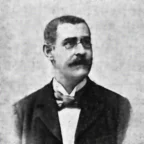
Lampros, Spyridon Pavlos
Corfu, 1851 - Skopelos, 23 July 1919
Spyridon P. Lampros (1851-1919) can easily be considered the greatest Greek historian of Byzantine and Modern Greek history of the late nineteenth and early twentieth centuries. His career combined the edition of primary texts, the systematic cataloguing of manuscript collections, the creation of the principal journal of Byzantine and Neo-Greek studies in Greece, and, in an incongruous final chapter, the political catastrophe of the premiership during the most divisive crisis in modern Greek political history. He was a scholar of the first order who found himself, late in life, deployed by a king as a political instrument and broken by the experience.
He was born in Corfu in 1851 and was educated in London, Paris and Vienna, studying history. His father, Pavlos Lambros, was an Aromanian (Vlach) from Kalarrytes in Epirus. Pavlos Lambros was himself a figure of cultural importance: a numismatist, antiquarian, and collector whose engagement with the material heritage of ancient and Byzantine Greece prefigured his son's scholarly orientation. The formation in London, Paris, and Vienna placed Spyridon at the center of the most dynamic traditions of nineteenth-century historical philology and codicology: the German and Austrian schools of Byzantine studies above all, with their rigorous methods of textual editing and palaeographic analysis, complemented by the French tradition of manuscript cataloguing and the English archival discipline he had absorbed in London.
The first major scholarly undertaking of Lambros's career was his critical edition of the complete works of Michael Choniates (Akominatos), Archbishop of Athens from 1182 to 1204, one of the most significant literary figures of the Komnenian period and the last bearer of a complete copy of Callimachus's Hecale and Aitia. The best edition of his works is that of Spiridion Lambros (Athens, 1879-80).
The two-volume edition, Μιχαὴλ Ἀκομινάτου τοῦ Χωνιάτου τὰ Σωζόμενα (The Surviving Works of Michael Akominatos Choniates), Athens: Parnassos, 1879-80, gathered for the first time the homilies, speeches, letters, and poems of a Byzantine ecclesiastic whose writing constitutes an irreplaceable documentary source for the condition of late Komnenian Greece. Michael's discourses cast a sad light on the wretched conditions of contemporary Attica, as does his iambic elegy "On the City of Athens", described as "the first and only surviving lamentation for the decay and ruin of the ancient and illustrious city". Lambros's edition of these texts, produced when he was still in his late twenties, immediately established him as a scholar of international standing. The edition remains the standard reference for Michael Choniates's works, reprinted at Groningen in 1968 and cited in every subsequent study of the author.
The same year he published Αἱ Ἀθῆναι περὶ τὰ τέλη τοῦ Δωδεκάτου Αἰῶνος (Athens at the End of the Twelfth Century), Athens, 1878, an early historical study that drew on the Choniates material to reconstruct the social and urban condition of Athens in the decades before the Latin Conquest, the first serious scholarly treatment of the city's Byzantine history.
In 1890, he joined the faculty of the University of Athens and taught history and ancient literature. He became Provost of the university in 1893, serving in that capacity twice, 1893-1894 and 1912-1913. His appointment to the chair of history at Athens placed the most productive Byzantine philologist in Greece at the center of the country's principal institution of higher learning, where he remained until the political disasters of the final years of his life.
The work that secured Lambros's international reputation beyond all question was his two-volume Catalogue of the Greek Manuscripts on Mount Athos, published by Cambridge University Press: Volume 1 in 1895, Volume 2 in 1900. In this two-volume set, the author lists no less than 6618 fully annotated religious manuscripts at the time of publication (1895-1900).
The Catalogue was the first systematic scholarly inventory of the manuscript holdings of the Athonite monasteries, an enterprise that required Lambros to gain the exceptional permission to enter the Holy Mountain, move from monastery to monastery across the peninsula, personally examine thousands of codices, and record for each its contents, dimensions, script, date, condition, and distinguishing features. The monasteries he catalogued included the Great Lavra, Vatopedi, Iviron, Chilandari, Dochiariou, Pantocrator, and the smaller foundations, the same libraries that Pelekanidis and his collaborators would photograph and publish in the exhaustive photographic catalogues of the 1970s and 1980s. Lambros's work stands at the origin of that scholarly tradition: the first attempt to make the manuscript wealth of Athos systematically accessible to scholarship.
From the time monks first settled on the Holy Mountain and formed an organized monastic community there was a need for books to satisfy their devotional and liturgical needs and also to cultivate the mind. These factors proved decisive in determining the types and content of the manuscripts which gradually began to accumulate in the monasteries and other foundations and which were eventually to form the manuscript collection of each.
The 6,618 manuscripts he catalogued represent only the portion of the Athonite collections that was accessible to him during his visits, the full extent of the holdings, including manuscripts not shown to him or subsequently acquired, is larger still. Nevertheless, for the better part of a century, Lambros's Catalogue remained the indispensable starting point for any research into Athonite manuscript holdings. Its publication by Cambridge University Press, then as now the principal anglophone vehicle for Byzantine scholarship, gave it immediate international circulation and authority.
After 1903, Lambros started an academic movement called Neos Hellenomnemon (Νέος Ἑλληνομνήμων) which studied the scientific and philosophical developments of the Greek-speaking world during the Byzantine and Ottoman eras. The journal he founded to serve this movement, Νέος Ἑλληνομνήμων, began publication in 1904 and continued until 1927, eight years after its founder's death, under the editorship of collaborators who maintained its programme. The journal Neos Hellenomnemon (1904-1927) that he founded continues to be an invaluable resource for Byzantinists and NeoHellenists.
The journal published critical editions of unpublished Byzantine and post-Byzantine texts, studies of individual manuscripts, biographical notices of scholars and writers of the Byzantine and Ottoman periods, and documentary articles on the intellectual and literary history of the Greek-speaking world between the fall of Constantinople and the establishment of the modern Greek state. Its scope, explicitly encompassing both the Byzantine and Ottoman centuries as a continuous Greek literary and intellectual tradition, reflected Lambros's fundamental conviction that the history of Greek civilization did not end with the fall of Constantinople in 1453 but continued, in attenuated and transformed conditions, through the centuries of Ottoman rule.
A further dimension of Lambros's documentary scholarship was his four-volume Παλαιολόγεια καὶ Πελοποννησιακά (Palaeologeia kai Peloponnesiaka), published between 1912 and 1930, the final two volumes posthumously. This collection assembled Byzantine texts and documents relating to the Palaeologan dynasty and the Despotate of the Morea: chronicles, imperial documents, letters, and literary texts that illuminate the last two centuries of Byzantine political and cultural life. The Despotate of the Morea, the late Byzantine principality in the Peloponnese that produced some of the most remarkable achievements of Palaeologan art and literature at Mistra, had been insufficiently documented in the scholarly literature available to Lambros's contemporaries, and his collection of primary sources filled a gap of fundamental importance for historians of the late Byzantine world.
For scholars working on the Palaeologan period in any of its dimensions, the wall paintings studied by Iakovleva, the documentary history researched by Theocharidis, the monastic architecture examined by Pelekanidis, the Palaeologeia kai Peloponnesiaka remains a primary reference, cited in the apparatus of virtually every serious study of the period.
The digital collection of Spyridon Lampros's Papers was created in order to digitize the folders containing unpublished material of the Spyridon Lampros archive, located at the History Library of the School of Philosophy in Athens. The database's content is being constantly renewed with the unpublished correspondence of Bessarion, Lampros's notes on medieval and modern Venice, the rest of his correspondence, and documents concerning the University of Athens and Greek education in general. The archive reveals a scholar whose engagement with Byzantine primary sources extended well beyond his published work, including substantial manuscript notes on Cardinal Bessarion, the Byzantine humanist who carried so much of the Greek intellectual tradition to the West after 1453.
The final chapter of Lambros's life was a political tragedy of the kind that awaits the unwary scholar who enters the arena of power without the instincts required to survive in it. Largely because of his international reputation as a scholar, he was chosen to lead Greece during a time of political crisis and change. On October 5, 1916, King Constantine appointed Spiridon Lambros as the new Greek premier hoping that he would be acceptable to the Allies.
In October 1916, with Greece in the midst of the National Schism and under two governments (Eleftherios Venizelos in Thessaloniki and King Constantine in Athens), the formerly Liberal (and associated with Venizelos) Lambros accepted the King's commission to form a government in Athens. Eventually, riots took place in Athens (the Noemvriana), for which Lambros was judged responsible due to mismanagement. He resigned as Prime Minister. After the exile of the king in summer 1917, Lambros was put in internal exile by the Venizelists, in Hydra and Skopelos. He died in Skopelos on 23 July 1919.
In conclusion, Lambros proved to be an excellent historian but a failure in politics. He simply was a tool of manipulation by Constantine during a time of extreme crisis and change. He was sixty-eight years old when he died in exile on the island of Skopelos, estranged from his political allies of a generation, stripped of the university position that had been his professional home, and denied the peaceful end that a lifetime of scholarship might have earned. His daughter, Lina Tsaldari, was elected to Parliament in 1956 and became the first woman in the Greek Cabinet as Minister of Social Welfare.
The scholarly legacy of Spyridon Lambros operates simultaneously on three levels. As a documentary editor, his critical texts, the Michael Choniates edition above all, remain in active use more than a century after their publication, cited in every subsequent study of Byzantine Athens and Komnenian literary culture. As a manuscript cataloguer, his Catalogue of the Greek Manuscripts on Mount Athos established the template for all subsequent Athonite manuscript scholarship and provided the first reliable inventory of a collection whose importance for Byzantine studies, Greek Orthodox liturgical history, and the history of the illuminated book cannot be overstated. And as an institutional entrepreneur, his Neos Hellenomnemon created the principal vehicle for Byzantine and Neo-Greek philological scholarship in Greece for two and a half decades, fostering a generation of scholars and publishing primary material that had not previously been accessible in print.
The chain from Lambros's Athos Catalogue of 1895-1900 to Pelekanidis's photographic volumes of the 1970s-80s traces the full arc of modern scholarship on Athonite manuscripts: from the first systematic inventory, made by a scholar who physically traversed the peninsula on foot and examined each codex by hand, to the comprehensive photographic documentation that placed the same material before the eyes of researchers worldwide. Lambros was the pioneer who established that the Athonite collections were documentable in systematic scholarly terms; Pelekanidis and his collaborators were the generation that documented them with photographic completeness. Between these two moments lies the entire history of twentieth-century Byzantine manuscript studies in Greece.
Lampugnani, Elena
Elena Lampugnani is a contemporary Italian art historian specializing in early medieval Lombard painting and ecclesiastical patronage, whose work on the Galliano frescoes has made the single most important iconographic discovery of recent decades regarding this cycle. Her principal contribution to the study of the Maestro di Galliano is the essay La "commendatio animae" di Ariberto nelle pitture absidali di San Vincenzo a Galliano (1007), published in 2006 in the collective volume Pittura murale del Medioevo lombardo: Ricerche iconografiche (secoli XI–XIII), edited by Paolo Piva (Jaca Book, 2006), a volume that brought together the most recent Italian scholarship on the major mural painting cycles of the provinces of Como, Lecco, and Bergamo between the year 1000 and the thirteenth century. In this essay, Lampugnani proposed for the first time a comprehensive reading of the entire apse program at Galliano as a commendatio animae — that is, a liturgical prayer of commendation of the soul to God, spoken at the moment of death and translated here into a painted visual program — a theological framework that unifies all the apparently disparate iconographic elements of the apse into a single coherent argument about intercession, death, and resurrection. The commendatio animae interpretation, now widely accepted in the scholarly literature, explains the selection of figures — Elijah and Enoch (who avoided death), the prophets prostrating before the Theophany, the martyred Vincent (who gained eternal life through his passio), the intercessor Adeodato, and finally the praying donor Ariberto — as the successive stages of a liturgical and eschatological narrative culminating in Ariberto's own petition for divine mercy at the moment of his anticipated death. Lampugnani's essay thus belongs to the tradition of iconographic theology in medieval art studies — a method that decodes painted programs not merely as aesthetic ensembles but as precise translations of theological and liturgical texts into visual form — and it represents a significant methodological advance over both Ansaldi's documentary approach and de Francovich's primarily stylistic analysis. She also authored the essay Ariberto, custos a Galliano e arcivescovo a Milano: la personalità storica di un committente artistico attraverso i suoi "ritratti" (Monduzzi Editoriale), in which she analysed the four known portraits of Ariberto — beginning with the Galliano apse fresco and extending through his later representations in manuscript illuminations and goldsmiths' works — as a coherent self-representational strategy through which Ariberto constructed and projected his public identity as a patron of exceptional cultural ambition. Her work has been incorporated and cited by subsequent scholars — including the authors of the entries in the Treccani Enciclopedia dell'Arte Medievale and of the JSTOR article on the nave paintings — confirming her position as one of the leading current authorities on the patronage and iconographic programs of the early eleventh-century Ambrosian world.
Lányi, Jenő
Várna, Hungary, 1902 - North Atlantic, 17 September 1940
Jenő Lányi (1902–1940) was a Hungarian art historian whose short life was devoted almost entirely to the study of Donatello, and whose death at sea during the Second World War is often described as one of the tragedies of the discipline. Though his own publications were few, his notes and photographs became the foundation of the standard modern catalogue of Donatello's sculpture.
He was born in 1902 in Várna, Hungary — today Varín in Slovakia — the son of a Hungarian civil servant, Árpád Lányi. He spent only his childhood in Hungary; after taking his Abitur at a humanities Gymnasium in Budapest in 1920, his training was entirely Austro-German. He studied art history, archaeology, and history in Vienna under Julius von Schlosser, the great Vienna-School scholar, and then in Munich under Wilhelm Pinder, completing a dissertation on Jacopo della Quercia (Quercia-Studien) in 1929, probably under Pinder's supervision. Between 1929 and 1932 he worked as a volunteer researcher in Berlin — in the graphics collection under Max J. Friedländer and at the Kaiser Friedrich Museum, where his contact with the Italian Renaissance sculpture specialist Frida Schottmüller proved formative for his later work.
In 1932 a Swiss benefactor financed a research stay at the Kunsthistorisches Institut in Florence, where he began the monograph on Donatello that would occupy the rest of his life. In Florence he met Monika Mann, daughter of Thomas Mann, then herself studying art history. The Nazi laws of 1938 barring Jews from academic and museum posts foreclosed any career in German-speaking lands, and Lányi emigrated to England in 1938; he and Monika married in 1939. It was in London in 1939 that he gave a series of lectures — at the Warburg Institute among other venues — presenting both his Donatello research and his enormous photographic documentation of the sculptor's work.
That photographic campaign is central to his significance. In the mid- 1930s Lányi commissioned the photographer Gino Malenotti, of the Brogi firm, to produce a systematic corpus of roughly 3,000 photographs of Donatello's sculptures, documenting each work from multiple angles and under varied lighting to capture its three-dimensionality — the Judith and Holofernes group alone was shot some fifty times. This reflected a genuine methodological conviction: Lányi treated photography not as mere illustration but as an instrument of analysis, using it to test and revise attributions in the absence of documentary evidence. He is often credited as one of the first art historians to question systematically the traditional attributions to Donatello. His best-known specific proposal — that the bronze David in the Bargello might represent not David but Mercury (hence the occasional label "David-Mercury") — dates to around 1939. It is worth stressing, since it is easy to misstate, that Lányi never published this hypothesis himself; it entered scholarship posthumously, chiefly through John Pope-Hennessy, and remains contested (most quattrocento references to the statue call it David).
His death came in 1940. His father-in-law, Thomas Mann, by then in Princeton, secured passage for the couple to North America. Their ship, the SS City of Benares, was torpedoed by the German submarine U-48 in the North Atlantic on 17 September 1940 and sank — the same disaster, notorious for the child evacuees lost aboard, in which Monika Mann was injured but survived. Lányi drowned. (A caution on the record: because so many émigré scholars were lost in this period, his death is occasionally conflated with other wartime sinkings, but the City of Benares is the well-attested vessel.)
The afterlife of his work is the reason his name survives. The suitcases holding his Donatello notes were recovered and reached his widow, who carried them to the United States. His material was judged so important that H. W. Janson took it over, and it was published, incorporating Lányi's notes and photographs, as The Sculpture of Donatello (Princeton, 1957) — for decades the critical catalogue of the sculptor. Two of Lányi's own English articles appeared posthumously in the Art Bulletin and the Burlington Magazine, and his thinking is said to have influenced Pope-Hennessy. A recent doctoral project by Martina Medolago has begun the fuller reconstruction of his life and ideas that scholarship has long lacked.
Lanzi, Luigi
Treia (Macerata), 1732 – Florence, 1810
Luigi Lanzi was a Jesuit-trained antiquarian and art historian whose Storia pittorica della Italia (first edition 1792, definitive three-volume edition 1795–96) organised the entire history of Italian painting by regional school — Florentine, Sienese, Roman, Venetian, Bolognese, Neapolitan and others — a methodological innovation that shaped how the discipline subsequently periodised and classified its subject. After the suppression of the Jesuit order in 1773 Lanzi settled in Florence, where from 1775 he served as antiquarian and curator at the Uffizi Gallery, responsible among other things for the reorganisation of its collections of antiquities, a role that grounded his later writing on painting in a connoisseur's first-hand familiarity with a vast range of works.
Lanzi's history combined attention to documentary evidence with sustained stylistic characterisation of individual masters and schools, written in a lucid and judicious prose that made the Storia pittorica the standard synthetic account of Italian painting for the following century and a direct model for nineteenth-century connoisseurial historians, including Crowe and Cavalcaselle. He was also a noted authority on Etruscan antiquities and language, publishing the pioneering Saggio di lingua etrusca (1789); this second, epigraphic strand of his work reinforced the same philological rigour that distinguishes his treatment of painting. He died in Florence in 1810, having done as much as any single writer to establish the "school" as the basic organising unit of Italian art history.
Lasinio, Carlo
Treviso, 1759 – Pisa, 1838
Carlo Lasinio was an engraver, antiquarian and museum-maker who belongs in a record of medieval scholarship less for anything he wrote than for what he preserved and transmitted. Born at Treviso in February 1759, he trained as a painter at the Venetian Accademia before turning to printmaking, settled in Florence in 1778, built a reputation with large series of etchings in the later 1780s, and was appointed maestro d'intaglio at the Florentine Accademia di Belle Arti in 1800. On 10 June 1807 Maria Luisa of Bourbon named him conservatore of the Camposanto of Pisa, a post he held until his death there in March 1838. (The Dizionario Biografico degli Italiani gives 15 February 1759 and 27 March 1838; Anglophone reference works commonly give 10 February and 29 March. The divergence is recorded here rather than resolved.)
At Pisa Lasinio effectively invented the Camposanto as a museum. He brought into its galleries sculpture, sarcophagi, inscriptions and paintings gathered from churches and monasteries suppressed under Napoleonic and Lorrainese legislation, and imposed on the accumulated holdings a modern apparatus of analytical files and reasoned inventories. He was also active as an antiquary and dealer, a double role characteristic of his generation and not without consequences for the provenance record. The collection he assembled was the subject of the exhibition and catalogue I marmi di Lasinio (Pisa, 1993), coordinated by Clara Baracchini.
His enduring monument is Pitture a fresco del Campo Santo di Pisa, forty large plates engraved from the gallery walls, completed in 1812 and reissued in 1828. Executed in the hard contour manner then fashionable, the plates flattened the frescoes into outline and are not neutral documents; but they record the cycles in a state long anterior to the fire of 1944, and they are consequently a primary source for the reconstruction of paintings that no longer exist in the form they show. Their European diffusion was extraordinary. William Holman Hunt recorded that it was the study of Lasinio's volume that turned the Pre-Raphaelite Brotherhood away from the High Renaissance toward the art that preceded Raphael, and the plates circulated equally in Nazarene and German romantic circles. His interventions on the frescoes themselves were contested in his own lifetime — a dispute with Bruno Scorzi produced formal accusations in 1836, on which the Accademia found in Lasinio's favour — and later conservation scholarship has continued to weigh what his campaigns preserved against what they altered. His son Giovanni Paolo Lasinio carried on the engraving of the Pisan monuments.
Lasko, Peter
Berlin, 5 March 1924 - 18 May 2003
Peter Erik Lasko was a British art historian of German-Jewish birth who became one of the leading postwar authorities on the "luxury arts" of the early medieval West - metalwork, enamelling, gem-setting and ivory carving from the sixth to the twelfth century - while also building institutions: he was the first Professor of Visual Art at the University of East Anglia (UEA), where he founded the art history department and helped secure the Sainsbury collection that became the Sainsbury Centre for Visual Arts, and he was Director of the Courtauld Institute of Art in London from 1974 to 1985, where he engineered the Institute's move to Somerset House.
Lasko was born in Berlin on 5 March 1924, the youngest child of the filmmaker Leo Lasko and his wife, who moved in the bohemian and "degenerate" circles that the Nazis, from 1933, condemned as entartete. An accident in Paris, where the family lived briefly from 1933, left him blind in one eye; a return to Berlin for treatment proved fruitless, and as a family of Jewish heritage associated with Modernist art circles their position in Germany grew untenable. Peter, then thirteen, arrived in England in 1937 with his mother and sister, following his father, who had left the previous year. His life during the Second World War is largely undocumented - he was between fifteen and twenty-one, and by one family account may have been interned as an enemy alien near Bristol - and he rarely spoke of this period afterward.
By 1946 he was back with his parents in London, studying at Hammersmith College of Art with the ambition of becoming a painter; within a year he judged, probably correctly, that he would never be a great one, though a picture of a clown he painted at the time reportedly hung in his various lodgings for years after. It was at art school that he met his future wife, Lyn Norman, whom he married in 1948. He had by then turned to the academic study of art, first under Nikolaus Pevsner at Birkbeck College before transferring to the Courtauld Institute of Art, where he graduated in 1949 under the mentorship of Christopher Hohler and the directorship of Tom Boase.
Within a year of graduating, Lasko was hired as a curator in the British Museum's Department of British and Medieval Antiquities, replacing Thomas Kendrick, who had become the Museum's director. In a small department where staff had to range widely, he took on the collection of clocks and watches, helping to secure the 2,000-object Courtenay Adrian Ilbert Collection for the Museum, and built a close circle of colleagues that included the future British Museum director David Wilson. His major acquisitions included a twelfth-century walrus-ivory reliquary tusk related in style to the Lewis chessmen and an English whalebone portable altar; the great prize that eluded him was the Cloisters Cross, lost to the Metropolitan Museum of Art in New York after Parliament declined to fund a purchase clouded by questions of wartime provenance. During these Museum years he also travelled widely to the church treasuries and museum collections of the Continent, often with the close friends and eventual rival Pelican-series authors George Zarnecki and C. R. (Reg) Dodwell - a research partnership that, around 1960, led Nikolaus Pevsner to commission from the trio three companion volumes, on painting, sculpture and the "luxury arts," for the Pelican History of Art; Lasko, in addition to writing his own volume, served as the group's driver and mechanic on their continental research trips.
In 1965 Lasko left the Museum to become founding Professor of Visual Art at the new University of East Anglia, appointed - on the recommendation, among others, of George Zarnecki - to build an art history department from nothing alongside his lieutenant Andrew Martindale. He completed his major book, Ars Sacra, 800-1200 (Harmondsworth: Penguin, 1972; 2nd edn, New Haven and London: Yale University Press, 1994), delivered to Pevsner as series editor in 1968: a survey of Carolingian, Ottonian and Romanesque metalwork, enamelling and ivory carving that insisted, against the label "minor arts," on the aesthetic ambition and sculptural sophistication of these small-scale luxury objects, and that traced a shift across the book's three parts from art organised by royal and imperial patronage to a Romanesque section built around named makers such as Nicholas of Verdun and Godefroid de Claire. At UEA he also helped assemble the University's own Modernist art collection with Alastair Grieve, and was instrumental in persuading Robert and Lisa Sainsbury to donate their collection to the University, a gift realised in the Norman Foster-designed Sainsbury Centre for Visual Arts.
Lasko succeeded Anthony Blunt as Director of the Courtauld Institute of Art in 1974, moving to London the following year. His directorship was contentious - he inherited a faculty with little loyalty to an outside appointee, and his efforts to invigorate the Institute's research culture met resistance - but his central achievement was strategic: unable to relocate the Courtauld to Bloomsbury, he negotiated instead a lease on part of Somerset House, uniting the Institute's galleries and collections with its students for the first time in a setting far grander than its previous home at 20 Portman Square. The financial strain of the move told on both his health and the Institute's finances, and in 1985 Lasko stepped down as director; the move to Somerset House was completed after his departure by his successor and friend, the fellow medievalist Michael Kauffmann. During and after his Courtauld years he served as President of the British Archaeological Association (from 1977), as a Trustee of the British Museum, and as general editor of the Pelican History of Art as the series transferred from Penguin to Yale University Press. He also chaired the founding committee of the Corpus of Romanesque Sculpture in Britain and Ireland (CRSBI), where as early as 1988 he insisted, prophetically, that the project be built as a digital resource rather than a printed corpus, well before the computing power to realise that vision was generally available.
Lasko's scholarly interests reached back to his student years in another direction as well: German Expressionism, a subject bound up with his own formation and, as his colleague and biographer Sandy Heslop has suggested, with a lifelong wish to see German contributions to modern art rehabilitated in English-speaking scholarship after the ruptures of two world wars. This research, renewed in the 1990s, produced a 1997 Art History article on the training of the four founders of Die Brücke and his last book, The Expressionist Roots of Modernism, published posthumously in 2003. Diagnosed with cancer in the mid-1990s, he refused chemotherapy after a single session; his energy and combativeness were undimmed to the end, including a quixotic 1999 run as Labour candidate in a solidly Conservative Norfolk council ward. Peter Lasko died on 18 May 2003. He had been elected a Fellow of the British Academy in 1978.
Lavin, Marilyn Aronberg
St. Louis, Missouri, 1925-
American art historian of fourteenth- and fifteenth-century Italian painting, the leading Anglophone authority on Piero della Francesca, author of the first systematic study of narrative mural decoration in Italian churches across twelve centuries, and a pioneer - decades ahead of the field - of computing and digitized imagery in art-historical research. She built a major career largely outside the tenure system, and said so: because her research was driven by personal interest rather than employment, she could afford to publish books that were not written to persuade tenure committees.
She was born in St. Louis, Missouri, in 1925, the daughter of Charles Aronberg and Blanch Silverstone. Her family, like that of the man she would marry, was Jewish and of eastern European emigrant background.
She attended Washington University in St. Louis, studying under Horst Woldemar Janson - later famous, and later notorious, for the universally assigned survey textbook - and graduated in 1947. She took her M.A. in 1949, again under Janson, who was himself still working toward his doctorate at Harvard, and in the same year gained a certificate at the Free University of Brussels.
While serving as a graduate assistant in art history in 1949-1950, she met Irving Lavin (1927-2019), a student in her class taking his first art history course. They had in fact met as teenagers. They married in 1952; the marriage lasted sixty-six years, until his death.
Her career took an unconventional shape, and the shape is part of the story. From 1953 to 1955 she was curator of the Robbins Print Collection in Arlington, Massachusetts. From 1955 to 1957 she held a Fulbright fellowship in Rome. In 1957 she joined the Metropolitan Museum of Art, New York, as a staff writer, becoming a researcher in 1959. From 1965 she consulted for Time, Inc. and for the fine-press Heritage Press, for which she edited a two-volume Lives of the Most Eminent Painters by Vasari (1967).
When Irving Lavin was appointed at New York University in 1963, she worked at the Metropolitan while pursuing graduate study at NYU. Her Ph.D. came only in 1973, from New York University, with a dissertation on Piero della Francesca - by which point she had already published the Flagellation book. In 1975 she resigned from the Metropolitan to become visiting professor of art history at Princeton, followed by visiting posts at Yale (1977) and the University of Maryland (1979). She also taught at the Universita di Roma, La Sapienza.
When her husband was appointed in 1973 to the chair at the Institute for Advanced Study previously held by Erwin Panofsky and Millard Meiss, she found herself at Princeton with - initially - no title but "wife." That position, which required no teaching of him, also freed her: she could stop teaching and pursue her own research.
Her career was inescapably shaped by the dual-career marriage, and she has been candid about the costs. But her work stands entirely separate from her husband's in method and merit. She was never a derivative scholar.
Her work on Piero spans five decades and several registers.
Piero della Francesca: The Flagellation (London: Allen Lane / New York: Penguin, 1972), written for the Art in Context series, tackled what is probably the most contested small panel in Italian painting. It remains her best-known book.
Piero della Francesca's "Baptism of Christ" (New Haven: Yale University Press, 1981) is a monograph on the London panel.
Piero della Francesca: San Francesco, Arezzo (New York: George Braziller, 1994) treats the True Cross cycle, and she contributed texts to the Skira volume on the cycle edited by Maetzke and Bertelli (2001), published in the wake of the restoration.
She was the organizing scholar for the National Gallery of Art's 1995 exhibition and symposium volume Piero della Francesca and His Legacy (Studies in the History of Art 48), proceedings of "Monarca della pittura: Piero and his legacy," held in Washington on 4-5 December 1992 under CASVA, the Getty Museum, and the Getty Center.
Her synthetic Piero della Francesca (Phaidon, Art and Ideas series, 2002) analyses all the surviving works, benefiting from new photography of the freshly cleaned frescoes, and situates the paintings within early Renaissance religion and politics - a corrective to the long habit of reading Piero as a purely formal, geometrical intelligence. Piero's mathematics matter, she argues, but most of the paintings were commissioned to do religious work and were valued by contemporaries for their spiritual worth.
The Place of Narrative: Mural Decoration in Italian Churches, 431-1600 (Chicago: University of Chicago Press, 1990) is her most ambitious book and the one of most direct use outside Renaissance studies. It asks not what Italian mural cycles depict but where they are put - how narrative sequences are disposed across the surfaces of a church, and what the disposition means. The chronological span, from the fifth century to the sixteenth, deliberately refuses the conventional break between medieval and Renaissance, treating the placement of pictorial narrative as a continuous problem with its own history.
For anyone working on programme, iconography, and the relation of image to liturgical space in Italian churches, this is a foundational reference - and its early medieval and Romanesque material is not incidental to it.
Seventeenth-Century Barberini Documents and Inventories of Art (1975) won the Charles Rufus Morey Award of the College Art Association. It was an early instance of primary-source documentation within the history of collecting, and it belongs to a strand of her work - archival, exhaustive, unglamorous - quite distinct from the interpretive monographs.
She is a genuine pioneer here, and the point deserves emphasis: she was building databases for art-historical analysis when the field regarded computers as clerical equipment. She directed the Piero Project, an electronic compendium of images and text (with a period of work at the Clark Art Institute), and in 1991 created and moderated a Listserv for art and architectural historians (caah@princeton.edu) that grew to some 800 scholars in 22 countries. She presented "New Technology Brings New Life to Art History: The Piero Project Story" at Museums and the Web in 2009.
She wrote a history of her adopted department - The Eye of the Tiger: The Founding and Development of the Department of Art and Archaeology, 1883-1923, Princeton University (1983) - and edited her husband's Festschrift, IL60: Essays Honoring Irving Lavin on His Sixtieth Birthday (New York: Italica Press, 1990). With Irving Lavin she published Images from the "Song of Songs" in the Art of Cimabue, Michelangelo, and Rembrandt (2002).
After his death in 2019 she edited into publishable form the article he left in drafts and notes on the Palestrina Pieta, filling gaps and resolving the question of when precisely Bernini became maestro. In 2022 she gave, in his honour, the black-and-white marble bust inscribed with the name of the jurist Prospero Farinacci - one of Irving Lavin's last Bernini discoveries - to the Republic of Italy via the non-profit LoveItaly; it is destined for the Castel Sant'Angelo, where a ceremony marked the gift on 20 March 2023.
In 2025 she published One Life for Two: The Autobiography of Irving and Marilyn Lavin (Deutscher Kunstverlag), a four-hundred-page account of two St. Louis children of Jewish emigrant families who became, together, central figures in the postwar discipline. She was interviewed about it at the age of one hundred. Writing from what she calls her "old age vantage point," she has continued to publish - a recent essay uses the view "from above, as it were," to trace relationships between Cavallini, Giotto, and Piero della Francesca in the planning of their major cycles.
She was living as of early 2026.
Lawlor, Hugh Jackson
Ballymena, 11 December 1860 – 26 December 1938
Hugh Jackson Lawlor was an Irish clergyman and ecclesiastical historian, born in Ballymena, County Antrim, and educated at Trinity College, Dublin, the institution with which his scholarly career would be identified for over three decades. He took holy orders in the Church of Ireland and later held the degrees of Doctor of Divinity and Doctor of Letters. Before his Dublin professorship he spent a formative period in Scotland, where he served in the Scottish Episcopal Church and taught theology in Edinburgh; his first major book was published there.
At Trinity he became Professor of Ecclesiastical History, a chair he held from 1898 to 1933. In parallel he rose through the chapter of St Patrick's Cathedral: by 1906 his title pages describe him as Canon and Precentor of St Patrick's and professor of ecclesiastical history in Dublin. From 1924 until his retirement in 1933 he served as the Church of Ireland Dean of St Patrick's Cathedral, Dublin, succeeding Charles Thomas Ovenden and being followed by Thomas Arnold Harvey. He was also a central figure in Irish learned life: from 1919 until 1930 he was Secretary of the Royal Irish Academy.
For a historian of medieval art, Lawlor matters above all as one of the pioneering palaeographical and liturgical students of early Irish books. His Chapters on the Book of Mulling (Edinburgh, 1897) was the first sustained study of the eighth-century pocket Gospel book now at Trinity College Dublin (MS 60), including its liturgical fragments and the famous schematic "plan" of crosses and enclosures, long discussed as evidence for early Irish monastic layout. In 1916 he published in the Proceedings of the Royal Irish Academy his landmark study of the Cathach of St Columba, the late sixth- or early seventh-century psalter traditionally associated with Columba, where he examined its script, its text and its shrine, work that remains a starting point for discussion of the earliest decorated initials in insular manuscript art. For the Henry Bradshaw Society he edited The Psalter and Martyrology of Ricemarch (1914), the late eleventh-century Welsh manuscript from Llanbadarn Fawr (TCD MS 50) whose interlace and zoomorphic initials are key witnesses to insular ornament in the Romanesque period, and, with R. I. Best, The Martyrology of Tallaght (1931). He also wrote on the manuscripts of the Vita S. Columbani.
Lawlor's range extended well beyond Ireland. His Eusebiana: Essays on the Ecclesiastical History of Eusebius of Caesarea (1912) established him as a respected patristic scholar, and with J. E. L. Oulton he produced the annotated English translation of Eusebius's Ecclesiastical History and Martyrs of Palestine (1927–28). His translation of St Bernard's Life of Malachy, issued as St Malachy of Armagh in 1920, made a central text of the twelfth-century Irish reform accessible to English readers. Other works include Thoughts on Belief and Life (1900) and The Reformation and the Irish Episcopate (1906), the latter reissued in a second edition by SPCK in 1932, and studies of diocesan origins such as The Genesis of the Diocese of Clogher, an offprint from the County Louth Archaeological Journal of 1917.
His last major work turned to his own cathedral: The Fasti of St Patrick's, Dublin (1930), a reference list of the cathedral's dignitaries and prebendaries that remains standard. His working materials survive: his correspondence and papers for 1894–1934 are held at the Representative Church Body Library (Ms 38), along with an annotated typescript of the Fasti (MS 710), and an annotated and interleaved copy of the Fasti is also recorded there (MS 698).
Lawlor belongs to the generation of Anglo-Irish clerical scholars who laid the documentary foundations for the study of early Christian Ireland. His interpretations have in places been revised, particularly on the dating of the Cathach and on the Mulling "plan", but his editions and codicological descriptions are still routinely cited, and anyone working on the Cathach, the Book of Mulling or the Ricemarch Psalter will meet his name in the bibliography.
Lazarev, Viktor Nikitich
Moscow, 3 September 1897 – Moscow, 1 February 1976
Viktor Nikitich Lazarev was the leading Soviet historian of Byzantine and Old Russian art and one of the founders of the Russian school of medieval art history, whose work also reached deep into the painting of Duecento and Trecento Italy. The son of the Moscow architect Nikita Lazarev, he studied in the Faculty of History and Philology of Moscow University from 1917 to 1920. From 1924 to 1936 he was chief curator of the picture gallery of the State Museum of Fine Arts (later the Pushkin Museum) in Moscow. He then taught at Moscow State University, where from 1961 he headed the chair of the history of foreign art, and in 1943 he was elected a corresponding member of the Academy of Sciences of the USSR.
His History of Byzantine Painting (Istoriya vizantiyskoy zhivopisi, 1947-1948), for which he received a USSR State Prize, was the first comprehensive account of its subject. Revised and much expanded, it appeared in Italian as Storia della pittura bizantina (Einaudi, Turin, 1967) and became a standard reference in Western scholarship. Alongside it he published fundamental monographs on Theophanes the Greek, Andrei Rublev, Novgorod icon painting and Old Russian mosaics and murals, as well as on Armenian art. His articles on Byzantine painting were later collected in English as Studies in Byzantine Painting (Pindar Press).
For the study of early Italian painting Lazarev's decisive contribution was his insistence on the Byzantine roots of the Duecento. In "New Light on the Problem of the Pisan School" (The Burlington Magazine, 1936) he examined the Byzantinizing culture of Pisa around 1200 and set the painted crosses of the city, among them the Christus patiens cross no. 20 of the Museo di San Matteo, within the orbit of Comnenian and post-Comnenian art. On that basis he argued that the formation of Giunta Pisano should be sought in the Byzantine milieu of Pisa itself, a view later endorsed by Angelo Tartuferi. He developed the same line in his essays on Duccio and the Greek icons of the thirteenth century and in his wider studies of the origins of the Italian Renaissance.
In "Über eine neue Gruppe byzantinisch-venezianischer Trecento-Bilder" (Art Studies VIII, 1951) he placed the Sterbini Diptych fully within Greek culture with Western influences, as the restoration catalogue of the diptych reports.
The state catalogue, which writes the name Lazareff, records that in 1936 he dated cross no. 20 around 1230.
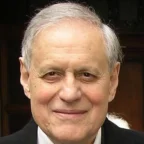
Leonardi, Claudio
Sacco di Rovereto, Trento, 17 April 1926 - Florence, 21 May 2010
Claudio Leonardi was an Italian historian, philologist and Latinist, the dominant figure in twentieth-century Italian mediolatinistica and the founder of the institutional apparatus - SISMEL, the Fondazione Ezio Franceschini, Medioevo latino - that still underpins medieval Latin studies internationally.
He was educated at the Liceo Antonio Rosmini in Rovereto, then studied at the Università Cattolica in Milan and at Fribourg in Switzerland, where he encountered Gianfranco Contini and Ezio Franceschini. He took his degree under Franceschini in 1950 with a thesis on the medieval fortuna of Martianus Capella's De nuptiis Philologiae et Mercurii - published as I codici di Marziano Capella in «Aevum» (1959-60), and still a foundational study.
The years immediately after his degree were difficult, but from 1953 Raffaello Morghen drew him into the work of the Istituto Storico Italiano per il Medio Evo, where he edited the first volume (Series collectionum) of the Repertorium fontium historiae Medii Aevi (1962). Only in 1960 did he become scriptor for Latin codices at the Biblioteca Apostolica Vaticana, also working on the edition of the decrees of the medieval ecumenical councils (1962). In 1968 he took the chair of medieval Latin literature at the University of Lecce, remaining until 1971, then moved to Perugia (1971-74), Siena (Arezzo campus, 1974-76) and finally Florence (1976-2001).
His encounter with Gustavo Vinay and his relationship with Gianni Baget Bozzo, in the years of the student contestation and the Second Vatican Council, pushed him toward new historiographical instruments; he collaborated with «Renovatio», and in 1970 succeeded Vinay as director of «Studi medievali», which he held for over thirty years. From «Studi medievali» came, in 1978, the idea of «Medioevo latino (sec. VI-XV)», the great annual repertory of authors, texts and manuscripts, which began publication in 1980 and immediately became the reference tool of the discipline.
To sustain that enterprise, in 1984 Leonardi founded, with other Italian colleagues, the Società Internazionale per lo Studio del Medioevo Latino (SISMEL); the Fondazione Ezio Franceschini followed in 1987, presided over until 1992 by Oscar Luigi Scalfaro. In 1987 both institutions found a home in Florence at the Certosa del Galluzzo, and under Leonardi's direction became a decisive centre of research: a specialist library grown around Franceschini's own, prizes for young scholars, electronic infrastructure from 1992, publishing in its own right from 1996, and from 2001 a postgraduate course in medieval Latin philology and literature. By his death, SISMEL was issuing some forty series and eight journals, besides «Medioevo latino» and the digital archive of medieval culture, Mirabile. He left a bibliography of over a thousand titles.
Philology, understood as a historical science in the German tradition as rethought by Giorgio Pasquali and Contini, was the basis of everything he did. His editorial work includes the study of the tradition of Anastasius Bibliothecarius's Gesta octavae synodi quae Constantinopoli congregata est (1967) - the fullest documentation of the condemnation of Photius - the autograph Glossae on Martianus Capella by Ratherius of Verona (1984), the Latin recension of the Ascensio Isaiae (1995), Savonarola's De veritate prophetica (1997), and interventions on the text of the Opuscula of Francis of Assisi (2004). His major monographic studies appeared in «Studi medievali»: Anastasio Bibliotecario e l'ottavo concilio ecumenico (1967), Spiritualità di Ambrogio Autperto (1968), Alle origini della cristianità medievale: Giovanni Cassiano e Salviano di Marsiglia (1977).
He also curated large thematic anthologies: Scrittrici mistiche italiane (Genoa, 1988, the modern and contemporary section by Giovanni Pozzi); volumes 3-5 of Il Cristo for the Fondazione Valla (1989-1992); and La letteratura francescana in three volumes (Francesco e Chiara d'Assisi; Le vite antiche di San Francesco; Bonaventura: la perfezione cristiana), again for Valla-Mondadori. Two large retrospective collections gather his essays: Medioevo latino. La cultura dell'Europa cristiana (ed. F. Santi, Florence, 2004) and Agiografie medievali (ed. A. Degl'Innocenti and F. Santi, Florence, 2011), each of 47 studies.
Leonardi read the twentieth century as the crisis of modern culture, a crisis he saw fully articulated in Nietzsche, and held that the modern function of the intellectual had exhausted itself. Against both ideological historicism and a merely positivist retreat into erudition, he argued that philology restores the alterity of a past world through the language of its authors, and that the Middle Ages therefore matter as the space in which "reason is not everything" - where difference can be thought. He named the resulting programme a "storiografia del piacere" (Per una storiografia del piacere, «Micrologus», 1993), centred on what he called the gratuito: the non-predeterminable, generative element of history. This is also why medieval mysticism was central to him, refused as a primitive idealism and read instead as the testimony of a person who experiences freedom.
He was married to the philologist Anna Maria Chiavacci Leonardi. In 1981 the Alexander von Humboldt-Stiftung in Bonn awarded him its Foreign Social Science Researcher Prize. The Zeno Karl Schindler Foundation's Claudio Leonardi Fellowship for Medieval Latin Studies, supporting young scholars, was established in his honour as founder and first President of SISMEL.
Essential secondary bibliography. E. Menestò, Claudio Leonardi (Sacco di Rovereto, 17 aprile 1926 - Firenze, 21 maggio 2010), «Studi medievali» 51 (2010), pp. 555-580, with an autobiographical note by Leonardi at pp. 574-580; L'esperienza intellettuale di Claudio Leonardi, Florence, 2011, with the complete bibliography; M. Lapidge, obituary in «Journal of Medieval Latin» 20 (2010); T. Gregory, Claudio Leonardi medievista, «Rinascimento» 50 (2010), pp. 1-18; A. Vauchez, Claudio Leonardi et l'hagiographie médiévale, «Studi medievali» 53 (2012), pp. 303-312.
Leonardi, Corrado
20th century
Monsignor Corrado Leonardi was a priest of Urbania, the former Casteldurante in the upper Metauro valley, and the town's leading local historian and scholar of ceramics. His work was devoted almost entirely to the artistic heritage of Urbania and its territory. He wrote on its painting, its churches and above all on the maiolica tradition that had made Casteldurante famous in the Renaissance.
As a ceramics scholar he did more than write. At the end of the 1960s he founded the Centro Piccolpasso, named after Cipriano Piccolpasso, the sixteenth-century Durantine author of a treatise on the potter's art. Many of the town's present ceramists trained there, and it helped revive a production that had declined after the Second World War. In 1982 he curated the exhibition La ceramica rinascimentale metaurense in the Palazzo Ducale of Urbania. His own collection of Durantine and Urbanian ceramics, from the Middle Ages to recent times, was donated to the diocesan museum, where it was installed in 1993. After the union of the dioceses in 1987, the former bishop's palace became the seat of the archdiocesan cultural and social institute that bears his name, with its museum, library and archive. He is also credited with discovering and saving a sixteenth-century fresco by Timoteo Viti in the church of Santa Chiara at Urbania.
For the study of the Riminese Trecento his main contribution is the essay "Per una storia delle opere perdute, emigrate, conservate in Urbania del '300 riminese", published in Notizie da Palazzo Albani XVI (1988), pp. 84–92, in the proceedings of the Mercatello conference of 1987. It traced the fortunes of the Riminese works made for Casteldurante. Among them were Giuliano da Rimini's dossal of 1307, sold from the sacristy of the cathedral at the beginning of the twentieth century and now in Boston, and the fresco of the Virgin and Child in the Oratorio della Madonna del Carmine. Against the local tradition that the fresco had been moved there from the Rocca, Leonardi argued that it had stood in the oratory from the start.
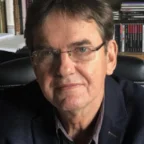
Leone de Castris, Pierluigi
Bari, 26 January 1955
Pierluigi Leone de Castris was born in Bari on January 26, 1955. He completed his university studies in Naples in 1977, beginning an intellectual trajectory that would remain deeply anchored to the cultural and artistic world of Southern Italy. His formation took place in Naples at a moment of renewed scholarly interest in the art of the Mezzogiorno, and from early in his career he oriented his research toward the long arc of Neapolitan artistic production from the late thirteenth century to the early seventeenth century.
Leone de Castris built his academic career progressively, teaching first at the Universities of Lecce and Basilicata before joining the Universita degli Studi Suor Orsola Benincasa in Naples, where he became full professor (professore ordinario) of Medieval and Modern Art History. At Suor Orsola Benincasa he also teaches Museology and History of Collecting, and has directed both the Scuola di Specializzazione in Storia dell'arte and the Doctoral Programme in Art History and History of Ideas in Naples and Mediterranean Europe. He has served as President of the Consulta Universitaria Nazionale per la Storia dell'Arte, the national coordinating body for the discipline in Italian universities.
His teaching has reached well beyond Naples. He delivered seminars on patronage and the role of artists at the Angevin court at the Scuola Normale Superiore di Pisa in 1990, lectured on Polidoro da Caravaggio at the National Gallery in London within the Renaissance Research Seminar in 2003, and again at the Musee du Louvre in Paris in 2007.
Before his full commitment to academic life, Leone de Castris worked as art historian inspector (ispettore) and then director (direttore storico dell'arte) at the Soprintendenza per i Beni Artistici e Storici della Campania e di Napoli. In this institutional role he oversaw the rehangings of the Museo di Capodimonte and the Museo Civico di Castel Nuovo, and organized numerous exhibitions in Naples, across Italy, in Europe, and in the United States. Among the most significant of these was the landmark exhibition L'Europe des Anjou. Aventure des Princes Angevins du XIIIe au XVe siecle, held at Fontevraud in 2001, and the more recent Ori, argenti, gemme e smalti della Napoli angioina, 1266-1381 (2014), whose catalogue he edited. He also serves as director of the prestigious journal Napoli Nobilissima and sits on the scientific committees of Rivista d'arte, Kronos, and Confronto.
Leone de Castris's scholarship is defined by a dual focus: on one hand, the art produced in Naples and the Mezzogiorno between the late thirteenth and the early seventeenth century, examined in its broader European and Mediterranean dimensions; on the other, the social role of the artist and the mechanisms of artistic patronage. His methodology is rooted in rigorous connoisseurship, extensive archival research, close comparison of literary sources, and a thorough command of the geographical distribution of artistic heritage across Southern Italy. He has also devoted significant attention to the goldsmith arts, manuscript painting, and wooden sculpture, fields often neglected by mainstream Italian art historiography.
A recurrent theme in his work is the relationship between Naples and the broader Mediterranean and transalpine worlds: how Angevin dynastic politics brought French, Flemish, and Tuscan artists to Naples; how the Aragonese succession opened the city to Catalan and Flemish influences; and how the Spanish Viceroyalty transformed the artistic landscape of the early modern city.
Leone de Castris is the author of a substantial body of monographs and catalogues that have become standard reference works in the field. His first major work, "Forastieri e regnicoli". La pittura moderna a Napoli nel primo Cinquecento (1985; second edition 1988), established his reputation. This was followed by Arte di corte nella Napoli angioina. Da Carlo I a Roberto il Saggio (Cantini, Florence, 1986), a foundational study of court art under the Angevins. He then produced the two-volume Pittura del Cinquecento a Napoli (1991 and 1996) and Quattrocento aragonese. La pittura a Napoli al tempo di Alfonso e Ferrante d'Aragona (1997).
His monographic studies of individual masters are particularly wide-ranging. He has devoted full volumes to Polidoro da Caravaggio (2001), Simone Martini (F. Motta, Milan, 2003), Giotto a Napoli (Electa, Florence, 2007), Gian Cristoforo Romano (2010), Pietro Cavallini, subtitled Napoli prima di Giotto (Arte'm, Naples, 2013), Andrea Sabatini da Salerno (2017), and the church of Donnaregina Vecchia a Napoli (2018). His most recent major contribution is La pittura del Quattrocento a Napoli 1400-1458. Da Ladislao D'Angio-Durazzo ad Alfonso d'Aragona (Naples, 2020). On his Academia.edu profile, he has made available over 45 scholarly papers covering topics from the social status of medieval artists, including a study on Petrarca, Giotto, Simone e lo status sociale dell'artista (2021), to manuscript painting and the rediscovery of the Neapolitan painter Colantonio.
Leone de Castris is recognized as one of the leading authorities on Neapolitan medieval and Renaissance art. His work has fundamentally reshaped scholarly understanding of Naples as a cosmopolitan artistic center in the Middle Ages and the Renaissance, not a peripheral zone of Italian culture, but a dynamic crossroads where Angevin, Aragonese, Flemish, Tuscan, and Spanish artistic currents converged and transformed one another. His biographical and attributional studies of painters such as Pietro Cavallini and Simone Martini, both active in Naples, have been essential to understanding how the great artistic revolutions of the Duecento and Trecento radiated southward from Rome and Tuscany and found new creative expression in the Neapolitan kingdom.
Levison, Wilhelm
Düsseldorf, 27 May 1876 – Durham, 1947
Wilhelm Levison was born on 27 May 1876 in Düsseldorf, the elder son of Hermann Levison, a merchant, and his wife Josephine, née Goldschmidt. His family's roots lay in Siegburg on the Rhine, where his Jewish family had lived since the 17th century. Hermann Levison was an active member of the association for the propagation and advancement of skilled trades amongst Jews, and was remembered by his son particularly for his generous helpfulness that was by no means restricted to members of the Jewish community. After Hermann's early death in 1886, his widow eventually joined her son's household.
Directly after finishing high school, Wilhelm Levison went to Bonn to study classical philology and history, attaining his doctoral degree in 1898. He also studied at the University of Berlin before completing his degree. His doctoral dissertation, Die Beurkundung des Civilstandes im Altertum, already displayed his characteristic command of documentary evidence. The trajectory of his career, however, was decisively shaped by a chance encounter: with an article on the history of the Frankish king Clovis I, he gained the attention of Bruno Krusch, chief editor of the MGH series Scriptores rerum Merovingicarum. Although Levison originally intended to pursue a career as a librarian, Krusch was able to convince him to take up work for the Monumenta at the age of 23 in 1899. This was a decision that changed the direction of his life.
Levison's association with the Monumenta Germaniae Historica — the great German project for the critical edition of medieval sources — would define the first three decades of his scholarly output. He was well known as a contributor to the Monumenta, especially for the vitae from the Merovingian era. Working under Krusch, he co-edited volumes 5, 6, and 7 of the Scriptores rerum Merovingicarum (1910–1920), producing authoritative critical editions of numerous saints' lives from the Frankish period — texts of central importance for the history of early medieval religious culture, patronage, and liturgical practice.
A landmark in his hagiographic work was the edition of the Vitae sancti Bonifatii archiepiscopi Moguntini (MGH SS rer. Germ. 57, 1905), the collected lives of Boniface of Mainz. Levison spent his early career producing definitive editions of lives of Willibrord and Boniface — the two great Anglo-Saxon missionaries whose activity on the Continent would later become the central subject of his masterwork. His editorial standards set the benchmark for Merovingian hagiography for the entire twentieth century.
He carried this double workload — MGH editions and university teaching — until 1920, by which time he had become a leading specialist for early medieval Latin.
In 1903 Levison became a lecturer at the University of Bonn in the history of the medieval ages and auxiliary historical sciences, and became a full professor in 1912. He specialised in the early Merovingian and Carolingian periods, being the first scholar to treat Rhenish history as an integral part of German and European history.
In 1917, one year after the death of his mother, Levison married Dr Elsa Freundlich, a Jewish scholar and former student in his university classes. Their marriage remained childless. Bonn was the gravitational centre of his life and identity: in 1929 he turned down the offer of a professorship in Berlin in order to remain on the Rhine, where, as he wrote, "he felt himself rooted through his studies and at home with the people and the countryside."
Among the most remarkable products of his Bonn years was his massive 1927 study Das Werden der Ursula-Legende — a meticulous reconstruction of the development of the legend of St Ursula and the Eleven Thousand Virgins, published in the Bonner Jahrbücher and running to 164 pages. For historians of medieval art, this study is of direct relevance: the Ursula legend generated one of the richest iconographic traditions in Northern European art, from the Cologne reliquary shrines to Hans Memling's famous reliquary shrine in Bruges. Levison's philological and documentary analysis of how the legend evolved from a brief inscription to an elaborate narrative cycle remains a foundational point of reference.
In 1935, Levison was forced to retire from his professorship at Bonn University because of the Nuremberg Laws. He requested permission to emigrate but was initially refused. He was able to leave for Durham only in 1939. The circumstances of his departure were desperate: after the pogroms against Jews in November 1938, the Levisons decided to emigrate. They moved to Durham in north-east England, where Wilhelm Levison was given a stipend as an honorary fellow of Durham University.
The indignity did not end there. Like many Jewish refugees, he was interned as an "enemy alien" by the British government from 21 June 1940 until 2 September 1940. That a sixty-four-year-old Jewish scholar, who had fled the Nazi regime and whose career had been destroyed by German racial laws, should be classified as a threat to the British state speaks eloquently of the disorientation of wartime policy. He endured the internment without apparent bitterness.
Even in exile and under these conditions, Levison maintained contact with the MGH in Munich, continuing to work on editorial matters through clandestine correspondence. The MGH itself acknowledged this loyalty decades later, noting that no one was ever faced with greater challenges to his sanctus amor patriae — the old MGH motto, "holy love of the fatherland" — than he, a Rhenish Jew who never ceased working for the cause even as he was chased from the country.
From Durham, Levison produced the work for which he is most celebrated. He delivered the Ford Lectures at the University of Oxford in 1943, and they were published as England and the Continent in the Eighth Century (Oxford, 1946).
The book argued, through five richly documented lectures, that the eighth century represented England's period of deepest engagement with continental Europe — through the Roman church, the Frisian mission, the reforming activity of Boniface, and the scholarly networks linking figures such as Alcuin, Pippin, and Charlemagne. Levison argued that this period saw England's greatest influence on the continent until the industrial revolution. In his interpretation, Anglo-Saxon missionaries had saved a barbaric pre-Christian continent — a pattern he hoped to see repeated in his own life.
The work's significance for the historiography of medieval studies was considerable. Levison put the first crack in the insular exceptionalism which had plagued medieval English scholarship to that point; his work inspired many to take up his questions and aims in other places — Story, Rollason, Nelson, Reuter, and Leyser, among others, have all drawn on Levison's work. Conrad Leyser later described Levison as "one of the giants of twentieth-century historical scholarship, his England and the Continent in the Eighth Century one of its canonical texts."
Levison died of a heart attack in Durham in 1947. He died during the preparation of Aus Rheinischer und Fränkischer Frühzeit, a collected volume of essays published posthumously in 1948. His wife Elsa compiled a complete bibliography of his works, also published in 1948. His editions of Merovingian hagiographic texts for the MGH were completed and issued posthumously as well, including the critical edition of Gregory of Tours' Libri historiarum X (MGH SS rer. Merov. 1, 1951).
Five conferences have been held in commemoration of his work, and the lectures given at the 2007 meeting at Durham University were published in 2010. He also edited Wilhelm Wattenbach's Deutschlands Geschichtsquellen im Mittelalter, the standard guide to medieval German source materials, continued posthumously by Heinz Löwe. In Bonn, a street bears his name, the Wilhelm-Levison-Strasse — a belated civic recognition of one of the city's most distinguished scholars.
Levison's legacy operates on several levels simultaneously. As a textual scholar he produced critical editions of Merovingian saints' lives that remain indispensable tools for anyone working on early medieval hagiography, ecclesiastical organisation, or manuscript transmission. As a historian his England and the Continent demolished the artificial boundary between insular and continental medieval scholarship. And as a figure his biography embodies the tragic destruction wrought upon European intellectual culture by National Socialism — a destruction that stripped Germany of some of its greatest medievalists in the years when that discipline was reaching maturity.
For the historian of medieval art and manuscript culture in particular, Levison's work on the textual foundations of early medieval sanctity — the vitae, the missionary narratives, the hagiographic cycles — provides the documentary armature upon which iconographic programmes from the Carolingian period onward were systematically constructed.
Lindsay, Wallace Martin
Nairn, Scotland, 21 February 1858 – near St Andrews, 21 September 1937
Wallace Martin Lindsay was a Scottish classical scholar and palaeographer, Professor of Humanity at the University of St Andrews from 1899 until his death. One of the founders of modern Latin palaeography, he produced foundational studies of scribal abbreviation, notably Notae Latinae (1915), and of the history and classification of Insular and continental minuscule scripts, work that underpinned much subsequent codicological study of manuscripts such as the Book of Dimma.
Lindsay was among the first scholars to give the Cadmug Gospels (Fulda, Landesbibliothek, Codex Bonifatianus 3) sustained palaeographic description; in 1910 he characterised it as Saint Boniface's "pocket-copy" of the gospels, a phrase that entered the standard vocabulary later formalised by Patrick McGurk's category of the pocket gospel book. Lindsay drowned while swimming near St Andrews in 1937.
Lo Vullo, Gaetano
active first half of the twentieth century; documented into the 1950s
Gaetano Lo Vullo was one of the most important and influential painting restorers in twentieth-century Italy, and is closely associated with the golden age of postwar Florentine restoration. Born into a noble Sicilian family from Licata, he developed a rigorously practical vocation that distinguished him within a field often divided between scholarly theory and workshop practice. Trained in Florentine restoration ateliers, he absorbed the artisanal discipline that made Florence a major international center of painting conservation, and built a methodology grounded in philological respect for the original work combined with technically necessary intervention.
Lo Vullo worked within the circle directed by Superintendent Ugo Procacci, a pivotal figure in postwar Italian restoration culture. Alongside Augusto Vermehren and Vittorio Granchi, he formed part of the historic core of restorers active at the Uffizi, where he participated in major campaigns for the preservation of some of Italy's most significant pictorial heritage. In this environment, where technical operations were increasingly linked to historical research on artistic materials and processes, Lo Vullo became one of the most representative practitioners of a restoration model that united craft knowledge and emerging scientific standards.
Among the best-documented interventions of his career is the restoration in the 1950s of Beato Angelico's panel of the Last Judgment in the Museum of San Marco, Florence, prepared in the context of the 1955 commemorations for the fifth centenary of the artist's death. Lo Vullo cleaned the pictorial surface, removing yellowed varnishes and altered retouchings, but deliberately preserved the underlying patina because the available means at the time made deeper removal too risky. This decision has often been cited as exemplary of his methodological balance: intervention where necessary, restraint where material integrity required caution.
Contemporaries and later historians valued Lo Vullo for what was described as a pragmatic eclecticism between conservation and integration. Rather than applying a rigidly conservative or interventionist doctrine, he developed case-by-case solutions calibrated to each object's condition and historical complexity. This approach made him an important point of reference for subsequent generations, and later theoretical developments in Florence — including those associated with the International University of Art (founded 1969-70) and figures such as Umberto Baldini — have often been traced back to the practical culture of the Uffizi restoration team of which he was a leading member.
Lo Vullo was also fully integrated into the wider intellectual life of postwar Florence. A personal friend of Ugo Procacci and a supporter of Carlo Ludovico Ragghianti since the Liberation, he moved within anti-fascist and cultural networks that connected restoration, criticism, and exhibition culture. He served for many years as Secretary General of La Strozzina at Palazzo Strozzi and, in that role, was frequently delegated by the Superintendency to supervise the conservation of works lent to major exhibitions. In 2008, the publication of an English-language monograph by Rossella Beatrice Batassa confirmed the international scholarly recognition of his legacy as a central figure in twentieth-century Italian restoration practice.
Lollini, Fabrizio
Bologna, 3 February 1964
Fabrizio Lollini was born in Bologna on 3 February 1964, and his entire scholarly career has unfolded within the same city — a remarkable continuity that reflects both deep institutional loyalty and the extraordinary richness of Bologna as a centre of medieval artistic production. He completed his Laurea in Lettere classiche at the Università di Bologna, a foundation in classical philology and literature that informs the rigour and textual sensitivity of all his subsequent art-historical work. He then obtained a Diploma di Specializzazione in Storia dell'Arte medievale e moderna at the same institution, before going on to a doctorate. His training was thus doubly rooted: in the classical tradition and in the specialist art-historical methodology of the Bolognese school.
Lollini is currently Professore Associato in the sector ARTE-01/A (Storia dell'Arte Medievale) in the Dipartimento delle Arti of the Università di Bologna, one of Italy's oldest and most prestigious universities. He teaches three courses: Storia dell'arte medievale, Storia della miniatura, and Alimentazione e arti visive — the last of which reflects an original and growing area of his interests, namely the representation of food and nourishment in the visual culture of the Middle Ages. He has organised numerous international conferences and delivered lectures at foreign universities, and sits on the editorial boards of several scientific journals including La Rivista di Engramma. He has also been a member of the scientific committees of many exhibitions in Italy and abroad.
The Storia della miniatura course Lollini teaches reflects one of his deepest scholarly commitments: the study of illuminated manuscripts as primary historical documents. His investigation of the so-called Codice Parigi-Imola — a Dantesque manuscript produced at the Visconti court, split between Paris and Imola — has attracted considerable attention and was the subject of a dedicated public lecture that he delivered online in February 2021. In 2007 he contributed to the scholarly study of illuminated manuscripts preserved in Imola, including a 1506 manuscript biography of Cardinal Albornoz transcribed and illuminated by Girolamo Pagliarolo, demonstrating his command of the late medieval and humanist manuscript traditions of Emilia-Romagna. His work on Bolognese illumination connects directly to the long tradition of manuscript production for which Bologna was one of the great centres of medieval Europe, supplying the university and the mendicant orders with legal, theological, and liturgical codices from the twelfth century onward.
Beyond manuscripts, Lollini has written extensively on medieval sculpture in Bologna. His essay on Niccolò dell'Arca's Compianto in Santa Maria della Vita — one of the most celebrated and emotionally overwhelming groups of terracotta sculpture in Italian art — examines the devotional, institutional, and figurative sources that converged in that extraordinary work. He traces the complex visual culture of the sculptor, who came from Apulia but worked exclusively in Bologna, demonstrating how Niccolò drew on a European range of sources while remaining firmly embedded in the Bolognese artistic context. This interest in the intersection between imported stylistic currents and local tradition is a constant thread throughout Lollini's scholarship.
Lollini has been curator and scientific director of numerous exhibitions, making him one of the most publicly active medieval art historians of his generation in Italy. In July 2024 he gave a lecture entitled "Sentire" l'arte medievale: gli oggetti, il pubblico e i suoi sensi in Imola, a title that encapsulates an important dimension of his recent research: the sensory and affective dimensions of the medieval encounter with artistic objects. He has also lectured at the Museo della Città di Livorno and at the Fondazione Collegio San Carlo di Modena, bringing medieval art history to audiences well beyond the university. His collaboration with the publisher specialising in manuscript facsimiles further reflects his commitment to making medieval visual culture physically accessible to readers and institutions.
Lollini's declared research interests, as listed on his Academia.edu profile, include cinema and the visual arts, Late Byzantine history, and food studies alongside his core medieval art-historical work. This breadth is unusual among Italian medievalists and signals a scholar who thinks across disciplinary boundaries — connecting the medieval image to questions of sensory perception, material culture, and the long history of visual representation. His course on Alimentazione e arti visive is, to the best of current knowledge, one of the few such courses offered at an Italian university, reflecting his pioneering engagement with the anthropology of the image.
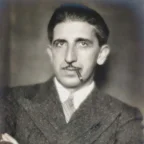
Longhi, Roberto
Alba, 28 December 1890 – Florence, 3 June 1970
Roberto Longhi is universally regarded as the greatest Italian art historian of the twentieth century: a figure who revolutionized critical methodology, discovered or reevaluated entire areas of Italian painting that had remained in the shadows, and trained generations of scholars—from Federico Zeri to Ferdinando Bologna—who reshaped the discipline.
Born in Alba, in the Langhe region, on December 28, 1890, to a middle-class family of Modenese origin, Longhi soon moved to Rome, where in 1913 he completed his advanced studies at the school of Adolfo Venturi, the great encyclopedist of Italian painting, of whom he became the most brilliant student and later the most formidable critic. Venturi opened the doors of the journal L'Arte to him, in which Longhi published his first essays, wittily dismantling established attributions and inaugurating his method of formal analysis—based on the examination of brushstroke, color, and compositional structure, rather than on documentary sources. The characteristics of his literary style emerged even in his very earliest works: a dense prose, rich in synesthetic metaphors and lexical inventions, which transformed the art-historical essay into an autonomous literary genre.
From 1913, he taught art history at the Tasso and Visconti high schools in Rome, where his students included Lucia Lopresti, a writer who would publish under the pseudonym Anna Banti and who would become his wife in 1924, as well as his intellectual collaborator for life. During his years in Rome, Longhi published essays destined to become milestones: Orione (1919), Piero della Francesca (1913, expanded in 1927), and the polemical Gentile da Fabriano e il Pisanello (1926), in which he attacked Croce's aesthetics and asserted the philosophical autonomy of figurative language. Between 1920 and 1922, he undertook a long journey through Europe with the collector Alessandro Contini Bonacossi, visiting museums and collections in France, Spain, Germany, Austria, the Netherlands, Czechoslovakia, and Hungary—experiences that extraordinarily broadened his visual and comparative horizons.
In 1934, he was appointed to the chair of Medieval and Modern Art History at the University of Bologna, where he began teaching in 1935, establishing his first academic school. That very year he published Officina Ferrarese, his study of painting in Ferrara during the fifteenth century—from Cosmè Tura to Ercole de' Roberti—which remains an unsurpassed model of reconstructing a regional pictorial tradition through stylistic analysis. In 1937, through Minister Giuseppe Bottai (a former student of his at the Visconti School), he obtained a position at the General Directorate of Fine Arts in Rome, where he worked for two years on organizing the Italian art exhibition at the EUR, which was ultimately not held due to Italy's entry into the war. In 1943 he founded the journal Proporzioni, and refused to serve under the Italian Social Republic, resulting in his suspension from teaching until the end of the war—one of the few explicit political gestures in a life deliberately focused on art criticism.
In 1950 he was appointed to a professorship at the University of Florence, where he remained until reaching the mandatory retirement age, forming his second school and teaching in the small villa at Villa Il Tasso, which had become his studio-museum. In 1950 he founded the journal Paragone, which he edited until his death and which became the leading organ of postwar Italian art criticism. Through Paragone, Longhi waged his cultural battles: he reevaluated forgotten artists, debunked erroneous attributions, championed contemporary painting (particularly Giorgio Morandi, of whom he was a close friend and the first systematic critic), and published the writings of his best students, including Federico Zeri, Mina Gregori, Luciano Bellosi, and Ferdinando Bologna himself. The magazine outlived its founder: Anna Banti continued it after Longhi's death until the 1980s, maintaining its polemical spirit and critical quality.
Longhi's two major contributions to the history of world art concern Caravaggio and Piero della Francesca. Regarding the latter, Longhi was the first 20th-century critic to fully grasp Piero's role in the Italian 15th-century art scene: his 1927 monograph, immediately translated into French and English, restored the artist from Sansepolcro to the ranks of the greatest painters, influencing all subsequent criticism and paving the way for a reevaluation by Bernard Berenson and Anglo-Saxon critics. As for Caravaggio, Longhi was the undisputed leading figure in the 20th-century rediscovery: following the Quesiti caravaggeschi (1928–1934) and the Ultimi studi caravaggeschi (1943), in 1951 he curated the monumental exhibition Caravaggio e i Caravaggeschi at the Palazzo Reale in Milan, which marked a turning point in the public and critical perception of the Lombard painter, definitively establishing him as the father of European naturalism. His 1968 monograph on Caravaggio remains his most mature contribution to the subject.
Longhi's method is based on the supremacy of the "visual fact": Longhi refused to rely on documents or literary sources for attribution when the analysis of pictorial form—of color, light, space, and "tone"—could offer more precise answers. This formalism, rooted in the traditions of Warburg and Berenson, was, however, always tempered in Longhi by a keen historical sensibility, which placed every artist within the network of relationships between workshops, patrons, and local traditions. Equally celebrated is his prose: rich in neologisms, daring constructions, and visual metaphors capable of translating the quality of light or the texture of a color into words, his writings have influenced generations of critics and writers, from Pier Paolo Pasolini to Andrea Zanzotto.
Roberto Longhi died in Florence on June 3, 1970, bequeathing his extraordinary art collection, library, photo library, and archive to the Roberto Longhi Foundation for Art History Studies, now based at Villa Il Tasso in Florence. Each year, the Foundation awards scholarships to young art history researchers, continuing the educational work of its founder. The photographic archive, now part of the Zeri Foundation's Photo Library, is an indispensable resource for research on Italian painting from the 13th to the 18th century.
In "Frammento siciliano" (Paragone, 1953) he held, according to the restoration catalogue of the Sterbini Diptych (2018), that the diptych was certainly to be ascribed to a Sienese school.
In his course of 1953-54 at the University of Florence on Umbrian painting of the first half of the fourteenth century, published in 1973 in Paragone and as La pittura umbra della prima metà del Trecento. Delpriori describes the publication as the foundation of all later research on the subject, and the account of the Cappella di Santa Croce at Montefalco published by the monastery credits Longhi with praising the "immediatezza sentimentale" of its anonymous painters. According to the Palazzo Venezia entry, he attributed two reliquary panels now in that museum to the Master of Santa Chiara da Montefalco.
Longhurst, Margaret
Chertsey, 1882 – Aldbourne, 1958
Margaret Helen Longhurst was an English historian of medieval ivories and sculpture and, in 1938, the first woman appointed to a keepership in a major British museum. Her scholarly formation was entirely irregular: born at Chertsey in 1882 into a prosperous draper's family, she was educated informally and built her expertise through private study and long periods of travel in Europe financed by her own inheritance — a route into the discipline open, in her generation, almost only to a woman of independent means.
She spent her whole career in the Department of Architecture and Sculpture at the Victoria and Albert Museum, and made her name with three books on ivories in four years: English Ivories (1926) and the two parts of the museum's Catalogue of Carvings in Ivory (1927 and 1929). With Eric Maclagan she then produced the V&A's two-volume Catalogue of Italian Sculpture (1932). She was elected a Fellow of the Society of Antiquaries in 1929 and sat on its council in 1941; she became Keeper of her department in 1938 and retired on 27 August 1942. She died at Aldbourne in Wiltshire in 1958, and is remembered there — in a phrase recorded at the village heritage centre — as "a private, stern and pleasant character."
Her place in the literature on the Codex Aureus of Lorsch rests on a single article. In 1928 she published, jointly with Charles Rufus Morey, "The Covers of the Lorsch Gospels I. The Vatican Cover," Speculum 3, pp. 64–74; Morey's continuation followed in Speculum 4 (1929), and the pair of studies, with his catalogue of the Museo Sacro ivories of 1936, established the fundamental physical facts about the two plaques — which was front and which was back, the pattern of the pin-holes, the evidence of reuse. Their central and still debated contention was that the Vatican cover is a Carolingian reworking of a fifth-century Alexandrian diptych, which places the Lorsch ivories at the head of the long argument about the Carolingian appropriation of late antiquity. The V&A's own record of the London plaques still follows the Morey–Longhurst reading.
Lowe, Elias Avery
Moscow, 15 October 1879 – Bad Nauheim, 8 August 1969
Elias Avery Lowe was born on 15 October 1879 in Moscow, then part of the Russian Empire, to a Jewish family headed by Charles Loew, a silk and embroidery merchant, and his wife, Sarah Ragoler. The family's roots lay in Lithuania, and he emigrated to New York City with his parents in 1892, becoming a citizen of the United States in 1900. He died on 8 August 1969 in Bad Nauheim, Germany; his ashes were interred at Corpus Christi College, Oxford.
After studying at the College of the City of New York from 1894 to 1897, Lowe obtained a BA at Cornell University in 1902. He then studied briefly at the University of Halle before moving to the University of Munich — a transition accidental in origin but consequential in effect. Georg Wissowa at Halle thought it would contribute to Lowe's development to spend a semester in Munich with Ludwig Traube. So taken was Lowe by Traube's personality and approach to Latin literature — with its emphasis on the manuscript traditions of the literature — that he never returned to Halle.
The intellectual debt to Ludwig Traube was absolute and lifelong. Traube — the founder of the modern science of Latin palaeography as an independent academic discipline — proposed as a dissertation subject the transmission of Latin classics through Monte Cassino. Lowe approached the problem on its most fundamental level, initiating an exhaustive study of the handwriting used in South Italy, on the basis of which extant manuscripts might be assigned to Monte Cassino as their place of origin and given their appropriate dates. Under Traube's supervision, Lowe completed his doctorate in 1908 with a dissertation on the oldest surviving calendars from Monte Cassino. Traube died prematurely in 1907, before the work was printed, and Lowe would carry his master's methods forward for the next six decades.
The first major publication to emerge from the Monte Cassino research was Studia Palaeographica: A Contribution to the History of Early Latin Minuscule and to the Dating of Visigothic Manuscripts (Munich, 1910). In this work Lowe established highly sophisticated criteria for dating Beneventan and Visigothic minuscule manuscripts, deploying for the first time systematically the principle that changes in letterform, ligature, abbreviation, and parchment treatment could serve as independent chronological indicators. This methodological rigour — the close comparison of formal features across a large number of dated exemplars as a basis for assigning undated manuscripts to a time and place — was Lowe's central contribution to the discipline, and it underpins everything that followed.
The Beneventan Script (Oxford, 1914) was the first full-scale study of a particular Latin script. It described, classified, and traced the history of the distinctive South Italian minuscule — the script associated with the great Benedictine scriptorium of Monte Cassino and its daughter houses — from its origins in the eighth century through its long florescence and eventual decline after the thirteenth. The script had previously been called Langobarda, Longobarda, or Gothica; it was Lowe who gave it the name Beneventan, now universally adopted. According to Lowe, the perfected form of the script was used in the eleventh century, while Desiderius was abbot of Monte Cassino, declining thereafter. The Beneventan Script remains, together with the facsimiles in Scriptura Beneventana, the model for treating the history of a script; a revised and expanded second edition, prepared by Virginia Brown, was published in Rome in 1980.
Lowe first lectured at the University of Oxford in 1913, and in 1914 gave the Sandars Lectures on bibliography at the University of Cambridge. He would be associated with Oxford — as lecturer, then reader, then honorary fellow — for over four decades, and nearly all of his palaeography teaching took place there. In parallel, from 1911 to 1953, he acted as research associate in palaeography for the Carnegie Institution of Washington, an affiliation that gave him both the financial independence and the institutional mandate to undertake sustained fieldwork across European libraries. During the 1910s he collaborated on the edition of the Bobbio Missal, a Gallican liturgical manuscript of the seventh–eighth century, producing the palaeographic analysis in a three-volume edition alongside André Wilmart and H. A. Wilson (London, 1917–1924).
The project that would consume the final forty years of Lowe's life arose from an encounter in 1921 with a sixth-century uncial fragment of the letters of Pliny the Younger, then at the Pierpont Morgan Library in New York. In order to establish a reliable date of origin for the Pliny fragment, Lowe began to assemble a list of all objectively dated uncial manuscripts that he could find, noting when various palaeographical or codicological features made their first appearance. The collecting and evaluating of data of this kind continued through the 1920s, well beyond the publication of the Pliny text, and eventually inspired Codices Latini Antiquiores. Work on this project began in 1929 and the final proofsheets of the last supplementary volume were in Lowe's hands when he died forty years later.
The Codices Latini Antiquiores (CLA) offers a palaeographical guide to all extant Latin literary manuscripts copied in scripts antedating the ninth century. Published 1934–1971, this monumental work covers over 1,800 manuscripts from repositories in twenty-one countries, providing detailed descriptions and one or more facsimiles for each manuscript. The eleven volumes are organised geographically — the Vatican City, Great Britain and Ireland, Italy, France, Switzerland, Germany, and a final volume covering Austria, Belgium, Denmark, Spain, Sweden, and the United States, among others — and were followed by a supplement in 1971 and two sets of addenda published in 1985 and 1992. To compile each volume, Lowe travelled in person to examine the originals, filling standardised forms with measurements, script identifications, and codicological observations. His assistant on many of these journeys was a young German palaeographer who would become his peer — Bernhard Bischoff, who later wrote a memoir of their travels together.
Lowe became one of the first professors at Princeton's Institute for Advanced Study in 1936, where no teaching was required; he continued to lecture at Oxford during Trinity terms until 1948. He also acted as a consultant in palaeography for the Library of Congress. His collected short studies, spanning nearly sixty years of publication, were gathered posthumously in the two-volume Palaeographical Papers 1907–1965, edited by Ludwig Bieler and published by the Clarendon Press in 1972.
In 1911, Lowe married the translator Helen Tracy Lowe-Porter, who became celebrated as the English translator of Thomas Mann's novels — Buddenbrooks, The Magic Mountain, Doctor Faustus. They had three daughters. Among their descendants are the English artist Charlotte Johnson Wahl and her son, the politician Boris Johnson, the former Prime Minister of the United Kingdom. Although Lowe never abandoned his solidarity with the Jewish people, he declined to practise Judaism; towards the end of his life he told one of his daughters that, were he to adhere to a religion, he would opt for Roman Catholicism — a disposition not without irony in a scholar whose life's work was rooted in the manuscript culture of Benedictine monasticism.
Lowe received numerous recognitions from academies, institutes, and scholarly societies. He was awarded the Medieval Academy of America's Haskins Medal in 1957 and the gold medal of the Bibliographical Society in 1959, and received honorary doctoral degrees from the University of Oxford (1936), the University of North Carolina (1946), and the National University of Ireland (1964). From 1954 until his death he was an Honorary Fellow of Corpus Christi College, Oxford. He was also a corresponding fellow of the British Academy and a member of the Accademia dei Lincei in Rome and the Institut de France. A series of triennial lectures on palaeography, the E. A. Lowe Lectures, continues to be held at Corpus Christi College in his memory.
Lowe stands as the central figure in the twentieth-century transformation of Latin palaeography from an auxiliary discipline into an independent science. By insisting on the systematic analysis of letterforms against a controlled body of dated exemplars — and by applying this method with unmatched consistency across twelve volumes spanning the entire surviving corpus of pre-Carolingian Latin manuscripts — he gave to all subsequent medieval scholarship a reliable physical foundation for the study of manuscript transmission, textual history, and the geography of book production in the Latin West. For the historian of illuminated manuscripts in particular, the Codices Latini Antiquiores is not merely useful but foundational: it is the instrument through which the oldest stratum of Western manuscript art — the insular Gospel books, the great Italian uncial codices, the Merovingian liturgical books, the Visigothic and Beneventan traditions — can be assigned to their places and periods of origin with the precision that iconographic and art-historical analysis demands.
Ludovico da Pietralunga
16th century (fl. c. 1570-1580)
Ludovico da Pietralunga was a Franciscan Conventual friar, born at Pietralunga in the Alta Valle del Tevere (Umbria, in the territory of Città di Castello), who spent his mature years in the Sacro Convento at Assisi. He is consistently described in the literature as a frate-pittore — a friar who also practised painting, apparently at a modest artisanal level — though his own surviving output is negligible and this side of his career rests on slender evidence rather than on a documented corpus.
His claim on the attention of art historians rests entirely on one text: the Descrizione della Basilica di S. Francesco e di altri santuari di Assisi, compiled around 1570-1580 and preserved in manuscript 148 of the Biblioteca comunale di Assisi. It remained unpublished until the early twentieth century. The standard reference edition is Ludovico da Pietralunga, Descrizione della Basilica di S. Francesco e di altri santuari di Assisi. In appendice: Chiesa superiore, di Anonimo secentesco, ed. Pietro Scarpellini, Treviso, Canova, 1982 (series Fonti per la storia dell'arte) — cited in the scholarly literature as "Ludovico da Pietralunga, ed. 1982".
The Descrizione is the earliest systematic, room-by-room account of the decoration of the Basilica, and it is not a devotional inventory of relics but something closer to an artistic topography: Ludovico described the images, explained their iconography, recorded the names of illustrious donors — popes and cardinals — and dwelt at length on the names and merits of the painters. Because he wrote before the Baroque remodelling and the nineteenth-century interventions, he preserves evidence of things now lost.
Three examples of the kind of testimony he supplies:
- He is the first to record the panel of St Francis against a gold ground, surrounded by four scenes of miracles, now in the Museo del Tesoro.
- He recorded the tomb of Cardinal Gentile Partino da Montefiore in the pavement before the altar of the Cappella di S. Ludovico, of which no trace survives after the 1763 remodelling.
- Read alongside Vasari, he documents heraldry in the Lower Church Passion cycle — the arms of Gualtieri di Brienne, recently identified in a badly worn portion of fresco by Michela Becchis exactly where Vasari and Ludovico had placed them, a find with consequences for the chronology of Pietro Lorenzetti at Assisi.
Lunghi, Elvio
Assisi, 1957
Elvio Lunghi was born in Assisi in 1957, a birthplace whose significance cannot be overstated: his entire scholarly life would orbit around the artistic heritage of that city and the Franciscan world it generated. He completed his Laurea in Lettere at the Università degli Studi di Perugia in 1981, and in 1987 defended his doctorate as an external candidate at the Università La Sapienza di Roma. His academic engagement began even before graduation: from 1983 to 1988 he served as professore incaricato at the Università per Stranieri di Perugia, a position that would prove the foundation of a career spent almost entirely at that institution. From 1988 to 1991 he taught as a tenured secondary school professor — an experience that cultivated his lifelong commitment to public communication of art history — before returning to the Università per Stranieri as professore comandato in 1991.
In 2004 Lunghi was appointed Professore Associato in Medieval Art History (sector L-ART/01) at the Università per Stranieri di Perugia, the post he has held ever since. His three declared research areas are: painting and sculpture in central Italy between the Middle Ages and the Renaissance; artistic patronage of the mendicant religious orders; and the popular promotion and dissemination of artistic heritage. These three axes are not parallel lines but deeply interwoven — the mendicant orders were the principal engine of visual culture in medieval Umbria, and understanding their patronage is inseparable from understanding the painters and sculptors Lunghi has spent his career studying.
No work has absorbed more of Lunghi's intellectual energy than the great artistic programme of the Basilica of San Francesco in Assisi. His monograph La Basilica di S. Francesco in Assisi (Scala Editrice, Florence, 1996) remains one of the most comprehensive single-volume accounts of the building's decoration. His 2012 volume Giotto e i pittori giotteschi ad Assisi (Editrice la Rocca, Marsciano, pp. 494) is the most systematic account yet written of the entire Giottesque workshop presence in the city. His article L'influenza di Pietro di Giovanni Olivi e di Ubertino da Casale nel programma iconografico della chiesa inferiore di S. Francesco ad Assisi, published in Collectanea Francescana in 1997, and the study La perduta decorazione trecentesca nell'abside della chiesa inferiore del S. Francesco, published in the same journal in 1996, together represent the most sustained scholarly engagement with the theological motivations behind the Lower Church's pictorial programme. His synthesis Immagini degli Spirituali. Il significato delle immagini nelle chiese francescane di Assisi (Il Formichiere, Foligno, 2019, pp. 313) crowns four decades of reflection on the relationship between Franciscan spirituality — particularly the Spiritual Franciscan movement — and the images produced for the order's churches.
Lunghi's contributions to the study of illuminated manuscripts in Umbria are among the most enduring in the field. In 2004 he wrote numerous entries for the Dizionario biografico dei miniatori italiani secoli IX–XVI (Edizioni Sylvestre Bonnard, Milan), covering artists including Bartolomeo Caporali, Giapeco Caporali, the Maestro dei Corali di Gubbio, the Maestro dei Corali di S. Lorenzo, the Maestro del Messale di Deruta, Marino da Perugia, Venturella di Pietro, and Vanni di Baldolo. Each of these entries represents original archival and stylistic research into artists who had received little or no dedicated scholarly attention. His essay Intorno ai codici liturgici del XIII e XIV secolo conservati nelle raccolte umbre, written with P.M. Della Porta and published in the catalogue Canto e colore: I corali di San Domenico di Perugia nella Biblioteca comunale Augusta (Perugia, 2006), accompanied catalogue entries for some twenty-three individual manuscripts preserved in the Augusta library. The 2018 exhibition Gubbio al tempo di Giotto, which Lunghi co-curated with Giordana Benazzi and Enrica Neri Lusanna, extended this manuscript work with entries on the Maestri dei corali di Gubbio, an anonymous Bolognese miniatore active in Gubbio, Venturella di Pietro, and Vanni di Baldolo.
Lunghi has also made a decisive mark on scholarship concerning wooden devotional sculpture in Umbria. His monograph La Passione degli Umbri. Crocifissi di legno in Valle Umbra tra Medioevo e Rinascimento (Orfini Numeister, Foligno, 2000, pp. 190) was the first systematic survey of the surviving corpus of wooden crucifixes in the Valle Umbra, tracing the artistic, liturgical, and devotional contexts that produced them. His essay La scultura lignea in Umbria nel XIII secolo, published in the CISAM volume L'Umbria nel XIII secolo in 2011, extended this analysis to the earliest documented phase of production in the region. Through the exhibition catalogues Da Giotto a Gentile (Fabriano, 2014) and Dal visibile all'indicibile (Foligno, 2012), he continued to catalogue individual crucifixes and place them in the broader context of mystical and penitential culture in central Italy.
As a connoisseur, Lunghi has proposed and refined a number of attributions that have entered standard art-historical usage. His early study Il Crocifisso di Giunta Pisano e l'icona del "Maestro di San Francesco" alla Porziuncola (1995) placed the two most important early devotional images at the Porziuncola in their full historical context, distinguishing the documented work of Giunta Pisano from the anonymous panel known as the Maestro di San Francesco. More controversially but very influentially, his essay Le arti del Duecento a Gubbio (2018) proposed an identification between the anonymous Maestro dei Crocifissi Francescani and the documented Bolognese painter Guido di Pietro da Gubbio, father of the miniatore Oderisi immortalised by Dante. In the catalogues of the exhibitions Da Giotto a Gentile (2014) and Gubbio al tempo di Giotto (2018), he systematically attributed multiple works to the Maestro dei Crocifissi Francescani across institutions in Assisi, Camerino, and Bologna. He also confirmed the presence of the Monteripido Crucifix within the corpus of the German sculptor Giovanni Teutonico, active in Umbria in the late fifteenth century.
While Lunghi's reputation rests primarily on medieval art, his scholarship extends naturally into the Quattrocento and early Cinquecento. He edited the major exhibition catalogue Nicolaus Pictor. Nicolò di Liberatore detto l'Alunno (Foligno, 2004, pp. 544) with Giordana Benazzi, the fullest account of the Foligno painter's life and workshop. He wrote Itinerari del Perugino in Umbria (Silvana Editoriale, 2004) and the monograph Il Martirio di san Sebastiano di Pietro Perugino a Panicale (2005), and in 2015 co-authored Cesare Sermei pittore devoto nell'Umbria del Seicento with P. Mercurelli Salari (Edizioni Orfini Numeister, pp. 330). A notable early contribution to Raphael studies was his 2003 monograph Raffaello a Cerqueto. Un affresco giovanile e l'esordio in Umbria and his article Una proposta per il giovane Raffaello (2002), which advanced a new attribution for the young Raphael's debut in Umbrian fresco painting.
Lunghi's scholarship has reached international audiences through publications in English and German. His essay Francis of Assisi in Prayer before the Crucifix in the Accounts of the First Biographers was published in the prestigious National Gallery of Art volume Italian Panel Painting of the Duecento and Trecento (Studies in the History of Art, XXXVIII, New Haven & London, 2002, pp. 341–353). He contributed a further study, Una proposta per il giovane Raffaello, to the Festschrift for Antje Middeldorf Kosegarten published in Dresden and Kassel in 2002. For the Enciclopedia dell'Arte Medievale of the Istituto dell'Enciclopedia Italiana he wrote entries on Orvieto (1997), Spoleto (1999), and Giovanni di Bonino (1995). For many years he has maintained a regular column in the journal San Francesco Patrono d'Italia, writing each month on themes drawn from Franciscan art and spirituality, making scholarly research accessible to the widest possible audience. His most recent volume, Perugia. Cento storie, was presented in December 2025, confirming that at nearly seventy years of age his scholarly productivity shows no sign of abating.
Luttrell, Anthony
October 1932
Anthony Thornton Luttrell is a British medievalist and the foremost modern authority on the Knights Hospitaller, in particular on the Order of St John at Rhodes and Malta in the fourteenth and fifteenth centuries. Educated at Bryanston School and at Oriel College, Oxford, where he graduated in 1954, he spent his final undergraduate year as a De Osma Student at the Instituto Valencia de Don Juan in Madrid, studied at Madrid University in 1955 and at the British School at Rome from 1956 to 1958, and took his master's degree and doctorate at Oxford in 1959, with further study at the Scuola Normale Superiore in Pisa.
He taught at Swarthmore College from 1960 to 1962 and at the University of Edinburgh from 1963 to 1967, was assistant director and librarian of the British School at Rome from 1967 to 1973, and afterwards held posts at the Royal University of Malta and fellowships at Princeton, Dumbarton Oaks and Würzburg; since 2001 he has been an honorary research associate at Royal Holloway, University of London. His bibliography runs to more than two hundred and fifty items, many of them gathered in Variorum collected-studies volumes such as Studies on the Hospitallers after 1306: Rhodes and the West, alongside The Town of Rhodes 1306–1356. He received the Humboldt Research Award in 1999–2000 and the Prix Gustave Schlumberger of the Académie des Inscriptions et Belles-Lettres in 2012, and was honoured with a Festschrift on the Hospitallers, the Mediterranean and Europe.
In 1972 Luttrell re-examined the white-clad knight standing near the emperor in Andrea di Bonaiuto's Via Veritatis in the Spanish Chapel. Against the identification proposed by Mary Aquinas Devlin in 1929, he argued that the figure is not an English Knight of the Garter but a Knight of St John — a Knight of Rhodes — recognizable by the white cross and consistent with the role of Hospitallers as cubicularii in the papal household, an identification that agrees, as it happens, with Vasari's own description of the figure. The debate has continued without resolution.
M
Mabillon, Jean
Saint-Pierremont, 23 August 1632 - Paris, 27 December 1707
Jean Mabillon was born on 23 August 1632 in Saint-Pierremont, a small village in the Ardennes region of northeastern France, into a modest rural family. Little is recorded of his early childhood, but his evident intellectual gifts brought him to the attention of the local clergy, and he received his initial formation at the collège of Reims, where he demonstrated exceptional aptitude for Latin and the study of texts.
In 1653, at the age of twenty-one, Mabillon took his monastic vows at the Abbey of Saint-Rémi in Reims, entering the Congregation of Saint-Maur — the reformed Benedictine congregation founded in 1618, which would become the most distinguished centre of ecclesiastical scholarship in seventeenth-century Europe. The Maurists, as they were known, had made rigorous textual and historical scholarship central to their monastic vocation, producing critical editions of the Church Fathers, hagiographical collections, and historical documents on a scale unprecedented in the history of religious learning.
After his novitiate at Saint-Rémi, Mabillon was transferred to several abbeys for further formation — including Nogent-sous-Coucy and Corbie — before being definitively assigned in 1664 to the Abbey of Saint-Germain-des-Prés in Paris, the intellectual heart of the Maurist congregation and home to one of the finest manuscript libraries in France. It was here that Mabillon would spend the greater part of his scholarly life, and where he would produce the works that secured his permanent place in the history of Western learning.
To understand Mabillon, it is essential to appreciate the extraordinary intellectual culture of the Maurists at Saint-Germain-des-Prés. Under the direction of scholars such as Luc d'Achery — who became Mabillon's mentor and guide — the congregation had undertaken the systematic editing of patristic and medieval texts, applying to sacred and historical documents the same rigorous philological methods that humanist scholars had brought to classical antiquity. D'Achery's own Spicilegium (1655–1677), a massive collection of previously unpublished medieval documents, set the standard for the enterprise in which Mabillon would surpass all his contemporaries.
Working under d'Achery's direction, Mabillon began his career with contributions to the edition of the works of St. Bernard of Clairvaux (1667), a task that required close familiarity with the transmission of twelfth-century manuscripts and the problems of attribution. This early experience sharpened his sensitivity to questions of textual authenticity and documentary evidence that would become central to all his subsequent work.
Mabillon's first major independent project was the nine-volume Acta Sanctorum Ordinis Sancti Benedicti, published between 1668 and 1701, which presented the lives and acts of Benedictine saints arranged chronologically from the sixth to the twelfth century. This monumental undertaking required Mabillon to survey and critically evaluate an enormous body of hagiographical material, distinguishing authentic documents from later forgeries and interpolations with a methodological rigour that was, at the time, genuinely revolutionary.
The Acta Sanctorum established Mabillon's reputation throughout learned Europe as a scholar of the first rank — meticulous, balanced in judgement, and possessed of an unparalleled command of the medieval manuscript tradition. It also brought him into correspondence with virtually every major historian and antiquary of the age, from Gottfried Wilhelm Leibniz — with whom he maintained a prolonged and intellectually fertile exchange — to Antonio Magliabechi, the Florentine librarian and polymath. This network of correspondence, which Mabillon cultivated assiduously throughout his life, made Saint-Germain-des-Prés a nodal point in the pan-European République des Lettres of the late seventeenth century.
Mabillon's supreme achievement, and the work that assures his unique position in the history of scholarship, is the six-volume De Re Diplomatica libri VI, published in Paris in 1681. The immediate occasion for the work was a direct scholarly challenge: the Bollandist hagiographer Daniel van Papenbroeck had questioned the authenticity of a number of early medieval charters held by Benedictine monasteries, including documents foundational to the Maurists' own institutional history. Mabillon's response transformed what might have been a narrow polemical exchange into the founding document of an entirely new discipline.
De Re Diplomatica established, for the first time on a systematic basis, the criteria by which medieval documents — charters, diplomas, privileges — could be authenticated or identified as forgeries. Mabillon examined hundreds of original documents, developing rigorous criteria based on the analysis of script and handwriting, establishing a historical typology of Latin scripts from the Merovingian period through the high medieval era; the study of formulaic language (formulae) — the standardized phrases and clauses typical of different chanceries and periods; the material analysis of writing supports — parchment, vellum, papyrus — and of inks, seals, and authentication marks; and the examination of diplomatic protocol: the structure and sequence of clauses in official documents (invocation, intitulation, address, preamble, dispositio, sanctio, corroboration, dating, witness lists).
By synthesizing these multiple analytical approaches, Mabillon created what is essentially the discipline of Latin palaeography and the science of diplomatics as they are still practised today. Van Papenbroeck — with exemplary intellectual honesty — publicly acknowledged Mabillon's refutation of his arguments, and the two scholars parted in mutual respect. The work was immediately recognized as a masterpiece. Leibniz called it opus plane singulare, "a work altogether singular." It was translated, excerpted, and debated across Europe, and remains to this day the foundational text of the discipline.
In 1685–1686, Mabillon undertook an extended journey through Italy, commissioned by Jean-Baptiste Colbert's son the Marquis de Seignelay and by King Louis XIV himself, with the mission of identifying and acquiring manuscripts for the Royal Library. Accompanied by the Maurist Michel Germain, he traveled through Turin, Milan, Florence, Rome, Monte Cassino, Naples, and numerous other centres, visiting archives, monastic libraries, and collections both ecclesiastical and princely.
The journey was of incalculable scholarly significance. Mabillon gained direct access to document collections he had previously known only through correspondence or secondary description, and the experience deepened his understanding of Italian Benedictine manuscript traditions — particularly those of Monte Cassino, where he could examine the origins of the Beneventan script, a topic he would address in De Re Diplomatica. He also forged lasting relationships with Italian scholars, archivists, and librarians. The results of this journey were published as Museum Italicum (2 volumes, 1687–1689), a detailed account of the Italian libraries and manuscripts he had consulted, which remains an indispensable source for the history of Italian manuscript collections in the late seventeenth century.
In 1691, Mabillon entered a famous public controversy with Armand-Jean de Rancé, the austere reforming abbot of La Trappe and founder of the Trappist branch of the Cistercian order. Rancé had published a work arguing that monastic scholarship was fundamentally incompatible with the true spirit of the Benedictine vocation — that monks should devote themselves exclusively to prayer, manual labour, and penance, and that intellectual work was a form of spiritual vanity.
Mabillon's response, the Traité des Études Monastiques (1691), is a masterpiece of learned and dignified polemic. Without acrimony, he argued systematically that scholarly study had always formed an integral part of Benedictine life from the time of St. Benedict himself — that the copying, preserving, and interpreting of sacred and patristic texts was a form of lectio divina and an act of service to the Church no less spiritually valid than manual labour. The Traité drew on the full weight of Benedictine historical tradition to demonstrate that learning and contemplation were not enemies but natural complements, and that the great monastic culture of the Middle Ages had been inseparable from its scholarly activity.
The work was both an apologia for the Maurist enterprise and a profound meditation on the relationship between the intellectual and spiritual life. It remains one of the most thoughtful defences of the compatibility of scholarship and religious vocation ever written.
The last great project of Mabillon's life was the Annales Ordinis Sancti Benedicti, a comprehensive chronological history of the Benedictine order from its origins through the twelfth century. Mabillon published the first two volumes in 1703 and continued working on the project until his death, having completed four volumes; the remaining two were published posthumously between 1713 and 1739 from his notes and drafts.
The Annales represented the summation of a lifetime's engagement with medieval Benedictine sources — charters, chronicles, hagiographical texts, liturgical documents — and demonstrated once again Mabillon's extraordinary capacity to synthesize vast bodies of evidence into a coherent and critical historical narrative. Although inevitably superseded in many particulars by subsequent scholarship, the Annales remained an essential reference for historians of medieval monasticism well into the nineteenth century.
Mabillon was celebrated not only for the scale of his learning but for the exceptional quality of his personal character. Contemporaries consistently described him as humble, gentle, and entirely without intellectual vanity — qualities all the more remarkable in a scholar whose eminence was universally acknowledged. He bore controversy with equanimity, was generous in acknowledging the contributions of predecessors and colleagues, and maintained an extensive correspondence with scholars across confessional boundaries with unfailing courtesy.
He was elected a member of the Académie française and received recognition from learned societies across Europe. Louis XIV's minister Colbert sought his advice on the organization of the Royal Library, and Pope Clement XI received him in private audience during his Italian journey, honouring him as the foremost Latinist and medievalist of the age.
In his final years, increasingly affected by the physical decline of age, Mabillon continued to work at Saint-Germain-des-Prés with undiminished dedication. He died there on 27 December 1707, aged seventy-five, mourned across Catholic and Protestant Europe alike as one of the supreme intellectual figures of his generation.
The legacy of Jean Mabillon is at once disciplinary, institutional, and cultural. As the founder of Latin palaeography and diplomatics, he established the methodological foundations on which all subsequent study of medieval documents has been built. The analytical categories he developed in De Re Diplomatica — script typology, diplomatic protocol, formulaic analysis, material examination — remain the core instruments of the discipline to this day, and every palaeographer and archivist working with Latin medieval manuscripts works, however distantly, in his tradition.
His broader scholarly programme — the rigorous critical edition of medieval texts, the systematic cataloguing of manuscript collections, the application of philological method to hagiography and church history — defined the Maurist achievement and, through it, shaped the entire development of medieval studies as an academic discipline from the eighteenth century onward. The German historical school of the nineteenth century, Benedictine historical scholarship at Solesmes and Monte Cassino, and the modern institutions of palaeography and archival science all draw, in different ways, from the methodological capital accumulated by Mabillon and his Maurist colleagues.
For historians of medieval art and manuscript culture in particular, Mabillon's palaeographical typologies and his catalogues of Italian and French manuscript collections retain a documentary value that transcends their immediate historical context. His Italian journey and the Museum Italicum remain indispensable for the reconstruction of the state of monastic libraries at the end of the seventeenth century, before the catastrophic dispersals of the Revolutionary era.
Maetzke, Anna Maria
d. 2004
Anna Maria Maetzke was an Italian art historian and heritage official whose whole career was bound to Arezzo and its province, and who is the single most important modern researcher on Margarito d'Arezzo. She belonged to a family of scholars: her father was the archaeologist Guglielmo Maetzke (1915–2008), and her sister Gabriella (1946–2003) taught medieval archaeology at the Università della Tuscia in Viterbo. Her birth date and her schooling are not recorded in the accessible literature; she was already serving in the Aretine soprintendenza by the early 1970s, and she rose to be soprintendente for the artistic and architectural heritage of the province of Arezzo, an office whose formal title changed several times during her tenure. She died in 2004, a few months after her sister; a local commemoration gives the date as 11 March.
Her decisive contribution to the study of Margarito came out of the campaign of restorations that she followed directly in the early 1970s, which took in the painted cross of the Pieve di Santa Maria at Arezzo, the Madonna di Montelungo, the dossal of Santa Maria delle Vertighe with its wings, and two panels of Saint Francis. In "Nuove ricerche su Margarito d'Arezzo," Bollettino d'Arte, serie V, LVIII (1973), fasc. II, pp. 95–112, she published the results. The heart of the article is the inscription of the Vertighe dossal, which the cleaning allowed her to read rather than merely to reconstruct: Margaritus et Restaur[…]ecerunt hoc opus sub anno Domini MCCL[…]III m(en)se Augusti. From it she established the collaboration of Margarito with Restoro d'Arezzo, the author of La composizione del mondo, to whom she gave the four lateral scenes on grounds of script and style, suggesting that Margarito's work had been interrupted, perhaps by his death, and completed and signed by his collaborator; and she showed that the surviving letters of the date admit exactly three readings, 1269, 1274 or 1283. The same article attributed the painted cross of the Pieve to Margarito. She returned to the Aretine Duecento in the catalogue Arte nell'Aretino. Recuperi e restauri dal 1968 al 1974 (Arezzo, 1974), pp. 15–31, and in "Pittura del Duecento e Trecento nel territorio aretino," in La pittura in Italia. Il Duecento e il Trecento, I (Milan, 1986), pp. 364–366.
Beyond Margarito her name is attached to some of the largest conservation projects of late twentieth-century Tuscany. She directed the restoration of the Volto Santo of Sansepolcro between 1984 and 1989, whose results led her to argue for a Carolingian dating, and edited the resulting volume Il Volto Santo di Sansepolcro. Un grande capolavoro medievale rivelato dal restauro (Cinisello Balsamo, Silvana, 1994). Above all she directed the fifteen-year "Progetto per Piero della Francesca," the restoration of the Legend of the True Cross in the Bacci Chapel at San Francesco in Arezzo, carried out with the Opificio delle Pietre Dure from 1985 until the frescoes were unveiled on 7 April 2000, and co-edited with Carlo Bertelli the accompanying monograph published by Skira in 2001. She also directed the restoration of Piero's Madonna del Parto at Monterchi, edited the catalogue of the Museo statale d'arte medievale e moderna di Arezzo (1987), and curated the exhibition La bellezza del sacro. Sculture medievali policrome across five Aretine venues in 2002–2003. The library of the soprintendenza in Palazzo Albergotti at Arezzo now bears her name.
Maginnis, Hayden B. J.
active 20th–21st century
Hayden B. J. Maginnis is an American art historian whose work on the painting of Trecento Siena has been especially concerned with reconstructing the material and documentary conditions of the medieval workshop, and with subjecting the connoisseurial tradition surrounding painters such as Duccio to sustained historiographical scrutiny.
His major books, Painting in the Age of Giotto: A Historical Reevaluation (1997) and The World of the Early Sienese Painter (2001), examine the documentary and institutional world in which Sienese Trecento altarpieces were commissioned, produced, and paid for, and have provided the archival basis for subsequent studies of individual painters' careers, including the documentation of major civic and ecclesiastical commissions such as the chapel of St Paul in Siena Cathedral.
Magister, Sara
active late 20th–21st century
Sara Magister is an Italian art historian trained in both classical archaeology and medieval and modern art history — she holds a research doctorate in classical antiquities alongside a diploma of specialization in medieval and modern art history — whose scholarship spans two seemingly distant fields: Trecento Sienese painting and the history of collecting, particularly of antiquities, in Renaissance and Baroque Rome.
For the Istituto della Enciclopedia Italiana's Dizionario Biografico degli Italiani, Magister contributed the standard modern biographical entry on the Sienese painter Jacopo di Mino del Pellicciaio (vol. 62, 2004), a synthesis that draws together Gaetano Milanesi's nineteenth-century documentary transcriptions, Roberto Longhi's and Pier Paolo Donati's reconstruction of the "Maestro degli Ordini," and Luciano Bellosi's 1972 identification of that anonymous personality with the documented painter, while carefully weighing later proposals — including Mojmír Frinta's punch-mark hypothesis linking Jacopo's father to the painter Mino Parcis, which Magister judged "di scarso fondamento" (of scant foundation).
Her principal monograph, Arte e politica: la collezione di antichità del cardinale Giuliano della Rovere nei palazzi ai Santi Apostoli (Atti della Accademia Nazionale dei Lincei, 2002), reconstructs the antiquities collection assembled by Cardinal Giuliano della Rovere — the future Pope Julius II — before his election, situating it within a broader survey of more than 160 Roman collecting families and establishing the documentary groundwork for the pontiff's later foundation of the Belvedere. She has since published widely on Renaissance and Baroque collecting, and in 2018 released Caravaggio, il vero Matteo. I capolavori per San Luigi dei Francesi a Roma, storia e significato (Campisano; 2nd ed. 2020), a study of Caravaggio's Contarelli Chapel paintings that won the national "Città Cristologica" prize the same year.
Alongside her published research, Magister has worked consistently to bring art history to a wider public, combining university teaching with print and television journalism, cultural tourism, and museum education — an orientation reflected in her continuing lecture courses for the online academy Schola Palatina.
Maguire, Henry P.
Bath, 1943
Henry P. Maguire is one of the most original and influential historians of Byzantine art of the second half of the twentieth century, Professor Emeritus at Johns Hopkins University and former Director of Byzantine Studies at Dumbarton Oaks. His contribution has often been described as transformative: with systematic rigor, he reintroduced literary rhetoric, poetry, and non-canonical objects as tools for analyzing medieval art, permanently expanding the traditional scope of Byzantine art history.
Born in 1943 in Bath, England, Maguire enrolled in 1962 at King's College, Cambridge, to study Archaeology and Anthropology, before moving to Art History after one year. His doctoral training took place at the Courtauld Institute of Art in London and at Harvard University, both attended through the Bliss Fellowship. At Harvard he studied under Ernst Kitzinger, whose Viennese-inflected method in early Christian and late antique art deeply shaped Maguire's stylistic and iconographic approach. His wife, Eunice Dauterman Maguire, herself a Byzantine art historian and later curator of the Johns Hopkins Archaeological Collection, followed the same advanced training and intellectual environment.
After a brief post at the University of Massachusetts in the early 1970s, Maguire held a joint appointment as assistant professor at Johns Hopkins and Dumbarton Oaks from 1973 to 1979. From 1979 to 2000 he taught at the University of Illinois at Urbana-Champaign, where he and Eunice Dauterman Maguire pursued pioneering work on domestic objects and the material culture of late antiquity. In 1991 he was appointed Director of Byzantine Studies at Dumbarton Oaks, a role he held until 1996. From 2000 to 2010 he held the Chair of Art History at Johns Hopkins University in Baltimore, where he is now Professor Emeritus.
Maguire's first major book, Art and Eloquence in Byzantium (Princeton University Press, 1981), established the methodological foundation of his later work. It demonstrated how classical rhetorical genres, especially ekphrasis and threnos, directly influenced Byzantine narrative pictorial conventions. The thesis was groundbreaking: instead of treating medieval art as a self-contained visual system, Maguire showed that painters and patrons worked within a shared semiotic field that included poetry, liturgy, homiletics, and rhetoric. A decisive early articulation of this line of inquiry is his 1977 Dumbarton Oaks Papers article, The Depiction of Sorrow in Middle Byzantine Art, where the Threnos at Nerezi is interpreted through the literary tradition of lament.
From the 1980s onward, Maguire expanded his research toward new and previously underexplored fields: nature in Byzantine art, magic and apotropaic imagery, and secular and domestic culture. Earth and Ocean: The Terrestrial World in Early Byzantine Art (1987) interpreted representations of earth, sea, and living beings in early Christian art as a coherent cosmological system. Rhetoric, Nature and Magic in Byzantine Art (1998) collected essays integrating aesthetics with magical-religious concerns, demonstrating how amulets, engraved gems, and textiles could be read within the same symbolic horizon as monumental works.
A mature synthesis of these themes appears in Nectar and Illusion: Nature in Byzantine Art and Literature (Princeton University Press, 2012), where Maguire analyzed how Byzantines represented and interpreted flowers, fruit, animals, and landscapes across monumental art, manuscripts, decorative arts, and texts. The volume is now indispensable for manuscript studies because it offers a strong theoretical framework for interpreting vegetal and zoomorphic ornament in margins, initials, and decorative programs.
Two parallel strands characterize the second half of his career. The first, focused on sanctity and the sacred image, culminated in Icons of Their Bodies: Saints and Their Images in Byzantium (Princeton University Press, 1996), a fundamental study of the relationship among saintly corporeality, relics, and representation. The second, devoted to secular culture, produced Other Icons: Art and Power in Byzantine Secular Culture (Princeton University Press, 2007), written with Eunice Dauterman Maguire, which shifted attention toward private and domestic objects, including textiles, jewelry, ceramics, and ivory. The book strongly influenced later scholarship on non-ecclesiastical medieval material culture.
His directorship at Dumbarton Oaks (1991-1996) was marked by intense editorial activity reflecting the full breadth of his interests. Under his supervision, major collective volumes appeared, including Byzantine Magic (1995), Byzantine Court Culture from 829 to 1204 (1997), and Byzantine Garden Culture (2002), all published by the Dumbarton Oaks Research Library and Collection. The volume San Marco, Byzantium, and Myths of Venice (2010), edited with Robert Nelson, further reflects his interest in interactions between Byzantine artistic traditions and their medieval Western reception.
In 2020, recognition of Maguire's scholarly legacy took the form of the Festschrift The Eloquence of Art: Essays in Honour of Henry Maguire, edited by Andrea Olsen Lam and Rossitza Schroeder for Routledge's Birmingham Byzantine and Ottoman Studies series. The twenty-three contributions, ranging from imperial iconography to Islamic-Byzantine visual culture and from Ravenna mosaics to Cypriot art, testify to the extraordinary thematic and geographical reach of his work and to an influence that spans generations and disciplines.
Mâle, Émile
Commentry, 2 June 1862 – Fontaine-Chaalis, 6 October 1954
Émile Mâle effectively created the study of medieval iconography as a discipline. His four-volume survey of French religious art, begun with the celebrated thesis of 1898, taught two generations to read a cathedral as an organised system of meaning rather than as an accumulation of ornament, and the method he established — reading images against the theological and liturgical texts of their period — dominated medieval art history for the better part of a century.
He was born at Commentry in the Allier in 1862 and entered the École normale supérieure, placing first in the agrégation in 1886. He was teaching rhetoric in provincial lycées when a journey to Italy that same year, and in particular a fresco by Andrea da Firenze showing Thomas Aquinas, turned him toward the history of Christian art. He defended his thesis, L'Art religieux du XIIIe siècle en France: étude sur l'iconographie du Moyen Âge et sur ses sources d'inspiration, in 1898; from 1906 he taught the history of Christian art at the Sorbonne, and in 1912 he received its chair of medieval archaeology, which he held until 1923.
The thirteenth-century volume was followed by companions on the twelfth century, the late Middle Ages, and the art of the Counter-Reformation, together forming the most influential body of iconographic scholarship ever produced in France. Its governing conviction — that "the Middle Ages had a passion for order", and that the imagery of a great church constitutes a mirror of knowledge, arranged and legible — gave the discipline both its method and its characteristic confidence.
He directed the École française de Rome from 1923 to 1937, was elected to the Académie des inscriptions et belles-lettres in 1918 and to the Académie française in 1927, and died at Fontaine-Chaalis in 1954 at the age of ninety-two.
His authority has been qualified in two directions. Arthur Kingsley Porter challenged the national and regional priorities of his account of Romanesque sculpture — Mâle held for the primacy of Languedoc and treated Spanish work as downstream of French, a position sharpened by the nationalism of the period and weakened by the fact that he never travelled the pilgrimage roads himself. More recently, the textual model itself has been questioned: Linda Seidel, writing on Autun, argued against the Mâle tradition that a sculptural programme is not a fixed pictorial book to be read in sequence but a distributed field of associations activated by the movement of the viewer through the building. Both objections are a measure of how completely the field he founded was still his to be argued with.
Mango, Cyril
Istanbul, 14 April 1928 – 8 February 2021
Cyril Mango was born on 14 April 1928 in Istanbul, Turkey, the youngest of three sons of Alexander A. Mango, a descendant of a Genoese family who came to Istanbul via Chios, and Adelaide, known as Ada (née Damonov) Mango, a refugee from Baku. This cosmopolitan Levantine background — blending Italian, Greek, and Russian strands — proved formative for a scholar who would spend his life bridging cultures across centuries. His brother Anthony later became a multilingual interpreter at the UN, while brother Andrew became a prominent Turcologist and author of a seminal biography of Kemal Atatürk. Theirs was a very special, cosmopolitan universe, a remnant of the famous Pera, the bygone district of Constantinople.
After school, Mango began working for the British Council in Istanbul, where he crossed paths with Sir Steven Runciman, who was waiting out the war in the honorary position of Professor of Byzantine Art and History at Istanbul University. "His erudition, even when he was still in his teens, was extremely impressive," wrote Runciman of Mango in his memoirs many decades later.
Born in Constantinople in 1928, Mango was educated at the University of St Andrews, earning his MA in 1949, and then earned his doctorate in History from the University of Paris in 1953. His doctoral thesis, written under the supervision of Rodolphe Guilland, focused on the Imperial Palace of Constantinople — a subject that would anchor his scholarly interests for decades.
Mango's institutional career unfolded across the most prestigious centers of Byzantine studies in the world. At Dumbarton Oaks, he was a Junior Fellow (1951–1953), Fellow (1953–1954), and Research Associate (1954–1955) of Byzantine Studies, Instructor in Byzantine Archaeology (1955–1958), Lecturer in Byzantine Archaeology (1958–1962), Associate Professor of Byzantine Archaeology (1962–1963), and Executive Editor of Dumbarton Oaks Publications (1958–1963). His scholarly outlook was key for many research projects undertaken during this period.
He then held the Koraes Chair of Modern Greek and Byzantine History, Language, and Literature at King's College London (1963–1968), followed by the Bywater and Sotheby Professorship of Byzantine and Modern Greek at Oxford University (1973–1995). He was also a Visiting Associate Professor of Byzantine History at the University of California, Berkeley (1960–61). At Oxford he became an Emeritus Professorial Fellow of Exeter College, where, upon his death, the college flag was flown at half-mast in his honor.
Mango was also co-director of the Christian Monuments in Turkish Mesopotamia Project (1982–1990), and director of the Cathedral of Nisibis Project (1990–1991).
What distinguished Mango from most of his contemporaries was the extraordinary breadth of his scholarly command. A colleague at Oxford, Peter Frankopan, eulogised Mango as "prodigiously talented and astonishingly versatile, comfortable and adept not only in many languages, but also in disciplines ranging from art and architecture to archaeology, palaeography, epigraphy, numismatics and sigillography."
Mango's approach integrated archaeology and textual analysis, bridging gaps in Byzantine cultural history. He was particularly adept at using archival sources that others had overlooked. A celebrated example involved the 19th-century Swiss architect Gaspare Fossati, who had overseen restoration work on Hagia Sophia. In 1894, many mosaics and frescoes were destroyed by an earthquake. Mango had the genius to go to the cantonal archive of Ticino, the homeland of Fossati, and search for his drawings there — and he found them. Mango returned to humankind a lost piece of Hagia Sophia.
At Dumbarton Oaks, Mango directed significant restoration projects, like the mosaics of St. Sophia, enhancing scholarly understanding of Byzantine architecture. His collaboration with Ihor Ševčenko resulted in groundbreaking discoveries, including the lost church of St. Polyeuktos.
Mango's bibliography is both vast and foundational. His first major book, The Brazen House: A Study of the Vestibule of the Imperial Palace of Constantinople (1959), remains a classic of Byzantine topography. The Mosaics of St. Sophia at Istanbul (1962) details the history of the mosaics of the Hagia Sophia and is still considered an important work.
The Art of the Byzantine Empire 312–1453: Sources and Documents (1972) consists almost entirely of English translations of Byzantine primary sources about art, with commentary by Mango, organized from the age of Constantine through the Late Byzantine period — an indispensable anthology for any student of Byzantine visual culture. His Byzantine Architecture (1976) was a foundational textbook for more than one generation of Byzantinists.
His synthesis Byzantium: The Empire of New Rome remains one of his most celebrated works for broader audiences, and he also edited The Oxford History of Byzantium (2002), often recommended as the best introduction to the subject. As editor, Mango assembled many of the world's leading scholars of Byzantine studies to contribute essays for this ambitious volume — a narrative history covering over 1,100 years of civilization in under 400 pages.
Mango established Oxford as a premier center for Byzantine studies and mentorship. His legacy includes the Corpus of Dated Inscriptions project, enhancing the study of Byzantine inscriptions. By his death, into his tenth decade, Mango had become the sort of scholar for whom everyone seems to reserve the word "doyen." His younger colleagues relished his presence at Oxford's Byzantine seminars, and enthusiasts of Byzantine studies mourned Mango as a "titan" of their field.
At the time of his death, he was overseeing the final details of a major book on Constantinople ahead of its publication. He donated the rich holdings of his personal library to the Gennadius Library in Athens — a gift that will inspire students and scholars for decades to come.
He was a Fellow of the British Academy (FBA) and a Fellow of the Society of Antiquaries of London (FSA). Cyril Mango died on 8 February 2021, at the age of 92.
Manuali, Giovanni
active late 20th-21st century
Giovanni Manuali is an Italian conservator-restorer and cultural-heritage curator, best known as conservatore dei Beni (keeper of the collections) of the Accademia di Belle Arti "Pietro Vannucci" in Perugia. His work centers on the custody, restoration, study, and exhibition of the academy's extensive historical patrimony.
In his role at the Accademia, Manuali is responsible for one of the richest academic collections in central Italy. By his own accounting, the holdings include roughly 12,000 drawings and 6,000 prints, along with original documents and autographs, including material connected to Canova, to the local eighteenth-century painter Carattoli, and to the Fondo Wicar (the drawings collection tied to Jean-Baptiste Wicar). The collection continues to grow through donations. He combines curatorial responsibility with active restoration practice, and local reporting identifies him specifically as conservatore dei beni e restauratore.
His name recurs in the Accademia's exhibition and conservation programs, often in coordinating or co-curating roles:
- He coordinated the Accademia's section of Raffaello in Umbria e la sua eredita in Accademia (Palazzo Baldeschi, Perugia, 2020), the Raphael fifth-centenary exhibition. Its subsection L'Accademia di Perugia e Raffaello: da Minardi e Wicar al Novecento was curated by Alessandra Migliorati, Stefania Petrillo, and Saverio Ricci.
- He co-curated, with critic Aldo Iori, a Giuliano Giuman exhibition at MUSA (the Accademia's museum) in 2021.
- He promoted restoration and digitization of the Accademia's early drawings through a project supported by the Fondazione Cassa di Risparmio di Perugia and Art Bonus, carried out with the Soprintendenza archivistica e bibliografica dell'Umbria e delle Marche, to conserve and digitize a selected group of about fifty historic sheets.
Within the Accademia's institutional structure, Manuali serves among the governing bodies in the collections-keeper role, working in coordination with the academy's direction, including the years of Emidio De Albentiis as director and didactic coordinator.
Marabottini, Alessandro
Florence, 1926 - Florence, 12 June 2012
Alessandro Marabottini, known to friends and colleagues simply as "Sandro," was an Italian art historian, collector, and occasional novelist who held the chair of Storia dell'Arte Medioevale e Moderna at the universities of Messina and Perugia for over two decades. Although his scholarly output ranged across six centuries, from Trecento panel painting to the Macchiaioli, he is most closely associated today with his pioneering studies of Italian Baroque art and with the eclectic art collection he bequeathed to the city of Perugia.
Marabottini was born in Florence in 1926 into an old family of medieval Tuscan origin. He used his mother's surname, Marabottini, in preference to his father Piero's surname, Marabotti, a habit that distinguished him within the family. He grew up in a cultured, comfortable household in Florence, where he held particular affection for his great-grandfather Pitagora, who had served as Uruguay's consul in the city.
A formative episode is said to have occurred in his youth: travelling by train through Padua to join his parents on holiday in the Veneto mountains, he stopped to see Giotto's frescoes in the Scrovegni Chapel, an encounter that left a lasting impression on him. He went on to take his degree in medieval art history under Mario Salmi, one of the most influential Italian medievalists of the twentieth century, whose other students included Enzo Carli and Umberto Baldini. Marabottini subsequently followed Salmi to Rome, working as his unpaid assistant in the early years of his career.
In Rome during the 1950s, Italian art history was largely divided between followers of Roberto Longhi and those aligned with Lionello Venturi. Marabottini deliberately avoided taking sides, preferring to remain on good terms with both camps. It was during this period, in 1951, that he met the British art historian Francis Haskell, who became a lifelong friend. Their exchanges are said to have shaped Marabottini's later book Mecenati e pittori. His Roman circle also included the art historians Giuliano Briganti and Luigi Salerno and the painter Arturo Cecchi, with whom he shared an early enthusiasm for artists such as Titian, Nicolas Poussin, and Pietro da Cortona, the latter studied at a time when Baroque art was still largely overlooked by Italian academia.
Marabottini won the chair of modern art history at the University of Messina in 1962, where he began his long engagement with Antonello da Messina, culminating in a major exhibition in 1979 marking the 500th anniversary of the painter's death, for which he also produced an illustrated booklet on the artist's life. From 1979 he taught at the University of Perugia, remaining there until his retirement in the mid-1980s.
Marabottini's bibliography spans the fourteenth through the twentieth centuries. His earliest major publication, the 1950 monograph on the Trecento painter Giovanni da Milano, remains his principal contribution to medieval art scholarship and was for some time a standard reference on the artist. His subsequent work moved chronologically forward and stylistically outward, including studies on Raphael's workshop and his early years, on Polidoro da Caravaggio, and full monographs on Pietro da Cortona, Jacopo da Empoli, and Pompeo Batoni. A 1981 monograph on Antonello da Messina consolidated his reputation as a leading authority on the painter. Later in his career he turned to nineteenth-century Italian painting, becoming one of the earliest scholars, beginning in the early 1980s, to take serious critical interest in Silvestro Lega and the Macchiaioli, to whom he dedicated a monograph and a 2000 exhibition at the Museo del Corso in Rome.
In 1981 he was elected a member of the Accademia Nazionale di San Luca in Rome.
An avid and discerning collector, Marabottini assembled an eclectic personal collection over decades, paintings, sculptures, drawings, prints, miniatures, glass, porcelain, and furniture, numbering well over 600 pieces and ranging from the sixteenth to the twentieth centuries, with objects also drawn from Central America, Africa, and Asia. He lived among the collection in his Florence apartment on Via Carducci from 1983. Having never married and leaving no direct heirs, he bequeathed the entire collection by will to the Fondazione Cassa di Risparmio di Perugia, with the stipulation that it serve as a hands-on teaching resource for art history students at the University of Perugia, where he had taught for twenty years. Since 2015 the collection has been on permanent public display across two floors of Palazzo Baldeschi in Perugia, with his former student Caterina Zappia overseeing its curation and reconstructing his study within the installation.
Beyond his academic output, Marabottini wrote fiction, publishing the mystery novel Le tentazioni di Sant'Antonio (2003) and leaving an unpublished campus mystery, Delitto accademico, set at the University of Perugia. A further novel, Collemammole, tracing his family's history from the mid-nineteenth century around the ancestral villa of the same name, was published posthumously by La nave di Teseo in 2022 to mark the tenth anniversary of his death.
Alessandro Marabottini died in Florence on 12 June 2012. A volume of essays in his honor, Scritti in onore di Alessandro Marabottini, had already been assembled by former students in Messina to mark his sixtieth birthday and final year of teaching. He is remembered as an unusually versatile and generous scholar whose interests moved fluidly between the medieval, the Baroque, and the modern, and whose collection continues to give Perugia's art history students direct, physical contact with works spanning four centuries.
Marcelli, Fabio
active late 20th-21st century
Fabio Marcelli is an Italian art historian of the medieval period, working on painting and manuscript illumination in Umbria and the Marches and on the artistic traffic across the Apennine watershed that joins them. He teaches medieval art history at the University of Perugia. Within this site he matters for one thing above all: he is the scholar who has gone furthest towards giving the Maestro di Campodonico a name.
The Bartoluccio proposal. The argument was first rehearsed in 1995 in the Fabriano weekly L'Azione, in a short series of pieces titled "Il pittore degli ospedali", "Il maestro era Bartoluccio?" and "La tavola di Malta". It was then put in scholarly form in 1996 as "Un possibile nome per il Maestro di Campodonico: Bartoluccio da Fabriano", in Commentari d'arte. The reference itself is unsettled: the Enciclopedia dell'Arte Medievale cites the article as issue 2, pp. 21-28, whereas Marcelli's own list of publications gives issue 3. The two cannot be reconciled without the journal in hand, and this site records the discrepancy rather than choosing between them.
The proposal is bound up with the panel from the Messina collection in Valletta, which Federico Zeri had published in 1963. Marcelli accepts that attribution, which the Enciclopedia dell'Arte Medievale sets aside, and the name rests in part on it. What no published source yet supplies is the documentary link: no deed, payment or signature connects a named Bartoluccio to any of the works attributed to the master, and a "Bartoluccio" recorded among the painters around Allegretto Nuzi in the second half of the century would belong to a later generation than a painter already at work in the 1330s. The hypothesis therefore deserves discussion, but not the definite article.
The 1998 volume. Marcelli returned to the subject as editor of Il Maestro di Campodonico. Rapporti artistici fra Umbria e Marche nel Trecento (Cassa di Risparmio di Fabriano e Cupramontana, 1998), to which he contributed "Il Maestro di Campodonico tra Assisi e Fabriano" and "Botteghe di pittori a Fabriano nel Medioevo". The volume is the single densest collection on the painter and on the cross-border question that frames him; it also carries Corrado Fratini's "Pittura fra Marche e Umbria: primi passi per una storia comparata" and Stefano Felicetti's "Regesti documentari, 1299-1499", the source of the undated notice of Allegretto Nuzi in the register of a Fabriano confraternity.
Reception. Enrica Neri Lusanna's entry in the Enciclopedia dell'Arte Medievale reports the identification without endorsing it, and rejects the Valletta panel on which it partly depends; the Pinacoteca Civica of Fabriano continues to label the painter as anonymous. Marcelli's name is nonetheless the one that any account of the master has to engage with, and the care with which he advanced it, in a scholarly journal and as a possibility rather than a conclusion, is not the fault of the popular texts that have since hardened it into a fact.
Marcucci, Luisa
active mid-20th century
Luisa Marcucci was an Italian art historian and museum official who served within the Gallerie Nazionali di Firenze during the mid-twentieth century. Though biographical details about her personal life remain sparsely documented in available sources, her scholarly legacy is tangible and consequential: she produced two of the foundational systematic catalogues of the medieval Florentine collections, volumes that remain standard references in Trecento studies to this day.
Marcucci's work belongs to one of the most ambitious collective enterprises in twentieth-century Italian museum scholarship: the Cataloghi dei Musei e Gallerie d'Italia, published by the Istituto Poligrafico dello Stato under the auspices of the Ministero della Pubblica Istruzione — Direzione delle Antichità e Belle Arti. This series, launched in the postwar period, aimed to produce rigorous scientific catalogues of the state collections in a standardized format: each volume covering a defined school or period within a specific museum, with entries including physical description, provenance, critical history, bibliography, and photographic documentation. The series sat at the intersection of museum practice and academic scholarship, and its authors were typically the conservators and functionaries directly responsible for the works in question — custodians with daily, hands-on knowledge of the objects they catalogued.
Luisa Marcucci published Gallerie Nazionali di Firenze: I dipinti toscani del secolo XIII. Scuole bizantine e russe dal secolo XII al secolo XVIII with the Istituto Poligrafico dello Stato in 1958. This volume catalogued the thirteenth-century Tuscan panels in the Florentine national collections alongside Byzantine and Russian icons spanning the twelfth to eighteenth centuries — a pairing that reflects the collecting logic of the period, which grouped pre-Gothic and Byzantine material together as expressions of a shared pre-naturalistic tradition predating the Giottesque revolution.
The century covered — the Duecento — is among the most technically demanding in Italian art history: a period of transition from the Byzantine manner to the new pictorial language developing simultaneously in Florence, Siena, Lucca, and Pisa, when the distinction between individual artistic personalities and workshop traditions is often contested, and when documentary evidence is thin. Cataloguing this material with scientific rigour required both connoisseurial precision and a thorough command of the sparse archival record.
Her second volume, Gallerie Nazionali di Firenze: I dipinti toscani del secolo XIV, was published by the Istituto Poligrafico dello Stato in 1965, containing 210 pages and 170 black-and-white plates. This is the more widely cited of the two catalogues, covering the Trecento — the century of Giotto's legacy, the great Florentine workshops of the Gaddi family, Bernardo Daddi, Maso di Banco, Orcagna, and their circles, and the generation leading into the International Gothic. It is precisely the territory that Erling Skaug would later map through his punzoni research, and Bruce Cole addressed in his monograph on Giotto and Florentine painting.
The volume's entries are cited throughout the subsequent half-century of scholarship on Trecento Florence. A characteristic example of Marcucci's critical method appears in the museum database record for a Bernardo Daddi panel in the Galleria dell'Accademia: Marcucci considered this work particularly important because, being dated 1333, it confirmed that the stylistic change in the artist — due to his approach to Maso di Banco and Taddeo Gaddi — was occurring precisely at that date. This is a concise illustration of how she used individual dated works as chronological anchors for mapping the broader currents of stylistic evolution within the Florentine school.
Her engagement with the critical tradition was equally rigorous: where Richard Offner had assigned certain works to his anonymous grouping "Close Following of Daddi," Marcucci's attributions typically restored them to Daddi himself or to his documented workshop — a position subsequently confirmed by Angelo Tartuferi in later Accademia catalogues.
Marcucci's two catalogues occupy a specific and important position in the historiography of medieval Italian art. They were produced at a moment — the late 1950s and early 1960s — when the systematic, object-based approach to Trecento painting was gaining momentum, following the methodological groundwork laid by Richard Offner's Corpus of Florentine Painting (begun in 1930) and pursued in Italy by Roberto Longhi and his school. Her volumes provided the field with a reliable, systematic inventory of the Florentine state collections' medieval holdings at precisely the moment when scholars like Skaug, Cole, and Boskovits were building the modern critical literature on the period.
The consistent citation of her 1965 catalogue in subsequent scholarship — in attributional debates, in provenance research, in auction and exhibition literature, and in the MiBAC's national art database — confirms its enduring authority. Her name appears in the bibliographic apparatus of works on Giovanni del Biondo, Bernardo Daddi, and other major Trecento artists as a standard point of reference, functioning as the first systematic checkpoint between the older connoisseurial tradition and the more analytical scholarship that followed.
The relative biographical obscurity of Luisa Marcucci — a scholar whose contribution to the field is substantive and whose catalogues are cited by virtually every serious student of Trecento Florentine painting — reflects a broader pattern in twentieth-century Italian institutional art history, where the predominantly female workforce of the Soprintendenze and museum administrations produced scholarship of lasting value while remaining largely invisible in the biographical record that the discipline has maintained for its most prominent figures. Her case is analogous to that of several other women officials of the mid-century Florentine institutions whose cataloguing work underpins the field without their names having attracted the biographical attention they merit.
Mari, Fabio
Rome, 1993
Fabio Mari was born in Rome in 1993. He completed his undergraduate studies at the University of Rome Tor Vergata in the Faculty of Letters and Philosophy, earning a degree in Cultural Heritage. He is currently a Ph.D. candidate at the Department of Literary, Philosophical, and Art History Studies at the same university (36th cycle, Comparative Studies), where he is preparing a dissertation provisionally titled Caetani Patronage in Southern Lazio between the 13th and 14th Centuries under the supervision of Walter Angelelli and the co-supervision of Serena Romano.
The core of Mari's research concerns medieval painting in Lazio, with particular attention to the thirteenth and fourteenth centuries. His interests range from Gothic art to the history of collecting and patronage, from connoisseurship to medieval sculpture between the thirteenth and fifteenth centuries. A recurring line in his work is the relationship between landscape, aristocratic power, and visual culture, examined through pictorial monuments in Benedictine areas and noble settlements in southern Lazio.
A significant part of his scholarship is devoted to Caetani patronage, the powerful medieval family that controlled broad territories in southern Lazio between the late thirteenth and fourteenth centuries. Mari has studied the frescoes of the Caetani Palace in Fondi, especially the camera picta cycle dedicated to Virgil and commissioned by Roffredo III, presenting these results at the conference European and Mediterranean Middle Ages. Exchanges, Circulation, and Artistic Mobility. He has also explored the patronage context of the Lauri Chapel in the Cathedral of Anagni, publishing an essay in a 2021 anthology for the centennial of Giorgio Falco's I Comuni di Campagna e Marittima.
Among his most important contributions are two studies on Subiaco. The first, published in Convivium in 2022, analyzes the paintings in the lower church of the Sacro Speco through the theme of sacred landscape and visual culture. The second, published in 2023 in Horti Hesperidum under the title The Legitimizing Landscape: On the Paintings of the Cosmatesque Cloister of Santa Scolastica in Subiaco, interprets cloister paintings as a visual instrument for legitimizing abbatial power. Together, these studies argue that landscape in medieval monastic art is not merely decorative background but a politically and symbolically loaded visual language.
Mari has presented his research in many academic venues. In 2023 he participated in the international conference Aula micat medio clarificata suo. Rediscovering, Tracing, and Reconstructing Works and Monuments of Medieval Europe with a paper on reconstructing the Lauri Chapel in Anagni Cathedral. In 2025 he took part in the Giornate di storia del Lazio meridionale with a contribution on thirteenth-century painting in Priverno, and in a conference on noble chapels in the mendicant churches of Rome. He is also active in scholarly dissemination through work for ArtsLife and critical reviews for Horti Hesperidum, including pieces on Serena Romano's Apogeo e fine del Medioevo (Jaca Book, 2017) and Francesco Gandolfo's study of painting in Fondi between the eleventh and twelfth centuries.
Alongside traditional art-historical research, Mari contributes to the Tor Vergata initiative Digital Resources for the Study of Medieval Art and Art-Historical Sources, a Digital Humanities project aimed at improving access to medieval documentary heritage through digital tools. This methodological engagement reflects a new generation of scholars attentive both to archival sources and to digital research infrastructures.
Marković, Miodrag
Gacko, 1962
Miodrag Marković was born in Gacko in 1962. He is today one of the leading figures in the study of Byzantine and Serbian medieval art, and one of the most internationally connected Serbian scholars working in that field.
He pursued his academic career at the Faculty of Philosophy of the University of Belgrade, rising through the full sequence of academic ranks from Teaching Aide (1990–1999) to full Professor from 2015 onwards. He served as Director of the Institute of Art History of the Faculty of Philosophy, Belgrade from 2010 to 2018. He also held visiting positions as Guest Professor at Okayama University, Japan (May 2004) and at the Aristotle University of Thessaloniki (May 2009), and as Visiting Professor at the Faculty of Philosophy of the University of Eastern Sarajevo (2005–2011 and 2014–2016).
Marković became a Corresponding Member of the Serbian Academy of Sciences and Arts on 5 November 2015 and a Full Member on 4 November 2021; since 2023 he has served as SASA Vice-President. His accession speech to the Academy, delivered on 25 May 2016, was titled "Art in the Serbian Lands of the 11th Century" — a title that signals his particular interest in the formative, often understudied, early phase of Serbian medieval visual culture before the full consolidation of the Nemanjić dynasty.
Marković's scholarship centres on the art and architecture of medieval Serbia and its relationship with the broader Byzantine world, with special focus on monumental painting, iconography, and the cultural politics of patronage. Among his major monographs are The First Voyage of St. Sava to Palestine and Its Importance for Serbian Medieval Art (Belgrade, 2009) and Saint Niketas near Skopje: A Foundation of King Milutin (Belgrade, 2015), both published in Serbian with English summaries. The first reconstructs the formative pilgrimage of the Serbian archbishop St. Sava to the Holy Land and demonstrates how Palestinian iconographic models were absorbed into the nascent Serbian monumental tradition. The second offers a detailed monographic study of the monastery of St. Niketas near Skopje — one of the most important foundations of King Milutin (Stefan Uroš II, r. 1282–1321) and a key site for understanding the Palaiologan artistic renewal in the Serbian sphere. His research also extends to the social and institutional history of Byzantine art, as demonstrated by his study Painters in Byzantium and Beyond: Their Social Status and Reputation (Zbornik Radova Vizantološkog Instituta, 2023), which examines the position of painters within Byzantine society from the time of the Book of the Eparch in the tenth century.
Among Marković's most visible institutional achievements is his co-editorship, with Dragan Vojvodić, of a major publication dedicated to the artistic heritage of Kosovo and Metohija: the exhibition catalogue Artistic Heritage of the Serbian People in Kosovo and Metohija: Identity, Significance, Vulnerability (Belgrade, 2017) and the accompanying collection of scholarly papers Artistic Heritage of the Serbian People in Kosovo and Metohija: History, Identity, Vulnerability, Protection (Belgrade, 2017), which received the Special Award of the 63rd International Belgrade Fair. The contributions were written by renowned specialists including members of the Serbian Academy of Sciences and Arts, the Russian Academy of Arts, and the Norwegian Academy of Science and Letters, alongside university professors and associates of scientific institutes, museums, and heritage protection institutions.
Marković served as Editor-in-Chief of Zograf — the principal Serbian journal of Byzantine and medieval art history — from 2008 to 2016. He has sat on the editorial boards of numerous journals and reference works, including the Serbian Encyclopaedia (Matica Srpska and SASA), the Dictionary of Visual Arts and Architecture (SASA), the Matica Srpska Journal of Fine Arts, the Collection of Papers of the Institute for Byzantine Studies, the proceedings of the Niš and Byzantium conference series, and the Italian journal Byzantina Lupiensia, founded by CISAM (Spoleto) and the University of Lecce. He served as Associate of the Board of Directors of the International Center of Medieval Art of the Metropolitan Museum of Art, New York (2014–2018), was a member of the International Committee of the History of Byzantine Art under the auspices of the International Association of Byzantine Studies, and sat on the Organising Committee of the 23rd International Congress of Byzantine Studies, held in Belgrade in 2016.
Marković's career represents a sustained effort to situate Serbian medieval art within its proper Byzantine and trans-regional context, resisting any purely nationalistic framing while simultaneously insisting on the specificity and richness of the Serbian contribution to medieval visual culture. His work on iconographic programmes, on the social history of Byzantine painters, and on the monumental heritage of Kosovo and Metohija has secured his position as a central figure in twenty-first-century Byzantine studies, with a research profile that bridges Serbian, Greek, Italian, and broader international scholarly communities.
Markus, Robert Austin
Budapest, 8 October 1924 - 2010
Robert Austin Markus (1924–2010) was a Hungarian-born British historian widely credited, alongside Peter Brown, with helping to establish "Late Antiquity" as a distinct field of study. He was Professor of Medieval History at Nottingham between 1974 and 1982, and subsequently professor emeritus, and is best remembered for his work on Augustine of Hippo and Gregory the Great.
He was born Róbert Imre Márkus in Budapest, Hungary on 8 October 1924, into an assimilated Jewish family with, as the biographical record puts it, strong ties to Christianity. His father, Gyözö (Victor) Márkus, was the director of a heavy engineering firm founded by Robert's grandfather, and his mother, Lili Elek, was an internationally recognised ceramicist. Markus fled Hungary with his parents in 1939 amid rising antisemitism, settling in England, where he anglicised his name and pursued education at the University of Manchester, initially in chemistry before shifting to philosophy, earning an MA and PhD under Dorothy Emmet. At Manchester he studied medieval philosophy alongside figures such as Alasdair MacIntyre.
The intellectual trajectory that defined his life began with religious conversion. His philosophical turn was intimately connected with his conversion to Roman Catholicism in 1946, and after completing his doctorate he spent four years as a Dominican, reading deeply in the Church Fathers, especially Augustine. In 1954 he made the decision to leave the Dominicans. A year later he married a longstanding Catholic friend, Margaret Bullen, to whom he would later dedicate his first major book. He also became, and remained, an active supporter of the Campaign for Nuclear Disarmament — a detail worth noting, since his politics and his theology were not kept in separate compartments.
His teaching career ran first through Liverpool, where he taught medieval history from 1955 to 1974, and then Nottingham, where he held the chair in medieval history until his relatively early retirement in 1982. Retirement did not slow his output; his two most influential books both appeared afterward.
Markus's scholarly reputation rests on three works in particular. Saeculum: History and Society in the Theology of St Augustine (1970) advanced a then-radical reading of Augustine's concept of the "secular" — the saeculum as the shared temporal space of political communities, which Augustine, on Markus's account, effectively "liberated" from direct sacral control. It is worth flagging that this reading has been contested: critics have debated whether its true centre lies in Augustine's relation between sacred and secular history or in a broader "secularisation" of political institutions, and some have argued Markus read his own post-Vatican II sensibilities back into the fourth century. His The End of Ancient Christianity (1990) examined how Roman culture eroded from the time of Augustine to that of Pope Gregory the Great; Wolf Liebeschuetz regarded it as Markus's masterpiece, though it too generated debate about how sharply "ancient" Christianity can be said to have "ended." It was followed by Gregory the Great and His World (1997).
He was elected a Fellow of the British Academy and appointed OBE. He died of cancer in 2010, at the age of 86. His long intellectual friendship and productive disagreement with Peter Brown — who contributed the epilogue to Markus's Festschrift — is itself part of the story of how the study of Late Antiquity took shape in the anglophone academy. Obituaries appeared in The Guardian (by Dame Janet Nelson) and The Independent (by Wolf Liebeschuetz), and the ODNB carries a full entry.
Marrone, Raffaele
active 21st century
Raffaele Marrone is an Italian scholar specializing in medieval art history, with particular focus on late medieval visual culture, devotional practices, and the relationship between images and urban religious space in central Italy. His profile is especially relevant for research on Trecento Siena and the social uses of art in confraternal contexts.
Marrone is affiliated with the Scuola Normale Superiore di Pisa, one of Italy's leading research institutions, and completed his doctoral work there under the supervision of Francesco Caglioti. In July 2025 he earned his PhD with a dissertation titled Images, Spaces, and Practices of Devotional Confraternities in Siena in the Late Middle Ages, a study that integrates visual analysis, documentary evidence, and urban topography.
His declared research interests include late medieval art and medieval iconography, with a concentration on fourteenth-century Sienese painting. Among his contributions is a study of the chapel in the cemetery of Santa Maria della Scala in Siena, decorated in 1341 by Ambrogio Lorenzetti, examined through archival sources and architectural evidence connected to the cult of Saint Cristina and to relics that arrived from Constantinople in 1359.
Marrone has also published on early fourteenth-century painting in Pistoia, including work on the pictorial cycle of the Stories of the Passion, expanding his research beyond Siena while maintaining a consistent focus on the interaction between narrative imagery, devotional practice, and local institutional history.
In November 2025 he presented the paper Images, Spaces, and Practices of Devotional Brotherhoods in the Late Middle Ages: The Case of Siena within the Medieval Networks series, further consolidating his position among emerging scholars working on confraternal visual culture and late medieval Italian art.
Marsden, Richard
active late 20th-21st century
Richard Marsden is a British scholar of Old English and Anglo-Saxon manuscript culture, Professor Emeritus at the University of Nottingham and general editor of The Cambridge Old English Reader. His scholarship on the transmission of the Bible in Anglo-Saxon England is foundational to the modern textual study of the Codex Amiatinus and its companion pandects.
His monograph The Text of the Old Testament in Anglo-Saxon England (Cambridge: Cambridge University Press, 1995), and especially its long treatment of what are conventionally called the "Ceolfrith Bibles," remains the fundamental study of the editorial work behind the Northumbrian text and of its relationship to the Italian exemplars that reached Wearmouth-Jarrow through Benedict Biscop and possibly Hadrian of Canterbury. His article "Manus Bedae: Bede's Contribution to Ceolfrith's Bibles," published in Anglo-Saxon England in 1998, argued for Bede's active editorial participation in the pandect project — a hypothesis now widely, though not universally, accepted, since no primary source names Bede directly in connection with the Bibles.
Marsden's work is also frequently cited on the vexed question of the manuscript's scribal count, where the figure of seven hands associated with his research, and repeated by subsequent scholars including Peter Darby, remains the most frequently cited modern count, against earlier proposals of nine. See the essay on the Codex Amiatinus in this database for the fuller discussion of both questions.
Masetti, Anna Rosa Calderoni
Italian art historian best known as a leading scholar of medieval art and of the artistic culture of Pisa and Liguria. Born in Pisa, she pursued a distinguished academic career and eventually became full professor of History of Medieval Art at the University of Genoa, where she taught for many years before retirement.
Her research has focused on the visual culture of the medieval Mediterranean, with particular attention to Pisa's civic and religious monuments, its role as a maritime republic, and its connections with the eastern Mediterranean, the Iberian world, and Byzantine artistic traditions. She has written extensively on Pisan Romanesque art, mosaics, sculpture, and the city's urban development, often bringing together art-historical analysis, urban history, and the study of maps and historical views of Pisa.
Calderoni Masetti has also studied smaller objects and systems of ornament, including enamelled belts and jewelry, addressing questions of technique, iconography, and courtly culture in the high and late Middle Ages. Her publications range from specialist scholarship to more accessible books, making her work a key reference for scholars and students interested in Pisan and Ligurian art as well as broader Mediterranean artistic exchanges. She continues to work as an independent researcher, publishing essays and participating in scholarly projects that deepen understanding of medieval visual culture in southern Europe.
Mather Jr., Frank Jewett
Deep River, Connecticut, 6 July 1868 - 11 November 1953
Frank Jewett Mather Jr. was one of the most influential American art critics, historians, and professors of the first half of the twentieth century. His career spanned militant journalistic criticism, innovative university teaching, and museum administration, making him a central figure in the dissemination of artistic culture in the United States.
Mather was born in Deep River, Connecticut, to Caroline Arms Graves and attorney Frank Jewett Mather Sr. (1835-1929). He was a direct descendant of Richard Mather, the seventeenth-century Puritan minister active in Boston, and thus deeply rooted in the intellectual traditions of New England. He graduated from Williams College in 1889 and earned his Ph.D. in 1892 at Johns Hopkins University in English philology and literature. He completed his formation through further study at the University of Berlin and at the École des Hautes Études in Paris.
Between 1893 and 1900, Mather returned to Williams College as an instructor and then assistant professor of English and Romance languages. During these years he established himself as an art critic: he wrote for the New York Evening Post, served as assistant editor of The Nation (1901-1906), and worked as art critic for the Post (1905-1906 and 1910-1911). From 1904 to 1906 he was American editor of the newly founded Burlington Magazine, later contributing regularly to journals such as Art and Progress and The Atlantic. In 1923 he became editor of the academic journal Art Studies.
In 1910, Mather was appointed professor of art history and archaeology at Princeton University, where he was the department's first scholar with a strong modern and post-classical orientation. His arrival marked a turning point by expanding Princeton's program beyond strictly classical studies to include systematic work on Italian medieval and Renaissance painting and on modern European and American art.
In 1922, he became director of Princeton's Museum of Historic Art (now the Princeton University Art Museum), a role he held until 1946. As director, he proved both intellectually ambitious and personally generous, donating numerous works from his own collection, including important Italian drawings. With colleague Charles A. Platt, he became a key figure in the growth of the museum's Italian drawings holdings, including works by Parmigianino and other Mannerist masters. Although he retired from teaching in 1933, he remained closely associated with Princeton until his death.
Mather was also a sharp and often polemical observer of the modern art world. During the 1913 Armory Show, the landmark exhibition that introduced European avant-garde currents to the United States, he took a critical stance toward the most radical Cubist and Futurist tendencies. His position, shared in part with figures such as Kenyon Cox and Royal Cortissoz, defended the values of formal quality and historical continuity without collapsing into simplistic conservatism.
His bibliography is remarkably broad, ranging from fiction to art history and from aesthetics to medieval studies. Among his major works are Estimates in Art (1916; Series II, 1923), The Portraits of Dante (1921), A History of Italian Painting (1923), Modern Painting: 1664-1914 (1927), The Isaac Master: A Reconstruction of the Work of Gaddo Gaddi (1932), Concerning Beauty (1935), and Western European Painting of the Renaissance (1939).
Mather was elected to the American Academy of Arts and Sciences in 1931 and to the American Philosophical Society in 1940. Throughout his life he donated works of art and acquisition funds to Princeton's museum. Since 1963, the College Art Association has awarded the annual Frank Jewett Mather Award for the best published contribution to art criticism in the previous year.
Over subsequent decades, the award has recognized critics including Clement Greenberg, Rosalind Krauss, Robert Hughes, Leo Steinberg, and Arthur C. Danto. It remains one of the highest institutional honors for published art criticism in the United States and confirms Mather's lasting centrality in American artistic culture.
Matthiae, Guglielmo
20th century
Guglielmo Matthiae was one of the most important Italian medievalists of the 20th century, trained in the school of Pietro Toesca and destined to become the leading scholar of medieval Roman mural painting, from late antiquity to the High Middle Ages.
Matthiae earned his degree in Medieval and Modern Art History at the University of Rome under the guidance of Pietro Toesca, whose assistant he later became. The influence of Toesca—the great systematizer of medieval Italian painting—was decisive: Matthiae absorbed his philological rigor and interest in the early Christian and early medieval traditions, directing his research from the outset toward the churches and pictorial decorations of Rome and Lazio.
Matthiae began his career in the Administration of Fine Arts, rising to the rank of Superintendent. He worked first in Abruzzo—where he acquired a deep knowledge of Romanesque painting in central Italy, studying in particular the frescoes of Bominaco and other monastic complexes—and then in Rome and Lazio, where his institutional role became inextricably intertwined with art-historical research and restoration work. He was appointed to teach Medieval Art History at the University of L'Aquila, where he passed on his methodology to subsequent generations.
The pinnacle of his scholarly output is represented by the two-volume work Pittura romana del Medioevo (Rome, Fratelli Palombi, 1965–1966): the first volume dedicated to the 4th–10th centuries, the second to the 11th–14th centuries. This work remains an indispensable reference today for anyone studying medieval pictorial decoration in Rome, from the catacombs and early Christian mosaic cycles to the great Romanesque and Proto-Gothic painting projects. The text was scientifically updated in a second edition (1987–1988) edited by Maria Andaloro and Francesco Gandolfo, attesting to its enduring historiographical relevance.
A parallel and equally important strand of his work concerns the early Roman churches: Matthiae edited the entry Churches of Rome from the 4th to the 10th Century in the series dedicated to Christian Rome, and published monographs on numerous Roman sacred buildings within the series Illustrated Churches of Rome. In 1961, he published in the Memorie della Pontificia Accademia Romana di Archeologia his research on the origins of the Basilica of San Pietro in Vincoli, conducted in parallel with the restoration of the building, which he himself had directed. In the final years of his life, he devoted himself with increasing intensity to the Abbey of Grottaferrata, studying its mosaics of the Greek-Byzantine tradition and overseeing their delicate removal.
A lesser-known but highly significant aspect of his work is his pioneering interest in the photographic documentation of works of art as a tool for research and conservation. His photographic collection, which was incorporated into the Photographic Library of the Federico Zeri Foundation in Bologna in the 1990s, constitutes a visual archive of extraordinary value for the study of the Middle Ages between East and West, documenting works and monuments that are today sometimes compromised or lost. Matthiae was a member of the Gruppo dei Romanisti, the association of the most distinguished scholars of Roman culture and history, further confirming his deep roots in the scholarly tradition of the city that was the center of his entire intellectual life.
Mazzalupi, Matteo
b. 1977
Matteo Mazzalupi was born in Rome in 1977. He graduated from the University of L'Aquila in 2004 with a dissertation on the fifteenth-century Camerino painter Girolamo di Giovanni, and took his PhD at the University of Udine in 2008; that thesis grew into the book-length study Pittori ad Ancona nel Quattrocento, co- edited with Andrea De Marchi (2008).
He subsequently held fellowships from the Fondazione Roberto Longhi in Florence (2008–09), the Metropolitan Museum of Art in New York (2010–11), and the University of Florence (2011–14). He is currently a funzionario storico dell'arte in the Italian Ministero della Cultura.
His principal field is late medieval and Renaissance painting and sculpture in the Marches, though he has worked on artists of other regions and periods as well, always with a marked preference for archival research. That documentary orientation is the defining feature of his scholarship: much of his output consists of newly discovered notarial and testamentary material used to reset the biographies and chronologies of individual masters.
Representative finds include an archival document placing Piero della Francesca in Ancona in 1450, published for the first time in Nuovi studi, and the will and related Roman documents of the Umbrian painter Piermatteo d'Amelia, recovered from the Archivio di Stato di Roma.
He has contributed to a long series of exhibitions, among them Il Quattrocento a Camerino (2002), Fra Carnevale (2004–05), Gentile da Fabriano e l'altro Rinascimento, Officina pratese (2013), Luca di Paolo e il Rinascimento nelle Marche (2015) and Lorenzo de Carris e i pittori eccentrici nelle Marche del primo Cinquecento (2016); he also worked on the first two volumes of the corpus of the iconography of St Nicholas of Tolentino (2005, 2006) and on a catalogue of painted crosses in the Marches (2014).
With Andrea De Marchi he curated L'Autunno del Medioevo in Umbria. Cofani nuziali in gesso dorato e una bottega perugina dimenticata at the Galleria Nazionale dell'Umbria (2019–20), and was involved in the Fabriano exhibition devoted to Allegretto Nuzi (c. 1315–1373).
He has written entries on Giovanni Angelo d'Antonio, Girolamo di Giovanni, Paolo da Visso, Piergentile da Matelica, Piermatteo d'Amelia and Pietro di Galeotto for the Allgemeines Künstler-Lexikon and the Dizionario Biografico degli Italiani.
Two points relevant to the Trecento material in this site: his study on the Fabriano painters in Oro e colore nel cuore dell'Appennino. Allegretto Nuzi e il '300 a Fabriano (2021) and his attribution of the wooden St Anthony Abbot from Sant'Agostino at Civitanova Alta to the Master of the Fabriano Magi fall directly within the site's Trecento range — and his work on Paolo da Visso intersects with the Valnerina material.
Mazzoni, Cristina
active late 20th–21st century
Cristina Mazzoni is an Italian-American scholar of Italian studies and comparative literature whose work moves fluidly between medieval women's religious writing, modern literature and psychoanalysis, and the cultural history of food, ranging from a thirteenth-century Umbrian mystic to the oranges of Sicily. She holds a Ph.D. in Comparative Literature from Yale University and joined the faculty of the University of Vermont in 1993, where she was promoted to full professor in 2005. In November 2020 she was invested as the inaugural Wolfgang and Barbara Mieder Green and Gold Professorship in the Department of Romance Languages and Cultures, a chair recognizing her record of eight books and more than forty-five scholarly articles and book chapters; following the department's later reorganization, she now holds it as Professor of Italian in UVM's School of World Languages and Cultures.
Mazzoni's earliest book, Saint Hysteria: Neurosis, Mysticism, and Gender in European Culture (Cornell University Press, 1996), examined the overlapping discourses of clinical hysteria and female mystical experience in turn-of-the-century European culture, tracing how physicians and hagiographers alike struggled to interpret women's bodily and visionary excess. The theme of embodied female experience carried into Maternal Impressions: Pregnancy and Childbirth in Literature and Theory (Cornell University Press, 2002), a study of how pregnancy has been figured in literary and psychoanalytic writing.
For students of medieval sainthood, Mazzoni's most directly relevant contribution is her edition of Angela of Foligno's Memorial (Cambridge: D. S. Brewer, 1999), translated into English by John Cirignano with an introduction by Mazzoni herself. Appearing in the same decade as Giovanni Pozzi's Italian critical edition of the text as Il libro dell'esperienza and Paul Lachance's earlier English translation of Angela's Complete Works, Mazzoni's volume helped consolidate the Memorial's place in Anglophone teaching and research on medieval women's visionary writing. She returned to the terrain of Italian sanctity with The Voices of Gemma Galgani: The Life and Afterlife of a Modern Saint (University of Chicago Press, 2003), co-authored with the historian Rudolph Bell, a study of the short and intensely documented life of the late nineteenth-century Lucchese stigmatic Gemma Galgani (1878-1903) and of the devotional cult that formed around her after death.
Mazzoni has also written extensively on the intersection of women's spirituality and domestic culture, most notably in The Women in God's Kitchen: Cooking, Eating, and Spiritual Writing (Continuum, 2005), which examines the recurring figure of food, fasting, and culinary metaphor in the writings of Italian women mystics. She edited the volume Capital City: Rome, 1870-2010 (Annali d'Italianistica, 2010) and published a cultural history of one of Rome's foundational symbols, She-Wolf: The Story of a Roman Icon (Cambridge University Press, 2010), tracing the Capitoline Wolf from antiquity to modern fascist and republican iconography.
Her more recent research has turned to material and popular culture: Golden Fruit: A Cultural History of Oranges in Italy (University of Toronto Press), which won the American Association for Italian Studies Book Prize in 2018, and an ongoing project on European fairy tales, reflected in her teaching on Italian food culture, travel writing, and children's literature at the University of Vermont. Across this varied output, Mazzoni's consistent method is to read canonical and marginal texts alike — mystical autobiography, medical case history, cookbook, and folk tale — as evidence of how culture inscribes itself on the female body and its appetites, a perspective that has made her editions and studies a recurring point of reference for scholars working on Angela of Foligno and on the broader tradition of Italian women's religious writing.
McGinn, Bernard
b. 19 August 1937
Bernard McGinn is an American Catholic theologian and historian of religion, and is widely regarded as the preeminent scholar of mysticism in the Western Christian tradition. He is the Naomi Shenstone Donnelley Professor Emeritus of Historical Theology and of the History of Christianity at the University of Chicago Divinity School, where he taught from 1969 until his retirement in 2003 and continues to publish prolifically.
He graduated cum laude from Saint Joseph's Seminary (Dunwoodie) in Yonkers, New York, earned a Licentiate of Sacred Theology from the Pontifical Gregorian University in Rome in 1963, and completed a Ph.D. in history at Brandeis University in 1970 with a dissertation on the twelfth-century Cistercian mystical author Isaac of Stella. After a year teaching at the Catholic University of America, he joined the University of Chicago Divinity School faculty in 1969, specializing in medieval intellectual history and the history of Christian spirituality.
McGinn's central achievement is the multivolume series The Presence of God: A History of Western Christian Mysticism, published by Crossroad beginning with The Foundations of Mysticism (1991) and continuing through The Growth of Mysticism (1994), The Flowering of Mysticism: Men and Women in the New Mysticism (1200-1350) (1998), The Harvest of Mysticism in Medieval Germany (1300-1500) (2005), The Varieties of Vernacular Mysticism (1350-1550) (2012), a three-part sixth volume on mysticism in the Reformation and Counter-Reformation (2016-2020), and The Crisis of Mysticism: Quietism in Seventeenth-Century Spain, Italy, and France (2021). Reviewers have consistently described the series as the most important contribution to the historical study of Christian spirituality in decades, prized for its exhaustive command of primary sources and its lucid synthetic analysis.
Alongside this project, McGinn is a leading authority on the fourteenth-century Dominican mystic and theologian Meister Eckhart, producing translations (with Edmund Colledge, for the Classics of Western Spirituality series) and interpretive studies including The Mystical Thought of Meister Eckhart (2001). He served as editor-in-chief of Paulist Press's Classics of Western Spirituality series from 1988 to 2015, co-edited the multivolume Encyclopedia of Apocalypticism, and has written extensively on apocalyptic thought in the Middle Ages, including Visions of the End: Apocalyptic Traditions in the Middle Ages (1979). He is a past president of the American Society of Church History and of the American Catholic Historical Association, and a Fellow of the Medieval Academy of America and of the American Academy of Arts and Sciences.
For the study of Angela of Foligno, McGinn's work is a central point of reference: he places her Liber at the summit of thirteenth-century Franciscan mysticism, treats her apophatic language of the abyss and annihilation alongside that of Mechthild of Hackeborn and Marguerite Porete in his study "Annihilation and Authorship: Three Women Mystics of the 1290s" (2016), and has judged her book to be "the premier text of all Franciscan women mystics."
McGurk, Patrick
dates of birth and death not established in the accessible record; formerly Reader in Medieval History, Birkbeck College, University of London; d. before 2024
Patrick McGurk was a British palaeographer and historian of the early medieval book whose long career centred on a single, enduring contribution: a systematic catalogue and analysis of the Latin Gospel book as a physical and textual object from Late Antiquity into the Anglo-Saxon period. For much of that career he was Reader in Medieval History at Birkbeck College, University of London.
McGurk's doctoral thesis, "The Architecture of Latin Gospel Books before A.D. 800" (1954), set out the method that would define his scholarship: rather than classifying Gospel manuscripts primarily by script or by decoration, McGurk analysed their "architecture" — the presence and arrangement of the prefatory apparatus that normally accompanies a Gospel text, including the Letter of Jerome to Damasus, the Eusebian canon tables, prologues, capitula and the interpretation of Hebrew names. This structural approach yielded a descriptive vocabulary that could be applied consistently across manuscripts of very different date, script and origin.
The thesis matured into Latin Gospel Books from A.D. 400 to A.D. 800 (Publications de Scriptorium V; Paris–Brussels, 1961), in which McGurk identified and catalogued 138 Gospel books surviving in European libraries, plus one in St Petersburg, assigning each a running catalogue number that remains in use as shorthand throughout the field. It is under this system, as no. 84, that the fragmentary Codex Usserianus Primus is entered — one of the three standard numbering systems, alongside those of J. J. G. Alexander and James F. Kenney, by which the manuscript is cited in the literature.
McGurk continued to work on the corpus of early Gospel books for the rest of his career. In 1986 he joined Jonathan Alexander, Simon Keynes, Bernard Barr and Nicolas Barker in producing the Roxburghe Club's commentary volume for the facsimile of the York Gospels. His article "The Anglo-Saxon Gospelbooks of Judith, Countess of Flanders: Their Text, Make-up and Function" (Anglo-Saxon England 24, 1995) and his chapter "Anglo-Saxon Gospel-Books, c. 900–1066" in The Cambridge History of the Book in Britain, volume I (1999), extended the architectural method he had developed for the earlier period into the study of the later Anglo-Saxon Gospel-book tradition. In 1998 his scattered articles on the subject were gathered as Gospel Books and Early Latin Manuscripts (Variorum Collected Studies), consolidating four decades of work into a single accessible volume.
An earlier article, “The Irish Pocket Gospel Book” (Sacris Erudiri 8, 1956, pp. 249–270), gathered the small Irish Gospel books into a class of their own, one of whose members is the Book of Mulling; the essays on the Book of Mulling and the Book of Dimma in this database take their definition of the type from it.
Alongside the Gospel-book studies, McGurk devoted much of his later career to editing the twelfth-century Chronicle of John of Worcester for the Oxford Medieval Texts series: he co-edited volume II with R. R. Darlington and edited volume III alone. He was still at work on volume IV, the Chronicula, at the time of his death; it was completed by David A. Woodman and published by Oxford University Press in 2024, McGurk's name on the title page marked with the editorial dagger that records a contributor who did not live to see the volume in print.
McKitterick, Rosamond
Chesterfield, 31 May 1949
Rosamond Deborah McKitterick was born Rosamond Pierce on 31 May 1949 in Chesterfield, Derbyshire, England. From 1951 to 1956 she lived in Cambridge, where her father had a position at Magdalene College, before moving with her family to Western Australia, where she completed primary and secondary school and an honours degree at the University of Western Australia. In 1971 she returned to Cambridge to pursue her career, a return that proved permanent. She received the degrees of MA, PhD, and LittD from the University of Cambridge, and also studied for a year — 1974–75 — at the University of Munich under Bernhard Bischoff, the greatest Latin palaeographer of the twentieth century and the natural successor to the tradition of Traube and Lowe. This year of technical formation — absorbing the methods and rigour of the Munich school at their source — proved as decisive for McKitterick's intellectual identity as any element of her formal doctoral training.
McKitterick's doctoral thesis, The Carolingian Renaissance: A Study in the Education of a Society, was submitted under her maiden name of Pierce and approved on 24 February 1976. Her supervisor was Walter Ullmann — an Austrian-Jewish scholar who had fled the Third Reich, settled in Britain, and become one of the foremost authorities on medieval political and ecclesiastical thought, whose doctoral students include Brian Tierney, Quentin Skinner, Janet Nelson, and McKitterick herself, a genealogy that stands among the most distinguished in twentieth-century medieval studies. The combination of Ullmann's jurisprudential and ecclesiastical focus with the palaeographic and codicological training absorbed at Munich under Bischoff created the methodological compound that is distinctively McKitterick's: the use of manuscript evidence not merely as the vehicle for text but as historical evidence in its own right, revealing the physical realities of literary production, circulation, and reception. She married David McKitterick, Librarian of Trinity College, Cambridge, in 1976.
She was a Fellow of Newnham College, Cambridge, and then became a professorial fellow of Sidney Sussex College. She was promoted to a Personal Chair in 1997 and from 1999 held the Chair in Medieval History in the University of Cambridge's Faculty of History, succeeding Barrie Dobson and holding it until her retirement in September 2016, when she was succeeded by John H. Arnold. Thomas F. X. Noble has described her as "one of the most original and productive historians of Europe's early Middle Ages," and she has been called a "doyenne in her field." She supervised 42 PhD theses to completion as of October 2015, with five more in progress at that date. Among her doctoral students are Sarah Foot — whose biography of the Anglo-Saxon king Æthelstan is a landmark of the field — and Matthew Innes, author of influential work on Carolingian local society and state formation.
McKitterick's first monograph, The Frankish Church and the Carolingian Reforms, 789–895 (Royal Historical Society, 1977), examined the ecclesiastical reform programme that the Carolingian rulers and their episcopal advisers pursued across the late eighth and ninth centuries — the capitularies, the attempts to regularise liturgy and canon law, the standardisation of the Rule of St Benedict, and the broader effort to create a uniformly Christian Frankish society through the written word. The Frankish Kingdoms under the Carolingians, 751–987 (1983) was a comprehensive political and institutional history of the Carolingian dynasty from Pippin's usurpation of the Merovingian throne to the Carolingians' effective extinction in the West, and served for a generation as the standard anglophone treatment of the subject.
The Carolingians and the Written Word (Cambridge University Press, 1989) is the book that definitively established McKitterick's scholarly identity and changed the terms of debate about early medieval culture. It studies the function and status of the written word in Carolingian society in France and Germany in the eighth and ninth centuries, demonstrating that literacy was by no means confined to a clerical élite but was dispersed in lay society and used for government, administration, and ordinary legal transactions. The book is structured to cover law and documentary practice, the evidence of charters, the production and economic organisation of books, the organisation of written knowledge in library catalogues, and the literacy of the laity — each chapter deploying a different category of manuscript evidence to build a cumulative argument that the Carolingian world was one in which the written word functioned as an active medium of social and political life across a considerably broader population than earlier scholarship had assumed. The research challenges the notion of separation between lay and clerical spheres and finds that Latin functioned more as a formal high register than a foreign language in the Carolingian realm, differing significantly from British and Irish contexts. Reviewers found it an essential reference book for questions of medieval European literacy and a contribution to current historical debate far in excess of its intended compass. It remains in print and in active use.
History and Memory in the Carolingian World (Cambridge University Press, 2004) developed the implications of her earlier work on literacy by examining how the Carolingians understood, constructed, and deployed their own historical past. Treating Carolingian historiography — the royal annals, the Liber historiae Francorum, the compilation and circulation of texts by Gregory of Tours, Paul the Deacon, and the Liber Pontificalis — as evidence not merely for events but for the construction of historical consciousness, McKitterick argued that the Carolingians were profoundly self-aware managers of historical memory, disseminating particular narratives of Frankish identity through the deliberate production and distribution of manuscripts. The book received a French translation (Histoire et mémoire dans le monde carolingien, Brepols, 2009). Perceptions of the Past in the Early Middle Ages (University of Notre Dame Press, 2006) extended these arguments in a series of interconnected lectures from a broader theoretical perspective.
Charlemagne: The Formation of a European Identity (Cambridge University Press, 2008) analyses the narrative representations of Charlemagne produced after his death before focusing on the evidence from his lifetime concerning the creation of the Carolingian dynasty, the growth of the kingdom, the court and royal household, communications and identities in the context of government, and Charlemagne's religious and cultural strategies. McKitterick identifies his reforms, particularly in administration and culture, as foundational to a unified European identity, synthesising Roman, Christian, and Frankish traditions during the Carolingian Renaissance. She challenges the notion of a primitive administration, revealing it as sophisticated, and demonstrates — contrary to earlier beliefs — that Charlemagne travelled minimally outside the Rhine-Moselle region.
McKitterick's most recent monograph, Rome and the Invention of the Papacy: The Liber Pontificalis (Cambridge University Press, 2020), is in many respects the culmination of a research trajectory that began with the Carolingian reform agenda and moved progressively towards Rome and the Franks' construction of Roman authority. The book offers a new analysis of this extraordinary combination of historical reconstruction, deliberate selection, and political use of fiction to illuminate the history of the early popes and their relationship with Rome, examining the content, context, and transmission of the text and the complex relationships between the reality, representation, and reception of authority that it reflects. Its sixth chapter, on the transmission, reception, and audiences of the early medieval manuscripts of the Liber Pontificalis, demonstrates most clearly the continuity with her lifelong method: the manuscript tradition is not incidental but constitutive evidence, revealing where the text was known, by whom, and how it was used to shape perceptions of papal authority across early medieval Europe.
Among McKitterick's most consequential editorial contributions is her editorship of The New Cambridge Medieval History, volume II: c.700–c.900 (Cambridge University Press, 1995), the standard collaborative reference work for the Carolingian period in the English-speaking world. She also edited The Uses of Literacy in Early Medieval Europe (1990), a collection that extended the arguments of The Carolingians and the Written Word to other regions and contexts; Carolingian Culture: Emulation and Innovation (1994); and the Times Atlas of the Medieval World (2003–2004), bringing her synthesis of early medieval history to a broad public audience.
In 2010 McKitterick was awarded the Dr A. H. Heineken International Prize in History by the Royal Dutch Academy, a biannual prize for outstanding scholarly achievement established in 1990, whose other awardees include Judith Herrin and Aleida Assmann. In 2015 she was elected to the Lectio Chair at the Katholieke Universiteit Leuven's Centre for the Transmission of Texts and Ideas in Antiquity, the Middle Ages, and the Renaissance. In 2017 she was elected a Fellow of the Society of Antiquaries of London. She is also a Fellow of the Royal Historical Society, the Royal Society of Arts, the Medieval Academy of America, the Monumenta Germaniae Historica, and the Austrian Academy of Sciences. She is Chair of the Faculty of Archaeology, History and Letters of the British School at Rome — a position reflecting her sustained engagement with Rome as a subject of research, especially following her Balsdon Fellowship there in 2002 — and was President of the Ecclesiastical History Society for 2018–19. In 2018 her former doctoral students published a Festschrift in her honour, Writing the Early Medieval West: Studies in Honour of Rosamond McKitterick, edited by Elina Screen and Charles West, with contributions from fifteen of her students.
McKitterick occupies a singular position in the historiography of the early medieval West because she works simultaneously at two registers that scholars more commonly keep apart: the technical analysis of manuscripts, scripts, and codicological features — the methods she absorbed from Bischoff in Munich — and the broad historical synthesis of political, cultural, and religious change across the Carolingian world and its Roman inheritance. The manuscript is not for her the passive vehicle of a text but an active historical object, carrying evidence of where it was made, who possessed it, how it was used, and how through its circulation it shaped the intellectual and political world of those who read it. For the historian of illuminated manuscripts and medieval book culture, her work is essential because she has established, across four decades of research, the social, economic, and institutional conditions under which early medieval manuscripts were produced, owned, catalogued, and read. Without understanding those conditions — the scriptoria, the library catalogues, the patterns of lay ownership, the Carolingian reform legislation that drove manuscript production to new intensity — the illuminated manuscripts themselves remain aesthetically admirable but historically opaque objects. McKitterick's scholarship provides precisely the contextual framework within which the physical evidence of the surviving books can be made fully intelligible.
McLynn, Neil B.
active late 20th-21st century
Neil B. McLynn is a British historian of Late Antiquity whose work centres on the religious politics of the fourth-century Roman world. He is University Lecturer in Later Roman History and a Fellow of Corpus Christi College at the University of Oxford, where he holds his post within the Faculty of Classics.
McLynn read classics and completed his doctorate (DPhil) at Oxford, before taking an unusual professional detour: in 1990 he moved to Japan, where until 2007 he taught in the Faculty of Law at Keio University, giving courses on subjects ranging from Shakespeare to International Relations. He returned to Oxford on 1 April 2007 to take up the University Lectureship in Later Roman History, a position he combines with a stipendiary lectureship at Corpus, teaching undergraduates in both classics and history. He has since become closely involved in the Oxford Centre for Late Antiquity, where he sits on the managing committee representing late-antique history, and much of his teaching is directed at graduate students, including the Late Antique and Byzantine Studies and Medieval History MSt programmes.
His scholarly reputation rests above all on his first book, Ambrose of Milan: Church and Court in a Christian Capital (University of California Press, 1994) — a study likely to interest you given its Milanese subject. Rather than treating Ambrose primarily as a theologian or saint, McLynn read the bishop's career as a sustained exercise in political manoeuvre, reconstructing how Ambrose negotiated his authority against the imperial court. The book is generally regarded as having reshaped scholarly understanding of episcopal power in the later empire, though it also drew criticism from those who felt its emphasis on political calculation risked flattening Ambrose's religious convictions — a debate worth weighing rather than taking McLynn's reading as settled.
Much of his subsequent output has orbited two figures. The first is Gregory of Nazianzus, on whom he has published extensively and around whom he has long described himself as writing a book examining the workings of secular, ecclesiastical, and cultural politics both in provincial Nazianzus and in Constantinople. The second is Augustine of Hippo, into whose more difficult biographical episodes he turned more recently. His shorter studies — collected in Christian Politics and Religious Culture in Late Antiquity (Variorum/Ashgate, 2009) — range across imperial churchgoing, Christian violence, the Donatist schism, and pagan-Christian relations in late-antique Rome. He also co-edited, with Anna Marmodoro, Exploring Gregory of Nyssa: Philosophical, Theological, and Historical Studies (Oxford University Press, 2018), and has supervised a substantial number of Oxford doctoral theses in late-antique history.
Meehan, Bernard
active late 20th – early 21st century
Bernard Meehan is an Irish manuscript scholar and curator, Head of Research Collections and Keeper of Manuscripts at Trinity College Dublin until his retirement at the end of 2016, and for a generation the custodian-scholar of the Book of Kells. His four-scribe division of the manuscript is the current working consensus.
Meehan spent his working life in the Manuscripts Department at Trinity College Library, rising to Keeper of Manuscripts and, latterly, Head of Research Collections; he holds an MA and a PhD. His curatorial responsibilities extended well beyond the medieval collections — he oversaw major modern Irish literary archives, including material relating to Samuel Beckett — and he served as chairman of the Irish Region of the Society of Archivists and as a member of the National Archives Advisory Council (1987–1997). He was Burns Visiting Scholar at Boston College in the spring of 1998.
His research divides into two substantial fields, which is worth knowing when searching his bibliography: Insular manuscripts, history and culture of the sixth to ninth centuries; and the history and manuscripts of Scotland and northern England from the Norman Conquest to about 1200 — with, as his own departmental profile puts it, excursions into modern literary and archival subjects.
His earliest published work belongs to the second of these. It includes "Outsiders, insiders and property in Durham around 1100," Studies in Church History 12 (1975), pp. 45–58; "The siege of Durham, the battle of Carham and the cession of Lothian," Scottish Historical Review 55 (1976), pp. 1–19; and "Geoffrey of Monmouth, Prophecies of Merlin: New Manuscript Evidence," Bulletin of the Board of Celtic Studies 28 (1978), pp. 37–46. He later contributed "Durham twelfth-century manuscripts in Cistercian houses" to Anglo-Norman Durham, ed. D. Rollason, M. Harvey and M. Prestwich (Boydell Press, 1994), pp. 439–449, and "Notes on the Preliminary Texts and Continuations to Symeon of Durham's Libellus de exordio" (1999).
From the Trinity collections came "A note on the Dublin Apocalypse (Trinity College Dublin MS 64)," Scriptorium 38 (1984), pp. 82–83; "The manuscript collection of James Ussher," in Treasures of the Library, ed. Peter Fox (Dublin, 1986), pp. 97–110; and, much later, "A fourteenth-century historical compilation from St Mary's Cistercian abbey, Dublin," Medieval Dublin XV (2016). He also edited Archives and Copyright, the proceedings of a 1982 conference of the Irish Region of the Society of Archivists (1983).
Meehan contributed to the commentary volume of the 1990 Faksimile Verlag Luzern facsimile, edited by Peter Fox. His The Book of Kells: An Illustrated Introduction to the Manuscript in Trinity College Dublin (London: Thames & Hudson, 1994; 95 pp.) became Thames & Hudson's best-selling title of all time and was subsequently reissued in a completely restructured, rewritten, redesigned and freshly illustrated edition (ISBN 9780500480243).
His large-format The Book of Kells (Thames & Hudson, 2012) was launched at Trinity with an introduction by Roger Stalley, Professor of the History of Art, and marked the tercentenary of the Old Library building. Presented in a cloth-bound slipcase, it features 84 full-size reproductions of complete pages together with enlarged details, and treats the manuscript through its historical background, the great decorated openings of the prefatory texts, comparison with earlier and related manuscripts, its symbols, themes and narratives, its scribes and artists, and the technical evidence supplied by recent scientific research. The Financial Times called it a triumph of scholarly investigation and interpretation.
His four-scribe scheme extends Françoise Henry's three-hand division (A, B, C) by identifying a fourth scribe, Hand D, distinguished by angular, elongated letterforms and a characteristic serif on the initial s, and reassigning to him much of what Henry had grouped under her Hand C. In the 2012 volume (p. 212) he suggested that a fifth hand, Scribe E, may yet await identification. He has also published on the manuscript's iconography — notably "'New' Narrative Scenes in the Book of Kells," in Making Histories: Proceedings of the Sixth International Conference on Insular Art, York 2011, ed. Jane Hawkes (Donington, 2013).
He was a co-author of the micro-Raman pigment study (Bioletti, Leahy, Fields, Meehan and Blau, Journal of Raman Spectroscopy 40, 2009, pp. 1043–49) and of the subsequent non-destructive analysis of the Codex Usserianus Primus, the Book of Durrow and the Book of Armagh (Burgio, Bioletti and Meehan, in Making Histories, 2013). Other work includes studies of the St Cuthbert Gospel and the Irish pocket gospels, "Book satchels in medieval Scotland and Ireland" (2005), and entries in Art and Architecture of Ireland, vol. 1, ed. Rachel Moss (2014).
His current projects, as listed by Trinity, include linked studies of Oxford, Bodleian Library, Rawlinson G. 167 and Auct. D. 2. 19 (the Macregol Gospels); St Gallen, Stiftsbibliothek, 51; the Otho-Corpus Gospels; the Turin Gospels; and the Faddan More Psalter — together with a study of Françoise Henry and her predecessors, including J. O. Westwood, as interpreters of Insular manuscripts, which will be the natural companion piece to the historiographical section you are assembling.
Meier, Hans-Rudolf
Zurich, 9 November 1956
Hans-Rudolf Meier's path into art history was not a direct one: he trained first as a laboratory technician, worked in the chemical industry, and was active in trade-union and political life before turning to university study of art history, history, medieval archaeology and prehistory in Basel, Zurich and Freiburg im Breisgau. He completed his doctorate at the University of Basel in 1992 with a dissertation on high-medieval secular architecture in Sicily, and held a post as senior assistant at the Institute for Historic Preservation of ETH Zurich from 1992 to 2000, with further research stays in Basel, Rome and Zurich. He completed his habilitation in 2000.
His subsequent career has been spent almost entirely within Denkmalpflege, the German tradition of monument preservation understood as a historical and theoretical discipline rather than a purely technical one. He held an interim professorship in early art history at Basel in 2002/03, then a professorship in monument preservation and applied building research at the Technical University of Dresden from 2003 to 2007, before moving in 2008 to the Bauhaus-Universität Weimar as professor of monument preservation and building history, a chair he still holds. At Weimar he served as pro-rector for research from 2011 to 2012, directs the university's International Heritage Center, and is a spokesperson for the DFG-funded research training group "Identität und Erbe" ("Identity and Heritage"), run jointly with the Technical University of Berlin and the universities of Anhalt and Erfurt. His broader research concerns the theory and history of monument preservation, the reuse of architectural fabric across historical periods, and building archaeology.
Meier's engagement with Assisi dates to his 1990 article "Santa Chiara in Assisi. Architektur und Funktion im Schatten von San Francesco," published in Arte Medievale (2nd ser., IV/2, pp. 151–178), which read the basilica as a building shaped, formally and functionally, by its status as a memorial church subordinate to San Francesco — an interpretation that has become the organising thesis of the modern architectural literature on Santa Chiara. He expanded this analysis for the architecture section of the collaborative monograph La basilica di Santa Chiara in Assisi (Quattroemme, Perugia, 1994), co-authored with Marino Bigaroni and Elvio Lunghi, which remains the standard reference on the building.
Meiss, Millard
1904 – 1975
Millard Meiss was one of the most influential American art historians of the twentieth century, specializing in late medieval and early Renaissance painting, and later in manuscript illumination — areas of direct relevance to your own research interests. Born in 1904, Meiss first studied architecture at Princeton, graduating in 1926, before turning to art history. He taught at Columbia University from 1934 to 1953, then moved to Harvard as both professor and Curator of Painting at the Fogg Art Museum. In 1958, he left Harvard to assume the chair of Professor of Art at the Institute for Advanced Study in Princeton — a position vacated by his former teacher Erwin Panofsky, one of the giants of iconographic studies.
Meiss is celebrated for bridging traditional connoisseurship with a broader, socially informed art history. He sought to read paintings not merely as stylistic objects but as reflections of collective consciousness — a revolutionary stance at the time. His innovative interpretation held that artists of the mid-Trecento had absorbed the traumatic shocks of economic crises and the catastrophic Bubonic Plague of 1348, and that this suffering was visibly encoded in their work.
His landmark book Painting in Florence and Siena after the Black Death (1951) remains a cornerstone of Trecento studies, analyzing how the Black Death reshaped the spiritual and aesthetic character of Italian painting. He won the Haskins Medal in 1953 — awarded annually for a distinguished book in medieval studies — for this work. In 1962, he co-authored with Leonetto Tintori The Painting of the Life of St. Francis in Assisi, innovative in its use of technical analysis of mural painting to resolve major attribution debates.
Meiss's research broadened significantly in the 1960s to include manuscript illumination, an area now at the center of your own scholarly pursuits. His monumental multi-volume series French Painting in the Time of Jean de Berry (1967–74) is a definitive study of late Gothic manuscript illumination at the Valois court, covering French, Flemish, and Italian influences on the luxury manuscripts produced for Jean, Duc de Berry. This work remains an indispensable reference for anyone studying illuminated manuscripts of the late fourteenth and early fifteenth centuries.
Meiss was elected to the American Academy of Arts and Sciences, the American Philosophical Society, and the British Academy, as well as several French and Italian scholarly societies. The College Art Association named its book illustration grant in his honor. A full-length reassessment of his scholarship, Millard Meiss, American Art History, and Conservation by Jennifer Cooke (University of Turin), was published in the Routledge Studies in Art Historiography series and provides a thorough modern evaluation of his methodology and lasting influence.
He located the Stella triptych in the Rothschild collection at the Villa Ephrussi, Saint-Jean-Cap-Ferrat, and, without knowing its provenance, attributed it on stylistic grounds to the Maestro di Cesi. He published it in 1962 as "Reflections of Assisi: a tabernacle and the Cesi Master", in the Scritti di storia dell'arte in onore di Mario Salmi.
Mentré, Mireille
France - active late 20th-21st century
Mireille Mentré is a French art historian whose career was based at the Universite de Paris-Sorbonne (Paris IV), where she worked at the intersection of the history of art and the history of religion. This disciplinary positioning shaped her scholarship on Mozarabic illumination, privileging theological and spiritual interpretation alongside formal and historical analysis.
Her research environment at Paris IV linked her to the French tradition of religious art history associated with figures such as Emile Male, while her Iberian medieval specialization remained relatively rare in the French academy. She worked within a scholarly context closely connected to the cataloguing infrastructures of the Bibliotheque nationale and Sorbonne research institutes.
Mentré's doctoral thesis, La peinture mozarabe, submitted in 1981 in four dactylographed volumes at the Universite Paris-Sorbonne, was a pioneering and comprehensive treatment of Mozarabic painting in the Iberian Peninsula. It addressed origins, stylistic development, iconographic programs, and religious context, and represented the first systematic synthesis of the field in French scholarship.
A first published form appeared in 1984 from Presses Universitaires de Paris-Sorbonne as La Peinture "mozarabe". An expanded and retitled version, La Peinture mozarabe: Un art chretien hispanique autour de l'an mil, was published by Desclee de Brouwer in 1995, with extensive illustration and a broader synthetic framework.
In 1982, she co-authored with Francois Avril, Jean-Pierre Aniel, Alix Saulnier, and Yolanta Zaluska the reference volume Manuscrits enlumines de la peninsule iberique (Bibliotheque nationale), produced by the Centre de recherches sur les manuscrits enluminés. This catalogue of Iberian illuminated manuscripts in the BnF collections remains an indispensable tool for manuscript research in French collections.
Also in 1984 she published Creation et Apocalypse: Histoire d'un regard humain sur le divin in the series L'imaginaire medieval. More essayistic than her catalogues, the book clarified a key interpretive axis of her work: images as visual theologies that render the extremes of sacred history, Creation and Apocalypse, for communities living under historical pressure.
Her specialized studies include the 1985 communication "Le probleme de la couleur dans la peinture 'mozarabe'" (published in the Bulletin de la Societe nationale des Antiquaires de France, 1987), a technical analysis of Mozarabic chromatic practice; the 1986 article "Iconographie de la creation"; and the 1990 study "L'iconographie des bibles romanes catalanes" in Cahiers de Saint-Michel de Cuxa, where she connected Iberian manuscript traditions with wider regional Romanesque debates.
Her major international impact came with the English translation of the 1995 synthesis: The Illuminated Manuscripts of Medieval Spain (Thames & Hudson, 1996), translated by Jenifer Wakelyn with a foreword by Pierre Riche. The volume established Mentré, for English-language readers, as one of the two principal authorities on Mozarabic illumination alongside John Williams.
Mentré's method integrates three levels of analysis. At the formal level, she studies pictorial vocabulary such as striped color bands, flattened figural conventions, zoomorphic ornament, and architectural framing. At the historical level, she situates manuscripts in the political, liturgical, and cultural conditions of tenth- and eleventh-century Christian Iberia, in relation to al-Andalus and the eschatological horizon around the year 1000. At the theological level, she interprets images as expressions of religious experience, especially the tension between Beginning and End, Creation and Apocalypse.
Within the historiography of Mozarabic studies, her contribution is distinct from the classificatory work of Wilhelm Neuss, the socio-historical readings of Otto Karl Werckmeister, and the codicological and corpus-based syntheses of John Williams and Barbara Shailor. Mentré provided the major French art-historical synthesis of Mozarabic painting, grounded in sustained manuscript study and framed through religious history and spiritual phenomenology.
Metz, Peter
Mainz, 26 September 1901 - Berlin, 15 May 1985
Peter Metz was a German art historian and museum director whose long career spanned the interwar Rhineland museum world, wartime and postwar Berlin, a formative interlude at the Germanisches Nationalmuseum in Nuremberg, and, from 1955, the directorship of the Sculpture Department of the Berlin State Museums, which he rebuilt after the war and finally rehoused in a new museum building in Dahlem. He is best remembered in the field of medieval book illumination as the author of the standard monograph on the Codex Aureus of Echternach.
Born Ludwig Ferdinand Peter Paul Metz in Mainz on 26 September 1901, the elder of two children of the royal Bavarian court photographer Hanns Metz and Marie Metz, née Hilge, he was educated at the humanistic Altes Gymnasium in Mainz (later the Rabanus-Maurus-Gymnasium), taking his Abitur in 1920. He went on to study art history, archaeology and history at Frankfurt am Main, Munich, Göttingen, Cologne and Gießen, completing his doctorate at Gießen in 1924 under Christian Rauch with a dissertation on Mainz rococo sculpture, Mainzer Rokokoplastik.
His early career was rooted in his native Mainz: from 1925 to 1928 he was a scientific assistant at the University of Mainz, working on the cathedral and diocesan museum and organising the major sculpture exhibition Alte Kunst am Mittelrhein at the Hessisches Landesmuseum in Darmstadt (1927). In 1928 he moved to Berlin as a volunteer in the Kupferstichkabinett and the painting department of the Berlin State Museums, and assisted Ernst Friedrich Bange and Theodor Demmler on the reorganisation of the German department. A fellowship of the German Art Historical Institute took him to Florence in 1931-32. He married Ingeborg Sachse (1908-1994) in 1934.
The Nazi period disrupted his career sharply. He took a post as librarian at the state goldsmiths' school in Hanau but left it for political reasons; in 1935 he declined the directorship of the Frankfurt Historical Museum rather than accept the NSDAP membership the post required, and worked instead as an unpaid scientific assistant at the Berlin State Museums. He served in the military from September 1939 to 1945. After the war he was made a Custos, habilitated at the Friedrich-Wilhelms-Universität Berlin in 1946 with a study of Tuscan incrustation architecture (Toscanische Inkrustationskunst), and taught as Privatdozent at the Humboldt-Universität Berlin from 1948 to 1950. In 1950 he was appointed director of the Sculpture Department in what was now East Berlin, but fled soon afterward to West Germany.
Between 1950 and 1955 Metz worked at the Germanisches Nationalmuseum in Nuremberg as a conservator, while also lecturing at the University of Erlangen from 1951. He organised the exhibitions Deutsche Kultur von der Spätantike bis zum Rokoko at Schloss Cappenberg and Aufgang der Neuzeit, and led the museum's Augustinus-Seminar. It was in this Nuremberg period that he took on the task for which he is best known outside the world of sculpture studies: he directed the scholarly and organisational work behind the museum's acquisition of the Codex Aureus Epternacensis, the Golden Gospels of Echternach, and wrote the monograph that accompanied it, Das Goldene Evangelienbuch von Echternach im Germanischen Nationalmuseum zu Nürnberg (Munich: Prestel, 1956), published in English the following year as The Golden Gospels of Echternach: Codex Aureus Epternacensis (New York: Praeger, 1957). The book distilled the whole of his art-historical learning into a description of the manuscript's origins, history and iconographic and colour-symbolic programme, and it remained for decades the foundational full-length study of the Codex Aureus in any language; Metz was also the scholar who first proposed, and defended against later criticism, a dating of the manuscript to 1053-1056, after Abbot Humbert's death - a minority position followed by Peter Lasko but not generally accepted by subsequent scholarship.
In 1955 Metz returned to Berlin as the first postwar director of the Sculpture Department of the State Museums in West Berlin, a post he held until his retirement in 1966. He rebuilt the collection from wartime losses, acquiring 188 significant sculptures, and organised a series of major loan exhibitions, including Europäische Bildwerke von der Spätantike bis zum Rokoko at the Villa Hügel in Essen (1957) and, at Schloss Charlottenburg, Christliche Kunst Europas and Das Bild Christi (both 1958). His achievement was recognised in 1959 when Pope John XXIII made him a Knight of the Papal Order of Saint Gregory the Great. He was appointed adjunct professor at Erlangen in 1960, and the culmination of his Berlin directorship came on 16 April 1966 with the opening, in Berlin-Dahlem and with the architect Wils Ebert, of a new, purpose-built Sculpture Museum whose lighting and spatial design reflected his own theologically inflected views on how sculpture should be displayed. On his retirement later that year he declined the Bundesverdienstkreuz, First Class, after the Museums' refusal to extend his contract.
Metz's scholarship ranged from Rhenish cathedral sculpture and Ottonian book illumination to Late Antique ivories, and consistently sought to integrate art-historical description with Christian theology and symbolism; among his other books are Der Dom zu Mainz (1927), Zehn deutsche Dome (1939, with K. H. Clasen), Der Stifterchor des Naumburger Doms (1947), Idee und Erscheinungsform des Kunstwerkes (1953), Ottonische Buchmalerei (1959), and Elfenbein der Spätantike (1962). In retirement he pursued theological and scientific correspondence, was active in the Una Voce movement in support of the traditional Latin liturgy, and led study tours across Europe and Russia. Peter Metz died in Berlin on 15 May 1985 after a brief illness.
Meyer, Alfred Gotthold
Germany, 1864 – 1904
Alfred Gotthold Meyer was a German art historian born in 1864 whose scholarly work focused with exceptional precision on the medieval and early Renaissance sculpture and architecture of northern Italy, particularly Lombardy. Despite dying at just forty years of age, he produced two landmark works that remain indispensable references for the study of Lombard artistic heritage.
Principal Work on 14th-Century Lombardy
Meyer's most celebrated contribution is his monograph Lombardische Denkmaler des vierzehnten Jahrhunderts: Giovanni di Balduccio da Pisa und die Campionesen (1893), subtitled Ein Beitrag zur Geschichte der oberitalienischen Plastik - "A Contribution to the History of North Italian Sculpture". This ambitious study examines two of the most significant sculptural forces in 14th-century Lombard art: Giovanni di Balduccio da Pisa, the Tuscan sculptor who transplanted the refined Pisan Gothic tradition into Milan, and the Campionese masters, the dynasty of Lombard sculptors and architects from Campione d'Italia whose workshops dominated the decoration of the great northern Italian cathedrals and funerary monuments throughout the Trecento. The book remains a foundational text for any scholar researching the transmission of sculptural styles between Tuscany and Lombardy in this period.
Oberitalienische Fruhrenaissance
Meyer's second major work, Oberitalienische Fruhrenaissance: Bauten und Bildwerke der Lombardei ("North Italian Early Renaissance: Buildings and Sculptures of Lombardy"), appeared in two volumes, with the second part - Die Bluthezeit ("The Flowering") - published in Berlin by Wilhelm Ernst & Sohn in 1900. This expansive survey charts the transition from the Gothic to the Renaissance in Lombard artistic production, treating architecture and sculpture as interrelated phenomena shaped by the particular cultural context of the Po Valley. The work demonstrated Meyer's command of both formal analysis and historical documentation, synthesizing archival evidence with close stylistic observation in a manner characteristic of the rigorous German Kunstwissenschaft tradition of the late 19th century.
Significance and Scholarly Legacy
Meyer wrote at a time when the systematic study of medieval and proto-Renaissance Italian art was still being established as an academic discipline, and his focus on the often-overlooked Lombard school - long overshadowed by the Florentine and Sienese traditions - was itself a scholarly intervention of lasting importance. His analysis of the Campionese masters helped define how scholars understand the regional character of Lombard Gothic sculpture and its relationship to broader European currents. The digitized version of Oberitalienische Fruhrenaissance is preserved and accessible through the Universitatsbibliothek Heidelberg, and Lombardische Denkmaler is available through the Internet Archive, making both works accessible to researchers today. His premature death in 1904 cut short a scholarly career that, had it continued, would almost certainly have reshaped the historiography of Lombard medieval art more broadly.
Meyvaert, Paul
Belgium, 1921 - United States, 2011
Paul Meyvaert was a Belgian-born medievalist whose long career, conducted for the most part in the United States in close association with the Medieval Academy of America and its journal Speculum, made him one of the most consequential scholars of Bede, of the transmission of patristic texts, and, above all, of the Codex Amiatinus. Trained originally as a Benedictine monk before pursuing a full-time scholarly career, he brought to his work an intimate, practitioner's familiarity with the monastic textual and liturgical traditions he studied.
Meyvaert's article "Bede, Cassiodorus, and the Codex Amiatinus," published in Speculum in 1996, reoriented the entire modern discussion of the manuscript's models. He established that Bede possessed and used an Old Latin pandect associated with Cassiodorus at Jarrow, while arguing, more surprisingly, that Bede did not know Cassiodorus's Institutiones and was seemingly unaware that Cassiodorus had founded the monastery of Vivarium at all — meaning the Northumbrians had inherited a Cassiodoran book without Cassiodorus's own account of what he had made or why. In a second major article, "The Date of Bede's In Ezram and his Image of Ezra in the Codex Amiatinus" (Speculum, 2005), he dissented sharply from Rupert Bruce-Mitford's view that the manuscript's celebrated Ezra miniature was a relabelled portrait of Cassiodorus, arguing instead that the image was newly conceived at Wearmouth-Jarrow, very possibly with Bede's own close involvement in both its design and its accompanying couplet.
Meyvaert's two Amiatinus articles remain, more than any other single body of work, the fulcrum around which current debate on the manuscript's Cassiodoran background and its Ezra portrait turns; his qualification of Karen Corsano's 1987 argument for direct Cassiodoran dependence, and his dissent from Bruce-Mitford's identification of the Ezra figure, define the two principal axes of disagreement that later scholars, from Lawrence Nees to Celia Chazelle, have continued to negotiate. See the essay on the Codex Amiatinus in this database for the fuller account of both debates.
Migne, Jacques Paul
Saint-Flour, 25 October 1800 - Paris, 24 October 1875
Jacques Paul Migne was born on 25 October 1800 in Saint-Flour, Cantal, in the Auvergne region of south-central France. After completing his university courses, Migne studied theology in Orléans, where he temporarily filled the position of professor at the college of Châteaudun. Ordained priest in 1824, the following year he was named curé at Puiseaux, in the Diocese of Orléans.
The parish of Puiseaux proved an uncongenial posting for a man of Migne's temperament. His uncompromisingly Catholic and royalist sympathies did not coincide with local patriotism and the new regime of the Citizen-King. He published a pamphlet, De la liberté, which brought him into conflict with his bishop, Brunault de Beauregard, in consequence of which he resigned his parish and went to Paris.
In 1833, after falling out with his bishop, he went to Paris, and on 3 November started a journal, L'Univers religieux, which he intended to keep free of political influence. It quickly gained 1,800 subscribers and he edited it for three years. The journal - which later became the ultramontane organ L'Univers under the co-editorship of Louis Veuillot - revealed the driving conviction that would shape his entire career: a belief in the power of the printed word, widely and cheaply distributed, as the primary instrument of Catholic revival in a France still convulsed by the cultural aftermath of the Revolution.
Migne believed in the power of the press and the value of information widely distributed. In 1836 he opened his great publishing house, the Ateliers catholiques, at Petit-Montrouge, in Paris's outlying fourteenth arrondissement. The establishment he built there over the following decades was unlike anything in the history of religious publishing.
The Ateliers catholiques were not a traditional publisher. They were an industrial complex - a factory of the sacred - in which steam-powered technology served theological ends. Migne's Ateliers catholiques employed five steam-powered presses, and by 1854 some 596 workers. The Ateliers were capable of turning out two thousand quarto volumes every 24 hours. They had approximately ten per cent of the printing capacity of a highly mechanised département.
According to the publisher Ambroise Firmin Didot, Migne undertook "the greatest publishing enterprise since the invention of printing." By Migne's own account, he intended to "render to the Church the greatest service that has ever been rendered," by publishing a complete edition of the Latin and Greek Fathers and thus reuniting a church divided by the Great Schism of 1054 and the Reformation.
The methods by which he achieved this output were characterised by their creator's ferocious pragmatism. Migne kept labour costs low; his workers were poorly paid - many of them were relatives, people networked from his hometown, and defrocked priests. He utilised the latest technologies, including the new steam-driven printing presses whose output was substantially higher than the previous technologies, so the per-unit cost was much less. He published numerous religious works in rapid succession meant for lesser clergy at prices that ensured wide circulation, and bypassed the bookselling establishment with direct subscriptions. These works were reproduced from the best available texts, generally without requesting permission.
Migne's workshop employed 596 workers in 1854, making him one of France's largest employers at the time. Rising literacy rates resulted in a growing reading public; advances in printing and paper manufacturing made books cheaper to produce; progress in transportation and communication made large-scale distribution and publicity possible. Bloch compares Migne's religious enterprise to the department store Le Bon Marché, showing how both used similar manufacturing, merchandising, and distribution techniques.
Migne trafficked illegally in masses and frequently reprinted editions that were not in the public domain. The police characterised him as one of the great schemers of the century. But the scheming was in the service of a genuine theological vision: the reconstruction of the library of Christian civilisation.
Before the great Patrologies, Migne had already demonstrated the ambition of his project through a series of encyclopaedic compilations. The best known of his publications are Scripturae sacrae cursus completus, which assembled a wide repertory of commentaries on each of the books of the Bible, and Theologiae cursus, each of them in 28 volumes, 1840-45; Collection des auteurs sacrés (100 vols., 1846-48); Encyclopédie théologique (171 vols., 1844-46).
In a desire to overturn the secularisation movement of the French Revolution, Migne attempted to produce a universal work that would match, and improve, other publications of a similar scope. In reading the volumes of the Patrologiae, many nineteenth-century readers might have recalled the greatest editorial enterprise of the previous century: Diderot and d'Alembert's Encyclopédie. Migne was explicitly competing with the secular encyclopaedists on their own terrain, producing a Catholic counter-encyclopaedia of comparable scale, and using the same industrial logic of systematisation, coverage, and affordable pricing.
The first and in some respects the more immediately useful of the two Patrologies was the Patrologiae Cursus Completus, Series Latina - the Patrologia Latina (PL). The Patrologia Latina includes Latin works spanning a millennium, from Tertullian (d. 230) to Pope Innocent III (d. 1216), edited in roughly chronological order in 217 volumes: volumes 1 to 73, from Tertullian to Gregory of Tours, were published from 1841 to 1849, and volumes 74 to 217, from Pope Gregory I to Innocent III, from 1849 to 1855. Four volumes of indexes were published between 1862 and 1865, bringing the total to 221 volumes.
Relying on a clever system of subscriptions and on an aggressive publicity campaign through the publication of prospectuses and newspaper articles, Migne managed to publish this vast Latin corpus in two series spanning twenty years. The textual basis was not original scholarship: Migne reprinted the best available earlier editions, adding prefaces, indices, and supplementary material to enhance accessibility. Migne did not publish these texts as primary sources exclusively - alongside the patristic texts proper, the volumes include commentaries, vitae, sermons, liturgical texts, canon law compilations, chronicles, hagiographical dossiers, and documentary materials of every kind produced within the Latin Church across eleven centuries.
For the student of medieval art and iconography, the PL is a resource of first-order importance precisely because of this breadth. The exegetical tradition that governed the iconographic programme of every illuminated Bible, every apsidal mosaic programme, every tympanum and carved capital is documented here: in the biblical commentaries of Origen, Jerome, Ambrose, Augustine, Gregory the Great, Bede, Hrabanus Maurus, Anselm, and Bernard of Clairvaux; in the liturgical texts and ordines that shaped the devotional context of manuscript production; in the hagiographical vitae that generated the cycles of saints' legends painted on church walls and woven into the imagery of psalters and breviaries; in the theological texts - from the Libri Carolini to Durandus of Mende's Rationale divinorum officiorum - that articulate the theological justifications and critiques of sacred imagery.
The Patrologia Graeca includes the printed works of Greek Christian writers down to the Council of Florence (1438-39). It was a still more ambitious project than the Latin series. The Patrologia Graeca consists of 161 volumes produced in 1857-1866 by J. P. Migne's Imprimerie Catholique, Paris. It includes both the Eastern Fathers and those Western authors who wrote before Latin became predominant in the Western Church in the third century.
The first series contained only Latin translations of the originals (81 vols., 1856-61). The second series contains the Greek text with a Latin translation (166 vols., 1857-66). The texts are interlaced, with one column of Greek and a corresponding column on the other side of the page that is the Latin translation. Where the Greek original has been lost, as in the case of Irenaeus, the extant Greek fragments are interspersed throughout the Latin text.
The PG includes the writings of the Apostolic Fathers, such as the Epistles of Clement and the Shepherd of Hermas, Eusebius, Origen, and the Cappadocian Fathers Basil the Great, Gregory of Nazianzus, and Gregory of Nyssa, and it extends through the entire Byzantine theological and literary tradition - John of Damascus, the iconophile theologians of the second iconoclast controversy, the writers of the Macedonian and Comnenian periods, to the hesychast controversy of the fourteenth century. The PG is, for the student of Byzantine art and theology, what the PL is for the student of the medieval Latin West: the indispensable collected dossier of the theological tradition that generated and sanctioned the visual programmes under study.
On the night of 12-13 February 1868, a devastating fire, which began in the printing plant, destroyed Migne's establishment. "Five hundred thousand plates, stacked in piles, melted in an instant; they are now enormous blocks of the most bizarre forms," reported Le Monde illustré. Despite his insurance contracts, Migne was only able to retrieve a pittance.
In 1865 Migne had sold the literary rights to the Patrologia Latina to the Parisian publishing firm of Garnier. Only three years later the fire completely destroyed Migne's presses and stereotype plates, so that all subsequent Garnier editions were necessarily inferior because they had to rely on printed copies instead of the original plates.
The disasters compounded. Shortly afterwards, Georges Darboy, Archbishop of Paris, forbade the continuance of the business and even suspended Migne from his priestly functions. The Franco-Prussian War of 1870 inflicted further losses. Then from the curia of Pope Pius IX came a decree condemning the use of Mass stipends to purchase books, which specifically called out Migne and his publications.
The archbishop's hostility was long-standing: the Archbishop of Paris was averse to the commercial elements in the work, and had forbidden the continuance of the business. The Roman decree, in naming Migne and his publications specifically in the context of Mass stipend trafficking, dealt a severe blow to one of his primary mechanisms of revenue generation. He had long operated a system whereby priests in France and Belgium - regions with severe shortages of clergy - were subcontracted to celebrate masses at a fixed cost, receiving payment partly in kind through subscriptions to his publications. This brought controversy and resulted in the attempt by the Archbishop of Paris to unsuccessfully close his company.
Migne died in Paris on 24 October 1875 - one day before his seventy-fifth birthday. He died without ever regaining his former success, and his Imprimerie Catholique passed in 1876 into the hands of Garnier Frères.
It is important to distinguish clearly between Migne's scholarly deficiencies and his scholarly achievement. The deficiencies are real. The intention was to choose for the new issues the best editions of each author, with suitable introductions and critical additions, which plan, unfortunately, was not always realised. The printing, too, was frequently unsatisfactory, and in most of the Migne reprints we find a number of misprints and errata. Many of the editions Migne reprinted were already outdated when he reprinted them; the Greek texts in the PG frequently do not match their Latin translations, which were made in the Renaissance from inferior or corrupt manuscripts; and the whole enterprise was conducted at a pace that precluded any serious philological control.
Yet the achievement remains without parallel. Though scholars have always criticised them, these hastily edited, inexpensive, and widely distributed texts have only slowly been replaced during a century and a half with more critically edited modern editions. The cheap paper of the originals has made them fragile today, but the scope of the Patrologia still makes it unique and valuable when modern editions do not yet exist. It is a far more complete collection of Patristic and later literature than anything that has appeared subsequently.
The Patrologia Latina and the Patrologia Graeca, along with the Monumenta Germaniae Historica, are among the great nineteenth-century contributions to the scholarship of patristics and the Middle Ages. The comparison with the MGH is instructive: both are mid-century German and French responses to the same historical moment - the simultaneous recognition that the documentary basis of medieval civilisation was vast and largely inaccessible, and that only a systematic industrial mobilisation of editorial resources could make it available. The MGH applied the rigour of diplomatic and palaeographic criticism to the task; Migne applied the speed and economy of the new steam press. The results are complementary: the MGH gave scholars the best-edited texts of the most important documents; Migne gave them access to everything else.
The two Patrologia remain the standard edition for much of the religious Latin and Greek literature of the patristic and medieval periods. It usually gives the best texts which were available at the time of its publication, and it adds to them a store of notes, introductions, and dissertations by well-known Patristic scholars. The Latin series is furnished with four volumes of useful indices.
The output in summary is staggering in its dimensions. On average, it published a book every ten days for thirty years. In a career of forty years, Migne published, across all his series, well over a thousand volumes - a total of published text that dwarfs any comparable nineteenth-century editorial enterprise.
Migne's work has the peculiar status of a monument everyone uses and no one fully respects. Its column numbers - cited as "PL 120, col. 567" or "PG 44, col. 800" - appear in the footnotes of virtually every article and monograph in medieval studies, patristics, Byzantine history, liturgical history, and the history of Christian thought published in the last century and a half. No scholar of the medieval theological tradition, of the textual sources of iconographic programmes, of the history of ecclesiastical music, of canon law, of monastic culture, or of the Church Fathers themselves can work without reference to it.
What Migne provided was not critical scholarship in the sense that Quicherat, Levison, Lowe, or the scholars of the MGH would have recognised. He was not a philologist or a palaeographer; he was a systematiser and a publisher of visionary scale, who grasped that the primary need of the mid-nineteenth century was not better editions of individual texts but access to the totality of the tradition. The Patrologiae Cursus Completus fulfilled that need, and continues to fulfil it wherever modern critical editions do not yet exist - which, across the full span from Tertullian to the Council of Florence, is still true of a very great deal of the material.
For the historian of medieval art, the Patrologia is the theological library in which the visual culture of the Middle Ages was formed. The sermons, commentaries, hagiographies, liturgical texts, canonical decrees, and theological disputations that shaped the iconographic choices of every medieval illuminator, mosaicist, sculptor, and panel painter are assembled here. Without Migne, medieval art history would lack its textual infrastructure. With it - however imperfect - the full documentary universe of Christian visual culture from the second century to the fifteenth becomes, in principle, accessible to any researcher in any library that holds the collection.
Milanesi, Gaetano
Siena, 1813 – Florence, 1895
Gaetano Milanesi was an Italian philologist, archivist and art historian who, as director of the Archivio di Stato in Florence, placed the study of Tuscan art on a documentary footing that later generations of scholars have continued to build on. His early major undertaking, the three-volume Documenti per la storia dell'arte senese (1854–1856), assembled and published the archival record of Sienese painting, sculpture and building on a scale no previous scholar had attempted, establishing the model of source-based art history that Milanesi would apply on an even larger canvas to Florence.
That larger undertaking was his critical, annotated edition of Giorgio Vasari's Le vite de' più eccellenti pittori, scultori e architettori, published by Sansoni in nine volumes between 1878 and 1885. Milanesi did not merely reprint Vasari's text: he appended to each Life the archival documents — contracts, payments, guild registrations, wills — that could confirm, correct or contradict Vasari's often unreliable dates and attributions, converting the Vite from a literary monument into a working scholarly instrument. This annotated edition became, and for over a century remained, the standard reference text of Vasari used by art historians, and it is still routinely cited today wherever a Vasarian claim needs to be checked against the surviving documentary record. Milanesi also edited the correspondence of Michelangelo, applying the same rigorous, document-first method. He died in Florence in 1895, having done more than any other single scholar to give nineteenth- and twentieth-century Vasari studies their archival spine.
Miljković-Pepek, Petar
20th century
Petar Miljković-Pepek was the most prominent art historian and medieval archaeologist in twentieth-century Macedonia, the de facto founder of systematic research on Macedonian medieval monuments, and the mentor of generations of specialists who continued to shape the core of medieval studies at the University of Skopje. His work had international importance and brought him some of the most prestigious national and international academic distinctions, including the Herder Prize awarded through Vienna.
Miljković-Pepek worked within the Faculty of Philosophy at the "Sts. Cyril and Methodius" University of Skopje (Универзитет „Св. Кирил и Методиј”), which after the Second World War became Macedonia's principal center for historical-artistic and archaeological research. When the independent program in Art History and Archaeology was established there in 1973, the first academic offering of its kind in Macedonian history, he was among the seven founding professors charged with teaching in it, alongside Dimče Koco, Blaga Aleksova, Ivan Mikulčić, Boris Petkovski, and Cvetan Grozdanov. That founding group formed the intellectual nucleus that transformed Macedonian medieval studies from a peripheral specialty into a field recognized at the European level.
His influence within that school was extraordinary. Students such as Elizabeta Dimitrova, later a full professor and one of the leading figures of the department, explicitly dedicated scholarly works to him, acknowledging him as a formative mentor. Snezhana Filipova, another major scholar in the department, began her career in 1988 as his assistant. Miljković-Pepek's legacy therefore lies not only in his own publications but also in the scholarly lineage he created.
The central focus of his research was medieval Macedonia, spanning a chronology from the early Christian era of the fourth to sixth centuries to the late Palaiologan art of the fourteenth century. Among his most important contributions was his pioneering research on the ecclesiastical complex of Vodoča (Водоча) near Strumica, dedicated to Saint Leontius, a monumental episcopal center of the Samuelid period in the late tenth and early eleventh centuries. He identified the complex as a sacred structure of prime importance for understanding the art and architecture of Tsar Samuel's empire, and his investigations turned the fragmentary and heavily altered remains into a legible and scientifically documented architectural ensemble.
Equally significant was his work on the Church of the Virgin Eleousa at Veljusa, a small twelfth-century cave monastery near Strumica, founded in 1080 by Manuel, Bishop of Strumica. His monograph Veljusa, published in Skopje in 1981, remains the standard study of the monument's architecture and mural painting. The church exhibits close typological and stylistic ties to the monastery of Nerezi, sharing not only the same broader region but also related iconographic solutions, and the comparison between the two monuments, initiated by Miljković-Pepek, became a recurring theme in international scholarship.
Among his most frequently cited international publications is the monograph L'oeuvre des peintres Michel et Eutych, published in Skopje in 1967 with a French summary. That study was devoted to the identification and analysis of the work of the painters Michele and Eutichios, named in the inscription of the frescoes in the Church of Saints Anargyroi in Kastoria, dated around 1180. Because their inscription is one of the very few surviving signatures of Byzantine painters, the question of which other Macedonian and Greek monuments can be attributed to the same hands or workshop became one of the major debates in the history of medieval painting. Miljković-Pepek's method, based on comparative stylistic analysis across broad corpora of wall painting, established a model followed by subsequent scholarship.
Parallel to this work, he investigated foundation inscriptions and pictorial cycles of the tenth and eleventh centuries in Macedonia, paying special attention to artistic production after the Byzantine reconquest of 1018, when the Archdiocese of Ohrid became the ecclesiastical and cultural center of the region. In this way, his research linked the study of individual monuments to larger questions of political, religious, and artistic transformation in the medieval Balkans.
Among the honors he received, the most significant at the international level was the Herder Prize (Herderpreis) conferred in Vienna, one of the most distinguished European awards for scholars of Central, Eastern, and Balkan cultures. Nationally he received the "October 11" Award (11 Oktomvri), the highest cultural distinction of the Republic of Macedonia, as well as the "November 13" Award of the city of Skopje and numerous further medals of merit.
Miljković-Pepek's scholarly legacy is measured above all by the school he founded. The scholars trained under his guidance, including Elizabeta Dimitrova, Snezhana Filipova, Tatjana Filipovska, and others, expanded his lines of inquiry in international journals such as Niš and Byzantium, Zograf, Folia Archaeologica Balcanica, and the proceedings of the International Congresses of Byzantine Studies. The Department of Art History and Archaeology in Skopje, which he helped found in 1973, is now recognized as one of the most active centers of medieval studies in the Balkan region, a lasting institutional monument to his work.
Minello, Rosanna
active late 20th-21st century
Rosanna Minello is an Italian scholar and librarian associated with the Biblioteca Medicea Laurenziana in Florence, the institution that has held the Codex Amiatinus since the manuscript's transfer from the suppressed abbey of San Salvatore on Monte Amiata in the late eighteenth century.
She was a co-editor, with Luigi G. G. Ricci and Lucia Castaldi, of La Bibbia Amiatina: Riproduzione integrale su CD-ROM del manoscritto Firenze, Biblioteca Medicea Laurenziana, Amiatino 1 (Florence, 2000), the complete electronic facsimile of the manuscript prepared in connection with the removal of its nineteenth-century binding that same year. The facsimile has served as an essential research tool for subsequent scholarship, allowing scholars worldwide to examine the manuscript's disordered opening quire, its offsets, and the fine detail of its script and decoration without recourse to the fragile original. See the essay on the Codex Amiatinus in this database for the fuller discussion of the manuscript's modern conservation history.
Molajoli, Bruno
active 20th century
Bruno Molajoli was the art historian who gave Fabriano a school of its own, and the civic gallery of the town — the Pinacoteca Civica "Bruno Molajoli" — now bears his name. His bibliography on Fabriano's art spans several decades. It includes an essay on "La scuola pittorica fabrianese" in the bulletin issued for the Gentile da Fabriano centenary of 1928; an article in Rassegna Marchigiana, X (1932), on a fresco of the "Maestro di San Biagio in Caprile", that is, of the painter later known as the Maestro di Campodonico; and the Guida artistica di Fabriano, published at Fabriano in 1936 and reissued at Genoa in 1968 and at Fabriano in 1990 — the second edition of which is cited elsewhere in this directory for its rejection of an attribution to the Maestro di Campodonico.
His decisive contribution to the study of the anonymous Fabrianese masters is a note of two pages: B. Molajoli, "Gli affreschi riminesi in Sant'Agostino di Fabriano", Rivista d'Arte, XVI (1934), pp. 319–320. The title is itself a critical position. By presenting the frescoes of the Gothic chapels as Riminese, Molajoli established the lens through which Fabriano's early Trecento has been read ever since — in relation to the school of Rimini rather than to Florentine Giottism directly. In the note he assigned the frescoes of the right-hand Gothic chapel to the "Maestro della Maestà di Sant'Emiliano", the longer and older form of the notname, tied to the Maestà detached from the abbey of Sant'Emiliano in Congiuntoli; later editions of the Guida artistica reportedly extended the attribution to the left-hand chapel as well. The link between the eponymous fresco and the Augustinian chapels — the basis of the painter's whole later corpus — was thus established in the Fabriano literature of the 1930s.
The timing is telling. The Maestà had reached Fabriano about a quarter of a century earlier, through the patronage of Giovanni Battista Miliani, and the partitions that had isolated the Sant'Agostino chapels were demolished in 1933, when preparatory work for their recovery began; that work was completed only in 1951. Molajoli's note of 1934 followed immediately on the physical rediscovery of the chapels, and is best understood as the first critical response to newly visible paintings, framed by a scholar of Fabriano keen to give his town a founding master. That master's critical existence begins here: Federico Zeri would contest part of it in 1950, and Giampiero Donnini and the exhibition of 2014 would reaffirm and redate it. Two points remain unverified: neither the 1934 article nor the successive editions of the guide could be consulted in the preparation of the entry on the Maestro di Sant'Emiliano, so the note's precise wording, and whether Molajoli coined the notname in 1934 or took it from earlier local usage, are not established.
Monck Mason, Henry
dates of birth and death not established with confidence in the accessible record; active in Dublin in the early 19th century
Henry Monck Mason was an Irish lawyer, librarian and antiquarian, librarian of the King's Inns in Dublin in the early decades of the nineteenth century. According to the provenance record kept by Trinity College Dublin, Monck Mason acquired the Book of Dimma sometime before 1816, unlawfully purchased without permission from a Dr Thomas Harrison of Nenagh, to whom the manuscript had merely been lent.
Monck Mason exhibited the book to the Society of Antiquaries of London and, on 24 May 1819, presented it to the Royal Irish Academy, accompanied by a paper describing "a rich and ancient Box, containing a Latin copy of the Gospels" — an early, if unsystematic, scholarly notice of both manuscript and shrine. He was also active in the affairs of the Hibernian Bible Society and wrote on the history of Bible translation into Irish. The manuscript subsequently passed from his hands to the antiquary William Betham.
Monneret de Villard, Hugo
Milan, 16 January 1881 - Rome, 4 November 1954
Hugo Monneret de Villard was one of the most extraordinary and multifaceted figures in twentieth-century Italian academia: trained as an engineer, he became Italy's leading scholar of Islamic, Coptic, and Eastern Christian art, as well as a pioneer in medieval archaeology. He stands as a rare bridge between the technical rigor of engineering and the encyclopedic breadth of Oriental studies.
Born in Milan on January 16, 1881, to Enrico Monneret and Anna Foli, Hugo belonged to a family of Burgundian origin that had moved to Piedmont during the French Revolution. He enrolled at the Polytechnic University of Milan, where he earned a degree in industrial chemical engineering in 1904. This technical training, however, did not lead him toward industry, but rather toward the history of medieval Lombard art and architecture, fields into which he ventured with an engineer's methodology and a humanist's passion.
Between 1913 and 1924, he taught History of Architecture at the Polytechnic University of Milan, becoming in 1913 the first Italian university professor of a subject called Medieval Archaeology. During this period, he engaged in depth with the medieval history of Lombardy and the Romanesque architecture of northern Italy, also contributing to the debate on the preservation of Milan's architectural heritage. These years marked the first phase of a career that would later take an increasingly Eastern and international direction.
In the second phase of his scholarly life, Monneret de Villard devoted himself to the art and archaeology of the Christian and Islamic East, working on behalf of the Italian Ministry of Foreign Affairs in Egypt, Nubia, Ethiopia, Iraq, Iran, India, and Central Asia. In Egypt and Sudan, he amassed an immense body of documentation on Nubian, Coptic, and Islamic art, compiling photographs, drawings, and architectural surveys that remain primary sources of great importance to this day. In 1937, following the Italian conquest of Ethiopia, he participated in excavation operations at Axum, contributing to the selection of the obelisk later transported to Rome, a controversial episode linked to fascist colonialism.
Monneret de Villard was the only Italian specialist in Islamic art of his time, and his bibliographic output effectively constitutes the entirety of Italian literature on the subject for that period. Among his most important works are studies on Roman and Christian Nubia, on Coptic and Muslim architecture in Egypt, and fundamental research on the art and architecture of medieval Iraq and Iran. He died before completing an ambitious catalog of Islamic art in Italy, which remained partially unpublished. His archive, comprising approximately 340 volumes and 750 pamphlets on Orientalist topics, was donated by his family to the Library of Archaeology and Art History in Rome at Palazzo Venezia in 1956 and 1966.
In 1944, after the fall of fascism in Rome, he taught archaeology at La Sapienza University for a year. In 1950, he was elected a member of the Accademia dei Lincei, the highest honor in Italian scientific culture. He died in Rome on November 4, 1954. His scientific legacy is particularly significant for anyone studying medieval art in its Mediterranean and Eastern dimensions: he demonstrated that one cannot fully understand European medieval art without taking into account the circulation of forms, techniques, and iconography among the Western Christian world, Byzantium, the Coptic world, and Islam, a perspective that anticipated the methodological debate in global art history by decades.
Mooney, Catherine M.
active late 20th–21st century
Catherine M. Mooney is an American historian of medieval religion and Associate Professor of Church History at Boston College's Clough School of Theology and Ministry, where she teaches courses on saints and sanctity, the papacy, spiritual autobiography, and Christian mysticism. She holds an A.B. in history from Saint Louis University, an M.T.S. from Harvard Divinity School, and an M.A., M.Phil., and Ph.D. in medieval history from Yale University. Before coming to Boston College she taught at Virginia Commonwealth University, the University of the Witwatersrand in Johannesburg (where she also co-coordinated the graduate Gender Studies program), and Weston Jesuit School of Theology in Cambridge, Massachusetts.
Mooney's central scholarly concern is the mediated, often male-authored textual construction of female sanctity in the later Middle Ages — how the voices of holy women reach us only through the shaping hands of the confessors, scribes, and hagiographers who wrote (or wrote down) their lives. This is the organizing theme of the influential edited volume she produced, Gendered Voices: Medieval Saints and Their Interpreters (University of Pennsylvania Press, 1999), to which she contributed the chapters "Voice, Gender, and the Portrayal of Sanctity" and "Imitatio Christi or Imitatio Mariae? Clare of Assisi and Her Interpreters." The same concern underlies her major monograph, Clare of Assisi and the Thirteenth-Century Church: Religious Women, Rules, and Resistance (University of Pennsylvania Press, 2016), which won the Hagiography Society's Best Book Prize and reconstructs Clare's long, largely unsuccessful struggle to secure papal approval for a rule of absolute poverty against the resistance of a curia intent on regularizing female religious life.
She is a past and current leader of the field's professional institutions, serving as President of the Hagiography Society since 2019 and as an Advisory Council Member of the Bollandist Society, and has received research support from the National Endowment for the Humanities, the Women's Studies in Religion Program at Harvard Divinity School, and the Franciscan Institute at St. Bonaventure University, where she held the Joseph A. Doino Visiting Professorship of Franciscan Studies in 2009.
Mooney's contribution to the study of Angela of Foligno is foundational. Her essay "The Authorial Role of Brother A. in the Composition of Angela of Foligno's Revelations" (1994) was among the first sustained arguments that the scribe's mediating and shaping hand must be reckoned with before Angela's Liber can be read as an unmediated record of her voice — a position that helped set the terms for the "male scribe, female voice" debate later taken up by Dalarun, Coakley, and others. She returned to Angela in "The Changing Fortunes of Angela of Foligno, Daughter, Mother and Wife" (2007) and in "Interdisciplinarity in Teaching Medieval Mysticism: The Case of Angela of Foligno" (Horizons 34.1, 2007).
Morey, Charles Rufus
Hastings, Michigan, 20 November 1877 – Princeton, New Jersey, 28 August 1955
Morey was born in Hastings, Michigan, on 20 November 1877, and died in Princeton, New Jersey, on 28 August 1955. He graduated Phi Beta Kappa from the University of Michigan in 1899 and took his Master's degree there in Classics the following year, then held a three-year fellowship at the American School of Classical Studies in Rome. His first article, "The Christian Sarcophagus in S. Maria Antiqua," appeared in 1905. Those Roman years matter: he came to medieval art as a classicist, and the question that occupied him for fifty years — how antique form mutates into medieval form — was set by that training. Notably, he never took a doctorate.
He arrived at Princeton in 1903 as an instructor in Classics, and in 1906 Allan Marquand, founder and chairman of the Department of Art and Archaeology, invited him to transfer; this began a thirty-nine- year career in art history. He was made full professor in 1918, and on Marquand's death in 1924 succeeded him as chairman.
His institutional achievements outweigh, in the long run, his individual publications:
- The Index of Christian Art, which grew out of an image collection of late antique, early Christian and medieval works he assembled in 1917; he handed its direction to his student Helen M. Woodruff in 1933. It survives as the Index of Medieval Art.
- A deliberate programme of hiring his own medievalist students into the department — Albert M. Friend (1921), Ernest DeWald (1925), W. Frederick Stohlman (1929), Donald Drew Egbert (1935) — and, in 1935, the German refugee Kurt Weitzmann, welcomed warmly despite having published a book arguing against an early work of Morey's.
- The Vatican Museo Sacro catalogue, begun in 1929; Morey wrote the ivories volume himself and distributed the others to Stohlman and Princeton colleagues. The first volume appeared in 1936, translated into Italian by Margaret Scolari Barr.
- The "Laboratory-Library" pamphlet of 1932, a rethinking of the research library that combined faculty offices and student space; its ideas shaped both Firestone Library and the Marquand Library.
- The Antioch excavations at Daphne, organised as a joint American–French campaign.
- He was a founding member of the College Art Association and sat on its editorial board from 1922 to 1939, serving as its principal fundraiser.
In 1938 he was named to the Marquand Chair of Art and Archaeology.
His methodological breakthrough was "Sources of Mediaeval Style," Art Bulletin 7 (1924): 35–58 — a piece Panofsky said startled art historians as Kepler's work had startled astronomers. The two synthetic books of 1942, Early Christian Art and Medieval Art, restated the same thesis: that medieval style was formed by the interaction of three traditions — Hellenistic naturalism, Latin realism, and what he called "Celto-Germanic dynamism." It is a schema of continental temperaments rather than of workshops, and that is precisely where it has dated.
The Terence corpus belongs to this same period: The Miniatures of the Manuscripts of Terence Prior to the Thirteenth Century, with Leslie Webber Jones, Princeton University Press, 1930–31. The Adelricus/Corvey argument is a good specimen of Morey's method and its limits — a bold stylistic-genealogical reconstruction, later dismantled by Bischoff's palaeography.
He resigned the Princeton chair in 1945 to become the first Cultural Attaché at the American Embassy in Rome, assisted by Stohlman; Weitzmann succeeded him as department chairman. He worked on the repatriation of looted works of art, and — recognising that the great scholarly libraries in Rome were German-owned and therefore vulnerable — created a holding company, the International Union of the Archaeological and Historical Institutes of Rome, to preserve the collections of the Bibliotheca Hertziana and the Deutsches Archäologisches Institut. He was also Acting Director of the American Academy in Rome from 1945 to 1947. He was married to Sara Frances Tupper.
The Dictionary of Art Historians puts it bluntly: his writings, groundbreaking in their moment, proved less durable than those of contemporaries, and his datings of medieval objects have been superseded. What endured was the Index and the students — Walter W. S. Cook, George H. Forsyth Jr., Harald Ingholt, Glanville Downey, David Robbins Coffin, Joseph C. Sloane and others; Panofsky credited him personally with the fact that art history holds an undisputed place in American institutions.
Morino, Alberto
Italian philologist and textual critic, the modern editor of Restoro (Ristoro) d'Arezzo and the scholar to whom the La composizione del mondo colle sue cascioni owes its recovery as a readable and citable text. His critical edition appeared in 1976 from the Accademia della Crusca in Florence, as volume 2 of the series Scrittori italiani e testi antichi (XC, 276 pp.). Until it appeared, the only complete edition of the earliest scientific treatise in an Italian vernacular remained the textually poor editio princeps published by Enrico Narducci in 1859 — a gap of more than a century for a work of acknowledged importance to the culture of the Tuscan Origins.
Morino returned to the text twice more: with a commented reading edition (Parma, 1997, in the series of the Fondazione Pietro Bembo) and with a revised edition carrying a new paragraph numbering (Trento–Lavis: La Finestra editrice, 2006–2007). It is this last system — citations in the form I.15.3 or II.8.4 — that has become the scholarly standard for quoting Restoro, and his established text that responsible modern quotation follows.
The philological consequences of the 1976 edition went well beyond textual hygiene. Morino demonstrated that the passage on which the entire tradition of Restoro as a monk or friar rested — the reference to writing "nel convento nostro" — was an interpolation of a single unreliable witness, the Chigi manuscript (Chig. M.VIII.169) of the Vatican Library, whose copyist had introduced corrections designed to bring the author's thought into line with religious orthodoxy. The phrase was expunged, and with it a biography that reference works had repeated for generations, down to the Enciclopedia Dantesca of 1973; the Dizionario Biografico degli Italiani now holds the friar hypothesis to be without foundation. At the same time Morino identified a series of errors common to the whole surviving tradition, the early Aretine Riccardiano codex included, which complicates any claim that that manuscript stands wholly above the transmission.
Moskowitz, Anita Fiderer
b. 1937
Anita Fiderer Moskowitz is among the leading Anglophone authorities on Italian late-medieval and Renaissance sculpture, and Professor Emerita of Art at Stony Brook University (SUNY). Over four decades she has done as much as any scholar writing in English to establish Italian Gothic sculpture as a coherent field of study in its own right and, in a distinct second phase of her career, to open up the history of forgery, imitation, and the art market that grew up around Renaissance sculpture in the nineteenth and early twentieth centuries. For anyone working on the Pisano tradition, on Trecento tomb-shrines, or on the Lombard sculpture of Giovanni di Balduccio, her books are foundational reference points.
Life and training
She was born in Austria in 1937 and became an American scholar, taking her PhD at New York University's Institute of Fine Arts, one of the principal American centers for the study of Italian art. Her teaching career passed through adjunct appointments at Brooklyn College (CUNY), Union College, and Cooper Union before she settled at the State University of New York at Stony Brook, where she rose from assistant professor (from 1981) to associate professor and then full professor of art, and served for a time as director of graduate studies. She is now Professor Emerita there. Her birth in Austria and emigration place her within the notable cohort of Central-European-born scholars who shaped the study of Italian art in the American academy.
The sculpture scholarship
Moskowitz's core body of work is devoted to Italian sculpture of the thirteenth and fourteenth centuries, above all the tradition inaugurated by Nicola Pisano and carried forward by his successors.
Her early monograph, The Sculpture of Andrea and Nino Pisano (1986), treated two artists who had been comparatively neglected, arguing that their work stands at the meeting point of two great currents: the late diffusion of the Parisian court style and the emergence of a distinctively Italian sculptural language. She returned repeatedly to the Pisani across her career, including a study of the great pulpits of Nicola and Giovanni Pisano and a monograph on the facade reliefs of Orvieto Cathedral (Harvey Miller, 2005).
The book most directly relevant to the Lombard material is Nicola Pisano's Arca di San Domenico and Its Legacy (Pennsylvania State University Press, for the College Art Association, 1994). It analyzes the tomb-shrine of St Dominic, designed by Nicola Pisano in the 1260s for San Domenico in Bologna, not merely as a formal object but in relation to the specific concerns and controversies of the Dominican Order in the mid-thirteenth century, reading its unusual iconography against contemporary religious debate. Crucially, the book then traces the monument's legacy: the two most important descendants she identifies are Giovanni di Balduccio's Arca di San Pietro Martire in Sant'Eustorgio, Milan, and the Arca di Sant'Agostino in Pavia by a follower of Balduccio. Her sustained interest in Giovanni di Balduccio is also reflected in a dedicated article, "Giovanni di Balduccio's Arca di San Pietro Martire: Form and Function" (1991). This is the strand of her work that connects directly to the sculptural culture of Visconti Milan.
Her most ambitious synthesis is the survey Italian Gothic Sculpture, c. 1250-c. 1400 (Cambridge University Press, 2001), which follows the tradition from Nicola Pisano's arrival in Tuscany around 1260 through the end of the fourteenth century, ranging across central Italy, Naples and Campania, Lombardy, and the Veneto. Its governing argument is a revisionist one, and it is the thesis for which she is best known: Italian Gothic sculpture is neither a provincial offshoot of Northern (French) Gothic nor a mere preparation for the Early Renaissance, but a body of work with its own distinctive visual language and syntax, deserving to be understood on its own terms. That framing, against both the "provincial" and the "proto-Renaissance" readings, has shaped how the period is taught and discussed.
The turn to forgery and the art market
In the later part of her career Moskowitz turned to a related but methodologically different subject: the fortunes of Renaissance sculpture in the modern imagination, and the questions of authenticity, imitation, and forgery that attend it. Beginning research at the National Gallery of Art in Washington in the early 2000s, she produced Forging Authenticity: Bastianini and the Neo-Renaissance in Nineteenth-Century Florence (Leo S. Olschki, 2013), a study of Giovanni Bastianini, arguably the most gifted nineteenth-century Florentine imitator of Renaissance sculpture, and the center of an authenticity controversy that has never entirely subsided. She situates Bastianini's pseudo-Renaissance production within the economic, political, and cultural context of the Risorgimento and the market of European and American collectors hungry for the aura of a lost golden age.
She followed this with Stefano Bardini, "principe degli antiquari": Prolegomenon to a Biography (Centro Di, 2015), the first English-language study of one of the most important and elusive Italian antiquarian dealers of the period between the nineteenth and early twentieth centuries, tracing Bardini's dealings with collectors and museums across Europe and America. Together these books mark a shift from object-centered connoisseurship toward the history of taste, the sociology of the art market, and the problem of authenticity, a natural extension of a career spent looking very hard at how sculpture is made, copied, and attributed.
Honours and standing
Moskowitz has held a fellowship at Villa I Tatti (the Harvard University Center for Italian Renaissance Studies), three fellowships from the National Endowment for the Humanities (1988-89, 1993-94, and 2003-04), and a Visiting Senior Fellowship at the Center for Advanced Study in the Visual Arts (CASVA) at the National Gallery of Art in 2003, where her research on Bastianini began.
Significance
Two things distinguish her contribution. The first is her insistence, most fully argued in the Cambridge survey, that Italian Gothic sculpture has an autonomous artistic identity, a corrective to older narratives that treated it as either derivative of France or merely a runway toward Donatello. The second is her characteristic method: reading monuments functionally and contextually, in relation to the religious orders, patrons, and controversies that produced them, rather than through style alone, an approach exemplified by the Arca di San Domenico book. Her late work on forgery and the market adds a third dimension, turning the tools of connoisseurship back on the very practices of attribution and authentication. For research on Trecento tomb sculpture and its Lombard diffusion, Giovanni di Balduccio and the world of Sant'Eustorgio and Visconti Milan, she remains an essential guide.
Selected bibliography
- The Sculpture of Andrea and Nino Pisano (Cambridge University Press, 1986)
- "Giovanni di Balduccio's Arca di San Pietro Martire: Form and Function" (article, 1991)
- Nicola Pisano's Arca di San Domenico and Its Legacy (Pennsylvania State University Press / College Art Association, 1994)
- Italian Gothic Sculpture, c. 1250-c. 1400 (Cambridge University Press, 2001)
- The Facade Reliefs of Orvieto Cathedral (Harvey Miller, 2005)
- Nicola and Giovanni Pisano: The Pulpits (study of the Pisano pulpits)
- Forging Authenticity: Bastianini and the Neo-Renaissance in Nineteenth-Century Florence (Leo S. Olschki, 2013)
- Stefano Bardini, "principe degli antiquari": Prolegomenon to a Biography (Centro Di, 2015)
Moss, Rachel
active 21st century
Rachel Moss is an Irish art historian and professor in the Department of History of Art and Architecture at Trinity College Dublin, where she became a fellow in 2022 and now serves as head of department. Her research centers on medieval Ireland, and especially on Insular art, medieval Irish Gospel books, and monastic history, examined through iconography, materials and methods, and the political and cultural settings in which such objects were made and used. She has been president of the Royal Society of Antiquaries of Ireland (elected 2013) and a fellow of the Society of Antiquaries of London since 2011.
Moss edited Art and Architecture of Ireland, Volume 1: Medieval c. 400–c. 1600 (Yale University Press, 2014), the standard modern synthesis of the field, and has since published An Insular Odyssey: Manuscript Culture in Early Christian Ireland and Beyond (Four Courts Press, 2017, co-edited), The Book of Durrow (Thames & Hudson, 2018), Modest and Civil People: Religion and Society in Medieval Galway (Four Courts Press, 2022), and, most recently, the co-edited Irish and Scottish Art, c. 900–1900: Survivals and Revivals (Edinburgh University Press, 2024), winner of the Historians of British Art Book Award for Exemplary Multi-authored Book.
With the Library's Keeper of Preservation and Conservation, Susie Bioletti, Moss directed the art-historical dimension of the Trinity College Dublin conservation and digitisation campaign — carried out between roughly 2014 and 2017 with support from the Bank of America Merrill Lynch Art Conservation Project — that comprehensively examined, conserved, and digitised four of the college's early Gospel books: the Codex Usserianus Primus, the Codex Usserianus Secundus (the Garland of Howth), the Book of Dimma, and the Book of Mulling. Bioletti and Moss co-authored an account of the project, Early Irish Gospel Books in the Library of Trinity College, Dublin (2016). The campaign was among the first to subject the Garland of Howth to sustained art-historical attention, a manuscript till then almost unknown to art historians, and Moss's contribution argued that its scribes and artists had drawn on exemplars of markedly different date and type, situating the book's modest, composite decoration within the wider circulation of models, materials, and technique across the Insular scriptoria.
Mottana, Annibale
Rome, 21 April 1940
Annibale Mottana is an Italian mineralogist whose long career in the crystal chemistry and petrology of minerals has been accompanied by a sustained interest in the history of his own discipline — an unusual combination that made him the natural modern interpreter of the mineralogical content of Restoro d'Arezzo's thirteenth-century treatise. He took his degree in geological sciences with honours at the University of Milan in 1963, held a NATO fellowship at the University of Western Ontario in 1966–68, and taught at Milan before winning a chair: systematic mineralogy at Bologna in 1976, mineralogy at Rome "La Sapienza" from 1977 to 1992, and from 1992 the newly established chair of mineralogy at Roma Tre, where he later moved to the field of georesources and mineralogy applied to the environment and to cultural heritage.
He discovered six new mineral species, and one — mottanaite-(Ce) — was named for him. He received the Premio Feltrinelli of the Accademia Nazionale dei Lincei for geology, palaeontology and mineralogy in 1981, was elected a corresponding member of the Lincei in 1986 and a national member in 1989, and belongs to the Accademia Nazionale delle Scienze detta dei XL and the Istituto Veneto di Scienze, Lettere ed Arti, among other academies.
For the medievalist his indispensable contribution is "Oggetti e concetti inerenti le scienze mineralogiche ne 'La composizione del mondo con le sue cascioni' di Restoro d'Arezzo (anno 1282)," in Rendiconti Lincei. Scienze Fisiche e Naturali, ser. 9, X (1999), pp. 133–229: an exhaustive study that sorted what Restoro had compiled from his Aristotelian and Arabic authorities from what may be his own observation, and that reconstructed the chronology of his life from internal evidence, tentatively identifying the earthquake the author says he felt with the seismic event of 30 April 1279.
Mouriki, Doula
Ampelokepi (Aigion), 1934 - Athens, 25 November 1991
Doula Mouriki was one of the most distinguished Greek Byzantinologists of the twentieth century, whose pioneering scholarship on Byzantine mosaics, frescoes, and icons transformed the field of medieval art history. Her career broke several academic barriers for women while producing enduring research on the visual culture of the Orthodox world.
Mouriki was born in 1934 in Ampelokepi, a village near the city of Aigion in the Peloponnese, the second of four children. Her father was a doctor and her mother a schoolteacher, a background that helped shape her intellectual vocation. In 1952 she moved to Athens to attend the University of Athens, where she came under the influence of a distinguished generation of Greek Byzantinists, including Professors Orlandos, Zakythinos, and Vlachos, and graduated with a degree in history and archaeology in 1956.
Her formation was decisively enriched by a scholarship year (1956-1957) at the Ecole Pratique des Hautes Etudes and the College de France in Paris, where she studied under two major figures of Byzantine scholarship: Andre Grabar and Paul Lemerle. On returning to Athens, she earned a second diploma in French literature from the University of Athens in 1958, reflecting an intellectual breadth that would mark all of her subsequent work.
In the early 1960s Mouriki joined the staff of the National Archaeological Museum of Athens and subsequently became a principal research assistant under Manolis Hatzidakis at the Byzantine and Christian Museum, a post she held from 1961 to 1965. In 1964, preparations were underway for the landmark Council of Europe exhibition Byzantine Art, An European Art, held at the Zappeion in Athens. Mouriki personally wrote 237 of the 740 catalogue entries, a remarkable contribution that attracted the attention of visiting international scholars such as Kurt Weitzmann, Hugo Buchthal, and Cyril Mango. The friendships forged during that exhibition led directly to her decision to pursue doctoral studies at Princeton University with Weitzmann.
Mouriki arrived at Princeton in 1965 and spent two years as a Junior Fellow at Dumbarton Oaks while writing her dissertation. She earned an MFA in 1968 and a PhD in 1970, completing a doctoral thesis entitled The Octateuch Miniatures of the Byzantine Manuscripts of Cosmas Indicopleustes, a meticulous study of miniature cycles in illustrated manuscripts of the Christian cosmographer Cosmas Indicopleustes. With this degree she became the first woman to earn a PhD from Princeton University's Department of Art and Archaeology.
After returning to Athens, Mouriki briefly worked at the Ethnikon Idruma Ereunon before taking a position in 1972 teaching art history at the National Technical University of Athens, where she remained for the rest of her career. She became the first woman to hold the rank of full professor in the university's School of Architecture, another landmark achievement in an era when women in academic leadership were rare.
Her research ranged across three principal areas: Middle Byzantine mosaics, Palaiologan monumental painting in Greece, and late medieval Cypriot icons. She was also deeply interested in the development of regional schools of medieval Orthodox painting, exploring how local workshops across the Byzantine world developed distinct stylistic identities while remaining connected to metropolitan Constantinople. She additionally produced important papers on Georgian fresco cycles, extending her comparative reach beyond the Greek-speaking world. Much of her work addressed Byzantine and Orthodox iconography, including representations of the Virgin Mary across different media and periods.
Mouriki's scholarly output was as broad in geography as it was in medium. Her 1975 monograph The Frescoes of the Church of St. Nicholas at Platsa in the Mani established her credentials as a leading interpreter of provincial Byzantine wall painting. Her 1981 article "Stylistic Trends in Monumental Painting of Greece during the Eleventh and Twelfth Centuries," published in Dumbarton Oaks Papers, remains a foundational text for the study of Middle Byzantine painting programs in Greek provincial churches. In 1978 she co-authored, with Hans Belting and Cyril Mango, The Mosaics and Frescoes of St. Mary Pammakaristos (Fethiye Camii) at Istanbul, a detailed analysis of one of the most important surviving Palaiologan decorative programs.
Her 1985 monograph The Mosaics of Nea Moni on Chios is widely regarded as her magnum opus. The Nea Moni, an eleventh-century imperial monastery endowed by Emperor Constantine IX Monomachos, preserves one of the finest intact mosaic programs of the Middle Byzantine period, and Mouriki's exhaustive study of its iconographic program, stylistic sources, and workshop organization set the standard for all subsequent scholarship on the monument. The book was awarded the prestigious Gottfried von Herder Award in 1987. Her 1986 volume Thirteenth-Century Icon Painting in Cyprus addressed the rich and understudied tradition of Crusader-era icon production on the island, and in 1991 she co-edited with Slobodan Curcic The Twilight of Byzantium: Aspects of Cultural and Religious History in the Late Byzantine Empire.
Mouriki also served as a corresponding member of the Istituto di Studi Bizantini e Neogreci, as a member of the administrative council of the Greek Archaeological Society, and on an advisory committee to the Greek Ministry of Culture for the preservation of the historic monuments at Mistra. She died on 25 November 1991 in Athens, at the age of 57, cutting short a career that had lasted barely three decades but had transformed understanding of Byzantine visual culture. In her memory, a volume of essays was published in 1999 under the title Medieval Cyprus: Studies in Art, Architecture, and History in Memory of Doula Mouriki, edited by Nancy Patterson Sevcenko and Christopher Moss. Her posthumous collection Studies in Late Byzantine Painting brought together eight of her most influential essays, ensuring that her synthesis of stylistic analysis and iconographic interpretation would remain accessible to future generations of scholars.
Muller, Norman E.
active 20th–21st century
Norman E. Muller is an American paintings conservator and technical art historian long associated with the Princeton University Art Museum, where he built a career devoted to the close physical examination of early Italian panel paintings — their wooden supports, joinery, ground preparation, and painted stratigraphy — as a source of evidence independent of, and sometimes in tension with, purely stylistic analysis.
Muller's technical studies have repeatedly resolved questions of function and construction that connoisseurship alone could not settle. His 2025 article in the Zeitschrift für Kunstgeschichte on Luca di Tommè's Crucifixion at Montepulciano, the only known Sienese Trecento painting on cloth, examined the glued mounting of the linen support on its wooden strainer and argued, against the picture's long-standing interpretation as a processional banner, that its construction is consistent only with a fixed, single devotional image — a conclusion reached through material examination rather than stylistic comparison.
Mullins, Elizabeth
active late 20th – 21st century
Elizabeth Mullins is an Irish art historian specialising in the illumination and decorative apparatus of early medieval Irish gospel books. Her research on the Eusebian canon tables added to the Book of Mulling (Trinity College Dublin MS 60) — apparatus absent from the original core of that manuscript, as it is from the Book of Dimma, but supplied to it at a later stage — has clarified how members of the pocket gospel book group diverged from, and at points converged toward, the fuller display apparatus found in grander Insular gospel books such as the Book of Kells.
Her work situates the pocket gospels within the wider comparative study of Insular manuscript decoration inaugurated by Patrick McGurk's 1956 article and continued by later codicologists working on the group.
Muñoz, Antonio
Rome, 1884 – Rome, 1960
Antonio Muñoz was an Italian architect and art historian. He wrote the catalogue of the exhibition of Italo-Byzantine art held at the abbey of San Nilo in Grottaferrata in 1904–05, published as L'art byzantin à l'exposition de Grottaferrata (Rome, 1906).
In that book (p. 10) he placed the Sterbini Diptych, which stands at the head of the catalogue, generically at the end of the thirteenth century, as the restoration catalogue of the diptych (2018) reports.

Murat, Zuleika
active 21st century
Zuleika Murat completed her MA in History of Art in 2007 and her PhD in the Study, Conservation and Enhancement of the Cultural Heritage in 2013, both at the University of Padova, an institution with which she has maintained a deep and continuous scholarly bond. Her doctoral research laid the groundwork for what would become a career defined by methodological innovation and a sustained engagement with the material, sensory, and devotional dimensions of medieval visual culture.
Following the completion of her doctorate, Murat received postdoctoral research fellowships from the University of Warwick (2013-2014) and the University of Padova (2014-2016), and was also appointed Teaching Assistant at Birkbeck, University of London, in 2015 and 2018. These formative years abroad enriched her scholarly profile with a comparative, pan-European perspective that later proved central to the design of her major funded projects.
Murat is Associate Professor of History of Medieval Art in the Department of Cultural Heritage at the University of Padova. She teaches MA-level modules on Visual and Material Culture in Medieval Europe and BA-level teaching on Making Art in Medieval Italy within Italian Medieval and Renaissance Studies.
Before winning European-level funding, Murat distinguished herself within the University of Padova's internal research landscape. In 2017 she won a STARS grant for ILAPA, leading a two-year multidisciplinary research project (2018-2020) as Principal Investigator. She has described that experience as decisive training for her later ERC success, both in proposal design and in presenting herself as an already established PI.
A crucial turning point in Murat's research emerged from an archival encounter while she was studying wood reliquary caskets produced in fourteenth-century Venice. In a 1489 pilgrim's chronicle, she found a report that a devotee's response had been triggered by the sweet smell emanating from one of the caskets. That detail prompted Murat to ask whether looking alone was the right way to grasp such artworks, and led her to rethink how medieval objects exerted agency and how their worshippers experienced them.
This question became the seed of SenSArt. Murat is Principal Investigator of the ERC Starting Grant project SenSArt - The Sensuous Appeal of the Holy. Sensory Agency of Sacred Art and Somatised Spiritual Experiences in Medieval Europe (12th-15th century) (2021-2026), funded under the European Union's Horizon 2020 programme with a total budget of EUR 1,499,328. The project investigates both quantitatively and qualitatively the perceptual schemes that oriented the reception of sacred art, studying how artworks solicited beholders through multiple sensory inputs and how, through sensorial stimulation or deprivation, they exercised social agency.
Murat's theoretical framework draws in part on Michael Baxandall's concept of the "period eye," extending it toward a reconstruction of a medieval "period sensorium" through the combined study of texts and objects. In this way, SenSArt seeks to recover how sacred art was experienced by medieval beholders and to expand the study of medieval visual culture beyond purely iconographic or stylistic analysis.
Alongside SenSArt, Murat serves as Principal Investigator of the FARE project SIDME - Sensory Impairment and Disability in Medieval Europe: Inclusive Approaches for Studying the Experience of Art (2022-2027). This five-year multidisciplinary project develops interpretive and inclusive analytical frameworks for studying how art was experienced by individuals with sensory and physical disabilities in medieval Europe, combining Disability Studies, Sensory Studies, and Material Culture Studies. Among its core lines of inquiry is the therapeutic agency of artworks in relation to healing objects and practices intended for people with impairments.
Murat's broader research has brought together sacred topography, church interiors as social constructions, gender, relics and devotion, visual and material culture in Western Christianity, domestic devotion, liturgy, the senses, and the history of disability and impairment. Across these areas, her work consistently approaches medieval art as something embodied, material, and experientially charged.
Her scholarly output includes monographs, edited volumes, and journal articles. Among the most notable are the co-edited volume English Alabaster Carvings and their Cultural Contexts (2019), with Luca Palozzi, Nigel Ramsay, and Andrew Kirkman; the article Contexts and Receptions of English Alabasters: Symbolic Meanings, Material Qualities, Aesthetic Values in Musica & Figura 9 (2022), pp. 9-34; the co-edited volume Pregare in casa. Oggetti e documenti della pratica religiosa tra Medioevo e Rinascimento (2018), with Giovanna Baldissin Molli and Cristina Guarnieri; the essay Il Paradiso dei Carraresi. Propaganda politica e magnificenza dinastica nelle pitture di Guariento a Sant'Agostino (2013); and the co-edited volume Il patriarcato di Aquileia. Identità, liturgia e arte (secoli V-XV), with Paolo Vedovetto. She also co-edits, with Teresa Martínez Martínez, the Brepols Gold Open Access series The Senses and Material Culture in a Global Perspective.
Murat is a member of the Governing Council of the Centro Interdipartimentale di Ricerca di Filosofia Medievale "Carlo Giacon" (CIRFIM), a member of the Accademia Galileiana di Scienze, Lettere ed Arti in Padova, a member of the Istituto Pio Paschini per la Storia Religiosa in Friuli, and a member of AcademiaNet following nomination by the Swiss National Science Foundation.
Murat stands among the most innovative medievalists currently working in Europe. By redirecting the study of medieval sacred art toward a sensory and experiential framework, and by pairing that work with a major project on disability and impairment, she has opened a new methodological horizon at the intersection of art history, liturgical studies, cognitive approaches, and disability studies. Her research is especially important for scholars concerned with the devotional, material, and embodied dimensions of medieval visual culture.
Mütherich, Florentine
1915–2015
Florentine Mütherich was an internationally recognised authority on early medieval book illumination and treasury art, whose expertise was drawn on by libraries, museums and the art trade alike. Her life's work was the edition of illuminated manuscripts of the Carolingian and Ottonian periods, which she made accessible both in commentary volumes to facsimile editions and in the eight-volume corpus of the Karolingische Miniaturen.
She was born on 26 January 1915 in Bestwig, a railwaymen's village on the upper Ruhr in Westphalia, and raised there. Her father Franz Mütherich, a railway worker from Enkhausen near Meschede, died in a field hospital on the Galician front in the year of her birth; her mother remarried in 1920. After the Abitur at the Oberlyzeum in Arnsberg in February 1935, and several weeks of compulsory labour service, she began studying art history, archaeology and history at Bonn in the same year. When Paul Clemen (1866–1947) retired she moved in 1936 to Königsberg, completing the so-called Ostsemester that qualified her for a place in Berlin, where from the winter semester of 1936/37 she studied art history with Wilhelm Pinder (1878–1947) and classical archaeology with Gerhart Rodenwaldt (1886–1945). Her dissertation on the ornament of Rhenish goldsmiths' work in the Hohenstaufen period — a subject suggested by the Cologne art historian Hermann Schnitzler (1905–1976) — earned her the doctorate under Pinder in 1940, though she kept her distance from his völkisch-nationalist positions.
From 1941 to 1945 she worked in monument conservation, on the inventory of architectural and artistic monuments in the Mark Brandenburg. In 1948 she went to the Gräflich Schönbornsche Bibliothek at Schloss Pommersfelden to catalogue medieval manuscripts.
In 1949 a research grant from the state of North Rhine-Westphalia took her to the newly founded Zentralinstitut für Kunstgeschichte in Munich, where in 1954 she was appointed a permanent research staff member. Her fellowship ran until 30 June 1954. She gave energetic support to the founding director Ludwig Heinrich Heydenreich (1903–1978) and helped make the Zentralinstitut a name in international scholarship. Until 1970 she also edited the Kunstchronik, which had appeared since 1948 and which she rapidly built into an internationally respected organ of reviews and reports for the discipline. She remained at the institute until her retirement in 1980. These years also brought her collaboration with the Göttingen historian Percy Ernst Schramm (1894–1970), which produced in 1962 the first volume of Denkmale der deutschen Könige und Kaiser — a much-noticed publication that became a standard work and appeared in an enlarged second edition in 1981.
The decisive turn came through Wilhelm Koehler. Koehler had resumed the corpus of the Karolingische Miniaturen in 1954 after war and exile; after his sudden death in 1959, Mütherich took over the continuation of the edition project, with its comprehensive palaeographical, codicological and text-critical investigations. Work on the Karolingische Miniaturen was to become her life's work, reaching a provisional conclusion in 2013 with a supplementary volume to the seven volumes devoted to the individual schools and groups. The volumes she saw through the press under the joint imprint with Koehler are: vol. 4, Die Hofschule Kaiser Lothars. Einzelhandschriften aus Lotharingien (1971); vol. 5, Die Hofschule Karls des Kahlen (1982); vol. 6, Die Schule von Reims, in two parts (1994–1999); vol. 7, Die frankosächsische Schule (2009); and vol. 8, Nachträge – Gesamtregister (2013). She also wrote the Neue Deutsche Biographie article on Koehler himself, published in 1980.
Meanwhile she contributed to the great Council of Europe exhibition Karl der Große at Aachen in 1965, writing the essay on book illumination at the Carolingian court for the accompanying publication. That essay — "Die Buchmalerei am Hofe Karls des Großen," in Wolfgang Braunfels and Hermann Schnitzler, eds., Karl der Große. Lebenswerk und Nachleben, vol. 3: Karolingische Kunst (1965), pp. 9–53 — remains a fundamental short account of the Court School.
The Aachen exhibition brought her a teaching appointment at the Ludwig-Maximilians-Universität in Munich in 1966; she became honorary professor there in 1969 and taught continuously until 1980. Research stays at the Institute for Advanced Study in Princeton followed in 1966 and 1971; in 1967 came the call to a visiting professorship at Columbia University in New York, to which she returned at intervals until 1982. Harvard and All Souls College, Oxford, each secured her for a semester, in 1975 and 1983 respectively. She was elected a corresponding member of the Medieval Academy of America in 1975, and received the Verdienstkreuz of the Federal Republic in 1991 and the Bavarian Order of Merit in 1993.
At the centre of her research stood the scholarly opening-up of illuminated manuscripts of the Carolingian, Ottonian and Romanesque periods, attested not least by her commentary volumes to major facsimile editions: the Stuttgart Psalter (1968), the Metz Sacramentary fragment (1972), the Gospels of Otto III (1978), the Leiden Aratea (1989), and the Bible of Charles the Bald from San Paolo fuori le Mura in Rome (1993). Methodologically, the broad interdisciplinary approach set by the Karolingische Miniaturen remained characteristic. The integration of text-critical and palaeographical analysis founded long and intensive collaborations with scholars such as Bonifatius Fischer OSB (1915–1997) and Bernhard Bischoff (1906–1991). That combination of art-historical connoisseurship with palaeography and biblical textual criticism is her most distinctive legacy, and it is what makes her volumes usable as research instruments rather than merely as descriptive catalogues.
She also made pioneering contributions to early medieval treasury art, above all the classification of the ivory decoration on the throne of Charles the Bald — the so-called Cathedra Petri in St Peter's — for whose extraction from Bernini's casing she was called in as a consultant in 1968.
Her students included Katharina Bierbrauer, Matthias Exner (1957–2020), Gude Suckale-Redlefsen, Ulrike Bauer-Eberhardt, Hans-Caspar Graf von Bothmer and Jolanda Drexler. She corresponded and maintained close friendships with Ernst Kitzinger, Francis Wormald, Kurt Weitzmann, Carl Nordenfalk, Hermann Fillitz and Joachim E. Gaehde, among many others; the extensive correspondence still awaits scholarly cataloguing.
She never married and had no children. She remained active with great discipline to the end — her publication list extends into her final years — and died on 12 June 2015 in Munich of a lung complaint, a few months after an academic celebration of her hundredth birthday. She is buried in the Velmede cemetery in her home community of Bestwig.
N
Nardinocchi, Elisabetta
active late 20th-21st century
Elisabetta Nardinocchi is an Italian art historian specializing in contemporary art, Christian art, iconography, and medieval sacred goldsmithing, as well as one of the leading experts on the work and legacy of the British collector and art historian Herbert Percy Horne. She is currently the Director of the Horne Museum in Florence, an institution of which she is also a member of the Foundation.
Nardinocchi teaches Christian Art, Symbolism, and Iconography of Sacred Goldsmithing, fields that reflect a background rooted in medieval religious visual culture and the history of liturgical objects. Her expertise thus spans both art history in the broadest sense and the history of sacred objects - an unusual profile that places her at the intersection of art history, Church history, and material culture. She has led tours and given lectures in collaboration with leading cultural institutions, including the Biblioteca dell'Accademia della Crusca and the British Institute of Florence.
The Horne Museum, located at Via de' Benci 6 in Florence, houses the extraordinary collection that Herbert Percy Horne (1864-1916) bequeathed to the Italian State upon his death, comprising 14th- and 15th-century panel paintings, sculptures, antiquities, and a substantial documentary archive.
Nardinocchi oversees the conservation and promotion of this heritage, while also supervising the Foundation's historical archive, which is accessible to scholars upon request with a letter of introduction. In recent years, she has overseen the restoration of the portrait of Herbert Percy Horne, an occasion on which she highlighted Florence's debt to the cultured and passionate foreigners who chose it as their second home, committing themselves to the protection of its art and urban fabric.
Among her major editorial contributions is the editing of the proceedings of the conference Herbert Percy Horne and Florence (Edizioni della Meridiana, 2005), the first comprehensive work dedicated to Horne in the Italian academic sphere.
She edited and authored the official guide to the Horne Museum (Polistampa, 2011), which remains the reference tool for visitors and scholars of the museum. In 2013, together with art historian Matilde Casati, she curated the exhibition and its accompanying catalog Horne & Friends: Florence, a Dream to Save (Horne Museum, May 27-December 7, 2013), an exhibition project that linked Horne to the network of foreign intellectuals and collectors who gravitated toward early 20th-century Florence. Together with Casati, she co-edited a publication featuring new photographic documentation and essays dedicated to the museum, highlighted in the newsletter of the Friends of Florence Foundation in 2023. She also wrote the entry Herbert Percy Horne for Treccani's Dizionario Biografico degli Italiani, an authoritative recognition of her role as Italy's leading scholar of Horne.
Nardinocchi is an active participant in Florentine academic life. In 2022, she participated in the conference Herbert Horne: A New Perspective on the Unity of the Arts, held at Villa Bardini as part of the events organized by the Fondazione CR Firenze. Her collaboration with Francesco Caglioti, full professor of Medieval Art History at the Scuola Normale Superiore in Pisa, attests to the ties she cultivates with the high-level academic world. She recently shared with the public in-depth insights and previously unknown facts about Horne on the occasion of the restoration of his portrait, presented in 2026.
Narducci, Enrico
Rome, 12 November 1832 – Rome, 11 April 1893
Enrico Narducci was a Roman bibliographer and librarian, the first in Italy to propose a collective catalogue of the holdings of the peninsula's libraries, and the editor who first brought Restoro d'Arezzo's La composizione del mondo into print. Educated at the Collegio Romano, he served as an infantry cadet during the Roman Republic of 1848 and then taught in an elementary school; the decisive turn came with his meeting with Prince Baldassarre Boncompagni, the patrician historian of mathematics, who directed him towards palaeography and from 1854 entrusted him with his celebrated library of codices and rare scientific texts.
It was from within that circle that Narducci produced, in 1859, the editio princeps of La composizione del mondo di Ristoro d'Arezzo, testo italiano del 1282 (Rome: Tipografia delle Scienze Matematiche e Fisiche, Boncompagni's own press; reissued at Milan in 1864). The edition made his reputation and fixed for a century the image of its author as a precocious scientific mind — it was Narducci who christened him the "Humboldt of the thirteenth century." Its textual basis, however, was a corrupt mid-fifteenth-century codex, and the edition has long been recognised as poor; it was superseded only in 1976 by Alberto Morino's critical edition for the Accademia della Crusca.
Narducci's enduring achievement lies in cataloguing. He described the 368 manuscripts of the Boncompagni collection in 1862, entered the Biblioteca Alessandrina of the University of Rome as assistant librarian in December 1870 and directed it from November 1872, moved to the Biblioteca Angelica in 1883 and retired in 1889. His mature work is the Catalogus codicum manuscriptorum of the Angelica (1892), covering 1,543 manuscripts; his last was the catalogue of Boncompagni's fifteenth-century editions (Rome, 1893). In the pages of Il Buonarroti he had argued, in a Discorso del modo di formare un catalogo universale delle biblioteche d'Italia, for exactly the kind of state-coordinated union catalogue that Italian librarianship would pursue long after him; he died in Rome while at work on a catalogue of the fifteenth-century editions held in the city's libraries.
Nassar, Magdi A.M.
Peccioli, 8 April 1994
Magdi A.M. Nassar is a remarkably versatile intellectual, active in Tuscany and the Italian scholarly landscape as a researcher in history, numismatics, and medieval art history, while also maintaining a professional career in the business sector.
Born on 8 April 1994, Nassar grew up in Peccioli, in the province of Pisa. He graduated from the F. Niccolini Institute in Volterra, a city that later became central to his scholarly work. He then began university studies at the Faculty of Architecture of the University of Florence, where he enrolled in a master's degree program. His formation is therefore rooted in the humanities, with strong ties to Tuscany and its historical heritage.
Nassar is a member of the Italian Numismatic Society, a member of the Accademia dei Sepolti di Volterra, and National President of the Young Numismatists' Circle. His Academia.edu profile, linked to the University of Florence, presents him as a scholar of numismatics, history, and art history with a substantial publication record.
His best-known book is Le monete di Arezzo (2017), the first monographic study of the Arezzo mint from the Middle Ages to the modern era, where he proposes new attributions and datings by connecting coin production to the city's political and economic history. The volume received the 2017 NIA Literary Prize. This was followed by Le monete di Volterra. Il Medioevo e l'età moderna (Varesi Edizioni), dedicated to the coinage of the Volterra mint.
In 2025, he published a study in the Rivista Italiana di Numismatica e Scienze Affini titled La zecca medievale di Chiusi (XIII-XIV secolo). Aggiornamenti storico-numismatici e studio sui coni (pp. 175-219), reconstructing the historical-economic context of Chiusi in the thirteenth and fourteenth centuries and analyzing surviving dies. He has also worked on the mint of Casole d'Elsa with the essay Sulla zecca di Casole e sul denaro del vescovo Ranuccio: monete, poteri comunali e faide familiari nella Toscana del Trecento.
For medieval art history, his essay on the Master of the Castelfiorentino Cross is especially relevant. That study addresses an anonymous thirteenth-century painter associated with the Volterra area and demonstrates Nassar's competence in attributional problems central to research on Duecento and Trecento Tuscan painting.
On the civic side, Nassar ran for mayor of Peccioli in 2019, receiving 46% of the vote, and served as minority council leader in the Municipality of Peccioli until 2024. In parallel, since 2013, he has worked as Sales Master for NIMS S.p.A., a Lavazza Group company in the coffee distribution sector.
Nassar thus represents a rare profile: a self-taught and highly committed scholar who, outside traditional academic structures, has produced recognized scientific contributions published in specialized national journals.
Nees, Lawrence
active late 20th-21st century
Lawrence Nees is an American art historian, Professor at the University of Delaware, and one of the most prolific and wide-ranging contemporary scholars of early medieval art, spanning the Insular, Carolingian, and broader Mediterranean traditions. His book Early Medieval Art (Oxford: Oxford University Press, 2002), in the Oxford History of Art series, is a widely used synthetic account of the period, and his numerous articles have addressed questions of form, function, and meaning in early medieval illustrated manuscripts.
Nees has written specifically on the problem of form and function in early medieval illustrated Bibles from northwestern Europe, a body of work directly relevant to the Codex Amiatinus's prefatory quire. On the vexed question of the identity of the seated scribe in the manuscript's celebrated Ezra miniature, Nees has found Paul Meyvaert's positive reconstruction of a Wearmouth-Jarrow origin only partly persuasive, while agreeing that Rupert Bruce-Mitford's earlier hypothesis of a relabelled Cassiodorus self-portrait does not convince either — a position of careful, undogmatic skepticism that reflects the genuinely unsettled state of the question. See the essay on the Codex Amiatinus in this database for the fuller discussion of the Ezra portrait debate.
In 1983 he published “The Colophon Drawing in the Book of Mulling: A Supposed Irish Monastery Plan and the Tradition of Terminal Illustration in Early Medieval Manuscripts” (Cambridge Medieval Celtic Studies 5). The sources consulted for this database report that it reads the circular device on the last leaf as a colophon drawing rather than a plan and argues that the pairing of evangelists with prophets has its roots in Carolingian art; see the essay on the Book of Mulling.
Neri Lusanna, Enrica
active late 20th-21st century
Enrica Neri Lusanna is an Italian art historian, one of the most authoritative living specialists on Italian medieval sculpture, painting, and manuscript illumination, and the scholar most closely identified with the modern reassessment of Arnolfo di Cambio.
Training and early career. She graduated in 1972 under Roberto Salvini at Florence. Between 1974 and 1980 she held fellowships from the Fondazione Roberto Longhi, the Courtauld Institute Summer School in London, and the CNR. From 1981 to 1985 she served as a functionary of the Ministero per i Beni Culturali e Ambientali, attached to the Soprintendenze of Florence and Pistoia. The Longhi/Salvini formation plus soprintendenza fieldwork accounts for the connoisseurial-philological cast of everything she has written since.
Academic career. After teaching at the University of Florence, she became professor ordinario of Storia dell'arte medievale at the University of Perugia. She was elected Accademico Corrispondente of the Accademia delle Arti del Disegno in 2009 and Accademico Ordinario in 2014, and presided over its Class of Art History from December 2015 until October 2023. She sits on the scientific committee of Studi di Storia dell'Arte.
Research. Her declared method is philological and interdisciplinary, applied across sculpture, painting, and illumination.
- Arnolfo di Cambio. Alle origini del Rinascimento fiorentino (Museo dell'Opera del Duomo, Florence, 2005): she conceived and curated the exhibition and edited the catalogue, and has presented Arnolfian material at international conferences before and since, including the study day on the restored Guillaume de Braye monument.
- Maso di Banco. La cappella di San Silvestro (Electa, 1998): monograph on the Bardi di Vernio chapel in Santa Croce.
- Pistoia. Un'officina di libri in Toscana (Florence, 2011): study of a Tuscan book-producing workshop.
- Percorrendo giardini di virtu. Affreschi del Trecento a Firenze nel Canto dei Pecori al Boldrone (2005), with Mirella Branca and Francesca Carrara, and Dante, non-Dante (Paragone, 2014): part of a sustained turn toward civic and secular Trecento fresco cycles.
- She directed the PRIN 2008 project Testi e contesti. Arti e tecniche a confronto tra Umbria e Marche (XI-XIII secolo) and edited the proceedings, Umbria e Marche in età romanica (Todi, 2013).
- Co-curator of Bagliori dorati (Uffizi, 2012); contributor to catalogues of Florentine museum exhibitions in 2000, 2008, 2014, and 2015; co-curator with Giordana Benazzi and Elvio Lunghi of the 2018 Gubbio exhibition on art from 1200 to the later Trecento, which reinterpreted Guido di Oderisi, the Maestro Espressionista di Santa Chiara, Palmerino di Guido, and Guiduccio Palmerucci. She also edited Le chiese di Montefollonico: Arte e storia (Olschki, 2019), reviewed in Speculum.
Nessi, Silvestro
active 20th century
Silvestro Nessi was an Italian scholar active in the study of Umbrian medieval painting, especially the Trecento artistic culture of the Trevi-Spoleto area. He is cited in modern historiography as a key contributor to the reconstruction of local artistic personalities otherwise known only through connoisseurship and surviving works.
His best-known intervention is the article I dipinti trecenteschi di Trevi, published in Spoletium 21 (1976), pp. 29-40. In that study he brought critical attention to the monumental painted cross from San Francesco at Trevi and aggregated it to the corpus of the painter now generally known as the Maestro della Croce di Trevi.
This attributional move had long-term historiographical consequences: from Nessi onward, the label "Maestro della Croce di Trevi" became the most stable and widely used name for that anonymous master, replacing or reordering earlier designations tied to other works. Later scholarship has repeatedly returned to Nessi's 1976 proposal when discussing the master's catalogue, chronology, and geographic setting in southern Umbria.
Although his profile in international literature is often linked above all to this specific contribution, Nessi remains an indispensable point of reference for studies of Trevi's medieval painted heritage and for the methodological history of Umbrian connoisseurship in the second half of the twentieth century.
Neuss, Wilhelm
Montabaur, 24 July 1880 – Bonn, 31 December 1965
Wilhelm Neuss was born in Montabaur on 24 July 1880 and grew up in Aachen. His family background was solidly intellectual: his father, Johann Joseph Neuß (1847–1913), directed the Realgymnasium in Aachen from 1883 to 1913, and a great-uncle on his mother's side was the philosopher and poet Christoph Bernhard Schlüter (1801–1884). Young Wilhelm attended both the Realgymnasium and the Kaiser-Karls- Gymnasium in Aachen before graduating in March 1899.
After obtaining his Abitur, Neuss studied Catholic theology in Münster (1899–1900), Munich (1900–1901), and Bonn (1901–1902), where he was particularly influenced by the historian Heinrich Schroers. He also devoted himself to history and art history alongside his theological training. In the summer semester of 1902 he entered into contact with the Christian archaeologist Karl Künstler (1859–1932) in Freiburg im Breisgau, who drew his attention to the fresco cycle in the double church at Schwarzrheindorf.
During his Bonn years, Neuss was a member of the Catholic student fraternity W.K.St.V. Unitas Rhenania. On 24 August 1903 he was ordained as a priest and later became curate at St. Alban's Church in Cologne. In 1905 he was a religion teacher at the Cologne Ursuline School.
The intellectual trajectory Neuss had begun in Freiburg bore its first major fruit in 1911. Neuss wrote his dissertation on "The Book of Ezekiel in Theology and Art till the End of the 12th Century, with Special Consideration of the Painting in the Church of Schwarzrheindorf". The full publication followed in Münster in 1912.
In 1913 he submitted his post-doctoral habilitation thesis on "Catalan Bible Illustration at the Turn of the First Millennium", a study that signalled his pivotal interest in the Iberian Peninsula as a crucible of early medieval Christian iconography.
In 1917, Neuss was appointed associate professor of Church History at the University of Bonn, and a year later he became director of the Seminar for Christian Archaeology and Art Science in Bonn. From 1920 he held a full professorship in Church History at Bonn, and in 1927 he received the chair for Medieval and Modern Church History as well as the History of Christian Art. During these years he also formed an acquaintance with the constitutional lawyer Carl Schmitt.
The summit of Neuss's scholarly achievement came in 1931 with the publication of his two-volume work Die Apokalypse des hl. Johannes in der altspanischen und altchristlichen Bibel-Illustration: Das Problem der Beatus-Handschriften. It established the foundational classification of the Beatus manuscript tradition, dividing the surviving codices into the textual and pictorial branches (I, IIa, IIb) that scholars would continue to use, refine, and debate for the rest of the century.
Among the seminal studies on the Beatus manuscript group, Neuss's Die Apokalypse remains one of the three corner-stones of the field, alongside Peter Klein's 1976 corpus study and John Williams's five-volume The Illustrated Beatus (1994–2003).
The work was published as part of the Spanische Forschungen series of the Görres-Gesellschaft. Together with Heinrich Finke, Johannes Vincke, and J. Vives, Neuss co-directed this series, positioning German Catholic scholarship at the heart of Iberian medievalism.
Neuss's moral courage during the Third Reich is among the most significant chapters of his biography. In 1934–35, he co-edited the Studien zum Mythus des XX. Jahrhunderts ("Antimythus"), a critical examination of the racial ideology of Alfred Rosenberg. Cardinal Schulte originally prohibited this publication because he feared the possibility of termination of the Reich Concordat, but Münster Bishop Cardinal Clemens August von Galen declared himself willing to include the "Studies" as a contribution to the Church Office Magazine (Amtsblatt). In all, around 200,000 copies of the Studies were published.
After 1933, Neuss also managed to bring numerous artworks to safety, saving them from confiscation by the National Socialists.
From 1938 to 1947, Neuss served as director of the Diocesan Museum in Cologne — the institution that would later become the Kolumba Museum — navigating its collections through the devastation of Allied bombing.
From 1923 to 1965 Neuss was chairman of the "Society for Christian Art in the Archbishopric of Cologne and the Bishopric of Aachen" and thus also chairman of the museum board. From 1935 to 1954 he was chairman of the Society for the Publication of the Corpus Catholicorum. In 1936 he became non-resident curate of Cologne Cathedral.
In 1947, Neuss became a corresponding member of the Institut d'Estudis Catalans. That same year he published Kampf gegen den Mythus des 20. Jahrhunderts. Ein Gedenkblatt an Clemens August Kardinal Graf von Galen.
Neuss was granted emeritus status in 1949. Pope Pius XII appointed him Papal House Prelate on 4 January 1953. In his final years he co-authored (with Friedrich Wilhelm Oediger) the first volume of the history of the Archbishopric of Cologne, covering the period from the foundation of the diocese to the end of the 12th century, published in 1964 by the Kölner Bachem Verlag.
Wilhelm Neuss died in Bonn on 31 December 1965 and was buried in the Bonner Südfriedhof. A street in Bonn was subsequently named in his honour.
For researchers working on medieval illuminated manuscripts, Neuss occupies a place of enduring methodological importance. His approach was rigorously comparative and iconographic: he sought to trace the transmission of biblical imagery across scriptoria, centuries, and regions, reading the visual evidence in conjunction with theological and liturgical texts. His work on the Beatus manuscripts demonstrated that the illustrated Apocalypse commentary tradition of northern Iberia constituted a coherent and classifiable corpus, shaped by distinct textual recensions and connected pictorial archetypes. His habilitation on Catalan Bible illustration and his doctoral study of the Ezekiel iconography at Schwarzrheindorf together show a career built on the intersection of biblical exegesis, monumental painting, and book illumination.
Nicco Fasola, Giusta
Turin, 23 February 1901 - Fiesole, 8 November 1960
Giusta Nicco Fasola was an Italian art historian, philosopher of art, teacher and anti-fascist partisan, author of the monograph on Nicola Pisano that reoriented Italian scholarship on the origins of Tuscan Gothic sculpture.
She was born in Turin on 23 February 1901, the daughter of Carlo Nicco and Marianna Rosa Cumino, and was registered at birth as Giustina Maria Rosa. Her entire education took place in the city: private schooling, then the Regio Ginnasio Massimo D'Azeglio, then the Regia Università degli Studi di Torino, where she took not one degree but two — philosophy on 8 July 1922, and letters on 29 June 1924, the second obtained by enrolling directly in the fourth year immediately after the first. Her final assessment was awarded 110 cum laude.
At Turin she was a pupil of both Adolfo Venturi and Lionello Venturi. The dual training — philosophical and art-historical — is the single most useful fact for reading her later work: she came to medieval sculpture with the habits of an aesthetician, interested less in connoisseurial attribution for its own sake than in the formal and conceptual principles by which a style is constituted. Her degree thesis, on Ravenna and the compositional principles of Byzantine art, was published in L'Arte in 1925.
From 1924 she taught art history, philosophy and pedagogy in a succession of Turin schools — among them the Liceo Classico Cavour, where one of her pupils was the young Giulio Carlo Argan — while serving from 1923 to 1933 as a voluntary assistant to the chair of art history at the university. She passed two state competitions and entered the regular teaching corps in 1927.
In 1934 she married Cesare Fasola (1886-1963), librarian of the Uffizi and later one of the Italian officials who worked with the Allied Monuments, Fine Arts and Archives programme to recover Florentine works displaced during the war. She adopted the name under which she published, Giusta Nicco Fasola, and the couple settled at Fiesole, where both would spend the rest of their careers.
Her first monograph, on Jacopo della Quercia, appeared with Bemporad in 1934. In 1938 the Reale Accademia d'Italia awarded her a Borsa Volta of two thousand lire; at the solemn session of 21 April 1941 the same body gave her its award for the historical sciences, on the strength of her work on Nicola Pisano.
The documentary record here requires care, and is worth stating precisely rather than smoothing over. Nicco Fasola was enrolled in the Partito Nazionale Fascista from 1933 to 1943 — a fact she herself declared on her 1 September 1944 application to the Florence section of the Partito d'Azione, the same document recording that she had been "denounced and kept under surveillance," had conducted clandestine political activity after 8 September 1943, and had belonged to the Partito d'Azione since 1941. PNF membership was in practice a condition of continued state employment in those years; the two facts stand side by side in her own hand.
She was secretary of the Comitato di Liberazione Nazionale of Fiesole and held several posts for the Tuscan committee between 1943 and 1945; after February 1944 she sat on the emergency committee in Florence. She served on the committee that found lodgings for refugees, for those being hunted, and for Jews. She was recognised as a partigiano combattente, having belonged to the Giustizia e Libertà division of Florence, and was awarded the war merit cross. From 1945 to 1947 she sat on the building commission of the Comune di Firenze; in 1948 she and her husband left the Partito d'Azione for the Partito Socialista Italiano.
In the academic year 1944-45 she was given the teaching of Italian literature in the Faculty of Architecture at Florence, a post she herself converted into a chair of estetica e trattatistica dell'architettura — aesthetics and architectural treatise literature — which was judged highly effective in forming the critical conscience of future architects. On 28 February 1949 she was appointed professor of medieval and modern art history at the University of Padua, thereby entering the regular university ranks; in practice she held that chair, first as straordinaria and then as ordinaria, in the Faculty of Letters at Genoa, where she taught until her death and where she is regarded as the founder of art-historical teaching and of the Institute of Art History. She was one of the first women in Italy to hold a university chair in the discipline.
Her published work moves freely between the medieval and the early modern, and between history and theory:
- Jacopo della Quercia (Florence: Bemporad, 1934)
- Nicola Pisano. Orientamenti sulla formazione del gusto italiano (Rome: Palombi, 1941)
- Piero della Francesca, De prospectiva pingendi, critical edition (Florence: Sansoni, 1942)
- Pontormo o del Cinquecento (Florence: Arnaud, 1947)
- Ragionamenti sulla architettura (1949)
- La fontana di Perugia, with Francesco Santi's report on the restoration of 1948-49 (Rome: Libreria dello Stato, 1951)
- Storiografia del manierismo (Rome: De Luca, 1956)
- "Giulio Romano e il manierismo," Commentari 11 (1960)
For the study of thirteenth-century sculpture two of these matter most. The Nicola Pisano of 1941 is not a catalogue but an argument: the subtitle, orientamenti sulla formazione del gusto italiano, announces a thesis about how an Italian visual sensibility was constituted, with Nicola as its hinge. Its appendix of documents remains in use — the Sienese charter of 13 March 1284 that records Nicola as already dead is still cited from her edition. La fontana di Perugia (1951) is the fundamental modern study of the Fontana Maggiore, published in the immediate wake of the 1948-49 restoration and still the reference point for any discussion of the division of hands between Nicola and Giovanni across the two basins. Reviewing it, Harald Keller credited her with dislodging working hypotheses that had been favoured for generations; Rudolf Wittkower, writing in The Burlington Magazine in 1953, praised the independence of her readings of father and son from the surviving documentation.
She died at her house in Fiesole on 8 November 1960, after an illness of two years during which she continued to receive students and colleagues at home when the journey to Genoa became too much for her. She was working to the last, with her husband's help, on the entry Jacopo della Quercia for the Enciclopedia universale dell'arte — the subject of her first book closing the circle of her final one. She is buried in the family tomb at Bra.
Her personal library was given by Cesare Fasola to the Institute of Art History at Genoa; her photographic collection of glass slides, assembled for teaching between 1948 and 1960 and heavily weighted towards Nicola and Giovanni Pisano, Arnolfo di Cambio and the Perugia fountain, survives there in part, having been damaged by a fire at the Institute in the 1970s. Her papers are conserved with her husband's in the Cesare and Giusta Nicco Fasola archive, catalogued by the Soprintendenza archivistica e bibliografica dell'Umbria; they include correspondence with Lionello Venturi, Benedetto Croce and Pietro Nenni. A memorial volume, Studi in onore di Giusta Nicco Fasola, appeared as a special number of Arte Lombarda in 1964-65, with a bibliography of her writings compiled by Carla Musso Casalone.
Nicolaïdès, Andréas
active late 20th–21st century
Andréas Nicolaïdès is a French scholar of Byzantine art and archaeology whose career has been built around the painted churches of Cyprus — above all the church of Panagia tou Araka at Lagoudera, whose 1192 fresco cycle he subjected to the definitive iconographic study that remains the standard scholarly reference nearly thirty years after its publication. He completed his doctoral thesis, "L'église de la Panagia Arakiotissa à Lagoudera et la peinture byzantine du 12ème à l'aube du 13ème siècle à Chypre," at Aix-Marseille I in Art and Archaeology in 1993. His institutional career has been spent almost entirely at Aix-Marseille University, where he holds the position of Maître de conférences in Byzantine art history and archaeology, affiliated with LA3M (Laboratoire d'Archéologie Médiévale et Moderne en Méditerranée), CNRS UMR 7298.
Three years after completing his doctorate, Nicolaïdès published the iconographic study of the Lagoudera frescoes that has become the indispensable reference for the monument: "L'église de la Panagia Arakiotissa à Lagoudéra, Chypre: Étude iconographique des fresques de 1192," Dumbarton Oaks Papers 50 (1996), pp. 1–137. At 137 pages, an exceptionally substantial monograph-length study even by the standards of the journal, the article undertook a comprehensive iconographic analysis of the entire fresco programme commissioned by Leon Authentes in December 1192, situating it within the chronology of late Komnenian painting on the eve of the Frankish conquest's full consolidation. Its analysis of the Panagia Arakiotissa — the Virgin of the Passion image on the church's southeastern wall — remains the foundational scholarly account of one of the earliest known depictions of that iconographic type, a depiction that, in Nicolaïdès's reading, combines the tenderness of the mother-child relationship with a deeper theological meaning concerning Christ's future Passion. Subsequent scholarship on Lagoudera, including the 2018 Leventis Foundation volume edited by Papageorgiou, Bakirtzis, and Hadjichristodoulou, and the Winfields' study of the paintings' painterly significance, builds upon rather than supersedes this 1996 iconographic framework.
Before his career became centred on Cyprus, Nicolaïdès's early publications addressed the Roman and medieval archaeology of Aix-en-Provence, including excavation reports on the Maison d'arrêt on the Rue Peyresc published in Archéologie médiévale (1993) and a co-authored study of ancient houses on the Rue des Magnans published in Gallia (1994). His Cypriot research extended beyond individual monuments into landscape archaeology: he was among the contributors to "Potamia-Agios Sozomenos (Chypre): La constitution des paysages dans l'Orient médiéval," Bulletin de correspondance hellénique 125/2 (2001), pp. 655–678, a multi-disciplinary project integrating pottery, geomorphology, ceramics, and Byzantine art history. His co-authorship on that project with Demetrios Michaelides — who was also Ioanna Kakoulli's co-author on the 2010 study of painted rock-cut tombs in Cyprus — links the landscape-archaeology and materials-science strands of Cypriot research examined across this series.
Nicolaïdès's most direct institutional link to Kakoulli's work lies in his co-editorship, with Annemarie Weyl Carr, of the major Dumbarton Oaks volume Asinou Across Time: Studies in the Architecture and Murals of the Panagia Phorbiotissa, Cyprus (Washington DC, 2012). Kakoulli, together with M. Schilling and J. Mazurek, contributed "The Murals of Panagia Phorbiotissa: A Technical Examination" to this volume — making Nicolaïdès the co-editor of the publication in which Kakoulli's laboratory delivered its scientific findings on the third great Troodos painted church, alongside Lagoudera and the Enkleistra. His continuing engagement with Asinou is reflected in his paper "Le cycle sanctoral de la Panagia Phorbiotissa à Asinou en 1105–1106," presented at the conference "Melusine of Cyprus" at CAARI in Nicosia in May 2017 — the same institution of which Kakoulli was, from 2011, a member of the Board of Trustees.
Beyond his monument-specific studies, Nicolaïdès has produced broader syntheses for major exhibition catalogues. His "La peinture monumentale byzantine en Chypre du Xe au XIIIe siècle" appeared in Chypre: entre Byzance et Occident, IVe–XVIe siècle, edited by Jannic Durand and Dorota Giovannoni (Louvre/Somogy, 2012), pp. 112–123. He has also worked on the iconography of female sanctity in Cypriot wall painting, co-authoring "Sainte souveraine et saintes princesses dans la peinture monumentale des églises byzantines de Chypre" with Ourania Perdiki, in a volume he himself co-edited: Impératrices, princesses, aristocrates et saintes souveraines de l'Orient chrétien et musulman (Presses Universitaires de Provence, 2014), pp. 25–36.
Nicolaïdès occupies, for Lagoudera, the position that Mango and Hawkins occupy for the Enkleistra: the author of the foundational scholarly study upon which all subsequent work depends. His 1996 Dumbarton Oaks Papers article transformed the church of Panagia tou Araka from a remote and beautiful Troodos monument into a fully documented art-historical object — one whose patron, painter, iconographic programme, and place within the chronology of Komnenian painting on the eve of the Lusignan conquest are now established with a precision that, before 1996, did not exist. His later career — moving outward from Lagoudera to Asinou, to landscape archaeology, to broader syntheses for the Louvre, and to co-editorship of the Dumbarton Oaks Asinou volume alongside contributions from Kakoulli's laboratory — traces, in microcosm, the entire arc of this biographical series: from a single fresco cycle, outward to the network of monuments, scholars, patrons, and scientific collaborators that together constitute the study of medieval Cypriot Byzantine art.
Nordenfalk, Carl
Stockholm, 13 December 1907 – Stockholm, 13 June 1992
Carl Nordenfalk was born in Stockholm on 13 December 1907 and died there on 13 June 1992. He belongs to a generation of Northern European art historians who rebuilt the discipline of medieval manuscript studies on rigorously comparative, iconographic, and stylistic foundations.
Nordenfalk studied at the University of Uppsala between 1926 and 1928 and at Göteborg University from 1928 to 1929. His formation, however, extended well beyond Scandinavia. During research travels in Germany he studied with Georg Swarzenski in Frankfurt and with Adolph Goldschmidt and Albert Boeckler in Berlin. In Berlin he also worked with Wilhelm Koehler, the founder of the Deutscher Verein für Kunstwissenschaft and the driving force behind the comprehensive corpus publication of Carolingian illuminated books. These encounters grounded Nordenfalk in the most rigorous philological tradition of German Kunstwissenschaft while simultaneously exposing him to the ambitions of large-scale, systematic corpus scholarship.
During his research travels Nordenfalk also became acquainted with an international group of art historians who shared similar interests: Francis Wormald and Hugo Buchthal in London, Otto Pächt in Vienna, and Meyer Schapiro and André Grabar in Paris. Several of these were to become lifelong friends.
In 1938 Nordenfalk published his doctoral thesis on the Eusebian canon tables. This study marked the start of his long and successful academic career and also signalled his life-long interest in illuminated and decorated manuscripts. The work, Die spätantiken Kanontafeln: kunstgeschichtliche Studien über die eusebianische Evangelien-Konkordanz in den vier ersten Jahrhunderten ihrer Geschichte (Göteborg, 1938), is a two-volume study in art history and theology. The Eusebian canon tables are the columnar concordance systems devised by Eusebius of Caesarea that allow the reader to cross-reference parallel passages across the four Gospels; when reproduced in illustrated codices, these tables were enclosed within elaborate arcaded architectural frameworks that became one of the most sophisticated and varied decorative programmes in all of medieval art.
Nordenfalk's monograph on the canon tables remains the only full monograph on the subject from an art-historical standpoint, and its importance has only grown with renewed scholarly interest in the relationship between Gospel book structure and the visual imagination of Late Antiquity and the early medieval period. This pioneering work contributed immensely to scholarship on the history of the medieval book and is still recognised for its long-lasting scholarly value. His dissertation became the standard work on canonical typologies of Gospel illumination.
Nordenfalk was appointed assistant curator at the museum in Göteborg in 1935. Articles on Insular illumination had already begun appearing from his pen in the early and mid-1930s, and his combination of museum work and independent research would characterise his entire professional life. In 1944 he moved to the Nationalmuseum in Stockholm, where he was put in charge of loans, exhibitions and education. In 1949 he was promoted to the department of painting and sculpture.
A pivotal interlude followed when, at the nomination of Erwin Panofsky, Nordenfalk spent a year at the Institute for Advanced Study in Princeton, 1949–1950. The intellectual environment of the Institute — where Panofsky, Kurt Weitzmann, and other European émigré scholars had reconstituted a world-class centre for art-historical research — left a decisive mark. For his Princeton project he returned to his favourite research area, examining the origins and oldest types of medieval ornamental letters, work that would eventually lead to his 1970 book on illuminated initials. The materials were selected from the Codices latini antiquiores of Elias Avery Lowe, whom Nordenfalk was able to consult in Princeton, and to whom he was to dedicate the resulting book.
Nordenfalk rose to director of the Nationalmuseum in 1958. As director he presided over one of Sweden's most internationally respected cultural institutions, overseeing both acquisitions and exhibition programmes. As director he organised several important shows, including the Queen Christina of Sweden exhibition of 1966. He retired in 1968, spending a second term at the Institute for Advanced Study from 1968 to 1970.
Alongside his technical scholarly production, Nordenfalk played a decisive role in bringing medieval painting to an educated general readership through the celebrated Skira series. In 1957 and 1958, in collaboration with the Byzantine art historian André Grabar, he authored two magisterial volumes: Early Medieval Painting from the Fourth to the Eleventh Century (1957) and Romanesque Painting from the Eleventh to the Thirteenth Century (1958). Produced in Geneva and distributed internationally in multiple translations, these volumes set a benchmark for accessible yet scholarly synthesis of medieval pictorial culture that remained authoritative for decades.
Nordenfalk's research emphasized Celtic influences in Insular illumination over Northumbrian influence, the latter felt to be the predominant origin at the time. He also studied the contribution of Insular style to continental illumination, tracing pathways of transmission that German and English scholarship had tended to examine in isolation.
In the United States he taught as guest professor at the University of California, Berkeley, 1971–1972, and at the University of Pittsburgh, 1971–1976, interrupted by the 1972–1973 year as both Slade Professor at Cambridge and Kress Professor in Residence at the National Gallery of Art, Washington DC. The Slade Professorship — the oldest visiting chair in art history at Cambridge, endowed since 1869 — placed him alongside some of the most distinguished art historians of the twentieth century to have held it.
His Celtic and Anglo-Saxon Painting (1976) brought another underpublished subject to English readers with intelligence and economy. The volume offered commentary on forty-eight folios from the major Insular codices — the Book of Kells, the Lindisfarne Gospels, the Book of Durrow among them — combining analytical precision with genuine descriptive elegance.
He further taught at the University of California, Los Angeles, 1977–1978, and was a fellow at the National Humanities Center, North Carolina, 1980–1982, before returning to Sweden.
Nordenfalk was elected to the American Philosophical Society in 1970 and to the American Academy of Arts and Sciences in 1974. In 1987, on the occasion of his eightieth birthday, his colleagues Per Bjurström, Nils-Göran Hökby, and Florentine Mütherich edited the Florilegium in honorem Carl Nordenfalk octogenarii contextum (Stockholm: Nationalmuseum, 1987), a Festschrift that assembled contributions from the leading manuscript scholars of three continents.
His wife, Cecilia, died in 1991. In the last year of his life Nordenfalk prepared his final book for press: Studies in the History of Book Illumination (London: Pindar Press, 1992). This volume compiles twenty-three significant papers spanning four decades, from late antiquity to Ottonian illumination, all extensively revised by the author just prior to his death in 1992.
The publisher's assessment, which served as the volume's blurb, may stand as the most succinct appraisal of his career: Nordenfalk's work over the last forty years has represented perhaps the most important effort made in these decades to clarify the development of book illumination in the late antique and early medieval periods. His papers on late antique and Insular manuscript painting in particular are recognised as standard works on the subject.
Nordenfalk possessed an excellent narrative style, taking somewhat dry topics and turning them into engaging discussions by, among other things, describing the search for evidence. His English- language treatments of manuscript painting were the finest and most accessible in the language for many years.
Unlike many art historians whose range is defined by a single period or medium, Nordenfalk moved fluently between disciplines. Most unusual were his numerous forays into the Baroque — he wrote a major study of Rembrandt's only monumental painting, The Batavians' Oath of Allegiance (Stockholm: Nationalmuseum, 1983) — and into the modern era with his study of van Gogh, published in Swedish in 1946 and translated into English as The Life and Work of van Gogh (New York: Philosophical Library, 1953).
For anyone working on medieval illuminated manuscripts, Nordenfalk is an unavoidable reference point across three distinct domains. His dissertation on the Eusebian canon tables remains the foundational art-historical study of one of the most ubiquitous and visually complex decorative programmes in Gospel book production, from Late Antiquity through the full flowering of Carolingian, Insular, and Ottonian illumination. His work on Insular manuscripts reframed the debate about Celtic versus Northumbrian origins with a rigour and comparative breadth that shaped research for the rest of the century. And his Skira volumes with Grabar provided generations of students — and museum professionals — with the most visually generous and intellectually reliable introduction to the field that the mid-twentieth century produced.
Nordhagen, Per Jonas
active late 20th century
Per Jonas Nordhagen was a Norwegian art historian, Professor at the University of Bergen, and a leading specialist in early medieval Roman wall painting and its Byzantine connections, particularly the extensively studied fresco cycles of Santa Maria Antiqua in the Roman Forum. His work situated early medieval Rome within a Mediterranean-wide artistic culture in close contact with Byzantium, rather than treating it as a purely local or purely Western tradition.
In his Jarrow Lecture of 1977, The Codex Amiatinus and the Byzantine Element in the Northumbrian Renaissance, Nordhagen argued that the manuscript's late-antique Mediterranean pictorial idiom — its modelling, foreshortening, and treatment of drapery, which have no genuine Insular parallel — was most plausibly explained by the direct presence of an Italo-Byzantine painter working in Northumbria, brought there as part of the same continental recruitment that furnished Benedict Biscop's monastery with glaziers and masons. The position has an obvious attraction, but it has been challenged by subsequent pigment analysis identifying orpiment, a material characteristic of Insular rather than Italian workshops, in the Amiatinus's painting — evidence now generally taken to favour a Northumbrian artist copying imported models rather than a visiting Mediterranean painter. See the essay on the Codex Amiatinus in this database for the fuller discussion of this debate.
Novello, Roberto Paolo
b. 1958
Roberto Paolo Novello is an Italian art historian and educator whose scholarship centres on Italian Gothic sculpture and the medieval "minor" or decorative arts. He took his laurea with honours in Lettere Moderne (art-historical track) at the University of Pisa, followed at the same institution by the Diploma di Perfezionamento in the history of ancient and medieval-modern art (1986) and a Dottorato di Ricerca in Storia dell'Arte (1991). His doctoral work was a monographic study of the Pisan sculptor Giovanni di Balduccio da Pisa. He has long taught art history at the Istituto Statale d'Arte "Stagio Stagi" in Pietrasanta (Lucca), the historic art school in the heart of the Apuan marble district.
His research has developed largely independently within two closely linked fields: the sculpture of the Pisan and Campionese schools (Giovanni Pisano, Giovanni di Balduccio, Tino di Camaino, Matteo da Campione) and the arti minori, especially wood intarsia (tarsie) and marble work. Among his signature contributions is the 2006 monograph Giovanni Pisano. Il Pergamo di Pisa in Franco Cosimo Panini's Figure series, alongside essays and catalogue entries on the Trecento sculpture, mosaics, and inlays of the Pisa Duomo, and studies of the Pisan pergami of the thirteenth and fourteenth centuries.
Novello sat on the scientific committees of two landmark marble exhibitions - Niveo de Marmore. L'uso artistico del marmo di Carrara dall'XI al XV secolo (Sarzana, 1992) and I Marmi di Lasinio (Pisa, 1993) - and contributed to the great Panini Mirabilia Italiae corpora directed by Salvatore Settis, including the Duomo di Pisa, Duomo di Modena, the Basilica di San Francesco ad Assisi, and the Scrovegni Chapel volumes. He collaborated repeatedly with the Opera della Primaziale Pisana and the Pisa Soprintendenza on cataloguing thirteenth- to fifteenth-century sculpture and painting, and took part in the virtual reconstruction of the tomb of Emperor Henry VII (Arrigo VII) for the multimedia installation displaying Tino di Camaino's facade angels.
His institutional ties to the Scuola Normale Superiore in Pisa are significant: he ran a continuous seminar in collaboration with Enrico Castelnuovo's art-history course, and from its foundation he has belonged to the research group behind the Corpus delle opere firmate del Medioevo italiano - later Opere firmate nell'arte italiana / Medioevo. Rinascimento - directed by Maria Monica Donato. That project on the medieval artist's signature produced several of his sharpest philological studies, including work on indirect textual transmission such as the Orlandi-Roncioni codex. He is also a contributor of numerous artist entries to the Saur Allgemeines Künstler-Lexikon. His authority record is VIAF 33155637.
One caveat is worth marking for the present context: despite the "signed works" strand touching on scribal and epigraphic questions, Novello's corpus is essentially sculptural and lapidary rather than codicological. He is therefore a strong reference point on the Pisan sculptural milieu, on Giovanni di Balduccio and related masters, and on the broader problem of the medieval artist's signature, but not a specialist in illuminated manuscripts as such.
O
O'Curry, Eugene
Dunaha, County Clare, 20 November 1794 – Dublin, 30 July 1862
Eugene O'Curry was an Irish scholar of language, literature and manuscripts, one of the towering figures of nineteenth-century Irish antiquarian scholarship despite having received no formal university education. Largely self-taught in Irish palaeography and the Irish language, he worked from 1835 for the Ordnance Survey of Ireland under George Petrie, and subsequently as a cataloguer of Irish manuscripts for the Royal Irish Academy, Trinity College Dublin and the British Museum, work that gave him an unrivalled first-hand knowledge of the surviving corpus of medieval Irish manuscripts.
In 1854 O'Curry was appointed the first Professor of Irish History and Archaeology at the newly founded Catholic University of Ireland, where his lectures were published as Lectures on the Manuscript Materials of Ancient Irish History (1861) and, posthumously, On the Manners and Customs of the Ancient Irish (1873). O'Curry described the Old Irish verse following the John colophon of the Book of Dimma as among the oldest specimens of pure Irish writing then known.
Writing before the palaeographic redating of the manuscript in the twentieth century, O'Curry's broader account of the Book of Dimma exemplifies the romantic, largely uncritical antiquarian tradition that Richard Irvine Best's 1926 study of the colophons would later overturn.
Oertel, Robert
Leipzig, 1907 – Freiburg im Breisgau, 1981
Robert Oertel (Leipzig, October 30, 1907 – Freiburg im Breisgau, December 1, 1981) was one of the most important German art historians of the twentieth century, specializing in medieval and Renaissance Italian painting, with particular emphasis on the period between the thirteenth and fifteenth centuries.
He studied art history, history, classical archaeology, and philosophy at Leipzig, Vienna, Munich, Hamburg, and Freiburg im Breisgau. In February 1932 he completed his doctorate in Frankfurt am Main under Hans Jantzen, one of the major theorists of medieval German art, and in 1948 he obtained his habilitation in art history, consolidating his return to academic and museum life after the war.
Between 1935 and 1939, Oertel served as director of the Kunsthistorisches Institut in Florence, where he deepened his firsthand knowledge of Tuscan medieval and Renaissance painting. After 1939 he moved to the Gemaldegalerie Alte Meister in Dresden, working under Hans Posse and later Hermann Voss on inventories and acquisitions. During the war he was chiefly responsible for the relocation and safeguarding of the gallery's holdings. Drafted in 1944, he fought on the Eastern Front as an artilleryman, was captured by Soviet forces in May 1945, and was released in August of the same year.
After a brief return to work with the Dresden collections, Oertel was dismissed because of his past NSDAP membership. He rebuilt his career in West Germany, becoming chief curator at the Alte Pinakothek in Munich, where he was appointed Oberkonservator in 1960 and Landeskonservator in 1962. The peak of his institutional career came in November 1964, when he was appointed director of the Gemaldegalerie of the Prussian State Museums in Berlin-Dahlem, a role he held until 1973. There he oversaw the reinstallation of the Italian Renaissance painting section and planned the new Gemaldegalerie building at the Tiergarten.
For medieval studies, his most enduring contribution is Early Italian Painting to 1400, a major critical synthesis of Italian painting from its origins through the end of the fourteenth century. He also published a monographic study on Fra Filippo Lippi in 1942, combining broad historical framing with close analysis of a single master. His photographic archive, preserved at the Zentralinstitut fur Kunstgeschichte in Munich, documents Italian painting from the thirteenth to the sixteenth century and remains a valuable research resource.
Oettinger, Karl
Vienna, 4 March 1906 - Peschiera del Garda, 8 May 1979
Karl Norbert Julius Oettinger was an Austrian art historian and medievalist whose career spanned the Vienna museum and university world of the interwar and wartime periods and, from the 1950s, a long professorship at the University of Erlangen, where he became an influential figure in the study of medieval sculpture and archaeology in Franconia. In the historiography of the Codex Aureus of Echternach he is remembered for a striking and much-discussed intervention on the date of the treasure cover's central ivory plaque.
Born in Vienna on 4 March 1906, Oettinger studied classical archaeology, German studies and art history from 1924, in Berlin under Adolph Goldschmidt and in Vienna under Julius von Schlosser and Karl Maria Swoboda, taking his doctorate at the University of Vienna in 1928 with a dissertation on early Bohemian painting (altböhmische Malerei) and spending 1928/29 at the Institute for Austrian Historical Research. In 1930 he joined the Austrian Museum for Applied Art (the Österreichisches Museum für angewandte Kunst) as a scientific officer, and from 1934 he contributed artist biographies to the Thieme-Becker Allgemeines Lexikon der bildenden Künstler. He habilitated in art history at the University of Vienna in 1936 and, from 1942 to 1945, served as associate professor there, during part of this period acting as substitute for the chair-holder, Hans Sedlmayr.
Oettinger did not obtain a permanent Vienna chair in the immediate postwar years; his major publications of the later 1940s and early 1950s — Das Wienerische in der bildenden Kunst (1948) and, above all, Das Werden Wiens (1951), a study proposing a continuous development of the city from antiquity into the Middle Ages that broke with earlier scholarly consensus and helped establish medieval archaeology as an independent discipline in Austria — were accompanied by fieldwork at St. Stephen's Cathedral in Vienna, where his excavations clarified the configuration of the medieval high altar. He took a full professorship at the University of Erlangen in 1953/54, remaining there until his retirement as professor emeritus in 1971, and held guest lectureships at Ankara University in 1962 and 1965. His scholarly method moved over his career from a stylistic-critical approach toward the historical analysis of stylistic change, and his earlier work included Altdeutsche Bildschnitzer der Ostmark (1939), a study of late Gothic wood sculptors in the Austrian lands.
Oettinger's contribution to the study of the Codex Aureus of Echternach is a single, pointed article: "Der Elfenbeinschnitzer des Echternacher Codex Aureus und die Skulptur unter Heinrich III. (1039-56)," Jahrbuch der Berliner Museen, n.F. 2 (1960), 34-54. Against the standard view that the cover's central ivory Crucifixion plaque was carved in Trier in the late tenth century as an original component of Archbishop Egbert's treasure binding, Oettinger connected the ivory carver's hand to sculpture produced under Henry III in the mid-eleventh century, implying a significantly later date for the ivory and effectively decoupling it from the rest of the late-tenth-century metalwork. The proposal has not displaced the majority view, but it remains a live element of the unresolved debate over the ivory's date and origin, cited alongside Peter Metz, John Beckwith and Peter Lasko in every subsequent survey of the question.
Karl Oettinger died in Peschiera del Garda, on Lake Garda, on 8 May 1979.
Offner, Richard
Vienna, 1889 - Florence, 1965
Richard Offner was one of the most rigorous and influential art historians of the twentieth century, specializing in medieval and early Renaissance Florentine painting. His career marked a turning point in the systematic and critically grounded study of Duecento, Trecento, and early Quattrocento masters.
Born in Vienna on June 30, 1889, Offner moved with his family to New York in 1891. He studied at Harvard between 1909 and 1912, then trained as a Fellow at the American Academy in Rome, where he developed his visual method on early Italian painting. In 1914, he completed his doctorate at the University of Vienna under Max Dvorak, a foundational figure of the Viennese school. This formation gave Offner the strict formal and methodological discipline that would define his connoisseurship.
He began teaching at the University of Chicago in 1915, moved to Harvard in 1920 as a Sachs Fellow, and joined New York University in 1923. Promoted to full professor in 1927, he served as head of the fine arts department from 1930 to 1933 and remained at NYU until retiring in 1961. He died in Florence on August 26, 1965, after a lifetime devoted to Florentine painting.
Offner's scholarly identity was rooted in connoisseurship understood as a disciplined reading of artistic personality through style. Influenced by Bernard Berenson but also by the analytical rigor of the Viennese school, he treated line, form, and structure as historically legible evidence. He was skeptical of color photography as a primary analytical instrument, preferring black-and-white documentation to minimize interpretive distortion and isolate compositional relations.
His central achievement was A Critical and Historical Corpus of Florentine Painting, an extraordinarily ambitious, multi-volume cataloguing project conceived in the 1920s to provide exhaustive critical coverage of Florentine painting from its medieval foundations through the Renaissance. Planned across six sections and thirty volumes, the Corpus was organized by artists and structured through detailed historical and attributional analysis. Offner published twelve volumes, working closely with Klara Steinweg, but the enterprise remained unfinished at his death.
After 1965, the Corpus was continued by Miklos Boskovits (1984-2011) and remains active under the direction of Sonia Chiodo, with Andrea De Marchi in a leading institutional role and support from the Kunsthistorisches Institut in Florenz. Offner's early books, including Studies in Florentine Painting: The Fourteenth Century (1923) and Italian Primitives at Yale University (1927), remain foundational references.
His documentary legacy is equally significant: the Offner photographic archive, now preserved at the National Gallery of Art in Washington through the Institute of Fine Arts, contains roughly 50,000 photographs, negatives, notes, clippings, and teaching materials. Preserved with his original attributional structures intact, it remains one of the most important research tools for scholars of Florentine medieval painting.
Ó Floinn, Raghnall
active late 20th – 21st century
Raghnall Ó Floinn is an Irish archaeologist and museum curator, Director of the National Museum of Ireland from 2013 to 2018 and, before that, Keeper of Irish Antiquities. A specialist in medieval Irish metalwork, reliquaries and book shrines, he is the author of the standard account of the Book of Dimma's cumdach, "The Shrine of the Book of Dimma," published in Éile: Journal of the Roscrea Heritage Society (volume i, 1983).
Ó Floinn's reading of the shrine's inscription corrected the older antiquarian identification of its patrons, dating the surviving gilding and inscription to a refurbishment of about 1380–1407 under Tadhg Ailbhe Ó Cearbhaill, king of Éile, rather than to the shrine's original twelfth-century manufacture — a distinction fundamental to any accurate account of the shrine's composite history. His broader work has done much to place Irish ecclesiastical metalwork, including the cumdachs of Dimma, Mulling and the Cathach, within its proper archaeological and historical context.
Okunev, Nikolai Lvovich
1885 - Prague, 1949
Nikolai Lvovich Okunev was one of the most important historians of medieval art in the first half of the 20th century, a leading authority on Byzantine mural painting as well as ancient Russian, Armenian, Georgian, and medieval Serbian art. His career, marked by political exile after the Russian Revolution of 1917, took him from the University of St. Petersburg to Prague, where he became professor at Charles University and founded academic institutions that endured long after his lifetime.
From 1905 to 1911, Okunev studied at the Faculty of History and Philology of the University of St. Petersburg under Dmitry Ainalov, one of the founding figures of Russian Byzantine studies and author of the seminal essay Ellenisticeskie osnovy vizantijskogo iskusstva. This training decisively shaped Okunev's method, grounded in rigorous analysis of material evidence - architecture, mural painting, and manuscript illumination - and in the broad historical framing of Eastern Mediterranean artistic cultures.
After graduating in 1911, he participated in the excavations at Ani, the ancient capital of the Armenian Bagratid Kingdom in eastern Anatolia, led by Academician Nikolai Marr. That expedition opened a field of inquiry he would pursue throughout his life: the relationship between Eastern Christian traditions (Armenian, Georgian, Syriac) and Byzantine artistic heritage. On Marr's recommendation, he was admitted to the Imperial Russian Archaeological Society.
Between 1913 and 1914, Okunev served as secretary of the Russian Archaeological Institute in Constantinople, one of the leading European centers for Byzantine art and archaeology. There he worked in direct contact with the monuments of the imperial capital and with the international scholarly network surrounding the institute, including Fyodor Uspensky, its director and a central figure in Russian Byzantine studies.
In June 1917, shortly after the February Revolution, Okunev was appointed assistant professor at the University of Petrograd. Soon after, Marr invited him to lead an expedition to the Caucasian province of Kars to document and preserve Christian monuments in Ottoman Armenia, then temporarily occupied by Tsarist troops during World War I. During the summer of 1917, Okunev and photographer Bulbenko traveled through Tao-Klardjeti - Otkhta Eklesia, Parkhali, Ishkhani, Oshki, Khakhuli - producing over 400 photographs of early Christian and medieval wall painting in southern Georgia. Preserved today in the Photographic Archive of the Institute for the History of Material Culture in St. Petersburg, these images remained unpublished for decades and are still irreplaceable primary documentation, since many recorded frescoes were later destroyed or whitewashed.
The October Revolution radically altered his trajectory. For political reasons he left Russia and, between 1920 and 1923, lived in the Kingdom of Serbs, Croats, and Slovenes, where he entered a favorable intellectual milieu and began focusing on Serbian and Macedonian medieval monuments. During this phase he carried out field surveys and documentation work that became central to his later publications.
In 1923, Okunev settled permanently in Prague, where he remained until his death in 1949. At Charles University (Karlova Universita), he held the chair of medieval art history for over two decades, training a new generation of scholars who continued research across the Balkans and Eastern Europe. He was active in the Institute of Slavic Studies in Prague, where he founded both the Archive and the Gallery of Slavic Art for systematic documentation of medieval Slavic artistic heritage. He was also among the founding editors of Byzantinoslavica, which soon became the leading international journal for the art and culture of the Byzantine-Slavic world.
Okunev's most enduring contribution lies in medieval mural painting in Serbia and Macedonia. His investigations of Serbian monasteries, especially in the Raska region, were pioneering surveys of monuments then scarcely known in Western scholarship. Of exceptional importance was his work on the Church of St. Panteleimon in Nerezi (Macedonia), whose 1164 painted cycle commissioned by Alexios Angelos Komnenos was first published and systematically analyzed by Okunev in 1927. That publication triggered a debate, still active today, over the identification of the votive portraits and established Nerezi as a landmark in the history of medieval painting in the Balkans. Okunev also carried out conservation work at Nerezi and at the Basilica of Saint Sophia in Ohrid, one of the most complex monuments of medieval and Palaiologan mural painting in present-day North Macedonia.
His scholarship is distinguished by extraordinary geographical and chronological range: from pre-Mongol Russian art to Armenian medieval architecture, from tenth-century Georgian painting to fourteenth-century Serbian manuscript illumination. His field expeditions, often in difficult conditions and politically unstable zones, produced photographic and documentary archives of exceptional value, in many cases the only surviving record of monuments now lost or severely deteriorated.
Jirina Jancarkova's 2012 monographic study published in Frankfurt, Istorik iskusstva Nikolai L'vovich Okunev, 1885-1949. Zhiznennyj put' i naucnoe nasledie, offered the first comprehensive reconstruction of Okunev's intellectual biography and scholarly legacy within the major currents of twentieth-century medieval studies. Okunev emerges as a bridge between the Russian fieldwork-based school of art history and the Central European academic world in which he continued to produce research of the highest level despite the constraints of exile.
O'Loughlin, Thomas
active late 20th-21st century
Thomas O'Loughlin is an Irish theologian, Professor of Historical Theology at the University of Nottingham, and one of the most prolific contemporary scholars of early medieval biblical exegesis and Hiberno-Latin intellectual culture. His work ranges from critical editions and studies of Adomnán's De Locis Sanctis to broader accounts of how early medieval Christians organized and understood the structure of Scripture itself.
His article "The Structure of the Collections that make up the Scriptures: the Influence of Augustine on Cassiodorus," published in the Revue Bénédictine in 2014, demonstrated that the nine-volume arrangement displayed in the bookcase of the Codex Amiatinus's Ezra miniature follows the canon list set out by Augustine in De doctrina christiana II.8.13, a scheme that Cassiodorus had himself adopted at Vivarium. The finding adds a further layer to the manuscript's opening quire, showing it to transmit an Augustinian scheme at one remove, mediated through Cassiodorus and realized in a Northumbrian book. See the essay on the Codex Amiatinus in this database for the fuller discussion of the Ezra miniature and its bookcase.

Oltrogge, Doris
b. 1959
Doris Oltrogge is a German art historian and art technologist, and one of the leading specialists in the technical and material study of medieval book illumination. Since 1996 she has taught and researched at the Cologne Institute of Conservation Sciences (CICS), part of the Technische Hochschule Köln (formerly the Fachhochschule Köln), where her long-standing partnership with the chemist Robert Fuchs has produced one of the most substantial bodies of art-technological research on European manuscript painting of the past three decades.
She began her studies in 1977, reading art history, history, classical and Christian archaeology, and prehistory at the Georg-August-Universität Göttingen; in 1980 she moved to the Rheinische Friedrich-Wilhelms-Universität Bonn, where she completed her doctorate in 1987 with a dissertation on the illustration cycles of the Histoire ancienne jusqu'à César, 1250-1400 - an early instance of the interest in the transmission of pictorial cycles across manuscript traditions that would recur throughout her later career.
After the doctorate she returned to Göttingen as a research assistant on the DFG-funded Forschungsstelle für Technik mittelalterlicher Buchmalerei (Research Unit for the Technique of Medieval Book Painting), and carried out a period of art-technological examination work at the J. Paul Getty Museum. Between 1992 and 1993 she held a postdoctoral fellowship of the Fritz Thyssen Foundation for a study of the underdrawings of the Master of the Registrum Gregorii, the Trier Ottonian illuminator whose style stands behind much of the following century's Ottonian and Salian book painting, including the Echternach golden Gospels. From 1993 to 1995 she worked with the Byzantinist Peter Schreiner at the Fachhochschule Köln on the project Byzantinische Tintenrezepte: Rekonstruktion und technischer Kommentar (Byzantine ink recipes: reconstruction and technical commentary), reconstructing historical ink formulae from textual recipe sources - a method of working from written recipe to reconstructed material practice that became a hallmark of her subsequent research.
Since 1996 Oltrogge has been based at the CICS, teaching art-historical sources and documentation, codicology, the technology of illumination, bindings and prints, and building - together with Fuchs, a chemist by training - an interdisciplinary programme that unites documentary and archival method with non-invasive scientific analysis (reflectography, spectroscopy, pigment and dye identification) of the physical object. The partnership has produced technical studies of, among others, the Registrum Gregorii tradition, the manuscripts of Ottonian Hildesheim associated with Bishop Bernward, and the World Chronicle of Rudolf of Ems and its miniatures. The study for which she is most cited in the literature on the Codex Aureus of Echternach is Die Maltechnik des Codex Aureus aus Echternach: ein Meisterwerk im Wandel (Nuremberg: Verlag des Germanischen Nationalmuseums, 2009), the systematic technical examination, co-authored with Fuchs, of every painted and ornamental page of the Nuremberg manuscript, which established that roughly a third of its leaves had been reworked - in most cases already in the course of the book's original production, for aesthetic reasons and using nearly the full range of pigments available in the eleventh century.
Oltrogge's broader research concerns the painting technique and materiality of medieval book illumination, art-technological written sources and the practical contexts that produced them, and the history, manufacture and non-destructive analysis of historical painting materials. She directs the Kunsttechnologische Rezeptsammlung at TH Köln, a growing database transcribing and translating German-language art-technological recipes preserved in manuscripts from the medieval period to the sixteenth century - covering pigment and colour preparation, painting media, binders and adhesives, and the working of textiles, leather, parchment, paper, metal and glass - built on the corpus of pre-1500 recipe manuscripts identified by the art historian Mark Clarke. More recently she has been involved in WELTBUNT, a BMBF-funded collaborative project examining the early German chemical dye industry for textile production up to 1940, again pairing spectroscopic analysis of surviving dyes and textiles with archival research. She is a member of ICOM-CC and of the Arbeitskreis Archäometrie und Denkmalpflege (Working Group for Archaeometry and Monument Conservation).
Together, Oltrogge and Fuchs represent one of the most productive art-historian/chemist partnerships in the technical study of European medieval manuscripts, and their 2009 Codex Aureus volume remains, alongside the Germanisches Nationalmuseum's own catalogues, the primary source for understanding the material genesis of the Nuremberg manuscript.
O'Reilly, Jennifer
1938 - 2016
Jennifer O'Reilly was an Irish art historian, long associated with University College Cork, and one of the most influential scholars of her generation in the study of Insular art as a vehicle of patristic and Bedan exegesis. Her work on the Book of Kells, the Lindisfarne Gospels, and related manuscripts consistently argued that their decoration could be fully understood only in relation to the theological and exegetical traditions their makers inhabited, and above all in relation to the writings of Bede.
Her article "'All that Peter stands for': The Romanitas of the Codex Amiatinus Reconsidered," published in the Proceedings of the British Academy in 2009, is among the most important single studies of the manuscript's meaning. O'Reilly argued that the Amiatinus's alignment with Rome — visible in its script, its layout, its late-antique pictorial idiom, its Hieronymian text, and above all in its destination at the tomb of St Peter — was a theological claim rather than a merely stylistic preference: an assertion that Northumbria belonged to the universal Roman communion not as a distant periphery but as a full participant, capable of producing for the apostle's tomb a book finer than anything then available in Rome itself. Her reading remains the fullest and most persuasive account of what the manuscript's Romanitas actually meant. See the essay on the Codex Amiatinus in this database for the fuller discussion.
Ovcharova, Olga V.
active late 20th-21st century
Olga V. Ovcharova is a Russian historian of medieval and Byzantine art, currently a senior researcher at the State Institute for Art Studies (Gosudarstvennyi institut iskusstvoznaniia; Государственный институт искусствознания) in Moscow, located at 5 Kozitsky Pereulok. She holds a Ph.D. and works within the department dedicated to Byzantine art at this important Russian research center.
Her interests focus primarily on middle- and late-period Byzantine art, with particular attention to painting, both mural and panel, and to the miniatures of illuminated manuscripts. A recurring theme in her studies is the relationship between metropolitan centers, especially Constantinople, and provincial schools, specifically the ways in which Constantinopolitan artistic models were adopted, reinterpreted, and transformed in the empire's peripheral regions. In this context, she has devoted studies to the style of twelfth-century Byzantine painting as an indicator of artistic trends and individuality, a central theme in historiographical debate on anonymity and creative personality in Eastern medieval art.
Among the iconographic subjects she has addressed is the archangel Michael on horseback, the iconographic type known as "Archangel Michael Voivode," analyzed in terms of its transformations across Byzantine, post-Byzantine, and Russian iconography. She also presented research on the miniatures of the Acts of the Apostles in Byzantine manuscripts at the 23rd International Congress of Byzantine Studies (Venice, 2022).
Ovcharova has played a prominent role in organizing Russian academic life in the field of Byzantine studies. She served as secretary of the organizing committee for the international conference "Art of the Byzantine World: Individuality of Artistic Creativity," held in Moscow jointly by the State Institute for Art Studies and Lomonosov Moscow State University. She is also co-editor, together with Irina Oretskaia, of a collection of papers from that conference, published by the State Institute for Art Studies. She participated as a member of the organizing committee at the 22nd International Congress of Byzantine Studies (Sofia, 2011), where she also presented a paper on the genesis of certain Byzantine iconographic traditions.
Ovcharova publishes regularly in the journal Iskusstvoznanie (Art Studies Journal), the periodical of the State Institute for Art Studies, and contributes to the collective volume Actual Problems of Theory and History of Art, a primary forum for methodological discussion among art historians in the post-Soviet region. Her ORCID (0000-0001-5074-8082) and Scopus ID (57205690917) confirm her active presence in internationally indexed scholarly output.
P
Pace, Valentino
Lanciano (Abruzzo), 2 October 1944
Valentino Pace is one of Italy's leading scholars of medieval and Byzantine art. His academic career has spanned universities across Europe and North America and has brought him recognition from major international scholarly institutions.
Pace earned his degree in Humanities with a specialization in Medieval Art History at the University of Rome (academic year 1968-69). Between 1982 and 1994 he worked in Rome as a researcher at the Institute of Art History at La Sapienza, consolidating a methodological approach centered on early Christian and early medieval art and on the relations between Rome, the Latin world, and the Byzantine East.
From the 1980s onward he established an international profile through teaching appointments in Heidelberg, Bonn, Basel, Johns Hopkins University, and Princeton. He also held a chair in Early Christian and Medieval Art at Trinity College (Hartford, Connecticut), on the Rome campus. These experiences fostered sustained dialogue with Germanic, Anglo-Saxon, and Scandinavian historiographical traditions.
In 1998 he was appointed associate professor of Medieval and Byzantine Art History at the University of Udine, becoming full professor in 2004 and serving until retirement in 2014. Between 2000 and 2005 he also taught Byzantine Art History at Roma Tre. International recognition followed: foreign member of the Academy of Sciences and Letters at the University of Oslo (from 2003), recipient in 2010 of the University of Belgrade award for outstanding medieval and Byzantine art-historical research, Richard-Krautheimer-Professor at the Bibliotheca Hertziana / Max-Planck-Institut fur Kunstgeschichte in Rome (2010-2012), and Rudolf-Arnheim-Gastprofessur at Humboldt University in Berlin (2015-2016).
His primary field is the medieval art of Southern Italy and the Mediterranean, with particular attention to the penetration of Byzantine figurative language into the Latin West. His major contributions include studies on Romanesque frescoes in Campania, Venetian mosaics (especially the Baptistery of San Marco and the role of Paolo Veneziano), medieval bronze doors, and painted crosses of central and southern Italy. He was also among the first to study systematically the Greek-Byzantine pictorial traditions of Salento, including the frescoes of Santa Maria di Cerrate, interpreted as evidence of the interaction of Greek monasticism, manuscript culture, and Italo-Byzantine visual language.
Among his most significant publications are Apulien - Basilicata - Kalabrien (Darmstadt, 1994), Campania Romanica (Milan, 1997, with Mario D'Onofrio), and Medieval Art in Southern Italy, Vol. 1: Campania (Naples, Liguori, 2007), collecting essays written between 1975 and 2003. In his honor, the anthology Un Medioevo in lungo e in largo. Da Bisanzio all'Occidente (VI-XVI secolo) was published, confirming his importance in international medieval studies. On Academia.edu he has made 232 essays freely available and has built a substantial scholarly following.
Padoa Rizzo, Anna
active late 20th–21st century
Anna Padoa Rizzo is an Italian art historian whose career has been devoted to the study of Florentine painting from the Trecento through the Quattrocento. Associated with the Istituto di Storia dell'Arte dell'Università di Firenze — a scholarly lineage rooted in the tradition founded by Mario Salmi and continued under Roberto Salvini — her scholarship is fundamentally archival and attributive in character: the close reading of documents, registers, and visual evidence in combination, brought to bear on problems of attribution, workshop identity, and the reconstruction of artistic personalities that had been either misidentified or left without a name.
The central axis of her published work is Benozzo Gozzoli (c. 1421–1497), the prolific Florentine painter who worked across the whole of central Italy during the second half of the Quattrocento. Her first monograph, Benozzo Gozzoli pittore fiorentino (Editrice Edam, Florence, 1972), established the documentary and critical foundations she would continue to build upon. Twenty years later came Benozzo Gozzoli: catalogo completo (Cantini, Florence, 1992), the complete catalogue of the painter's works in the series I Gigli dell'Arte, providing the standard reference for Gozzoli's entire painted production. In 1997, on the occasion of the fifth centenary of Gozzoli's death, she curated the exhibition Benozzo a Firenze, San Gimignano, Val d'Elsa e Val d'Era, Pisa, Pistoia (OCTAVO, Florence), working alongside Annamaria Bernacchioni, Nicoletta Pons, and Lisa Venturini; the same year saw the publication of Benozzo Gozzoli in Umbria (Octavo, Florence), tracing the painter's Umbrian activity. The arc concluded with the large illustrated volume Benozzo Gozzoli: un pittore insigne, pratico di grandissima invenzione (Silvana Editoriale, Cinisello Balsamo, 2003), a monograph of 272 pages with 230 colour illustrations tracing chronologically the entirety of the painter's life and work.
A defining feature of Padoa Rizzo's method is the patient disentanglement of anonymous hands from within workshop production. Her most consequential attribution in this domain concerns Alesso di Benozzo (1473–1528), Gozzoli's son: she proposed that the more refined and elegant figures in works produced by the Gozzoli sons jointly are by Alesso, while the coarser passages are by Francesco, apparently of lesser renown. More strikingly, Padoa Rizzo identified Alesso as the anonymous artist previously known by two names — the "Maestro Esiguo," invented by Roberto Longhi in reference to the painter's exiguous figures, and the "Alunno di Benozzo" invented by Bernard Berenson — simultaneously resolving two critical pseudonyms into a single documented personality, a model of connoisseurship at its most consequential. Her 1989 article on the altar of the Compagnia dei Tessitori in San Marco, Florence, attributed to the same painter the spectacular Volto Santo with Saints, originally on the choir screen of San Marco, described by Vasari and erroneously attributed to Cosimo Rosselli. On Giovanni di Francesco del Cervelliera she corrected Vasari's claim that Giovanni and his cousin were pupils of Andrea del Castagno, noting on documentary grounds that Castagno was ten years younger than Giovanni. In the field of late Trecento and early Quattrocento painting, Padoa Rizzo and Cecilia Frosinini extended research into Stefano di Antonio di Vanni, proposing to identify his hand in secondary parts of altarpieces and frescoes executed within Bicci di Lorenzo's bottega.
Padoa Rizzo's scholarship is not confined to monographic studies of individual painters. Her Arte e committenza in Valdelsa e Valdera: con Benozzo, catalogo di un itinerario pittorico (Florence, 1997) traced the pictorial heritage of the Elsa and Era valleys in relation to Gozzoli's presence. She contributed essays to major collaborative catalogues including Bagliori dorati: Il Gotico Internazionale a Firenze 1375–1440, the landmark exhibition on International Gothic painting in Florence, and to the exhibition catalogue dedicated to painters in the territory of Castelfiorentino and the Valdelsa in the second half of the Quattrocento, alongside Antonio Natali, Nicoletta Pons, and Annamaria Bernacchioni.
Within the landscape of Italian art-historical scholarship, Anna Padoa Rizzo belongs to a tradition — centred on Florence and rooted in archival documentary research — that produced the great critical catalogues of Florentine painters of the Quattrocento. Her generation inherited the methods of Richard Offner, Federico Zeri, and Miklós Boskovits, and applied them with systematic care to the reconstruction of individual artistic personalities within the dense web of the Florentine bottega system. Her work on Gozzoli in particular has made that painter, long underestimated in comparison with his more celebrated contemporaries, substantially more legible as an artistic personality: a figure of extraordinary productivity, geographical mobility, and technical versatility who merits serious reassessment alongside the canonical masters of the Quattrocento.
Pagès i Paretas, Montserrat
Barcelona, 1951
Montserrat Pagès i Paretas is a Catalan art historian. She took her doctorate at the Universitat de Barcelona and was curator of Romanesque art at the Museu Nacional d'Art de Catalunya from 1990 to 2016; she curated there the exhibition Catalunya a l'època carolíngia (1999). Her research concerns pre-Romanesque and Romanesque architecture and, above all, Romanesque mural painting in Catalonia, the Val d'Aran, the Coserans and the Ariège.
Her books include Sobre pintura romànica catalana (2005), La pintura mural romànica de les Valls d'Àneu (2008) and Pintura catalana. El romànic (2015). On the Master of Pedret she published "Le Maître de Pedret", in Entre Adriatique et Atlantique: Saint-Lizier au premier âge féodal (Saint-Lizier, 1994, pp. 133–147), a study listed in the bibliography of the entry "Pedret, Maestro di" of the Enciclopedia dell'Arte Medievale.
Palanque, Jean-Rémy
Marseille, 7 March 1898 - Aix-en-Provence, 2 June 1988
Jean-Rémy Palanque was a French historian of late antiquity and early Christianity whose work helped renew the historical study of the later Roman Empire in the French academy. He is remembered especially for his major study of Saint Ambrose, produced at almost exactly the same moment as Frederick Homes Dudden's work on the same figure, but in complete independence and with a distinctly historical rather than Anglican-ecclesiastical emphasis.
Born in Marseille on 7 March 1898, the son of a merchant, Palanque studied at the Lycée Thiers, took his baccalauréat in 1914, and entered the École normale supérieure on the rue d'Ulm in 1917. He was licencié ès lettres in 1918 and placed first in the agrégation in history and geography in 1921. Appointed that same year to the lycée at Montpellier, he began lecturing in ancient history at the Faculty of Letters there from 1925, laying the foundations for a career that moved steadily from school teaching to university research and major scholarly synthesis.
His first publications already announced the subject that would make his name. In 1924 he published two studies on Ambrose: a critical examination of Paulinus of Milan's Vita Ambrosii in the Revue des sciences religieuses, and an analysis of the testimony of Socrates Scholasticus on Ambrose in the Revue des études anciennes. These studies fed directly into the doctoral thesis he defended in 1933, Saint Ambroise et l'Empire romain: contribution à l'histoire des rapports de l'Église et de l'État à la fin du IVe siècle, printed at Bordeaux in 1933 and issued in Paris by de Boccard in 1935, hence the double dating by which the book is often cited. His complementary thesis was the Essai sur la préfecture du prétoire du Bas-Empire (1933), showing the extent to which his Ambrose study emerged from a wider command of the late Roman administrative world.
The Ambrose book is structured in two large movements: first the history of the bishop of Milan's personal and political dealings with the emperors Gratian, Valentinian II, and Theodosius; then, drawn from that narrative, a reconstruction of Ambrose's political ideas. Palanque rightly insisted that Ambrose never set out a formal doctrine of Church and State in systematic fashion; his position emerges instead from letters, occasional writings, and texts produced in the pressure of events. The chronological framework Palanque established, especially for the letters and the sequence of confrontations with imperial authority, remains a standard point of departure for later work on Ambrose and on the late fourth-century relationship between episcopal authority and imperial government.
Palanque's academic career advanced rapidly thereafter. He became maître de conférences at Montpellier in 1937, professeur sans chaire in 1938, and in 1940 transferred to the chair of ancient history at Aix-en-Provence. His public life extended beyond the seminar room: he was decorated with the Medal of the Resistance in 1945, and in the elections to the constituent assembly that same year he stood in second place on a list associated with the Resistance. In 1950 he was behind the creation of the Fédération historique de Provence, strengthening the scholarly infrastructure of regional history in southern France. He also taught for a period in Tananarive, Madagascar, in 1961.
Scholarly recognition followed at the highest level. Palanque was elected to the Académie des Inscriptions et Belles-Lettres on 15 November 1968 and later presided over the Société d'histoire religieuse de la France. His wider work ranged well beyond Ambrose. In collaboration with Henri-Irénée Marrou, he helped renew the historical reading of the later Roman Empire and of early Christianity, and he translated and completed in French the late antique studies of the Austrian historian Ernst Stein. He contributed the volume De la paix constantinienne à la mort de Théodose to the Fliche–Martin Histoire de l'Église, wrote Les impérialismes antiques (PUF, "Que sais-je?", 1948) and Le Bas-Empire (1971), collaborated with Latreille and Delaruelle on the three-volume Histoire du catholicisme en France (Spes, 1957–62), and edited the diocesan histories of Marseille (1967) and Aix-en-Provence (1975) for the Histoire des diocèses de France.
Particularly important for late antique and early medieval prosopical work was his role, together with Marrou, in the long-term project of the Prosopographie chrétienne du Bas-Empire, launched in publication from 1982. The second volume, Italie (313–604) by Charles and Luce Pietri, remains one of the essential research tools for anyone working on Milanese or north-Italian ecclesiastical names in the age of Ambrose, Gregory, and the post-imperial church. Palanque died in Aix-en-Provence on 2 June 1988, leaving behind a body of work that remains central to the historical study of Ambrose, Church-State relations in the late Roman Empire, and the Christian prosopography of late antiquity.
Palladino, Pia
active 20th–21st century
Pia Palladino is an American art historian and curator specialising in Italian painting of the late medieval and early Renaissance periods. She built her early career in the department of European Paintings at the Metropolitan Museum of Art, New York, where she worked closely with Laurence Kanter on the reconstruction and study of Sienese Trecento and Quattrocento altarpieces.
With Kanter she organised the exhibition Painting a Tuscan Town: Sassetta in 15th-Century Siena (2003–04) and, earlier, curated Art and Devotion in Siena after 1350: Luca di Tommè and Niccolò di Buonaccorso at the Timken Museum of Art, San Diego (1997–98), one of the first exhibitions to present Luca di Tommè to a general public as an artist in his own right. Palladino subsequently worked as a specialist in Old Master paintings at Sotheby's, and returned to museum scholarship as co-author, with Kanter, of the first volume of the catalogue of Italian paintings at the Yale University Art Gallery (2025).
Paoli, Emore
active late 20th–21st century
Emore Paoli is an Italian philologist and one of the leading living scholars of medieval Latin hagiography, with a research profile centred on Umbria and on the textual transmission of saints' lives from late antiquity through the Counter-Reformation. He is professore ordinario of Medieval and Humanistic Latin Literature (Letteratura latina medievale e umanistica) at the Università per Stranieri di Perugia, having previously taught the same discipline for many years at the Università degli Studi di Roma "Tor Vergata," where he served as director of the Dipartimento di Studi letterari, filosofici e di storia dell'arte from November 2015 to October 2021. From February 2021 to April 2024 he was President of the Consulta per il Medioevo e l'Umanesimo Latini (CoMUL), the principal Italian coordinating body for university teaching in medieval and humanistic Latin.
Paoli's career began within the network of scholars associated with Claudio Leonardi, one of the founders of modern Italian medieval Latin philology. From 1989 to 1999 he collaborated on Medioevo Latino. Bollettino bibliografico della cultura europea dal secolo VI al XIII, directed by Leonardi, and in the early 1990s on the Bibliografia Umbra, directed by Leonardi together with Enrico Menestò — the same Menestò whose editorial projects on Umbrian sources and mystics recur throughout Paoli's later bibliography. Between 1993 and 1997 he was scientific coordinator, with Andrea Tabarroni, of a research group at the Centro italiano di studi sull'alto medioevo in Spoleto working on the CNR strategic project "Medioevo Europa," building a database of medieval historical sources and authors writing in Latin and in the other languages of the period.
The core of Paoli's scholarship lies in the critical study of hagiographic texts as evidence for the politics, liturgy, and social uses of sanctity. His edition of the Dominican Bartolomeo da Trento's Liber epilogorum in gesta sanctorum (Florence, SISMEL–Edizioni del Galluzzo, 2001) is his major critical edition, and he has continued to work on the same author's Liber miraculorum beatae Mariae Virginis. He also edited the anastatic reprint of Petrus de Natalibus's fourteenth-century Catalogus sanctorum et gestorum eorum (Spoleto, 2012), contributed the chapter on the thirteenth century to Claudio Leonardi's handbook Letteratura latina medievale (secoli VI-XV) (Florence, 2002), and took part in the multi-volume cataloguing project on the medieval manuscripts of the Biblioteca Comunale of Todi directed by Enrico Menestò, describing dozens of codices for the Todi collections.
For the study of medieval women's mysticism, Paoli's most directly relevant contributions concern Angela of Foligno. His essay "Le due redazioni del 'Liber' [di Angela da Foligno]: il perché di una riscrittura," in Angèle de Foligno. Le dossier, edited by G. Barone and J. Dalarun (Rome, 1999), addresses the textual problem of the two surviving redactions of Angela's Liber, a question closely bound up with the editorial choices later made by Giovanni Pozzi in his own critical edition of the text. Paoli returned to Angela in "Le visioni di Angela da Foligno" (2009) and, more broadly, in "Parole di donna, scritture di uomini: Angela da Foligno, Margherita da Cortona, Chiara da Montefalco" (2011), a study that places Angela alongside Margaret of Cortona and Clare of Montefalco to examine how the spoken or dictated words of thirteenth- and fourteenth-century women mystics were shaped, in each case, by the male scribes and confessors who committed them to Latin — the same dynamic explored from a different angle in this database's entries on John W. Coakley and Catherine M. Mooney.
Much of Paoli's other work is anchored in Umbrian local hagiography: studies of the cults of San Fortunato of Montefalco (with Silvestro Nessi, 1995), San Terenziano of Todi, San Valentino, and San Gemino; the "vite antiche" of the poet-friar Iacopone da Todi (2003); the legend of the Orvietan penitent Vanna da Orvieto, edited with Lucia Gualdo Rosa Ricci (1996); and the hagiography and cult of saints in Todi, Perugia, and the Piceno across the early and later Middle Ages. A recurring theme across this body of work is the reception and rewriting of medieval saints' lives in the post-Tridentine period, examined for instance in his study of the early modern afterlife of the medieval lives of St Ubaldo of Gubbio.
Paoli sits on the scientific council of the Società Internazionale per lo Studio del Medioevo Latino (SISMEL) and of the Fondazione Ezio Franceschini in Florence, where he is responsible for the foundation's Mariology section; on the governing board of the Centro italiano di studi sul basso medioevo–Accademia Tudertina in Todi; and on the scientific council of the Edizione Nazionale dei Testi Mediolatini d'Italia. Since 1994 he has been a member of the editorial committee, and one of the secretaries, of Hagiographica. Rivista di agiografia e biografia della Società internazionale per lo studio del Medio Evo Latino, the principal international journal in the field. Author of more than a hundred scientific publications, he remains one of the central figures connecting the philological tradition of Claudio Leonardi and Enrico Menestò to the ongoing study of Umbrian sanctity and of the great thirteenth- and fourteenth-century women mystics.
Paolini, Gilberto
L'Aquila, 22 December 1928; later active in the United States
Gilberto Paolini was born in L'Aquila on 22 December 1928 and later emigrated to the United States. He developed his academic career at Tulane University in New Orleans, where he taught in the Department of Spanish and Portuguese and eventually became Professor Emeritus. His institutional profile was therefore primarily situated in Hispano-medieval studies rather than in Italian medieval studies, while still reflecting his Italian origins and literary training.
Paolini's scholarship engaged with medieval Iberian literature and culture, especially the world of Alfonso X of Castile (Alfonso el Sabio, 1221-1284), whose court produced the Cantigas de Santa Maria. A JSTOR study, Iconography and Literature: Alfonso Himself in Cantiga 209, identifies Paolini as a member of the Relations Committee overseeing scholarship in this field, confirming his active role within Alfonsine and medieval Iberian studies.
Earlier in his career, Paolini also published in Forum Italicum: A Journal of Italian Studies, including the 1968 article La moralita zeniana, indicating that his interests extended to modern Italian literary culture alongside medieval Iberian research.
The scope and impact of his scholarly contribution were recognized by the publication of Studies in Honor of Gilberto Paolini in the Juan de la Cuesta Hispanic Monographs series. Contributions to that volume include work explicitly addressing medieval tradition and Islamic cultural currents, suggesting an intellectual horizon centered on the cross-cultural dimensions of the medieval Mediterranean and Iberian worlds at the intersection of Christian, Islamic, and Jewish learning.
Papahagi, Adrian
b. Cluj-Napoca, 20 March 1976
Adrian Papahagi is a Romanian philologist, palaeographer and codicologist, professor of medieval and early modern English and of manuscript studies in the Faculty of Letters at Babeș-Bolyai University in Cluj, and the founder and director of its Centre for the History of the Book and Texts (CODEX). He is the scholar who has done most to make the western medieval manuscripts held in Romania — above all those of the Batthyáneum at Alba Iulia — accessible to international research, and he is at the same time an Anglo-Saxonist working on Alfredian prose, Boethius and the transmission of medieval Latin texts.
Born at Cluj-Napoca on 20 March 1976, of Aromanian descent, he read English and German at Babeș-Bolyai (1994–99) alongside classical studies there (1995–97), and was a foreign pensionnaire at the École Normale Supérieure in the rue d'Ulm from 1997 to 2000. He took his licence, maîtrise and DEA in medieval studies at Paris IV-Sorbonne and, in 2006, a doctorate in medieval studies there, summa cum laude. He returned to Cluj as lecturer in 2007, founding the CODEX centre in the same year, became conferențiar in 2014, took his habilitation in 2021 and was appointed professor in 2022. He held a research fellowship at the New Europe College in Bucharest (2006–07) and a Mellon postdoctoral fellowship at the Warburg Institute in 2008, and has directed a sequence of national and international projects: a codicological vocabulary and census of the western medieval manuscripts in Romania (2010–13), pre-Reformation book production and use in Transylvania (2015–17), and the Transylvanian strand of the Swiss-funded Fragmentarium project (2019–22). Between 2009 and 2012 he also served as an adviser to the Romanian foreign minister.
On the Codex Aureus of Lorsch he has given the most searching recent account of the manuscript's position within the "Ada group" and of the theology that governs its programme, and he served for seven years as the link between the German scholarly committee and the Batthyáneum, where the first half of the book has lain since the eighteenth century. He characterises the Lorsch Gospels as "the last product of the so-called 'Ada Group'," made once the entire textual, palaeographical and pictorial apparatus of the Court School was in place. Against Peter Harbison's wholesale late dating — built on Bernhard Bischoff's observation about the Caroline minuscule of the capitulare evangeliorum — he argues, following the evidence assembled in the 2000 commentary, that the capitulare cannot carry that weight: it begins on folio 116, in the central bifolium of a quire that also contains the end of John, and so is not a physically separable later addition. He holds that the division of the manuscript into two halves happened later, in Rome or on the road to it, rather than at Lorsch; he has noticed the adjustment by which the Lorsch Christ treading the beasts abandons the cross-staff of the received type; and he reads the book's departures from Court School syntax not as provincial misunderstanding but as a deliberate subordination of everything to the figure of Christ.
Papazotos, Thanasis
Agios Athanasios, Drama, 1951 – Athens, 20 November 1996
Greek Byzantinologist and archaeologist whose brief but concentrated career — cut short by illness at the age of forty-four — produced the most comprehensive scholarly study of the Byzantine monuments of Veria and its icons, a contribution that won the Prize of the Academy of Athens and remains the standard reference for the late Byzantine heritage of one of the most significant cities in medieval Macedonia. He graduated in History and Archaeology from the Aristotle University of Thessaloniki in 1975 and completed his doctoral dissertation at the Faculty of Philosophy of the University of Crete — a trajectory placing him within the methodological traditions of two of the most important centres of Byzantine studies in Greece.
The institutional home of Papazotos's career was the 11th Ephorate of Byzantine Antiquities at Veria, where he served as curator-archaeologist and eventually as head of the Ephorate; he had previously served at the 9th Ephorate in Thessaloniki. In 1989–90 he held the position of visiting researcher at the University of Illinois at Urbana-Champaign, where he also gave courses and lectures at American universities and research centres. Veria (ancient Beroea, Byzantine Βέρροια) — an episcopal centre preserving more than seventy Byzantine and post-Byzantine churches spanning the eleventh through the eighteenth centuries, many with their original painted decoration — was an extraordinarily rich field of study for a Byzantine archaeologist with scholarly ambitions.
The culminating achievement of his career was Η Βέροια και οι ναοί της, 11ος–18ος αι. Ιστορική και αρχαιολογική σπουδή των μνημείων της πόλης (Veria and Its Churches, 11th–18th Centuries: A Historical and Archaeological Study of the City's Monuments; Athens, 1994), awarded the Prize of the Academy of Athens in 1995. Spanning seven centuries of architectural typology — domed basilicas, cross-in-square churches, and single-nave chapels, each with its painted programme and specific context of episcopal, monastic, or civic patronage — the work provides the definitive inventory of the Macedonian provincial painting tradition from the Comnenian period through the Palaeologan Renaissance. Βυζαντινές Εικόνες της Βέροιας (Byzantine Icons of Veria; Athens: Akritas, 1995; translated into English by John C. Davis as Byzantine Icons of Verroia in the same year) documents the portable icon painting tradition of the city and its region — complementing the earlier architectural volume and constituting together the most comprehensive visual and historical record of a single Byzantine Macedonian city's artistic heritage. Papazotos completed the icons volume during the final years of his illness, writing against pain and debility in full knowledge of his prognosis. A third volume, Μακεδονικά Αποσημειώματα, Βυζαντινά-Μεταβυζαντινά (Macedonian Notes, Byzantine and Post-Byzantine), was published posthumously by the Institute for Historical Research of the National Research Foundation, gathering unpublished articles on archaeological, historical, prosopographical, and iconographic problems related to Byzantine and post-Byzantine Macedonia.
Alongside his scholarly career, Papazotos was a practicing visual artist — a dimension consistently noted by his colleagues — whose trained eye informed the quality of his visual analysis and descriptive prose when addressing individual works of art. His personal library of approximately 1,700 items, with Byzantine archaeology and history as its central focus, is preserved at the Aikaterini Laskaridis Foundation. A memorial event organized by the Ephorate of Antiquities of Thessaloniki on 5 June 2026 marked the thirtieth anniversary of his passing. His two volumes on Byzantine Veria complement the work of Pelekanidis on the churches of Kastoria and of Theocharidis on the documentary history of Byzantine Macedonia, providing the detailed object-based analysis that neither the iconographic survey nor the historical synthesis alone can furnish; for anyone researching Byzantine panel painting or Macedonian ecclesiastical architecture, they remain an indispensable starting point.
Parenti, Daniela
active late 20th-21st century
Daniela Parenti is an art historian and long-serving curator at the Galleria dell'Accademia di Firenze.
Parenti is the curator responsible for the medieval and early-Renaissance painting collections at the Galleria dell'Accademia, the major holding of Florentine gold-ground panels from the Duecento to the early Quattrocento, including Pacino di Bonaguida's Tree of Life and the Lorenzo Monaco group. Her work belongs to the connoisseurship tradition associated with Miklos Boskovits and Angelo Tartuferi: attributive, catalogue-based, and focused on the Florentine Trecento and International Gothic.
Her name is attached to many of the defining Accademia exhibitions of the last two decades, often co-curated with Tartuferi:
- Da Puccio di Simone a Giottino. Restauri e conferme (Galleria dell'Accademia, 2005), co-curated with Tartuferi.
- Intorno a Lorenzo Monaco. Nuovi studi sulla pittura tardogotica (conference proceedings, Fabriano-Foligno-Firenze 2006, published Livorno 2007), co-edited with Tartuferi, a foundational volume on late Gothic in central Italy linking Florence to the Marche and Umbria.
- L'eredita di Giotto. Arte a Firenze 1340-1375 (2008) and related scholarship on the generation after Giotto.
- Work on Giovanni dal Ponte and on the parallel currents of late Gothic and early Renaissance painting in the first three decades of the Quattrocento in Florence, mirroring the Accademia's collection displays.
She has also contributed to the museum's collection catalogues and to the philological reorganization of its Duecento and Trecento rooms, including the 2019 arrangement that brought Pacino and Jacopo del Casentino panels from the Uffizi to sit in continuity with the Accademia holdings.

Park, Katharine
active late 20th-21st century
Katharine Park (known as "Katy" Park) is an American historian of science and medicine, Samuel Zemurray, Jr. and Doris Zemurray Stone Radcliffe Professor of the History of Science emerita at Harvard University. She specializes in the history of gender, sexuality and the female body in medieval and Renaissance Europe, and in categories and practices of experience and observation in the Middle Ages.
Park took her A.B. in History and Literature (Renaissance and Reformation) at Radcliffe College, an M.Phil. in Combined Historical Studies of the Renaissance at the Warburg Institute, University of London, and her Ph.D. in the History of Science at Harvard. She was awarded a Marshall Scholarship in 1974, and received the Harvard doctorate in 1981.
Her research and teaching centre on the history of science and medicine in medieval and early modern Europe, with particular attention to gender, sexuality and the history of the body. Her work insists on the interconnection of knowledge and practice, and on relating both to the social, institutional and cultural contexts that produced them. At Harvard she also chaired the programme in Women's Studies from 1998 to 2003.
Her first book, Doctors and Medicine in Early Renaissance Florence (Princeton University Press, 1985), argued for studying artisanal and empirical practitioners, male and female, alongside university-trained physicians. It examines the guild, the university, hospitals and confraternities, Church and state as the institutional frame of Florentine medicine, the social position and intellectual life of the doctors themselves, and argues that the arrival of plague marked a crisis that transformed the composition of the profession and the conditions of practice. The Dan David Prize citation described her method there as surveying "the entire world of medical practice" in the wake of the 1348 epidemic.
With Lorraine Daston she wrote Wonders and the Order of Nature, 1150-1750 (Zone Books, 1998), a study of the place of the marvellous in European natural philosophy across six centuries. Her monograph Secrets of Women: Gender, Generation, and the Origins of Human Dissection (Zone Books, 2006) reconstructed the emergence of human dissection in late medieval Italy, showing - against the received account of anatomy as a Renaissance rupture - that the earliest dissected bodies were largely women's, and that the practice grew out of concerns with generation, holiness and the interior of the female body. She also co-edited, with Daston, The Cambridge History of Science, vol. 3: Early Modern Science (2006).
She has been at work on A New History of Medieval Science, co-authored with Ahmed Ragab, premised on the argument that Greek, Arabic and Latin science were contemporary and in continuous communication throughout the medieval period, rather than three successive phases of a linear development culminating in the "birth of modern science" in early modern Europe. The book, spanning the eighth to the seventeenth centuries, is organised chronologically as a series of chapters, each set in a different city and built around a particular object of scientific knowledge.
Wonders and the Order of Nature, which has appeared in Italian and German translation, received in 2001 the Pfizer Award of the History of Science Society and the Roland H. Bainton Prize of the Sixteenth Century Studies Conference. Secrets of Women won the Margaret W. Rossiter History of Women and Science Prize of the HSS in 2007 and the William H. Welch Medal of the American Association of the History of Medicine in 2009, appearing in French the same year. Park was elected to the American Academy of Arts and Sciences and awarded the Sarton Medal in 2016. In 2021 she was named a Dan David Prize laureate in the "Past" category (History of Health and Medicine), alongside Alison Bashford and Keith Wailoo.
Parkes, Malcolm Beckwith
1930 - 2013
Malcolm B. Parkes was one of the foremost palaeographers of the twentieth century, Professor of Palaeography at the University of Oxford and a Fellow of Keble College. His books English Cursive Book Hands, 1250–1500 (1969) and, above all, Pause and Effect: An Introduction to the History of Punctuation in the West (1992) reshaped the study of medieval script and layout by treating punctuation, word separation, and page design as historically meaningful systems of visual communication rather than incidental scribal habit.
Parkes brought this same attention to the material discipline of the page in his 1982 Jarrow Lecture, The Scriptorium of Wearmouth-Jarrow, in which he argued that the community responsible for the Codex Amiatinus had developed its own graded system of uncial script, including a working variety he termed "Capitular Uncial," reserved for subsidiary elements of the page. The observation is significant because it points to institutional method rather than individual virtuosity: a scriptorium capable of distinguishing and teaching different grades of script for different textual functions was operating at a level of organizational sophistication matched by very few contemporary houses. See the essay on the Codex Amiatinus in this database for the fuller discussion of the manuscript's script and the scriptorium that produced it.
Parlato, Enrico
b. 1955
Distinguished Italian art historian specializing primarily in Renaissance and Baroque art, with significant contributions to medieval studies, including illuminated manuscripts and the masters of the twelfth to fourteenth centuries. Born in 1955, he earned a Ph.D. from Columbia University (GSAS) in 1985, and has developed a scholarly career since the 1980s across subjects ranging from the Middle Ages to the nineteenth century, with a core focus on fifteenth-century painting and sculpture in Rome and Florence.
Parlato has been Full Professor of Italian Art History from the Renaissance to the Baroque at the University of Tuscia in Viterbo since 1987. He is a member of the advisory committee of the National Institute of Archaeology and Art History (INASA), Scientific Secretary at the same institute, and a corresponding member of the National Institute of Roman Studies. His international teaching profile includes service as adjunct professor in Cornell University's Rome program and visiting lectures at multiple European and U.S. universities.
His research addresses the rediscovery of antiquity in the Renaissance, artistic exchanges between Rome and Venice in the sixteenth century, and the reworking of early Christian and medieval Rome in early modern visual culture. He has also published on medieval patronage in the Mediterranean, including work connected to Jill Caskey's studies on Amalfi, and has contributed to projects such as the Enciclopedia Farnesiana (since 2020) with collaborators including Paolo Marini.
Alongside academic publications, Parlato has been active in curatorial work, including the Filippo Lippi exhibition at Palazzo Barberini (2017–18) and the curatorial committee for the Pietro Aretino project at the Uffizi. He has also worked within RIASA (Journal of the National Institute of Archaeology and Art History), where he has served as secretary, in a framework spanning archaeology and art from antiquity to the Middle Ages.
His bibliography includes books, articles, edited volumes, and conference activity on topics such as Rome-Venice-Cyprus connections and artistic epistolary culture. On Academia.edu, he maintains an active profile with broad scholarly engagement (including 151 research papers), and his work is frequently cited in discussions that bridge medieval and Renaissance attributional and iconographic problems.
Parronchi, Alessandro
Florence, 26 December 1914 - Florence, 7 January 2007
Alessandro Parronchi was one of the most versatile Italian intellectuals of the twentieth century: poet, art historian, critic, essayist, translator, and amateur painter. He spent almost his entire life in Florence, which he rarely left except for brief stays related to travel and university teaching.
The only child of Augusto Parronchi, a notary, and Annunziata Paoletti, he was deeply marked in adolescence by the loss of his father, who died by suicide under circumstances never fully clarified. This biographical fracture has often been associated with the elegiac and melancholic tone of his poetry.
After classical studies, he enrolled in 1933 in the Faculty of Letters at the University of Florence, where classmates included Franco Fortini and Giorgio Spini. He graduated in November 1938 with highest honors with a thesis in art history under the medievalist Mario Salmi.
Together with Mario Luzi and Piero Bigongiari, later joined by Alfonso Gatto, Parronchi formed what Carlo Bo called the "triad" of Florentine Hermeticism, the literary movement often considered the most important in Italian culture after Futurism. For Parronchi and his generation, Hermeticism was also a gateway to European culture in the 1930s and 1940s, including Mallarme, Rimbaud, and Rilke, all authors with whom he maintained a lasting intellectual dialogue.
His poetic debut came in 1938 in Frontespizio with the poem Eclisse, introduced by Carlo Betocchi. He took active part in Florence's avant-garde journals, including Frontespizio, Campo di Marte, Letteratura, and Corriere Fiorentino. His first major collection, I giorni sensibili (1941), established him as one of the most authentic voices of Hermetic poetry. Later books, including Per strade di bosco e citta (1954), Coraggio di vivere (1961), and Quel che resta del giorno (2001), show a path from strict Hermeticism toward more narrative and existential tones while preserving a constant elegiac quality. In 2000, Polistampa gathered his poetic work in Le poesie, and in 2001 he received the Premio Dino Campana for his complete oeuvre.
In parallel with poetry, Parronchi developed a distinguished body of scholarship on medieval and Renaissance art. Already active as an art critic before completing his degree, he published in newspapers and journals such as Il Bargello. In 1959 he began university teaching, with appointments at the Florence Institute of Art, the Academy of Fine Arts in Bologna, and the University of Urbino, before becoming full professor of Medieval and Modern Art History at the University of Florence (1973-1989).
His major art-historical work is Studi su la dolce prospettiva (Aldo Martello Editore, Milan, 1964), a monumental 675-page collection of essays on fourteenth- and fifteenth-century art. The volume reconstructs the optical, perspectival, and mathematical frameworks within which figures such as Brunelleschi, Donatello, Paolo Uccello, and Filippo Lippi worked, and remains an important reference for studies of Renaissance perspective and the scientific foundations of vision.
He also published significant studies on Michelangelo and Donatello. Particularly well known is his attribution of the Fanciullo Arciere, now at the Cultural Institute of the French Embassy in New York, to the young Michelangelo. Proposed in 1968 after examining a photograph of the work, this attribution was later supported by specialists in the late 1990s.
Parronchi was also an important translator, rendering into Italian works by Stephane Mallarme, Arthur Rimbaud, and Gerard de Nerval, thereby contributing to the diffusion of French Symbolism in Italy. He also served as President of the Venice Biennale, confirming his role in major national cultural institutions.
In 1936 he wrote the libretto for the opera Giuoco del Barone in 9 e piu colpi di dadi for the composer Valentino Bucchi. The work was performed in 1939 and later won the Premio Italia in 1953, attesting to his broad engagement with literary and musical culture.
Throughout his life he maintained close relationships with many of the leading intellectuals of the century. During World War II, his Florentine home hosted figures including Eugenio Montale and Carlo Emilio Gadda. His large correspondence, much of it still insufficiently explored, is preserved at the Humanities Library of the University of Siena.
Parronchi died in Florence on 7 January 2007, a few days after turning ninety-two, leaving his wife Nara Somigli, whom he had married in 1954, and his daughters Rosa and Agnese. His scholarly and literary production has been systematically cataloged in the bibliography of works and criticism (1937-2014) edited by Bassi and Manigrasso and published by the University of Siena. Often described as "the last of the Hermetics," he is recognized both as one of the major Italian poets of the second half of the twentieth century and as a pioneering scholar of Renaissance perspective and medieval optics.
Pasqualetti, Cristiana
active late 20th-21st century
Cristiana Pasqualetti is an Italian art historian specializing in medieval painting and sculpture in Umbria and the central Apennine area, with particular attention to the fourteenth century and to the mobility of artists, workshops, and devotional objects between Spoleto and L'Aquila.
Her research is especially associated with the historiography of the anonymous masters of the Trecento in the old Duchy of Spoleto, including the Maestro della Croce di Trevi and the closely related painter-sculptor workshop problem around the Maestro della Croce di Visso. In this field, she is frequently cited for methodological precision in distinguishing secure attributions from proposals and in preferring workshop-based explanations when documentary proof is lacking.
A major contribution is her 2020 study that reexamined the evidence for the master's trans-Apennine geography, with focused analysis of the lunette in San Silvestro at L'Aquila and related Abruzzese material. That intervention helped reactivate the debate on whether the so-called "Spoletan" masters should be interpreted within a broader Umbrian-Abruzzese cultural continuum rather than through modern regional boundaries.
Pasqualetti's work is marked by close visual reading of physiognomic types, ornamental motifs, and painting technique, combined with careful control of provenance and restoration history. Her studies are regularly used in current scholarship on central-Italian Trecento art for questions of attribution, chronology, workshop structure, and the circulation of forms across the Apennines.
Pasqui, Ubaldo
Arezzo, 20 March 1859 – Arezzo, 29 November 1939
Ubaldo Pasqui was born in Arezzo on 20 March 1859 to Pietro Pasqui, an appreciated woodcarver, and Angelo (Angiolo) Pasqui, the archaeologist who became famous as the discoverer of the Ara Pacis Augustae. He left the local technical schools quite early and undertook a largely self-directed course of study in the libraries and archives of his native city, a choice that shaped his entire intellectual identity. Before the age of twenty he had already conceived the ambitious plan of writing an organic, document-based history of Arezzo, inspired in part by the massive Memorie manoscritte della città di Arezzo left by the marchese Antonio Albergotti. This early project explains the precocious breadth of his archival explorations and his life-long attachment to municipal history in a decidedly Romantic and Risorgimento-influenced key.
His first publication, written together with his brother Angelo, was La cattedrale aretina e i suoi monumenti (1880), a broad and systematic study of the cathedral of Arezzo and its artworks, illustrated with drawings by his own hand. Two years later, in 1882, on the occasion of the great Guidonian celebrations, he published the Guida di Arezzo, explicitly presented as "nuova" and "compilata sui documenti", already signalling his programmatic insistence on archival foundations for any description of the city. In order to collect documentary material on Arezzo — whose medieval communal archive had been destroyed in the fire of 1384 — Pasqui frequented the archives of Florence, Rome, Siena and Perugia, an activity that broadened both his documentary base and his scholarly network.
Pasqui's professional life was deeply rooted in archival work. From the 1880s he collaborated with the distinguished scholar Gian Francesco Gamurrini and came into contact with the great diplomatist Cesare Paoli, who between 1889 and 1891 published three of Pasqui's monographs in the prestigious Archivio Storico Italiano. In 1890–1892 he reorganized the pre-unification historical archive of the Comune di Arezzo, serving for decades as its conservator and compiling an inventory that, reworking earlier tools by Gustavo Mancini and Pasquale Leoni, remained the principal instrument for accessing the material for more than a century.
His archival career coincided with his broader role within the emerging Italian state archival administration; later surveys of the Archivio di Stato di Arezzo recall that some of the earliest concentrations of historical fonds in the city were the result of Pasqui's efforts from 1885 onwards. His training and practice as a diplomatist and paleographer shaped his methodological stance: he was deeply convinced that only rigorous archival investigation and critical analysis of documents could yield reliable, scientifically grounded historical knowledge. This conviction underpinned not only his documentary editions but also his work in local historiography and art history, making him a key figure in the renewal of humanistic studies in Arezzo at the turn of the century.
Although archivist and diplomatist by profession, Pasqui cultivated a remarkably wide range of scholarly interests, being described by the Società Storica Aretina as a man of "multiforme ingegno". He worked as historian, art historian, archaeologist, glottologist, bibliographer and sigillography specialist, publishing around forty studies on Arezzo and its territory. Among his main works are studies on the Casa del Petrarca (1900, 1904, 1933), on the family of Giorgio Vasari (1911), on Aretine painters of the late Middle Ages and Renaissance (notably the 1917 essay on painters active from the mid-twelfth century to 1527), on pottery (vasi fittili, 1921), on Bartolomeo della Gatta (1926) and on the Aretine dialect (1928).
His best-known and most substantial achievement is the monumental Documenti per la storia della città di Arezzo nel medio evo, published in four volumes between 1889 and 1937 and amounting to over two thousand pages. This collection, conceived as preparatory to a complete Storia di Arezzo that he never managed to write, gathers nearly 900 documents dated between 650 and 1385, along with some ten chronicles, including the third-rhyme chronicle of ser Bartolomeo di ser Gorello, whose authorship Pasqui correctly identified. The enterprise, with its strong "Muratorian" spirit, became a fundamental quarry for all subsequent studies on medieval Arezzo and remains a standard reference in diplomatic and historical research.
In parallel, Pasqui's Guida illustrata storica, artistica e commerciale di Arezzo e dintorni, published in 1925 together with Ugo Viviani and enriched with an extraordinary photographic apparatus, represented a synthesis of his activity as historian, art historian and archaeologist. For Pasqui, the description of monuments and the review of the city's illustrious men formed an organic part of local history, an approach that prefigures later notions of integrated cultural heritage. This guide, which combines historical narrative, topographical description and artistic documentation, is still considered an indispensable working tool for art historians dealing with Arezzo.
Beyond his archival post, Ubaldo Pasqui held several public and cultural positions in the city and province. From 1890 to 1913 he served as regio ispettore of monuments and excavations for the province of Arezzo, then as conservator of the municipal picture gallery (pinacoteca), and in 1914 he was made a knight of the Kingdom of Italy. He was a member of various Tuscan learned societies, including the Accademia Etrusca of Cortona, the Florentine society "La Colombaria", and the Deputazione di storia patria per la Toscana, and later also entered the Accademia Petrarca in Arezzo. The city itself commemorates him with plaques and a small monument near his birthplace, where he is paired with his older contemporary and sometime mentor Gamurrini.
Contemporary testimonies and later assessments present Pasqui as a figure of difficult and somewhat angular character, inclined to non-conformist positions and often isolated within the Aretine cultural milieu. His vision of the city's past was strongly marked by a narrow, municipal patriotism of Romantic and Risorgimento derivation, a mindset widespread in many Italian smaller cities between the nineteenth and early twentieth centuries. In at least one case this led to a significant historical misunderstanding: it was Pasqui's interpretation that prompted the podestà Guidotti Mori, in 1929, to formalize an anomalous version of Arezzo's civic coat of arms. Yet the very body of archival evidence assembled and published by Pasqui has since allowed later scholars to move beyond some of his interpretative limits, demonstrating how his empirical groundwork outlived his ideological framework.
Ubaldo Pasqui died in Arezzo on 29 November 1939, having spent his entire life working for and on his native city. The archival fonds he concentrated and inventoried formed the initial nucleus of what later became the local section of the Archivio di Stato, established in the city by ministerial decree in 1941, ensuring institutional continuity for his work as archivist and diplomatist. Generations of Aretine scholars — historians, philologists, art historians and archaeologists — have depended on his documentary editions and guides, which remain essential points of reference for the medieval and early modern history of the city.
Modern evaluations underline the dual nature of his legacy: on the one hand, an at times restrictive municipal perspective; on the other, an extraordinary depth of archival research and methodological rigour that renewed historical and humanistic studies in Arezzo. Because of this, current historiography on Arezzo routinely treats Pasqui as both an object and an instrument of research: his writings are critically scrutinized, yet his Documenti and guides are still used daily as basic tools. In short, Ubaldo Pasqui can be seen as an exemplary figure of late nineteenth- and early twentieth-century Italian local erudition at its best: deeply rooted in place, passionately attached to municipal history, but also capable of producing documentary work of lasting national scholarly value.
Pasut, Francesca Rosa
active late 20th–21st century
Francesca Rosa Pasut is one of Italy's leading specialists in medieval illuminated manuscripts, with a scholarly career spanning nearly three decades and focused primarily on Florentine and Bolognese manuscript painting from the thirteenth to the fifteenth centuries. Her work sits at the intersection of art history, codicology, and Dante studies, making her a central figure in contemporary research on Italian medieval book culture.
Pasut received her graduate training at the Università Cattolica del Sacro Cuore in Milan, and then pursued a three-year specialization (Scuola di Specializzazione triennale in Storia dell'Arte) at the Università degli Studi di Milano. A decisive formative experience came through her fellowship at the prestigious Fondazione di Studi di Storia dell'Arte Roberto Longhi in Florence, where she held a scholarship for the academic years 1997–98 and 1998–99. This institution, founded by the great art historian Roberto Longhi, has long been a crucible for connoisseurship-based approaches to Italian painting, and its influence is clearly visible in Pasut's method of close stylistic and attributional analysis.
Her institutional career has centered on two major universities. She has been affiliated with the Università degli Studi di Firenze, within the Department of History, Archaeology, Geography, Art and Performing Arts (SAGAS), where she held a post-doctoral position. More recently, she has been associated with the Università degli Studi di Napoli "Federico II," within its Department of Humanistic Studies. These affiliations reflect the broad national reach of her scholarly network, connecting the great Florentine tradition of art historical research with the important medieval manuscript holdings of Southern Italy.
One of Pasut's most significant early scholarly contributions is her volume Ornamental Painting in Italy, 1250–1310: An Illustrated Index (Florence: Giunti, 2003), published as part of the foundational Corpus of Florentine Painting series edited by Miklós Boskovits. This work systematically catalogued decorative painting in Italian manuscripts of the late Duecento and early Trecento, providing the field with an essential reference tool for understanding the stylistic relationships between workshops operating during a period of remarkable artistic transformation. The volume addresses a category of medieval visual production — border and ornamental work in manuscripts — that had often been treated as peripheral, but which Pasut demonstrated to be a rich source of evidence for questions of dating, attribution, and inter-workshop exchange.
Pasut has dedicated a substantial portion of her career to the study of Pacino di Bonaguida, the early fourteenth-century Florentine painter and illuminator who was among the first artists to create illustrated copies of Dante's Divine Comedy. She contributed the authoritative entry on Pacino to the Dizionario Biografico degli Italiani (vol. 80, Treccani, 2014), the national biographical encyclopedia of Italy. Her essay "Codici miniati della Commedia a Firenze attorno al 1330: questioni attributive e di cronologia" (Rivista di Studi Danteschi, 2007) is considered a landmark study on the attribution and dating of the earliest Florentine illustrated Dante manuscripts, having accumulated over 2,400 views on Academia.edu. She also published research on Pacino's illumination of the Trivulzian Bible (Codice Trivulziano 2139), co-authored with M. Pontone in Libri & Documenti (2014), demonstrating the collaborative, workshop-based nature of this major commission.
A particularly original thread in Pasut's research concerns the Danti del Cento, a compact cluster of Florentine Commedia manuscripts identifiable through shared philological, graphic, and codicological features — replicated from one exemplar to the next in codified form. At the 2021 Bargello Museum exhibition marking the seventh centenary of Dante's death, she argued that the key impulse for producing illustrated Commedia manuscripts emerged around 1337, the year Giotto's image of Dante appeared among the blessed in Paradise in the Bargello's Cappella del Podestà. This thesis connects the production of illustrated Dante manuscripts directly to a specific historical and devotional moment in Florentine civic life, and was central to the exhibition's scholarly apparatus.
Alongside her Florentine research, Pasut has made lasting contributions to the study of Bolognese manuscript painting, particularly the work of Nicolò di Giacomo, the most prominent illuminator of late Trecento Bologna. Her early article "Qualche considerazione sul percorso di Nicolò di Giacomo miniatore bolognese" (Arte Cristiana, 1998) established key aspects of his chronology and stylistic development. She later published an essay on his illustrations for the Ambrosian manuscript of Seneca's Tragedies (co-authored with C.M. Monti, in Miscellanea Graecolatina, 2013), a study that showed how classical literary texts circulated in richly illustrated form within the learned milieu of Trecento Northern Italy. She also wrote a profile of the master for the popular illumination journal Alumina. Pagine Miniate (2009), bringing her specialist research to a wider audience.
Pasut's interests extend naturally to the other two crowns of the Trecento literary canon. Her essay "Il Dante illustrato di Petrarca: problemi di miniatura tra Firenze e Pisa alla metà del Trecento" (Studi Petrarcheschi, 2007) traced the illuminated copy of the Commedia owned by Petrarch, addressing complex questions about artistic interchange between Florence and Pisa around 1350. Her contribution to the 2013 exhibition catalogue Boccaccio autore e copista (Biblioteca Medicea Laurenziana) treated Boccaccio as a visual artist, analyzing his drawings in relation to the broader manuscript culture of his time.
Pasut's chronological range extends into the Quattrocento through her research on manuscript production connected with the early Vatican Library. Her major essay "Libri, miniatori e artisti alle origini della Vaticana tra Niccolò V e Sisto IV" appeared in the volume Le origini della Biblioteca Vaticana tra Umanesimo e Rinascimento (Vatican City, 2010), exploring the illuminators and artists who contributed to the Library's founding collections under popes Nicholas V and Sixtus IV. This work positions her as a scholar equally at home in the Trecento world of Gothic illumination and in the transitional moment of the early Renaissance.
Beyond her individual research, Pasut has played an important role in organizing the field. She co-edited the conference proceedings Da Giotto a Botticelli: Pittura fiorentina tra Gotico e Rinascimento (Florence, 2008), the acts of an international symposium held at the University of Florence and the Museo di San Marco in 2005. This volume brought together international specialists on Florentine painting and illumination across a critical century of artistic transformation. She has also contributed to the Illuminated Dante Project (IDP), an international digital humanities initiative cataloguing the approximately 280 illuminated manuscripts of the Divine Comedy from the fourteenth and fifteenth centuries.
Pelekanidis, Stylianos
Constantinople (Phanar), 1909 – Thessaloniki, 1980
Greek archaeologist and professor of Byzantine archaeology whose career united three complementary identities — field conservator, academic scholar, and documentary editor — in a sustained engagement with the material heritage of early Christian and Byzantine Greece. Born in the Phanar district of Constantinople, he entered the Theological School of Halki (Heybeliada) in 1923, graduating in 1931 with a diploma in Orthodox theology. This liturgically grounded formation in Byzantine sacred culture preceded his academic studies at the University of Berlin from 1935, where he encountered the rigorous methodological traditions of German art-historical and archaeological scholarship. The transit between Halki's Orthodox theological culture and Berlin's secular academic apparatus was the characteristic movement of the most productive Greek Byzantinologists of the twentieth century.
Pelekanidis served as Ephor of Byzantine Antiquities in Thessaloniki from 1943 to 1962 — a tenure that began under the Axis occupation of Greece and continued through the civil war and its aftermath. In this capacity he held administrative and scholarly responsibility for the care, conservation, and study of Byzantine monuments in the city and its region. He oversaw the completion of the restoration of the Basilica of Saint Demetrios in 1948, following the catastrophic fire of 1917, and coordinated the systematic conservation of the mosaics of the Rotunda on the occasion of the Ninth International Congress of Byzantine Studies in Thessaloniki in 1953. These conservation campaigns required sustained, technically demanding contact with the most important monuments of early Christian pictorial art in Greece and forged the connoisseurial expertise that informed all his subsequent scholarship. After his years as Ephor, he joined the faculty of the Aristotle University of Thessaloniki as Professor of Byzantine Archaeology, affiliated with the Centre for Byzantine Studies (Κέντρο Βυζαντινών Ερευνών).
The Byzantine painted churches of Kastoria — a lakeside town in western Macedonia with an exceptionally dense concentration of medieval frescoes spanning the eleventh to the fifteenth centuries — were the subject of his first and most sustained monographic engagement. His Καστορία, τόμος I: Βυζαντιναί τοιχογραφίαι (Kastoria, Volume I: Byzantine Wall Paintings; Thessaloniki, Society of Macedonian Studies, 1953) was the first systematic scholarly treatment of the Byzantine painted decoration of the town's churches, documenting the foundational Comnenian cycles of Hagios Stephanos, Hagioi Anargyroi, and Hagios Nikolaos Kasnitzi. The authority of this documentation was confirmed three decades later in the volume Kastoria (Melissa Publications, 1985), produced in collaboration with Manolis Chatzidakis in the prestigious Byzantine Art in Greece series — a posthumous confirmation of the enduring value of his fieldwork. His collected essays, Μελέτες Παλαιοχριστιανικής και Βυζαντινής Αρχαιολογίας (Studies in Early Christian and Byzantine Archaeology; Institute of Balkan Studies, Thessaloniki, 1977; 502 pp., also known in German as Studien zur frühchristlichen und byzantinischen Archäologie), represent the mature summation of his scholarly contributions to the field.
For the study of illuminated manuscripts, the most directly relevant dimension of his career is his editorial supervision of the multi-volume photographic catalogue Θησαυροί του Αγίου Όρους: Εικονογραφημένα χειρόγραφα (Treasures of Mount Athos: Illustrated Manuscripts), produced under the auspices of the Aristotle University's Centre for Byzantine Studies — the most systematic documentation of the illuminated manuscripts preserved in the monasteries of the Athonite peninsula. Pelekanidis supervised and edited volumes covering the manuscripts of the Great Lavra, Pantocrator, Dochiariou, Karakalou, Philotheou, Saint Paul, Iviron, Saint Panteleimon, Esphigmenou, and Chilandari. The series spans the full range of Byzantine book production — Gospels, Psalters, Lectionaries, theological and hagiographic texts — from the earliest surviving examples of the ninth and tenth centuries through the Palaeologan Renaissance and into the post-Byzantine tradition, and constitutes an indispensable reference for the study of Byzantine manuscript illumination across its full chronological and typological range.
In 1974 Pelekanidis was awarded the Herder Prize, conferred by the Alfred Toepfer Foundation through the University of Vienna, recognizing his contributions to the cultural life of Central and Eastern European nations through the documentation of the Byzantine heritage of northern Greece and Macedonia. A philological memorial volume was published in his honour in 1982, gathering the tributes of colleagues and students from the Thessaloniki academic community.
Perkins, Frederick Mason
Boston, 1874 – Assisi, 1955
Frederick Mason Perkins, who published under the name F. Mason Perkins, was an American-born connoisseur and art historian who spent almost the whole of his adult life in Italy and became one of the most prolific and internationally consulted authorities on Sienese and Umbrian painting of the thirteenth through fifteenth centuries. Settling first in Assisi and later dividing his time between Assisi and Florence, he built an extensive private collection of early Italian panels alongside his scholarly work.
Between 1908 and the 1920s Perkins published a long series of articles, principally in the Rassegna d'arte senese, that drew together and reattributed scattered panels then circulating under mistaken or generic names, work that formed an essential precondition for the twentieth-century reconstruction of numerous Sienese painters' corpora, Luca di Tommè among them. Perkins's residence in Fascist Italy through the Second World War, and his sympathies with the regime, later complicated his reputation; his collection of early Italian paintings passed after his death to the Museo del Tesoro della Basilica di San Francesco, Assisi.
Perrin, Michel Jean-Louis
born 1944
Michel Perrin was born in 1944 and is a specialist in Latin Christian literature. He was the author of an undergraduate thesis in Classical Letters at the University of Nancy 2 in 1969 on the illustration of the rhetorical precepts of the fourth book of Augustine's De doctrina christiana through examples drawn from his sermons, an early engagement with the relationship between textual argument and formal expression that would prove prophetic of his life's work.
His doctoral thesis, directed by Jacques Fontaine at the Universite de Paris IV (Sorbonne), was defended in 1977 under the title Homo christianus: christianisme et tradition antique dans l'anthropologie de Lactance, a major study of how Lactantius (c. 250-325) absorbed, transformed, and re-articulated classical anthropological concepts within Christian prose. Perrin became Professor of Latin Language and Literature at the University of Picardie in 1976 and has long worked in Amiens, where he directed the research laboratory trAMe (EA 4284: "Textes, Representations, Autorites, Archeologie, Memoire") at the Universite de Picardie Jules-Verne.
His scholarship is structured across three principal domains: Late Antiquity (especially the fourth century), the Middle Ages (especially the ninth century), and the history of biological and medical sciences. The Lactantius studies that emerged from his doctoral work, including articles in the Cahiers de Fontenay between 1984 and 1991, established him as an authority on Christian Latin intellectual culture in the Constantinian age.
The decisive turn in his career came through manuscript proximity at the Bibliotheque municipale d'Amiens, which preserves one of the key ninth-century witnesses to Hrabanus Maurus's In honorem sanctae crucis (BAM 223 F). In 1988 Perrin published the first French translation of De laudibus sanctae crucis, with reproductions, drawings, and a substantial introduction. This publication made one of the most complex Carolingian verbal-visual works accessible to a wider francophone scholarly public.
The object of Perrin's central research, Hrabanus's cycle of 28 carmina figurata, is a uniquely difficult corpus in which letter-grids, poetic composition, and image formation are inseparable. Read continuously, each grid yields hexametric text; read selectively through highlighted versus intexti, it generates theological images and inscriptions. Around eighty manuscripts survive, confirming the broad diffusion of the work in Carolingian and post-Carolingian intellectual networks.
In 1989 Perrin published two foundational studies. The first, "Le De laudibus sanctae crucis de Raban Maur et sa tradition manuscrite au IXe siecle" (Revue d'histoire des textes, 19, 1989, pp. 191-252), offered the first systematic reconstruction of the ninth-century manuscript tradition. The second, "Le De laudibus sanctae crucis de Raban Maur: de la codicologie a la theologie en passant par la poetique" (Revue des Etudes Latines, 67, 1989, pp. 213-235), articulated the methodological triad that defines his work: codicology, theology, and poetics.
This research proved decisive for understanding the Vienna codex tradition centered on Codex Vindobonensis 652 (Osterreichische Nationalbibliothek). Perrin did not treat Vienna as an isolated masterpiece; he located it within a dynamic transmission network including Vatican Reginensis 124, Amiens BAM 223 F, and other Fulda, Tours, and related witnesses. His analysis clarified recension differences and showed that Vienna preserves the earlier textual state of the cycle.
Perrin's critical edition in Corpus Christianorum, Continuatio Mediaevalis (CCCM 100-100A, Brepols, 1997) transformed the field. It was the first truly critical edition since Jakob Wimpfeling's 1503 editio princeps; intervening print traditions, including PL 107, had largely recycled non-critical text. The CCCM edition includes an extensive introduction, full manuscript-based apparatus, translation, explanatory notes, and indexed tools for navigating the corpus.
Perrin subsequently extended this philological foundation into systematic iconographic documentation with L'iconographie de la "Gloire a la sainte croix" de Raban Maur (Brepols, 2009-2010), the first volume of the RILMA series, which he directed. This initiative sought to provide medieval literary illustration with the same documentary rigor that critical editions provide for texts, enabling comparative analysis of visual programs across the full manuscript tradition.
Beyond Hrabanus, Perrin co-organized and co-edited Bede le Venerable entre tradition et posterite (2005, with Stephane Lebecq and Olivier Szerwiniack), directed work on court Latin poetry and political culture (La lyre et la pourpre, with Nathalie Catellani-Dufrene), and published studies on the relationship between Alcuin and Hrabanus in the genesis of In honorem sanctae crucis.
Michel Perrin's contribution is foundational for historians of Carolingian art, manuscript studies, and medieval visual theology. His integrated method, codicology, theology, and poetics, his mapping of the manuscript tradition, his critical edition, and his iconographic repertory together established the modern scholarly framework for studying Hrabanus Maurus and the transmission of Carolingian word-image culture, including the Vienna Codex Vindobonensis 652.

Picchiarelli, Veruska
b. Umbria, 1978
Veruska Picchiarelli is an Italian art historian specialising in medieval and early modern painting, and one of the leading scholars of Umbrian art of the Duecento and Trecento.
Training. She took her degree in Conservazione dei Beni Culturali at the University of Siena, followed by a specialisation diploma and a doctorate in Storia delle Arti Visive at the University of Pisa. She also holds a diploma from the school of archival science, palaeography and diplomatics at the Archivio di Stato in Perugia, a philological grounding that shows in her work on documentary sources and on manuscript-adjacent material.
Career. Since 2017 she has been a staff art historian (funzionaria storica dell'arte) at the Galleria Nazionale dell'Umbria in Perugia, where she curates the medieval and early modern collections, organises exhibitions, and has coordinated the museum's educational services. Her earliest museum work there goes back much further: she collaborated on landmark Perugia exhibitions including Perugino il Divin Pittore (2004), Arnolfo di Cambio. Una rinascita nell'Umbria medievale (2005-06), and Pintoricchio (2008).
Since December 2020 she has been scientific director of Castello Bufalini at San Giustino (PG), where she has overseen a restoration and access programme, funded under the Ministry's Piano Strategico Grandi Progetti Beni Culturali, to open currently unvisitable rooms, with completion targeted for 2026. She is also cultore della materia for the teaching of Economia e gestione dei Beni Culturali e del Turismo at the University of Perugia, and is active in ICOM Italia.
On 24 June 2026 the Ministry of Culture appointed her interim head of the Musei nazionali di Perugia - Direzione regionale Musei nazionali Umbria, following Costantino D'Orazio's move to the Direzione generale Creativita contemporanea; she will serve until a new director is appointed through the international competitive procedure introduced by the 2014 Franceschini reform.
Scholarship and exhibitions. Her research centres on late medieval painting in Umbria, the Foligno diocese, minor masters of the Trecento, and the artistic geography of the Valnerina, and on the Perugino orbit. Notable curatorial work includes:
- Taddeo di Bartolo (GNU, 2019), for which she wrote on Benedetto di Bindo in Umbria
- L'Autunno del Medioevo in Umbria. Cofani nuziali in gesso dorato (GNU, 2019-20), on Perugian gilded-gesso marriage caskets
- L'eta dell'oro (GNU, 2024-25), co-curated with Alessandra Mammi and Carla Scagliosi, spanning nine centuries from the Middle Ages to the contemporary
- Il Maestro di San Francesco e lo stil novo del Duecento umbro, with Andrea De Marchi and Emanuele Zappasoldi (Silvana Editoriale, 2024), the first major attempt to reconstruct the anonymous Duecento master's oeuvre
She has also published previously unknown preparatory drawings connected to Perugino's Adoration of the Child fresco from San Francesco al Monte, now in the GNU.
Piccirilli, Pietro
Sulmona, 18 July 1849 – Sulmona, 8 March 1921
Pietro Piccirilli was the first scholar from Abruzzo to approach the history of medieval art and architecture in his region in a systematic and critically grounded manner, documenting the artistic heritage of inland Abruzzo through rigorous methodology and tireless fieldwork, which established him as an irreplaceable figure in southern medieval studies.
Born in Sulmona on July 18, 1849, Piccirilli was entirely self-taught, graduating with top honors in August 1875 from the Institute of Fine Arts in Naples, then directed by Edoardo Dalbono. By 1872 he was already working as a teacher in Sulmona's secondary schools, a career he never abandoned until his death, alongside his historical-artistic research: he was responsible for founding the School of Arts and Crafts in Sulmona, an institution that had a tangible impact on the technical and artistic education of local generations. An acquaintance and friend of Benedetto Croce, he was the second scholar from Abruzzo—after Antonio De Nino—to engage systematically and not merely sporadically with the region's historical and artistic heritage, distinguishing himself from his predecessors precisely through his ability to compare sources and subject attributions to a precise stylistic examination, without succumbing to the parochial biases that had marred many local studies.
Piccirilli's most enduring contribution concerns two distinct yet complementary fields: medieval architecture in Abruzzo and the luxury arts—goldsmithing, silversmithing, and woodcarving. In 1888, he published in Lanciano Monumenti architettonici e artistici di Sulmona (Architectural and Artistic Monuments of Sulmona), the first critical survey of medieval architecture in the Peligna region, followed between 1893 and 1898 by the volumes La Basilica di San Clemente a Casauria (The Basilica of San Clemente in Casauria) and Monumenti sulmonesi architettonici descritti ed illustrati (Described and Illustrated Architectural Monuments of Sulmona) (ten issues with thirty-six plates). At the same time, Piccirilli was the first scholar to reconstruct, with historiographical rigor, the great medieval goldsmithing tradition of Sulmona and to systematically analyze the work of the leading 15th-century goldsmith of Abruzzo, Nicola da Guardiagrele, grouping the relics scattered throughout the region's churches into coherent stylistic families through an attributive method that anticipated the formalistic approach later codified by Longhi's criticism. His essays on medieval goldsmithing were published in Adolfo Venturi's journal L'Arte, which attests to the recognition of his expertise by the national scholarly community.
Piccirilli was the first scholar to provide a detailed and systematic description of the frescoes in Santa Maria ad Cryptas a Fossa and the oratory of San Pellegrino a Bominaco, the two most important medieval pictorial cycles in inland Abruzzo. These descriptions, published in local journals between the late 19th century and the first decade of the 20th century, remained for decades the sole scientific reference for anyone wishing to study those monuments, and were explicitly cited by all the great medievalists who studied Abruzzese painting during the 20th century—from Guglielmo Matthiae to Ferdinando Bologna.
In 1897, together with Giovanni Pansa, Piccirilli founded the Rassegna Abruzzese di Storia e Arte (RASA), the first scholarly journal entirely dedicated to the region's historical and artistic heritage. He was also among the founders of the Società Regia di Storia Patria degli Abruzzi (later the Deputazione Abruzzese di Storia Patria), based in L'Aquila, an institution that brought together scholars and historians from the region in a joint project of archival and monumental research. Among his foreign scholarly counterparts were Émile Bertaux—author of the seminal L'art dans l'Italie méridionale (1903)—and G. Rohault de Fleury, with whom he collaborated on studies of medieval goldsmithing, fostering dialogue between Abruzzo research and French medieval studies.
The most emblematic moment in Piccirilli's life was his response to the Marsica earthquake of January 13, 1915, which completely destroyed Avezzano and devastated dozens of towns in western Abruzzo, burying sculptures, frescoes, liturgical furnishings, and archives of immense value under the rubble. Piccirilli, by then sixty-five years old, rushed to the affected areas and remained there for weeks, working in conditions of extreme cold and hardship, leading the recovery of salvageable works with an energy and determination that Superintendent Carlo Ignazio Gavini, in his seminal History of Architecture in Abruzzo (1927), recalled as one of the most shining examples of dedication to artistic heritage. His son Guido Piccirilli (1885–1968) continued his father's research, becoming himself a scholar of Abruzzo art history. Pietro Piccirilli passed away on March 8, 1921, leaving behind a bibliographic output of over fifty-five contributions published between 1882 and 1919 in journals such as Venturi's L'Arte, Napoli Nobilissima, the Rassegna Abruzzese, and the Rassegna d'Arte.
Piciocco, Michele
active 21st century
Michele Piciocco is an Italian scholar, the author of the entry Restoro d'Arezzo in the Dizionario Biografico degli Italiani, vol. 87 (Rome: Istituto della Enciclopedia Italiana, 2016). Beyond that contribution the accessible literature records very little about him, and no biographical notice, dates or institutional affiliation can be given here with confidence.
The entry itself is nonetheless the authoritative modern account of its subject, and the starting point of any responsible treatment. It opens by stating that Restoro's date of birth is unknown and that the few biographical notices available derive exclusively from his single work, and it holds to that discipline throughout: the eclipse of 1239, the comet of 1264 and the date of 1282 in the explicit are presented as internal evidence, the estimates of birth and death as estimates. Its most consequential passage is the one that records as groundless the long tradition making Restoro a monk or friar, a tradition that rested on an interpolation of the Chigi codex removed by Alberto Morino's critical edition; with it falls the further hypothesis identifying him with the Dominican said by Vasari to have designed Santa Maria Novella. The entry is equally careful with the identifications that would make the author a practising artist - the Restaurus pictor of the Aretine confraternity, the collaborator named on the Vertighe dossal, the illuminator of the Laurenziana manuscripts, the bell-founder - judging that on the strength of the scanty notices extractable from the treatise none of them can be confirmed with absolute certainty.
Poilpré, Anne-Orange
b. 1974
Anne-Orange Poilpré is a French historian of early medieval art, maître de conférences at the Université Paris 1 Panthéon-Sorbonne, and the author of the standard modern study of the Maiestas Domini. Her field is the visual culture of the fifth to eleventh centuries — biblical and christological imagery, the illuminated book, and the relation between images and the space of the church — and her characteristic question is less what an image represents than what work it was made to do.
She wrote her doctoral thesis at Paris X-Nanterre under Jean-Pierre Caillet on Maiestas Domini: l'image du Christ en majesté en Occident, des origines à la fin de l'époque carolingienne (Ve–IXe siècle), published as Maiestas Domini. Une image de l'Église en Occident (IVe–IXe siècle) (Paris: Cerf, 2005). She has taught at the École du Louvre since 2005, was maître de conférences in medieval art history at the University of Lorraine at Nancy from 2006 to 2012, and moved to Paris 1 in 2012; she took her habilitation in 2021, supervised by Philippe Plagnieux, on the depiction of the life of Christ in Carolingian and Ottonian gospel books. Her edited volumes map the wider project: Imago Libri. Représentations carolingiennes du livre (with Charlotte Denoël and Sumi Shimahara, 2018), Visibilité et présence de l'image (with Sulamith Brodbeck, 2019), Histoires chrétiennes en images (with Sulamith Brodbeck and Ioanna Rapti, 2022) and L'église microcosme (with Philippe Plagnieux, 2023).
Her bearing on the Codex Aureus of Lorsch is twofold. The Maiestas Domini book supplies the genealogy behind the manuscript's central image: the long transfer, from late antiquity onward, of the visual vocabulary of imperial majesty to the enthroned Christ — a transposition that makes the Lorsch Maiestas legible as an argument about empire and not merely as a devotional frontispiece. And on the disputed relation between the miniatures and the ivory covers she belongs, with Adrian Papahagi, Paul Williamson, Giuseppa Zanichelli and Lawrence Nees, to the party that argues for a unitary conception of book and binding, against the caution of Hermann Fillitz.
Polzer, Joseph
1929 – Victoria, British Columbia, 2018
Joseph Polzer was an art historian of Italian medieval and early Renaissance painting, and one of the most persistent modern investigators of the great fourteenth-century fresco cycles of Tuscany. He began in the art of classical Rome before turning to Sienese and Tuscan painting of the thirteenth and fourteenth centuries, above all to the Triumph of Death in the Camposanto of Pisa, whose date and authorship — the long contest between Francesco Traini and Buonamico Buffalmacco — he returned to repeatedly across his career.
Polzer taught at the University of Louisville from 1962 to 1973, where in 1967 he became the first member of the faculty to hold a research travel grant from the National Endowment for the Humanities; that grant and a Harvard fellowship funded two years of research in Florence from 1967 to 1969. In 1973 he moved to Canada, first to Queen's University in Kingston, Ontario, and then to the University of Calgary. In later years he was an associate fellow of the Centre for Studies in Religion and Society at the University of Victoria, and he continued to publish steadily after retirement, with articles still appearing after his death in 2018.
His article "Andrea di Bonaiuto's Via Veritatis and Dominican Thought in Late Medieval Italy," in The Art Bulletin 77 (1995), 263–89, is the most searching modern reading of the east wall of the Spanish Chapel. Connecting the fresco to a then recently uncovered image of the Purgatory of St Patrick at Todi and to a close reading of Jacopo Passavanti's penitential writing, Polzer interpreted the right-centre of the wall as an allegory of mortal existence seen from a Dominican point of view, and showed how selectively its programmer had drawn on purgatorial imagery while excluding everything in it that was painful or terrifying.
Pope-Hennessy, John
London, 13 December 1913 - Florence, 31 October 1994
Sir John Wyndham Pope-Hennessy was one of the most influential art historians and museum directors of the twentieth century, especially in the study of Italian sculpture from the medieval period through the Renaissance and Baroque. Trained in the British connoisseurship tradition but intellectually cosmopolitan, he combined close visual analysis with archival awareness and an unusually elegant literary style, producing books that shaped generations of scholars, curators, and students.
Born in London into a prominent Anglo-Irish family, Pope-Hennessy was educated at Downside School and later at Balliol College, Oxford. Early in his career he turned decisively toward Italian art, with a particular focus on sculpture as a central rather than secondary field of historical inquiry. At a time when painting still dominated most narratives of Italian art, he argued that sculpture offered an equally rigorous route to reconstructing patronage, workshop practice, devotional culture, and civic ideology.
His scholarly reputation was established by a sequence of landmark studies that remain foundational: Italian Gothic Sculpture, Italian Renaissance Sculpture, and Italian High Renaissance and Baroque Sculpture. Together, these books provided a coherent long-duration history of Italian sculpture, notable for clear periodization, strong attributional judgement, and sensitive stylistic reading. He also authored major monographs on individual masters, including Donatello and Cellini, and influential museum catalogues, among them the work on Italian sculpture in the Victoria and Albert Museum.
Pope-Hennessy also played a major public role in museum leadership. He served as Director of the Victoria and Albert Museum in London, then as Director of the British Museum, and later became Director of The Metropolitan Museum of Art in New York. Across these institutions he promoted rigorous object-based scholarship, strengthened curatorial standards, and expanded the international profile of museum research. His directorships helped bridge the worlds of academic art history, conservation, and public museum culture at a global level.
Methodologically, his work is associated with disciplined connoisseurship: careful formal comparison, attention to material and carving technique, and strong interest in historical context without reducing visual problems to documentary summaries. His writings on Trecento and Quattrocento sculpture were especially important for integrating provincial and regional centers into broader narratives, rather than treating Florence as the sole axis of development. In this respect, he contributed decisively to a more plural map of Italian artistic production.
Beyond specialist monographs, Pope-Hennessy wrote and lectured with a rare clarity that made demanding art-historical arguments accessible to non-specialist audiences without sacrificing scholarly precision. His prose style, precise but never dry, became a model for museum catalogues and synthetic histories alike. He was widely honored in Britain and internationally, and his authority extended across both European and American scholarly communities.
For researchers of medieval and early Renaissance visual culture, Pope-Hennessy remains indispensable not only for specific attributions but for historiographic method: his insistence that sculpture be read as a primary historical source transformed how Italian art is taught and interpreted. His legacy survives in the continued use of his books, in the curatorial standards he championed, and in the enduring centrality of sculpture within narratives of Italian medieval and Renaissance art.
Porter, Arthur Kingsley
Stamford, Connecticut, 6 February 1883 – Inishbofin, County Donegal, 8 July 1933 (disappeared)
Arthur Kingsley Porter was the first American scholar of Romanesque art to achieve international standing, the author of the ten-volume Romanesque Sculpture of the Pilgrimage Roads, and the central figure in the most consequential controversy in the field's early history. He disappeared from a Donegal island in 1933 in circumstances that have never been explained.
He was born at Stamford, Connecticut, in 1883, the son of a banker; his mother died when he was eight and his father during his first year at Yale, leaving him independently wealthy. He was educated at the Browning School in New York, graduated from Yale in 1904, and studied at the Columbia School of Architecture — a training in building rather than in connoisseurship that marked all his later work. In 1912 he married Lucy Bryant Wallace, who managed his affairs and his vast photographic campaigns. He took a Harvard B.F.A. in 1917, joined the Fine Arts department there in 1920, taught at the Sorbonne in 1923, and from 1925 held the William Dorr Boardman chair.
Medieval Architecture (1909) and the four volumes of Lombard Architecture (1915–17) established him, but Romanesque Sculpture of the Pilgrimage Roads (1923) made him famous and contentious in equal measure. Its thesis was that twelfth-century sculptural style was not the property of nations or regions but travelled, fluid as the pilgrims themselves, along the roads to Santiago de Compostela — and that Spanish monuments could hold chronological priority over French ones. This ran directly against Émile Mâle and the received primacy of Languedoc, and the ensuing quarrel, sharpened by the nationalist temper of French scholarship after 1918, was among the defining episodes of twentieth-century medieval art history. Porter, unlike Mâle, had actually travelled the Camino. Spanish Romanesque Sculpture followed in 1928.
His documentary ambition was as important as his arguments. He and Lucy Porter assembled a photographic archive of Romanesque architecture and sculpture on a scale no individual scholar had attempted, and the plate volumes of his books put the monuments themselves before readers who would never see them. The method — comparison at scale, from photographs, across national boundaries — became standard practice.
From about 1929 Ireland absorbed him. He bought Glenveagh Castle in County Donegal, built a cottage on the island of Inishbofin off the Donegal coast, and turned to Irish material in The Crosses and Culture of Ireland (1931). On 8 July 1933, having spent the night at the Inishbofin cottage, he vanished without trace; the inquest was the first held in Ireland without a body. He was presumed drowned, though the absence of any remains has sustained a long afterlife of speculation, including the suggestion that he arranged his own disappearance. He was fifty.
His name survives in the Gislebertus literature in a minor but characteristic register: it was Porter who compared the Eve of Autun to El Greco and Gauguin, one of the earliest of those modernist analogies — André Malraux's "Romanesque Cézanne" is the other — by which twentieth-century critics claimed Romanesque sculpture for the history of expressive form.
Post, Chandler Rathfon
Detroit, 1881 – Foxborough, 1959
American art historian renowned for his expertise in Spanish and Italian Renaissance art, particularly iconography and painting traditions. Born on December 14, 1881, in Detroit, Michigan, Post pursued his education at Harvard University, earning a BA in Spanish literature in 1904. He later studied Greek literature at the American School of Classical Studies in Athens and returned to Harvard for a PhD in 1909, with a thesis on fifteenth-century Castilian allegory influenced by Dante. Post joined Harvard's faculty in 1914 as assistant professor of Greek art and fine arts, advancing to the William Dorr Boardman Professor of Fine Arts by 1934 and teaching until 1950, when he became professor emeritus. He served as an interpreter for the American Red Cross Commission to Italy during the First World War, blending his linguistic skills with art historical pursuits.
Post's scholarship focused on comprehensive art surveys, beginning with the two-volume History of European and American Sculpture (1921), one of the earliest such works produced in America. His magnum opus, the fourteen-volume A History of Spanish Painting (1930–1953), meticulously documented Spanish art from the medieval to the Renaissance period, with the final volumes completed posthumously by Harold Edwin Wethey. This series remains a foundational reference for understanding regional styles, attributions, and iconographic developments in Iberian painting, and provides valuable context for transitional periods relevant to twelfth- to fourteenth-century iconography.
A member of the American Academy of Arts and Sciences and the American Philosophical Society, Post's rigorous methodologies advanced connoisseurship and stylistic analysis in Renaissance studies. Among his notable students were the writer John Dos Passos and the art historian Walter William Spencer Cook, reflecting his influence on future scholars. He died on November 2, 1959, in Foxborough, Massachusetts.
Potestà, Gian Luca
Genoa, 15 November 1952
Gian Luca Potestà is an Italian historian of Christianity, and one of the leading international authorities on medieval prophetism and apocalypticism — above all on Joachim of Fiore.
Formation and academic career
He studied at the Università Cattolica del Sacro Cuore in Milan, where he graduated in philosophy. He remained at the same university as a fellow and then as a researcher in the Dipartimento di Scienze Religiose. In 1998 he became associate professor of medieval history at the University of Palermo, where in 2001 he obtained the chair of History of Christianity and of the Churches (as straordinario, 2001–2004). From 2004 to 2023 he held the chair of History of Christianity at the Università Cattolica, where he is now professor emeritus in the Facoltà di Lettere e Filosofia.
His international career includes a fellowship of the Alexander von Humboldt-Stiftung at the Monumenta Germaniae Historica in Munich (1990–1992), a Senior Fellowship at the Historisches Kolleg in Munich (2008–2009), visiting professorships in medieval history at the University of Konstanz (1996 and 2000), and a directeur d'études invité appointment at the École des Hautes Études en Sciences Sociales in Paris (2007). He has directed the scientific committee of the Centro Internazionale di Studi Gioachimiti at San Giovanni in Fiore since 2021, and in the same year became a Corresponding Fellow of the Medieval Academy of America. He is a member of the International Commission for the critical edition of the Opera omnia of Joachim of Fiore.
His work began with the biographical and doctrinal trajectories of the Franciscan Spirituals and the fraticelli of the early fourteenth century. To this belong Storia ed escatologia in Ubertino da Casale (Vita e Pensiero, 1980), which won the "Paola e Antonio Malipiero" prize for Franciscan studies in 1982, Angelo Clareno: dai poveri eremiti ai fraticelli (Istituto Storico Italiano per il Medio Evo, Rome, 1990), his critical edition of Ubertino da Casale's Tractatus de altissima paupertate Christi et apostolorum eius ("Oliviana", 4, 2012), and most recently Frati contro. Dissidenti, cospiratori, fuggiaschi (Edizioni Biblioteca Francescana, 2025).
From the early 1990s he turned intensively to Joachim of Fiore and to the prophetic and apocalyptic figures and movements attached to his doctrinal legacy. Within the Opera omnia he produced the critical edition of Joachim's Dialogi de prescientia Dei (Rome, 1995; Italian translation with facing Latin text, Rome, 2001). His best-known book is Il tempo dell'Apocalisse. Vita di Gioacchino da Fiore (Laterza, 2004), translated into Spanish as El tiempo del Apocalipsis (Trotta, Madrid, 2010).
Other principal works include L'Anticristo, in three volumes with Marco Rizzi for Mondadori–Fondazione Valla (2005–2019); L'ultimo messia. Profezia e sovranità nel medioevo (il Mulino, 2014; Czech translation Argo, 2017; French translation Les Belles Lettres, 2018); Dante in conclave. La lettera ai cardinali (Vita e Pensiero, 2021; revised and expanded French translation, Macula, 2025); and Segni dei tempi. Figure profetiche e cifre apocalittiche (Vita e Pensiero, 2023). With Giovanni Vian he co-authored the widely used textbook Storia del cristianesimo (il Mulino), of which chapters 1–16 are his.
He directs the series Dies Nova. Fonti e studi per la storia del profetismo (Vita e Pensiero); he sits on the editorial board of «Aevum. Rassegna di scienze storiche linguistiche e filologiche», which he directed from 2014 to 2022, and of the «Rivista di Storia del Cristianesimo», which he helped to found. He is also on the editorial committee of «Oliviana. Mouvements et dissidences spirituels XIIIe–XIVe siècles» and the scientific committee of the «Annali di Scienze religiose», which he directed from 2008 to 2013.
Powell, Roger
Kimbolton, Herefordshire, 1896 – Hampshire, 1990
Roger Powell was a British bookbinder and manuscript conservator, among the most celebrated craftsmen in twentieth-century book conservation. Trained originally in the Arts and Crafts binding tradition, Powell went on to rebind or conserve an extraordinary run of the most important surviving medieval manuscripts of the British Isles, including the Book of Kells, which he rebound into four volumes, one per gospel, in 1953.
In 1957 Powell rebound the Book of Dimma with wooden boards and modern vellum, work that stood until the manuscript was disbound, conserved and rebound again by John Gillis in 2016. His other major commissions included conservation work associated with the Dead Sea Scrolls fragments and historic bindings held at the Bodleian Library and elsewhere. Powell's combination of traditional craft skill with a scholarly, historically informed respect for the physical integrity of the object set a professional standard for manuscript conservation that later conservators, including Gillis himself, would continue to develop.
Pozzi, Giovanni
Locarno, 20 June 1923 - Lugano, 20 July 2002
Giovanni Pozzi was a Swiss-Italian Capuchin friar and philologist of international renown, one of the most versatile literary critics working in Italian studies during the second half of the twentieth century. Baptized Paolo, he entered the Capuchin convent of Faido, in the Canton Ticino, at the age of eleven, took his novitiate at Cesena under the religious name Giovanni da Locarno, and was ordained priest in 1947. In his scholarly publications, however, he always signed simply as Giovanni Pozzi.
He began his literary studies in 1948 at the University of Fribourg in Switzerland, where he formed himself in the exacting school of Gianfranco Contini and Giuseppe Billanovich. He went on to hold the chair of Italian literature at the same university from 1960 to 1988, nearly three decades during which Fribourg became, under his guidance, an unlikely but productive outpost of Italian philology north of the Alps.
His earliest scholarly interests lay in medieval and humanist philology. Contini, then at work on his anthology Poeti del Duecento, enlisted him to edit Brunetto Latini's Tesoretto and Favolello. Spurred on by Billanovich, Pozzi then turned to the literature of Italian Humanism, producing with Lucia A. Ciapponi the monumental modern critical edition, richly annotated, of Francesco Colonna's Hypnerotomachia Poliphili (Padua, Antenore, 1964), the allegorical dream-romance printed by Aldo Manuzio in 1499, which remains the standard reference edition of that famously difficult text. He devoted the following decade to a four-volume critical edition of Ermolao Barbaro's Castigationes Plinianae et in Pomponium Melam (1973-1979), a project on which he trained a first generation of Fribourg doctoral students, assigning them dissertations on figures such as Biondo Flavio, Leon Battista Alberti, Sebastiano Serlio, and Felice Feliciano. With Maria Teresa Casella he also edited the spiritual letters of the Florentine Dominican Giovanni Dominici.
Pozzi investigated Seicento literature with equal rigour, beginning with his university thesis on the sacred oratory of the Capuchin preacher Emmanuele Orchi and continuing with his edition of Giovan Battista Marino's Dicerie sacre and La strage degli innocenti (Einaudi, 1960). This line of research culminated in his critical edition, with extensive commentary, of Marino's masterpiece Adone (Mondadori, 1976; revised 1988), a work that did much to rehabilitate a poet then still widely dismissed as an emblem of Baroque bad taste, and which Pozzi instead situated within a century that, in his own phrase, "gave the heavens a new order."
Alongside his editorial work, Pozzi developed an influential theoretical strand of research into the relationship between text and image. Building on Ernst Robert Curtius's study of literary commonplaces, he analysed the descriptive conventions, or topoi, through which the female body is evoked in Italian poetry and prose. In parallel, he catalogued the figurative and iconic potential of written language itself, from Alexandrian and medieval technopaegnia to the calligrammes of Guillaume Apollinaire, gathering this research in La parola dipinta (Adelphi, 1981), a study of poetry made to be seen as much as heard.
In the last two decades of his life, Pozzi turned with particular intensity to the study of Italian women's mystical writing, a body of texts he treated as a singular and largely unexplored register of literary and religious expression. He edited Maria Maddalena de' Pazzi's ecstatic utterances as Le parole dell'estasi (1984), and, most consequentially for students of medieval sainthood, produced the modern critical edition of the Memoriale of Angela of Foligno, published as Il libro dell'esperienza (Adelphi, 1992; revised 2001) — the edition that underlies most subsequent scholarship on the text, including the study of Angela's Franciscan "frater scriptor" discussed in this database's entry on Mario Sensi and the reading of the Angela-scribe relationship offered by John W. Coakley. Pozzi also prepared an edition of writings attributed to Clare of Assisi. With Claudio Leonardi he co-edited the wide-ranging anthology Scrittrici mistiche italiane (1988), spanning women's religious writing from the twelfth to the twentieth century and opened by his own foundational essay "L'alfabeto delle sante" — a collaboration that places Pozzi within the same Italian scholarly milieu of critical hagiographical editing, centred on Leonardi and the Florentine SISMEL circle, from which the editions of Adele Simonetti on Umiltà da Faenza would later emerge. His final book, Tacet (2002), a meditation on silence in mystical experience, appeared in the year of his death.
Pozzi received the Premio Galileo Galilei of the Italian Rotary clubs for the history of Italian literature (1992), the Premio Viareggio-Répaci for Alternatim (1996), the career prize of the Premio Chiara (1998), and the Centenary Prize of the Banca della Svizzera Italiana (2000). As a Capuchin friar he also contributed to the renewal of Franciscan conventual libraries, collaborating at times with the Ticinese architect Mario Botta on the restoration of the library of the Capuchin friary at Lugano, where his own extensive personal library is now preserved. He died suddenly on 20 July 2002 and was buried in the cemetery of the convent of Bigorio, near Lugano.
Previtali, Giovanni
Florence, 4 March 1934 - Rome, 3 February 1988
Italian art historian, the most restless and methodologically ambitious of Roberto Longhi's pupils. In a career cut short at fifty-three he produced a founding study of the modern reception of medieval art (La fortuna dei primitivi, 1964), a reframing of the Giotto problem (Giotto e la sua bottega, 1967), a body of essays that effectively created the map of Gothic sculpture in central and southern Italy, and as founder of Prospettiva and coordinator of Einaudi's Storia dell'arte italiana, some of the most consequential editorial projects of postwar Italian art history.
Previtali was born in Florence on 4 March 1934, into a family of prominent musicians: his father was the conductor Fernando Previtali (1907-1985), and his mother the daughter of the conductor Vittorio Gui (1885-1975). He initially inclined toward law, but in the summer of 1952 decided on letters instead; his letters to his mother from those years, published by Galansino, record both that choice and his impatience with the disorder of the University of Rome.
He began in Rome under Lionello Venturi, but found the teaching unsatisfying and moved to Florence in 1954 to follow Roberto Longhi, then at the height of his authority. It was a deliberate act of self-apprenticeship, and the bond held until Longhi's death in 1970. On 15 March 1957 Previtali discussed his thesis with Longhi, with Francesco Arcangeli as correlatore, on the critical fortune of the Italian primitives in the eighteenth century. In 1966 he took the libera docenza in the history of art criticism.
The thesis became the book that made his name. Published by Einaudi in 1964 as La fortuna dei primitivi. Dal Vasari ai neoclassici, it traced how the art of the Italian Middle Ages was seen, misprized, rediscovered, and finally canonized across three centuries of criticism and collecting. It was a pioneering study of reception, and it did not look like other art-historical books of its moment: its plates were as innovative as its argument. A revised and expanded edition appeared posthumously in 1989, with an introductory note by Enrico Castelnuovo.
For anyone working on medieval art today, this remains the indispensable prehistory of the field: it explains why the "primitives" became visible at all, and on whose terms.
In 1964 Previtali also published a Giotto (Fabbri), followed by volumes on the Assisi and Padua frescoes (1965) and, in 1967, the monograph Giotto e la sua bottega (Fabbri), dedicated to Longhi. The book placed Giotto within his workshop and his following rather than in isolation.
On the vexed question of the St Francis cycle at Assisi, Previtali sided with Longhi, Toesca, and their Italian colleagues in holding the cycle to be Giotto's conception but not his execution. His distinctive move, as Castelnuovo observed, was to reframe the problem: rather than the binary "Giotto or non-Giotto" of Richard Offner's connoisseurship, he asked what specifically Giotto's achievement consisted in. The Assisi attribution remains one of the genuinely unresolved questions of Trecento studies, and Previtali's position should be cited as a considered stance within a live controversy, not as a settled outcome.
Alongside his work on painting and historiography, Previtali opened up a field that had been left at the margins: the Gothic sculpture of central and southern Italy. His investigations of Umbrian sculpture between the Duecento and Trecento, and of the Marche and Abruzzo, produced new results in an area then poorly mapped, and culminated in the Siena exhibition Scultura dipinta. Maestri di legname e pittori a Siena 1250-1450 (1987).
The essays were gathered posthumously as Studi sulla scultura gotica in Italia. Storia e geografia (Turin: Einaudi, 1991, "Biblioteca di storia dell'arte," n.s. 15), with a prefatory memoir by Luciano Bellosi, "Previtali e la scultura." The volume assembles the Umbrian studies with a Florentine corollary on Tino di Camaino and a Lucchese one on the Crocifisso di Camaiore; the great essay on Marco Romano; two studies on the sculptures of the Loggia degli Osii in Milan and on the tomb of Giovanni d'Aragona at Tarragona; and three pieces on Quattrocento subjects (the late Donatello, Vecchietta, Domenico di Niccolò dei Cori).
Bellosi judged the Marco Romano essay Previtali's masterpiece, for its method and for its capacity, in the total absence of documents, to bind together major works on stylistic evidence alone. The subtitle, storia e geografia, is the point: Previtali integrated stylistic, technical, and formal observation into larger structures, yielding unusual geographical cross-sections and unexpected definitions of artistic milieu. The Milanese essays in particular, on the Loggia degli Osii, sit directly adjacent to the Lombard sculptural questions of the mid-Trecento.
Previtali entered the editorial board of Longhi's journal Paragone in spring 1961 and served as its secretary from 1962, collaborating with it for about a decade. By the early 1970s disagreements arose among the Longhi pupils on the board, notably over whether classical art belonged in its pages. In 1975, with the archaeologist Mauro Cristofani (1941-1997), he founded Prospettiva, a quarterly open to ancient and modern art alike and conceived as an organ of scientific and political debate within the discipline.
He edited the Arte 2 volume of the Feltrinelli-Fischer encyclopedia (1971) and coordinated the first four volumes of Einaudi's Storia dell'arte italiana, writing its weighty introductory essay, "La periodizzazione della storia dell'arte italiana" (1979). The project was fought over: within Einaudi, Paolo Fossati backed him only partway while Giulio Bollati favored an alternative scheme presented by Federico Zeri, and the compromise produced a work split into two hard-to-reconcile halves. Previtali also wrote introductions to the Italian translation of George Kubler's The Shape of Time (1976) and to the Einaudi edition of Bellori's Vite (1976, edited by Evelina Borea).
His Marxism and his engagement with the PCI were not incidental to the scholarship. Giovanni Romano's assessment, that Previtali was a philologist with impeccable credentials who nonetheless kept reopening his own professional statute against other masters and other disciplines, and an inexhaustible animator of books, exhibitions, and conferences, has become the standard verdict. Arturo Galansino's monographic study is aptly titled storico dell'arte militante.
He taught at the universities of Messina, Siena (professor of medieval art history from 1973), and Naples, where he was called to the chair of medieval and modern art history in 1983. His research on southern Italy produced La pittura del Cinquecento a Napoli e nel Vicereame (Einaudi, 1978) and continued with the Andrea Sabatini exhibition at the Certosa di Padula and its catalogue, Andrea da Salerno nel Rinascimento meridionale (1986). In 1986 he was visiting senior fellow at CASVA, the National Gallery of Art's Center for Advanced Study in the Visual Arts in Washington, where he sketched the plan for a corpus project.
Early in 1987 he learned he had cancer. He died in Rome on 3 February 1988, not yet fifty-four.
His archive was donated by Evelina Borea to the University of Siena, which also received his library and photographic collection; the Fondo Giovanni Previtali entered the Biblioteca Umanistica in May 2014. Prospettiva devoted two double issues to his memory (Scritti in ricordo di Giovanni Previtali, nn. 53-56 and 57-60, 1988-1990), the second containing his complete bibliography. Gert Kreytenberg donated a pencil drawing by Previtali to the Siena library in 2018.
La fortuna dei primitivi and Studi sulla scultura gotica in Italia remain in active use, the latter routinely set alongside Gnudi's L'arte gotica in Francia e in Italia on university reading lists for Italian Gothic sculpture.
Prinz, Ursula
b. Gorzów Wielkopolski, 1988
Ursula Prinz is a German art historian whose work centres on early and high medieval book painting, ornament and frame systems, and on Ottonian Trier and Cologne in particular. She was born in 1988 in Gorzów Wielkopolski, Poland, as Ursula Skudynowski. She studied art history, German studies and history at Greifswald and Kiel, and took her master’s degree in art history at Kiel in 2017 with a thesis on the frame ornament of Ottonian Cologne book painting. Her first book, Die Ornamentik der ottonischen Kölner Buchmalerei. Studien zum Rahmenfüllwerk (Cologne, 2018), treats the same subject.
From 2017 to 2021 she taught at the Kunsthistorisches Institut of the Christian-Albrechts-Universität zu Kiel, and since September 2021 she has been a research associate at its chair of medieval and modern art history. A doctoral scholarship of the Konrad-Adenauer-Stiftung supported her from 2019 to 2021. She took her doctorate at Kiel in 2024 under Klaus Gereon Beuckers with a dissertation on the so-called Gregory Master and Ottonian book painting in Trier (Studien zum sogenannten Gregormeister und der ottonischen Buchmalerei in Trier). Her current habilitation project concerns realism in twentieth-century Polish art in its European context. With Beuckers and others she has edited Illustrierte Epistolare des frühen und hohen Mittelalters (2021) and Das Gießener Evangeliar und die Malerische Gruppe der Kölner Buchmalerei (2023).
The dissertation appeared in 2026 as Gregormeister. Die ottonische Buchmalerei in Trier und ihre kunsthistorische Galionsfigur (Regensburg: Schnell & Steiner, 632 pp.). It examines the luxury manuscripts of Egbert’s Trier as material objects within their ecclesiastical and political contexts, and it argues that the “Gregory Master” is above all a convenience name sustained by a lingering cult of artistic genius. In her view the evidence is better explained by a group of artists who worked closely together and used the same models; fixed schemes for drapery and flesh tones, and recurrent motifs such as the circular fold on the belly, derive from shared models and do not in themselves prove a single hand. The thesis revises the reconstruction of an individual career built on stylistic grounds by Carl Nordenfalk and, with palaeographical evidence, by Hartmut Hoffmann, and shifts the question from who painted the Trier manuscripts to how they were made.
The work has been recognised with the prize of the Gesellschaft für mittelrheinische Kirchengeschichte, presented in Trier in September 2025, a faculty prize of the University of Kiel (2025), and the Romanikforschungspreis of the Europäisches Romanik Zentrum, presented on 29 May 2026. The book was presented at the library in Trier in April 2026, when the Gregory leaf (Hs. 171/1626a) was exhibited to mark its publication.
Procacci, Ugo
Florence, 31 March 1905 – Florence, 19 February 1991
Ugo Procacci was born in Florence on 31 March 1905 into a lower-middle-class family; his father Virgilio worked as a railway inspector and his mother Amelia Faini was a housewife. He studied at the University of Florence, where he graduated in 1927 with a thesis in art history, coming into contact with the environment of the Rivista d'Arte and with the Florentine school of historians of medieval and Renaissance art. After a short period as an assistant at the university, he entered the Soprintendenza alle Gallerie of Florence at the end of the 1920s, beginning a career as a state official that would last more than four decades. In 1932 he became director of the newly founded Gabinetto dei Restauri of the Florentine Soprintendenza, a laboratory that he built up into a crucial centre for the study and restoration of panel painting.
During the 1930s Procacci combined his work as a civil servant with an intense scholarly activity, publishing in the Rivista d'Arte and other journals studies on Tuscan painting between the fourteenth and seventeenth centuries. He participated in the organization of major exhibitions such as the 1933 Tesoro di Firenze sacra and the 1937 Mostra giottesca, for which he carried out systematic surveys of churches, pievi and minor collections in the Florentine countryside, including the Mugello. These campaigns led to the identification and "rediscovery" of many neglected medieval and early Renaissance works, which Procacci studied and often re-attributed on the basis of stylistic and documentary analysis.
From an early stage, Procacci was recognized as a specialist in medieval and early Renaissance painting, particularly in the Tuscan and Florentine context. His research addressed both major figures — Giotto, Masaccio, Vasari — and lesser-known masters, insisting on the importance of documentary evidence and on the study of the "life" of works of art, including their later alterations and restorations. At the same time, he developed an innovative conception of restoration, which he helped to ground on scientific, technical and historical bases through the work of the Florentine restoration laboratory.
Under his direction, the Gabinetto dei Restauri became a pioneering institution in which art historians, chemists, photographers and restorers collaborated closely. Among the best-known episodes of his technical and connoisseurship acumen is the discovery, during investigations on Masaccio's Trinità in Santa Maria Novella, of the painted skeleton underlying the lower part of the fresco, a memento mori long hidden by later interventions. In other cases, like the cleaning of the Madonna with Child from San Giovanni Battista a Remole, the laboratory under Procacci experimented with mechanical cleaning techniques using a scalpel, inaugurating practices that would become widely discussed in the theory of restoration.
His approach to restoration sought to "return to the work its authentic image" through the removal of repaintings and accretions, but also insisted on respect for the material history of the object and on prudence in reconstruction, often opting for neutral reintegration and reversible solutions. Because of these contributions, later accounts describe him as one of the founders of modern scientific restoration in Italy and as a fundamental reference point for debates on conservation ethics.
Procacci's career as a civil servant and historian intersected dramatically with the events of the Second World War and the flood of 1966. During the war he was among the Italian officials who organized the transfer and protection of artworks from Florence and Tuscany, actions that later earned him recognition as a kind of civilian "monuments man". After the devastating flood of the Arno in November 1966, by then Soprintendente of Florence, he was among the first to rush to Santa Croce, where Cimabue's great Crocifisso and many other works had been gravely damaged.
In his report to the Ministry of Education of 30 November 1966, Procacci described the destruction as worse than any "più infausta previsione" and recounted how, in the absence of fire brigade support, the staff of the Soprintendenza and the restorers had to work alone in the mud to dismantle and secure the crucifix. He took the crucial decision, later considered decisive, to carry out all restoration work in Florence, despite difficulties and international offers of help from laboratories abroad. This choice ensured homogeneity of methods, central coordination of operations and the creation, in Florence, of an extraordinary experimental hub that accelerated the development of restoration techniques and research.
In the decades after the flood, Procacci continued to oversee restoration campaigns and to publish on the results, helping to shape both the practical and theoretical framework within which Italian conservation was reinvented. His role as Soprintendente and as a public intellectual made him a central figure in discussions on the relationship between modernization, urban planning and the protection of historic centres, especially in Florence.
Alongside his activity as official and restorer, Ugo Procacci was also a prolific scholar and editor. He published numerous studies on Florentine and Tuscan art from the Trecento to the Seicento, many of them in the Rivista d'Arte, a journal with which his career was closely intertwined and which he eventually directed. His writings combined connoisseurship, archival research and technical observation, often reattributing works, clarifying workshop practices and reconstructing the historical contexts of commissions.
Even after his retirement from the Soprintendenza in 1970, Procacci continued to work as a professor at the University of Florence, where he transmitted his integrated vision of art history — concerned with the material, social and institutional life of artworks — to new generations of scholars. Colleagues and pupils later described him as a master of a history of art attentive to "la vita degli artisti e delle opere in tutti i loro aspetti", from creation to conservation and reception. His essays were later collected and re-read in volumes such as Tra Giotto e Vasari, which emphasize his contribution to understanding the long continuity of Florentine artistic traditions.
Recognition of his importance continued after his death: in 2006 the library of the Opificio delle Pietre Dure in Florence was named "Biblioteca Ugo Procacci" in honour of his role in founding the first modern restoration laboratory in Italy. A prize for young scholars in the field of art history and conservation, the "Premio Ugo Procacci", further testifies to his lasting prestige and to the desire to link his name to innovation in research.
Ugo Procacci died in Florence on 19 February 1991. By then he was widely regarded as one of the foremost Italian art historians of the twentieth century, particularly in the field of medieval and early Renaissance painting, and as a founding father of scientific conservation in Italy. His connoisseurial discoveries contributed to the re-evaluation and "rediscovery" of many medieval works and contexts, both in the great museums and in minor ecclesiastical settings.
Perhaps even more important is the model he offered of an art historian who is simultaneously scholar, civil servant and custodian of a city's heritage, actively engaged in protecting and rescuing works in times of crisis. Thanks to his decisions during the flood and to his long work at the Gabinetto dei Restauri, Florence became an international centre of excellence for restoration, attracting expertise and resources from around the world. For these reasons, recent commemorations in Florence and in the scholarly world continue to present him as a "custode di Firenze" and as a reference figure for those working at the intersection of medieval art history and conservation.
Q
Quicherat, Jules
Paris, 13 October 1814 – Paris, 8 April 1882
Jules Étienne Joseph Quicherat was born on 13 October 1814 in Paris, the son of a working cabinet-maker who had come from Paray-le-Monial to the capital to support his large family. Despite these modest, even straitened circumstances, he was admitted to the Collège de Sainte-Barbe, where he received a thorough classical education. His debt to that institution was lifelong: he showed his gratitude by writing its history in three volumes, published between 1860 and 1864. He was also the younger brother of Louis Quicherat, a celebrated Latin scholar and lexicographer, who survived him.
The decisive intellectual turning point of his youth came through an encounter with the historian Jules Michelet. At the end of his studies he hesitated for some time before deciding what career to follow, until Michelet ended his indecision by inspiring him with a taste for history. In 1835, Quicherat entered the École des Chartes, and left two years later at the head of the college.
The first monumental achievement of Quicherat's career was in the field of documentary history. Inspired once more by the example of Michelet, who had just written an admirable work on Joan of Arc, he published the text of the two trials of Joan, adding much contemporary evidence on her heroism in his Procès de condamnation et de réhabilitation de Jeanne d'Arc (5 vols., 1841–1849), as well as a supplementary volume of Aperçus nouveaux sur l'histoire de Jeanne d'Arc, in which it seems that the last word has been said on important points. This edition, a landmark in the critical editing of primary sources, transformed Joan of Arc studies and demonstrated his rigorous command of palaeographic method.
Quicherat extended his archival energies deeply into late medieval French history. In 1844, he published memoirs of the adventures of the brigand Rodrigue de Villandrando, which gradually grew into a volume full of fresh matter. He produced full biographies of two chroniclers of Louis XI: the obscure Jean Castel, and Thomas Basin, Bishop of Lisieux, who was, on the contrary, a remarkable politician, prelate, and chronicler. Between 1855 and 1859, Quicherat published the latter's works, most of which were brought out for the first time. He also edited Fragments inédits de Georges Chastellain and Lettres, mémoires et autres documents relatifs à la guerre du bien public en 1465.
Quicherat's most enduring institutional contribution was the creation of archaeology as a formal academic discipline in France. In 1847, he inaugurated a course of archaeological lectures at the École des Chartes, and in 1849, was appointed professor of diplomatics at the same college. His students circulated his principles throughout France, recognizing him as the "founder of national archaeology."
His pedagogical influence was profound even beyond the lecture hall: although he was not eloquent and had a nasal voice, his hearers were loath to miss any of his thoughtful teachings, which were unbiased and well-expressed. He began transcribing his lectures towards the end of his life, but only the introductory chapters, covering material up to the 11th century, were found among his papers at his death. These were subsequently reconstructed and published posthumously by his students Robert de Lasteyrie and Arthur Giry.
For scholars of medieval art, Quicherat's contributions are of particular significance. In 1849, he wrote his Notice sur l'Album de Villard de Honnecourt architecte du XIIIe siècle, the first serious scholarly study of the famous portfolio of the thirteenth-century architect and draughtsman — a foundational text for the interpretation of Gothic architectural practice and workshop culture. This essay was published posthumously in the collected Mélanges d'archéologie et d'histoire (1885–1886).
On the question of Gothic origins, he published in 1850 a memoir De l'ogive et de l'architecture ogivale, where he advanced his theory on the structural role of the pointed arch in the history of religious architecture. In an 1874 article on L'âge de la cathédrale de Laon, he proposed an exact date for the birth of Gothic architecture. These contributions placed him at the centre of the heated nineteenth-century debate over the national and structural origins of the Gothic style.
Quicherat was also the first French historian to develop a systematic theory of the history of dress, analysing material artefacts alongside pictorial, textual, and philological sources. His Histoire du costume en France, depuis les temps les plus reculés jusqu'à la fin du XVIIIe siècle (1875) was a key text that established a method, theory, and framework for understanding dress history — a discipline that is today indispensable for the iconographic study of medieval imagery and manuscript illumination.
Not all of Quicherat's positions proved correct. With warmth and pertinacity worthy of a better cause, he maintained the identification of Caesar's Alesia with Alaise in the Doubs, and he died without becoming a convert to the opinion, now almost universally accepted, that Alise-Sainte-Reine is the place where Vercingetorix capitulated. Yet even this error had a productive side: some well-directed excavations at Alaise brought many Roman remains to light, which were subsequently sent to enrich the museum at Besançon.
From 1871 to 1882, Quicherat served as director of the École des Chartes, the institution he had attended as a student nearly four decades earlier. He filled this post with the same energy he had shown in the many scientific commissions he had taken part in. In 1878 he relinquished his duties as professor of archaeology, which then fell to the most prominent of his pupils, Robert de Lasteyrie.
He died suddenly in Paris on 8 April 1882, a short time after correcting the proofs of Supplément aux témoignages contemporains de Jeanne d'Arc, published in the Revue Historique. His brother Louis outlived him.
Quicherat published over three hundred and sixty-three works during his lifetime, a bibliography reconstructed in full by his student Arthur Giry. Among his posthumous papers were important fragments of his archaeological lectures, though his Histoire de la laine, with which he had been occupied for many years, was never found.
Quicherat stands as one of the pivotal figures of nineteenth-century European medievalism: a rigorous palaeographer, a founding theorist of French archaeology, a pioneer of Gothic architectural history, and one of the first scholars to treat medieval artefacts — whether buildings, costumes, or manuscripts — as structured evidence for historical interpretation. His study of Villard de Honnecourt's album alone would secure him a permanent place in the historiography of medieval art.
Quintavalle, Arturo Carlo
Parma, 12 May 1936 - living
Arturo Carlo Ottaviano Quintavalle is an Italian art historian whose career has decisively shaped the modern study of Emilian Romanesque sculpture while ranging, with unusual breadth, from the twelfth century to contemporary photography and design. Professor of art history at the University of Parma and founder of its Centro Studi e Archivio della Comunicazione (CSAC), he is best known to medievalists for his sustained, philologically exacting work on Wiligelmo, on Benedetto Antelami, and on the sculptural programme of the Parma Baptistery. In May 2026 the city of Parma marked his ninetieth birthday with a public celebration at the Teatro Regio, an occasion that gathered civic and academic authorities together with several of the scholars and artists formed in his orbit.
Quintavalle was born into a household already at the centre of Italian connoisseurship. His father, Armando Ottaviano Quintavalle (Naples 1894 - Modena 1967), served as superintendent (soprintendente) for the provinces of Parma and Piacenza from 1933 to 1959; a scholar first of Campanian Romanesque and then of Emilian Renaissance painting, he is remembered above all for having sheltered roughly nine thousand works from the Galleria Nazionale di Parma in the Castello di Torrechiara during the Second World War. His mother, Augusta Ghidiglia Quintavalle (1904-1988), was herself a leading twentieth-century authority on Correggio and Parmigianino. The younger Quintavalle thus inherited both a scholarly vocation and a lifelong preoccupation with the conservation of the artistic patrimony.
He studied at Pisa, at the University and at the Scuola Normale Superiore, where his principal masters were the art historian and cultural critic Carlo Ludovico Ragghianti and the medieval historian Arsenio Frugoni. Ragghianti's eclectic, anti-Crocean model, which admitted cinema and design alongside the traditional canon, left a lasting imprint on Quintavalle's later refusal of disciplinary boundaries. In 1963-64 he taught briefly in the United States at the University of Chicago; returning to Italy in June 1964, he entered the Soprintendenza at Bologna under Cesare Gnudi, with responsibility for the Romagna. He has said that the decision to return was deliberate: the study of urbanism, territory and monuments, in his view, cannot be conducted by correspondence but demands presence in Europe.
Quintavalle's academic career was thereafter bound to the University of Parma, where he became professor of medieval and modern art history and eventually professor emeritus. In 1968 he founded the Centro Studi e Archivio della Comunicazione (CSAC), which he directed for roughly two decades, latterly in partnership with Gloria Bianchino. Conceived as an archive of contemporary visual culture in the broadest sense, CSAC grew into one of the most important collections of its kind in Italy, today housing several million items spanning painting, sculpture, photography, drawing, design and graphic projects, and installed in the former Cistercian Abbey of Valserena (the "Certosa di Paradigna") outside Parma. Within Italian medieval studies his institutional legacy is equally significant: he founded and, for some fourteen years, presided over the Associazione Italiana Storici dell'Arte Medievale (AISAME), and coordinated a long series of international congresses in the field.
Quintavalle's contribution to medieval art history is concentrated on the Romanesque and early Gothic sculpture of the Po valley, and it is characterised throughout by a materially grounded, workshop-centred method. His early monograph on Modena Cathedral (La Cattedrale di Modena, 1964-65) established a framework he would refine for decades: the reconstruction of the officina, the workshop as a working organism with its masters, apprentices, borrowings and internal chronology, rather than the isolated attribution of masterpieces to named individuals. Wiligelmo, the sculptor of the Modena facade reliefs, remained a recurrent subject, as did the vexed relationship between the Modenese enterprise and the later Campionese masters.
His most conspicuous single achievement was the great Parma exhibition of 1990, Benedetto Antelami, held at the Salone delle Scuderie in the Pilotta from 31 March to 30 September and accompanied by a monumental catalogue published by Electa for the Centro Studi Medievali of the University of Parma, with the catalogue of works itself edited by Arturo Calzona and Giuseppa Z. Zanichelli. There Quintavalle marshalled some hundred pieces, several long hidden or little known, to argue for Antelami as an architect-sculptor who assimilated the Ile-de-France and Provencal currents and, alongside Nicola Pisano, mediated the Gothic into Italy in a distinctively classicising key. He returned to the same master at the end of his career with a study of the Antelamic workshop at the cathedral of Fidenza (Borgo San Donnino) in 2020, and he authored the Benedetto Antelami entry for the Treccani Enciclopedia dell'Arte Medievale (1991).
The Parma Baptistery lies at the centre of this body of work. Quintavalle reads its sculptural and architectural programme as, first of all, an evolving architectural project shaped by the city's political position between papacy and Empire, and he has advanced the interpretive thesis that its iconography was conceived in part to rebut Cathar heresy, the denial of the sacraments, of the works of mercy, and of the Cross as instrument of Christ's Passion. This reading is a strong interpretive claim rather than a settled fact, and it should be weighed against the work of other specialists on the same monument, notably Chiara Frugoni, whose studies of the Antelamic Months and of the Baptistery (I mesi antelamici del battistero di Parma, 1992; Benedetto Antelami e il Battistero di Parma, 1995) approach the cycle from a different interpretive tradition. That Quintavalle and Frugoni, the latter a daughter of his own teacher Arsenio Frugoni, could reach divergent conclusions on the same reliefs is a useful reminder of how open these questions remain.
Beyond his own publications, Quintavalle formed a genuine school of Emilian medievalists. Scholars such as Arturo Calzona, Giuseppa Z. Zanichelli, Francesca Stroppa and Michele Luigi Vescovi, among others, emerged from or worked closely with the Parma circle, and their continued activity is part of his lasting influence on the field.
What distinguishes Quintavalle from most medievalists of his generation is the deliberate extension of the same critical apparatus to the modern and contemporary. From the 1970s he became one of the principal Italian advocates of authorial photography, introducing American work, the Farm Security Administration photographers, Lee Friedlander and others, through his contact with John Szarkowski of the Museum of Modern Art, and serving as an intellectual point of reference for Luigi Ghirri and the generation of the 1984 Viaggio in Italia. His Il territorio della fotografia (1979) and his editorship of the six-volume Enciclopedia pratica per fotografare (also 1979) treated photography as a structured visual language demanding the same historical rigour as any older art. Through CSAC he pressed this argument still further, gathering design, graphics, advertising, fashion and even comics into a single field of visual communication. He also wrote extensively on the Renaissance, including on Correggio, the subject of his parents' scholarship, and on twentieth-century Italian art.
Quintavalle sustained an unusually prominent public role. From the early 1970s he wrote the art column for the weekly Panorama for about twenty-five years, and for some three decades he contributed to the Corriere della Sera, where he remained a widely quoted commentator on questions of heritage, his comparison, after the 2019 fire, of Notre-Dame de Paris to the loss of the Sistine Chapel being a characteristic intervention. This combination of specialist scholarship and public advocacy for conservation is central to how he is understood in Italy.
He is a member (socio nazionale) of the Accademia Nazionale dei Lincei, earlier sources describe him as a corresponding member, reflecting his advancement within the academy over time, and he has been affiliated with a British society of architectural historians in London. Among his distinctions are a gold medal conferred by the President of the Republic for services to culture, a silver medal for the protection of cultural heritage, the Ariosto d'Oro of the Liceo Romagnosi alumni association (2011), and the Gold Medal of the Premio Sant'Ilario awarded by the city of Parma in 2017, the citation praising his rigour and his commitment to the conservation of the contemporary artistic patrimony.
R
Ragghianti, Carlo Ludovico
Lucca, 1910 – Florence, 1987
Carlo Ludovico Ragghianti (Lucca, March 18, 1910 - Florence, August 3, 1987) was one of the leading Italian art historians, critics, and theorists of the twentieth century. His career united rigorous methodological reflection with an exceptional level of civic and political engagement, making him a central figure in modern Italian intellectual life.
He received his early formation in Lucca and developed a precocious anti-fascist stance by the mid-1930s. He then moved to Pisa, studying art history at the Scuola Normale Superiore and the University of Pisa in an environment of high critical discipline. Giovanni Gentile, despite deep ideological differences, recognized Ragghianti's intellectual gifts and supported him at the start of his career. In 1935, together with Ranuccio Bianchi Bandinelli and with Gentile's backing, he founded Critica d'Arte, a journal that also involved Roberto Longhi and became one of the key instruments for methodological renewal in postwar Italian art history.
Ragghianti's most original contribution was his formulation of a rigorous aesthetic historicism, grounded in both formal analysis and historical interpretation. He rejected both pure formalism and reductive social-documentary readings of art, seeking instead to reconstruct the internal development of visual language over time. In contrast to approaches centered on stylistic rupture, he emphasized continuity and progression, a perspective that shaped his reevaluation of neglected periods, including nineteenth-century Italian art, and also informed his long-range inquiry into prehistoric visual culture, culminating in L'uomo cosciente, arte e conoscenza nella paleostoria (1981).
His biography was inseparable from political action. During the Resistance he became one of the main leaders in Tuscany, heading the Actionist Military Committee, founding and commanding the Rosselli Brigades until June 1944, and then presiding over the Tuscan National Liberation Committee. In this role he directed the provisional government that led the uprising against Nazi-Fascist forces in Florence, liberated on August 11, 1944. In 1945 he served as Undersecretary of Education in the Parri government, with responsibility for Fine Arts and Performing Arts, promoting urgent measures for postwar cultural reconstruction.
His institutional work remained marked by a reformist vision. In 1957 he founded the Cabinet of Drawings and Prints at the University of Pisa, developing it into both a major twentieth-century graphic collection and a center for research and exhibitions. In 1964 he founded and directed the Italian Society of Archaeology and Art History to strengthen collaboration between university and heritage administration. In 1967 he curated the landmark exhibition Arte moderna in Italia 1915-1935 at Palazzo Strozzi, a major application of his historical-critical method to twentieth-century art.
Ragghianti's legacy is preserved through the Fondazione Centro Studi sull'Arte Licia e Carlo Ludovico Ragghianti in Lucca, established according to his and his wife Licia's wishes as a permanent institution for research, exhibitions, and cultural dissemination. His archival papers, conserved in the Tuscan State Archives, remain a primary source for the history of twentieth-century Italian art criticism. He continues to be an essential reference point for scholars studying the relationship between artistic interpretation, public responsibility, and intellectual vocation in modern Europe.
Ramsey, J. Boniface
b. 6 October 1945
J. Boniface Ramsey (born 6 October 1945) is an American Catholic priest, patristics scholar, and translator, known in two quite distinct capacities: as a prolific editor and translator of early Christian texts, and as the priest who tried, over nearly two decades, to alert Church authorities to the misconduct of Theodore McCarrick.
He was ordained in 1973 as a member of the Dominican Order, and earned a doctorate in theology in 1983 following studies at the Institut Catholique in Paris. He taught patrology at institutions including The Catholic University of America and, from 1986 to 1996, at Immaculate Conception Seminary at Seton Hall University in New Jersey (the seminary serving the Archdiocese of Newark). In 2004 he left the Dominicans to join the Archdiocese of New York, his hometown, where he has served as pastor and administrator in several Manhattan parishes — over the years associated with St. Vincent Ferrer, St. Joseph-Yorkville, and, most recently, St. Rita's in Long Island City.
Ramsey's scholarly reputation rests principally on his work with the Church Fathers. His introductory survey Beginning to Read the Fathers (Paulist Press, 1985), a thematic guide to the principal Greek and Latin patristic writings, remains widely used as a teaching text. He is the general editor of The Works of Saint Augustine: A Translation for the 21st Century (New City Press), the ambitious project begun in 1990 in conjunction with the Augustinian Heritage Institute to render Augustine's entire corpus — some 132 works — into modern English for the first time. Within that series he served as editor of volumes including The City of God, and himself translated Augustine's Revisions (Retractationes). Beyond Augustine, he produced the standard modern English translations of John Cassian's monastic works — The Conferences (1997) and The Institutes (2000) in the Ancient Christian Writers series — and translated the sermons of Maximus of Turin. He also edited the volume on Ambrose in Routledge's Early Church Fathers series (1997), which may be of particular interest given your work on Milan.
The second strand of his public life concerns McCarrick. While on the Immaculate Conception faculty in the early 1990s — when McCarrick was Archbishop of Newark — Ramsey heard persistent reports that the archbishop invited seminarians to his beach house and shared his bed with them. In November 2000, after McCarrick was appointed Archbishop of Washington, Ramsey wrote to the Apostolic Nuncio, Archbishop Gabriel Montalvo, setting out these allegations; by his own later account, he did so on his own initiative, having phoned the nunciature beforehand. As a Dominican rather than a diocesan priest, he was not under McCarrick's supervision, which gave him a measure of independence in speaking out. He received no formal reply, but a 2006 letter from the Vatican's Leonardo Sandri confirmed the 2000 complaint had been received in Rome. Ramsey later renewed his warnings, including a 2015 letter to Cardinal Seán O'Malley. When the McCarrick scandal broke publicly in 2018, and Archbishop Carlo Maria Viganò cited Ramsey's letter in his own dossier, Ramsey emerged as the central whistleblower in the affair — though he has been careful to distinguish his documented factual claims from Viganò's broader and more contested accusations, and has resisted framing the matter as a campaign against gay priests.
Ranucci, Cristina
active 20th-21st century
Cristina Ranucci is an Italian art historian specializing in medieval painting, particularly the thirteenth and fourteenth centuries, with research interests that also extend to late antique archaeology. Her work is especially relevant for studies of Italian Duecento and Trecento visual culture and regional workshop traditions.
Ranucci is active as an independent art historian and lecturer, with a research profile centered on thirteenth- and fourteenth-century Italian painting. Her Academia.edu profile lists 17 published articles and identifies her principal interests as 13th- and 14th-century painting and late antique archaeology, situating her among independent scholars engaged in sustained scholarly production outside a permanent university chair.
Among her most significant contributions is the entry on Gentile da Rocca in Treccani's Dizionario Biografico degli Italiani (vol. 53, 2000), where she examines a painter active in Abruzzo in the second half of the thirteenth century. The study includes a detailed discussion of a 1283 Virgin Enthroned Nursing the Child, combining technical and iconographic analysis with attention to stylistic attributes, Gothic inscriptions, and regional context.
Her research also includes studies on thirteenth-century painting in Terni and the contribution La maesta di Otricoli, presented in the proceedings of the Third Week of Studies in Medieval Art History at the University of Rome. In collaboration with Monica Zorzan, she has worked on fragments of painted plaster from the presbytery of the ancient Basilica of St. Paul Outside the Walls, a topic of particular importance for the study of early medieval painted decoration. She also published The Hermitage of San Cataldo in Cottanello: From Research to Conservation (Miligraf, 2011), a volume that links historical-artistic investigation with conservation issues.
Ravalli, Gaia
active 21st century
Gaia Ravalli is an Italian art historian whose research is centred on panel and mural painting in Florence in the second half of the fourteenth century, with particular attention to the workshop associated with the brothers Andrea, Nardo and Jacopo di Cione. Her work continues, and in places revises, the connoisseurial tradition established by Richard Offner and carried forward by Gert Kreytenberg, applying close comparative analysis of technique, documentary record and archival dating to a body of material whose attributions have shifted repeatedly across the twentieth century.
Her most consequential contribution to the study of Andrea di Cione, called Orcagna, is a monographic study of the Chiostrino dei Morti at Santa Maria Novella, published in 2015. The essay reopens the question of the two fresco fragments in the Tornaquinci-Trinciavelli burial chapel — a Nativity and a Crucifixion long associated with Andrea and his immediate circle — setting them against the securely dated campaign of the vault quatrefoils in the basilica's cappella maggiore and testing the conventional dating of 1340-47 against the surviving documentary record. Her conclusions bear directly on the vexed question of hand: whether the Chiostrino frescoes are autograph work of Andrea or the product of one of the subordinate painters distinguishable elsewhere in the choir vault, a distinction on which the chapel's status as an early, formative work in Andrea's career depends.
More broadly, Ravalli's work is representative of a strand of recent Trecento scholarship that treats the Cione workshop not as a single hand extended by anonymous assistants but as a genuinely collaborative enterprise whose internal division of labour can, with sufficient care, be partially reconstructed — an approach that has steadily narrowed the secure corpus attributed to Andrea himself while sharpening understanding of how a large fourteenth-century Florentine shop actually produced its work.
Recanati, Maria Grazia
Bergamo, 1962
Maria Grazia Recanati was born in Bergamo in 1962. She studied at the Università Cattolica del Sacro Cuore in Milan, where she graduated in lettere moderne with a specialization in art history and medieval history, writing her thesis on late medieval Lombard art history under the supervision of the distinguished Hungarian-Italian art historian Miklos Boskovits. After her degree she further refined her methodological training at the Fondazione "Roberto Longhi" in Florence, one of Italy's most prestigious institutes for the advanced study of art history.
Following her postgraduate formation at the Longhi Foundation, Recanati collaborated with the chair of medieval and modern art history at the Università Cattolica and simultaneously worked with the Pinacoteca Carrara in Bergamo. These early institutional ties established her dual profile as both a researcher engaged with the scholarly community and a museum professional committed to the public communication of art history. Her research output in this period included, notably, a 1992 study of the late-14th-century secular allegorical fresco cycle at the Castello di Bianzano in the Val Cavallina, a rare example of profane pictorial decoration in the Bergamo area that she was among the first scholars to analyze systematically.
Recanati's contribution to the 1998 volume Il Protiro settentrionale di Santa Maria Maggiore in Bergamo, edited by Enzo Mangili and published by the Banca Popolare di Bergamo, positioned her as a key voice in the scholarly reassessment of Giovanni da Campione's masterwork. The northern protiro, built between 1351 and 1353, is one of the finest examples of Campionese Gothic sculpture in Lombardy, featuring red Veronese marble lion-bearers and a rich sculptural program that connects Lombard Romanesque typology with the refined Trecento workshop tradition of the Campionesi. The volume, produced in conjunction with a major restoration campaign of the monument carried out between 1997 and 1998, brought together several specialists; among the contributors also noted in related scholarship is Saverio Lomartire, who addressed the theme of Giovanni di Ugo da Campione and the civic myth of the Campionesi.
The central axis of Recanati's scholarly activity has consistently been medieval Lombard painting and miniature. In 1989 she co-authored Codici e incunaboli miniati della Biblioteca civica di Bergamo, a foundational catalogue of the illuminated manuscripts held by Bergamo's civic library. She also contributed to the monumental multi-volume series La pittura in Lombardia, the Cariplo-sponsored survey coordinated by Mina Gregori and published between 1987 and 1999, where she co-authored with Carla Travi the section on Lombardy, Piedmont, and Liguria in the volume dedicated to mural painting from the late 13th to the early 15th century. In 2018 she delivered a public lecture at the Biblioteca Angelo Mai in Bergamo on the little-known illuminated Messale MA 298, using it as a lens to reconstruct the largely uncharted context of Lombard manuscript painting in the second half of the 13th century.
From 2000 to 2010, Recanati served as Director of the Accademia Carrara di Belle Arti di Bergamo, one of the major art academies in northern Italy. This decade-long directorship reinforced her standing as a central figure in Bergamo's cultural institutions. She has also served as a member of the Commission for Mobile Cultural Heritage of the Diocese of Bergamo, and as president of the cultural commission of the Biblioteca Angelo Mai, Bergamo's principal civic research library.
One of Recanati's most important recent scholarly contributions is the first volume of the scientific catalogue of the Accademia Carrara, dedicated to the panel paintings of the 14th and 15th centuries, published in September 2018. The catalogue was the result of years of archival and connoisseurial research and established significant new attributions within the collection, making it an essential reference tool for the study of Lombard and northern Italian painting of the Trecento and Quattrocento. She continues to teach art history at the Accademia di Belle Arti "G. Carrara" - now known as the Politecnico delle Arti di Bergamo - where her courses address medieval and modern art.
Ricci, Luigi G. G.
active late 20th-21st century
Luigi G. G. Ricci is an Italian philologist and palaeographer whose work is closely tied to the manuscript holdings of the Biblioteca Medicea Laurenziana in Florence, and in particular to the study and conservation of the Codex Amiatinus, the great Northumbrian Bible that has been housed there since the late eighteenth century.
Ricci was the lead editor, with Lucia Castaldi and Rosanna Minello, of La Bibbia Amiatina: Riproduzione integrale su CD-ROM del manoscritto Firenze, Biblioteca Medicea Laurenziana, Amiatino 1 (Florence, 2000), the complete electronic facsimile prepared alongside the manuscript's removal from its nineteenth-century binding — a conservation milestone that also permitted new non-destructive scientific analysis of the codex between 1999 and 2001. The facsimile remains a standard research tool, giving scholars direct access to the manuscript's full page sequence, including the disputed and disordered opening quire, without recourse to the fragile original. See the essay on the Codex Amiatinus in this database for the fuller discussion of the manuscript's modern conservation and study.
Richa, Giuseppe
Florence, 1689 – Florence, 1764
Giuseppe Richa was a Florentine Jesuit priest and ecclesiastical historian whose ten-volume Notizie istoriche delle chiese fiorentine divise ne' suoi quartieri (1754–1762) is the most exhaustive early-modern survey of Florence's churches, compiled parish by parish and quarter by quarter over the course of nearly a decade of research and writing. For each church Richa set out its foundation and building history, its patronage and burial rights, and a detailed inventory of its altars, tombs, and decoration, citing archival and inscriptional evidence throughout.
Because so many Florentine church interiors were subsequently reordered, stripped, or damaged — by eighteenth- and nineteenth-century remodelling, by Napoleonic suppressions, and by the losses of the twentieth century, including the flood of 1966 — Richa's Notizie istoriche frequently constitutes the only surviving record of an altarpiece's original location, a chapel's patron, or a fresco cycle's subject before its destruction or removal. Alongside Bocchi–Cinelli and Del Migliore, Richa completes the trio of great topographical guides on which modern reconstructions of Trecento and later Florentine decorative campaigns still depend, and his parish-by-parish method makes him particularly valuable for tracing a single family's chapels and commissions across the city.
Richter, George Martin
San Francisco, 27 March 1875 - June 1942
George Martin Richter was born on 27 March 1875 in San Francisco, California, the son of Dr. Clemens Max Richter (1848-1936), a noted surgeon, and his wife Emma. He pursued his art-historical training in Germany, writing his doctoral dissertation on the sixteenth-century German painter Melchior Feselen under a professor described as a leading chair in art history and noted scholar of Bavarian art history from the Middle Ages to the early modern era. His doctorate was conferred in 1907, and it was during these formative German years that Richter absorbed the rigorous, object-centred methodology of the German academic tradition.
Richter's intellectual formation was decisively shaped by his encounter with Giovanni Morelli, the Italian senator and connoisseur who had revolutionized art historical attribution by insisting on the close examination of small, unconsciously rendered details - ears, hands, fingernails - as fingerprints of individual artistic personality. Richter famously introduced Morelli to Bernard Berenson, a meeting that proved consequential for the entire field of Italian Renaissance connoisseurship, as Berenson adapted and extended the Morellian method throughout his long career. This placed Richter at the very nerve centre of the connoisseurial world at the turn of the twentieth century.
From approximately 1910 to 1912, Richter worked at the Galerie Helbing, a prominent gallery and auction house, where his scholarly expertise and his growing photo archive were both developed and refined. In 1918 he returned to Munich and established his own art dealership, and in July 1919 he co-founded the luxury publishing company Phantasus-Verlag with H. H. Schlieper. Over the following years his scholarly attention shifted increasingly toward Italian Renaissance art, with a particular concentration on the Venetian master Giorgione and on Florentine painters of the fifteenth and early sixteenth centuries. On 24 March 1925, the Richters were invited to tea with Bernard and Mary Berenson at the Villa I Tatti in Settignano, cementing a connection between the two most prominent connoisseur-scholars of Italian art of the day.
While most art historians of his era collected photographs as part of their research practice, Richter accumulated them on an exceptional scale, ultimately assembling an archive of some sixty thousand photographs along with an unspecified quantity of press clippings, all arranged in hundreds of green slip-case boxes according to his own classification system: first by school, then by artist attribution, and finally by chronology. He recorded the system in a small leather-bound notebook that survives in the National Gallery of Art. This archive was conceived as a tool for connoisseurship and authentication - a visual memory bank against which new attributions could be tested - and it anticipated the kind of photographic reference libraries that would later become standard in major art research institutions.
With the rise of fascism in Italy, Richter relocated his family and his archive from Florence to England in 1929, continuing to write, lecture, and advise clients on Italian art from his new base. Eventually he emigrated to the United States, where Hilla von Rebay - the pioneering director of what would become the Guggenheim Museum - helped introduce him to the New York art world and encouraged him to resume his research. He took up again his work on the Florentine painter Andrea dal Castagno (a book eventually published posthumously) and began a new project linking Giorgione to the modernist painting movements of the early twentieth century.
Finding it difficult to establish himself as a dealer in New York and discovering that income from writing and lecturing was insufficient, Richter recognized that his library and archive were his most valuable assets. From February 1940 he began negotiating with David Finley, director of the National Gallery of Art in Washington, offering the entire archive of sixty thousand photographs for fifty thousand dollars. In February 1942, already in failing health, Richter presented his last paper at Johns Hopkins University, accompanying an exhibition on Giorgione. He died in June 1942. It was only after his death that Solomon Guggenheim, at the urging of Hilla von Rebay, stepped in and provided the funds for the National Gallery to purchase the archive from Mrs. Richter, while his books were sold at auction. In 1943 the National Gallery announced with great fanfare the donation of what it called the George M. Richter Archive of Illustrations on Art, emphasizing its vital role in authenticating works of art and establishing provenance in the turbulent aftermath of the Second World War.
Within this broader career, Richter's article Megliore di Jacopo and the Magdalen Master (Burlington Magazine, Vol. 57, No. 332, November 1930) represents his engagement with the problems of Duecento Florentine painting that naturally arose from his long residence in Florence during the 1920s. The article is entirely consistent with his method: placing anonymous and semi-anonymous painters within networks of stylistic affiliation, drawing on his vast photographic archive for comparison, and contributing to the same connoisseurial project that Offner and Berenson were simultaneously pursuing. For a scholar of your specialization, Alberto, the Richter Archive at the National Gallery of Art in Washington would itself be a remarkable resource - its sixty thousand photographs of Italian paintings, organized by school and artist, constitute an extraordinary document of how early-twentieth-century scholarship constructed the corpus of Italian medieval and Renaissance art.
Romagnoli, Ettore
Siena, 22 October 1772 - Siena, 13 January 1838
Ettore Romagnoli was one of the most versatile figures in early nineteenth-century Sienese culture: art historian, musicologist, composer, and interpreter of the city's heritage for Italian and foreign visitors. For scholars of medieval Sienese art, he remains an indispensable historical source, especially for the reconstruction of local artistic biographies and archival traditions.
Born in Siena, he remained closely tied to the city throughout his life and also performed a quasi-diplomatic cultural role, accompanying foreign dignitaries on behalf of local noble circles. He was a member of the Societa Colombaria Fiorentina, one of the major learned societies of Grand Ducal Italy, and collaborated with the music theorist Carlo Gervasoni on the drafting of the Nuova teoria di musica.
His magnum opus is the autograph manuscript Biografia cronologica de' Bellartisti senesi dal secolo XII a tutto il XVIII, organized in twelve volumes plus a thirteenth volume of indexes, for a total of roughly 11,000 pages. Donated by the author to the Municipal Library of Siena in 1835, it gathers biographies of painters, sculptors, architects, and artisans, with documentary transcriptions, archival references, and critical observations. The first volume, dedicated to artists active between 1100 and 1300, is directly relevant to research on Duecento and Trecento Siena.
The manuscript was used by contemporaries such as Rumohr, Gaye, and Milanesi, later noted by Julius von Schlosser in Letteratura artistica (1924), and consulted by John Pope-Hennessy in his 1937 study of Giovanni di Paolo. After long periods of relative neglect, it has returned to the center of scholarship thanks to the complete digital transcription project promoted by Fondazione Memofonte. A facsimile reprint in thirteen volumes was published by S.P.E.S. (Studio per Edizioni Scelte) in 1976.
Among his printed works, Romagnoli published the Guide to the City of Siena for Lovers of the Fine Arts (Siena, Marco Ferri e Figlio, 1832), one of the earliest systematic guides to the city's artistic heritage. Posthumously appeared the Historical and Artistic Notes on Siena and Its Suburbs (Siena, Onorato Porri, 1840), republished in a third edition in 1852 with a biographical essay on the author and his writings. Together with the manuscript corpus, these works confirm his role as a foundational mediator between local erudition and modern art-historical method.
Romanini, Angiola Maria
Legnano, 26 February 1926 - Rome, 18 January 2002
Angiola Maria Romanini was one of the most influential Italian art historians of the second half of the twentieth century, especially in the study of medieval architecture and sculpture. Her work combined close formal analysis with broad historical interpretation, and helped shape modern scholarship on Lombard, Romanesque, and Gothic art in Italy.
Romanini taught medieval art history at the University of Pavia and later at Sapienza University of Rome, where she trained generations of students and researchers. Her university activity was matched by a major institutional profile: she became a member of the Accademia Nazionale dei Lincei and also held roles in high-level heritage bodies concerned with conservation policy and monument protection.
Her research focused in particular on Lombard art, the development of Romanesque and Gothic architectural language, and the artistic culture of monastic orders. Among her most cited works are studies on fourteenth-century Lombard architecture and on Arnolfo di Cambio, including the landmark volume Arnolfo di Cambio e lo "stil novo" del gotico italiano (1969), which became a reference point for discussions of the transition from Duecento classicism to early Trecento innovation.
Romanini also played a foundational role in scholarly publishing. She founded and directed the journal Arte Medievale and worked on major encyclopedia projects dedicated to medieval art, helping to create durable research infrastructure for the field. Her output is notable not only for specialized monographs, but also for synthetic contributions that connected stylistic analysis, workshop practice, and cultural history.
For the study of Assisi and early Trecento painting, Romanini's essay Gli occhi di Isacco. Classicismo e curiosita scientifica tra Arnolfo di Cambio e Giotto (1987) remains an important reference. The article is frequently cited in debates on the Isaac Master, the emergence of spatial naturalism around 1300, and the intellectual context in which Giotto's pictorial language developed.
Romano, Serena
Italian-Swiss scholar, active 20th–21st century
Serena Romano is an Italian-Swiss scholar and art historian best known for her work on medieval art, Roman visual culture, and Lombard art under the Visconti and Sforza. She combines institutional experience in the Italian Ministry of Culture with a long academic career in Switzerland, where she held a professorship in Medieval Art and is now emerita.
Romano studied art history at the University of Rome "La Sapienza," earning a degree focused on medieval art. She began her professional life as an art historian in the Italian Ministry of Culture, working in Venice and Rome, and later shifted into academia, becoming professor of medieval art at the University of Lausanne (Universite de Lausanne), where she served until her retirement and is now professor emerita. She has also taught in the "Art History in Rome" program at the University of Rome Tor Vergata, offering graduate-level courses on medieval visual culture.
Her research centers on painting and visual culture in Rome from Late Antiquity through the Middle Ages, as reflected in major synthetic books such as Arte e iconografia a Roma. Da Costantino a Cola di Rienzo and related volumes on Roman art from Late Antiquity to the end of the Middle Ages. She has written extensively on the Basilica of Santa Maria Maggiore and on the frescoes of the Lower Church at Assisi, where she was involved in early research projects on the Assisi fresco cycles. Another strong line of work concerns Lombard art under the Visconti and Sforza, including studies on arte lombarda and the role of court patronage in the later Middle Ages and early Renaissance.
Romano has published monographs and edited volumes with major Italian publishers such as Jaca Book and Vita e Pensiero, and her titles appear in both scholarly and museum-oriented catalogues. She has also curated or co-curated exhibitions, for example the 2015 show Arte lombarda dai Visconti agli Sforza, which brought together paintings, manuscripts, and decorative arts to trace the development of Lombard visual culture under those dynasties. Her bibliography ranges from technical studies of individual fresco cycles to broader synthetic accounts of Roman and Italian medieval art, making her a key reference for students and researchers working on Italian medieval painting and iconography.
Ronig, Franz J.
Troisdorf, 11 September 1927 – Trier, 21 May 2019
Franz Ronig was a German priest and art historian, for more than four decades the guardian of the artistic heritage of the diocese of Trier. He was born at Troisdorf on 11 September 1927, grew up in Troisdorf and Cologne, and served in the army during the war. He entered the seminary at Trier in 1948 and was ordained priest on 3 April 1954. After a decade as a chaplain, religion teacher and rector of the Franciscan motherhouse on Nonnenwerth, he was released in 1963 to study art history at Bonn.
He worked as an assistant at the art-historical institute of the University of the Saarland from 1965 and took his doctorate in 1966 with a dissertation on Verdun manuscript painting of the twelfth century (Verduner Buchmalerei im zwölften Jahrhundert). In 1966 he became diocesan conservator of Trier, and from 1971 to 1997 he directed the diocesan office for church monument preservation. He was closely involved in the restoration of Trier Cathedral and from 1971 custodian of the Cathedral Treasury; he became cathedral vicar in 1973 and cathedral canon in 1994, and taught art history as lecturer and honorary professor at the Theological Faculty of Trier and at the universities of Trier and Saarbrücken.
His principal work on the manuscript is Codex Egberti. Das Perikopenbuch des Erzbischofs Egbert von Trier (Trier, Spee-Verlag, 1977); he also edited Der Trierer Dom (1980), published a Romanesque Gospel book from Helmarshausen in the Trier Cathedral Treasury (1999), and with Gunther Franz wrote the commentary to the partial facsimile of the Codex Egberti of 1983 (Wiesbaden, Reichert). His contributions to the 1993 Egbert memorial volume and to the commentary of the 2005 facsimile anchored the manuscript in its Trier context.
He received an honorary doctorate from the Theological Faculty of Trier in 1990, the honorary letter of the city of Trier in 1996, and the Federal Cross of Merit in 2005; the same year he was named papal prelate of honour. His private library of more than 27,000 titles was transferred to the library of the Trier seminary.
Ronzani, Mauro
b. Bologna, 1953
Mauro Ronzani is an Italian medievalist, professor of medieval history at the University of Pisa, whose work joins political and institutional history to the history of the Church and of religious life. Appointed a confirmed researcher in medieval history at the Scuola Normale Superiore of Pisa in 1981, he became associate professor at the University of Pisa in 1992 and professore ordinario in 2001. His research has centred on the political, institutional, religious and social history of medieval Pisa, on Tuscany between the eighth and the fourteenth centuries, and on the comparative history of urban ecclesiastical institutions from late antiquity to the high Middle Ages; Chiesa e "civitas" di Pisa nella seconda metà del secolo XI (Pisa, 1997), on the years from the accession of Bishop Guido to the elevation of Daibert as metropolitan of Corsica, is characteristic of the method.
For the Piazza del Duomo his decisive book is Un'idea trecentesca di cimitero. La costruzione e l'uso del Camposanto nella Pisa del secolo XIV (Pisa: Edizioni Plus, 2005). Working from the deliberations of the Opera and the archiepiscopal record rather than from the building's later fame, Ronzani asked what the Camposanto was actually for before it became a civic pantheon and a museum of the antique, and answered that its origin lies in an ordinary problem of ecclesiastical administration: the burials that had accumulated for centuries in the open ground around the Cathedral had to be gathered into one enclosed and dignified space, and that ground cleared for sacred and civic ceremony. On his reading the campaign of 1277–1278 marks the decision to concentrate those tombs and the moment at which Archbishop Federico Visconti attached to the new burial ground the name campus sanctus — not the launching of the cloistered building that stands today, which belongs to the revised masterplan of the 1320s.
The consequence for the historiography is considerable. Ronzani's documentary chronology leaves the celebrated legend of the earth brought by the Pisan fleet from Golgotha without any foundation in the record of the foundation itself, and confines it to the later fourteenth century, where the written sources in fact place it. The legend is thereby returned to what it is — a myth of sanctification that shaped how the cemetery was understood and decorated — and separated from the administrative history that actually produced the building. His work is among the principal foundations of the critical bibliography assembled by the University of Zurich's project on the written sources of the Camposanto.
Rossi, Aldo
Florence, 19 June 1934 – Florence, 2 December 1999
Aldo Rossi was an Italian philologist and Italianist, and should not be confused with his exact contemporary and namesake the Milanese architect Aldo Rossi (1931–1997). He studied at the Faculty of Letters in Florence under Giuseppe De Robertis, taking his degree in 1958 with a thesis, Misure per Boccaccio, on a Dantean forgery he attributed to Boccaccio — an opening subject that announced the preoccupation of his whole career, the question of who actually wrote, and who actually copied, the texts of the Italian Middle Ages. A scholarship took him to Paris to work on the Carolingian poets; he obtained the libera docenza in Italian literature in 1966, taught in the Faculty of Education at Parma from 1969 to 1976, held posts in Italian and Romance philology at the University of Siena from 1971, and spent the years 1980–82 at Sassari.
His fields were medieval Latin language and literature, the literature of the Italian Origins, and above all Dante, Petrarch and Boccaccio, to which he added a persistent interest in French authors from Balzac to Camus. He produced a critical edition of the 1477 Decameron and took part in the textual revision of Vasari's Vite (1966, 1986). From 1961 to 1978 he edited the poetry section of L'Approdo Letterario, and from 1982 he founded and directed the philological journal Poliorama. His teaching was gathered in Cinquanta lezioni di filologia italiana (1997). The Fondazione Ezio Franceschini awards a prize for doctoral theses in Italian philology named in his memory.
His last book, Da Dante a Leonardo. Un percorso di originali (Florence, 1999), appeared in the year of his death and contains the essay of most consequence for the study of Restoro d'Arezzo: "Tre possibili autografi: Marsilio da Padova, Salimbene da Parma, Restoro d'Arezzo," which argued that manuscript 2164 of the Biblioteca Riccardiana — the earliest and most faithfully Aretine witness of the Composizione del mondo — is the author's own autograph. The hypothesis had been anticipated by Alberto Morino, but the same Morino had identified in his 1976 critical edition a series of errors common to the entire tradition, the Riccardiano included, which tells against strict autography. Rossi's proposal is accordingly best presented as an attractive and well-argued possibility rather than an established fact.
Rothe, Andrea
active 20th–21st century
Andrea Rothe is a paintings conservator whose career bridges the Italian restoration tradition and the American museum world. He trained and worked in Florence, where he was active in the restoration laboratories that undertook the emergency conservation of works damaged in the flood of 1966, gaining an unusually broad practical grounding in the technical construction and condition of early Italian panel and canvas paintings before their treatment became a matter of laboratory science.
Rothe later moved to the United States and served for many years as a senior paintings conservator at the J. Paul Getty Museum in Los Angeles, where he treated numerous Italian Renaissance panels entering the Getty's collection. His 1979 restoration of Luca di Tommè's Crucifixion at Montepulciano, carried out at the Palazzo Pitti, forms part of the documented conservation history of that painting and of the broader modern effort to stabilise and re-examine early Sienese panel and canvas works.
Rotili, Mario
Benevento, 12 August 1920 - Benevento, 26 February 1981
Mario Rotili was one of the most multifaceted figures in twentieth-century Southern Italian culture: a historian of medieval and modern art, museologist, librarian, archivist, and politician, he combined a distinguished academic career with direct civic commitment to the reconstruction of his city. His figure uniquely combines scientific research with administrative responsibility, in an intellectual profile reminiscent of certain civic humanists of the fifteenth century.
He was born in Benevento on August 12, 1920, and spent most of his life there. After attending a classical high school in his hometown, he enrolled in the Faculty of Letters at the University of Naples, where he earned his degree and took his first steps in art-historical research. He also began teaching art history at the classical high school in Benevento and contributed to local newspapers with articles on literary, theatrical, and film criticism, revealing from a young age a cultural openness that would characterize his entire body of work.
A member of the Christian Democrats, Rotili entered city politics at a delicate moment: between 1952 and 1956 he led the opposition to right-wing administrations, and in 1956 he was elected mayor of Benevento, a position he held for seven years, until June 1963. His term was marked by a measured and careful policy of reconstruction of the areas destroyed by Anglo-American bombing in 1943, with a General Urban Plan entrusted to the renowned urban planner Luigi Piccinato. He took stock of that period in the book Seven Years in the Service of My City (Benevento, Abete, 1963), and for his civic commitment he was awarded the title of Grand Officer of the Order of Merit of the Italian Republic. Nearly ninety percent of the City Council's resolutions were approved unanimously during his tenure, a sign of his exceptional ability to mediate.
In 1959, while still serving as mayor, Rotili assumed the directorship of the city's cultural institutions: the Museo del Sannio, the Provincial Library, and the Provincial Historical Archives of Benevento. During his eleven years as director, until 1970, he completely reorganized the museum, established an art gallery within it, divided it into four specialized sections, and promoted exhibitions, conferences, concerts, and meetings with leading figures in Italian and international culture, envisioning the museum as a public hub of cultural life and not merely a repository of objects. He oversaw the restoration of the rich collection of parchment materials preserved in the museum's holdings, and for this work he was awarded the Gold Medal of Merit for Education, Culture, and the Arts by presidential decree in 1965.
After obtaining the title of Lecturer in Medieval and Modern Art History, Rotili initially taught at the Academy of Fine Arts in Naples, then at the University of Naples as an adjunct professor, and finally as a full professor, holding the chair of History of Miniature and Minor Arts and subsequently of Medieval and Modern Art History. He also taught at the Suor Orsola Benincasa University Institute of Education in Naples and was a lecturer in the Advanced Culture Courses at the Italian University for Foreigners in Perugia. A full member of the Pontaniana Academy and the National Society of Sciences, Letters, and Arts of Naples, he was also an Honorary Academician of the Pontifical Insigne Academy of the Virtuosi al Pantheon.
The core of Rotili's work is the history of medieval art in southern Italy, with Benevento and the Lombard duchy at the center of his focus. His first major volume, L'Arte nel Sannio (Benevento, 1952), won the Premio Napoli for Art History in 1956. This was followed by a series of studies on early medieval architecture and sculpture in the Benevento area, culminating in the monumental edition of L'Arco di Traiano a Benevento (Rome, Istituto Poligrafico dello Stato, 1972), which examined one of the most important monuments of classical art in Southern Italy. The volume Byzantine Art in Calabria and Basilicata (Cava dei Tirreni, Di Mauro, 1980) broadened the scope to encompass the landscape of late antique and medieval art in southern Italy. Rotili also contributed to the Corpus della scultura altomedioevale edited by the Italian Center for Studies on the Early Middle Ages in Spoleto, for which he authored the volume dedicated to the Diocese of Benevento (1966).
A second, equally original line of research concerns the history of miniature painting: Rotili was among the first Italian scholars to devote systematic research to book illustration in medieval Southern Italy. His major works in this field include La miniatura gotica in Italia (Naples, Libreria Scientifica, 1968-1969), Introduzione alla storia della miniatura e delle arti minori in Italia (1970, with Antonella Putaturo Murano), The Illuminated Dante Manuscripts of Naples (1972) and, above all, the two-volume work Miniature Painting in the Abbey of Cava (Cava dei Tirreni, Di Mauro, 1976-1978), dedicated to the Benedictine scriptorium of the Abbey of the Trinity in Cava. In 1963, he published Origins of Italian Painting (Bergamo, Italian Institute of Graphic Arts), a richly illustrated volume offering an overview of Italian painting from its Christian origins through the High Middle Ages, in which he included, among others, G. Salvi's thesis on the true identity of the painter Conxolus of the Sacro Speco in Subiaco.
His interest in architecture is also evident in his studies on Filippo Raguzzini, the Neapolitan architect of the Roman Rococo, to whom Rotili dedicated a volume in 1951 and a posthumous concluding essay in 1982; and in the series of studies on Luigi Vanvitelli, beginning in 1954, which culminated in the critical edition of the Vita di Luigi Vanvitelli written by his son (Naples, Banca di Roma-S.E.N., 1975). He contributed numerous entries to the Dizionario Biografico degli Italiani and the Enciclopedia Dantesca, and contributed to the major collective work L'art dans l'Italie meridionale, the updated edition of Emile Bertaux's monumental work edited by Adriano Prandi (Rome, École française, 1978).
Mario Rotili died in his hometown of Benevento on February 26, 1981, at the age of sixty. One year after his passing, the City Administration, the Provincial Administration, and the Rotary Club organized an official commemoration, the proceedings of which were published in 1987. In 1984, friends and students published Studi di Storia dell'Arte in memoria di Mario Rotili (Naples, Banca Sannitica, 2 vols., 954 pp.), a miscellaneous collection featuring his complete bibliography, edited by Alessandra Perriccioli Saggese, and a tribute by the great historian Giuseppe Galasso. The City of Benevento later named a street in his honor.
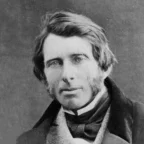
Ruskin, John
London, 8 February 1819 – Coniston, 20 January 1900
John Ruskin was the most influential English art and architecture critic of the Victorian age, a passionate advocate of the moral and social value of Gothic art, and, for the study of Giovanni Pisano in particular, the first major critical voice writing in English to recognize the sculptor's individual genius and expressive force, an appraisal that ran well ahead of the more cautious Italian scholarship of his own century.
The only child of a prosperous sherry merchant, Ruskin was educated largely at home before matriculating at Christ Church, Oxford. His parents took him on extended tours of Britain and the European continent from early childhood, journeys that fostered the close, almost obsessive observation of landscape, geology, and architectural detail that would characterize his mature writing; repeated visits to Italy, and to Tuscany in particular, gave him direct and prolonged experience of the cathedrals, pulpits, and sculpture of Pisa and Siena.
Ruskin first won public attention with Modern Painters, published in five volumes between 1843 and 1860, begun as a defense of J. M. W. Turner against critics who found his late work unintelligible and expanded into a sweeping theory of art founded on truth to nature. The Seven Lamps of Architecture (1849) and, above all, The Stones of Venice (1851-1853) established him as the leading English theorist of Gothic architecture; the central chapter of the latter work, "The Nature of Gothic," argued that the roughness and irregularity of medieval craftsmanship expressed the dignity of free labor, an argument that would exert enormous influence on William Morris and the Arts and Crafts movement.
It was within this framework that Ruskin arrived at his celebrated judgment of Giovanni Pisano, whom he called the "Canova of the thirteenth century," crediting him with combining the grace of Ghiberti, the tenderness of Raphael, and the majesty of Michelangelo. Coming decades before the documentary and stylistic work of later Italian and German scholarship had disentangled Giovanni's individual contribution from his father Nicola's workshop, Ruskin's enthusiasm belonged to the same wave of foreign rediscovery of the Pisano pulpits, alongside artists such as Ingres and Delaroche, that restored Giovanni Pisano to art-historical visibility after centuries of neglect.
Ruskin held the Slade Professorship of Fine Art at Oxford from 1869, lecturing on subjects ranging from Florentine sculpture to political economy, and his later career turned increasingly toward social criticism, most notably in Unto This Last (1860) and through the utopian Guild of St George, which he founded in 1871. Recurrent mental illness shadowed his final decades, and he died at his home at Brantwood in the Lake District in 1900, having shaped, through his voluminous writing, the taste, the conservation movement, and the social conscience of an entire generation.
Rutenburg, Nina
Boston, 1956 – New York, 20 May 2013
Nina Rutenburg — later, professionally, Nina Gray, after her marriage — is credited on the single most cited modern study of Andrea Orcagna's tabernacle at Orsanmichele, an article she wrote as an undergraduate with her Connecticut College professor Nancy Rash Fabbri. It was not the direction her career subsequently took.
Rutenburg attended Phillips Academy, Andover, before taking a bachelor's degree at Connecticut College, where she won the college's Lyman Allyn Museum Prize in art history — the training ground, and the collaborator, that produced "The Tabernacle of Orsanmichele in Context," The Art Bulletin 63, no. 3 (1981), 385–405. She went on to a master's degree at the Institute of Fine Arts, New York University, and from there into a curatorial career that left Trecento Florence behind for American decorative arts of a much later period.
As Nina Gray she was a staff curator at the New-York Historical Society from 1985 to 1990, and thereafter worked as an independent curator, consulting for institutions including the Brooklyn Museum, the Munson-Williams-Proctor Arts Institute, and several National Park Service properties. Her later scholarship centred on the glass and metalwork produced by Louis Comfort Tiffany's studios and, specifically, on the women who worked there: she was co-curator of the 2007 New-York Historical Society exhibition A New Light on Tiffany: Clara Driscoll and the Tiffany Girls, which established Driscoll's authorship of major Tiffany lamp designs long credited to the studio's men, and a contributor to the related scholarship on "the women of Tiffany Studios" written with Margaret K. Hofer and Martin Eidelberg.
The distance between the two projects associated with her name — a co-authored article on a fourteenth-century Florentine confraternity shrine, and a body of curatorial work recovering the women artisans erased from the Tiffany Studios attribution record — is worth pausing on. Both are, in their different registers, exercises in the same kind of historical attention: asking who actually did the work behind a monument or an object, and why the standard account obscures it. She died in Manhattan in 2013.
S
Sacchetti, Franco
Florence, c. 1332/1334 – San Miniato, 1400
Franco Sacchetti was a Florentine merchant, statesman and writer whose Trecentonovelle, a collection of vernacular short stories composed in the last years of the fourteenth century, is among the most vivid documentary windows onto the everyday life, speech and artistic culture of Trecento Florence. Born into a Guelph merchant family of ancient standing, he spent part of his youth engaged in trade in the eastern Adriatic, at Ragusa (Dubrovnik) and along the Slavonian coast, before returning to Florence to take up the civic and mercantile life of his class.
From the 1360s Sacchetti held a long succession of public offices in the service of the Florentine Republic, serving on councils and magistracies in the city and repeatedly as podestà and capitano in subject and allied towns, including San Miniato, Bibbiena, Faenza and elsewhere. This administrative career, pursued across four decades, gave him direct and repeated exposure to provincial as well as Florentine society, an experience that feeds directly into the social breadth of his narrative writing. He belonged to the same literary and civic milieu as Giovanni Boccaccio, with whom he corresponded, and his work is everywhere marked by the example of the Decameron, even as it pulls decisively away from Boccaccio's aristocratic and idealising registers toward a rougher, more anecdotal realism rooted in contemporary Florentine fact.
His principal work, the Trecentonovelle, was planned as three hundred novelle but survives in some two hundred and twenty-odd tales, composed mostly in the 1390s and left unfinished at his death. Populated by merchants, friars, magistrates, wits and artisans rather than by princes and nobles, the collection is prized by historians as much for its incidental testimony as for its literary merit: it preserves anecdotes, nicknames and turns of phrase current in late Trecento Florence that survive nowhere else. Painters and sculptors of the earlier fourteenth century recur as protagonists of his tales, Giotto above all, whose proverbial wit Sacchetti records in several of the collection's best-known novelle; it is in this same casual, undocumented register that Sacchetti uses the nickname "Orcagna" for the painter and sculptor Andrea di Cione without troubling to explain it, evidence that the sobriquet was already common currency within a generation of the artist's death. Sacchetti's other writings include a substantial body of lyric verse — sonnets, ballate and cacce collected as the Libro delle Rime — together with moral and political letters and a commentary on Dante, the Sposizioni di libri. He died in 1400, probably of plague, while serving as podestà of San Miniato, leaving the Trecentonovelle incomplete.
Salmi, Mario
San Giovanni Valdarno, 14 June 1889 – Rome, 16 November 1980
Mario Salmi was one of the most influential Italian art historians of the twentieth century, specializing in Romanesque architecture, Tuscan sculpture, and the early Italian Renaissance. Born in San Giovanni Valdarno on 14 June 1889, he died in Rome on 16 November 1980, leaving behind a scholarly legacy of extraordinary breadth and depth.
In 1910, Salmi earned his law degree from the University of Pisa with a pioneering thesis titled La tutela del patrimonio artistico nazionale, demonstrating from the very beginning an exceptional sensitivity toward the protection of cultural heritage. From 1911 to 1914, he pursued advanced studies in Art History at the University of Rome under the guidance of Adolfo Venturi, one of the founding fathers of the discipline in Italy. This rigorous training laid the foundation for a philological method that would characterize his entire career: always starting from a direct and meticulous observation of the work — "stone by stone," as he liked to say — and then arriving at critical assessments within a broader historical perspective.
In 1917 he taught Art History at the Academy of Fine Arts in Parma, and beginning in 1918 he served as inspector of monuments in various Italian regions, from Puglia to Molise, from Umbria to Lombardy. In 1923 he became a professor at the University of Pisa, where he founded the Institute of Art History, which opened in 1929. He then moved to the University of Florence, where he taught from 1929 to 1949 and where he established the National Institute of Renaissance Studies in 1937. From 1950 to 1964, he held the chair of Medieval Art History at the University of Rome, where he was named professor emeritus upon his retirement.
His institutional influence extended far beyond the university lecture halls. In 1952, he was among the founding members of the Italian Center for Studies on the Early Middle Ages, an institution that helped bring a historical period previously considered marginal back into the center of scholarly attention. In 1949 he founded the art history and criticism journal Commentari, and was also co-editor of the journal Rinascimento. He served as editor-in-chief of the monumental fifteen-volume Enciclopedia Universale dell'Arte, published between 1958 and 1967, promptly translated into English as Encyclopedia of World Art by McGraw-Hill in New York.
Salmi's most distinctive trait was his tireless visual empiricism: at a time when the aesthetic perspective marked by Croce's idealism dominated in Italy, he instead favored a rigorous historical-philological approach, always accompanied by a direct examination of the works. To reach monuments scattered across the most remote countryside, when few roads were yet passable, Salmi would walk dozens of kilometers, sometimes spending the night in farmhouses. During visits to restoration sites, those working there recalled the arrival of this tall, solemn figure who "immediately and rapidly observed, read, and analyzed everything, comparing it with distant monuments, aided by a prodigious memory." His writings, even the most specialized ones, are characterized by a linear and essential prose, accessible even to non-specialists — which reflected his conviction that formal clarity was an expression of an orderly and harmonious vision of reality.
The chronological scope of Salmi's scholarly work ranges from early Christian and Coptic art to the Baroque, spanning architecture, sculpture, painting, and the so-called minor arts. His primary fields of expertise, however, were the Romanesque and the Renaissance: the two-volume set Romanesque Architecture in Tuscany and Romanesque Sculpture in Tuscany (1926–1927) remains a fundamental reference in the field to this day. Salmi was one of the first scholars to devote academic attention to the minor arts, a field then still neglected in academic circles, even establishing a chair for it at the University of Florence.
A field to which Salmi devoted particular attention was that of Italian medieval miniature painting. Notable among his works on the subject are La miniatura fiorentina gotica (1954), Italian Miniatures (1954, translated into English and published by H. N. Abrams), La miniatura italiana (1956, Electa), and the study of the Grimani Breviary (1974). These works earned him international recognition as the foremost authority on the tradition of Italian miniature painting.
His deepest passion remained Piero della Francesca. In 1979, at the age of ninety, he published his last and most laborious work, The Painting of Piero della Francesca, confessing that he had "exhausted what remained of his extraordinary vitality" in it. His student Umberto Baldini recalled that his love for Piero had been "one of the focal points of his life as a scholar and teacher," almost a symbol of the order and divine harmony of the Renaissance.
His career was not without controversy. When he was chosen over Roberto Longhi for the chair of Art History at the University of Rome, Bernard Berenson uttered the famous — and ruthless — phrase: "A genius has been neglected in favor of an insect." Salmi was also involved in the controversial affair surrounding the breakup of the Contini-Bonacossi Collection, which led to the export of numerous masterpieces (including works by Zurbarán, Piero della Francesca, and Giovanni Bellini), resulting in parliamentary inquiries and a complaint for "fraud against the state." No less combative was his stance regarding the doors of Orvieto Cathedral, for which he resigned as vice president of the Higher Council of Antiquities and Fine Arts when there were plans to include a work by Emilio Greco.
Salmi was a member of the Accademia Nazionale dei Lincei — to which he bequeathed his vast library, including numerous manuscripts, upon his death — and a foreign member of the Académie de France. He served as president of the Accademia Petrarca di Lettere, Arti e Scienze in Arezzo from 1945 to 1979, transforming it into an institution of international significance. He received the Gold Medal of Merit for Education, Culture, and the Arts, and an honorary doctorate from the University of Algiers. He donated a significant portion of his private art collection to the Museum of Medieval and Modern Art in Arezzo.
Among his most illustrious students were Enzo Carli, Paola Barocchi, Umberto Baldini, Vittoria Kienerk, and Giovanni Carandente, a school that profoundly shaped Italian art history in the second half of the twentieth century. At the age of eighty-five, he still regretted no longer being able to work fourteen to fifteen hours a day as he had done for decades — eloquent testimony to a total dedication to art history that has few parallels in the Italian academic landscape.
Salvini, Anton Maria
Florence, 14 January 1653 – Florence, 16 May 1729
Anton Maria Salvini was a Florentine Hellenist, translator and lexicographer, professor of Greek in the Studio Fiorentino from 1677 and for half a century the most prolific annotator of texts in Tuscany. He belonged to the Accademia della Crusca and to the Accademia Fiorentina, and was a principal contributor to the third and fourth editions of the Vocabolario of the Crusca; his verse translations of Homer, Hesiod, Anacreon, Theocritus and Oppian, and his running commentaries on Italian authors, occupied him to the end of his life. His brother Salvino Salvini (1667–1751) was the historian of the Accademia Fiorentina.
His importance to the study of manuscripts is of a particular kind. Salvini read with a pen, and his postille - marginal glosses on vocabulary, sources and parallels - fill the margins of a great number of Florentine codices, where they constitute both an early modern stratum of scholarship and, not infrequently, an obstacle laid across the medieval page. Among the manuscripts he annotated is Florence, Biblioteca Riccardiana, MS Ricc. 2164, the oldest and most faithful witness of Restoro d'Arezzo's La composizione del mondo colle sue cascioni; the cursive notes visible in the margins of its opening leaves belong to that campaign of reading, and register the codex's long afterlife as an object of study a century and a half before Narducci's editio princeps.
He is not to be confused with Roberto Salvini (1912–1985), the twentieth-century art historian, whose entry follows this one.
Salvini, Roberto
Modena, 1912 – Florence, 1985
Roberto Salvini was one of the most important Italian art historians of the twentieth century, making fundamental contributions to the study of medieval art, Romanesque sculpture, and Flemish painting. A student of the medievalist Mario Salmi, Salvini received his education in Florence, Munich, and Berlin, acquiring a European methodological perspective that would characterize his entire body of work. In 1937, he joined the Fine Arts administration, serving as superintendent of galleries in various locations — Trento, Palermo, and Modena — during the years of World War II. His institutional career culminated in his directorship of the Uffizi Gallery in Florence, where he promoted significant museographic innovations.
In 1956, Salvini began his university career as a professor at the University of Trieste, before moving to the University of Florence, where he taught for many years. He was actively engaged in the methodology of teaching art history, a topic he had already addressed in his theoretical essay La pura visibilità (1947), which reflected the influence of the German formalist tradition on his education. In 1983, he was elected a National Member of the Accademia dei Lincei, the highest academic honour in Italy. He also served as President of the Art History Section of the Accademia delle Arti del Disegno in Florence and held the position of Secretary General.
His studies ranged from Italian medieval art to the Renaissance, from Flemish art to European Romanesque sculpture. Among his most significant works in medieval studies are Medieval Mosaics in Sicily (1949), Wiligelmo and the Origins of Romanesque Sculpture in Europe (1956) — a pioneering study on the origins of Romanesque sculpture — and The Cloister of Monreale (1962). He also made significant contributions to Byzantine studies, writing seminal volumes such as The Cathedral of Modena (1966) and the volume Medieval Sculpture for the international series History of Western Sculpture.
A recurring theme throughout his work was his interest in the relationship between Italian patrons and Flemish painting, explored both in Flemish Painting (1958) and in his last published work, Florentine Bankers and Flemish Painters (1985), released in the year of his death. Salvini left a profound mark on half a century of national and international art history, and in 2018 and 2022 his legacy was celebrated with conferences and publications dedicated to his scholarly contributions.
Sánchez Ameijeiras, Rocío (María del Rocío)
active late 20th-21st century
Rocío Sánchez Ameijeiras, full name María del Rocío Sánchez Ameijeiras, is a professor of History of Art at the University of Santiago de Compostela and one of the most intellectually distinguished medievalists working in Spain today. Her scholarship occupies a distinctive position in the landscape of Hispanic medieval art history: deeply grounded in the Galician and Castilian material record, yet theoretically ambitious in ways that situate her work firmly within international currents of image theory, visual studies, and the relationship between verbal and pictorial rhetoric.
Sánchez Ameijeiras earned her doctorate in History of Art from the University of Santiago de Compostela, with a thesis on the iconography of thirteenth-century funerary sculpture in Castile and León. She subsequently completed her formation at the Istituto di Storia dell'Arte of the Università di Roma I (La Sapienza) and at the Warburg Institute in London.
Her doctoral thesis was directed by Serafín Moralejo, the great Galician art historian of the generation of Yarza Luaces and Bango Torviso, whose encyclopaedic mastery of Romanesque art, pilgrim culture, and the visual world of Santiago de Compostela made him the presiding genius of his field. To be Moralejo's doctoral student was to inherit the most demanding of intellectual traditions: one grounded simultaneously in formal analysis, classical iconographic method, and extraordinary sensitivity to the entanglement of text and image in the medieval world. Sánchez Ameijeiras received that inheritance and has done more than any other scholar of her generation to transform it.
Her postdoctoral years at the Warburg Institute proved equally formative, exposing her to the tradition of cultural iconology, the study of symbolic images in their widest cultural and literary context, that Aby Warburg founded and E. H. Gombrich, Michael Baxandall, and their successors developed. This immersion in the Warburgian method is palpable in her later theoretical writing, with its attention to the migration of motifs, the classical substrate of medieval visual language, and the rhetorical structures that govern both pictorial and literary production.
Funerary Sculpture in Gothic Castile and León
The subject of her doctoral thesis, iconographic investigations into thirteenth-century funerary sculpture in Castile and León, has remained one of the defining axes of her career. Her research into Gothic royal and aristocratic tombs is exceptional for the range of questions it brings to bear on apparently circumscribed objects: questions of dynastic identity, liturgical function, gender representation, political propaganda, and the theology of death and intercession all converge in her analyses.
Among the most celebrated of her early articles is "Lament for a Lost Queen: the Sarcophagus of Doña Blanca in Nájera" (The Art Bulletin, vol. 78, no. 2, 1996), which placed a major Castilian funerary monument in a richly documented historical and visual context and was subsequently reprinted in the influential anthology Memory and the Medieval Tomb. Her study of the tomb ensemble at Villalcázar de Sirga (Palencia), the sepulchres of Infante Felipe and a noblewoman, reconstructed both the identity of the commissioning patron and the theological significance of the distinctive heart-offering gesture shown in the effigies, revealing the complex layering of political vindication, Marian devotion, and funerary liturgy encoded in a single monument.
Her research on Romanesque sculpture in Galicia has encompassed both individual monuments and the broader problem of model circulation, addressing her contribution to the Enciclopedia del Románico en Galicia on the provinces of A Coruña and Ourense, as well as studies of the Codex Calixtinus and the Tumbo A. Her long essay "Dreams of Kings and Buildings: Visual and Literary Culture in Galicia (1157-1230)," published in the Brill volume Culture and Society in Medieval Galicia (2015), offered a panoramic account of visual production under Fernando II and Alfonso IX, addressing the intersection of royal patronage, Arthurian literary culture, and architectural ambition in Galician Romanesque.
Her engagement with the Tumbo A of Santiago Cathedral, published in 2008 alongside Manuel Cecilio Díaz y Díaz and Fernando López Alsina, provided a searching analysis of the functions and modalities of images in one of the most politically charged illustrated cartularies of medieval Iberia, showing how illuminated charters served as instruments of institutional memory, territorial claim, and sacred authority simultaneously.
Her research on the illuminated manuscripts of Alfonso X the Learned, above all the codices of the Cantigas de Santa María, represents one of her most sustained and original contributions. Her study "Del Salterio al Marial: sobre las 'fuentes' de las imágenes de los Códices de las Historias de las Cantigas de Santa María" (Alcanate, 2012-2013) traced the iconographic sources of the miniature cycles, demonstrating the transformation of psalter imagery into a Marian narrative mode through a nuanced reading of both visual and theological tradition. Her essay "Ymagines sanctae: fray Juan Gil de Zamora y la teoría de la imagen sagrada en las Cantigas de Santa María" situated the visual programme of the manuscripts within a specific Franciscan theory of sacred imagery, connecting the production of court manuscript culture to the wider intellectual world of mendicant theology. She also directed a major inter-university and international research project on visual culture in post-Alfonsine Castile.
Sánchez Ameijeiras's major theoretical work, Los rostros de las palabras: Imágenes y teoría literaria en el Occidente medieval (Akal, 2014), is a study of the relationship between images and literary theory in the medieval West, pursuing two interrelated questions: the relationship between the predicatory arts and the figurative programmes of Gothic cathedrals, and the comparison between formulas codified in Latin and vernacular grammars and poetics with the visual translation of verse discourse, with the aim of defining a specific visual genre, that of images in verse.
The book adopts a circular structure in which the Cathedral of León and the illustrated codices of the Cantigas de Santa María serve as both starting and ending points of a journey that visits French Gothic cathedrals, illuminated manuscripts from the Utrecht Psalter to the Psalter of Blanche of Castile, and ivory objects from Carolingian book covers to Parisian fourteenth-century mirror-cases. The work is at once a contribution to the theory of medieval images and a practical hermeneutic tool: its argument is that rhetorical figures, tropes, schemes, figures of thought, are not merely verbal phenomena but structural principles that organise both the production and the interpretation of visual art. Reviewing the book in Cahiers de civilisation médiévale, Herbert L. Kessler, the most eminent American scholar of medieval imagery, engaged it as a work of the first importance.
Her more recent work has pushed further into questions of time, movement, and cosmology in Gothic art. Her article "From the End to the Beginning: Time, Movement and Cosmology at the Dawn of Gothic" (Codex Aquilarensis 37, 2021) explored the temporal and spatial logic of early Gothic programmes, and "Rebellious Architecture: Movement, Subversion and Transubstantiation in the Visionary Mode" (Codex Aquilarensis 35, 2019) investigated the ways in which Gothic architecture can be understood as enacting theological concepts, particularly transubstantiation, through formal means. Her essay "If the Sea Were Made of Ink: A Word on Medieval Visual Poetry," contributed to Tributes to Paul Binski (Harvey Miller, 2021), extended her long-standing inquiry into visual poetics, addressing the intersection of liquid materiality, ink, writing, and image in medieval devotional culture.
Sánchez Ameijeiras is a member of the editorial and scientific committees of numerous prestigious journals, including Codex Aquilarensis, and has contributed to major international collaborative volumes. She co-edited with Francisco J. Hernández and Emma Falque the volume Medieval Studies in Honour of Peter Linehan (SISMEL-Edizioni del Galluzzo, Florence, 2018), a tribute to the distinguished Cambridge medievalist and historian of the medieval Iberian Church. She has also co-edited with José Luís Senra the important collective volume El tímpano medieval: imágenes, estructuras y audiencias (Santiago de Compostela, 2003), which remains a foundational reference for the study of Romanesque portal sculpture.
As a doctoral supervisor she has directed theses on subjects ranging from the illuminated Books of Hours and the Penitential Psalms to the Gothic cloister of León Cathedral, to the visual culture of the Castilian monarchy in the thirteenth and fourteenth centuries. Her supervision of the 2012 thesis Thesaurum. La Crónica Troyana de Alfonso XI (Escorial, h.I.6) y los libros iluminados de la monarquía castellana (1284-1369) gave the field one of the most substantial recent monographs on royal Castilian illuminated manuscripts.
Within the tradition established by Yarza Luaces and Bango Torviso, Rocío Sánchez Ameijeiras represents both continuity and transformation. She inherits their commitment to rigorous archival and iconographic scholarship while opening the discipline toward the theoretical ambitions of image studies, visual poetics, and the anthropology of art. Her work on Gothic funerary sculpture, the Alfonsine manuscripts, and the rhetoric of medieval images has earned her a place in the first rank of European medievalists, a scholar for whom the Galician Romanesque and the Parisian Gothic, the Marian miracle and the liturgical rite, the sermon and the stone effigy all illuminate one another within a single, extraordinarily capacious intellectual vision.
Sandberg-Vavalà, Evelyn
Compton, Berkshire, 1888 – Florence, 8 September 1961
Evelyn Sandberg-Vavalà was born Evelyn May Graham Sandberg in Compton, Berkshire, in 1888. She was the only child of the Reverend George Alfred Sandberg (1848-1910), vicar of the church of Saints Mary and Nicholas, and Annie Sandberg (1858-1894), who died when Evelyn was still a child. She studied geography and went on to teach in a girls' grammar school and at a university college — an education and career path typical of the small number of professionally active women of her generation in Britain. She was also known by her married name, Evelyn Kendrew, though it was her pseudonym, Sandberg-Vavalà, that she used exclusively in her scholarly life.
In 1921 Sandberg-Vavalà made the decisive choice of her intellectual life: she moved to Florence, where she would remain for thirty-five years — interrupted only by the years of the Second World War. In Florence she placed herself under the guidance of Bernard Berenson, the great Lithuanian-American connoisseur and art historian who had established his villa I Tatti as the pre-eminent centre for the study of Italian Renaissance painting. Under Berenson's influence she developed into a rigorous scholar of iconography and early Italian painting, and she established close intellectual relationships with the most important art historians of the age: John Pope-Hennessy, Roberto Longhi, and Giuseppe Fiocco. She became well known in Florence not only as a researcher but also as a tutor and guide for students of art at the Galleria degli Uffizi, accompanying them on visits throughout Italy.
Her first and most enduring major work was published in 1929: La Croce Dipinta Italiana e l'Iconografia della Passione (Italian Painted Crucifixes and the Iconography of the Passion). This book remains a foundational reference in the study of the medieval painted cross — the croce dipinta — a distinctly Italian devotional form that was central to the visual culture of the Duecento and Trecento. For the first time, Sandberg-Vavalà subjected the entire corpus of surviving Italian painted crucifixes to systematic iconographic and stylistic analysis, tracing the development of the form from the Christus Triumphans of the Romanesque period to the suffering Christus Patiens of the Gothic age. Her work in this field was so foundational that a full century later, the Römisches Jahrbuch of the Bibliotheca Hertziana published a special section entitled Aspekte der Tafelkreuzforschung im Jahrhundert nach Evelyn Sandberg-Vavalà — "Aspects of panel cross research in the century after Evelyn Sandberg-Vavalà", a tribute to the lasting relevance of her pioneering study.
In 1934 she published her study on the iconography of the Virgin and Child in thirteenth-century Italian painting: L'iconografia della Madonna col bambino nella pittura italiana del Dugento, a work that brought the same systematic iconographic method she had applied to the crucifix tradition to bear on the Madonna type. She also made important contributions to the study of Venetian Trecento painting: she is cited by scholars of Venetian art — alongside Roberto Longhi — for her analyses of the workshop of Paolo Veneziano and his followers. Her 1926 monograph La pittura veronese del Trecento established her as one of the first scholars to treat Veronese medieval painting with the rigour it deserved.
In the postwar years Sandberg-Vavalà produced two major synthetic works that confirmed her reputation as the leading English-language authority on central Italian medieval and early Renaissance painting. Uffizi Studies: The Development of the Florentine School of Painting appeared in 1948, followed by Sienese Studies: The Development of the School of Painting of Siena in 1953. Both works combined iconographic analysis with careful attention to stylistic development and workshop tradition, and both remain useful reference tools. Her final monograph, Studies in Florentine Churches (Olschki, Florence, 1959), extended the investigation to the specific devotional and institutional contexts in which Florentine painting was produced and displayed.
One of the most remarkable legacies of Sandberg-Vavalà's scholarly life was her photographic archive of over 25,000 photographs of Italian paintings from the thirteenth to the sixteenth centuries. This archive, which she assembled and organised over four decades, constitutes an extraordinary documentary resource covering medieval mosaics and frescoes, Romanesque sculpture, and applied arts including cassoni, ivories, and jewellery. From 1957, aware of her declining health, Federico Zeri worked to ensure that the archive would be preserved intact. He persuaded Count Vittorio Cini to purchase it, and the archive passed after her death to the Fondazione Giorgio Cini in Venice, where it is preserved today as the Fondo Sandberg-Vavalà. A further portion of her photographic materials is held at the Fondazione Federico Zeri at the Università di Bologna.
Sandberg-Vavalà died in Florence on 8 September 1961, cared for in her final illness by the nuns of a religious community. She was buried in the small cemetery of Moggiona, a hamlet of Poppi in the Casentino, the forested valley southeast of Florence that she evidently loved. She was seventy-three years old. Her scholarly achievement was remarkable not only for its range and depth but for the era in which it was accomplished: as a self-taught British woman working in Florence in the interwar years, without a university chair or institutional support, she produced a body of work that shaped the study of medieval Italian painting for generations. The centenary of her great work on the painted crucifix has been marked by new international scholarship, the best possible tribute to an historian whose questions have not yet been fully answered.
In 1929 she suggested, as the state catalogue reports, that the author of the Pisan Christus patiens cross no. 20 was a miniaturist, judging from the technique of parchment glued to wood, and she moved the Santo Sepolcro cross decisively towards 1220, seeing in it the first repercussion of the new Byzantinizing style of Pisa on the Romanesque tradition.
Sanders, Henry A.
Livermore (Maine), 22 October 1868 - Ann Arbor (Michigan), 16 November 1956
American classicist, papyrologist, and textual scholar, professor of Latin at the University of Michigan, and editor of the standard early twentieth-century edition of the Latin text of Beatus's Commentary on the Apocalypse. Sanders took his A.B. at Michigan in 1890 and his A.M. in 1894, studied in Berlin in 1895–96, and received his doctorate at Munich in 1897. After two years at Minnesota he returned to Michigan in 1899, where he taught Latin until his retirement in 1939, rising from instructor to professor and chairing the department of speech and general linguistics from 1932 to 1939.
An interest in the Oxyrhynchus epitome of Livy drew Sanders from Roman history into papyrology, and he became the principal architect of the University of Michigan's celebrated papyrus collection, editing the bulk of its documentary Latin papyri and demonstrating the extent of Latin's use in the legal documents of Roman Egypt. He is equally known for his editions of the biblical manuscripts of the Freer Collection — the Washington codices of the Gospels, the Pauline Epistles, the Psalms, and the Minor Prophets — published in facsimile and transcription in a series of volumes that remain fundamental to New Testament textual criticism. He served as president of the American Philological Association in 1936–37 and twice directed the School of Classical Studies at the American Academy in Rome, in 1915–16 and from 1928 to 1931.
It was under the auspices of the American Academy in Rome, during his second term as director of its School of Classical Studies, that Sanders published in 1930 Beati in Apocalipsin libri duodecim, the critical edition of the Latin text of the Commentary of Beatus of Liébana. The edition established a textual classification of the manuscripts which, arrived at independently, corresponded closely to the family groupings that Wilhelm Neuss reached from the illustrations in the following year — a convergence of textual and pictorial evidence that gave the resulting stemma much of its authority. Sanders's text remained the standard edition of the Commentary until the appearance of modern critical editions in the later twentieth and early twenty-first centuries.
Santanicchia, Mirko
active late 20th-21st century
Mirko Santanicchia is an Italian art historian and professore associato of Storia dell'arte medievale at the University of Perugia (Dipartimento di Lettere - Lingue, Letterature e Civilta antiche e moderne). He specializes in painting and the applied arts of central Italy between the late Middle Ages and the early Renaissance.
What distinguishes him within the Umbrian school is his sustained focus on arti applicate, not only panel painting. His core research territory includes goldsmithing (oreficeria), manuscript illumination (miniatura), and wooden furnishings and inlay (arredo ligneo and intarsia), treated with the same rigor usually reserved for painting. This integrated method reads miniatures and metalwork as a single visual culture.
Representative work includes:
- In Istrumento: la sede puo fare la differenza? La rappresentazione del paesaggio urbano e naturale in alcuni documenti miniati e oreficerie del Trecento (in Paesaggio e arti figurative in Umbria tra Gotico e Rinascimento, 2014/2017), on Trecento illuminators and goldsmiths and their treatment of urban and natural landscape, keyed to Perugian illumination.
- Un campanile ravennate per l'antica cattedrale di Perugia (Studi di Storia dell'Arte, 25, 2014), based on a 1343 miniature by the Perugian illuminator Vanni di Baldolo in the Biblioteca Augusta (ms. 975), used as visual evidence for the lost cathedral bell tower.
- San Bevignate di Perugia. Storia e iconografia (Studi di Storia dell'Arte, 27, 2016), on the Templar church and the Statuto degli Ortolani in the Vatican Library.
- L'Antependium di Citta di Castello e l'oreficeria sacra in Umbria in eta romanica (in Enrica Neri Lusanna's Umbria e Marche in eta romanica, Todi, 2013), on Romanesque liturgical metalwork.
- La croce in cristallo di rocca del Duomo di Foligno e la circolazione di opere veneziane in Umbria nel Trecento (Arte Medievale, 2010-2011), on Venetian rock-crystal work circulating in Umbria.
Santanicchia has combined research with editorial and curatorial activity. He co-edited Paesaggio e arti figurative in Umbria tra Gotico e Rinascimento (2017) with Enrica Neri Lusanna, and Gli ordini di Terrasanta. Questioni aperte, nuove acquisizioni (XII-XVI secolo) (2021). He worked on the Pintoricchio centenary exhibition and its arti minori strand (Spello/Perugia, 2008), co-authored Storie di pittori tra Perugia e il suo lago (2008) and Il mobile in Umbria. Aspetti storici, artistici, tecnici e produttivi dal Medioevo al primo Novecento (2012), and contributed to Lo studiolo di Federico da Montefeltro e il suo doppio (Gubbio, 2023). He also lectures at the Festival del Medioevo and teaches the history of artistic techniques at Perugia.
Santi, Francesco
Perugia, 1914 – 1993
Italian art historian and long-serving custodian of the artistic patrimony of Umbria, born in Perugia in 1914. He took a degree in law at the University of Perugia in 1938, was called up for military service, and after the armistice of 8 September 1943 took part in anti-fascist Resistance activity and served on the local Liberation Committee; in its aftermath he turned to the study of art history in Rome.
In 1945 Santi entered the Soprintendenza of Perugia as an auxiliary official, beginning a career devoted almost entirely to the protection, study, and display of Umbrian art. He became director of the Galleria Nazionale dell'Umbria in 1966, when he expanded its exhibition space to include the top floor of the Palazzo dei Priori; he was named Soprintendente in 1973 and director of the Soprintendenza in 1975, overseeing the restoration of historic buildings across the region. He retired from public office in 1979 but continued to research and publish, contributing regularly to the Bollettino d'Arte and to the museum's own catalogues; he compiled two of the fundamental catalogues of the Galleria Nazionale dell'Umbria, in 1969 and 1985, works that remain standard references for the collection — including its Perugia triptych attributed to Jacopo di Mino del Pellicciaio, which Santi had published in 1969 with an attribution to Bartolo di Fredi. He died in 1993; his private library was later donated to the Galleria, becoming its single most substantial acquisition.
Sassi, Romualdo
1878 (some sources give 1881) – 1969
Romualdo Sassi was a professor of history and the leading local historian of Fabriano in the first two thirds of the twentieth century, a scholar of the city's archives whose working life, on the evidence of his publications, ran from the 1900s to his death in 1969. He worked on the ancient holdings of the municipal library and of the historical archive of Fabriano, and the city's public library, now the Biblioteca Multimediale "Romualdo Sassi", bears his name and preserves much of his printed output. That output (books, pamphlets, offprints, regesti, inventories and articles) was so large that his nephew Bruno Sassi undertook a compilation of it in 2005; he was a regular contributor to the Fabriano newspaper L'Azione from 1909 until 1969. The sources consulted for this entry disagree on his year of birth (1878 or 1881) and say nothing of his birthplace, schooling or offices, and none of these is asserted here.
His method was the calendaring of parchments and the edition of notarial and monastic charters. In the 1920s he compiled, with what the archival literature calls long and patient labour, a regesto of all the parchments of the fondo of the Fabriano foundling hospital (brefotrofio), finished in July 1928 and surviving as a manuscript of 232 numbered leaves; a Regesto delle pergamene dell'Archivio domenicano di S. Lucia followed in 1939, and the Memorie domenicane di Fabriano are dated 1935. His most durable contributions concern papermaking, the industry on which Fabriano's medieval fame rests. In 1931, in the Atti e Memorie of the Deputazione di Storia Patria per le Marche, he showed that two documents on which claims of thirteenth-century paper mills at Fabriano had rested did not say what the older erudite Luigi Mostarda had read in them, a correction that removed them from the evidence for the origins of the industry. Later studies included "Un'antica cartiera dei monaci di S. Vittore sul Sentino" (1942), on documents of 1306; La Pia Università dei Cartai di Fabriano e la sua chiesa di S. Maria Maddalena (1951); and the edition Le carte del monastero di S. Vittore delle Chiuse sul Sentino (Milan: Giuffrè, 1962, 285 pages). He also wrote the "Sommario storico" that opens Bruno Molajoli's Guida artistica di Fabriano.
For art history his weight is that of an archival witness. Genealogical research he published in 1928 on the family of Gentile da Fabriano is reported, at second hand, to place Gentile's grandfather among the smiths' guild and as syndic of the Olivetan convent of Santa Caterina in Castelvecchio. In 1955 he published in the Rivista storica benedettina (24, pp. 1–4) the short article "Un monaco olivetano scultore", which brought to light an Olivetan monk, Fra' Giovanni di Bartolomeo, a sculptor documented in Fabriano from 1365, and proposed him as the author of the wooden Adoration of the Magi from Santa Maria della Misericordia, the group that gives the Maestro dei Magi di Fabriano his name. The proposal stayed local for almost four decades, until Giampiero Donnini took it up in 1993 and again in 2014; it has not been accepted by the scholarship that followed the anonymous reconstruction of Enrica Neri Lusanna, since no document ties the monk to any surviving statue. The archival discovery of the monk and his workshop is nonetheless Sassi's, and it is the point from which the whole discussion of the master's name begins. The text of the 1955 article could not be consulted in preparing this entry.
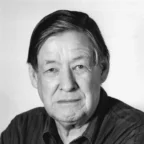
Sauerlander, Willibald
Bad Waldsee, 29 February 1924 - Munich, 18 April 2018
Willibald Sauerlander was one of the most influential art historians of the twentieth century, renowned for fundamentally rewriting the history of medieval French sculpture and shaping postwar German art historical scholarship. Born on February 29, 1924, in Bad Waldsee, Wurttemberg, Germany, he passed away on April 18, 2018, in Munich, leaving behind a legacy that transformed how scholars understand Gothic art and its broader cultural contexts.
Sauerlander grew up in an artistic household as the son of a late-Impressionist painter who, ironically, disliked art historians. Surrounded by works of old and modern art, he nevertheless chose to pursue art history, beginning his studies in 1946 at the University of Munich when the city was still in ruins from World War II. The intellectual atmosphere was severely truncated by the war's aftermath, and the academic focus centered on medieval art studied through what he later characterized as a "curious kind of secular, aesthetic mystical spiritualism," an approach he found unappealing. He received his doctorate in art history from Ludwig-Maximilians-Universitat Munchen in 1953 under the supervision of Hans Jantzen, with a dissertation on French Gothic portal sculpture.
After completing his doctorate, Sauerlander spent the years between 1954 and 1959 in Paris, working as a German lecturer and tour guide, an experience that profoundly shaped his scholarly focus on French medieval art. He then served as an assistant at the University of Marburg from 1959 to 1961, where he completed his Habilitation. His international connections deepened when he became a Visiting Member at the Institute for Advanced Study in Princeton in 1961-1962, marking the beginning of regular scholarly exchanges with American institutions. He held a professorship at the University of Freiburg from 1962 to 1970, also serving as a visiting professor at New York University in 1964-1965 and 1970.
In 1970, Sauerlander assumed the directorship of the prestigious Zentralinstitut fur Kunstgeschichte in Munich, a position he held until 1989. During these nearly two decades, he served simultaneously as an honorary professor at Ludwig-Maximilians-Universitat Munchen and continued his international engagement through visiting professorships at Harvard University (1984-1985), Berkeley (1989), and New York (1992). In 1991, he delivered the prestigious Mellon Lectures in Washington, a recognition of his scholarly eminence. After retiring from the Zentralinstitut, he became a freelance contributor to the Suddeutsche Zeitung from 1993 onward, bringing art historical expertise to a broader public audience.
Sauerlander's most celebrated achievement was his fundamental reconceptualization of early French Gothic sculpture, moving beyond the formalist approaches that had dominated prewar German art history. His landmark work "Gothic Sculpture in France, 1140-1270," published in 1970 and translated into English in 1972, established him as the leading authority on the subject. Rather than focusing solely on stylistic analysis, he pioneered a contextual approach that examined sculpture within its political, intellectual, and religious frameworks. His methodology represented a deliberate break from the contaminated nationalist concepts of his predecessors, particularly Hans Sedlmayr's reactionary fundamentalist views, which he actively opposed.
His scholarly approach was characterized by an explicitly transnational perspective, emphasizing the continuous artistic exchange between French and German art rather than treating them as isolated national traditions. When examining German monuments such as the Naumburg Stifterfiguren or Bamberg Cathedral, he deliberately sought parallels beyond Germany's borders. This internationalist stance, nurtured by his extensive time in Paris and frequent travels to the United States, constituted a form of methodological anti-nationalism that distanced postwar German scholarship from its problematic heritage.
Beyond Gothic sculpture, Sauerlander's scholarly interests encompassed Romanesque art, about which he published two volumes of collected papers, as well as Nicolas Poussin and French eighteenth-century art. His later work extended to Baroque and modern art, including studies on Rubens's religious altarpieces in "Der katholische Rubens" (2011) and on Manet's depictions of Monet in "Manet malt Monet" (2012). He published extensively on the history and methodology of art history itself, with his most important studies on Romanesque and Gothic art collected in "Cathedrals and Sculpture" (1999-2000) and "Romanesque Art" (2004). His critical essays were gathered in "Die Luft auf der Spitze des Pinsels" (2002) and "Geschichte der Kunst - Gegenwart der Kritik" (1999).
Sauerlander received numerous honors throughout his career, including honorary doctorates from the University of Strasbourg (1987) and Scuola Normale Pisa (1999). He was awarded the Bavarian Maximilian Order for Science and Art in 1995, became a Correspondant etranger de l'Academie des Inscriptions et Belles-Lettres in 1994, and received the Grand Prix de la Societe francaise d'archeologie in 2007. France honored him with the Commandeur de l'Ordre des Arts et des Lettres in 1990 and the Chevalier de la Legion d'Honneur in 1999. He was elected to the Academy of Europe in 1988 and held membership in numerous German and international academies. In 2011, international colleagues organized a conference in his honor at Princeton University, resulting in the volume "Gothic Art and Thought in the Later Medieval Period," which highlighted the breadth of his methodological innovations. After his death, the Zentralinstitut fur Kunstgeschichte established the Willibald-Sauerlander-Preis to honor early career research in the history of art history, preserving his memory and commitment to rigorous scholarship.
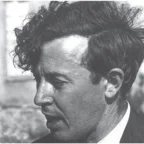
Scarpellini, Pietro
Rome, 4 April 1928 – Perugia, 29 September 2010
Scarpellini was one of the central figures in the twentieth-century study of Umbrian art, and for more than half a century the effective interpreter of Perugia's artistic patrimony.
Born in Rome to Luigi Scarpellini and Virginia Pancrazi, he was the nephew of the literary scholar Pietro Pancrazi, who is credited with transmitting to him an early love of art. He took a diploma at the Accademia di Belle Arti in Rome in 1951 and a degree in letters at the University of Rome in 1952, training under Lionello Venturi — a formation that left a lasting mark on his attention to style and to the critical tradition.
He taught at the Istituto d'Arte in Perugia from 1955, then at the Universita per Stranieri di Perugia from 1957 to 1981, becoming full professor in 1981 and moving to the Facolta di Lettere e Filosofia of the Universita degli Studi di Perugia in 1987, where he held the chair of medieval art history.
His scholarship spanned the medieval and Renaissance centuries in central Italy. He is remembered above all for his monographs on Luca Signorelli, Perugino and Bernardino di Betto (Pintoricchio), and for his critical edition of Fra Ludovico da Pietralunga's guide to Assisi, in which he drew together the vast bibliography on the Franciscan basilica and its fresco cycles — the Descrizione della basilica di S. Francesco e di altri santuari di Assisi (c. 1570), published at Treviso by Canova in 1982 and still routinely cited as a primary source in the literature on the Maestro di San Francesco and the Assisi cycles. His Perugino. L'opera completa appeared with Electa, Milan, in 1984. Equally valued are his studies on the interplay between medieval Umbrian poetry, the sacre rappresentazioni and the figurative arts, and his work on Giotto and the giotteschi.
Alongside his academic career he was a committed conservationist. He was among the founders, in 1959, of the Perugia section of Italia Nostra, which he presided over for twenty-three years (1978–2001), leading campaigns against the building speculation of the 1960s and 1970s. He was described after his death as a free thinker and the critical conscience of the city, a defender of Article 9 of the Italian Constitution. In 2015 the Perugia city council moved to install a commemorative plaque in his honour. His collected papers have since been published as Pietro Scarpellini. Scritti d'arte.
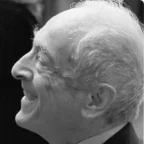
Schapiro, Meyer
Šiauliai, 1904 – New York, 1996
Pioneering American art historian, critic, and teacher whose interdisciplinary approach revolutionised the study of medieval, Romanesque, and modern art. Born on September 23, 1904, in Šiauliai, Lithuania, he immigrated to the United States with his family in 1907, settling in New York City, where he was profoundly shaped by the city's vibrant intellectual and artistic milieu.
Schapiro attended Columbia University, earning his bachelor's degree in 1924, his master's in 1926, and his Ph.D. in 1929 with a groundbreaking dissertation on twelfth-century Romanesque sculpture in Burgundy, which challenged prevailing stylistic chronologies and emphasised socio-political contexts. His early work — including articles on Mozarabic art and cloister frescoes at Santo Domingo de Silos — established him as a meticulous scholar who integrated formal analysis with historical, theological, and economic factors, methods that contrasted sharply with the era's more rigid iconographic or formalist schools. Joining Columbia's faculty in 1928, he taught there for over fifty years, mentoring figures including Arthur Danto and Robert Rosenblum, and fostering dialogues between art history, Marxism, psychoanalysis, and phenomenology.
His seminal publications include Romanesque Art (1977) and essays collected in Words and Pictures (1973), which dissected the emotional expressivity in medieval sculpture — arguing, for instance, that the "chaotic" sculptural heads at Moissac reflected deliberate spiritual intensity rather than primitivism — as well as later monographs on Van Gogh (1950) and Cézanne (1952), which humanised modern masters by linking their innovations to personal psychology and cultural upheaval. His insistence on viewing art as a dynamic interplay of form, content, and human agency — epitomised in his critique of Erwin Panofsky's iconology — bridged medieval monastic traditions with twentieth-century abstraction, influencing fields from semiotics to New York School painting; he was personally acquainted with artists including Willem de Kooning. He died on March 26, 1996, leaving an enduring corpus that taught generations to see art not as isolated objects but as vital expressions of historical consciousness.
Schiel, Hubert
Engen, 24 February 1898 – Trier, 7 March 1983
Hubert Schiel was a German librarian and church historian, director of the Stadtbibliothek and Stadtarchiv Trier from 1948 to 1963. He was born at Engen in the Hegau on 24 February 1898, attended the Bertholdgymnasium in Freiburg, and studied Catholic theology, philosophy, classical studies and pedagogy at Freiburg, Munich and Berlin. He took his doctorate at Munich in 1923.
After a period at the Deutscher Caritasverband in Freiburg he trained for the higher library service at Freiburg and Munich, and in 1930 joined the Stadtbibliothek in Frankfurt, of which he became deputy director in 1933. During the war he was head of library protection in the German military administration in Brussels (1941–1943) and acting director of the Landes- und Universitätsbibliothek in Brünn (1944–1945). After 1945 he worked as a free-lance author before taking the directorship at Trier, where the new library building opened in 1957.
His research concerned the Catholic theologians of the eighteenth and nineteenth centuries, above all Johann Baptist von Hirscher and Johann Michael Sailer, and the Trier-born Franz Xaver Kraus, whose papers, opened in 1951, he used for Im Spannungsfeld von Kirche und Politik (1951) and edited as the Tagebücher (1957). He also published Die Umwelt des jungen Karl Marx (1954) and translated Thomas More's Utopia and the colloquies of Erasmus.
As director of the Trier library he oversaw the full facsimile of the Codex Egberti, issued in 1960 by the Alkuin-Verlag in Basel, for which he wrote the text volume. The edition was printed from plates that the city of Trier later acquired. His own papers are held in the Benedictine abbey of St Matthias in Trier.
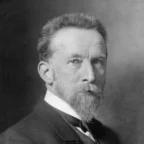
Schmarsow, August
Schildfeld (Mecklenburg-Schwerin), 26 May 1853 - Baden-Baden, 19 January 1936
August Schmarsow was a German art historian whose career united two distinct and lasting legacies: the foundational theory of architectural space that bears his name, and the institutional act that created what is now the most important research library for Italian art history in the world. He occupied the chair of art history at Leipzig for twenty-six years and trained a generation of scholars that would reshape the discipline for the following century.
Schmarsow was educated in Zurich, Strasbourg, and Bonn. He came under the decisive influence of Carl Nicolaus Heinrich Justi, one of the great scholar-connoisseurs of nineteenth-century German art history, whose philological rigor and biographical method left a permanent mark on his student's approach to the Italian masters. He became docent of the history of art at Gottingen in 1881, professor there in 1882, at Breslau in 1885, moved to Florence in 1892, and then to Leipzig in 1893.
The Breslau years were the crucible of his most consequential institutional initiative. It was as professor at Breslau that Schmarsow organized the winter seminar in Florence that would lay the groundwork for what became the Kunsthistorisches Institut.
The winter semester of 1888-89 produced one of the most remarkable gatherings in the history of the discipline. August Schmarsow, professor of art history at Breslau, taught courses at various locations in Florence. He lectured on Italian sculpture in the Circolo Filologico in the Palazzo Ferroni, on Masaccio and Masolino, and held tutorials on the history of Italian sculpture and painting in his private apartments. The nine students attending this seminar were Aby Warburg, Ernst Burmeister, Hermann Ulmann, Max J. Friedlander, Albert Kollmann, Johannes Seger, Max Semrau, August Winkler, and Ernst Zimmermann.
The roll-call is extraordinary: Aby Warburg, who would go on to found the Warburg Institute and transform cultural history, and Max J. Friedlander, who became the supreme connoisseur of Early Netherlandish painting, were both young students in Schmarsow's Florence seminar. Schmarsow's idea was to found the German Institution of Art History, the Kunsthistorisches Institut in Florenz, with the aim of promoting research in the field of Italian art. In this occasion, Warburg had the task of writing an essay regarding Masolino and Masaccio's frescoes from the Brancacci Chapel, highlighting the differences between the two.
August Schmarsow proclaimed with this pioneering feat in 1888 the establishment of the Kunsthistorisches Institut in Florenz. The formal history of the institution, however, is somewhat more complex: at the second Kunsthistorischer Kongress in Nuremberg, it was decided to establish a research institute in Florence, the most distinguished centre of art-historical studies. An executive committee was formed, headed by Adolph Bayersdorfer, August Schmarsow, and Max Georg Zimmermann. Considerable funds were donated via Wilhelm von Bode, the influential Berlin museum director. Schmarsow proposed Heinrich Brockhaus from Leipzig for the post of director. On 16 November the Kunsthistorisches Institut provisionally opened in the largest room in Brockhaus's private apartments.
The model that animated the project was explicit: he became devoted to the idea of founding an institute for art in Florence akin to the Deutsche Archaologische Institut in Rome. The DAI had given German classical scholarship a permanent base at the source of its materials; Schmarsow wanted to do the same for the study of Italian art. The institution he initiated, now the Kunsthistorisches Institut in Florenz, part of the Max Planck Society since 2002, possessing a library of over 360,000 volumes and one of the most comprehensive photographic archives on Italian art in the world, is the enduring monument to that ambition. It is precisely the institution where, seventy-eight years later, both Bruce Cole and Erling Skaug were working as fellows when the Arno flooded Florence in November 1966.
In 1893 Schmarsow succeeded Anton Springer as chair of art history at the University of Leipzig, beating out Heinrich Wolfflin. The competition between the two figures was not merely institutional but intellectual: they represented divergent approaches to the foundational question of what art history was and how it should proceed. Wolfflin would develop his theory of Kunstgeschichtliche Grundbegriffe, the formal categories of Renaissance and Baroque, into the most widely taught method in the discipline; Schmarsow contested him from the outset with an alternative rooted in bodily experience and spatial psychology rather than the optical analysis of form.
At Leipzig, Schmarsow incorporated ideas similar to Wolfflin's as well as concepts from the anthropology of his Leipzig colleague, the psychologist Wilhelm Wundt (1832-1920). Wundt, the founder of experimental psychology and the author of the monumental Volkerpsychologie, was Schmarsow's closest intellectual neighbour at Leipzig, and the cross-fertilization between Wundt's empirical investigations of perception and Schmarsow's theory of architectural experience was direct and consequential.
Schmarsow's inaugural lecture at Leipzig in 1893, Das Wesen der architektonischen Schopfung (The Essence of Architectural Creation), is the founding text of his theoretical legacy. In his inaugural lecture at Leipzig, Schmarsow focused on defining architecture exclusively as the spatial art, in contrast to Wolfflin's formalism.
Schmarsow was the first to formulate a comprehensive theory of architecture as a spatial creation at the frontiers of the paradigm of perceptual empiricism. He differed most from other theorists in his insistence that bodily movement through space rather than the stationary perception of form was the essence of architecture.
The implications of this position were radical. Schmarsow fundamentally altered the balance between space and mass in favour of the former: prior to his work, space was considered to be a void inside the solid building, while modern architecture treats structures as means to define the extensions of space. Schmarsow declared that architectural form should be understood through the movement of visitors through space and not as an object of stationary observation.
This reorientation from mass to space, from optical form to embodied experience, placed the human body, its bilateral symmetry, its sense of forward movement, and its proprioceptive awareness of enclosure and extension, at the centre of architectural analysis. The book also outlined Schmarsow's three principles of human organization: symmetry, proportionality, and rhythm.
The theoretical elaboration continued in Grundbegriffe der Kunstwissenschaft am Ubergang vom Altertum zum Mittelalter (1905): following the ideas of Alois Riegl in his recently published Spatromische Kunstindustrie, Schmarsow argued that the significance of space is part of the psychological expression of a particular period of history. This move, making spatial conception a historically determined phenomenon rather than a universal one, connected his theory to the broader Kunstwollen debate and gave it a historiographical as well as perceptual dimension.
Alongside his theoretical and institutional work, Schmarsow maintained a sustained engagement with specific artists and periods of Italian art, producing monographs that reflect the full scope of his interests from the medieval through the Baroque.
His early publications ranged from the Umbrian Quattrocento, Raphael und Pinturicchio in Siena (1880), Melozzo da Forli (1886), Giovanni Santi, der Vater Raphaels (1887), to medieval Tuscan sculpture: St. Martin von Lucca und die Anfange der toskanischen Sculptur im Mittelalter (1889). This last work, devoted to the origins of Tuscan sculpture in the Romanesque period, exemplifies the chronological range that distinguished him from contemporaries more narrowly focused on the High Renaissance.
The Masaccio-Studien (1895-1899), published in five parts with an atlas of photographs, a format designed to put visual evidence directly before the reader alongside the argument, was among the most systematic treatments of that pivotal painter produced before Roberto Longhi's generation. Masaccio was the hinge figure between the Trecento world of the Compagnia di San Luca and the new naturalism of the Quattrocento, and Schmarsow's sustained engagement with his work placed him at the centre of the debate about how that transition should be understood.
Gherardo Starnina (1912) addressed an important but elusive late Trecento and early Quattrocento painter active in Florence and Spain, a figure at the threshold between the International Gothic and the early Renaissance, whose work intersects with the tradition of Florentine workshop painting that runs through Orcagna, Agnolo Gaddi, and the circle studied by Skaug and Cole.
Barock und Rokoko (1897) represented his first major intervention in the rehabilitation of Baroque art at a moment when its reputation was only beginning to recover from Burckhardt's disparagement, a pioneering move that Schmarsow shared with his contemporary Cornelius Gurlitt. Federigo Barocci (1909-10) extended the argument into the Mannerist generation.
The 1888 Florence seminar had placed Schmarsow at the origin point of two of the most consequential careers in twentieth-century art history. Aby Warburg's lifelong obsession with the survival of antiquity in the Renaissance, his concept of the Pathosformel, his theory of cultural memory, and the library that became the Warburg Institute, traces its beginning to the encounter with Masaccio and Masolino that Schmarsow assigned him in Florence. Max J. Friedlander became the foremost connoisseur of Early Netherlandish painting, producing the fourteen-volume Early Netherlandish Painting that remains the standard reference.
His students included scholars who went on to occupy major positions in the German and international art-historical establishment. The institutional legacy through the Kunsthistorisches Institut is equally direct: generations of scholars from every country have used its library, worked in its seminar rooms, and published in its series, all of them inheritors of the ambition that Schmarsow articulated in his private apartments in Florence in the winter of 1888.
Schmarsow stands at the intersection of three distinct but related contributions: monographic scholarship on Italian Renaissance and medieval art, the institutional initiative that gave the international community of Italian art historians its most important research base, and the theoretical argument about space, movement, and embodied perception that made him one of the founding figures of architectural phenomenology.
His contest with Wolfflin, the two greatest art historians of their generation competing for the same chair, defined the methodological poles around which the discipline organized itself for decades. Where Wolfflin proposed an art history of pure visibility, grounded in the analysis of formal categories independent of historical content, Schmarsow proposed an art history grounded in bodily experience, psychological response, and the historically specific spatial imagination of a culture. The subsequent century has vindicated elements of both positions: the phenomenological tradition in architectural theory, from Merleau-Ponty through Christian Norberg-Schulz to Juhani Pallasmaa, descends in large part from the argument that Schmarsow first articulated in his Leipzig inaugural lecture of 1893.
Schmidt, Victor Michael
active late 20th-21st century; retired May 2024
Victor Michael Schmidt is a Dutch art historian specializing in Italian medieval and Renaissance painting, with a particular focus on panel painting, the typology and function of art objects, iconography, and the origins of art theory. For decades, he served as Associate Professor of Art History at Utrecht University, where he remained until his retirement in May 2024.
Schmidt's research focuses on Italian painting of the 13th and 14th centuries, employing an approach that integrates typological analysis, liturgical function, and the private devotion associated with pictorial objects. He is one of the foremost living specialists in late medieval Italian panel painting, with a specific focus on the Marche, Tuscany, and the Umbrian region.
His perspective is distinctly interdisciplinary: in addition to stylistic attribution, he investigates the artist's social status, patronage, and the reception of the works within the religious and civil context of the Middle Ages.
Schmidt's most influential publication is his editorship of the volume Italian Panel Painting of the Duecento and Trecento (Studies in the History of Art, 61), published by the National Gallery of Art in Washington in 2002, which brings together twenty-three essays by international specialists and grew out of a symposium held in Florence in 1998.
This volume has become an indispensable reference tool for anyone studying the origins of Italian panel painting. Equally significant is Painted Piety: Panel Paintings for Personal Devotion in Tuscany, 1250-1400 (Centro Di, Florence, 2005), a monographic study on private devotion and the relationship between patron and sacred image in 13th- and 14th-century Tuscany. In 2010, he co-edited with Justin Kroesen The Altar and Its Environment, 1150-1400 (Brepols, Turnhout), a collective volume on the altar as a physical, liturgical, and visual space in the Middle Ages. More recently, he published Processional Banners and Gonfalons from the Marche. Late Middle Ages and Renaissance (Edizioni Centro Studi "G. Mazzini," Fermignano, 2020), exploring processional painting in the Marche region.
Schmidt is a member of the editorial boards of some of the most authoritative Italian journals of medieval and Renaissance art history, including Prospettiva, La Diana (journal of the School of Specialization in Historical and Artistic Heritage at the University of Siena), Arte marchigiana, and Studi montefeltrani.
He is also a member of the board of directors of the Stichting voor Nederlandse Kunsthistorische Publicaties, the Dutch organization that publishes the journal Simiolus, one of the most respected art history publications in the Netherlands. He has maintained academic ties with the Dutch University Institute of Art History in Florence, an institution that has traditionally fostered the relationship between Dutch art historiography and Italian art.
Until his retirement, Schmidt trained entire generations of art historians in Utrecht, supervising theses and research on topics related to medieval Italian painting. As evidenced by his students still active in 2025-2026, his influence extended far beyond his direct teaching: a recent example is the presentation of a bachelor's thesis on Francesco da Bologna at Utrecht University in May 2026, supervised by Schmidt himself. The National Gallery of Art in Washington has also included his bibliography in online catalogs dedicated to 13th- and 14th-century Italian painting, a recognition of the institutional significance of his work.
Schubert, Ernst
Bemerode near Hannover, 23 May 1941 - Hannover, 18 March 2006
Ernst Schubert was a German historian best known for his work in medieval and regional history. He spent most of his academic life at the University of Gottingen, where from 1985 until his death he held the chair in Niedersachsische Landesgeschichte, the regional history of Lower Saxony.
Schubert studied history and the auxiliary historical disciplines, with a strong focus on the Middle Ages, and completed both his doctorate and habilitation in this field. After several academic appointments, he became Professor fur Niedersachsische Landesgeschichte at Gottingen in 1985, where he helped shape regional history as a major area of research and supervised numerous doctoral students.
His main research interests lay in the social and constitutional history of the Middle Ages and the early modern period, especially in Lower Saxony and northwestern Germany. He also worked on environmental and agrarian history, examining how land use, settlement patterns, and legal institutions influenced medieval society.
Schubert's studies regularly combined close archival research with a sustained focus on institutions such as lordships, towns, and ecclesiastical jurisdictions. This methodological combination made his work particularly valuable for understanding regional structures of power and long-term historical change.
He remained active in research and teaching until shortly before his death in 2006 at the age of sixty-four. His books and edited volumes continue to be cited in scholarship on medieval and early modern German regional history, especially for studies concerning Lower Saxony and neighboring territories.
Scudieri, Magnolia
active late 20th-21st century
Magnolia Scudieri is an Italian art historian specialising in Renaissance and medieval art, particularly known for her scholarship on Beato Angelico and fourteenth- and fifteenth-century miniature painting. She devoted the greater part of her career to the Museo di San Marco in Florence, where she held key positions in conservation, restoration, and curation.
Scudieri earned her degree in Medieval and Modern History from the University of Florence, where she studied under Giorgio Bonsanti, whose assistant she served from 1982 to 1992. She began her professional career at the Ministry of Cultural Heritage, working in the Restoration Office of the Superintendency for Artistic and Historical Heritage of Florence and Pistoia, with specific assignments in the Fiesole area and at the Museo di San Marco. This initial phase allowed her to combine scientific rigour with curatorial practice, and her work on restorations revealed previously unknown aspects of Renaissance interiors, including the original green colour of the walls of Michelozzo's library, which emerged in 2000 from beneath a nineteenth-century patina.
From 1992 until her retirement after approximately thirty years of service, Scudieri directed the Museo di San Marco, transforming it into a centre of excellence for conservation and public engagement. Under her leadership, the museum oversaw restorations of the Sala Greca — including the polychrome wooden ceiling — and of key works by Beato Angelico: the San Marco Altarpiece, the Crucifixion in the Chapter House, and the Annalena Altarpiece. She reorganised sections of the collection, including the tombstones from San Pancrazio and the paintings by Fra' Bartolomeo, improving security, accessibility, and conservation standards while preserving the site's monastic character.
A specialist in fourteenth- and fifteenth-century manuscript illumination, she contributed to exhibition catalogues in Italy and abroad, curating exhibitions on subjects including the illuminated choir books of San Marco and the relationship between Beato Angelico and miniature painting. Her publications include Gli affreschi dell'Angelico a San Marco (2004), Fra Giovanni Angelico. Pittore miniatore o miniatore pittore? (2007), the biographical entry on Guido di Pietro (Beato Angelico) in the Dizionario Biografico degli Italiani (2004), and the official museum guide Museo di San Marco. La guida ufficiale (1999). Her research on Sister Plautilla Nelli's Lamentation over the Dead Christ contributed to the rediscovery of Nelli as the first Florentine female painter, a contribution recognised by the Nelli Prize awarded in 2004 by Advancing Women Artists.
Antonio Paolucci, former superintendent of the Florentine museums, praised Scudieri's ability to combine scientific rigour with humanity. Her "diachronic" approach to the museum — emphasising San Marco's spiritual and historical continuity from the Renaissance to the twentieth century — has been widely acknowledged as a defining contribution to the site's identity. She led distinguished tours, including that for Emperor Akihito of Japan in 1993.
Secchi, Angelo
Reggio Emilia, 28 June 1818 – Rome, 26 February 1878
Angelo Secchi was an Italian Jesuit astronomer and one of the founders of astrophysics. He entered the Society of Jesus in 1833, taught at the Collegio Romano, spent the years of exile after 1848 at Stonyhurst and at Georgetown, and on his return in 1850 was appointed director of the observatory of the Collegio Romano, which he rebuilt above the church of Sant'Ignazio and directed until his death. He was among the first to apply the spectroscope systematically to the stars, and his classification of stellar spectra into four types is the ancestor of all later spectral classification.
His solar work is the part of his output that concerns the medievalist. Secchi observed the eclipses of 1860 and 1870, established photographically that the prominences and the corona belong to the Sun and not to the Moon or the terrestrial atmosphere, and gathered the results in Le Soleil (Paris: Gauthier-Villars, 1870; second, enlarged edition 1875–1877), the standard solar monograph of its generation.
It is there that he singled out the account of the total eclipse of 3 June 1239 given by Restoro d'Arezzo in the Composizione del mondo as the most ancient description of the solar corona then known in any detail - the clear sky turning yellow, the progressive covering of the disc, Mercury and the stars becoming visible, the animals taking fright, the cooling of air and ground, and the duration measured against the time a man needs to walk two hundred and fifty paces. Secchi's notice is the reason a passage of Aretine vernacular prose entered the literature of observational astronomy, and it remains the basis of the claim that Restoro's is among the most precise descriptions of a solar eclipse before the eighteenth century.
Seidel, Linda
b. 1939
Linda Seidel is an American historian of medieval art, Hanna Holborn Gray Professor Emerita of Art History at the University of Chicago, and the author of the study that dismantled the modern legend of Gislebertus. Her work is characterised by a persistent scepticism toward the received identities of famous monuments — she has repeatedly shown that what the discipline takes to be medieval fact is often a nineteenth- or twentieth-century construction — combined with an early and influential turn toward reception theory.
Born in 1939, she took a B.A. in French literature at Barnard College, an M.A. at Radcliffe, and her Ph.D. in art history at Harvard in 1965 under Frederick B. Deknatel. She taught at Harvard, in the Fine Arts department and at the Fogg Art Museum, before joining the faculty of the University of Chicago in 1977; she was named the first Hanna Holborn Gray Professor in Art History, received the Burlington Northern Distinguished Graduate Teaching Award in 1990, and retired in 2004.
Her method announced itself early. "A Romantic Forgery: The Romanesque 'Portal' of Saint-Étienne in Toulouse" (1968) demonstrated that one of the standard monuments of the French Romanesque canon was in fact a nineteenth-century composite, an argument that overturned a good deal of accepted French scholarship and set the pattern for her later work. Songs of Glory: The Romanesque Façades of Aquitaine (1981) read western French church fronts as public rhetoric rather than as illustrated theology, and Jan van Eyck's Arnolfini Portrait: Stories of an Icon (1993) applied the same suspicion to the most over-interpreted panel in Netherlandish painting, treating the accumulated readings as themselves the object of study.
Legends in Limestone: Lazarus, Gislebertus, and the Cathedral of Autun (Chicago, 1999) is her most contested book and the one most directly relevant here. It takes as its subject two cults — that of the saint and that of the sculptor — and shows how "Gislebertus, sculptor" was discovered, elaborated and effectively canonised over the course of the twentieth century, above all by the 1960 monograph of Denis Grivot and George Zarnecki. Against that reading she argued that the inscription GISLEBERTVS HOC FECIT commemorates a lay benefactor rather than a carver, proposing a late Carolingian count as its referent, and that its placement beneath the feet of Christ suits a patron's memorial better than a craftsman's boast.
The reception was respectful of the historiographical achievement and sceptical of the patron thesis in particular: William Diebold, reviewing the book in The Medieval Review (2000), allowed that a patron is entirely plausible on medieval conventions while noting that the displacement of artist by patron was hardly news to medievalists, and Christine Verzár in Speculum (2001) joined others in complaining that the book sets up and demolishes straw men drawn from an older iconographic art history. The fair verdict is that Seidel destabilised the confident biography of "Gislebertus the sculptor" without securing "Gislebertus the patron" in its place — which is itself a substantial result.
She also edited Meyer Schapiro's Charles Eliot Norton Lectures as Romanesque Architectural Sculpture (Chicago, 2006), an act of scholarly stewardship toward the tradition she had spent her career interrogating. Her wider argument against the older iconographic method associated with Émile Mâle — that a church's imagery is a fixed pictorial book to be read in sequence — has proved more durable than any single attribution: at Autun she describes a distributed programme whose meanings are made and remade by the moving body of the pilgrim.
Seidel, Max
Basel, 9 February 1940
Max Seidel is a Swiss art historian and, for a generation, one of the pre-eminent authorities on the art of medieval and early-Renaissance Tuscany, above all the sculptors Nicola and Giovanni Pisano. Director of the Kunsthistorisches Institut in Florenz (KHI) from 1993 to 2005, he presided over that institute's transformation into a Max Planck research center, and he remains its Director Emeritus. His career has run along the same terrain covered by this set of notes, the Pisano workshop, Sienese Trecento painting, and the political imagery of Lucca, which makes him a natural counterpart to Anita Moskowitz on the sculpture side and a scholar whose Lucca work touches directly on the world of Castruccio Castracani.
Life and career
He was born on 9 February 1940 in Basel and studied art history at the universities of Basel and Florence. He took his doctorate at Basel in 1967 with a dissertation on the relationship between central-Italian and northern-French art in the thirteenth century, a theme (the Italian encounter with French Gothic) that would recur throughout his work. He completed his Habilitation at Zurich in 1973.
His academic path then moved steadily southward and upward: university lecturer (Universitatsdozent) at Zurich (1973-1979); professor at Gottingen (1979-1982); full professor (Ordinarius) and director of the Kunsthistorisches Institut of the University of Heidelberg (1982-1993); and finally director of the Kunsthistorisches Institut in Florenz (1993-2005). During his tenure the KHI passed to the Max Planck Society in 2002; Seidel became a Scientific Member of the Max Planck Society that year and has been the institute's Director Emeritus since 2005. Under his directorship the institute's research capacities were substantially expanded, and it advanced into a leading international center for art-historical scholarship.
Seidel's standing in Italy is reflected in an unusual density of honours: he was made an honorary citizen of Florence in 2005, and he holds the rank of Grande Ufficiale of the Order of Merit of the Italian Republic and Commendatore of the papal Order of St Sylvester, along with the Italian state medal Benemerito della cultura e dell'arte (1997) and civic honours from Lucca (2008) and the cathedral works (Opera del Duomo) of Pisa (2014). The concentration of Lucchese, Pisan, and papal recognition mirrors exactly the geography of his research.
Research and the Pisano problem
Seidel's scholarship centers on Tuscan art of the thirteenth and fourteenth centuries, with excursions into the nineteenth. He has written extensively on Nicola and Giovanni Pisano, on the Sienese painters Simone Martini and Ambrogio Lorenzetti, and on Luca Signorelli, and he pursued the political iconography of the Tuscan communes. With Peter A. Riedl he co-directed the vast corpus project Die Kirchen von Siena (The Churches of Siena), one of the great topographical-inventory undertakings of Italian art history.
His engagement with the Pisani culminated in the two-volume monograph Father and Son: Nicola and Giovanni Pisano (Munich: Hirmer Verlag, 2012; 2 vols, c. 989 pp., c. 928 illustrations; ISBN 978-3-7774-5101-5), issued in the series of the Kunsthistorisches Institut in Florenz. It is the summation of a lifetime's work, and it is built around a single, deliberately narrow problem: the artistic relationship between father and son. Against the long-dominant view, encapsulated in Adolfo Venturi's image of an "abyss" separating Giovanni from Nicola, Seidel argues for the essential continuity of their art and outlook, tracing the emergence of Giovanni's manner directly out of his apprenticeship under his father and their joint labour on the Siena Cathedral pulpit.
The book's method is characteristic and worth noting for anyone using it: it eschews the conventional monographic apparatus (there is no chronological life-and-works survey), and it leans heavily on close reading of the surviving documents. From the Siena pulpit payment records, for instance, Seidel shows that Giovanni was the most highly paid sculptor on the project after Nicola himself, earning substantially more than any other assistant, Arnolfo di Cambio included, and he uses fiscal and property records to demonstrate the comparatively high social standing the two artists enjoyed (Giovanni's Siena house was appraised above those of Duccio or Segna di Bonaventura). He gives particular weight to the Pisani's confrontation with the Gothic art of France and with Roman antiquity. Reviewers in The Burlington Magazine, Speculum, and the Sculpture Journal received it as a landmark that sets a new standard for the study of Italian late-medieval sculpture, while noting that its problem-driven structure can be demanding for the non-specialist.
Among his other books is Dolce liberta: iconografia politica a Lucca (Venice: Marsilio, 2004; also issued in English), a study of the political iconography of Lucca, the very city whose Ghibelline fortunes Castruccio Castracani embodied, which reads the commune's visual self-representation as an instrument of civic ideology.
Significance and connections
Seidel's importance is twofold. As an institution-builder, he shaped the modern KHI and helped anchor German-language art history at the center of Italian medieval studies. As a scholar, he brought a rigorously documentary and iconographic method to bear on artists long treated through style alone, and his continuity thesis in Father and Son reframed the central narrative of Italian Gothic sculpture.
For the thread running through these biographies, the connections are direct. His lifelong subject, the Pisani, is the same tradition whose tomb-shrine legacy Anita Moskowitz traced from Nicola Pisano's Arca di San Domenico down to Giovanni di Balduccio in Milan; where Moskowitz argued for the autonomy of Italian Gothic sculpture against the French model, Seidel's doctoral and later work foregrounds precisely the Italian engagement with French Gothic, a productive counterpoint rather than a contradiction. And his Lucca iconography places him, unexpectedly, in the same civic and political world as the first figure in this series.
Selected bibliography
- Doctoral dissertation (Basel, 1967) on central-Italian and north-French artistic relations in the thirteenth century
- Die Kirchen von Siena (corpus project, co-directed with Peter A. Riedl)
- Dolce liberta: iconografia politica a Lucca (Marsilio, Venice, 2004; English edition also published)
- Father and Son: Nicola and Giovanni Pisano, 2 vols (Hirmer Verlag, Munich, 2012; ISBN 978-3-7774-5101-5)
- Numerous studies on Simone Martini, Ambrogio Lorenzetti, Giovanni Pisano, and Luca Signorelli
Sensi, Mario
Assisi, 15 August 1939 - 25 May 2015
Don Mario Sensi was an Italian priest-historian and one of the most prolific scholars of medieval and early modern religious life in Umbria and the Marche, with a bibliography reaching some 387 titles by 2008. A doctor in both Theology and Philosophy, he was ordained for the Diocese of Foligno and served as parish priest of Colfiorito from 1963 for many years before becoming episcopal chancellor; at his death he was prior of the Chapter of Canons of Foligno Cathedral, a chaplain and Prelate of Honour of His Holiness, and professor emeritus at the Pontifical Lateran University in Rome. He also served as a consultor to the Congregation for the Causes of Saints and as a member of the Pontifical Committee of Historical Sciences.
Sensi's scholarship traced what the medievalist Attilio Bartoli Langeli described as a "climb" from Foligno up to Colfiorito and the Altopiano di Plestia, over the Apennine watershed into the Alta Valle del Chienti, and from there outward across the interior Marche to Camerino, San Ginesio, Macerata, and the Piceno — a geography he treated not as a border but as a corridor of shared religious and social culture. Within this Umbro-Marchigian frame, he became a leading authority on penitential and quasi-religious movements — the *bizzoche* (lay female penitents) and Franciscan tertiaries — publishing extensively on their transition into Observant Poor Clare communities, on hospital confraternities and *xenodochia*, and on the typology of Marchigian sanctuaries and rural devotions. His edited volume with Ettore Orsomando, Studi sull'ambiente naturale degli altipiani di Colfiorito (2002), reflects the same integration of local topography with religious history that runs through his life's work. A festschrift, Amicitiae Sensibus: Studi in onore di don Mario Sensi, filled an entire volume (XXXI-XXXIV, 2007-2011) of the Bollettino Storico della Città di Foligno.
For Angela of Foligno, Sensi's most consequential intervention concerns the identity of her scribe. In "Fra Berardo Arnolti, il 'frater scriptor' del Memoriale di Angela?" (1992), he proposed identifying the anonymous "Brother A." with the archivally-attested Franciscan Berardo Arnolti — a hypothesis he himself flagged as uncertain with the question mark in his own title. He was also, alongside Jacques Dalarun, among the historians who judged the evidence for dating Angela's conversion to 1285 too weak to be treated as securely established, contributing to the broader critical reassessment of the traditional Ferré chronology of her life. His identification of the "frater scriptor" engages directly with the text established, in the same year, in Giovanni Pozzi's critical edition of the Memoriale, Il libro dell'esperienza (1992), which remains the standard modern edition of Angela's book.
Shailor, Barbara A.
New Haven - active late 20th-21st century
Barbara Shailor was born in New Haven and studied at Hamden High School, Wilson College, and the University of Cincinnati, where she received her PhD in 1975. Her doctorate in Classical Philology gave her work a distinct profile among medievalists: she approached manuscripts primarily through palaeography and codicology, with close attention to script, physical construction, and textual transmission. In Visigothic manuscripts, where script, decoration, and pictorial cycles are inseparable, this training proved especially influential.
Shailor is a specialist in Latin manuscript studies, the transmission of classical texts in the Middle Ages and Renaissance, and women in classical antiquity and the Middle Ages.
She was a faculty member and administrator at Bucknell University from 1975 to 1996. During these years, alongside full-time teaching and leadership responsibilities, she carried out one of the most sustained scholarly projects in North American manuscript studies: the systematic cataloguing of Yale Beinecke Library's medieval and Renaissance manuscript holdings.
From 1970 to 1995, through summer research and sabbatical leaves in New Haven, she completed the three-volume Catalogue of Medieval and Renaissance Manuscripts in the Beinecke Rare Book and Manuscript Library. Published in 1984, 1987, and 1993 (Medieval and Renaissance Texts and Studies), the catalogue remains the standard starting point for work on these collections. Each entry combines physical description, provenance, textual identification, palaeographical analysis, and bibliography.
In 1988 she curated a Beinecke exhibition that generated The Medieval Book, first issued as an exhibition catalogue and then published by the University of Toronto Press in association with the Medieval Academy of America in 1991. The book's first part explains the physical making of medieval books from the shift away from papyrus scroll; the second part examines manuscript genres and their cultural settings.
Reprinted repeatedly and widely adopted in university teaching, including in Rare Book School contexts, The Medieval Book became one of the most used English-language introductions to the physical and cultural history of the medieval codex.
In parallel, Shailor developed major expertise in Latin palaeography and codicology of Visigothic manuscripts from tenth- and eleventh-century northern Spain, publishing extensively on Visigothic script and monastic book production.
This specialization connected directly with the Beatus tradition. In A Spanish Apocalypse: The Morgan Beatus Manuscript (1991), her codicological analysis complemented John Williams's iconographic study, demonstrating the productive intersection of technical manuscript scholarship and interpretive art history in the study of MS M.644.
In 1989 she co-directed with Robert G. Babcock an NEH Summer Seminar on palaeography and codicology, reinforcing her commitment to training researchers through direct work with primary materials.
Shailor served as Dean of Douglass College and Professor of Classics at Rutgers University from 1996 to 2001, then joined Yale in 2001 as Director of the Beinecke Rare Book and Manuscript Library. In 2003 she became Yale's Deputy Provost for the Arts, a role she held until 2012, overseeing museums, performing-arts centers, and broader cultural programming.
After retiring from administration in 2012, she continued as Senior Research Scholar and Senior Lecturer in Classics, and as Co-PI of the Mellon-funded initiative on digitally enabled scholarship for Yale's medieval manuscripts. This work placed her at the intersection of long-standing object-based manuscript expertise and the digital humanities.
She retired from teaching in Spring 2020. Her honors and institutional roles include support from NEH, ACLS, the American Philosophical Society, and the National Science Foundation; election to the Comité International de Palaeographie Latine (2000); Fellowship of the Medieval Academy of America (2006); trusteeship at the Samuel H. Kress Foundation (from 2003); and election to the Grolier Club of New York.
The volume Medieval Manuscripts and their Provenance: Essays in Honour of Barbara A. Shailor (2024) reflects the central thread of her scholarly legacy: the reconstruction of manuscript histories through ownership marks, annotations, bindings, textual traditions, fragments, and archival evidence.
Shailor's contribution stands on three interconnected registers. As a palaeographer and codicologist, she produced one of the most rigorous institutional manuscript catalogues in North America. As a teacher and communicator, she authored a foundational introduction to the medieval codex. As an institution-builder, she shaped the Beinecke and Yale's arts infrastructure while helping open manuscript collections to global digital research communities.
Sharpe, Richard
17 February 1954 – 22 March 2020
Richard Sharpe was educated at St Peter's School, York, and at Trinity College, Cambridge, where he took a first-class degree in 1977. He began in Classics before moving toward the study of Anglo-Saxon, Norse, and Celtic, working under Simon Keynes and Michael Lapidge — a training that gave him, unusually among British medievalists of his generation, a genuinely comparative command of the historical cultures of early medieval England, Ireland, Scotland, and Wales alike. His doctoral research was on Latin hagiography from Ireland, a subject that would remain at the centre of his work for the rest of his career.
Sharpe spent his working life at Oxford, eventually as Professor of Diplomatic and a Fellow of Wadham College. From 1981 to 1990 he assisted in the editing of the Dictionary of Medieval Latin from British Sources, and for three decades he was general editor of the Corpus of British Medieval Library Catalogues, the British Academy project that gathers, prints, and interprets the scattered documentary evidence for the ownership and organisation of books in the medieval British Isles. He delivered the Lyell Lectures on medieval libraries and book economies in 2018–19 and served as President of the Surtees Society from 2002 until his death.
His 1991 book Medieval Irish Saints' Lives: An Introduction to Vitae Sanctorum Hiberniae grew directly out of his doctoral work and remains the standard guide to that body of hagiography. A Handlist of the Latin Writers of Great Britain and Ireland before 1540 (1997) supplied the field with an indispensable reference tool of a kind previously lacking, and his edition and translation of Adomnan's Life of Columba (1995) reshaped scholarly understanding of the Latin culture of Iona. Throughout, his method combined first-hand palaeographical and codicological examination of manuscripts with a historian's scepticism toward inherited scholarly consensus.
That scepticism was applied directly to the Book of Armagh in "Palaeographical considerations in the study of the Patrician documents in the Book of Armagh," published in Scriptorium 36 (1982), together with companion studies of the same period on Patrick and the see of Armagh and on Armagh's relations with Rome. Reopening a question that had seemed settled since E. A. Lowe's attribution, in Codices Latini Antiquiores, of three contemporary hands to the manuscript, Sharpe argued for essential scribal unity: that the observable variation in the script was more plausibly the work of a single accomplished scribe writing in different registers than evidence of several distinct hands. The argument returned the debate to something closer to John Gwynn's original position, and it stands, alongside Lowe's and Bieler's, as one of the three positions any serious account of the manuscript's production must weigh.
Sharpe was elected a Fellow of the British Academy in 2003, an Honorary Member of the Royal Irish Academy in 2018, and a Corresponding Fellow of the Medieval Academy of America in the year of his death. He died on 22 March 2020, aged sixty-six, remembered as one of the most exacting codicologists and textual historians of his generation, whose insistence on returning to primary evidence rather than received judgement — nowhere more consequentially than in the case of the Book of Armagh — set a standard the field has continued to measure itself against.
Simi Varanelli, Emma
Italian scholar, active late 20th-21st century
Emma Simi Varanelli is an Italian historian of medieval art whose work is especially associated with the study of late Duecento and early Trecento painting in central Italy. She is frequently cited in scholarship on Assisi, the Isaac cycle, and the formation of Giotto's early pictorial language.
Publicly available biographical data about Simi Varanelli's personal life and institutional trajectory are limited in comparison with the documentation available for many other twentieth-century art historians. For this reason, her profile is best reconstructed through her published scholarship and its reception in later historiography.
Her most widely cited contribution is the essay Dal Maestro d'Isacco a Giotto. Contributo alla storia della perspectiva communis medievale (1989), a study that links stylistic analysis to the intellectual history of medieval optics and perspective theory. The article has become a recurrent reference in debates on the so-called Isaac Master, on the relationship between Roman and Florentine currents at Assisi, and on the technical-intellectual foundations of early Trecento naturalism.
Methodologically, Simi Varanelli's work is valued for combining close visual reading with attention to the conceptual vocabulary of medieval image-making. Rather than isolating style from ideas, her approach treats pictorial innovation as part of a broader cultural field in which workshop practice, scholastic thought, and scientific curiosity interact.
In studies of Umbrian and central Italian painting around 1300, her scholarship is regularly cited alongside major contributions by Angiola Maria Romanini and Bruno Zanardi. Within that constellation, Simi Varanelli remains an important voice for understanding how questions of space, vision, and representation shaped the transition from Duecento modes to early Giottesque pictorial language.
Simonetti, Adele
active late 20th-early 21st century
Adele Simonetti is known to scholarship almost entirely through her work rather than through any public account of her life. The standard biographical data one would expect for such a profile, such as date and place of birth, education, academic appointments, and institutional affiliation, are not documented in reliable publicly accessible sources. This entry therefore presents her scholarly contribution and intellectual milieu rather than a conventional life-biography. Personal particulars have been deliberately left blank rather than filled with conjecture. If such details are needed, they should be sought in Italian academic directories, in the front matter of her own volumes, or through the institutions with which she has published.
A preliminary caution is necessary. The surname is common in Italian medieval and patristic studies, and Adele Simonetti should not be confused with Manlio Simonetti (1926-2017), the eminent historian of patristics and early Christian literature, nor with other scholars of the same name. Catalogue indices of Florentine medievalist publishers accordingly distinguish "Simonetti, A." from "Simonetti, M." and "Simonetti, R."
Simonetti is a philologist of medieval Latin, a practitioner of filologia mediolatina, the discipline devoted to the critical edition and study of Latin texts of the Middle Ages. Her published work situates her within the principal Italian institutional network for the field: the Florentine and central-Italian scholarly constellation around medieval Latin studies that developed in the later twentieth century. Her editions appeared under the imprint of Edizioni del Galluzzo at the Certosa del Galluzzo near Florence, the publishing house associated with the Societa Internazionale per lo Studio del Medioevo Latino (SISMEL) and the Fondazione Ezio Franceschini, and also in series of the Centro Italiano di Studi sull'Alto Medioevo (CISAM) at Spoleto.
This is the milieu shaped above all by Claudio Leonardi and his collaborators, whose ambition was to provide medieval Latin literature, and Italian hagiography in particular, with rigorous critical editions furnished with introduction, apparatus, and where appropriate facing Italian translation. Simonetti's work belongs squarely to that enterprise, and her name is attached to major series dedicated to editing medieval Latin texts. It was with Leonardi that the Capuchin philologist Giovanni Pozzi co-edited the anthology Scrittrici mistiche italiane (1988), a collaboration that situates Simonetti's editorial labour on Umilta da Faenza within the same broader project of recovering the Latin and vernacular textual record of medieval Italian women's religious writing.
Her particular specialism is hagiography and religious literature, and more specifically the textual dossier of Umilta da Faenza. Simonetti's scholarly identity is deeply bound to this medieval saint, whose Latin and vernacular remains she edited more completely than any predecessor. By editing both the hagiographic Lives written about Umilta and the sermons attributed to Umilta herself, she effectively became the modern custodian of the saint's literary record. Through the Umilta corpus, her contribution is chiefly measured. Her work exemplifies the strengths of her tradition: patient manuscript-based establishment of the text, careful reconstruction of textual transmission, and sober historical framing that does not smooth away evidentiary difficulty.
The foundation of Simonetti's reputation rests on three closely related publications, each concerning the writings of or about Umilta da Faenza and together constituting the critical basis on which serious modern study of the saint depends.
The first is I sermoni di Umilta da Faenza. Studio e edizione, published at Spoleto by CISAM in the series Biblioteca di "Medioevo Latino" (no. 14) in 1995 (xciv + 194 pages). The volume presents the Latin Sermones attributed to Umilta, preceded by a substantial study organized around the saint's identity (from Rosanese Negusanti to Umilta da Faenza), the character of the sermons and their Johannine spirituality, and manuscript transmission. A point of major importance is that the edition prints fifteen sermons, numbered Sermo I through Sermo XV, correcting the older and frequently repeated figure of nine sermons found in earlier reference literature and popular accounts.
The second is her edition of the hagiographic Lives, Le Vite di Umilta da Faenza. Agiografia trecentesca dal latino al volgare, published in the Per Verba series of the Fondazione Ezio Franceschini by Edizioni del Galluzzo in the later 1990s (dated 1997 in some catalogues and 1998 in others; citation should be checked against the book itself), LIV + 70 pages. Simonetti provides the first critical edition of the Latin redaction of the Vita, established from six manuscripts, together with a transcription of an independent vernacular redaction. Her framing is historically acute: she treats the two fourteenth-century redactions as independent witnesses, both attributed to Vallombrosan hagiographers, and places them within an early-fourteenth-century Vallombrosan project to model female sanctity in monastic and penitential terms, a minority current beside dominant mendicant hagiography.
The third, and most extensive, is the bilingual critical edition Sermones, issued under Umilta da Faenza (Humilitas) in the Edizione Nazionale dei Testi Mediolatini (Serie II, 6) by SISMEL - Edizioni del Galluzzo in 2005 (VIII + 553 pages). The volume was edited by Lea Montuschi, with the Latin critical edition by Adele Simonetti and Italian translation by Lea Montuschi and Luigi G. G. Ricci. The Latin text appears in a new critical edition with facing Italian translation and a set of critical essays on the corpus. Inclusion in the Edizione Nazionale marks the definitive scholarly status accorded to Umilta's sermons.
Simonetti's importance lies in transforming the study of Umilta da Faenza from devotional tradition and inadequate older printings into a properly critical enterprise. Before her editions, texts by and about Umilta were chiefly accessible through seventeenth- and eighteenth-century compilations and reference summaries. After her work, scholars gained critically established texts with reconstructed manuscript transmission and historically grounded framing. This kind of intervention is foundational, because it clarifies what the texts are and thereby enables further inquiry into spirituality, Latinity, women's preaching, and the relation between written remains and visual cult.
Her work is also significant for the broader history of medieval women's religious writing. By providing rigorous editions of a corpus of Latin sermons attributed to a thirteenth- and fourteenth-century woman, Simonetti supplied primary materials for one of the very few surviving female Latin preaching corpora of the period. Her distinction between independent Latin and vernacular redactions of the Vita, and her identification of their Vallombrosan authorship and purpose, also illuminated strategies by which a monastic order fashioned and promoted the sanctity of a foundress against prevailing mendicant models.
For researchers on manuscript culture, Trecento visual programs, and the relation of text and image, Simonetti's editions have direct practical utility. Her critical Latin Vita, established from six manuscripts, provides the dependable textual basis needed to test correlations with painted narrative cycles, including those associated with Beata Umilta. Where visual programs illustrate episodes of a saint's life, interpretive security depends on identifying the operative textual redaction. Simonetti's separation of independent Latin and vernacular versions is therefore a central analytical tool, not a merely philological detail.
Beyond Umilta specifically, her scholarship stands as a model of source-critical method for medieval studies more generally. The discipline of establishing a text from surviving witnesses, weighing relationships among them, and refusing assertions beyond documentary support is directly analogous to responsible work on script, decoration, localization, and iconography in manuscript and art history. For scholarship on the meeting of hagiographic text and image in the devotional culture of the Italian Middle Ages, Simonetti's editions are both a practical resource and an exemplary method.
Sindona, Enio
active 1950s - 1970s
Enio Sindona was an Italian art historian and critic active in Milan in the decades after the Second World War. He wrote and edited for the Istituto Editoriale Italiano, where he directed the monograph series Arte e Pensiero, which included, among other titles, Michelangelo Muraro's Paolo da Venezia (1969).
His own books were devoted mainly to Italian painting of the late Middle Ages and the early Renaissance. His Paolo Uccello (Istituto Editoriale Italiano, Milan, 1957) was followed by Pisanello (1961), which also appeared in French (Bibliothèque des Arts, Paris, 1962) and in English in a translation by John Ross.
His best-known work is L'opera completa di Cimabue e il momento figurativo pregiottesco (Rizzoli, Milan, 1975), a volume in the Classici dell'arte series. Its catalogue sets Cimabue's work within the wider culture of Tuscan and Umbrian painting before Giotto, including the painted crosses of Giunta Pisano and his followers, and the book remains a standard illustrated reference in the literature on Cimabue and on Duecento painting.
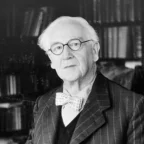
Singer, Charles Joseph
London, 2 November 1876 - 10 June 1960
Charles Joseph Singer was a British physician, historian of science, and one of the founding figures of the academic discipline of the history of medicine. Over the course of a long career that bridged active medical practice and painstaking archival scholarship, he became the most internationally prominent English-speaking historian of science and technology of the first half of the twentieth century - a man whose work touched directly on medieval illuminated manuscripts, early anatomical texts, and the transmission of ancient knowledge.
Singer was born on 2 November 1876 in London, the son of the Reverend Simeon Singer, a Hebrew scholar of considerable distinction, and Charlotte Pyke. He was educated at the City of London School and then entered University College London in 1896 before winning a scholarship to Magdalen College, Oxford, where he read zoology and took his BA in 1900. Medicine was always his true aim, however, and he completed his clinical training at St. Mary's Hospital, qualifying in 1903. Almost immediately upon qualifying, he departed as medical officer on an expedition under Sir John Harrington to delimit the Abyssinian frontier with Sudan, spending nearly a year collecting biological specimens and studying medical cases in the field.
Singer's transformation from practicing physician to professional historian of medicine was set in motion in 1910, when browsing a second-hand bookshop he encountered a copy of Benjamin Marten's early eighteenth-century text on contagion and was captivated by the problem of how scientific ideas are transmitted across centuries. He began writing papers on medical history alongside his hospital work at the Dreadnought Hospital for Seamen and the Cancer Hospital, Brompton. In the spring of 1914, at the age of thirty-eight, he made the decisive and financially costly choice to give up consulting medicine entirely, accepting an invitation from Sir William Osler, then Regius Professor of Medicine at Oxford, to devote himself full-time to historical research. Singer and his wife Dorothy, largely at their own expense, established a history of science research room in the Radcliffe Camera at Oxford, installing a safe to hold manuscripts and opening it as a working space for researchers.
After serving in the Royal Army Medical Corps during the First World War, Singer returned to Oxford as Lecturer in the History of the Biological Sciences. When Osler died in 1919, the hopes of securing Singer an Oxford professorial chair died with him, and in 1920 he moved to University College London, where he was appointed Lecturer on the History of Medicine, a post which the University of London upgraded to an honorary professorship in 1930. He retired as Professor Emeritus in 1942. His international standing was extraordinary: he presided over the Third International Congress of the History of Medicine in 1922 and the Second International Congress of the History of Science and Technology in 1931. He lectured at Johns Hopkins and the University of Pennsylvania, and was visiting professor at the University of California in 1931-1932. He held Oxford doctorates in all three faculties - medicine, letters, and science - a distinction without parallel among British scholars of his generation.
Singer's bibliography spans an extraordinary range. His early collaboration with Dorothy on The Development of the Doctrine of Contagium Vivum, 1500-1750 (1913) established his method: close reading of primary sources, careful attention to manuscript transmission, and resistance to teleological narratives of progress. His two-volume edited collection Studies in the History and Method of Science (1917-1921) gathered the most important international scholarship of the era. A Short History of Anatomy from the Greeks to Harvey (1925, revised 1957) remains a foundational text. His edition and translation of A Prelude to Modern Science (1946), presenting the complete text of Vesalius's Tabulae anatomicae sex of 1538 with detailed analysis, was one of his crowning achievements.
Perhaps his most enduring monument is the monumental A History of Technology (five volumes, 1954-1958), which Singer co-edited and to which he contributed substantially, covering the full sweep of human technological history from prehistoric times through the Industrial Revolution. His From Magic to Science (1928), especially relevant to students of medieval intellectual history, examined the scientific content of illuminated manuscripts from the medieval period, particularly medical and natural-philosophic manuscripts, bringing textual scholarship into productive dialogue with art-historical analysis.
No account of Charles Singer's work can omit his wife, Dorothy Waley Singer (1882-1964), a scholar of Jewish history, Giordano Bruno, and manuscript cataloguing who was an equal intellectual partner throughout their shared life. She participated in virtually every major research project, sustained the correspondence networks that kept the Radcliffe Camera research room functioning during the war years, and produced her own substantial independent scholarship on Renaissance science and Hermeticism.
During the 1930s and 1940s, Singer's commitments extended well beyond the archive. He helped found the Society for the Protection of Science and Learning, the principal British organisation dedicated to rescuing Jewish and anti-fascist scholars fleeing Nazi persecution, and he and Dorothy personally sheltered and assisted many academic refugees. In 1956 he received the Osler Medal of Oxford University and shortly afterward the George Sarton Medal of the American Society for the History of Science - the two highest honours in his field. A Festschrift of ninety essays in his honour, Science, Medicine and History (1953), gathered contributions from leading historians of science on both sides of the Atlantic. Singer died on 10 June 1960, leaving behind a discipline he had done more than almost anyone else to establish as a rigorous and internationally recognized academic field.
Sinkević, Ida
active late 20th-21st century
Ida Sinkević is one of the world's leading specialists in late antique, Byzantine, and medieval art and architecture. A professor at Lafayette College in Pennsylvania, she is especially known for her monographic study of the Church of Saint Panteleimon at Nerezi, the monument founded by Alexios Angelos Komnenos in 1164.
Sinkević earned her Ph.D. in Art and Archaeology from Princeton University in 1994. Her dissertation was devoted entirely to the church at Nerezi and offered a systematic analysis of the monument's architecture, painting, and sculpture. Princeton, with its historic ties to classical and late antique studies and its proximity to the Index of Christian Art (now the Index of Medieval Art), provided an ideal environment for research that combined architectural history, pictorial iconography, and Byzantine aristocratic patronage. The choice of Nerezi as a dissertation topic was an ambitious one: although the monument had been discussed in the specialized literature, especially by Okunev in the 1920s and by André Grabar, it had never before received an exhaustive monographic treatment in English.
After completing her doctorate, Sinkević pursued her academic career at Lafayette College in Easton, Pennsylvania, where she holds the Arthur J. '55 and Barbara S. Rothkopf Professorship of Art History, a privately endowed chair recognizing the significance of her work. Within the liberal arts environment of Lafayette, she has developed a teaching program spanning an unusually broad chronological and geographical range: from Greek and Roman art to post-revolutionary Russian art, from early Christian architecture to medieval Serbian miniature painting.
From the outset, her research has been marked by an approach that integrates formal and stylistic analysis of monuments, the study of literary and liturgical sources, and close attention to patronage and strategies of self-representation. This method, indebted in part to Panofsky's iconological tradition while also drawing on the social history of art, is evident both in her monograph on Nerezi and in her subsequent articles.
Sinkević's seminal book is The Church of St. Panteleimon at Nerezi: Architecture, Programme, Patronage, published in 2000 by Ludwig Reichert in Wiesbaden. The 209-page volume, accompanied by 88 figures and 27 plates, systematically develops the themes of her doctoral dissertation: the analysis of the church's architecture in its typological context, the description and interpretation of the pictorial iconographic program, and, in a particularly original way, the reconstruction of the personality and motivations of the patron, Alexios Angelos Komnenos. In this book, and in the precursor article published in Gesta in 1996, Alexios Angelos Komnenos, a Patron without History?, Sinkević advanced the thesis that Alexios consciously adopted the surname Komnenos as a strategy of social legitimation, and that the church's iconographic program was aligned with theological positions independent of the imperial court of Manuel I.
Among her later contributions, the essay Western Chapels in Middle Byzantine Churches: Meaning and Significance, published in Starinar in 2002, stands out for its examination of the liturgical and compositional function of western chapels in Middle Byzantine churches, including the northwestern chapel at Nerezi. She has also published studies on Serbian royal mausoleums as sites of cultural identity construction for the Nemanjić dynasty, and on five-domed churches in Middle and Late Byzantine architecture.
In recent years, Sinkević has broadened her interests to include innovative technological applications in medieval art history. She collaborates with ZeuxisVR, a virtual reality project dedicated to the reconstruction and interpretation of historical monuments, where she serves as a senior researcher with expertise in Byzantine and medieval art. This work reflects a sustained commitment to widening access to medieval artistic heritage, especially monuments preserved in geographically remote locations such as Nerezi itself in North Macedonia.
Sinkević is also active as an editor of major collective volumes. Her most recent and significant editorial project is Type and Archetype in Late Antique and Byzantine Art and Architecture, published by Brill in 2023 and edited together with Jelena Bogdanović, Marina Mihaljević, and Čedomila Marinković. Bringing together papers first presented at the 23rd International Congress of Byzantine Studies in Belgrade in 2016, the volume addresses the problem of typology in late antique and Byzantine art, namely the relationship between model and archetype, across case studies ranging from early Christian architecture to late Palaiologan painting. The project confirms Sinkević's place among the leading contemporary scholars of Byzantine art and architecture working across the Anglo-American and Central European scholarly worlds.
Sirén, Osvald
Helsinki, April 6, 1879 – Stockholm, June 26, 1966
Osvald Sirén was one of the most important and versatile art historians of the twentieth century, a figure bridging the European tradition of connoisseurship and the new horizons of scientific Orientalism, and the author of a monumental body of work that uniquely encompasses both medieval and Renaissance Italian painting and Chinese art.
Born in Helsinki on April 6, 1879, into Finland's Swedish-speaking minority, Sirén grew up in a culturally vibrant environment open to the most advanced European intellectual currents. He completed his university studies in art history, training in the tradition of the connoisseurship method of Morelli and Berenson, which in those years dominated the discipline throughout Europe. From the outset, his scholarly work was deeply influenced by the formalist methods of Bernard Berenson, with whom he shared an interest in medieval Tuscan painters and Leonardo da Vinci, aiming to situate works within their historical context without making a priori aesthetic judgments.
In 1908, Sirén was appointed to the J.A. Berg Chair of Art History and Theory at the University of Stockholm, thus becoming the first professor of art history in Sweden, a distinction that attests both to his exceptionally early academic success and to the youth of the discipline as an independent university subject in the Nordic world. He held that chair until 1923, devoting himself with great systematic rigor to the study of medieval and Renaissance Italian painting. During this period, he produced fundamental contributions: in 1905, he proposed attributing a painting preserved at the Bandini Museum in Fiesole to the Florentine painter and illuminator Lorenzo Monaco, a proposal that ushered in a new era of studies on late Gothic Florentine art. He published studies on Giotto, on the early Tuscan and Pisan painters, and was among the first to attempt a systematic organization of the corpus of the Maestro di Tedice, the anonymous thirteenth-century Pisan painter whose stylistic identification Sirén proposed by grouping under that conventional name a coherent body of thirteenth-century works.
Sirén belongs to that extraordinary generation of art historians born between 1870 and 1890 who transformed the discipline: he corresponded with Lionello Venturi and shared with him an interest in medieval Tuscan painters and Leonardo. Like Venturi, Sirén was influenced by the aesthetic thought of Benedetto Croce, by Alois Riegl's Kunstwollen, the concept of "artistic will" as a key to interpreting style, and by Berenson's Kennerschaft. His intellectual circle also included Tancred Borenius and Onni Okkonen, other Finnish art historians working internationally with similar methodologies. He was also a member of the theosophical movement, of which he was among the first adherents in the Scandinavian region, and this spiritual sensitivity toward Eastern traditions likely paved the way for his subsequent turn to Chinese art.
After World War I, Sirén made the most surprising intellectual shift of his career: he gradually abandoned the history of Italian art to devote himself increasingly exclusively to Chinese art, a field that was virtually unexplored by Western historiography at the time. This change of course was not sudden: the scholarly method he had applied to Italian primitives, meticulous formal analysis, classification by hand, and the construction of attributive corpora, proved extraordinarily well suited to the study of a figurative tradition that was itself extremely rich and still largely unknown in the West. From 1928 to 1945, he served as Curator of Paintings and Sculptures at the Nationalmuseum in Stockholm, thus combining his research activities with a leading role in museum operations.
The fruits of Sirén's Orientalist period were of extraordinary magnitude. In 1924, he published The Walls and Gates of Peking, a documentary work on imperial Beijing. In 1926, Chinese Sculpture: Fifth to Fourteenth Centuries was published in five volumes, accompanied by an impressive collection of photographs. In 1929, he published A History of Early Chinese Painting, published by the Medici Society in London. In 1935, he published La scultura e la pittura cinesi in Italian for ISMEO in Rome. His magnum opus was Chinese Painting: Leading Masters and Principles (1950-1958), a seven-volume work that compiled, updated, and systematized decades of research, becoming the indispensable reference text for anyone studying Chinese painting in the English-speaking world. He also taught courses on Chinese art at Harvard University, bringing his research to the heart of American academia.
In 1956, Sirén was awarded the Charles Lang Freer Medal, the most prestigious American honor in the field of Asian art studies, presented by the Smithsonian Institution, an award that cemented his status as the world's foremost authority in the field. He died in Stockholm on June 26, 1966, at the age of eighty-seven, leaving a bibliographic legacy of rare breadth and quality.
Osvald Sirén stands out for his dual excellence: very few art historians have achieved leading positions in two fields as diverse as medieval Italian painting and Chinese art. For scholars of Italian medieval art, his contributions to fourteenth-century studies, on Pisan painted crosses, the Maestro di Tedice, Lorenzo Monaco, and fourteenth-century Florentine frescoes, remain historiographical reference points that are still discussed and cited. For the world of East Asian studies, his monumental work on Chinese painting still retains irreplaceable documentary value today, the result of decades of travel, access to private and public collections, and a systematic application of Western connoisseurship to a visual tradition of extraordinary complexity.
For the Santo Sepolcro cross in Pisa the state catalogue records that Sirén first, in 1914, saw the influence of Giunta and later attributed it to the author of the San Frediano and Rosano crosses; for the San Frediano cross it records his placing it in the corpus of the hypothetical Maestro Tedice.
Skaug, Erling Sigvard
15 December 1938 – 7 March 2022
Erling Sigvard Skaug was a Norwegian art conservator and art historian whose career bridged the practical work of conservation and the exacting discipline of connoisseurship in Italian medieval panel painting. He is principally remembered for his monumental and methodologically innovative research on punch marks in Tuscan art.
Skaug began his career at the National Gallery of Norway, and also worked as a conservator at the Norsk Folkemuseum and the Oldsakssamlingen. A decisive turning point came in November 1966 when, as an intern at the Istituto Centrale per il Restauro in Rome, he participated in restoration work following the catastrophic Florence flood, assisting efforts to treat paintings damaged by floodwaters from the Arno. His own account of the experience is characteristically modest: "I was a nobody, but I watched and I did everything I was asked to do. They had to get me a pair of boots because I had brought trainers or something like that… I never conceptualised myself as one of the great people who came to save things." The personal and professional impact of those weeks in Florence would leave a permanent mark on the entire arc of his subsequent scholarship.
From the 1960s onward, Skaug dedicated himself to the systematic study of punzoni — the small metal tools used by Florentine and Tuscan panel painters to impress decorative patterns into gold leaf grounds. Working in parallel with the art historian Mojmir Frinta, he began investigating the potential of studying these patterns quantitatively to draw connections between art pieces. The probability that a punch pattern is unique is very high, given that the limited technology of the period made exact reproduction virtually impossible; Skaug manually catalogued a very large number of punches, their exact measurements, the art pieces they are connected to, and the potential author or authors involved in their production. This work took him more than thirty years and remains not exhaustive of all panel paintings making use of punched decoration in the region. The fruit of these decades of field research was his landmark two-volume publication: Punch Marks from Giotto to Fra Angelico: Attribution, Chronology, and Workshop Relationships in Tuscan Panel Painting c.1330–1430 (Oslo: IIC-Nordic Group, 1993–1994), covering artists including Giotto, Bernardo Daddi, Taddeo Gaddi, Pietro Lorenzetti, Simone Martini, Orcagna, and Fra Angelico, among many others. The publication set an example for future work in its comprehensive presentation of the evidence regarding how the motif punch serves in art-historical analysis and how it is positioned within the wider range of decorative practices used at the time. This publication also formed the basis of his doctoral work: in 1995 he took the dr.philos. degree.
In 1997 Skaug was hired as professor of conservation at the University of Oslo, retiring in 2004. He was a guest scholar at the Harvard Center for Italian Renaissance Studies (Villa I Tatti, Florence) in 2008–09, and was a Fellow of the Norwegian Academy of Science and Letters. In 2006 he was awarded the title Cavaliere dell'Ordine della Stella d'Italia by the Italian government for his work to save Italian cultural heritage after the 1966 flood — a distinction that closed the circle between that early formative experience and a lifetime of service to Italian art.
Beyond his punch-mark corpus, Skaug also explored the historical figure of Giotto in broader cultural context, publishing Giotto and the Flood of Florence in 1333, a study proposing that Giotto's appointment in 1334 as architect of the Cathedral of Florence may be understood in relation to the disastrous flood of 4 November 1333 — the worst catastrophe of its kind until 1966 — and that this angle of approach enables a new interpretation of several connected elements of Florentine art history of that moment. In his final years he also turned his attention to Norwegian cultural politics, publishing the polemical book Spillet om Nasjonalgalleriet. En politisk skandale (2018), in which he criticised the process of discontinuing the National Gallery of Norway and moving its collections to the National Museum of Norway.
Skaug's punch-mark research has continued to generate scholarly and scientific interest well after his death. His catalogues now underpin computational approaches to attribution, with machine-learning researchers using his corpus as training and reference data for automated punch recognition in digitised works. He remains one of the most original methodologists in the history of medieval art studies — a Norwegian scholar who, across six decades, made the gold grounds of Tuscan altarpieces yield their secrets with rigour, patience, and a craftsman's eye.
Skerl Del Conte, Serena
active late 20th century
Italian art historian based in Trieste, specializing in Tuscan Trecento painting and, in particular, the diffusion of the styles of Taddeo Gaddi, Antonio Veneziano, and Spinello Aretino beyond Florence in the second half of the fourteenth century. Her monograph Antonio Veneziano e Taddeo Gaddi nella Toscana della seconda metà del Trecento (Campanotto) traces the reach of the Gaddi workshop's manner through the careers of painters who absorbed and transmitted it, and her essay on the shared bottega of Agnolo Gaddi and Spinello Aretino, published in the journal Arte in Friuli, arte a Trieste, extends the same method — the tracing of workshop filiation across regional boundaries — to the following generation.
In a 1996 article in Critica d'Arte, Skerl Del Conte proposed to extend this line of enquiry to Siena, arguing that certain strongly Gaddesque passages in the decoration of the vault and western wall of the Cappellone degli Spagnoli in Santa Maria Novella, Florence — the chapter house frescoed in its final campaign by Andrea di Bonaiuto between about 1365 and 1368 — belonged to an earlier phase of work, datable to around 1355–1365, and were the work of the Sienese painter Jacopo di Mino del Pellicciaio. The proposal, reported neutrally by the Treccani Dizionario Biografico as a recent addition to Jacopo's catalogue rather than an accepted attribution, is characteristic of Skerl Del Conte's broader project of tracking the Gaddesque idiom as it moved between workshops and cities in the decades after the Black Death.
Smith, Allyson
active early 21st century
Allyson Smith is a conservator and conservation scientist associated with Trinity College Dublin's early Irish manuscripts project of the 2010s. With Susie Bioletti, she carried out non-destructive pigment analysis of the Book of Dimma and related pocket gospel books, published as "Shining a Light on the Pigments of Early Irish Manuscripts" in An Insular Odyssey: Manuscript Culture in Early Christian Ireland and Beyond (2017).
Their analysis overturned the long-held assumption that the intense blue found in these manuscripts derived from imported lapis lazuli, showing instead that the illuminators achieved a comparable visual effect using an indigo blue mixed with gypsum, and more generally relied on local materials used with expertise rather than costly imports — a finding that substantially revised the understanding of materials, trade and technical skill in early Irish scriptoria.
Solberg, Gail E.
active late 20th–21st century
American art historian resident in Florence, and one of the leading modern authorities on Sienese painting of the early Quattrocento. Solberg holds degrees in history and art history from Stanford University and completed her doctorate at the Institute of Fine Arts, New York University, in 1991 with a dissertation, written under John Pope-Hennessy, titled Taddeo di Bartolo: His Life and Work. She has spent much of her subsequent career expanding and refining that research, publishing extensively on Taddeo di Bartolo's documented commissions, workshop practice, and place within the network of painters who carried the Sienese Trecento tradition into the fifteenth century; this work culminated in the monograph Taddeo di Bartolo: Siena's Painter in the Early Quattrocento (Harvey Miller, 2025), praised for its meticulous documentation, detailed chronology, and comprehensive bibliography.
Solberg has also contributed to the conservation and cataloguing of Sienese Trecento panels outside the Taddeo di Bartolo corpus, including the scheda for the Madonna 'Belverde' in the Restituzioni conservation campaign of 2018, in which technical examination and archival research together established that the panel — long attributed on documentary grounds to Jacopo di Mino del Pellicciaio — is in fact a work of Taddeo di Bartolo of around 1405, made after Jacopo's death had left an earlier commission unfulfilled. Her explicit characterization of Jacopo as Taddeo's master, advanced in that scheda, gives documentary and technical weight to a relationship the field had previously inferred chiefly from style.
Sophocleous, Sophocles
Nicosia, active late 20th–21st century
Sophocles Sophocleous was born and educated in Lefkosia (Nicosia). He studied at the University of Human Sciences of Strasbourg and at Paris-X-Nanterre, and at ICCROM in Rome — the International Centre for the Study of the Preservation and Restoration of Cultural Property, which provided him with rigorous grounding in the theory and practice of conservation. He obtained his Doctorat, Sciences de l'Antiquité at the University of Human Sciences of Strasbourg in 1990, with a thesis on the heritage of icons in the Diocese of Limassol, Cyprus, from the 12th to the 16th century, written in French under the title Le Patrimoine des icônes dans le diocèse de Limassol, Chypre, 12–16e siècle. His research areas span Classical, Byzantine, and post-Byzantine art and archaeology, European and Middle Eastern art history, cultural heritage, religious and mythological imagery, iconographic analysis, the history of aesthetics, the theory and practice of conservation and restoration, and museology.
The foundation of Sophocleous's fieldwork lies in a sustained, systematic survey of Cyprus's ecclesiastical heritage. He worked at the Bishopric of Limassol for five years, recording the Byzantine and post-Byzantine heritage of more than 100 communities and municipalities of the district of Limassol and in various monasteries of the area, before appointment as District Archaeological Officer at Paphos within the Department of Antiquities of Cyprus. This dual experience — diocesan survey and state archaeological service — gave Sophocleous an unusually comprehensive grasp of Cyprus's dispersed and fragile sacred heritage, spanning churches, monasteries, and rural chapels often overlooked by institutional scholarship.
In 1991 he created, and has since directed, the Centre of Cultural Heritage in Nicosia, which has become the primary instrument through which he has pursued a threefold mission of research, conservation, and public education. The conservation atelier focuses on icons, murals, and archaeological finds; the educational department organises special programmes for children involving visits to churches and monasteries; and the museum of the Byzantine Heritage of Palaichori, inaugurated on 11 January 1998, showcases ecclesiastical art from Frankish rule to the present, reflecting social and economic life in a rural Cypriot community. He was Invited Professor (Directeur d'Études Invité) at the École Pratique des Hautes Études, Sorbonne, Paris (1996–1998), and Professor of Art History, Archaeology and Cultural Heritage at the University of Nicosia (2005–2011).
Sophocleous's most significant book-length contribution is his Icons of Cyprus: 7th–20th Century (Nicosia, 1994), a pioneering work intended for both the expert and the layman that investigates the history of Byzantine painting in one of the most fascinating provinces of the Byzantine Empire. Byzantine province, Crusader kingdom, and Venetian stronghold in the Eastern Mediterranean, Cyprus continued its Byzantine artistic traditions under Ottoman and British rule and renewed them in the modern Byzantine painting of the twentieth century. The volume presents for the first time a panorama of 116 icons from the seventh to the twentieth century and three iconostases of the sixteenth century, as well as three mural mosaics and six mural paintings from the sixth to the eleventh century. A complementary volume, Icons of Cyprus: Diocese of Limassol, 12th–16th Century (Nicosia, 2006), developed from his doctoral research into a comprehensive catalogue of a regionally specific corpus.
His published exhibition catalogue contributions include "L'évolution de la peinture chypriote durant la période franque et vénitienne" in La France aux portes de l'Orient: Chypre XIIe–XVe siècle (Paris, 1991) and "L'art des icônes byzantines et post-byzantines à Chypre" in À l'image de Dieu: Icônes byzantines de Chypre du 12e siècle à nos jours (Mulhouse/Strasbourg, 1994). At the 25th Spring Symposium of Byzantine Studies (Birmingham, 1991), he presented recently discovered medieval Cypriot icons from his diocesan surveys — 235 icons from the twelfth to the sixteenth century — exploring the implications of Western influences in Cypriot iconography and the interconnections between Byzantine and Crusader art. His paper "Cypriot icons before the 12th century: A critical reconsideration" (Nicosia, 2011) argued for the necessity of more rigorous scientific analyses to overcome the sparse data and aesthetic subjectivity on which pre-iconoclastic dating had previously relied.
In 2011 the French Republic honoured him with the distinction of Chevalier de l'Ordre des Arts et Lettres, and in 2012 he was honoured by the Cyprus Green Party with the Prize of Architectural Heritage in memory of Neoptolemos Michaïlidis.
Sordini, Giuseppe
Spoleto, 6 September 1853 - Spoleto, 8 June 1914
Italian archaeologist, art critic, and heritage official - self-taught, uncompromising, and the man who effectively excavated the Spoleto we see today. A lawyer by degree, he became Ispettore ai monumenti e agli scavi by public competition, served briefly and unhappily as mayor of his own city, and spent nearly two decades recovering, defending, and documenting its Roman and medieval fabric. For medievalists his importance lies in the restoration of Sant'Eufemia, his documentary study of the Duomo of Spoleto, and his archival work on Umbrian painters, above all the Sparapane of Norcia.
Sordini was born at Spoleto on 6 September 1853, the son of Oreste Sordini. He attended the city's classical liceo Pontano-Sansi and took a degree in law, studying at the universities of Perugia and Rome. He then worked as a tutor (precettore) for the Marignoli family in Rome.
Archaeology, however, was the real vocation, and he pursued it as an autodidact, extending his study to the history of art and architecture. His self-education was thorough enough to win him a public competition at the Ministry of Public Instruction, Divisione Antichità e Belle Arti. This is the essential fact about him: he had no formal training in the discipline he came to command, and he acquired his authority entirely by work.
The Ministry sent him to Palermo in 1888 as Ispettore ai monumenti e agli scavi. In 1890 he obtained a transfer to Florence. Only in 1896 did he return definitively to Spoleto, where he carried out the great bulk of his research, protection, and interpretation of the city's archaeological and artistic heritage, exercising what his biographers describe as a tenacious guardianship over every monument in it.
His archive - some seventy buste now in the Sezione di Archivio di Stato di Spoleto - contains his inspectorate papers, personal documents, a collection of early charters and parchments, epigraphic casts, prints, drawings, and correspondence. The names in that correspondence indicate his standing: Theodor Mommsen, Wilhelm Henzen, Eugen Bormann, Wolfgang Helbig, Paul Fridolin Kehr, Thomas Ashby, Luigi Pigorini, Corrado Ricci, Cesare Bazzani, Ugo Ojetti, Lionello Venturi. A provincial inspector with no university chair was corresponding with the leading epigraphers and archaeologists of Europe.
Elected town councillor on his return in 1896, and a member of the Commissione per l'ornato pubblico, he resigned from both - and from the various bodies and associations to which he belonged - over disagreements about the lighting of the Teatro Nuovo and, more revealingly, over the demolition of a medieval arch in via Cecili. He would not compromise with his own civic conscience, and the pattern repeated: appointed mayor of Spoleto in September 1902, he lasted seven months before the whole giunta resigned over political disputes. As mayor he planned the Piazza della Signoria, its gardens, and the panoramic terrace - a scheme realized only in the late 1920s, after the expropriations went through.
He succeeded Achille Sansi as director of the Accademia Spoletina. His contribution to the founding of the city's Pinacoteca and Museo Civico was decisive: housed in the so-called Palazzo della Signoria, the museum was inaugurated in 1910 but assembled by him slowly from 1903 until his death.
Working from old books and documents and then digging, Sordini recovered a series of major sites. He identified the Roman theatre - locating it from a drawing by Baldassarre Peruzzi - and published on its remains in Notizie degli Scavi (1891). He discovered the Casa Romana near the Palazzo Comunale in 1885 and worked on it until his death; the Ponte Sanguinario; the building in via della Sinagoga; and the Lex Spoletina. He reported a polygonal wall found at Spoleto in the Mitteilungen of the German Archaeological Institute in 1886.
He founded and directed periodicals of archaeological and art-historical character - among them La Nuova Umbria - and published in Notizie degli Scavi (the organ of the Accademia dei Lincei), the Bollettino d'Arte, and the Bollettino dell'Istituto Archeologico Germanico. His output ran to more than fifty essays.
Three strands matter most for the study of medieval art.
Sant'Eufemia. The Romanesque church within the courtyard of the Archbishop's Palace had been disfigured from the sixteenth and seventeenth centuries onward: divided horizontally into two storeys, the ground floor left for worship while the upper level - at the height of the galleries - was absorbed into the episcopal palace, the facade plastered over, the bell-cote demolished. In 1907, on Sordini's initiative, the complete restoration of the building was undertaken; it was carried through, in a campaign concluded only in 1954 by the Soprintendenza umbra, with the adjoining parts of the Palazzo Vescovile demolished. The result restored to view the only church in Umbria with high matronei - a building of Lombard-inflected Romanesque whose closest comparison is San Lorenzo in Verona, and whose recovery is the foundation of all subsequent discussion of Spoletan Romanesque. Mario Salmi's Sant'Eufemia di Spoleto (Spoletium, 1954) belongs to the conclusion of that story.
A caution worth recording: the church's original high altar was accidentally destroyed during the early twentieth-century restoration, and the marble frontal now in place came from the high altar of the Duomo. The restoration recovered a great monument and lost something in the process - a point to state plainly rather than smooth over.
The Duomo. Il duomo di Spoleto: delle origini, secondo i documenti (Spoleto: Panetto & Petrelli, 1908) is a short but exacting piece of documentary archaeology. Working from the cathedral's capitular archive - the Lezionari, the Vita of St John of Spoleto commissioned by the abbess Berta from John of Montecassino, the diploma of Henry II - Sordini established where the primitive episcopio actually stood and demolished the tradition, repeated by Bernardino di Campello and other late writers, that the tribune of S. Primiano had formed part of a ducal chapel or basilica. His verdict on that tradition was characteristically blunt: an unsupported amplification, of a kind produced in ages that thought monuments, families, and cities were honoured by resounding but gratuitous claims. He also published Di alcuni lavori nel Duomo di Spoleto eseguiti dal 6 gennaio 1904 a tutto l'agosto 1905, and a paper on the trifora in the facade of S. Gregorio in Spoleto (Bollettino d'Arte, 1908).
Painting and documents. Gli Sparapane da Norcia. Nuovi dipinti e nuovi documenti (Bollettino d'Arte, 1910) added both works and archival evidence to the corpus of that Nursine workshop. He also brought to light the Madonna col Bambino by Giovanni di Pietro, lo Spagna, in the church of Sant'Ansano at Spoleto, and published on a diploma and a fresco in the archiepiscopal palace (1890), on the tomb of Gabriello Garofoli (1895), on an underground Christian cemetery in Umbria (read at the international congress of Christian archaeology, Rome 1900), and on the oldest church and crypt of San Benedetto at Norcia (1913).
An untreated stomach ulcer turned bad; an operation attempted in extremis failed to save him. He died at Spoleto on 8 June 1914, aged sixty. He is buried in the city's Cimitero Monumentale, and a plaque placed by the Accademia Spoletina - of which he had been president - marks the house he inherited from an uncle he had cared for. A piazza in Spoleto bears his name, as does an annual schools competition on the city's heritage, now in its third decade.
His archive was the subject of a round table at the Archivio di Stato in 1993 and an accompanying exhibition, Giuseppe Sordini: luoghi e documenti di un archeologo spoletino.
Sotirakoglou, Christina
active 2024
Christina Sotirakoglou works as a court consultant based in Thessaloniki, specialising in the identification and authentication of handwriting in criminal cases. Her primary professional domain is forensic document examination — the discipline used in criminal investigations to match anonymous writings to known authors, verify signatures, and authenticate disputed texts. It is precisely this forensic expertise, applied with rigorous methodology to a medieval manuscript, that brought her into the field of Byzantine art history in 2024.
The investigation built upon prior research by Father Cosmas Simonopetritis, a Greek monk, linguist, and former senior administrator at Mount Athos. The trail started with earlier research linking the painter conventionally known as Manuel Panselinos — a name meaning "full moon" in Greek, long celebrated as one of the supreme masters of the Macedonian School of Byzantine painting and a contemporary of Giotto — with the artist and scholar who wrote and illustrated the Marcian Codex GR 516, an early fourteenth-century Greek handwritten text treating subjects from astronomy to music theory, among whose painted illustrations was a depiction of a full moon. Father Cosmas identified this image as a signature clue to the painter's identity and concluded that the name "Panselinos" was a nickname — "full moon" — eventually applied to the painter Ioannis Astrapas of Thessaloniki. With a name found for the hand that produced the manuscript, the next step was to check its script against the painted inscriptions on the Protaton frescoes, traditionally linked with "Panselinos." Father Cosmas turned to Sotirakoglou to undertake that comparison.
Since women have been banned from entering Mount Athos for more than a thousand years, Sotirakoglou was compelled to conduct her analysis from high-resolution photographic documentation of the inscriptions on the frescoes — a significant methodological constraint that she nonetheless managed to turn into a productive approach. The investigation cross-referenced the handwriting of the Marcian Codex GR 516 with inscriptions on the Protaton frescoes. Sotirakoglou identified distinctive similarities in the letterforms, particularly the Greek Phi (Φ), T, and K. "When the unique Phi was identified, it unlocked the code of the writing, making further matches much easier," she stated. This approach — applying forensic graphology to the painted inscriptions within a Byzantine church interior — represents a genuinely novel methodological crossover between criminal document examination and medieval art history, extending the evidentiary standard of forensic science into a domain where attribution had previously relied on stylistic analysis alone.
Father Cosmas Simonopetritis stated that the research "clearly proves" Panselinos's real identity: "Panselinos was a real person, and the name was just the nickname by which Ioannis Astrapas became known." The response from the wider scholarly community has been cautiously positive but not unconditional. Constantinos Vafiadis, a professor of Byzantine art in Athens not involved in the studies, found merit in the nickname theory and the Astrapas link, while noting that more than one painter appears to have undertaken the Protaton project: "I agree with attributing part of the paintings to Ioannis Astrapas." The qualification is significant — the Protaton church at Karyes is a large and complex decorative programme, and the possibility of workshop participation by multiple hands complicates any single attribution.
Sotirakoglou's contribution exemplifies a growing trend in medieval art history: the application of forensic and scientific methods — spectroscopic analysis, radiocarbon dating, digital imaging, and now graphological comparison — to problems that traditional connoisseurship and document study alone have been unable to resolve. Her work on the Panselinos question is particularly consequential given the painter's canonical status: the frescoes of the Protaton church have been described as among the most important achievements of late Byzantine art and were included in the UNESCO World Heritage inscription of the Mount Athos monastic community in 1988. The research was brought to wide international attention in December 2024 through an Associated Press report, prompting renewed interest in the question of artistic identity in the Byzantine world — a field where, because of the deeply collective and anonymous character of medieval workshop practice, individual painters remain extraordinarily difficult to identify.

Sotiropoulou, Sophia
active late 20th–21st century
Sophia Sotiropoulou is a physicist, graduating from the University of Athens in 1991, with postgraduate studies in Physical Methods in Archaeology and Museography at the University of Bordeaux in 1993, and a PhD in Chemical Engineering at the National Technical University of Athens in 2000, with a thesis addressing the optimisation of colour measurements in paintings using non-destructive techniques — a subject that defined the methodological axis of her entire subsequent career. The trajectory from physics through archaeometry to chemical engineering reflects the genuinely interdisciplinary formation required for the field she would help build: one in which the physics of light interaction, the chemistry of pigments and binders, and the historical understanding of artistic traditions must all be held in simultaneous focus.
From 1993 to 1996 she was Research Associate at the National Centre for Scientific Research "Demokritos," Institute of Materials Science, Laboratory of Archaeometry. From 1996 to 2017 she served as Senior Researcher at the "Ormylia" Foundation — Art Diagnosis Centre, the institution she helped to found and define alongside Sister Daniilia. Since 2018 she has been Senior Research Associate at the Foundation for Research and Technology–Hellas, Institute of Electronic Structure and Laser (FORTH-IESL), Heraklion, Crete, where she works within the Photonics for Heritage Science (PhoHS) team, developing laser-based methods — including laser-induced breakdown spectroscopy (LIBS), laser-induced fluorescence, and coherent anti-Stokes Raman spectroscopy — for the analysis, diagnosis, preservation, and restoration of archaeological and historical objects. From 2010 she has also served as Assistant Module Coordinator at the Hellenic Open University, School of Applied Arts, for the Master's course in Lighting Design.
Sotiropoulou and Sister Daniilia formed the core intellectual partnership of the Ormylia Art Diagnosis Centre from its inception. Their collaboration produced the foundational publications that established the scientific study of Byzantine iconography as a coherent, internationally recognised research field. In the landmark 2000 paper on the Protaton frescoes, published in the Journal of Cultural Heritage, they co-authored the first systematic technical examination of the Panselinos wall paintings at the Protaton Church on Mount Athos — establishing the mixed al fresco/al secco technique of the Palaiologan workshop and determining egg and animal glue as the binding media, a paper that remained for many years the primary scientific reference for the most important Byzantine fresco cycle accessible to scholarly investigation. In the 2010 review published in Accounts of Chemical Research — the first such review to appear in one of the flagship journals of the American Chemical Society — Sotiropoulou is the corresponding author and Sister Daniilia the co-author, surveying the state of the field across more than a decade of collaborative work.
Sotiropoulou's distinctive contribution lies in the development and optimisation of methodological frameworks that can be deployed across radically different object types and historical periods while maintaining the non-invasive or minimally invasive constraint essential when studying objects of active religious use. Her arsenal includes micro-Raman spectroscopy, Fourier-transform infrared imaging (FTIR and μFTIR), X-ray fluorescence (XRF), UV-vis diffuse reflectance spectroscopy (FORS), SEM-EDS, and high-performance liquid chromatography with diode array detection (HPLC-DAD). A recurring theme is the integration of in-situ non-invasive methods with laboratory micro-analysis, allowing first-pass characterisation in the field to guide the selection of the very small number of samples that may, where strictly necessary, be removed for more detailed laboratory investigation.
Her 2008 paper "Microanalytical investigation of degradation issues in Byzantine wall paintings," published in Applied Physics A with Sister Daniilia, Miliani, Rosi, Cartechini, and Papanikola-Bakirtzis, studied the St. Euthymios wall paintings in the Cathedral of Thessaloniki (dated 1303 AD, stylistically attributed to the School of Panselinos) within the Eu-ARTECH MOLAB project, combining in-situ XRF, mid-FTIR, and UV-vis diffuse reflectance spectroscopy with μFTIR, SEM-EDS, and μRaman on micro-samples. The identification of degradation products — in particular the alteration of minium (lead tetroxide) to plattnerite (lead dioxide), which produces a characteristic darkening — carries direct implications for conservation treatment decisions. Among the highest-profile applications of the Ormylia Centre's programme is the scientific study of El Greco's Baptism of Christ, co-authored by Sister Daniilia, Andrikopoulos, Sotiropoulou, and Karapanagiotis: "Analytical Study into El Greco's Baptism of Christ: Clues to the Genius of His Palette," Applied Physics A 90(3) (2008). The study identified the distinctive combination of Byzantine egg tempera with Venetian-inspired oil glazing in a single panel, providing the first scientific mapping of the transition between El Greco's Cretan Byzantine formation and his Venetian period, visible in the very stratigraphy of a single painting.
A significant strand of Sotiropoulou's research extends far beyond the Byzantine period into the Prehistoric Aegean. Her paper "Review and New Evidence on the Molluscan Purple Pigment Used in the Early Late Bronze Age Aegean Wall Paintings," published in Heritage (2021), investigated an assemblage of approximately 500 colouring materials and related objects from different contexts at Akrotiri, Thera, dating to the Early, Middle, and Late Cycladic Bronze Age (c. 3000–1600 BC). The identification of Tyrian purple — the prestigious dye extracted from Hexaplex trunculus and related molluscs — in the wall paintings of the Bronze Age Aegean, achieved through a comprehensive methodology combining micro-Raman, FTIR spectroscopies, and HPLC-DAD, connects the biochemistry of ancient pigment production with the archaeology of Cycladic civilisation. Her 2018 paper "Advanced analytical investigation on degradation markers in wall paintings," published in Microchemical Journal, co-authored with researchers from the University of Bologna, the Getty Conservation Institute, the University of Pisa, and CNR in Perugia, represents the large-scale international consortium research that characterises the mature phase of her career: moving from the case-study-driven investigation of individual monuments to the systematic characterisation of the chemical mechanisms by which wall painting materials age and decay across different traditions, climatic zones, and historical periods.
Sophia Sotiropoulou occupies a central position in the generation of Greek heritage scientists who transformed the study of Byzantine art from a discipline dependent entirely on stylistic connoisseurship and historical documentation into one in which chemistry, physics, and optics contribute structurally to understanding, attribution, and conservation. Her two-decade partnership with Sister Daniilia at the Ormylia Art Diagnosis Centre produced the foundational literature of the field. Her subsequent work at FORTH-IESL has extended the reach of those methods across a much wider chronological and geographical range, from the Bronze Age Aegean to the Ottoman-period monasteries of northern Greece. She is, in the fullest sense, a co-founder of the scientific study of Byzantine iconography as an internationally recognised discipline.
Spilner, Paula
active late 20th–21st century
Paula Spilner is an American art and architectural historian whose scholarship has been centred on the built environment of late medieval Florence. Her work sits at the intersection of urban history, architectural analysis, and archival research — an approach that draws on legal and administrative documents to reconstruct the physical transformation of a city during one of the most consequential centuries of its existence.
Spilner completed her doctoral dissertation at Columbia University in 1987 under the title 'Ut Civitas Amplietur': Studies in Florentine Urban Development, 1282–1400 — a work whose Latin title, taken from a communal provision of the period, translates as "so that the city may be enlarged." The phrase encapsulates her central concern: the deliberate, politically directed expansion of Florence as a physical and institutional project, pursued by the republican commune from the foundation of the Priorate of the Guilds to the close of the Trecento.
The dissertation provides a descriptive and analytical account of major aspects of urban development and planning in Florence from the foundation of the republic under the Priorate of the Guilds in 1282 to the end of the fourteenth century, utilizing a wide range of archival sources, many hitherto unstudied, to illuminate both civic and private contributions to urban form. Its scope is systematically conceived, covering: the legal and administrative aspects of planning; the construction of new fortifications; the evolution of the street network; the development of new residential districts by ecclesiastical institutions; and the evolution of the Piazza della Signoria.
Chapter I summarizes what is known about the topography of the city in about 1280. Chapter II focuses on legal and administrative aspects of planning and public works under the republic: the legislative process and powers of expropriation; the extensive planning responsibilities vested in the Six in Charge of Rights in the late thirteenth century and the evolution of this office in the fourteenth century; the duties of the city surveyors' office and the role technical experts played in planning. This is, in essence, a document-based anatomy of how a medieval commune organized, legislated, and administered its own growth — a subject that touches on the legal history of property, the politics of public space, and the administrative machinery through which architectural ambition was translated into stone.
Spilner's most widely cited published contribution is her 1993 article in the Journal of the Society of Architectural Historians: "Giovanni di Lapo Ghini and a Magnificent New Addition to the Palazzo Vecchio, Florence." In a previously unnoticed provision of 1371, the Signoria and Councils of Florence approved a plan to construct an addition to the Palace of the Priors, now known as the Palazzo Vecchio. The article analyzes the main features of the provision, including financing for the project, selection of a building committee, and appointment of the architect Giovanni di Lapo Ghini as superintendent of the work.
The conceptual centre of the article reaches beyond the building itself. The implications of the term "magnificence" used in the provision to justify the project are examined in the context of the contemporary understanding of Aristotle's theory of magnificence. The word magnificenza, deployed in a practical communal document, connects the civic building programme to the Aristotelian tradition of the Nicomachean Ethics, in which magnificent expenditure on public works is identified as a political virtue befitting those who govern a great city. Spilner's reading thus situates a piece of Florentine administrative prose within the broader intellectual culture of Trecento civic humanism. Her conclusion, following a review of an earlier addition proposed by the Duke of Athens in 1343, is that very little of that duke's project had been realized, and that the provision of 1371 effectively revived and recast the earlier idea.
A further dimension of her scholarship concerns the evolution of the Piazza della Signoria as a civic space — treated in the doctoral dissertation and cited repeatedly by later scholars as a foundational reference. Her archival reconstruction of the Trecento development of the Piazza — tracing the sequence of expropriations, demolitions, paving decisions, and competing architectural ambitions that shaped the space — has become a standard point of departure in subsequent studies of Florentine urban form and civic imagery. The detail she identified — that the delay between the granting of planning permission and its actual execution coincided with a reassertion of the Signoria's political authority — is characteristic of her method: a small archival finding that carries a large interpretative charge, illuminating the relationship between political contingency and the built fabric of the city.
Spilner contributed to the entry on Florence in Grove Art Online, the standard scholarly reference work for the history of art published by Oxford University Press, consolidating her standing as a recognized specialist on the medieval and early Renaissance city.
Spilner's work belongs to a strand of scholarship on late medieval Florence — alongside that of Marvin Trachtenberg, Diane Finiello Zervas, Richard Trexler, and Nicolai Rubinstein — that treats the built environment not as a backdrop to cultural history but as its central object. Her particular contribution is the sustained archival investigation of the administrative and legal machinery of urban planning: how the commune decided to build, how it acquired land, how it hired architects, and how it formulated and justified its ambitions in the language of civic virtue. The doctoral dissertation, though unpublished as a book, has circulated widely in the scholarly literature on Trecento Florence and remains the most comprehensive archival study of Florentine urban development in the period it covers. Its influence is traceable in a generation of subsequent work on medieval Italian urbanism, the Piazza della Signoria, and the civic architecture of the Palazzo Vecchio.
Steinhoff, Judith B.
active 20th–21st century
Judith B. Steinhoff is an American art historian, a professor of art history at the University of Houston, whose research has reframed the interpretation of Sienese painting in the decades following the plague of 1348. Her work challenges the older thesis that the Black Death produced a uniform retreat into a more hieratic and abstract mode of religious image-making, arguing instead that Sienese painting after 1348 exhibited a deliberate stylistic pluralism, in which patrons chose among coexisting registers according to the demands of function and commission rather than painters collectively regressing into archaism.
Steinhoff's article "Artistic Working Relationships after the Black Death: A Sienese Compagnia, c. 1350–1363(?)" (Renaissance Studies, 2000) and her monograph Sienese Painting after the Black Death: Artistic Pluralism, Politics, and the New Art Market (Cambridge University Press, 2006) proposed that a group of Sienese painters, including Bartolomeo Bulgarini, Niccolò di Ser Sozzo, and Luca di Tommè, operated after the plague as a loosely structured cooperative pooling resources, equipment, and commissions — a thesis that has substantially reshaped the interpretation of joint signatures, joint payments, and shared punch tools among Sienese Trecento painters.
Steinweg, Klara
Westphalia, 18 May 1903 - Meerbusch, 10 June 1972
Klara Steinweg was a German art historian specializing in Italian medieval and early Renaissance painting, best known for her decades-long collaboration with Richard Offner on the Critical and Historical Corpus of Florentine Painting - one of the most ambitious scholarly enterprises in the history of art historical studies. Although she worked largely in the shadow of her more celebrated partner, her contribution to the understanding of fourteenth-century Florentine painting was indispensable and lasting.
Steinweg was born on 18 May 1903 in Westphalia, Germany. The details of her early academic training are not fully documented in available sources, but her subsequent career demonstrates a thorough grounding in connoisseurship, archival methodology, and iconographic analysis. Like many German-trained art historians of her generation, she was shaped by the philological rigour that characterized the German Kunstwissenschaft tradition - a systematic, evidence-based approach to attributing and dating works of art.
The defining relationship of Steinweg's scholarly life was her partnership with Richard Offner (1889-1965), the American art historian whose A Critical and Historical Corpus of Florentine Painting aimed to catalogue and analyze, with exhaustive documentary precision, the entire body of Florentine painting from the twelfth century onwards. Steinweg became his primary collaborator from 1930 to 1965, contributing research, attribution analysis, and critical apparatus to multiple volumes. The project was published through the Institute of Fine Arts at New York University, and the volumes produced under their joint authorship covered pivotal figures of Trecento painting.
When Offner died in 1965, Steinweg assumed sole direction of the Corpus, continuing to produce volumes under the joint imprint of "Offner and Steinweg". Her contributions included landmark volumes on Jacopo di Cione (1965), Giovanni del Biondo (1967), and Niccolo di Pietro Gerini (1969). On attribution questions - such as the contested dating and authorship of major altarpieces by Orcagna and Jacopo di Cione - her positions were frequently cited and debated by subsequent scholars including Miklos Boskovits, Mirella Levi d'Ancona, and Carl Huter. Her final volume, on Andrea Bonaiuti, was published posthumously in 1979, seven years after her death.
Steinweg lived and worked in Florence for most of her adult life, immersing herself in the city whose artistic heritage she spent her career documenting. Her Florentine residence made her a central figure in the community of international art historians active in Italy during the mid-twentieth century. One of her research assistants in her final years was the young Patricia Rubin, who would go on to become a distinguished professor at the Institute of Fine Arts, NYU - a direct testimony to Steinweg's role as an informal teacher and mentor. She also had a significant influence on the formation of Miklos Boskovits, who made contact with her during his early career and who would later take over the direction of the Corpus after her death.
Steinweg's work was inseparable from the practice of photographic documentation that underpinned the Corpus. Her handwritten annotations on the backs of archival photographs - still preserved in the project's archives - record her first-hand observations of specific works, including notations made during direct inspection of paintings. This material evidence underlines how deeply her methodology depended on sustained, in-person confrontation with the objects of study, a practice central to the connoisseurship tradition she inherited from Offner.
Steinweg died on 10 June 1972, aged 69, in Meerbusch, in the Rhein-Kreis Neuss district of North Rhine-Westphalia, Germany - apparently having returned to her homeland at the very end of her life after decades in Florence. After her death, the Corpus was continued under the direction of Miklos Boskovits and Mina Gregori, a continuation that acknowledged the structural foundations she had laid. The Corpus of Florentine Painting remains, to this day, the essential reference for the study of Trecento Florentine painting, and Steinweg's name - paired with Offner's on volume after volume - ensures her permanent place in the historiography of Italian medieval art.
Stokes, Whitley
Dublin, 28 February 1830 – London, 13 April 1909
Whitley Stokes was born in Dublin on 28 February 1830, the eldest son of the physician William Stokes and grandson of the physician Whitley Stokes the elder; both father and grandfather had held the chair of Regius Professor of Physic at Trinity College Dublin. His sister, Margaret Stokes, became a noted writer and archaeologist of early Christian Irish art, so that the study of Ireland's medieval heritage ran in both directions through the same household. Stokes was educated at St Columba's College, Dublin, where he began the study of Irish, and entered Trinity College Dublin in 1846, taking his BA in 1851; there he studied Sanskrit and comparative philology with Rudolf Thomas Siegfried, the teacher who set him on the course of Celtic scholarship he would pursue, in the margins of an entirely separate career, for the rest of his life.
Called to the bar at the Inner Temple in 1855, Stokes practised in London as an equity draughtsman and conveyancer, devoting his spare hours to philology. In 1862 he went to India as Secretary to the Legal Department, and he remained in Indian government service for twenty years, becoming Law Member of the Council of the Governor-General in 1877 and president of the commission on Indian law in 1879. He was responsible, in this capacity, for a substantial part of the codification of Anglo-Indian law. He retired and returned permanently to London in the early 1880s. He married Mary Bazely in 1865, with whom he had four sons and two daughters before her death in India; he married Elizabeth Temple in 1884.
It is a measure of Stokes's capacity that a career spent almost entirely in law produced a scholarly output — reckoned at somewhere in the region of fifteen thousand printed pages — that made him, in the judgement of his contemporaries, the greatest of living Celtic philologists. He worked mainly on Irish but also on Cornish and Breton, editing sagas, saints' lives, and glossarial material with a combination of textual rigour and sheer productivity that no successor has matched. With Kuno Meyer he founded the Archiv fur celtische Lexicographie, one of the discipline's principal journals.
His single most consequential achievement for the study of the Book of Armagh was undertaken jointly with the Manchester Celticist John Strachan: the two-volume Thesaurus Palaeohibernicus (1901–03), which gathered and analysed the entire corpus of Old Irish glosses surviving in manuscripts across Europe. Its second volume, published in 1903, prints and phonologically analyses all the Irish-language material in the Book of Armagh — the charter-like notes of the Additamenta and the compressed jottings of the Notulae — and remains, more than a century later, the indispensable starting point for anyone working on that material, which includes some of the oldest continuous Irish prose to survive.
Stokes was elected a founder Fellow of the British Academy, a foreign associate of the Institut de France, and an honorary Fellow of Jesus College, Oxford; he held honorary doctorates of laws from Trinity College Dublin and the University of Edinburgh and a doctorate of civil law from Oxford, and was appointed CSI in 1887 and CIE in 1889. He died in London on 13 April 1909, at the end of a scholarly life that had been conducted, almost without exception, in the hours left over from an unrelated profession.
Strachan, John
Keith, Banffshire, 31 January 1862 – Prestwich, Lancashire, 25 September 1907
John Strachan was born in Keith, in the Scottish county of Banffshire, on 31 January 1862. He was educated at Keith Grammar School and the University of Aberdeen before proceeding to Pembroke College, Cambridge, and, briefly, the University of Jena, acquiring along the way a command of Sanskrit and Greek as well as of the Celtic languages that would become his principal field. In 1886 he married Mina Grant.
Strachan spent his entire academic career at Owens College, Manchester, and its successor institution, the Victoria University of Manchester (from 1903 the University of Manchester), where he held the Hulme Chair of Greek from 1885 until his death in 1907 and was, simultaneously, Professor of Sanskrit and Comparative Religion from 1890. This combination of chairs — Greek, Sanskrit, and comparative philology held by one man — reflects a scholarly formation now vanished from the modern university, in which Celtic studies grew directly out of, and remained answerable to, the methods of Indo-European comparative linguistics.
It was as a grammarian, rather than as a literary interpreter, that Strachan made his lasting contribution. Working alongside Whitley Stokes, seventeen years his senior and already the most productive Celtic scholar of the age, Strachan brought a comparative philologist's precision to material Stokes supplied in extraordinary quantity; the partnership produced the two-volume Thesaurus Palaeohibernicus (1901–03), the great collection of Old Irish glosses from the continental manuscripts at Wurzburg, Milan, St Gall, and Turin, alongside the vernacular material preserved in Irish manuscripts including the Book of Armagh. His Old-Irish Paradigms and Selections from the Old-Irish Glosses (1904–05) distilled this documentary mass into a working grammar that became, and long remained, the standard teaching text for the language; revised after his death by Osborn Bergin, it was still in use generations later. He also edited Stories from the Tain as a teaching selection from the great epic, and his comparative reach extended to Brittonic in the posthumously published An Introduction to Early Welsh (1909).
Strachan died in Prestwich, Lancashire, on 25 September 1907, at forty-five, his career cut short at the height of its productivity. The Thesaurus he built with Stokes nevertheless endures as the necessary point of departure for any editor of Old Irish glossarial or documentary material, the Book of Armagh's Additamenta and Notulae included, and his grammar shaped how the language itself was taught for the better part of a century after his death.
Strehlke, Carl Brandon
active late 20th-21st century
Carl Brandon Strehlke is an American art historian and museum curator whose career has been centred on the Philadelphia Museum of Art, where he served as Adjunct Curator of the John G. Johnson Collection and subsequently as Curator Emeritus. A renowned expert on Fra Angelico and other Florentine Renaissance painters, he has produced across four decades a body of scholarship combining the close visual analysis of individual panels with technical examination of their material constitution - a dual practice that places him in the tradition of scholarship inaugurated by scholars like Erling Skaug, who brought the physical evidence of punched goldwork into the service of attributional argument, and continued in the collaboration between art historians and conservators that has defined the most productive institutional research of the late twentieth and early twenty-first centuries.
The institutional foundation of Strehlke's career is one of the most important and least widely discussed early Italian collections in North America: the paintings assembled by the Philadelphia lawyer John G. Johnson and bequeathed, on his death in 1917, to the city of Philadelphia. When the Philadelphia lawyer John G. Johnson began to collect art in the late nineteenth century, he defied contemporary taste by acquiring Italian paintings from the early Renaissance. He eventually donated his distinguished collection to the City of Philadelphia, and it is now housed at the Philadelphia Museum of Art.
The Johnson Collection is a remarkable and idiosyncratic accumulation: Johnson was a self-taught collector of exceptional visual intelligence who acquired early Italian panels - Duccesque Sienese altarpieces, Trecento Florentine polyptychs, early Quattrocento panels - at a moment when such objects were generally undervalued by the market and dismissed by prevailing taste. The collection he assembled spans the full range of the period from the mid-thirteenth century through the mid-fifteenth, with particular strengths in Sienese Dugento-Trecento painting and early Florentine Quattrocento.
Although there have been several catalogues of these paintings, including one by Bernhard Berenson in 1913, Carl Brandon Strehlke, Adjunct Curator of the Johnson Collection, prepared the first complete scholarly examination. His discussion of such art historical questions as dating and attribution combines extensive archival research with information he gained through his technical study of the paintings with Mark S. Tucker, the Museum's Vice Chairman of Conservation and Senior Conservator of Paintings.
The collaboration with Tucker is methodologically significant. Over more than twenty years - for over twenty years, Carl Strehlke, adjunct curator of the collection; Mark S. Tucker, the Philadelphia Museum's vice chairman of conservation and senior conservator of paintings; and Tucker's extensive team have focused scrutiny on ninety-seven early Italian pictures in the Johnson Collection and another twenty among the museum's holdings. Their work has long constituted a vibrant force in the prolific, ever-dynamic scholarship of that field.
The examination of 117 panels over more than two decades - subjecting each to infrared reflectography, X-radiography, cross-section paint sampling, dendrochronological analysis of wooden supports, and the full range of technical methods available to a major conservation laboratory - placed the Johnson Collection catalogue in a category substantially different from its predecessors. Berenson's 1913 catalogue was a product of pure connoisseurship: the attribution of works to artists or schools on the basis of visual comparison, conducted without technical evidence and without archival consultation of the kind that subsequent generations would pursue. Strehlke's catalogue of 2004 is the product of a fundamentally different methodology - one in which the evidence of the paint itself, its material composition and its underdrawing, is integrated with the evidence of documents and with the comparative visual analysis of a connoisseurial tradition transformed by technical knowledge.
The catalogue, published jointly by the Philadelphia Museum of Art and Pennsylvania State University Press in 2004, runs to 600 pages with 130 colour illustrations and 700 black-and-white plates - a physical scale commensurate with the scholarly ambition of its content. Strehlke's introduction sheds new light on Johnson's collecting and traces the history of the acquisition, conservation, and installation of the Philadelphia paintings.
The individual entries - covering works attributed to or associated with Cimabue, Duccio, Simone Martini, Pietro and Ambrogio Lorenzetti, Bernardo Daddi, Maso di Banco, Orcagna, Fra Angelico, Lorenzo Monaco, Masolino, Masaccio, and many other named and anonymous Tuscan painters of the period - represent the most comprehensive systematic treatment of the collection since Berenson's catalogue ninety years earlier. The choice of the date range 1250-1450 mirrors Van Os's Sienese Altarpieces (which ends in 1460) and Erling Skaug's punch-mark corpus (which runs from Giotto to Fra Angelico, c. 1330-1430): it is the terrain of the Trecento and the early Quattrocento, the period bounded by the Giottesque revolution at one end and the early Renaissance at the other, that defines the core of Strehlke's scholarly engagement.
The attribution work in the catalogue advances several debates of lasting importance. His outright attribution of a Virgin of Humility to Lorenzo Monaco (c. 1420) and of a predella panel to Fra Angelico (c. 1425, where the influence of Masaccio's lost Sagra is argued) exemplifies the combination of visual analysis and contextual argument that characterizes the best attributional scholarship. The discussion of the Masaccio-Masolino panels in the collection - works that occupy one of the most contested zones in the historiography of the early Florentine Renaissance - drew on the technical examination to clarify questions of priority, collaboration, and relative chronology that purely visual analysis had left unresolved.
Reviewers recognized it as a model of the genre. "This handsome, lavishly illustrated, and meticulously researched volume is the first comprehensive and scholarly treatment of the collection and the collector."
Strehlke's most widely cited collaborative contribution to the study of Sienese painting was the catalogue produced for the Metropolitan Museum of Art exhibition of 1988-89: Painting in Renaissance Siena: 1420-1500, co-authored with Keith Christiansen and Laurence B. Kanter (New York: Metropolitan Museum of Art, 1988). The first comprehensive study in English devoted to Sienese painting published in four decades, it covered the generation from Sassetta through Giovanni di Paolo, Francesco di Giorgio Martini, Matteo di Giovanni, and the painters of the late Quattrocento - the period immediately following the chronological scope of Van Os's Sienese Altarpieces and completing the coverage of Sienese painting from the Dugento through the end of the fifteenth century. The combination of Christiansen's work on the early Sienese Quattrocento, Kanter's expertise in later Sienese painting, and Strehlke's specific knowledge of the Florentine-Sienese boundary zone produced a catalogue of extraordinary range and authority.
Fra Angelico (Guido di Pietro, c. 1395/1400-1455) is the artist to whom Strehlke has devoted the most sustained and consecutive scholarly attention. The Florentine Dominican friar-painter occupies a peculiar position in the historiography of Italian art: revered in the nineteenth century as a painter of uniquely spiritual vision, subsequently reassessed as a transitional figure between Gothic elegance and Renaissance spatial rationality, and most recently re-examined through the technical study of his materials and methods.
Strehlke's Angelico (Jaca Books, 1998; original Italian edition, translated into English by Anna Maria Agosti) was the first full monograph on the painter in the English-speaking world for a generation. His article "Fra Angelico and Early Florentine Renaissance Painting in the John G. Johnson Collection at the Philadelphia Museum of Art" (Philadelphia Museum of Art Bulletin, Spring 1993) addressed the specific Fra Angelico panels in the Johnson Collection, establishing the arguments that would later be developed in the 2004 catalogue.
With Laurence B. Kanter and Clay Dean, he produced Rediscovering Fra Angelico: A Fragmentary History (Yale University Art Gallery, 2001), examining four fifteenth-century panels recently confirmed as belonging to a single dispersed triptych by Fra Angelico - a problem in the reconstruction of dismembered polyptychs analogous to the challenges that occupied Van Os in his work on the Antwerp-Baltimore Altarpiece.
The capstone of his Fra Angelico scholarship was the Prado exhibition of 2019. Curated by Carl Brandon Strehlke, Curator Emeritus at the Philadelphia Museum of Art and a renowned expert on Fra Angelico and other Florentine Renaissance painters, the exhibition is on display in Rooms C and D of the Jerónimos Building. The exhibition, presented with almost eighty works, focused on the crucial decade 1420-30 - the moment at which Fra Angelico simultaneously absorbed the innovations of Brunelleschi's perspective architecture, Masaccio's chiaroscuro naturalism, and Donatello's sculptural expressivity while remaining committed to the refined colour and decorative richness of the late Gothic tradition he had absorbed as Lorenzo Monaco's pupil. This generously illustrated catalogue by Carl Brandon Strehlke, author of numerous studies on 15th-century Renaissance masters, includes two essays: one on Florence of the period seen through the eyes of the artists and one on Fra Angelico's formation and working methods. The accompanying Thames and Hudson volume made the exhibition's arguments available to a wide international readership.
Among Strehlke's most methodologically significant publications was the volume The Panel Paintings of Masolino and Masaccio: The Role of Technique (Milan: 5 Continents, 2002), co-edited with Cecilia Frosinini - the same Cecilia Frosinini who had collaborated with Anna Padoa Rizzo on research into Stefano di Antonio di Vanni. The volume brought together technical studies of the panels produced by the two painters - working separately and in documented collaboration - whose careers defined the transition from late Gothic Florentine painting to the revolutionary naturalism of the early Renaissance. The technical evidence - the analysis of panel preparation, underdrawing, pigment application, and the sequence of laying in figures and backgrounds - provided new grounds for addressing questions about the relative chronology of Masaccio and Masolino's collaboration on the Brancacci Chapel frescoes and the panels associated with the two painters, questions that had been debated for generations on purely formal and visual grounds.
A dimension of Strehlke's scholarship less immediately connected to his core work on early Italian painting is his engagement with the history of collecting and with the figure of Bernard Berenson - the most influential connoisseur of Italian art in the Anglo-American world of the late nineteenth and early twentieth centuries. Berenson had produced the first scholarly catalogue of the Johnson Collection in 1913, and the relationship between his attributional judgements and those of subsequent scholarship is a recurring subtext of Strehlke's 2004 catalogue.
His essay "Bernard Berenson and Asian Art" in the Villa I Tatti conference volume Bernard Berenson: Formation and Heritage (eds. Joseph Connors and Louis A. Waldman, Florence, 2014) placed him within the community of scholars engaged with Berenson's reception and legacy at the Harvard Center for Italian Renaissance Studies - the same institution where Van Os had held a visiting position and where Skaug had spent his fellowship year. The essay addressed a dimension of Berenson's intellectual life - his engagement with non-Western art - that the conventional image of him as the arbiter of Italian connoisseurship had largely obscured.
Carl Brandon Strehlke belongs to a generation of American museum-based scholars - alongside Keith Christiansen and Laurence Kanter at the Metropolitan Museum, Burton Fredericksen at the Getty, and Miklós Boskovits at the Florentine Art Historical Society - who brought the rigour of European art historical training to the systematic documentation of early Italian paintings in American institutional collections. His particular contribution is the sustained, technically grounded analysis of the Johnson Collection over more than two decades, producing in the 2004 catalogue a work of permanent reference value for the study of the period from Dugento Tuscany through the early Quattrocento.
The chronological span of his research - 1250 to 1450, Italian painting from its medieval origins to the threshold of the High Renaissance - encompasses the entire territory that recurs throughout this research thread: the Trecento world of Giotto, the Lorenzetti, Simone Martini, Bernardo Daddi, and their documented patrons, as well as the transitional generation of Masolino, Masaccio, Fra Angelico, and Lorenzo Monaco that closes the medieval epoch. His combination of archival documentary research, technical examination, and connoisseurial comparative analysis represents the fullest integration of the methodological traditions available to the student of this material.
Strzygowski, Josef Rudolph Thomas
Biala (Kingdom of Galicia and Lodomeria), 7 March 1862 - Vienna, 2 January 1941
Josef Rudolph Thomas Strzygowski was a Polish-Austrian art historian and one of the most controversial and provocative scholars of his era, celebrated for radically expanding the geographical horizons of art history while simultaneously drawing condemnation for his ideologically compromised later work. He is remembered as a central figure of the Vienna School of Art History and, arguably, Europe's first professor of non-Western art history.
Strzygowski was born on March 7, 1862, in Biala, in the Kingdom of Galicia and Lodomeria (present-day Poland, then part of the Austrian Empire). His mother, Edle Trass von Friedelfeldt, came from minor nobility, while his father was a cloth manufacturer. Following family tradition, the young Strzygowski began an apprenticeship at a weaving plant in 1880, but abandoned this path in 1882 to enroll at the University of Vienna. He soon transferred to the University of Munich, where he immersed himself in art history and completed a dissertation on the iconography of the Baptism of Christ, published in 1885 under the title Ikonographie der Taufe Christi.
After completing his studies, Strzygowski spent three years in Rome, where he produced Cimabue und Rom (1887), an early and significant work that emphasized the Byzantine sources underlying the painting of Cimabue, a subject of direct relevance to the study of medieval Italian art. This work already signaled his lifelong conviction that the roots of Western European art lay not in Rome alone but in the broader Eastern Mediterranean world. He subsequently traveled to Thessaloniki, Mount Athos, Saint Petersburg, and Moscow, deepening his knowledge of Byzantine and Russian art.
In 1892, Strzygowski was appointed to the faculty of the University of Graz. Between 1894 and 1895, he lived in Cairo, where he studied early Byzantine and Islamic art in Egypt and compiled a landmark catalogue of Coptic art held in the Cairo Museum. This fieldwork positioned him as a pioneer in areas that were then largely unexplored by Western scholars, and his expertise soon attracted the attention of major institutions: Wilhelm von Bode, director of the Berlin Museums, enlisted Strzygowski to help build the Byzantine collection before the opening of the Kaiser-Friedrich Museum in 1904, expanding the holdings from fewer than 100 to approximately 2,000 objects.
The most intellectually explosive moment of Strzygowski's career came in 1901, with the publication of Orient oder Rom: Beitrage zur Geschichte der spatantiken und fruhchristlichen Kunst ("The Orient or Rome: Contributions to the History of Late Antique and Early Christian Art"). In this polemical work, he directly challenged the dominant paradigm that Rome was the fountainhead of early Christian and medieval art, arguing instead that the Near East, particularly Syria, Mesopotamia, Armenia, and Egypt, played the decisive formative role. This thesis shook the foundations of the discipline and ignited a scholarly debate that resonated for decades.
Upon the death of Franz Wickhoff, Strzygowski was appointed in 1909 to his successor's chair at the University of Vienna, a position secured in part through the breadth of his research and, reportedly, the advocacy of Archduke Franz Ferdinand. From this prestigious platform, he continued to publish prolifically on Byzantium, Islam, Armenia, Norse art, and Slavic visual culture, developing a sweeping, non-Eurocentric theoretical framework for art history that was radical for its time.
His two-volume Die Baukunst der Armenier und Europa (1918), "The Architecture of the Armenians and Europe," advanced the daring claim that the origins of Gothic architecture could be traced to Armenian building traditions, a thesis that was largely rejected by subsequent scholarship. He also entered a notable controversy with the archaeologist Ernst Herzfeld over the origins of the Mshatta facade; in this dispute, Herzfeld's position was ultimately vindicated.
Strzygowski retired from the University of Vienna in 1933 and founded the Gesellschaft fur vergleichende Kunstforschung ("Society for Comparative Art History") in 1934 to propagate his theoretical views. Tragically, in his final years he embraced the nationalist and racist ideology of National Socialism, a drift that scholars have interpreted not merely as political opportunism but as the disturbing logical conclusion of the ethnic and racial categories that had gradually infiltrated his art historical thinking.
He died on January 2, 1941, in Vienna. His private library was bequeathed to the Art History Department of the University of Vienna, where it remains.
Despite his methodological inconsistencies and the deep ideological stain on his later work, Strzygowski's intellectual legacy is complex and cannot be dismissed outright. His insistence on looking beyond the Greco-Roman world helped legitimize Islamic art, Coptic art, and non-Western visual traditions as serious fields of academic inquiry. Several of his most gifted students, most notably Otto Demus and Fritz Novotny, successfully pursued these broadened horizons without adopting their teacher's ideology. Today, in an era of global art history and decolonized museum practice, Strzygowski's restless geographical curiosity finds a kind of posthumous vindication, even as his racial theorizing remains a cautionary chapter in the history of the discipline.
Stubblebine, James H.
1920 – 1987
James H. Stubblebine was an American art historian who specialized in early Italian painting, especially the Sienese school of the late thirteenth and early fourteenth centuries. He is regarded as one of the leading scholars of Italian Duecento and Trecento painting and made a major contribution to the institutional development of art history as a discipline in the United States.
Educated at Harvard University, where he graduated in 1942, Stubblebine became professor of art history at Rutgers University and was later named Distinguished Professor II. He helped build Rutgers' graduate program in art history and also taught at New York University's Institute of Fine Arts in the late 1970s and 1980s. His long-standing association with major American research institutions and museums, including the National Gallery of Art, anchored his work in both scholarly and curatorial practice.
Stubblebine's primary research focused on thirteenth- and fourteenth-century Italian panel painting, with particular emphasis on Duccio di Buoninsegna and his circle in Siena. His monumental two-volume study Duccio di Buoninsegna and His School combines iconographic, stylistic, and document-based analysis with an extensive photographic archive, reproducing essentially all of Duccio's surviving works and many by his contemporaries. He also published extensively on related figures such as Coppo di Marcovaldo and Guido da Siena, and his essays on Byzantine influence and the development of throne imagery in Duecento Tuscan painting remain frequently cited in debates on Italo-Byzantine transition.
For scholars working on twelfth- to fourteenth-century Italian painting and illuminated manuscripts, Stubblebine's work remains essential for understanding chronology, workshop practice, and stylistic evolution in late Duecento and early Trecento Siena. His method, combining meticulous formal analysis with documentary and archival research supported by systematic photographic evidence, continues to serve as a model for attributional and school-based studies in medieval Italian art.
Supino, Igino Benvenuto
Pisa, 29 September 1858 – Bologna, 1940
Igino Benvenuto Supino — the forename also appears as Iginio, and both forms circulate in the catalogues — was a painter turned art historian who did more than any other single figure to place the medieval monuments of Pisa on a documentary footing. He was born at Pisa into a cultivated Jewish family, son of Moisè Supino, a collector of medieval seals, coins and medals who gave his collection to the city's museum, and of Ottavia Levi. He studied painting first with Alessandro Lanfredini at Pisa and from 1883 at the Accademia di Belle Arti of Florence under Antonio Ciseri, moving in Macchiaioli circles before scholarship displaced practice.
In 1891 he returned to Pisa to study its medieval and antique monuments for the Museo Civico, which opened two years later, and was named ispettore dei monumenti of the city. His first studies — on Giovanni Pisano, Tino di Camaino, Giambologna and others — appeared in the Archivio Storico dell'Arte founded by Adolfo Venturi. He was appointed inspector at the Museo Nazionale del Bargello in 1896 and its director in 1904, serving also as associate superintendent of the Florentine galleries, and in 1906 took the chair of art history at the University of Bologna in succession to Enrico Panzacchi. He gave his last lecture there in June 1933; the chair passed in 1934, by concorso, to Roberto Longhi, while Supino remained honorary professor of the institute he had helped to found. Under the racial laws he was forced from teaching in the course of the academic year 1938–39, and he died at Bologna in 1940 while at work on a last volume on the art of the Bolognese churches. (Sources give the day of his death variously as 8 January and 4 July 1940.)
His Il Camposanto di Pisa (Florence: Fratelli Alinari, 1896) is the first modern monograph on the cemetery and remains a fundamental record: written before the fire of 1944 and before the twentieth-century detachments, it describes the frescoes, the sarcophagi and the inscriptions in the state and the arrangement in which Supino saw them, and its author was among the connoisseurs of the later nineteenth century who broke with Vasari's attribution of the south-wall cycles to Orcagna and Pietro Lorenzetti and proposed instead the Pisan painter Francesco Traini — the hypothesis that Millard Meiss would take up in 1933 and that Luciano Bellosi would displace in 1974. Supino also published extensively on Pisan and Bolognese architecture and sculpture, on Botticelli and Fra Angelico, and was an early and systematic user of photography as an instrument of art-historical argument.
T
Tambini Strocchi, Anna
c. 1942 - 2025
Anna Tambini Strocchi was one of the most authoritative Italian scholars of medieval and Renaissance art in the Romagna region, particularly celebrated for her pioneering studies on the Giottesque School of Rimini and on manuscript illumination between the thirteenth and fifteenth centuries. She died at the age of 82, mourned by the cultural community of Faenza and beyond.
Tambini studied Art History at the Università di Bologna under the guidance of Carlo Volpe, obtaining her Diploma di perfezionamento in Storia dell'Arte in 1979. Her graduation thesis became the foundation for her first major book, Pittura dall'Alto Medioevo al Tardogotico nel territorio di Faenza e Forli (Faenza, 1982), which established her as a rigorous and original voice in the study of Romagnole art history.
Her primary field was the art of the Middle Ages and Renaissance in Romagna, though she also devoted significant attention to eighteenth-century painting. Among her most appreciated contributions are studies on the Giottesque Riminese School, on Forli's medieval painting tradition, on Late Gothic art in Romagna, and on manuscript illumination in Romagna from the Duecento to the Quattrocento.
Over the course of her career, Tambini produced more than one hundred publications in specialized journals, including international venues. She contributed to the catalogues of the Pinacoteca di Ferrara and the Pinacoteca di Bologna, and she curated the medieval and Renaissance painting section in the catalogue of the Pinacoteca Comunale di Ravenna (2001). She also wrote entries for the Enciclopedia Treccani and the German Kunstler Lexikon.
Her most ambitious publishing project was a three-volume series on the history of figurative arts in Faenza: Le origini (2006), Il Gotico (2007), and Il Rinascimento (2009), followed by a contribution on Faentine painters of the first half of the sixteenth century in a fourth volume. These works, together with her cataloguing activity at the Biblioteca di Faenza and her contributions to the five-volume series on Faenza's historic neighborhoods edited by Lorenzo Savelli, form a major scholarly corpus on local art history.
In 2001 she also co-authored with Morelli and Tabanelli Quella chiesa nata dalle acque. L'oratorio di Croce Coperta a Lugo, a focused study on a lesser-known but artistically significant oratory in the Ravenna province.
Tambini lectured at the universities of Trieste and Urbino and supervised theses in both institutions. She presented papers at symposia in Mercatello, Tolentino, Vignola, Camerino, and Urbino, reflecting the breadth of her recognized authority across central Italy. In 2021 she received the honorary distinction Faentina Lontana, conferred by the city of Faenza.
Her legacy is that of a meticulous and passionate researcher who dedicated her scholarly life to recovering and illuminating an artistic heritage that might otherwise have remained largely forgotten.
Tartuferi, Angelo
Florence, 16 August 1957
Angelo Tartuferi is one of Italy's most authoritative art historians in the field of medieval and early Renaissance Tuscan painting, with a particular focus on the period from the thirteenth to the fifteenth century. His scholarship combines connoisseurship, archival discipline, and museum practice, and has made him a major reference point in studies of Florentine painting between the Duecento and the Quattrocento.
He graduated with honors in Art History at the University of Florence in 1982 under Mina Gregori, the same teacher as Giordana Benazzi. He later earned his Specialization Diploma at La Sapienza University of Rome (1986), followed by a PhD in 1989 with a dissertation titled La pittura a Firenze nel Duecento. Decisive to his formation was also his collaboration with Miklós Boskovits, a leading scholar of medieval Florentine painting at the Germanic Institute of Art History in Florence, an experience he has described as a true scholarly bottega in the most concrete and demanding sense.
On 25 July 1990 he entered the Italian Ministry for Cultural Heritage as an art-historical official. He served as Deputy Director of the Galleria dell'Accademia in Florence, then moved in 2006 to the Uffizi as Director of the Department of Duecento-to-Quattrocento painting. Between 2009 and 2013 he also held the position of Deputy Director of the Uffizi. In 2013, after the retirement of Franca Falletti, he became Director of the Galleria dell'Accademia, a role he held until the 2015 ministerial reform. From 2016 to 2020 he directed the department dedicated to Michelangelesque sculpture and Duecento-to-Quattrocento painting at the same museum. From 2020 to 2024 he served as Director of the Museo di San Marco in Florence, where he oversaw, among other projects, the new installation of the room dedicated to Fra Angelico.
Tartuferi has authored numerous monographs, essays, and articles in leading journals, including Paragone Arte, Arte Cristiana, Antichità Viva, Commentari d'arte, Revue de l'Art, and Studi di Storia dell'Arte. His research spans Duecento Florentine painting, late Gothic culture, and the early Renaissance, with special attention to attributional questions and to the reconstruction of minor or anonymous artistic personalities. He obtained the Italian National Scientific Qualification in 2012 for associate-professor rank and in 2020 for full-professor rank (sector 10/B1, Art History), and he has taught university courses at the University of Perugia and other institutions.
His scholarly stature has been recognized by a collective Festschrift, Scritti di Storia dell'Arte in his honor, published by Campisano Editore and featuring contributions from numerous international scholars on medieval and early Renaissance topics. After retiring in August 2024, he has continued to work as an independent researcher and exhibition curator.
Taurisano, Innocenzo
Nola (Naples), 2 December 1877 – Rome, 19 January 1960
Innocenzo Taurisano was an Italian Dominican friar, archivist and historian of his own order. After seminary studies at Nola he entered the Order of Preachers at Bibbiena in 1898 and made his novitiate in Rome at the college of the Minerva; he was ordained priest in Rome in 1903 and took a diploma in palaeography at the University of Rome in 1914. He was prior of the convent of the Minerva from 1928 to 1930 and served as archivist at the order's general headquarters.
Taurisano wrote prolifically on Dominican history and on the great figures of the order — Dominic, Thomas Aquinas, Catherine of Siena, Fra Angelico and Savonarola — and was long associated with the review Memorie Domenicane. He contributed to the Enciclopedia Italiana and the Enciclopedia Cattolica, belonged to the Associazione Italiana Biblioteche from 1934 and to the Società Romana di Storia Patria, and was a friend of the librarian Luigi De Gregori.
His decisive contribution to the history of Florentine painting came in 1916, when he brought to light the notarial document of December 1365 by which Fra Zanobi Guasconi, prior of Santa Maria Novella, made over a house to "Andrea Bonaiuti" in payment for painting the chapter house of the convent. The document confirmed the identification, proposed by Gaetano Milanesi in 1878, of the "Andrea da Firenze" of the Pisan payments published by Francesco Bonaini with the guild-enrolled Florentine painter Andrea di Bonaiuto, and so closed the long recovery of a name that Vasari's misattribution had lost for three centuries.
Theocharidis, Georgios Ioannis
active mid–late 20th century
Greek Byzantine historian associated with the Aristotle University of Thessaloniki and the Society of Macedonian Studies, whose scholarly life was devoted to the institutional, documentary, and prosopographical history of Byzantine Macedonia from late antiquity through the final decades before the Ottoman conquest. His work represents the specifically historical complement to the archaeological investigations of Stylianos Pelekanidis: where Pelekanidis read the material fabric of Byzantine Macedonia — its churches, mosaics, and manuscripts — Theocharidis read its documentary fabric, the charters, wills, legal proceedings, and council decisions that illuminate the social and institutional world within which those monuments were built and those manuscripts produced.
Theocharidis worked within the dense network of Thessalonian scholarly institutions whose primary publication vehicles were the journal Μακεδονικά and the monographic series of the Institute for Balkan Studies (Ίδρυμα Μελετών Χερσονήσου του Αίμου). His foundational source base was the extraordinary documentary archive of the Athonite monasteries — Vatopedi above all, but also the Great Lavra, Chilandari, and smaller foundations — which preserve chrysobulls, praktika, wills, and records of legal proceedings providing direct access to the economic, social, and institutional history of Byzantine Macedonia in the eleventh through fourteenth centuries.
Among his contributions to Μακεδονικά was a foundational prosopographical study of the Tzamphakonoi (Οι Τζαμπλάκωνες. Συμβολή εις την βυζαντινήν μακεδονικήν προσωπογραφίαν του ΙΔ΄ αιώνος — The Tzamphakonoi: A Contribution to Byzantine Macedonian Prosopography of the 14th Century). The Tzamphakonoi were one of the most powerful Byzantine aristocratic families in Macedonia during the fourteenth century — the period of Palaeologan civil war that nonetheless produced the mosaics of the Holy Apostles in Thessaloniki and the frescoes of the Chora monastery in Constantinople. Prosopographical research of this kind is indispensable for the history of art patronage: knowing who the Tzamphakonoi were, what properties they held, what religious foundations they were connected to, and what documents they left in the Athonite archives is a precondition for understanding the material culture of the world they inhabited.
His most substantial independent publication was his edition and analysis of Μια διαθήκη και μια δίκη βυζαντινή. Ανέκδοτα Βατοπεδινά έγγραφα του ΙΔ΄ αιώνος περί της μονής Προδρόμου Βεροίας (A Testament and a Byzantine Trial: Unpublished Documents from Vatopedi of the 14th Century concerning the Monastery of Prodromos at Veria; Supplement 2 of Μακεδονικά). The work exemplifies his characteristic method: the identification, transcription, and critical analysis of unpublished archival documents brought to bear on a specific historical problem. Such documentary editions serve art history directly: testamentary documents and property records of monasteries frequently mention icons, liturgical vessels, embroideries, and books that constitute their moveable heritage, establishing the existence of works no longer surviving and occasionally providing precise dates or attributions for objects still preserved.
The synthetic summation of his scholarly life was Ιστορία της Μακεδονίας κατά τους μέσους χρόνους, 285–1354 (History of Macedonia in the Middle Ages, 285–1354; Society of Macedonian Studies, Institute for Balkan Studies series, vol. 55, Thessaloniki, 1980). The dates of its scope are precisely chosen: 285 AD marks the administrative reorganization under Diocletian when Macedonia first emerged as a distinct late antique province; 1354 marks the definitive Serbian occupation under Stefan Dušan, after which the specific political identity of Byzantine Macedonia effectively dissolved. The work covers the entire arc of Byzantine Macedonia — from its late antique formation through the Macedonian dynasty, the Komnenian prosperity of the eleventh and twelfth centuries, the Latin occupation after 1204, the Nicaean reconquest of 1246, and the turbulent Palaeologan decades of civil war and artistic efflorescence — providing the essential historical framework within which the individual Athonite documents acquire their intelligibility.
Thode, Heinrich
Dresden, 13 January 1857 - Copenhagen, 19 November 1920
Heinrich Thode was a German art historian, renowned for his studies on the Italian Renaissance and especially on Saint Francis of Assisi, and for his role in shaping the discipline of art history in late nineteenth- and early twentieth-century Germany. He combined rigorous archival research with a strongly personal, often romantic vision of Italy and of the development of modern individuality out of medieval spirituality.
Thode was born in Dresden in 1857 into a respected North German bourgeois family. His father, Robert Thode (1825-1898), was a banker who had founded the "Dresdener Bank Robert Thode & Co." in Dresden, later incorporated into the Dresdner Bank in 1891, which placed the family in a comfortable financial and social position. His mother, Adolfine Dzondi (1822-1900), was the daughter of a Saxon Lutheran pastor, and Thode grew up as the third of four children in a protected, cultivated milieu where Protestant religiosity and bourgeois culture intersected.
From an early age he received a solid humanistic education: after the Gymnasium at Gorlitz he moved in the typical fashion of the German Bildungsburger between schools and university cities, building the classical and philological foundation that would later support his art-historical work. This combination of banking-bourgeois pragmatism and clerical-intellectual background helps explain both his practical engagement in institutional life and his persistent preoccupation with religious questions in art.
Thode initially enrolled in law at the University of Leipzig, following a conventional path for a young man of his class. However, he soon turned away from jurisprudence and, after being sent to Vienna, discovered art history, then still a relatively young academic discipline, which he continued to study in Berlin and Munich. In Vienna he wrote his doctoral dissertation under the guidance of Moritz Thausing, completing it in 1880 and thus entering the circle of the great positivist-philological school of Central European art history.
In 1886 he obtained his Habilitation at the University of Bonn as Privatdozent in art history, which gave him the formal right to teach at the university. These years of formation placed him at the crossroads of several methodological traditions: the documentary, source-critical Viennese school; the museum-based connoisseurship associated with figures like Wilhelm von Bode; and, increasingly, an idealist interest in the spiritual and cultural "sense" of historical periods. This plural background would mark his later work, which moves continually between archival precision and broader cultural interpretation.
In 1886 Thode married Daniela von Bulow (1860-1940), whom he had met in Venice during a study trip to Italy. Daniela was the daughter of Cosima Liszt (later Cosima Wagner) and of her first husband, the conductor Hans von Bulow, and thus part of the circle surrounding Richard Wagner and the Bayreuth enterprise. Through this marriage Thode entered the complex world of late nineteenth-century German musical and cultural elites, tied to the cult of Wagner and to a network of artists, intellectuals and patrons.
This connection to Bayreuth and to Cosima's family reinforced Thode's interest in the ideological and spiritual dimensions of art, since the Wagnerian milieu cultivated an almost religious conception of the artist and of the artwork as vehicles of a new Germanic spirituality. Socially, the marriage placed him in the border zone between academic art history and broader cultural debates, a position that would later shape his strong, sometimes polemical interventions on contemporary German art and on the threat he perceived in French Impressionism.
In 1889, thanks to the recommendation of Wilhelm von Bode, Thode was appointed director of the Stadelsches Kunstinstitut in Frankfurt am Main. This prestigious museum-directorship placed him at the heart of German museum practice at a time when museums were becoming key instruments for the formation of national taste. During his Frankfurt years he met the painter Hans Thoma, with whom he established a long friendship, indicative of his closeness to certain strands of German naturalism and of his appreciation for contemporary artists who, in his view, remained faithful to a specifically German sensibility.
However, disagreements with the museum administration led Thode to resign in October 1891, only two years after his appointment. The conflict reflected both institutional tensions and Thode's strong personality: he was not simply a curator but an intellectual with pronounced ideas about what a museum should collect and how it should present art to the public. His departure from Frankfurt marked a shift from primarily curatorial work back toward the university and gave him greater freedom to develop his own interpretive projects.
In 1893 Thode was appointed extraordinarius (associate professor) of art history at the University of Heidelberg, and in 1896 he became ordinarius, the first full professor of art history at that university. This position placed him among the central figures of German academic art history, a generation that included scholars who were institutionalizing the field within the university system. At Heidelberg he built a thriving art-historical seminar, training students in both archival research and close formal analysis, while integrating literary and theological materials into his lectures.
His teaching at Heidelberg reflected his dual interest in Italian Renaissance art and in the contemporary German artistic scene. On the one hand he offered historic courses on Michelangelo, the Renaissance, and the spiritual origins of modern art; on the other he took clear positions in the debates about what constituted "true" German art at the end of the nineteenth century. In this way he helped shape both the historical canon and the taste of a generation of educated German viewers.
Beyond the university, Thode nourished an intense personal and intellectual relationship with Italy. He settled for long periods on Lake Garda, where he acquired and developed a villa that became an "officina della maturita," a workshop of his mature years, filled with books, artworks, and memories of ancient and Renaissance art. This villa, later to become Gabriele D'Annunzio's Vittoriale degli Italiani, preserved many traces of Thode's presence and of the art-historical and literary work he carried out there.
In this Italian retreat he constructed something like a hortus conclusus, a closed garden of study and contemplation, embodying both his love of Renaissance culture and his romantic, almost Goethean idea of a fusion between scholarly research and the aesthetic experience of place. The Italian critic Silvia Urbini has highlighted how Thode's essays and Kunstnovellen (art novellas), written in this context, belong to a tradition of "romantic science" where documentary and philological research intertwine with narrative forms. For Thode, Italy was not merely an object of study but a lived environment that shaped his historiographical imagination.
Thode's most famous work is his study on Saint Francis and the origins of Renaissance art: Franz von Assisi und die Anfange der Kunst der Renaissance in Italien, first published in 1885. In this book he argued that the Renaissance should be understood as a process of emancipation from medieval values in which the modern individual emerges, yet in his view this emancipation remains deeply marked by the spirituality of Saint Francis of Assisi. The work was widely read, translated (for example into French and later into Italian), and helped consolidate the idea of Franciscan spirituality as a crucial factor in the birth of Renaissance art.
Alongside this seminal study, Thode devoted important monographs and essays to Michelangelo and to various aspects of Italian Renaissance art, confirming his reputation as a specialist in this period. At the same time, he wrote extensively on German art of the late nineteenth century, championing what he regarded as "great German art," characterized by technical skill, realism and a distinct national spirit, and sharply opposing the dominance of French Impressionism and other foreign currents. He insisted that art should be intelligible to the broader public, not only to academics and the bourgeois elite, which aligned his scholarship with broader debates on culture and nation.
In his writings on modern art, Thode expressed strong criticism of Impressionism and of what he perceived as a cosmopolitan trend undermining specifically German artistic traditions. He accused modern French art of attempting to destroy both "true" German art and the "true" German spirit, formulating an opposition between rooted national realism and foreign, decadent experimentation. These positions, while part of broader contemporary debates, were later regarded as important antecedents for the cultural policies of the Third Reich, particularly the condemnation of so-called "degenerate art."
This retrospective association has complicated Thode's reputation, as his work is now seen both as a significant contribution to the historical understanding of the Renaissance and as a source of ideas that could be instrumentalized for nationalist and exclusionary cultural politics. Modern scholarship, such as the monographic study Henry Thode (1857-1920): Leben und Werk, has sought to reassess his oeuvre in its historical context, emphasizing his role as the first full professor of art history at Heidelberg and as a key figure in the institutional consolidation of the discipline, while also critically examining the ideological dimensions of his thought.
Thode's personal life became increasingly unsettled in the years surrounding the First World War. His strong German nationalism and his Italian ties, combined with the political upheavals of the period, contributed to a sense of displacement; he and his wife moved around Germany until 1919, eventually leaving the country. In 1919 they settled in Copenhagen, where Thode sought a degree of peace after the traumas of war and professional conflict.
He died in Copenhagen in November 1920, reportedly depressed following complications from a gastric operation. His death in relative exile, away from both his native Dresden and his beloved Lake Garda, gives his biography a somewhat tragic cadence, contrasting with the secure, bourgeois beginnings of his life. Yet his writings continued to circulate, especially his work on Saint Francis and the Renaissance, which remained a reference point for discussions on the spiritual origins of modern art well into the twentieth century.
Thode stands as a representative of a generation of art historians who experienced and theorized a "time of upheaval" in art and culture, bridging the nineteenth and twentieth centuries. As the first ordinarius for art history at Heidelberg, he played a central role in institutionalizing the subject within German universities and in forming a generation of students who would continue to develop the discipline. His work on Saint Francis, the Renaissance, and Michelangelo contributed to the canonization of certain narratives about the birth of modern individuality and the relationship between medieval spirituality and Renaissance art, narratives that continue to interest scholars today.
At the same time, his conservative cultural politics, his hostility to Impressionism, and his insistence on an essentialized "German spirit" mark him as a figure in whom scholarly insight and ideological rigidity coexist in tension. Contemporary historians of art and culture read Thode not only for his factual contributions but also as a case study in how art history can participate in wider national and ideological projects. This dual legacy-scholarly and ideological-makes him a particularly instructive figure for understanding the history of art history as a discipline.
Tigler, Guido
Florence, 1963
Guido Tigler is an Italian art historian and one of the leading present-day specialists in Italian medieval sculpture, whose work ranges from the Romanesque workshops of Tuscany and the Adriatic to the Gothic funerary monument. Born in Florence in 1963, he graduated in medieval art history at the University of Florence in 1989 with a thesis on Romanesque sculpture and architecture at Lucca, supervised by Adriano Peroni, and took his doctorate at Venice in 1994 with a dissertation on the main portal of San Marco, supervised by Wladimiro Dorigo and Renato Polacco. Since 2002 he has taught as associate professor of medieval art history at the University of Florence, in the department of history, archaeology, geography, art and performance.
His doctoral subject became the book Il portale maggiore di San Marco a Venezia. Aspetti iconografici e stilistici dei rilievi duecenteschi (Venice, Istituto Veneto di Scienze, Lettere ed Arti, 1995), still the fullest treatment of the Venetian thirteenth-century reliefs, and was accompanied in the same year by the catalogue of the external sculptures of San Marco for Electa. Among his other books are Toscana romanica (Milan, Jaca Book, 2006), the three-volume Gruamons magister bonus. L'attività pistoiese degli allievi di Guglielmo (Livorno, Sillabe, 2019), the first volume of Scultura e pittura del medioevo a Treviso (Trieste, CERM, 2013), and studies of Sienese Gothic sculpture devoted to Nicola Pisano's pulpit and to Giovanni Pisano's work on the cathedral façade. He has also edited the series Le cripte medievali della Toscana (2020–2023) and published on the destroyed double cathedral of the Pionta hill at Arezzo (Florence, Edifir, 2024).
For the art of Arezzo his most consequential contribution is the series of studies on the tomb of Pope Gregory X in the cathedral of the Saints Peter and Donatus, the monument that Vasari had assigned to Margaritone. In "Quam coluit pacem nobis Gregorius oret". Considerazioni sul monumento sepolcrale di Gregorio X nel Duomo di Arezzo, published in Arte cristiana XCI (2003), Tigler removed the tomb from Margarito's orbit altogether and attributed it to the Sienese sculptor Gano di Fazio, dating it to about 1303–1304. He returned to the monument twice in 2015, in Il monumento sepolcrale di papa Gregorio X nel Duomo di Arezzo, in the conference volume Gregorio X pontefice tra Occidente e Oriente (Spoleto, CISAM, 2015, pp. 263–305), and in La tomba di Papa Gregorio X ad Arezzo: da Gano di Fazio a Camaino di Crescentino, in Atti e Memorie della Accademia Petrarca di Lettere, Arti e Scienze 76 (2015), pp. 205–254, where the possible participation of a second Sienese hand, Camaino di Crescentino, is weighed. The attribution has been influential without becoming unanimous: Antonio Andanti accepted the name of Gano while dating the monument between 1280 and 1289, and the Dizionario Biografico degli Italiani is content to describe the tomb as a Sienese work perhaps of the last decade of the Duecento.
Tischendorf, Constantin von
Lengenfeld, 18 January 1815 - Leipzig, 7 December 1874
Constantin von Tischendorf was a German biblical scholar and textual critic, Professor at the University of Leipzig, and one of the most celebrated manuscript hunters of the nineteenth century. He is best remembered for his discovery, at St Catherine's Monastery on Mount Sinai, of the Codex Sinaiticus, one of the two oldest surviving complete manuscripts of the Greek Bible, and for the numerous critical editions of the Greek New Testament he produced over a long and prodigiously productive career.
Tischendorf's connection to the Codex Amiatinus lies in his having published its New Testament text, in 1850 and again in an improved edition in 1854 — the publication that first made the manuscript widely known and consulted among biblical scholars internationally, more than three decades before its true origin was established. Tischendorf accepted, as did every other scholar of his generation, the manuscript's apparent identity as a sixth-century Italian production, an attribution seemingly confirmed by its own dedication page. He also noted the comparative textual inferiority of the Amiatinus's rendering of Maccabees, an observation that remains part of the standard account of the manuscript's uneven textual quality. See the essay on the Codex Amiatinus in this database for the fuller account of the manuscript's textual history and its historic misattribution.
Todd, James Henthorn
Dublin, 23 April 1805 – Dublin, 27 June 1869
James Henthorn Todd was an Irish clergyman and scholar, fellow and later librarian of Trinity College Dublin, Regius Professor of Hebrew from 1849, and President of the Royal Irish Academy from 1856 to 1861. A central figure in the mid-nineteenth-century revival of Irish historical and manuscript scholarship, Todd was a founding member of the Irish Archaeological Society (1840) and edited a series of medieval Irish historical texts, including Cogadh Gaedhel re Gallaibh: The War of the Gaedhil with the Gaill (1867) for the Rolls Series.
As Trinity's librarian, Todd oversaw the college's growing collection of early Irish manuscripts during the very period in which the Book of Dimma itself entered the library's holdings, purchased from William Betham in 1836. His editorial standards helped establish the more rigorous, source-critical approach to Irish manuscript scholarship that would culminate, a generation later, in the work of Whitley Stokes, John Strachan and Richard Irvine Best.
Todini, Filippo
Rome, 1957–
Italian art historian best known for his studies on Umbrian painting and the painting schools of Central Italy between the thirteenth and sixteenth centuries. Todini specializes in Italian art history with a particular focus on Umbria and on the artistic dynamics between Bologna, Perugia, and Florence from the late Middle Ages to the modern era. His work is frequently cited in studies on minor painters, anonymous masters, and attributional problems, and he is regarded as an authority on the cataloging and reconstruction of Perugian and Umbrian workshops.
Among his best-known works is the two-volume set La pittura umbra dal Duecento al primo Cinquecento (1989), which functions as a large-scale critical survey and catalogue-style reference for Umbrian painting. He has also edited volumes such as Studi di storia dell'arte (conference proceedings and research collections) and has published studies on seventeenth-century Umbrian painting, continuing his analysis of local history, patronage structures, and workshop formation.
Todini has repeatedly intervened in attribution debates, proposing or confirming identities of "anonymous masters" and reattributing works to lesser-known painters or collaborative workshop contexts. His criteria are often cited in articles and exhibition catalogues for their close attention to stylistic details, internal workshop chronology, and the circulation of forms between Umbria and Tuscany.
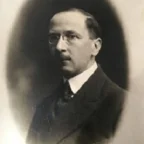
Toesca, Pietro
Pietra Ligure, 12 July 1877 – Rome, 9 March 1962
Giovanni Pietro Toesca was one of the greatest Italian medieval art historians of the twentieth century, whose work laid the methodological foundations of the discipline for generations of scholars. Born in Pietra Ligure, Liguria, to a noble family originally from Saorgio, he was orphaned at the age of twelve. He died in Rome on 9 March 1962 after dedicating over six decades to research, philological cataloging, and the critical evaluation of a vast body of artworks.
Toesca was trained in Rome under the guidance of Adolfo Venturi, the patriarch of Italian art history, of whom he became the most worthy successor in the teaching of medieval and modern art history. In 1905, he began his career as a lecturer at the Scientific-Literary Academy of Milan, and in 1907 he was appointed to the newly established chair of Art History at the University of Turin. These Turin years were extraordinarily productive: in 1908 he published a seminal essay in L'Arte on fourteenth- and fifteenth-century Italian gold-leaf stained glass with graffiti, and in 1909 he identified the illuminator Francesco Marmitta as the creator of Domenico Della Rovere's Missal.
In 1912, La pittura e la miniatura nella Lombardia fino alla metà del Quattrocento was published, a work that represented the first systematic attempt to reconstruct the landscape of Lombard figurative art from the Middle Ages onward and established its significance on a European scale. From May 1912 to December 1913, he also served on the Board of Directors of the Civic Museum of Turin, strengthening his ties with the city's cultural institutions.
In 1913, the first issue of the monumental Storia dell'arte italiana was published. Its first volume, Il Medioevo, would be completed in 1927 after years of uninterrupted research. The work became a central reference for the study of Italian medieval art and remained one of the most influential syntheses in twentieth-century historiography.
In 1914, Toesca moved to Florence, where he formed a deep intellectual friendship with Bernard Berenson, sharing the method of direct stylistic analysis of works. This Florentine phase strengthened his confidence in saper vedere, the ability to observe the distinctive stylistic characteristics of a work directly, as an indispensable foundation of art history. In 1926, he moved permanently to Rome, where he succeeded Venturi as professor of Medieval and Modern Art History at La Sapienza, concluding his teaching career in 1948.
Toesca's method was based on rigorous philological analysis of styles, combined with close visual observation. He theorized this approach in two articles published in the Annali della istruzione media: Una lezione su Giotto (1929) and Saper vedere (1932). In these texts, rare examples of explicit methodological reflection, he argued that understanding the distinctive stylistic qualities of a work constitutes the true foundation of the discipline.
He also made continuous and thoughtful use of photography as a tool for analyzing and documenting artworks, anticipating practices that would later become standard in art-historical research. This integration of direct viewing, philology, and visual documentation was one of the strongest features of his method.
In addition to university teaching, Toesca held institutional roles of the highest order. From 1929 to 1937, he served as director of the History of Medieval and Modern Art section of the Treccani Enciclopedia Italiana, leaving a lasting methodological imprint on the treatment of medieval artists. In 1939, he joined the Technical Council of the Central Institute for Restoration, helping to define scientific criteria for restoration in Italy.
From 1944 to 1952, he served as president of the National Institute of Archaeology and Art History (INASA) in Rome, guiding the institution through the difficult postwar years and returning it to its headquarters at Palazzo Venezia in 1945. His chair in Rome was also an extraordinary breeding ground for talent.
Among his most illustrious students were Roberto Longhi, Federico Zeri, Giulio Carlo Argan, Ernst Kitzinger, Carlo Bertelli, Sergio Bettini, Ferdinando Bologna, and Giovanni Carandente. Roberto Longhi, destined to become the most influential art critic of postwar Italy, took his first steps under Toesca's guidance, though he later developed a more dynamic and literary critical approach than his mentor's philological sobriety.
Toesca's definitive masterpiece remains the two-volume Storia dell'arte italiana. The first volume, Il Medioevo (1913-1927), covers Italian art from its Christian origins through the thirteenth century, while the second, Il Trecento (1951), resumes the discussion from the age of Giotto and Duccio. Also central are Monumenti e studi per la storia della miniatura italiana (1929) and La pittura fiorentina del Trecento (1929), testifying to his specific and lasting influence on the study of manuscript illumination and Trecento painting.
Toesca married Elena Berti (1900-1967), also an art historian and author of numerous essays; they had one daughter, Ilaria Toesca, who followed in her parents' footsteps. From 1946, he was a national member of the Accademia dei Lincei, the highest academic honor in Italy. Critics have described him as an example of exemplary moral consistency as both a teacher and a historian, qualities that made him not only a rigorous scholar but also a master in the fullest sense of the word.
In his Storia dell'arte italiana (1927, p. 41) he proposed, as the restoration catalogue of the Sterbini Diptych reports, to restrict the author of the diptych to a Roman milieu.
Tolaini, Emilio
Pisa, 1923 – 2012
Emilio Tolaini was a historian of Pisan architecture and urban form, and by training and temperament also a painter, printmaker and graphic designer. He collaborated in 1946 on the exhibition of Pisan Trecento sculpture and took his degree at the University of Pisa in 1949 under the art historian Matteo Marangoni. After five years in Paris attached to the cultural services of the Italian Embassy, he taught art history from 1956 in the artistic institutes and, from 1975 to 1992, at the Accademia di Belle Arti of Florence.
The book that established him was Forma Pisarum. Storia urbanistica della città di Pisa: problemi e ricerche, published by Nistri-Lischi in 1967 and reprinted in anastatic facsimile in 2023. (Some sources date the first edition to 1968.) It reconstructs the physical history of the city from antiquity to the twentieth century by holding together documentary, topographical, toponymic and linguistic evidence, and it gave Pisa something it had not previously possessed: an exact account of where its history had happened. Its influence on Pisan civic self-understanding has been out of proportion to the size of its readership, and it remains the frame within which the siting of the Piazza del Duomo at the north-western edge of the walled city is discussed.
His late Campo Santo di Pisa. Progetto e cantiere. La forma architettonica e la decorazione plastica (Pisa: Edizioni ETS, 2008) turned the same method on the cemetery itself, treating it as a building site rather than as a gallery: the sequence of projects, the abandonment of the first walled enclosure with its church of the Trinity, the revised cloistered scheme, the architectural articulation of the galleries and the carved decoration are followed as problems of design and execution. It is one of the works on which the critical bibliography of the Camposanto now rests. He was a persistent and often severe commentator on the modern planning of his city, and a green space in Pisa was named for him after his death.
Tomei, Alessandro
active late 20th - 21st century
Alessandro Tomei studied art history in Rome and Paris, taking his degree in Letters at the University of Rome with a thesis on the medieval painter and mosaicist Jacopo Torriti. He was a confirmed researcher at the Institute of Art History of the Faculty of Letters at Rome's Sapienza from 1981 to 1993, then associate professor of medieval art history at the Università "G. d'Annunzio" of Chieti from 1993 to 2000, when he was promoted to full professor of medieval art history, a post he held until his retirement in November 2022. He directed the university's Department of Medieval and Modern Studies from 2006 to 2012 and later coordinated its doctoral programme in cultural heritage and languages (2015-2018), and also taught medieval art history and the history of manuscript illumination at Rome Tre and at L'Aquila.
Tomei's research centres on central Italian painting and manuscript illumination of the thirteenth and fourteenth centuries, and on Roman Duecento painting and mosaic in particular. His monograph Iacobus Torriti pictor. Una vicenda figurativa del tardo Duecento romano (Argos, Rome, 1990) remains the standard study of the mosaicist of the apses of San Giovanni in Laterano and Santa Maria Maggiore, and his Pietro Cavallini (Silvana Editoriale, Milan, 2000) was the first monograph on that painter in over two decades, incorporating the results of intervening restorations. From 1981 to 1999 he was a contributing author and editor for the Istituto dell'Enciclopedia Italiana Treccani's Enciclopedia dell'arte medievale, writing, among other entries, the entry on Pietro Cavallini. He curated the exhibitions Fragmenta picta (Rome, 1989), Le Biccherne di Siena (2002-2003), and Giotto e il Trecento (Rome, 2009) — the last drawing more than 200,000 visitors — and has served on the editorial or scientific committees of Arte medievale, Rivista d'arte, Art e Dossier, and the Galleria dell'Accademia in Florence.
For Assisi, Tomei edited the volume Santa Chiara in Assisi. Architettura e decorazione (2002), commissioned in the wake of the 1997 Umbria earthquake to accompany the restoration of the basilica's frescoes and panels; despite its title, the volume is overwhelmingly concerned with the painted decoration rather than the architecture already treated by Hans-Rudolf Meier. In it Tomei argued for a substantially Giottesque paternity for much of the right-transept decoration and proposed the pontificate of Nicholas IV (1288-1292) as a terminus post quem for the Old Testament cycle in the transept, establishing the volume as the standard modern account of the basilica's post-earthquake decorative programme.
Torriti, Piero
Montisi, 1924 – Siena, 2015
Italian art historian, critic, and museum professional who played a central role in the study and stewardship of Sienese art throughout the second half of the twentieth century. Born in the hill town of Montisi in the Sienese countryside, he developed an enduring sensitivity to local artistic traditions and devotional imagery. He studied art history at the University of Florence under Mario Salmi, receiving a formation grounded in connoisseurship, contextual analysis, and the critical use of archival sources. Entering the state art-heritage administration after graduation, he eventually became Superintendent of the Soprintendenza per i Beni Artistici e Storici for the provinces of Siena and Grosseto, a role that placed him at the intersection of conservation policy, museum management, and scholarly research. As a scholar, Torriti focused especially on Sienese painting and sculpture from the Duecento to the early modern period, studying artists such as Duccio, Jacopo della Quercia, and the Lorenzetti circle, while also addressing the devotional culture, architecture, and urban image of Siena and its territory, including Pienza and the impact of the Renaissance papacy on local commissions. He curated important exhibitions and restorations, edited catalogues that combined archival documentation, technical analysis, and iconographic discussion, and wrote widely used books and guides such as Siena, storia e capolavori and Arte a Siena, making Sienese art accessible to a broad public without sacrificing scholarly precision. Through his work as superintendent, scholar, and popularizer, he helped define the modern understanding of Sienese art and left a lasting legacy in both academic and museum circles.
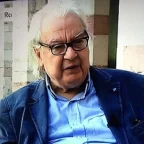
Toscano, Bruno
Spoleto, 9 April 1930-
Bruno Toscano is one of the leading Italian art historians of the second half of the twentieth century, as well as a painter, and he has played a fundamental role in the study and preservation of historical and artistic heritage, particularly in Umbria and Italy.
Born in Spoleto in 1930, Toscano initially trained as a painter and, beginning in the 1950s, participated in exhibitions in various Italian cities, joining the so-called "Spoleto Group" within the Informal art movement. He was among the promoters of the "Spoleto Prize" (1953-1963), which helped make the city one of the most vibrant centers of postwar contemporary art, fostering a close dialogue between artistic practice and historical-critical reflection. Parallel to his early work as a painter, he enrolled in the Faculty of Letters at La Sapienza University in Rome and in 1952 published his first study on fourteenth-century Umbrian painting, an early sign of a structural interest in medieval art.
After his formative years, Toscano embarked on a long academic career, becoming a full professor of the History of Art Criticism at the Faculty of Education at La Sapienza and later of the History of Modern Art at the same university. From 1992 to 2002, he taught Modern Art History at Roma Tre University, where he directed the Department of Historical-Artistic, Archaeological, and Conservation Studies, helping to define a strongly interdisciplinary approach to heritage studies. Institutional recognition of his work is reflected in the President of the Republic's Gold Medal for Cultural Merit (2003) and in his appointment, in 2016, as a member of the Scientific Committee of the National Gallery of Umbria.
Toscano's extensive and multifaceted scholarly output spans medieval, modern, and contemporary art history, with studies published in Italian and international books and journals. One of the cornerstones of his work is the definition of criteria for a systematic understanding of Italy's historical and artistic heritage, including not only preserved works but also those lost or stolen, and emphasizing the relationship between artists, patrons, and local contexts. His research on the relationship between museums and their local contexts and on artistic geography aims to reconcile the formal autonomy of the artwork with the multiple cultural, social, and material contexts in which it is created and transmitted, making art history an explicitly critical and problematic discipline.
Alongside art-historical research in the strict sense, Toscano has dedicated numerous contributions to restoration, museology, and heritage policy. In programmatic texts and in works such as the Vademecum for an Art History That Does Not Exist, he proposes tools for interpreting the Italian reality based on awareness of the gaps, dispersions, and stratifications of heritage, calling for the systematic integration of documentation, works in situ, and museum collections. In this context, the museum is never conceived as an isolated entity, but as a node in a network of relationships with the territory, urban and rural memory, and cultural landscapes, particularly in a "laboratory region" such as Umbria.
The relationship with Umbria, his homeland, is a constant in both his artistic practice and his historical-critical reflection, from the pioneering Spoleto in pietre (1963) to his most recent interventions on the city and landscape. Toscano is often presented as a leading figure in the awareness of Umbrian heritage, capable of combining cultural activism, scientific research, and educational activities, and of engaging with local authorities, heritage agencies, and museum institutions. His participation, as a member of the scientific committee, at the National Gallery of Umbria reaffirms this role as a mediator between local communities and the national historical-artistic tradition.
Although he became best known as an art historian, Toscano did not abandon painting, as evidenced by his watercolor exhibitions from 2013 to 2018, accompanied by catalogues that intertwine personal memory, landscape observation, and a critical awareness of the figurative tradition. In these works, that dual identity of artist and scholar emerges, in which the problems of seeing, of constructing space, and of the relationship with historical time are put to the test directly in practice. The same attention to the distinction and dialogue between the preserved and the lost, central to his studies, becomes in painting a meditation on the fragment, on urban or natural detail, and on light, in continuity with his long-standing reflection on Umbrian landscapes.
Tronzo, William
active late 20th-21st century
William Tronzo received his Ph.D. in the History of Art and Architecture from Harvard University (1973-1982) and his undergraduate degree in History from Haverford College (1969-1973). After completing his doctorate he taught at Johns Hopkins University, Duke University, and Tulane University before settling at the University of California, San Diego (UCSD), where he currently holds the position of Senior Teaching Professor in the History of Art, Architecture and Landscape, and serves as Director of European Studies.
Tronzo has held research fellowships and appointments at many of the most prestigious institutions in art-historical scholarship, including the American Academy in Rome, Dumbarton Oaks in Washington, the Institute for Advanced Study in Princeton, the Center for Advanced Study in the Visual Arts (CASVA) at the National Gallery of Art, the Bibliotheca Hertziana in Rome, the École des hautes études en sciences sociales in Paris, the Huntington Library, the Clark Art Institute, and the Stanford Humanities Center. This range of affiliations reflects the interdisciplinary breadth of his work across Byzantine studies, medieval Latin history, Islamic art history, and Renaissance studies.
He is also a member of the Collegio dei Docenti del Dottorato di Ricerca in the Department of Humanistic Studies at Università degli Studi Roma Tre, consolidating his ongoing connection to Italian academic life.
Tronzo's most celebrated and controversial contribution to medieval art history is his monograph The Cultures of His Kingdom: Roger II and the Cappella Palatina in Palermo (Princeton University Press, 1997). The study advanced a major reinterpretation of the Cappella Palatina, arguing that the building in its present form reflects two distinct planning projects with divergent aims in the twelfth century, rather than a single unified program of multicultural display. This thesis generated sustained debate because it challenged the long-dominant narrative of Norman Sicilian harmony and instead emphasized political tension and competing ideological agendas in the chapel's formation. The book remains a standard reference for scholarship on the monument.
His interpretation emphasizes not only decoration, but also patronage process: who commissioned what, in what sequence, and for what political purpose. This focus reflects his broader interest in the relationship between visual culture and power in the medieval world.
Beyond the Cappella Palatina, Tronzo has pursued sustained research on what he calls the hybrid culture of the Italian South, the multicultural civilization of Sicily and southern Italy from the Norman period through the court of Frederick II and into the early Renaissance. He has co-directed major projects on buildings, cities, and landscapes of the later medieval Italian South funded by the National Endowment for the Humanities (NEH), as well as a three-year program of research, seminars, and conferences on the medieval Mediterranean at the American Academy in Rome, funded by the Getty Foundation.
His monograph Petrarch's Two Gardens: Landscape and the Image of Movement (Italica Press, 2014) extends this inquiry into the early Renaissance, with a significant opening chapter on La Zisa and La Cuba in Palermo, surviving Fatimid-Norman garden pavilions of the twelfth century. Through these sites, Tronzo explores landscape as a social network and as a mediator of images. The study illustrates his characteristic method: beginning with a specific object or place to open broader questions of cultural exchange, representation, and the movement of ideas across time and space.
He has also published extensively on historiography and method in art history, examining how the discipline constructs narrative and what assumptions underlie scholarly judgment. For research on the art of the twelfth-century Mediterranean, including Monreale and the Cappella Palatina, Fatimid elements in Norman art, and the interplay of Byzantine, Arab, and Latin visual traditions, Tronzo is essential reading. If Jeremy Johns approaches Norman Sicily primarily through documentary and archaeological evidence grounded in Islamic studies, Tronzo approaches it through formal analysis and the interpretation of buildings and images; together, their work offers complementary lenses on Roger II's kingdom and its artistic legacy.
Tsigaridas, Euthymios
active late 20th–21st century
Euthymios Tsigaridas is Professor of Christian Art and Architecture at the Aristotle University of Thessaloniki. Over a career spanning more than four decades, he has established himself as the foremost living authority on the art of Mount Athos — its mosaics, wall paintings, and portable icons — and one of the most productive scholars of Byzantine and post-Byzantine painting in the Greek-speaking world. His position at the Aristotle University of Thessaloniki, the principal academic institution of northern Greece and the natural intellectual capital of Byzantine Macedonia, has given him both privileged access to the monuments of the Holy Mountain and the institutional standing to produce the monumental publications that the field requires. Throughout his career he has collaborated closely with Dr. Katia Loverdou-Tsigarida, whose expertise in Byzantine metalwork, revetments, and minor arts complements his own focus on monumental painting and portable icons.
Tsigaridas's scholarly career opens with a study of one of the most significant and enigmatic monuments of early Christian and Byzantine Thessaloniki. His monograph Latomou Monastery (The Church of Hosios David), published by the Institute for Balkan Studies in Thessaloniki in 1988 and translated into English by D. Whitehouse, remains the primary scholarly reference for this UNESCO World Heritage monument. The church of Hosios David — the former katholikon of the Latomos Monastery — preserves in its apse one of the most extraordinary mosaics of the early Christian period: a fifth-century Theophania depicting a youthful Christ in a radiant mandorla surrounded by the symbols of the four evangelists and flanked by the prophets Ezekiel and Habakkuk. The mosaic was concealed during the Ottoman occupation of Thessaloniki, rediscovered in 1921, and has since attracted intense scholarly attention for its iconographic programme, its unusual youthful typology of Christ, and its relationship to the broader tradition of apsidal decoration in the early Christian East. Tsigaridas's monograph was the first comprehensive study to integrate the architectural analysis, the mosaic's iconography, and its later medieval fresco decoration into a single scholarly treatment, and it established the interpretive framework within which all subsequent work on the monument has operated. The same year saw the publication of his essay "Monumental Painting in Greek Macedonia during the 15th Century" in the catalogue of the landmark exhibition Holy Image, Holy Space: Icons and Frescoes from Greece (Athens, 1988), addressing a period relatively neglected by Byzantine scholarship in favour of the more celebrated fourteenth-century Palaiologan Renaissance and seeking to characterise the distinct qualities of Macedonian monumental painting in the century of Ottoman conquest and consolidation.
The centrepiece of Tsigaridas's scholarly output on Mount Athos is his sustained engagement with Vatopedi — the second largest and one of the oldest and most richly endowed of the twenty ruling monasteries of the Holy Mountain. On the Holy Mountain, mural mosaics have survived only in the katholikon of the Vatopaidi Monastery; these mosaics, limited in extent but of high artistic quality, were not well known because of their poor state of preservation, and no special study was devoted to them until Tsigaridas filled the gap in 1994. The surviving mosaics comprise four separate subjects — two with the Annunciation, one with the Deisis, and one with a bust of St. Nicholas — belonging to three different periods. His analysis of their date, iconographic programme, and stylistic relationships with Constantinopolitan and Thessalonian workshops addressed a lacuna that Xyngopoulos had identified decades earlier but never fully resolved. "The Mosaics and the Byzantine Wall Paintings," published in the first volume of The Holy and the Great Monastery of Vatopaidi: Tradition, History, Art (Mount Athos, 1998), extended this analysis to the complete ensemble of wall paintings in the monastic complex, including the early fourteenth-century frescoes of the exonarthex of the katholikon. "Portable Icons," published in volume II of Moni Vatopediou in 1996, runs to nearly four hundred pages and constitutes a comprehensive art-historical catalogue of all the portable icons in the Vatopedi collection, proposing attributions to Constantinople, Thessaloniki, or Athos workshops as appropriate.
The magnum opus of this sustained engagement with Vatopedi came in 2007 with Holy Great Monastery of Vatopaidi: Byzantine Icons and Revetments (Monastery of Vatopaidi, 447 pp.), co-authored with Dr. Katia Loverdou-Tsigarida. The first part, written by Tsigaridas, covers the portable icons — describing each work, characterising its style and iconography, and concluding in each case on its date and the probable location where the artist worked, generally choosing between Athos, Constantinople, or Thessaloniki. Robin Cormack, reviewing the volume, described it as a highly important discussion of understudied materials, noting that it offers new information on the history of the Byzantine icon from the thirteenth century onwards — and in particular the fourteenth century — comparable in value to what the progressive publication of the Sinai icons has achieved for that collection. Among the most consequential findings is Tsigaridas's analysis of two royal doors from the monastery's library tower, which he concludes were made by an early fifteenth-century workshop in Constantinople and whose influence on the Russian artist Andrei Rublev he demonstrates — a significant contribution to the question of how late Byzantine artistic models were transmitted across Orthodox Christendom in the final decades before the fall of Constantinople.
Tsigaridas is the principal art-historical authority on the frescoes of the Protaton Church at Karyes — the oldest and most venerated church on Mount Athos and the site of the supreme achievement of the Macedonian School of Byzantine painting. His characterisation of the Panselinos style — the monumentality of the compositions, the autonomy and self-sufficiency of the figures, the delicacy of the colours, and the revival of themes from classical antiquity — established the evaluative vocabulary that all subsequent scholarship has engaged with. He wrote the museological study of the exhibition "Manuel Panselinos: From the Holy Church of the Protaton," organised by the Mount Athos Center in Thessaloniki in April–June 2003 as part of the Cultural Olympics, which presented for the first time an accurate reconstruction of the painted decoration of the Protaton and a second section showing the work attributed to Panselinos including the frescoes of the Chapel of St. Euthymios in the Church of St. Demetrios in Thessaloniki. His analytical passage characterising the style of the Protaton paintings — the olive green shadows, the warm ochre of the flesh, the linear white highlights above the eyebrows, the red parallel lines on the bridge of the nose, the schematisation of the sternum at the base of the neck, the fleshy half-open lips, and the reflective gaze — has served as a reference point in all subsequent attribution debates around Astrapas, Panselinos, and the Macedonian School. He also served as one of the principal contributors to the 700-page catalogue of the 1997 Treasures of Mount Athos exhibition in Thessaloniki, providing the scholarly apparatus for the icon sections and the presentation of key artefacts drawn from the collections of multiple monasteries — the first time that many of these objects had been publicly exhibited outside the Holy Mountain.
Euthymios Tsigaridas occupies a position in Byzantine art history that is, in the most precise sense, irreplaceable: no other scholar has devoted equivalent sustained attention to the art of Mount Athos across its full chronological range, from the early Christian period through the Palaiologan Renaissance to the post-Byzantine era, and across its full material spectrum, from mural mosaics and monumental frescoes to portable icons and metalwork revetments. His monograph on Hosios David, his comprehensive studies of the Vatopedi collections, and his authoritative texts on the Panselinos frescoes of the Protaton together constitute a scholarly corpus without which the understanding of Byzantine art in Macedonia would be fundamentally impoverished. He represents, in the tradition of Xyngopoulos and Chatzidakis before him, the continuation of a distinctly Greek scholarly commitment to the systematic documentation and interpretation of the sacred art of the Orthodox world.
Tuchman, Barbara W.
New York City, 30 January 1912 - Greenwich, 6 February 1989
Barbara W. Tuchman (1912-1989)
Barbara Wertheim Tuchman was an American historian and journalist, twice winner of the Pulitzer Prize, and perhaps the most widely read narrative historian of the second half of the twentieth century. She held no doctorate and never taught in a university, yet she shaped the popular historical imagination of her era more powerfully than most tenured medievalists, a fact of consequence for anyone writing about the fourteenth century today, since her A Distant Mirror (1978) remains, for a very large general readership, the book through which the Trecento is understood.
Born in New York City on 30 January 1912, she was the second of three daughters of the banker Maurice Wertheim and Alma Morgenthau. The family was wealthy, cultivated, and deeply engaged in public life. Her father founded the investment bank Wertheim & Co., owned The Nation, was a founder of the Theatre Guild, and was a serious art collector; his collection of Impressionist and Post-Impressionist paintings went to the Fogg Museum at Harvard. Her mother founded the Walden School, New York's first progressive school, which Barbara attended, and was a patron of contemporary American music.
Her maternal grandfather was Henry Morgenthau Sr., Woodrow Wilson's ambassador to the Ottoman Empire; her uncle Henry Morgenthau Jr. was Secretary of the Treasury under Franklin Roosevelt. She was, by her own description, a voracious reader from the age of six, formed early by G. A. Henty, Lucy Fitch Perkins, and the historical novels of Alexandre Dumas.
One biographical curiosity she planted quietly in her own work: as a two-year-old travelling with her grandfather's family, she was aboard a steamer that reached Constantinople in August 1914 having witnessed the British pursuit of the German warships Goeben and Breslau. In The Guns of August she describes the arrival of "the daughter, son-in-law and three grandchildren of the American ambassador" without disclosing that one of the grandchildren was herself, a detail she confirmed only later in Practicing History.
She took her B.A. at Radcliffe College in 1933, in history and literature, and never pursued a graduate degree. She was unembarrassed about this and came to argue that the absence of doctoral training had freed her: the discipline of writing for readers rather than for examiners was, in her account, a methodological advantage rather than a deficiency.
After graduating she accompanied her grandfather to the World Economic Conference in London, then worked as a researcher at the American Council of the Institute of Pacific Relations. In 1934-35 she spent a year in Tokyo, a month in Peking, and returned via the Trans-Siberian Railway, Moscow, and Paris. She wrote for Foreign Affairs at twenty-four. As a correspondent for The Nation, the magazine her father owned, she reported from Valencia and Madrid on the Spanish Civil War, sympathetic to the Republican cause. Her first book, The Lost British Policy: Britain and Spain since 1700 (1938), grew out of that work.
In 1940 she married Lester R. Tuchman (1904-1997), an internist and professor of clinical medicine at Mount Sinai. They had three daughters, Lucy, Jessica, and Alma; Jessica Mathews later became president of the Carnegie Endowment for International Peace. During the war she worked on the Far East desk of the Office of War Information. She then spent roughly a decade raising her children while researching what became Bible and Sword: England and Palestine from the Bronze Age to Balfour (1956), after which she produced a book about every four years for the rest of her life.
Major works
- Bible and Sword (1956)
- The Zimmermann Telegram (1958)
- The Guns of August (1962), the prelude to and first month of the First World War. Pulitzer Prize, 1963. Famously read by John F. Kennedy, and often credited with informing his caution during the Cuban Missile Crisis.
- The Proud Tower: A Portrait of the World Before the War, 1890-1914 (1966)
- Stilwell and the American Experience in China, 1911-45 (1970/71). Pulitzer Prize, 1972.
- Notes from China (1972)
- A Distant Mirror: The Calamitous 14th Century (1978)
- Practicing History: Selected Essays (1981)
- The March of Folly: From Troy to Vietnam (1984)
- The First Salute (1988)
Tuchman practised history as a literary art. She favoured explanatory narrative over archival discovery, and she was explicit that she did not consider it her task to unearth new documents; her gift lay in the shaping of known material into story. She insisted that "the material must precede the thesis," disclaimed any philosophy of history, and set as the historian's first duty staying within the evidence and refusing to judge past cultures by hindsight. One assessment often quoted against her, that she was a layperson's historian rather than a historian's historian, she would probably not have entirely disputed.
In the introduction to A Distant Mirror she formulated the principle that has outlived most of the book's specific claims: the fact of being reported multiplies the apparent extent of any deplorable development several-fold. Disaster looks continuous and ubiquitous in the record because the record is made of disasters; the persistence of ordinary life is systematically underrepresented. This is a genuinely useful corrective, and it applies as much to reading chronicles as to reading newspapers.
Tuchman spent roughly seven years on A Distant Mirror. Her organising device was the life of Enguerrand VII de Coucy (1340-1397), a French nobleman whose lifespan neatly bracketed the century, whose marriage to Isabella, eldest daughter of Edward III, gave him a foot in both kingdoms, and who was present at or near most of the era's decisive events, dying in Ottoman captivity after the catastrophe at Nicopolis. Around him she assembled the Hundred Years' War, the Black Death, the Papal Schism, the free companies, the Jacquerie and other risings, persecution of Jews, and, unusually for a popular history of the period, the Little Ice Age and the material conditions of every social class.
The title declares the thesis: the fourteenth century as a mirror of the twentieth, a violent and disordered age legible to a readership living through Vietnam.
Popular reception was enthusiastic; scholarly reception was not. The main lines of criticism are worth knowing precisely, because they bear on how the book can responsibly be cited:
- Charles T. Wood, reviewing in Speculum, allowed her narrative power but judged the book dated and old-fashioned in conception, and argued that it was shaped by American political preoccupations of the late 1960s and early 1970s, that is, the mirror distorted in the direction its maker was facing.
- Bernard S. Bachrach (1979) objected to her dependence on secondary literature and on old translations of the medieval narrative sources rather than archival work, and to the thinness of the critical apparatus and gaps in the bibliography.
- David Donald, in Commentary, made the structural objection: too little is known about Coucy to carry the weight placed on him. No authentic likeness survives; almost nothing of his words or opinions remains; the sole preserved detail of his appearance is that he went bald. Tuchman is therefore repeatedly driven to constructions of the he doubtless saw / he may have known variety. Worse, because Coucy's actual role in events was consistently secondary, sustaining him as protagonist forced her to narrate the whole Hundred Years' War at a scale disproportionate to her subject.
Underlying all three is her heavy reliance on Froissart, a chronicler whose flattery, chronological looseness, and aristocratic sympathies are precisely what modern scholarship has learned to discount, an irony, given that Tuchman's own Law describes the problem exactly.
A Distant Mirror is not a source. It is a reception-history document: the single most important vector by which the "calamitous fourteenth century" (plague, schism, chivalric collapse) entered the general imagination in the English-speaking world. When a museum label, a documentary, or a lay reader treats the Trecento as an age of catastrophe whose art is best read as a response to trauma, Tuchman is very often the unacknowledged ancestor of that framing.
For work on Italian art this matters in a specific way. The "calamitous" model is French- and northern-centred, built on the Hundred Years' War, and it fits Italy badly: Balduccio was carving in Milan for the Visconti in the 1330s and 1340s, in a peninsula whose crisis chronology, patronage structures, and civic institutions ran on different rhythms. Millard Meiss's Painting in Florence and Siena after the Black Death (1951) had already proposed a trauma-driven reading of Italian art, and that thesis has been substantially contested since. Tuchman is useful to cite as evidence of how the century has been imagined; she is not useful as evidence of what happened in it.
Her Law, though, is worth keeping. Applied to Trecento sources, chronicles, obituaries, records of catastrophe, it is a sound warning that the archive over-reports rupture and under-reports the workshop that simply kept working.
She won the Pulitzer Prize for General Non-Fiction twice (1963, 1972) and the St. Louis Literary Award (1971), was elected a Fellow of the American Academy of Arts and Sciences (1978), and served as the first woman president of the American Academy of Arts and Letters. Her books were translated into some thirteen languages. A tower of Currier House at Harvard is named for her; a graduate paper prize in historical international relations carries her name.
She died in Greenwich, Connecticut, on 6 February 1989, of complications following a stroke. Her papers are at Yale University Library (Barbara Wertheim Tuchman papers, MS 574).
U
Unterkircher, Franz
St. Jakob in Defereggen, 29 September 1904 – Vienna, 28 January 1989
Franz Unterkircher was born on 29 September 1904 in St. Jakob in Defereggen, a remote village in the Defereggen valley of East Tyrol, then part of the Austrian Empire. He attended the Gymnasium in Brixen from 1914 to 1922 — schooling in that ancient episcopal city which had been Austrian territory when he began his studies but became Italian under the Treaty of Saint-Germain-en-Laye in 1919, a transition that unfolded around him during his secondary education. He then studied scholastic philosophy and theology at the University of Innsbruck, completing the doctorate in theology in 1932. He died on 28 January 1989 in Vienna, at the age of eighty-four; an obituary and assessment was published the following year by Eva Irblich in Codices manuscripti 15 (1990), and his estate is held in the inventory of scholarly and cultural papers at the ÖNB.
The theological formation at Innsbruck — an institution with deep Jesuit roots — placed Unterkircher within the tradition of scholastic method, a rigorous training in textual analysis and deep familiarity with the liturgical and devotional literature of the medieval Church. These foundations would prove directly serviceable to his later work on liturgical manuscripts, Books of Hours, and Carolingian sacramentaries.
In 1939 he was forcibly retired from his post for political reasons. Austria had been annexed by the Third Reich in March 1938, and the Nazi regime's systematic dismantling of Catholic educational institutions and the suppression of clerical academic life followed swiftly. Rather than retreating from scholarly life, Unterkircher pivoted with striking intellectual energy: he studied art history at the University of Vienna, completing a second doctorate in 1942 with the dissertation Der Sinn der deutschen Doppelchöre (The Meaning of German Double Choirs), a study of the structural and symbolic function of the double-choir arrangement in medieval German ecclesiastical architecture that bridges his theological training and his emerging art-historical identity, treating architectural form as liturgical expression. From 1943 he worked at the Bundesdenkmalamt — the Federal Monuments Office responsible for the documentation and protection of Austria's cultural heritage — before taking a position at the library of the Academy of Fine Arts in Vienna.
In 1947 Unterkircher moved to the Österreichische Nationalbibliothek, whose manuscript collection he directed from 1950 to 1969. The Handschriftensammlung of the ÖNB is one of the most important repositories of medieval manuscripts in the world, holding thousands of codices ranging from late antique papyri and early medieval Gospel books to the great Flemish illuminated masterpieces of the Burgundian court. Unterkircher's nineteen years as its head produced two parallel bodies of work: a systematic programme of scholarly cataloguing, and a sustained effort to make the collection's greatest treasures accessible through facsimile editions.
The most structurally significant of Unterkircher's contributions to the scholarly infrastructure of manuscript studies was his leadership of the Katalog der abendländischen Handschriften der Österreichischen Nationalbibliothek — Series nova, produced jointly with Otto Mazal between 1963 and 1997, which constitutes the authoritative finding guide for researchers working with the collection. Parallel to this, Unterkircher directed and largely authored the Austrian contribution to the international series of catalogues of dated Latin-script manuscripts. The volumes Die datierten Handschriften der Österreichischen Nationalbibliothek appeared in four parts between 1969 and 1976, covering manuscripts up to 1400, 1401–1450, 1451–1500, and 1501–1600 respectively, each with a text volume and a plates volume. He then extended the series to the Viennese collections outside the ÖNB: Die datierten Handschriften in Wien außerhalb der Österreichischen Nationalbibliothek bis zum Jahre 1600, with catalogue descriptions by Heidelinde Horninger and Franz Lackner, appeared in 1981 in two parts.
Catalogues of dated manuscripts occupy a peculiar but essential position in the discipline. By identifying every manuscript that carries an explicit date — whether in a colophon, a dedication, a calendar entry, or an internal reference — they provide the fixed points against which undated manuscripts can be calibrated. In the method pioneered by E. A. Lowe and carried forward by Bernhard Bischoff, dated exemplars are the anchors of palaeographic chronology. Unterkircher's contribution to this framework for the Austrian collections gave subsequent researchers the chronological armature needed for localising and dating the thousands of manuscripts in the ÖNB and the collections surrounding it.
Alongside the technical cataloguing work, Unterkircher developed an equally significant role as interpreter and editor of the ÖNB's greatest treasures, working closely with the Akademische Druck- und Verlagsanstalt (ADEVA) in Graz — the publisher that, under his intellectual guidance and that of his colleagues, established itself as the world's leading producer of scholarly facsimile editions of illuminated manuscripts. His introductory survey Abendländische Buchmalerei: Miniaturen aus Handschriften der Österreichischen Nationalbibliothek (Vienna, 1966), published in English translation by Thames & Hudson in 1967 as European Illuminated Manuscripts in the Austrian National Library, presented sixty full-colour plates with discussion of illumination from the eighth century to the late sixteenth, and served as the standard introduction to the collection for decades.
Among his most celebrated editorial achievements was his contribution to the facsimile edition of the Hours of Mary of Burgundy (Codex Vindobonensis 1857), produced by ADEVA in 1969 with a commentary volume by Unterkircher and Antoine de Schryver. Completed in Flanders around 1477, probably for Mary, ruler of the Burgundian Netherlands, the manuscript contains 187 folios with 24 calendar roundels, 20 full-page miniatures, and 16 quarter-page illustrations, its foremost illuminator being the artist known as the Master of Mary of Burgundy. It has been described as among the most important works of art made in the late Middle Ages. Unterkircher's editorial work placed this pinnacle of Flemish manuscript illumination before the scholarly community in a form that could be studied independently of the fragile original.
He devoted comparable attention to the Livre du cœur d'amour épris (Codex Vindobonensis 2597) by King René of Anjou, whose sixteen extraordinary miniatures are among the most poetically conceived and technically accomplished paintings in any surviving manuscript. His presentation of the miniatures, published as Vom liebentbrannten Herzen (ADEVA, Graz, 1975) and simultaneously in a French edition with Daniel Poirion and Marie-Thérèse Gousset, introduced the allegorical imagery of this late medieval masterpiece — with its nocturnal tonalities, fantastic landscapes, and personifications of the inner life — to a wide international readership. His study of the Drogo Sacramentary (Paris, Bibliothèque nationale, MS lat. 9428), published in 1977 as Zur Ikonographie und Liturgie des Drogo-Sakramentars, brought his theological formation directly to bear on a monument of Carolingian book illumination — written and painted around 850 AD for the personal use of Drogo, Bishop of Metz, a son of Charlemagne — uniting iconographic analysis with liturgical exegesis in a way that few scholars, lacking his combination of theological and art-historical training, could have achieved. In 1983 he published Maximilian I: Ein kaiserlicher Auftraggeber illustrierter Handschriften, a study of Emperor Maximilian I as a commissioner of illustrated manuscripts. His final book, Tiere, Glaube, Aberglaube: Die schönsten Miniaturen aus dem Bestiarium (Graz, 1986), drew on the bestiary tradition in medieval manuscript illumination, tracing the intersection of natural history, theology, and visual imagination in one of the most characteristic genres of medieval manuscript art.
Unterkircher's career traces a remarkable arc across the disruptions of the twentieth century — from a Tyrolean theological education to forced removal under National Socialism, from a wartime pivot to art history to the postwar reconstruction of Austrian cultural institutions, and ultimately to the directorship of one of Europe's greatest manuscript repositories. What makes his trajectory unusual is not only its resilience but its coherence: the liturgical sensibility formed in Innsbruck, the architectural vision of his second doctorate, and the intense engagement with devotional manuscripts — Books of Hours, sacramentaries, bestiaries — all draw on the same formation. For the historian of illuminated manuscripts, his legacy operates on two complementary levels. The Katalog der datierten Handschriften provides the dateable chronological anchors on which manuscript scholarship depends, extending the international network of such catalogues to the Austrian collections. The facsimile editions — produced at a time when high-quality colour reproduction of complete manuscripts was technically ambitious and financially formidable — made the greatest treasures of the ÖNB, above all the Hours of Mary of Burgundy and the Cœur d'amour épris, permanently accessible to researchers who could not travel to Vienna. In both respects his work remains active and indispensable.
Ussher, James
Dublin, 4 January 1581 – Reigate, Surrey, 21 March 1656
James Ussher was Church of Ireland Archbishop of Armagh and Primate of All Ireland, and one of the most formidable scholars and book collectors of seventeenth-century Britain and Ireland. He is remembered today chiefly for his biblical chronology, but his contemporaries valued him at least as highly as a patristic textual critic and historian of the early British and Irish churches, and his personal library became, after his death, the founding acquisition of what is now the Library of Trinity College Dublin.
Ussher was born in Dublin on 4 January 1581, the son of Arland Ussher, a clerk in chancery, and Margaret Stanihurst, whose father James Stanihurst had been speaker of the Irish House of Commons; his brother Ambrose Ussher became a noted scholar of Arabic and Hebrew. James entered the newly founded Trinity College Dublin on 9 January 1594, at the age of thirteen, among the first cohort of students at an institution barely two years old. He took his B.A. by 1598 and his M.A. by 1600 or 1601, was elected a fellow, and was ordained deacon in 1602. In 1613 he married Phoebe Challoner, daughter of a former vice-provost of the college; their only child, Elizabeth, was born in 1619.
His ecclesiastical and academic career advanced together. He became Chancellor of St Patrick's Cathedral, Dublin, in 1605, and in 1607 was appointed Professor of Theological Controversies at Trinity, the university's senior chair in divinity. He was consecrated Bishop of Meath in 1621 and translated to the archbishopric of Armagh — the primatial see of the whole Irish church — in 1625, an office he held until his death thirty-one years later.
Ussher's scholarship pursued several distinct programmes at once. His Discourse of the Religion Anciently Professed by the Irish and British (1622, expanded 1631) argued that the early insular Church had held doctrines closer to the reformed than to the Roman position, a polemical thesis that gave the Church of Ireland an ancient pedigree independent of the papacy, and his Britannicarum Ecclesiarum Antiquitates (1639) was the most substantial history of the British churches produced to that date. In patristics his most durable achievement was his 1644 edition of the epistles of Ignatius of Antioch, in which he identified the shorter Middle Recension as the authentic corpus against the interpolated Long Recension that had circulated for centuries — a piece of textual criticism later vindicated in its essentials by nineteenth-century scholarship and still cited as a landmark in the history of the discipline.
It is on his chronological work that Ussher's wider fame rests. In Annales Veteris Testamenti (1650) and its continuation Annalium Pars Posterior (1654), he synthesised biblical genealogies with ancient Near Eastern and astronomical chronography to construct a continuous dated history of the world from Creation — placed at nightfall on the eve of 23 October 4004 BC — down to the fall of Jerusalem. The dates were later printed in the margins of many editions of the King James Bible, and "4004 BC" became, for generations of readers, effectively synonymous with the idea of biblical chronology itself, a popular afterlife that has obscured how the Annales was received in its own day: as a work of rigorous, up-to-date scholarship, drawing on the best available classical and Near Eastern sources, by a scholar whose command of the ancient chronographic literature was unmatched among his contemporaries.
The Irish Rebellion of October 1641 cost Ussher his revenues and much of his property in Ireland, and he never returned. Parliament voted him a pension of £400, and Charles I assigned him the income of the vacant see of Carlisle; from January 1642 he lived at royalist Oxford, then successively at Bristol, Cardiff and St Donat's Castle as the Civil War shifted around him, before settling in London in 1646 under the protection of Elizabeth, Dowager Countess of Peterborough. Parliament's abolition of episcopacy stripped him of the Carlisle income in October 1646, and he spent his final years as a preacher at Lincoln's Inn, a royalist bishop surviving on the goodwill of parliamentarian friends. He was present at the execution of Charles I in January 1649, watching from the Countess's house, and is said to have fainted before the axe fell.
Ussher died at the Countess of Peterborough's house at Reigate, Surrey, on 21 March 1656. Despite his lifelong royalism, Oliver Cromwell insisted on a state funeral, and Ussher was buried in the Chapel of St Erasmus in Westminster Abbey on 17 April 1656 — a mark of the respect in which his scholarship was held even by his political opponents. His library of some ten thousand books and manuscripts, one of the great private collections of the age and reportedly sought by both the King of Denmark and Cardinal Mazarin, could not simply be given to Trinity College as he had hoped: his straitened finances required that it be left as the sole provision for his widowed daughter. Cromwell forbade its export from the country, and the officers and soldiers of the army in Ireland subscribed a sum — usually given as £2,200, though a figure of £2,500 also appears in the record — to purchase the collection for a library in Dublin. The books were held at Dublin Castle from about 1658, exposed to some loss, until the Restoration, when they were formally granted to Trinity College Dublin in 1661, nominally as the gift of Charles II.
That bequest transformed Trinity's library into one of the great manuscript repositories of the British Isles, and Ussher's name still attaches to a number of its most celebrated holdings, including the two Gospel books catalogued as the Codex Usserianus Primus and the Codex Usserianus Secundus (the Garland of Howth). As the codicological literature on the Primus is careful to stress, however, no direct evidence places either manuscript in Ussher's own hands: the name records the collection through which each book reached Trinity, not a documented act of personal ownership. Ussher survives in the library's holdings, in other words, chiefly as a mark of institutional inheritance — a distinction his own exacting historical method would very likely have insisted upon.
V
Valagussa, Giovanni Francesco Maria
Milan, 1963 –
Giovanni Francesco Maria Valagussa (born 1963, Milan) is one of Italy's most distinguished art historians specializing in medieval and Renaissance painting, best known for his long tenure as curator of the Accademia Carrara in Bergamo and his fundamental contributions to the study of Italian Trecento and Quattrocento art.
Valagussa graduated in Lettere with a specialization in Art History from the Università Cattolica del Sacro Cuore in Milan, where the eminent Hungarian-Italian medievalist Miklos Boskovits served as co-supervisor of his thesis. This formative relationship with Boskovits, one of the great connoisseurs of Italian medieval painting, would leave a lasting imprint on his scholarly approach. He then deepened his training at the prestigious Fondazione Roberto Longhi in Florence, studying under Mina Gregori, and subsequently completed his PhD at the Università degli Studi di Torino under the guidance of Giovanni Romano. His educational path from 1982 to 1994 thus united three of Italy's most rigorous schools of art historical connoisseurship.
After a brief period teaching in secondary schools in Milan following his graduation, Valagussa entered the museum world by winning a competitive examination for the post of conservatore at the Museo Civico Ala Ponzone in Cremona (1998-1999), an experience he did not find entirely fulfilling. He subsequently held the role of conservator at the Accademia Tadini in Lovere (2000-2001), a small but significant institution on Lake Iseo, where he worked with great satisfaction. Simultaneously, beginning in 1998, he began teaching regularly at the Università Cattolica, both in Milan and in Brescia, offering courses in art history and museology that he has continued to this day.
In 2001, Valagussa won the competitive selection for the position of conservator at the Accademia Carrara in Bergamo, a contest promoted by the then-director Francesco Rossi. He would remain in that role for over twenty years, until April 2022, becoming the institution's most enduring scholarly figure of the modern era. During the museum's lengthy closure for renovation (2008-2015), he was the principal curator of the Accademia Carrara's travelling exhibitions, bringing the collection to Lausanne, Rome, Brussels, Canberra, and Moscow, among other international venues. He also co-curated with Simone Facchinetti important publications on the collection, including catalogues covering Italian Renaissance and eighteenth-century painting.
Valagussa's most significant single publication is the Catalogo completo dei dipinti italiani del Trecento e Quattrocento dell'Accademia Carrara (Officina Libraria, 2018), the first volume of the museum's scientific catalogues. The work is notable for introducing a number of relevant new attributions and providing a complete bibliographic apparatus for the collection, making it an essential reference for anyone working on Italian medieval and early Renaissance painting. His attribution of a Virgin and Child (Forli, Pinacoteca Civica) to the Master of the Borgo Crucifix is among the scholarly contributions that have drawn international attention, cited even in the National Gallery's catalogues. Beyond the catalogue, he has published numerous essays and articles focusing primarily on medieval and Renaissance art.
Throughout his career, Valagussa has curated a wide range of major monographic exhibitions, including those dedicated to Fra Galgario, Giovanni Battista Moroni (Piccio), Carlo Ceresa, and Andrea Mantegna. In 2017, he co-curated the exhibition Serenissime Trame at the Ca' d'Oro in Venice. In 2021, he organized an exhibition of masterpieces from the Accademia Carrara in Shanghai, demonstrating the international reach of his curatorial work. He has also presented individual works for broader public audiences, including a presentation of Lorenzo Lotto's Madonna col Bambino e i santi Giovanni Battista e Caterina d'Alessandria for RAI Radio 3's Museo Nazionale.
Since January 2022, following the conclusion of his curatorial post, Valagussa has continued as a studioso associated with the Comune di Bergamo and remains a docente a contratto in the Department of History, Archaeology, and Art History at the Università Cattolica. He is described by those who know him as a reserved and modest person (una persona schiva, modesta), dedicated entirely to scholarship rather than public visibility. Married with two children, he has spent much of his professional life in the Bergamo area, contributing enormously to the visibility and scholarly reputation of one of northern Italy's most important picture galleries. His expertise in the attributional study of medieval Italian painting, shaped by the Boskovits and Longhi traditions, makes him a key reference figure for researchers working on Trecento and Quattrocento art today.
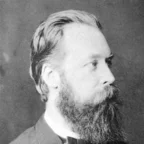
Valentiner, Wilhelm
Karlsruhe, 2 May 1880 - Raleigh, 6 September 1958
Wilhelm Reinhold Valentiner, known in the United States as William R. Valentiner, was a German-American art historian, connoisseur, critic, and museum director trained in the tradition of Wilhelm von Bode. He transplanted German museum scholarship into American museology in the decades before the wartime diaspora of German scholars and is remembered chiefly as a Rembrandt authority and as the architect of the modern Detroit Institute of Arts.
Valentiner was born on 2 May 1880 in Karlsruhe, the youngest of four children. His father, Karl Wilhelm Valentiner, was an astronomer and professor at Heidelberg, and his mother, Anna Lepsius Valentiner, belonged to the distinguished Lepsius family of scholars. He attended schools in Karlsruhe and Heidelberg before studying at the universities of Leipzig and Heidelberg, where Henry Thode supervised his doctorate on Rembrandt and his environment.
He then trained in the Netherlands, working alongside Cornelis Hofstede de Groot and Abraham Bredius and serving as Bredius's assistant at the Mauritshuis in The Hague. On the strength of this early work he was called to Berlin by Wilhelm von Bode, under whom he worked at the Kaiser-Friedrich-Museum and the Kunstgewerbemuseum. In that environment he absorbed Bode's encyclopedic conception of the museum and the connoisseur's method of attribution by eye, which remained central to his later career.
Around 1907-08 Valentiner moved to New York to become the first curator of the newly created department of decorative arts at the Metropolitan Museum of Art. He returned to Germany during the First World War and served in the German army until 1918, then worked again at the Kaiser-Friedrich-Museum and chaired the Arbeitsrat fur Kunst, placing him at the centre of Berlin's avant-garde. In 1919 he married Marie Cecilia Odefey; their daughter Brigitta later married the sculptor Harry Bertoia.
Valentiner returned to the United States in 1921, first cataloguing the Widener collection and advising on acquisitions, then organising one of the first American exhibitions of German Expressionism in New York. In 1924 he was appointed director of the Detroit Institute of Arts, a post he held until his retirement in 1944-45. His Detroit years were his most consequential institutional achievement: he built a curatorial staff, pursued an encyclopedic collection, acquired German Expressionism, Pre-Columbian art, and African art, and commissioned Diego Rivera's monumental Detroit Industry murals under Edsel Ford's patronage. He also founded Art Quarterly and helped shape the 1939 Chicago World's Fair art exhibition.
After leaving Detroit he continued to advise museums in Los Angeles and California, and in 1955 became the first director of the North Carolina Museum of Art in Raleigh, holding the post until his death. Alongside his Rembrandt studies he produced an influential body of work on Dutch and Flemish painting, including the survey The Art of the Low Countries, catalogues of Rembrandt and Frans Hals, and late in life Rembrandt and Spinoza (1957). His attributions should now be read historically, since many were later revised by the Rembrandt Research Project.
Valentiner's significance for medievalists lies in a set of early studies on Italian Gothic sculpture, especially Tino di Camaino. His 1923 article on Tino in Art in America, his 1925 study of Gothic sculpture from Siena and Pisa, and his 1935 monograph Tino di Camaino: A Sienese Sculptor of the Fourteenth Century helped establish the first modern anglophone framework for the sculptor's work. That framework mattered directly for the study of Giovanni di Balduccio, since Tino's sepulchral forms became the model that Balduccio carried northward in works such as the Arca di San Pietro Martire at Sant'Eustorgio.
Valentiner worked in the grand connoisseurial manner of the Bode school, relying on attribution by eye, expansive corpora, and close involvement with the art market. The method produced real discoveries but also many attributions that later scholarship has narrowed or rejected, both in the Rembrandt corpus and in Italian sculpture. He is best treated as a foundational but dated source: indispensable for the history of the discipline and provisional on specific attributions.
He received the Order of Merit of the Federal Republic of Germany in 1957 and died on 6 September 1958, while serving as director of the North Carolina Museum of Art. His papers survive in the Smithsonian's Archives of American Art and the North Carolina Museum of Art, and his influence remains visible in the transatlantic museum culture he helped shape.
Van Marle, Raimond
The Hague, 1887 – Perugia, 18 November 1936
Valentin Raimond Silvain van Marle was a Dutch art historian of remarkable versatility and ambition, best remembered today as the author of the monumental The Development of the Italian Schools of Painting - a work that remains one of the most comprehensive surveys of Italian painting ever attempted. Though largely self-funded and working outside the formal academy, he produced a body of scholarship that still serves as a fundamental reference for anyone studying medieval and Renaissance Italian art.
Van Marle was born in The Hague in 1887 to a family of mixed European origins: his mother was Hungarian and his father was of distant Picard descent, which explains the French-sounding surname. In 1906, at the age of nineteen, he moved to Paris to pursue higher studies, enrolling at two of France's most prestigious scholarly institutions - the Ecole des Chartes, renowned for its training in the analysis of historical documents and manuscripts, and the Ecole Pratique des Hautes Etudes. In 1910 he was awarded a doctorate from the Sorbonne, a considerable intellectual achievement that shaped his rigorous, source-based approach to historical inquiry.
His first published works were not about Italian art but about medieval Northern European history and philosophy. In 1908 - while still a student - he published Le Comte de Hollande sous Philippe le Bon, a study of the County of Holland under Philip the Good of Burgundy. In 1916 he produced a Dutch-language monograph on the German mystic Meister Eckhart, titled De mystieke leer van Meister Eckhart, demonstrating his command of both religious thought and vernacular scholarship. These early works revealed a scholar equally at ease with political history, mystical theology, and archival research.
The decisive turning point in van Marle's life came in 1918, when, following his marriage, he relocated to a villa in the San Marco district of Perugia, in the heart of Umbria. Blessed with a private income that freed him from institutional obligations, he committed himself entirely to the study of Italian painting. Perugia was an ideal base: surrounded by Umbrian altarpieces, frescoes, and the artistic heritage of central Italy, he could conduct direct visual research while corresponding with scholars across Europe. He began contributing regularly to the Bollettino d'Arte and other international specialist journals, establishing himself as a serious voice in the growing field of Italian art history.
Van Marle's supreme achievement was the encyclopaedic The Development of the Italian Schools of Painting, a project of almost inconceivable scope covering Italian painting from the Romanesque era to the end of the fifteenth century. Published between 1923 and 1938 in Dutch, French, English, and Italian, the work was originally planned in 21 volumes, though van Marle lived to complete only 17 of them. After his death in 1936, the art historian Frederick Mason Perkins and his widow Charlotte van Marle continued the work, completing the 19th volume and the general index. The first two volumes were subsequently translated into Italian by Alba Buitoni in 1938. The series remains a touchstone for scholars of medieval and early Renaissance Italian painting, offering detailed artist-by-artist and school-by-school analysis that has not been fully superseded.
Beyond Italian painting, van Marle turned his attention to the broader visual culture of the medieval period. His two-volume Iconographie de l'art profane au Moyen-Age et a la Renaissance, et la decoration des demeures (1931-1932) explored secular iconography - the imagery of everyday life, allegory, and decoration that adorned private dwellings alongside the more thoroughly studied religious art of the period. This work demonstrated his sensitivity to sociological dimensions of art history, treating images not merely as aesthetic objects but as documents of medieval and Renaissance culture and society.
Van Marle was also a collector of photographic documentation, and his personal photo library became part of a distinguished archival tradition. His collection is preserved today at the Fondazione Giorgio Cini in Venice, alongside the photographic archives of scholars such as Evelyn Sandberg Vavala - a testament to the importance of visual documentation in early twentieth-century art historical method.
Van Marle was part of an international network of art historians active in Italy during the interwar period. His name appears in the correspondence archives related to Belle da Costa Greene, the celebrated director of the Morgan Library, connecting him to the transatlantic circuits of medieval manuscript scholarship and connoisseurship. His collaboration with Frederick Mason Perkins - himself a specialist in Sienese and Umbrian painting - further anchored him within the community of foreign scholars who made central Italy their intellectual home.
Van Marle died in Perugia on 18 November 1936, with two further manuscripts still in preparation. The political climate of Fascist Italy cast a shadow even over his burial: the regime's hostility toward foreign scholars meant that he could not be interred in the city where he had lived and worked for nearly two decades. Instead, he was buried in the remote village of Pozzale, a district of Pieve di Cadore in the Dolomites - a poignant geographical displacement that reflects the precarious position of cosmopolitan scholarship under nationalist politics. His work was nonetheless reissued in the postwar period, with Hacker Art Books producing a reprint edition as late as 1970, confirming the enduring utility of his surveys for generations of art historians.
The state catalogue records that Van Marle dated the Santo Sepolcro cross in 1923 between the end of the twelfth and the beginning of the thirteenth century, and that for the San Frediano cross he moved slightly earlier the dating of the corpus of Maestro Tedice, linking it to the cross of Sarzana.
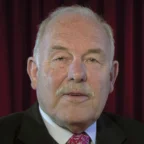
van Os, Hendrik Willem
Harderwijk, 28 February 1938 - 14 June 2025
Hendrik Willem van Os (28 February 1938 - 14 June 2025) was a Dutch art historian. He served as professor of Art and Cultural History, director of the Rijksmuseum in Amsterdam, and presenter of television programs on art. In the specific field of Italian medieval and early Renaissance painting, he was the author of the most comprehensive treatment of Sienese altarpiece production from the thirteenth through the fifteenth century produced in the twentieth century - a two-volume work that established the functional study of the altarpiece as a scholarly programme and whose influence has been permanent and wide. That the same scholar directed the Rijksmuseum and presented popular television programmes on art to a mass Dutch audience in the same years he was producing his most rigorous scholarly work makes him, among the historians encountered in this research thread, one of the most unusual in the range of his public and institutional commitments.
Hendrik Willem van Os (Harderwijk, 28 February 1938) studied History and Art History at the University of Groningen from 1957-1964, where he also obtained his doctorate cum laude with a thesis entitled "Iconological problems in Sienese painting from 1300-1450." While working on his PhD, he resided in Florence and Siena for several years.
Henk van Os studied art history at the University of Groningen, where his father, Frederik van Os, served as rector magnificus during two terms. The institutional connection between the van Os family and Groningen was thus biographical as well as intellectual: his formation in the university where his father held its highest office embedded him in a specific institutional culture that shaped his later commitment to the public responsibilities of the senior academic. He also spent time studying in Rome - the essential Italian complement to his Sienese specialization - before completing his doctorate in 1969.
The doctoral dissertation, published in German as Marias Demut und Verherrlichung in der sienesischen Malerei 1300-1450 (Mary's Humility and Glorification in Sienese Painting 1300-1450, The Hague, 1969), established the programmatic concerns that would govern his scholarly work for the next fifty years: the iconological analysis of religious imagery, the specific tradition of Sienese Marian devotion, and the function of images as instruments of prayer and theological statement rather than purely as aesthetic objects. The German-language publication - unusual for a Dutch scholar's doctoral work - signalled an immediate orientation toward the international German-language art historical community that had dominated the field of Italian medieval painting since Schmarsow and his successors.
In parallel with the doctoral dissertation, Van Os produced the first of his contributions to the study of Italian paintings in Dutch collections: Sienese Paintings in Holland (Groningen, 1969) and, in collaboration with Marian Bisanz-Prakken, The Florentine Paintings in Holland 1300-1500 (Amsterdam: De Arbeiderspers/Netherlands Institute for Art History, 1974). These catalogues of Italian medieval and Renaissance panels in Dutch public and private collections performed a service analogous to Luisa Marcucci's catalogue of the Florentine national collections - systematic documentation of a defined corpus, providing the scholarly community with reliable physical descriptions, attributions, and bibliographic apparatus for objects that had not previously been comprehensively treated.
His 1974 monograph Vecchietta and the Sacristy of the Siena Hospital Church: A Study in Renaissance Religious Symbolism (New York: A. Schram, 1974) turned the lens onto a single Sienese painter-sculptor of the mid-fifteenth century and a single institutional commission - the painted programme of the sacristy of the Spedale di Santa Maria della Scala - in a study that combined attributional analysis with the kind of contextual interpretation, rooted in the specific liturgical and civic function of the decorated space, that would become his signature method.
Van Os was appointed professor of Art and Cultural History at the University of Groningen in 1974, and subsequently became dean of the Faculty of Arts in 1984. The fifteen years between his professorial appointment and his move to the Rijksmuseum were the period of his most sustained scholarly production. He continued to publish on Italian painting in Dutch collections - the Early Venetian Paintings in Holland (Maarssen: G. Schwartz, 1978) extended his systematic catalogue work to the Venetian school - while simultaneously conducting the research that would produce his major scholarly monument.
The two-volume Sienese Altarpieces, 1215-1460: Form, Content, Function (Groningen: Bouma's Boekhuis, 1984 and 1990) is Van Os's principal scholarly legacy. Volume I covers the period 1215-1344 - from the earliest surviving examples of the Sienese altarpiece tradition through the death of Simone Martini; Volume II extends to 1460, covering the post-plague generation and the Quattrocento. His many publications include Mariological Themes in Sienese Painting: The Art of Devotion in the Late Middle Ages in Europe and Sienese Altarpieces, 1215-1460: Form, Content, Function.
The title's three terms - Form, Content, Function - are the programmatic declaration of Van Os's method. Where earlier scholarship on Italian altarpieces had concentrated primarily on formal and attributional questions (who painted it, when, in what style), Van Os insisted on the necessity of understanding the altarpiece as a functional object: an artefact designed for a specific liturgical setting, addressing a specific congregation, in service of specific patterns of devotion shaped by the particular theology, hagiography, and institutional culture of its commissioners. The Tarlati Polyptych, commissioned by Guido Tarlati for the high altar of Santa Maria della Pieve; the Orsini Polyptych, designed for Cardinal Napoleone Orsini's private prayer: both are illuminated by this methodology, which asks not only what an altarpiece represents but what it was for.
The Sienese Altarpieces is cited in every subsequent serious study of the Sienese Trecento - in the literature on Duccio, Simone Martini, the Lorenzetti brothers, Sassetta, and Giovanni di Paolo - as the standard systematic treatment of the context within which each of these painters' works functioned. The range of material covered, from the earliest surviving Sienese frontal paintings of the early Duecento to the late Quattrocento works that close the medieval tradition, encompasses the entire arc of Sienese devotional painting, making it the Sienese equivalent of what Erling Skaug attempted for Florentine punch marks or what Lambros attempted for the Athonite manuscript catalogue: a comprehensive scholarly survey that provides the foundational reference for all subsequent work.
From 1989 to 1996, Van Os was general director of the Rijksmuseum. The directorship of the Rijksmuseum - the principal museum of the Netherlands and one of the great encyclopaedic collections in the world, housing Rembrandt's Night Watch, Vermeer's The Milkmaid, and the most comprehensive collection of Dutch Golden Age painting in existence - was the institutional pinnacle available to a Dutch art historian. Van Os brought to it the same combination of scholarly rigour and public commitment that had characterized his Groningen years.
He organised numerous exhibitions, such as "Prayer Embedded in Beauty" (Gebed in Schoonheid). This exhibition, presented in 1994-95, brought together forty-four objects of private medieval devotion from Dutch and other collections - ivory diptychs, small panel paintings, Books of Hours, sculpted altarpieces, limewood Christ children - and presented them not as art objects but as instruments of prayer, each addressed to a specific kind of devotee: nun, duke, pilgrim, merchant wife. The exhibition and its accompanying publication, The Art of Devotion in the Late Middle Ages in Europe, 1300-1500 (Princeton University Press, 1994), translated the functional methodology of the Sienese Altarpieces into a format accessible to the general museum-going public while maintaining its scholarly integrity. For Alberto's research on illuminated manuscripts and private devotional objects, The Art of Devotion remains a foundational reference: the analysis of the Book of Hours as a specifically tailored instrument of lay piety - its calendar personalized, its devotional emphases calibrated to the owner's particular needs, its images selected to support the prayers that frame each of the canonical hours - draws directly on Van Os's insistence that medieval religious objects must be understood through the devotional practices they were designed to serve.
During his Rijksmuseum directorship, Van Os also developed the television work for which he became most widely known to the Dutch public. Van Os became widely known to the public through his presentation of TV programs such as Beeldenstorm (AVRO) and Museumschatten (VARA), which aimed to popularize art, especially painting. The programme Museumschatten (Museum Treasures) invited Van Os to present individual works from the national collection in terms accessible to a general audience, drawing on his gifts as a teacher and communicator to make the specific visual and historical arguments of art history legible to viewers with no prior preparation. The programme reached audiences of millions and established Van Os as the most publicly recognized art historian in the Netherlands - a position analogous to that which Kenneth Clark had occupied in Britain through the Civilisation series a generation earlier.
In 1996, he stepped down as director of the Rijksmuseum and was appointed University Professor holding the chair in Art and Society at the University of Amsterdam (UvA). The chair title - Art and Society rather than Art History - reflected the programmatic commitment of his Amsterdam years to the study of art as a social practice embedded in specific communities, institutions, and patterns of use, rather than as an autonomous aesthetic phenomenon to be evaluated by formal criteria alone.
He has held teaching positions at Princeton University, Harvard University, Heidelberg University, the Harvard Center for Renaissance Studies, and Smith College. The Harvard Center for Renaissance Studies - Villa I Tatti in Florence, the same institution where Erling Skaug had spent his postdoctoral years - was among the institutions at which Van Os held visiting appointments, placing him within the international scholarly community of Italian Renaissance specialists gathered around that extraordinary Florentine research library.
His later publications extended the range of his public engagement beyond his core Italian medieval specialization: The Discovery of the Netherlands: Four Centuries of Landscape Painting by Dutch Masters (Rotterdam: Nai Publishers, 2008) addressed the canonical Dutch landscape tradition in the accessible register of his television work; Young in Groningen: Art from the Period 1945-1975 (Groninger Museum, 2009) returned to the city of his formation to document its postwar artistic culture. A series of popular books in Dutch - including reflections on the pleasures of art history (De vreugden van de kunst(geschiedenis)), on looking (Zien is genoeg - Seeing is Enough), and on individual meditations on works he loved - established his Dutch-language voice as one of the most readable and intellectually serious in the genre of accessible art writing.
The collected essays published as Studies in Early Tuscan Painting (London: Pindar Press, 1992) gathered contributions to specific attributional and iconographic problems in Trecento Florentine and Sienese painting that complement and extend the systematic treatment of the Sienese Altarpieces. The essay "From Rome to Siena: the Altarpiece of San Stefano alle Lizza" (Mededelingen van het Nederlands Instituut te Rome, 43, 1981) traces the specific artistic and institutional history of a single Sienese altarpiece with the documentary precision of a scholar who has absorbed both the Italian archival tradition and the iconological method of the Warburg school.
His "Reassembling a Giovanni di Paolo triptych" (The Burlington Magazine, 119, 1977) exemplifies the connoisseurial contribution - the identification and physical reconstruction of a dispersed polyptych's original ensemble - that Van Os pursued alongside his broader cultural and functional analyses. The dual commitment to connoisseurship and function is characteristic of his generation of Italian Trecento specialists, trained in the tradition that runs from Richard Offner through Federico Zeri and Miklos Boskovits, who understood that the close visual analysis of individual objects and the contextual interpretation of their social function were complementary rather than competing activities.
Van Os died on 14 June 2025 at the age of eighty-seven, having spent the better part of six decades bringing the art of late medieval Siena to scholarly and public audiences. His career represents one of the most successful integrations of specialist scholarship and public communication in the history of art history: the man who wrote the standard treatment of the Sienese altarpiece was the same man who explained Rembrandt's Night Watch to millions of Dutch television viewers, and who made private medieval devotional objects accessible to visitors without prior art historical preparation. The Sienese Altarpieces and The Art of Devotion remain the starting points for any serious engagement with the function of painting and the sculpted or painted altarpiece in the religious life of the late medieval period - precisely the territory that Alberto's research on illuminated manuscripts, Trecento patronage, and Byzantine devotional imagery inhabits.
Vapheiades, Konstantinos
active late 20th–21st century
Konstantinos Vapheiades is affiliated with the Higher Ecclesiastical Academy of Athens, where his research interests span medieval art and Byzantine art. He is one of the most productive and methodologically wide-ranging Greek scholars currently working in the field of Byzantine and post-Byzantine painting, with a profile that extends from the twelfth century through the Ottoman period, and from the monumental ensembles of Constantinople and Mount Athos to the portable icons and workshop culture of Venetian Crete. His work is situated at a productive intersection of connoisseurship, epigraphy, iconographic analysis, and cultural history. He was cited by the Associated Press in 2024 as a scholarly commentator on the research linking the painter Panselinos to the identity of Ioannis Astrapas.
The cornerstone of Vapheiades's scholarly output is his major monograph Ύστερη βυζαντινή ζωγραφική: Χώρος και μορφή στην τέχνη της Κωνσταντινούπολης, 1150–1450 — Late Byzantine Painting: Space and Form in the Art of Constantinople, 1150–1450 — published by Barbounakis Editions in Thessaloniki in 2020 (397 pp.). The monograph has become an essential reference in the field and is cited across a broad range of international publications dealing with Byzantine monumental painting, attribution problems, and the artistic culture of the Palaiologan period. Its chronological scope — deliberately extending from the mid-twelfth century to 1450 — places the late Byzantine artistic flowering within a long arc of development rooted in Komnenian Constantinople, offering a coherent narrative of stylistic transformation across three centuries.
Perhaps Vapheiades's most consequential single contribution to Byzantine art history is his reattribution of the wall paintings of the Protaton Church on Mount Athos — the most important monumental ensemble of early Palaiologan painting on the Holy Mountain. During conservation work on the frescoes, a number of letters were found that can form the name "Eutychios" or "Eutychiou" — the name of one of the two painters who decorated the Peribleptos Church in Ohrid. This discovery overturned the findings of previous research, and Vapheiades addressed its implications in "The Wall-Paintings of the Protaton Church Revisited," published in Zograf in 2019. He there attributes the wall paintings to two painters — Michael Astrapas and the painter of the Chapel of St. Euthymios in Thessaloniki — and dates them to between 1309 and 1311/1312. An earlier essay, "Protaton: A Fundamental Monument of Late Byzantine Painting," published in Athonika Tetradion in 2015, had already staked out the church's pivotal position in the development of the Palaiologan aesthetic. This attribution carries major ramifications for the identity question long surrounding the enigmatic "Manuel Panselinos": according to the well-documented opinion of Miodrag Marković, if the name in the inscription between St. Merkourios' thighs is restored in the genitive form, it constitutes a patronym, given that Michael Astrapas liked to sign his works as Μιχαήλ Ευτυχίου (Michael son of Eutychios). Vapheiades engages directly with this hypothesis and with the broader problem of Macedonian School workshop dynamics, offering a revised reconstruction of Astrapas's artistic development. In a subsequent article in Zograf in 2021, "A Reassessment of Middle Byzantine Monumental Painting on Mount Athos: Patronage, Dating and Style," he extended his focus further back, offering an overall assessment of the extant fragments based on epigraphic, iconographic, and stylistic evidence and raising new questions as to their style, dating, and patrons.
Vapheiades contributed a substantial study, "The Byzantine Painting after 1341: Stylistic Tendencies and Devices," to Byzantina (vol. 35, Thessaloniki, 2017), addressing one of the most debated problems in Palaiologan studies: the nature and coherence of Byzantine painting after the theological rupture of the Hesychast controversy, when the victory of Palamite theology in 1351 coincided with profound political disintegration and the beginnings of Ottoman encroachment.
One of the most distinctive and theoretically ambitious dimensions of Vapheiades's research is his sustained attention to the relationship between ecclesiastical and imperial authority as expressed through monumental painting. His paper "Sacerdotium and Imperium in Late Byzantine Art," published in Niš i Vizantija XVIII (2020), explores the intricate relationship between sacramental and imperial power in late Byzantine art. A companion essay, "Sacerdotium and Regnum in Late Byzantium: Some Notes on the 'Imperial Deesis'," published in the American Journal of Arts and Design, examines how the iconographic motif of Christ as High Priest and King functioned as a visual instrument of ecclesiological argument in the fourteenth and fifteenth centuries. He also authored a monograph published in Athens in 2017, Η τέχνη της δουλείας και η δούλη τέχνη, 15ος–17ος αι. Η «κρητική» ζωγραφική ως τεκμήριο της μεταβυζαντινής πολιτικής θεωρίας και Ηθικής — The Art of Servitude and the Servile Art, 15th–17th Centuries: Cretan Painting as Evidence of Post-Byzantine Political Theory and Ethics — which reads the flourishing of Cretan workshop production under Venetian and Ottoman domination as a document of Byzantine political thought in exile, tracing how the visual culture of post-Byzantine Christianity encoded theological and moral responses to the loss of the empire.
In an article published in I Quaderni del MAES (2018), "Byzantine Painting Treatises: The Case of Codex Panteleimoniensis 259," Vapheiades examines a manuscript copy of a late Byzantine constitutio textus regarding the descriptions of saints' physiognomy alongside quotations from their dicta and verses related to biblical events. He argues that Byzantine painting manuals were not merely collections of technical and iconographic advice, as post-Byzantine ones tend to be, but primarily a corpus of theoretical knowledge necessary for the intellectual formation of artists — a distinction with important implications for understanding the status and self-understanding of Byzantine painters.
Beyond the capital and Mount Athos, Vapheiades has invested considerable research in the monastic artistic culture of Thessaly, centred on the extraordinary rock monasteries of Meteora. In a study on the artistic activity of Theophanes the Cretan in western Thessaly, published in the Analecta Stagorum et Meteororum, he expands knowledge of Theophanes Strelitzas's prolific activity under monastic patronage in the region by presenting unpublished icons pertaining to his artistic idiom from ecclesiastical collections of the wider area, and critically questions the prevailing art-historical narrative on the Cretan style's dissemination in Thessaly and continental Greece.
Vapheiades stands as a distinctive voice in contemporary Byzantine studies for the breadth of his chronological and geographical range — covering Middle Byzantine Athos, late Byzantine Constantinople, the Macedonian School's Palaiologan masterpieces, post-Byzantine Cretan workshop culture, and the monastic art of Ottoman Thessaly — and for his integration of formal analysis with broader cultural and theological interpretation. His reattribution of the Protaton frescoes, his monograph on space and form in Byzantine painting, and his politically inflected readings of post-Byzantine art place him among the most intellectually ambitious scholars currently working in the field.
Vassilaki, Maria
active late 20th–21st century
Maria Vassilaki is Professor of Byzantine Art at the University of Thessaly, Greece, and Scientific Advisor at the Benaki Museum in Athens. This dual affiliation — a full academic chair combined with a senior consultative role at one of Greece's most important cultural institutions — defines the character of her career: rigorously scholarly and at the same time deeply engaged with museum practice, curatorial work, and the public presentation of Byzantine and post-Byzantine heritage. Her research spans Byzantine art and archaeology, icon painting, Cretan painting of the fourteenth to seventeenth centuries, workshop practices, and the material and technical study of icons — a range that places her at the intersection of traditional art-historical analysis and the newer interdisciplinary approaches that have transformed the field since the 1990s.
The central and most sustained thread of Vassilaki's scholarship concerns the painting culture of Venetian Crete in the period following the fall of Constantinople in 1453, when the island — then under Venetian rule — became the principal centre of Orthodox icon production in the Mediterranean world. Large painters' workshops were established in Crete's urban centres, in particular Candia, and they undertook commissions for icons in substantial quantities. Vassilaki's research has approached this phenomenon from multiple angles: the social history of painters and their contracts, the iconographic structures governing the reproduction of devotional images, and — with particular originality — the material tools of the workshop itself. An examination of the methods by which Cretan painters of the fifteenth, sixteenth, and seventeenth centuries reproduced and transferred their iconographic material shows that this was done with the aid of working drawings (anthivola), which allowed iconographic themes to be copied identically, down to the last detail. This investigation into the technology of icon production — treating the physical tools of the Cretan workshop as primary historical evidence — represents one of Vassilaki's most distinctive methodological contributions.
One of the most celebrated results of Vassilaki's archival and connoisseurial work is her reconstruction of the career and œuvre of Angelos Akotantos, one of the most significant Cretan icon painters of the early fifteenth century. His will, drawn up in 1436, has survived, and he signed his works with the simple formula Cheir Angelou — "The Hand of Angelos" — a phrase taken as the title of the major exhibition and catalogue she edited. Her study The painter Angelos Akotantos: his work and his will (1436) is among her most cited works and established the foundation for all subsequent scholarship on the Cretan school at its formative stage. His art draws on Constantinopolitan painting and contains certain echoes of the decoration of the Chora Monastery, while also being influenced by the Italian Renaissance and recalling, for example, Paolo Veneziano — a cultural synthesis that Vassilaki's work has brought into sharp focus as characteristic of Cretan painters decades before the more celebrated case of El Greco. The fruits of this research were gathered in the exhibition The Hand of Angelos: An Icon Painter in Venetian Crete, hosted at the Benaki Museum in Athens from November 2010 to January 2011, with contributions by Angeliki Laiou, Cryssa Maltezou, David Jacoby, Robin Cormack, Maria Kazanaki, and Nano Chatzidakis.
A particularly important discovery in Vassilaki's career came through her collaborative work with Robin Cormack on Domenikos Theotokopoulos's Baptism of Christ in the Benaki Museum's Conservation Department. The cleaning and conservation of the panel revealed the date MDLXVII (= 1567) on its lower left side — a finding published in the Benaki Museum Journal in 2005 that provided a firm documentary anchor for the early Cretan phase of El Greco's career and confirmed what art historians had long suspected on stylistic grounds. The examination further demonstrated that in this work El Greco succeeded in combining traditional techniques of Byzantine icon painting with the innovative practices of Venetian Renaissance art.
Vassilaki's monograph Working Drawings of Icon Painters after the Fall of Constantinople: The Andreas Xyngopoulos Portfolio at the Benaki Museum (A. G. Leventis Foundation, Leventis Gallery & Benaki Museum, Athens, 2015) brought together years of research into the material culture of post-Byzantine icon workshops. The book focuses on the Xyngopoulos Portfolio — the largest known collection of such workshop materials — exploring its composition, history, and the importance of working drawings in the post-Byzantine icon-painting tradition. The catalogue is organised thematically across fourteen sections covering the full range of Orthodox iconography, from Christological cycles and scenes from the life of the Virgin to individual saints and hagiographic cycles, giving a comprehensive view of how Cretan painters organised and transmitted their iconographic repertoire across generations.
Beyond her monographic research, Vassilaki has been a driving force in the production of landmark exhibition catalogues that have shaped international access to Byzantine and post-Byzantine art. She organised the Mother of God exhibition at the Benaki Museum (October 2000 – January 2001), a landmark event in Byzantine studies that assembled representations of the Theotokos across more than a millennium of sacred art; the accompanying scholarly volume Images of the Mother of God brings together leading international authorities across the disciplines of art history, archaeology, theology, philology, and social anthropology to survey how the Theotokos was perceived in the Byzantine world. In 2008 she co-edited with Robin Cormack the monumental catalogue Byzantium: 330–1453, published by the Royal Academy of Arts in London to accompany one of the most ambitious exhibitions of Byzantine art ever mounted in the West. Highlighting over three hundred works from the holy monasteries of Sinai and Mount Athos, the Treasury of Saint Mark's in Venice, and institutions across the globe, the publication explores the artistic identity of Byzantium and its influence on European and Islamic traditions, illustrated with 465 full-colour images.
Maria Vassilaki occupies a prominent position in contemporary Byzantine studies as a scholar who has consistently combined archival precision, iconographic analysis, and material science to deepen understanding of icon painting as both a theological practice and an economic and social phenomenon. Her work on Cretan workshop practices — particularly the role of working drawings (anthivola) in transmitting iconographic models — has opened a methodological avenue that is now a recognised sub-field of post-Byzantine art history. Her curatorial achievements, above all the Mother of God and Byzantium: 330–1453 exhibitions, have played a central role in bringing Byzantine art to wider international audiences while maintaining the highest standards of scholarly rigour.
Vedova, Massimo
active late 20th–21st century
Massimo Vedova is an Italian Franciscan friar of the Order of Friars Minor Conventual and a scholar of medieval and early-modern spirituality, best known for his sustained philological and theological work on the writings of Angela of Foligno. He teaches the history of medieval spirituality at the Pontificia Università Antonianum in Rome, where he holds a position on the Faculty of Theology, and also at the Pontificia Facoltà Teologica Teresianum. Before entering theological studies, he trained as a physicist, earning a degree in Fisica from the Università degli Studi di Napoli Federico II in 1993, a scientific formation that preceded his later vocation to the friary and to the study of mystical texts.
Vedova's research centres on the history of monasticism and the papacy, hagiography, and above all the mystical and prophetic literature produced between the Middle Ages and the early modern period. The core of his published work addresses the textual and theological problems posed by the corpus attributed to Angela of Foligno (c. 1248-1309), the Umbrian mystic whose Memoriale and Instructiones occupy a central place in the history of medieval women's religious writing. In essays such as "Leggere" il Memoriale di Angela Da Foligno (published in Antonianum, 2010), Esperientia Dei: memoriale di Angela da Foligno, tracce di una teologia "alternativa"?, and L'immagine di Maria nel Liber di Angela da Foligno, he has pursued close readings of the text's theological vocabulary and its representation of Mary, poverty, and mystical experience, while Tematiche spirituali fondamentali nelle Instructiones di Angela da Foligno (Frate Francesco, 2019) examines the relationship between the Instructiones and the Memoriale within the wider Angelan corpus.
A recurring concern in his scholarship is the history of the reception and translation of Angela's writings across languages and centuries, treated in La (dis)avventura del tradurre (2019), an essay on the difficulty and the interpretive richness of translating the Memoriale. This interest culminated in his co-editorship, with Alessandra Bartolomei Romagnoli, of the collective volume Il Libro di Angela da Foligno e le sue traduzioni (Spoleto, Fondazione CISAM, 2019), which gathers studies on the hermeneutic problem of translation and on the reception of the Liber in various linguistic traditions, including its Polish fortunes. The two scholars subsequently co-edited Santa Angela da Foligno: la canonizzazione di una mistica medievale, again for CISAM, addressing the process and cultural context of Angela's formal canonization.
Alongside his work on Angela of Foligno, Vedova has published on other figures of Franciscan and broader Catholic mysticism, including studies of the Franciscan Beato Egidio of Assisi ( L'esperienza contemplativa del Beato Egidio and Il beato Egidio, la preghiera e il demonio), of the seventeenth-century ecstatic friar Giuseppe da Copertino ( La mistica di san Giuseppe da Copertino: piste di studio, 2017, and Metamorfosi di un'estasi: San Giuseppe da Copertino e la cupola della Santa Casa di Loreto, in Collectanea Franciscana, 2018), and of the theme of poverty in the spirituality of Angela of Foligno and of St Maximilian Kolbe. His broader theoretical interests include the symbolism of mystical union with God in medieval religious literature, addressed in L'amplexus simbolo dell'unione dell'anima con Dio nel contesto della letteratura mistica medievale (Miscellanea Francescana, 2012).
Combining a scientific formation with theological and philological training, Vedova belongs to a tradition of Franciscan scholarship, centred on institutions such as the Antonianum, that treats the medieval mystical corpus as a subject demanding rigorous textual criticism alongside spiritual and theological interpretation. His essays are regularly cited in the scholarly literature on Angela of Foligno alongside the work of Giovanni Pozzi, Paul Lachance, and Cristina Mazzoni, and his collaborative volumes with Alessandra Bartolomei Romagnoli have become standard points of reference for the study of the transmission and translation of her writings.
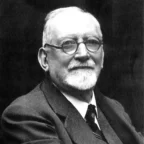
Venturi, Adolfo
3 September 1856 - 10 June 1941
Overview
Adolfo Venturi was the founding figure of modern art history as an academic and institutional discipline in Italy. Born in Modena the year before the Kingdom of Italy was proclaimed, he devoted his life to constructing the first systematic, archivally grounded history of Italian art on an Italian scholarly foundation - independent of the German, English, and French traditions that had previously dominated the field. His monumental Storia dell'arte italiana, published across nearly four decades in twenty-five volumes, remains a foundational reference from Early Christian art through the sixteenth century. He also created Italy's first university chair in art history, built the professional infrastructure for the protection and cataloguing of the national heritage, and formed the generation - Longhi, Brandi, Argan, Ragghianti - that shaped Italian art historical thought throughout the twentieth century.
Venturi was born on 3 September 1856 in Modena, son of Gaetano Venturi and Maria Barbieri, a family of modest means in a city that was still, at the moment of his birth, a duchy under the Este house. His son Lionello Venturi (1885-1961) became a distinguished art historian in his own right, continuing the family tradition at the University of Turin and, after his exile under Fascism, in North America.
Venturi's education was in many ways a self-construction. He attended the academy and technical school in Modena, but - lacking the means for formal study - largely taught himself classical history and art history by means of the private library of G. B. Toesca, to which he obtained access. To fund further study he worked as a private tutor, saving enough to attend the Istituto di Studi Superiori in Florence. He then undertook an intensive personal survey of the Italian artistic heritage, travelling systematically through Bologna, Venice, and Milan, studying monuments, collections, and archives directly.
In 1878, at the age of twenty-two, Venturi was appointed curator (ispettore) of the Galleria Estense in Modena - the Este ducal collection, one of the oldest and richest in Emilia. In a professional environment where the role of museum curator had no established guidelines in newly unified Italy, Venturi effectively shaped the profession from scratch. His governing principle was that understanding each work of art required reconstructing its individual history through archival research. He spent his years at the Estense systematically mining the Emilian state archives, linking documents to objects, establishing provenance, and grounding attribution in evidence rather than tradition or received opinion.
This empirical approach brought him into direct contact with the Morellian tradition. Venturi knew Giovanni Morelli personally. A celebrated anecdote - recorded by art historian Claudio Strinati at the 1992 Venturi conference - captures the relationship well: Morelli, in his Milan apartment, showed Venturi a painting and asked him to name the artist. Faced with Venturi's uncertainty, Morelli teased him for not recognizing a fellow Modenese, identifying it as Francesco Bianchi Ferrari. Venturi subsequently studied the work in detail and published an article reversing the attribution to a lesser painter, Michele Coltellini - a calculated riposte that demonstrated how archival and formal scrutiny could check even the authority of the master connoisseur. The combination of Morelli's close formal analysis with systematic documentary investigation became Venturi's methodological signature.
In 1882 he published La R. Galleria Estense in Modena, his first substantial contribution to the literature.
In 1888 Venturi was called to Rome as general inspector of the Belle Arti at the Ministry of Public Instruction, a position of national scope. There he was instrumental in two significant reforms: he instituted Italy's first formal training programme for the treatment of works of art - a rudimentary but foundational step towards professional conservation - and he developed the framework for a systematic national catalogue of the artistic heritage. From 1891 to 1898 he served as deputy director of the Kingdom's museums, and subsequently directed the National Gallery of Ancient Art at Palazzo Corsini in Rome. These institutional roles gave him an unparalleled overview of the national patrimony and deepened his conviction that Italian art history required a comprehensive, rigorous, and specifically Italian treatment.
That same year, 1888, Venturi co-founded with Count Domenico Gnoli (1838-1915) the journal Archivio storico d'arte - renamed L'Arte in 1901. He edited it continuously until 1940, making it for half a century the principal Italian venue for archivally grounded art historical scholarship across all periods. Crucially, L'Arte also published the early work of the next generation: in 1914 Venturi assigned the journal's book review section to the young Roberto Longhi, who published monographic studies on Orazio Borgianni, Battistello Caracciolo, and the Gentileschi family in its pages between 1914 and 1916.
In 1896 Venturi left the ministerial bureaucracy to take up an academic appointment at the Universita degli Studi di Roma "La Sapienza" as its first Professor of Medieval and Modern Art History - a chair created specifically for him, and the first university chair in art history in Italy. He held it until his retirement in 1931. He also established at La Sapienza a Scuola di Perfezionamento in Storia dell'Arte Medievale e Moderna, a postgraduate specialisation school whose alumni shaped the discipline for decades. The school was notably open to women students at a time when the Italian academic world was largely closed to them, and Venturi's seminars attracted a disproportionate number of female scholars, a circumstance that contemporaries remarked upon.
Intellectually, Venturi's work at this period was shaped by Benedetto Croce's aesthetics - specifically Croce's emphasis on the creative individual and on the artwork as expression of a singular historical consciousness - alongside the continuing influence of the Morellian connoisseurship tradition and, through his son Lionello, of Heinrich Wolfflin's formal analysis. His students at La Sapienza included Giuseppe Fiocco (who became the leading authority on Venetian Renaissance painting), Margaret Scolari Barr (who later worked closely with Alfred H. Barr at MoMA), and, more broadly, Cesare Brandi, Giulio Carlo Argan, and Carlo Ludovico Ragghianti - four of the most influential Italian art historians and critics of the twentieth century.
In 1901 Venturi was elected to the Institut de France in Paris, succeeding Giuseppe Verdi (1813-1901).
Venturi's magnum opus, the Storia dell'arte italiana, was published by Ulrico Hoepli in Milan in twenty-five volumes between 1901 and 1940, spanning early Christian art through the architecture of the sixteenth century. It was conceived from the outset as a monument: a comprehensive, illustrated, archivally anchored account of the totality of Italian artistic production across fifteen centuries - an enterprise without precedent in the Italian literature, and one that effectively demonstrated that Italians could construct their own art history rather than receive it from Rumohr, Waagen, or Ruskin. The project consumed Venturi's working life; in his final years, suffering from cataracts that left him practically blind, he relied on his students to help draft the later volumes.
The structure of the work is of particular relevance to researchers in medieval and Trecento art. The volumes dedicated to the pre-modern period are:
- Vol. I (1901): Dai primordi dell'arte cristiana al tempo di Giustiniano - Early Christian to Justinianic art
- Vol. II (1902): Dall'arte barbarica alla romanica - the transition from late antique and barbaric art to Romanesque
- Vol. III (1904): L'arte romanica - Romanesque painting, sculpture, and architecture
- Vol. IV (1906): La scultura del Trecento e le sue origini - Trecento sculpture and its origins
- Vol. V (1907): La pittura del Trecento e le sue origini - Trecento painting and its origins
Volumes IV and V constitute the most comprehensive treatment of Dugento and Trecento Italian art produced up to that date, and despite their age remain indispensable for the breadth of their documentary apparatus, their coverage of regional schools, and the sheer range of works catalogued and illustrated. They are also primary sources for early attributions in the field, since Venturi was often writing from direct examination and from archival sources that had not previously been published.
The work was abridged and translated into English as A Short History of Italian Art (Macmillan, New York, 1926), translated by Edward Hutton, and was the subject of an unpublished fuller translation produced by the Illinois Works Project Administration in 1939.
As Italy's pre-eminent authority on Italian art, Venturi was called repeatedly to adjudicate questions of attribution in legal and public contexts. In 1929 he testified in the celebrated American case of Hahn vs. Duveen, in which a Kansas City couple sued the dealer Sir Joseph Duveen for publicly dismissing their painting - claimed to be a Leonardo La Belle Ferroniere - as a copy. Venturi sided with Duveen, declaring the Hahn picture a low copy. He also expressed scepticism regarding the Isleworth Mona Lisa (1923), attributing its execution primarily to Ambrogio de Predis on Leonardo's design, and expressed doubts (1928) about a painting claimed to be Leonardo's Leda and the Swan, finding it too finished and elegant to be entirely by Leonardo's hand.
Adolfo Venturi died on 10 June 1941 at Santa Margherita Ligure, on the Ligurian coast, at the age of 84. His obituary appeared in the New York Times the following day. A commemorative conference held at Modena in 1989 - a century after his appointment to the ministry - resulted in a facsimile reprint of his Galleria Estense catalogue and a series of essays assessing his role in the institutionalization of Italian art history.
His legacy is threefold: as the architect of Italy's first modern art historical institution (the La Sapienza chair and postgraduate school); as the founder and decades-long editor of L'Arte, the central journal of the discipline; and as the author of the Storia dell'arte italiana, the most comprehensive account of Italian art ever undertaken by a single scholar. In the Dictionary of Art Historians he is characterised as a "pioneer of the modern school of art history in Italy" - a judgment that substantially understates the scope of his achievement: he did not merely pioneer, he founded.
For researchers working on Italian medieval painting, Venturi's Volumes IV and V of the Storia dell'arte italiana are primary reference tools - both as evidence of what was known and attributed at the turn of the twentieth century, and as catalogues that preserve documentary references and early photographic records of works that have since been dispersed, damaged, or insufficiently studied. Volume V (La pittura del Trecento e le sue origini, 1907) treats Giotto, the Sienese school, and the major regional schools of the Dugento and Trecento in systematic detail.
Venturi's attention to miniature painting and manuscript illumination as part of the continuous history of Italian art, rather than as a separate technical speciality, also makes his work relevant to Alberto's current focus: illuminated manuscripts are treated within the broader pictorial tradition in the Storia, and L'Arte published significant articles on Italian manuscript illumination throughout its run from 1901 to 1940.
In "Dittico attribuito a Cimabue, nell'esposizione di Grottaferrata" (L'Arte 8, 1905) he published the Sterbini Diptych as attributed to Cimabue, reporting Jean Paul Richter's hypothesis of a Duccio circle, and in La Galleria Sterbini in Roma (1906) he catalogued the collection that gave the diptych its name.
Venturi, Lionello
Modena, 25 April 1885 – Rome, 14 August 1961
Lionello Venturi was one of the greatest Italian art historians and critics of the twentieth century, distinguished both by the breadth and originality of his scholarship and by the civic courage with which he opposed fascism, refusing allegiance to the regime even at the cost of exile. His work spans medieval, Renaissance, and modern art, and remains foundational for the international historiography of art criticism.
Born in Modena to Adolfo Venturi and Giovanna Zanni, he grew up in an intellectually formative environment and moved early to Rome with his family. He graduated in Literature and Philosophy at La Sapienza in 1907 and in 1911 obtained his qualification to teach medieval and modern art history at the University of Padua. After graduation, he held a rapid sequence of museum and administrative posts: inspector of the Venice Galleries (1909-1910), inspector of the Galleria Borghese in Rome (1911-1912), and, at only twenty-eight, Director and Superintendent of the National Gallery of Urbino (1913-1914).
Between 1914 and 1915 he entered university teaching at Turin, where he was soon appointed associate professor. With Italy's entry into World War I he volunteered for military service; wounded in combat in 1917, he was discharged with a decoration for military valor. From 1915 to 1931 he held the chair of Art History at the University of Turin, where he trained a major generation of students including Giulio Carlo Argan and Mario Soldati. His teaching combined methodological rigor with sustained attention to both the aesthetic quality of the work and its historical context.
In October 1931, Venturi was among the very small group of Italian university professors who refused the oath of allegiance imposed by the fascist regime. The decision led to his immediate exclusion from university teaching in Italy. In 1932 he left for Paris, where he remained until 1939, developing contacts with the anti-fascist movement Giustizia e Libertà and teaching and lecturing in Paris, Lyon, London, and Cambridge. After the introduction of racial laws, he promoted the Italian section of the International League Against Racism and Anti-Semitism. With the outbreak of World War II he moved to New York (1939), taught at American universities, took leadership roles in the Mazzini Society, and chaired the Italian Emergency Rescue Committee.
His years in exile were also among his most productive intellectually. Major works include Histoire de la critique d'art (1936; expanded Italian edition, 1948), still a central text in the history of art criticism; the two-volume Cezanne (1936), which established him as a leading interpreter of modern painting; Archives de l'Impressionisme (2 vols., 1939), a key documentary corpus for Impressionist studies; and Come si guarda un quadro, one of the most widely read twentieth-century Italian books on aesthetic education. For medieval and Renaissance studies, Il gusto dei primitivi (1926) remains especially significant for the reassessment of early Italian painting.
After the Liberation, Venturi returned to Italy in 1945 and resumed teaching at La Sapienza, remaining there until 1955 and contributing decisively to the reconstruction of postwar Italian art-historical culture. He was elected to the Accademia dei Lincei, the Accademia di San Luca, and the Accademia delle Scienze di Torino, and became a corresponding member of the Institut de France. He died in Rome on 14 August 1961.
Verani, Cesare
active 1950s - 1980s
Cesare Verani was an Italian art critic and local historian active in Rieti, where most of his writings were published. His studies focus on the art of Rieti and its territory: the monograph Maestro Liberato di Benedetto di Cola di Rainaldo da Rieti (1971) and the article Un affresco di maestro Liberato in Sant'Agostino di Rieti (1976), on the fifteenth-century painter of the Sabina; Giuseppe Viscardi pittore reatino del '700 (1974); and La cappella della SS. Annunziata e i suoi dipinti murali (1984). A second group of writings, among them Pagine di diario casentinese 1944 (1970), La rosa di Pietramala (1971) and Arezzo alla vigilia della Seconda Guerra d'Indipendenza (1977), reflects a close connection with the Casentino and the territory of Arezzo.
His place in the literature on Giunta Pisano rests on a short article, "Giunta Pisano ha soggiornato a Roma?" (L'Arte, 57, 1958, pp. 241-242). In it he published two parchments of 4 and 26 May 1239, drawn up in San Clemente in Rome over a dispute about mills and water rights near the Marmore falls, which name as witnesses Leopardo, cleric and son of Master Giunta the Pisan painter, and Giovanni, a Pisan famulus of the same master. The documents made a stay by Giunta in Rome plausible and gave the only basis for estimating his date of birth, and they have remained part of the core documentary file on the painter ever since.
Vervat, Muriel
active in Florence since 1984
Muriel Vervat is a paintings conservator based in Florence, active in the field since 1984. Working principally for the Soprintendenza Speciale per il Polo Museale Fiorentino, she has undertaken conservation campaigns for the city's major state collections, among them the Galleria degli Uffizi, the Galleria Palatina, the Galleria d'Arte Moderna at Palazzo Pitti, and the Galleria dell'Accademia, as well as for churches including Florence's Duomo, Santo Spirito, and Santa Trinita. Her practice has also extended beyond Florence, to commissions for the Soprintendenze of Siena and Parma.
At the Galleria dell'Accademia, Vervat carried out the restoration of Andrea di Cione (Orcagna)'s Pentecost triptych, the high altarpiece of Santi Apostoli painted in the 1360s. Her intervention proceeded in two cleaning phases — first removing degraded adhesive responsible for micro-lifting of the paint surface, then thinning the discoloured varnish left by a restoration of 1953 — followed by the filling of losses and the selective reapplication of gold leaf to worn metallic passages. In the course of the work she drew attention to the sophistication of the panel's original gilding technique: layered gold and silver leaf applied over red bole, individually patterned haloes, and passages of "fantastical animals" rendered in silver over gold to suggest a bronzed finish, executed, in her account, in single strokes that allowed no correction. She presented these findings in 2023 in a video made for the Galleria dell'Accademia's public-facing "Scopri la Galleria" series.
Verzár, Christine
active late 20th–21st century
Christine Verzár — who published her earlier work as Christine Verzár Bornstein — is a historian of medieval art and Professor Emerita at the Ohio State University, and one of the principal Anglophone authorities on twelfth-century Italian sculpture. She took her doctorate at the University of Basel, and something of that school's tradition remains visible in her work; she has written on the Basel department itself and on the legacy of Jacob Burckhardt and Heinrich Wölfflin as its founders.
Her first monograph, Die romanischen Skulpturen der Abtei Sagra di San Michele (1968), studied the sculpture of the great Piedmontese abbey. Her central book is Portals and Politics in the Early Italian City-State: The Sculpture of Nicholaus in Context (Parma, 1988), which set the work of the sculptor Nicholaus within the civic and political circumstances of the emerging communes — an approach that treats a carved doorway as a public instrument rather than as an isolated aesthetic object, and which has been widely followed since. She has also worked extensively on Matilda of Canossa and on the representation of authority, on the relation of text to image in Romanesque sculpture, and on late medieval German sculpture.
A sustained interest in artistic exchange across the Mediterranean during the Crusades produced the co-authored exhibition volume The Meeting of Two Worlds: The Crusades and the Mediterranean Context (1981). She has served on the boards of the International Center of Medieval Art, of Assaph at Tel Aviv University, and of Fifteenth Century Studies, and has acted as an assessor of medieval works for the Detroit Institute of Arts, the Metropolitan Museum of Art and museums in San Francisco. Her photographic collection of more than six hundred and fifty images, weighted toward Italian Romanesque architectural sculpture, is held by the Index of Medieval Art at Princeton.
In the Gislebertus literature she appears as a reviewer. Her notice of Linda Seidel's Legends in Limestone in Speculum (2001) is among the substantial critical responses to that book, and voices the objection heard across its reception: that its case is built in part against straw men drawn from an older iconographic art history, and that dismantling the sculptor does not by itself install the patron.
Villani, Matteo
Florence, c. 1283 – Florence, 1363
Matteo Villani was a Florentine merchant, communal officeholder and chronicler whose continuation of his brother Giovanni Villani's Nuova Cronica is the principal eyewitness narrative source for Florentine history in the fifteen years following the Black Death of 1348. Like his brother, Matteo was active in the family's mercantile and banking affairs and held a succession of civic offices in the Florentine Republic, including terms as prior; this direct involvement in communal government gave his chronicle an insider's grasp of politics, taxation and guild affairs that complements its narrative of war and calamity.
When Giovanni Villani died of plague in 1348 partway through his universal chronicle of Florence, Matteo took up the task of continuation, explicitly framing his own book as a record of the plague's aftermath and of the profoundly altered world it had left behind. His chronicle, composed in eleven books covering the years from 1348 to 1363, opens with an extended and often-cited account of the epidemic's mortality and its social and moral consequences — the collapse of labour discipline, the inflation of wages, the ostentation and moral laxity Matteo perceived among the survivors — before proceeding to the wars against Milan under the Visconti, the conflicts with Pisa and other Tuscan powers, the depredations of mercenary companies of ventura moving through Italy, and the continuous business of Florentine guild and communal politics.
Matteo's chronicle is markedly more interpretative and moralising than his brother's more annalistic manner, reading contemporary events as evidence of a providential and penitential history; it is for this reason that modern historians of art and society researching the psychological and religious climate of post-plague Tuscany — including the interpretative literature on Florentine and Sienese painting after 1348 — have drawn on Matteo's testimony as documentary counterpart to the visual evidence. He died in 1363, almost certainly a further victim of plague, leaving his own chronicle unfinished; it was continued in turn by his son Filippo Villani, who carried the family's chronicle project into a fourth generation of Florentine historical writing.
Vittorini, Marta
L'Aquila, c. 1975-1976; active 21st century
Marta Vittorini is an Italian scholar, archivist, and medievalist from L'Aquila, currently serving as Director of the Archivio di Stato dell'Aquila. Her profile bridges academic research in medieval philosophy and manuscript studies with institutional leadership in the preservation and enhancement of Italy's archival and bibliographic heritage.
Vittorini studied Philosophy at the Università degli Studi dell'Aquila (Univaq), graduating with 110/110 con lode. Her thesis, Il problema dell'onnipotenza divina tra il XIII e il XIV secolo: Tommaso, Scoto e Ockham in dibattito, addressed a core issue of late medieval theology and anticipated her sustained engagement with scholastic thought.
She later completed a doctorate in Medieval Philosophy with the dissertation Predicabili e categorie nell'ultimo commento di Walter Burley all'Isagoge di Porfirio, including a critical edition based on three principal manuscripts. This work placed her within high-level textual scholarship on late medieval Aristotelianism, with research interests centered on theology, metaphysics, and philosophy of nature in the late Middle Ages.
Alongside philosophical training, Vittorini pursued advanced specialization in the material study of manuscripts. She obtained the Diploma di Archivista Paleografo at the Scuola Vaticana di Paleografia, Diplomatica e Archivistica, where her thesis examined the manuscript tradition of Walter Burley in codices of the Biblioteca Apostolica Vaticana. She also earned a Diploma di Conservatore di Manoscritti at Università La Sapienza di Roma, strengthening her expertise in manuscript conservation.
Her disciplinary range includes Latin and Greek paleography, codicology, history of manuscript illumination (storia della miniatura), history of manuscript transmission, library science, and cultural heritage legislation. She additionally attended Arabic language training and a seminar on Arabic paleography and codicology taught by Adam Gacek (McGill University), extending her methodological competence toward Arabic manuscript traditions.
The central focus of Vittorini's scholarly research is Walter Burley (c. 1274-c. 1344), the English scholastic philosopher and commentator on Aristotle. Her work analyzes Burley's logic and metaphysics through both philosophical argument and manuscript evidence, integrating history of ideas with codicological investigation.
She presented this research in international venues, including the XII International Congress of Medieval Philosophy (SIEPM, Palermo, 2007) with the paper Some Notes about the Metaphysical Composition of Individuals in Walter Burley. She also delivered Walter Burley on the Role of Difference at the Scuola Normale Superiore and presented at the Pisa workshop Conoscenza e contingenza nella tradizione aristotelica medievale (Convento di Santa Croce in Fossabanda, 2006).
In July 2007 she took part in the Workshop in Editing Medieval Texts at Georgetown University (Washington, D.C.) and later completed a two-month research stage at the Biblioteca dei Gesuiti in Salamanca, further consolidating her editorial and manuscript-based methods.
From February 2018 to December 2021, Vittorini served as Funzionario Archivista di Stato (Area III, F1) at the Soprintendenza in Rome, where she handled declarations of historical interest, authorizations for restoration and archival arrangement, and supervision of archives belonging to major institutions, including Confindustria, Confartigianato, INAIL, and sectors of the antiquarian market.
On 1 January 2022, by decree of the Director General of Archives (rep. 898/2021), she was appointed Director of the Archivio di Stato dell'Aquila, succeeding Sebastiana Ferrari. In this role she oversees the three archive sites in L'Aquila, Avezzano, and Sulmona, with responsibility for staff, conservation of archival and bibliographic patrimony, maintenance, and public services. She has also promoted the institute's collections through exhibitions, web communication, and social media, and collaborates with the Carabinieri TPC unit on expert evaluations of archival and bibliographic materials under investigation.
Vittorini has maintained an active publication record in medieval philosophy, manuscript studies, archival law, and the protection of non-state archives, including a 2023 contribution on the duties of Soprintendenze archivistiche e bibliografiche. She has also authored a book-interview with Professor Colapietra, reflecting her engagement with the wider cultural life of Abruzzo. Her profile exemplifies the intersection of medieval scholarship, technical manuscript expertise, and institutional leadership in the safeguarding of documentary heritage.
Vnouček, Jiří
active late 20th-21st century
Jiří Vnouček is a Czech-born parchment specialist and conservator, long associated with the Royal Danish Library (Det Kongelige Bibliotek) in Copenhagen, whose research combines close visual and microscopic examination of historical parchment with practical, hands-on experimental reconstruction of medieval skin-preparation techniques. His work has been influential in establishing species identification and manufacturing method as central, rather than incidental, evidence in the study of medieval manuscripts.
His study "The Parchment of the Codex Amiatinus in the Context of Manuscript Production in Northumbria Around the End of the Seventh Century," published in the Journal of Paper Conservation in 2020, challenged the long-standing assumption that all three of Ceolfrith's pandects were written on calfskin. On the basis of visual and microscopic examination combined with experimental reconstruction, Vnouček argued that the text-block of the Codex Amiatinus itself is composed of goat and sheep skins, while the surviving leaves of the two lost sister Bibles are calf — a finding that, if sustained, complicates the assumption that the three volumes were produced from a single uniform supply and unsettles the broader association of high-grade Insular bookmaking with calfskin specifically. The conclusion awaits confirmation by non-destructive peptide mass fingerprinting (ZooMS) and is not yet universally accepted, but it stands as a striking recent instance of long-held assumptions about the manuscript being overturned by direct examination of the physical object. See the essay on the Codex Amiatinus in this database for the fuller discussion.
Volbach, Wolfgang Fritz
Mainz, 28 August 1892 – Mainz, 23 December 1988
Wolfgang Fritz Volbach was a German historian of late antique, early Christian and Byzantine art, and the compiler of the corpus that still governs the study of early ivories. His Elfenbeinarbeiten der Spätantike und des frühen Mittelalters — Catalogue 7 of the Römisch-Germanisches Zentralmuseum at Mainz, first published in 1916, in a second edition in 1952 and a third in 1976 — is the reference by whose numbers the field still speaks; the Vatican plaque of the Lorsch Gospels is its cat. no. 224, and the definitive measurements of the two covers are to be sought there or in Charles Rufus Morey's Museo Sacro catalogue of 1936.
He was born at Mainz on 28 August 1892, the son of Friedrich Volbach, a professor and orchestral conductor, and took his Abitur in 1911 after schooling at Mainz and Bensheim. He studied at Munich, at Berlin under Adolph Goldschmidt, at Tübingen under Konrad von Lange and at Giessen under Christian Rauch, completing a doctorate in 1916 on the figure of Saint George in medieval German art. Wilhelm Bode brought him to the Kaiser-Friedrich-Museum in Berlin in 1917; he became curator in 1929 and, in 1930, head of its early Christian and Italian medieval collection. With Georges Duthuit and Georges Salles he published Art byzantin (Paris, 1933).
In 1933 he was classified "non-Aryan" on account of his mother's Jewish descent, and in 1934 he and his wife left Germany for Vatican City, where he worked in the Vatican Library and in the Museo Sacro and taught at the Pontifical Institute of Christian Archaeology. The Roman years were the making of his catalogues of the late antique and Byzantine holdings of that museum, and they placed him in the Vatican precisely in the decade when Morey was working on the same ivories. He returned to Germany in 1946 as director of the antiquities museum in his native Mainz, retired in 1958, organised an exhibition of Coptic Christian art in 1963, and remained in the city until his death on 23 December 1988. Beyond the ivory corpus his work ranged over early Christian art, the liturgical vessels of the early medieval church and the volume L'Europe des invasions (1967) in the Univers des formes series.
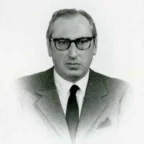
Volpe, Carlo
Bologna, 11 giugno 1926 - Bologna, 2 febbraio 1984
Carlo Volpe è stato uno dei più influenti storici dell'arte italiani del secondo Novecento, formatosi alla scuola di Roberto Longhi e protagonista degli studi sul Duecento e Trecento, in particolare sul Trecento riminese e bolognese.
Volpe nasce a Bologna nel 1926 e cresce in un ambiente che lo porta presto a confrontarsi con la grande tradizione degli studi storico-artistici italiani. La sua formazione decisiva avviene all'Università di Bologna, dove è allievo di Roberto Longhi, del quale assimila il metodo filologico basato sul confronto diretto con le opere, l'attenzione alla qualità visiva e l'uso serrato della fotografia come strumento di indagine. Nel novembre del 1949 discute con Longhi una tesi dedicata a Pietro Lorenzetti ad Assisi, che già rivela il suo interesse per la pittura trecentesca e per i rapporti fra scuole regionali. In questi anni si forma anche nel clima longhiano delle riviste e della critica militante, che mette in dialogo antico e contemporaneo.
Poco dopo la laurea, Volpe comincia a collaborare al Nuovo Corriere con interventi e recensioni che spaziano dall'arte antica alle ricerche contemporanee, mostrando una curiosità ampia e non settoriale. Parallelamente, entra nel gruppo di giovani redattori legati all'esperienza di Paragone, la rivista fondata da Longhi, dove debutta nel 1951 con un saggio su Ambrogio Lorenzetti e i rapporti fra Firenze e Siena nel quarto decennio del Trecento. Questa precoce attività critica lo pone subito in dialogo con figure come Francesco Arcangeli, Giuliano Briganti e Mina Gregori, con cui condivide una riflessione comune sul metodo e sui confini della storia dell'arte.
Dopo un lungo periodo di insegnamenti "secondari" presso l'Istituto di Storia dell'arte dell'Università di Bologna, Volpe ottiene nel 1974 la cattedra di Storia dell'arte medievale e moderna. Il suo insegnamento si colloca in continuità con la lezione longhiana ma introduce una particolare attenzione alla sistematicità degli studi sul Trecento e sulla tradizione emiliana, contribuendo a formare una generazione di storici dell'arte sensibili al dato visivo e, insieme, alle strutture critiche di lungo periodo. Nel 1982 diventa il primo direttore del neonato Dipartimento delle Arti Visive dell'Ateneo bolognese, trasformando l'eredità dell'Istituto di Storia dell'arte in una struttura dipartimentale più ampia, che integra storia dell'arte, studi visivi e nuove metodologie.
La sua morte prematura nel 1984 interrompe una carriera critica e accademica ancora in pieno corso, proprio nel momento in cui stava consolidando il suo ruolo istituzionale e la sintesi teorica dei suoi interessi. A distanza di decenni, l'Università di Bologna e vari centri di ricerca continuano a ricordarlo come una figura cardine nella storia del loro Dipartimento, anche attraverso convegni dedicati alla sua eredità scientifica accanto a quella di Francesco Arcangeli, altro grande allievo di Longhi.
Accanto all'insegnamento, Volpe sviluppa una intensa attività di critico militante, che attraversa quotidiani e riviste specialistiche. Oltre al Nuovo Corriere, lavora stabilmente nella redazione di Paragone, dove interviene regolarmente su temi di arte italiana, dall'età medievale al Seicento, consolidando il proprio profilo di conoscitore capace di misurarsi con problemi attributivi e con questioni di metodo. Dal 1958 affianca Stefano Bottari nella redazione di Arte antica e moderna, altra sede in cui la sua scrittura si esercita nel dialogo con i dibattiti più vivi della storiografia artistica.
Pur celebre per gli studi trecenteschi, Volpe mantiene un'attenzione costante all'arte contemporanea, seguendo artisti come Morlotti, Morandi, Cavaglieri, Ruggeri e Licini. Questa duplice inclinazione, verso il Medioevo e verso il Novecento, alimenta una concezione dell'arte come storia lunga, in cui le categorie formali e la questione della "moralità" dell'arte vengono ripensate alla luce del presente. Un saggio tardo, Il lungo percorso del "dipingere dolcissimo e tanto unito", mette bene in luce il suo sforzo di tenere insieme analisi stilistica, storia sociale e riflessione critica sui valori etici dell'opera.
La ricerca di Volpe si distingue per un'impressionante vastità di interessi, che vanno dal Duecento al Seicento, ma è soprattutto nel campo del Trecento italiano che il suo nome resta centrale. Il libro La pittura riminese del Trecento, pubblicato nel 1965, rappresenta una pietra miliare: in esso Volpe coglie per la prima volta con piena consapevolezza la precocità e la portata della ricezione della lezione assisiate di Giotto in area riminese, ridefinendo un intero capitolo della pittura italiana del tempo. Più tardi, nel 1979, dedica un'ampia sintesi alla pittura bolognese trecentesca all'interno del saggio La pittura emiliana del Trecento, contribuendo a chiarire il ruolo dell'Emilia come cerniera fra tradizioni diverse.
Un'altra linea importante dei suoi studi riguarda l'arte emiliana fra Cinque e Seicento, testimoniata, tra l'altro, dal volume Il fregio dei Carracci e i dipinti di Palazzo Magnani in Bologna, uscito per il Credito Romagnolo nella seconda metà degli anni Settanta. In questi lavori Volpe esercita con rigore il mestiere di conoscitore, affinando attribuzioni, ricostruendo cicli decorativi e riflettendo sulle dinamiche del collezionismo e del mecenatismo cittadino. Il suo contributo più ambizioso e teoricamente denso è considerato Il lungo percorso del "dipingere dolcissimo e tanto unito", apparso nel quinto volume della Storia dell'arte italiana, dove riconosce un ruolo centrale alla Lombardia nella rielaborazione di formule giottesche che a Firenze, al contrario, risultano "perdenti" in una certa fase del percorso del maestro.
Per l'ambito che interessa particolarmente gli studi sul Duecento e Trecento, Volpe si impone come figura chiave nella rilettura del cosiddetto "cantiere assisiate" e delle sue propagazioni regionali, dal riminese all'Emilia e oltre. La sua attenzione a maestri come Pietro e Ambrogio Lorenzetti, ai rapporti Firenze-Siena e al ruolo delle scuole periferiche lo colloca fra gli interpreti più raffinati delle vicende pittoriche del Medioevo italiano, influenzando anche la successiva valorizzazione di contesti allora considerati marginali.
Volpe è unanimemente riconosciuto come uno dei più rigorosi esponenti del metodo filologico longhiano, applicato con particolare finezza al lavoro di conoscitore. La sua pratica quotidiana di studio si fonda su un uso sistematico della fotografia: nel corso della vita costruisce una vasta fototeca personale di opere dal Duecento al Cinquecento, oggi organizzata e valorizzata come Fototeca Carlo Volpe, che rappresenta una risorsa di primo piano per la connoisseurship della pittura italiana. Questa raccolta, conservata e resa consultabile in ambito accademico, documenta non solo il suo interesse per singoli autori, ma anche la volontà di mappare interi territori figurativi con sguardo capillare.
Nel giudizio degli storici dell'arte, Volpe si afferma presto, accanto a Federico Zeri, come uno dei maggiori conoscitori a livello internazionale, capace di proporre attribuzioni e letture destinate a modificare il quadro critico di riferimento. Le iniziative recenti, convegni, studi sulla sua "moralità dell'arte" e ricerche dedicate alla sua fototeca, mostrano come la sua figura continui a essere un punto di riferimento per chi si occupa di Trecento italiano e di metodologia della storia dell'arte nel solco longhiano.
von Campenhausen, Hans Freiherr
Rosenbeck (Livonia), 16 December 1903 - Heidelberg, 6 January 1989
Hans Erich Freiherr von Campenhausen was one of the most important Protestant church historians of the twentieth century, known above all for his work on the early Church, the formation of canon, and the political and theological history of late antiquity. He also occupies a particular place in Ambrose studies, because his first major work on the bishop of Milan appeared almost simultaneously with the great books of Jean-Rémy Palanque and Frederick Homes Dudden, yet was conceived entirely independently and with a sharply argumentative, historically focused method of its own.
Campenhausen was born on 16 December 1903 at Rosenbeck in Livonia, then part of the Russian Empire, into a Baltic-German baronial family of large landowners whose ancestors had come from Germany into the still-pagan Baltic in the High Middle Ages. The Russian Revolution destroyed that world. His father was killed in the upheavals of 1919 as a representative of the "feudal class," and the young Campenhausen himself was imprisoned before the family eventually escaped to Germany. He had begun his schooling at Dorpat and Riga and completed his Abitur at Heidelberg in 1922, bringing to German academia the experience of violent political rupture that marked so many scholars of his generation from the Baltic provinces.
He studied theology and history at Heidelberg and Marburg, with periods in Berlin and Rome. His formation was shaped above all by Rudolf Bultmann and Hans Freiherr von Soden, while the methodological influence of Martin Dibelius was especially decisive. In 1926 he took his doctorate at Heidelberg under Hans von Schubert with a study of Ambrosius von Mailand als Kirchenpolitiker, published by de Gruyter in 1929. He habilitated at Marburg in 1928 with a work suggested by von Soden on the Passion sarcophagi, Die Passionssarkophage: Zur Geschichte eines altchristlichen Bildkreises, a study of direct importance for Christian archaeology and iconography because it traces the formation of an early Christian image-cycle in sculpted stone rather than treating late antique Christianity only through texts.
His Ambrose dissertation asked the sharpest single question in the field: what kind of church politician Ambrose was. This was not merely a biography but an inquiry into episcopal action, political tactics, and relations with imperial power under Gratian, Valentinian II, and Theodosius. In later historiography, Palanque's great thesis supplied the chronological and epistolary scaffolding for Ambrose's career, while Dudden's two volumes offered the full English narrative; but Campenhausen's book remained the shortest, most pointed, and most argumentative of the three, and it set enduring terms for the debate over Ambrose's political posture and practical dealings with the late Roman court.
Campenhausen's early academic career unfolded under the increasingly difficult conditions of the Third Reich. In 1930 he became Privatdozent for church history and Christian archaeology at Göttingen, and from 1931 to 1935 held the modest office of Inspector at the Theological Stift there. A compromised fact of his record is that on 11 November 1933 his name appeared among the signatories of the professors' declaration supporting Hitler and the National Socialist state. Yet he kept his distance from the regime, joined the Confessing Church, and paid for that distance professionally. From 1935 onward he survived on a sequence of stand-in lectureships at Giessen, Greifswald, Göttingen, Kiel, Heidelberg, and Vienna. Two academic chairs were blocked for political reasons: first the succession to Heinrich Bornkamm at Giessen in 1935, and then, in 1937, the Heidelberg chair of church history vacated by Walther Köhler, where he had already received favourable support from the dean, the faculty, and even student representatives before the office of the Deputy of the Führer vetoed him because of his Confessing Church ties.
Only after the collapse of the regime was he finally called, in 1945, to Heidelberg as successor to his own teacher Hans von Schubert. He was elected Rector of the university in 1946 and taught there until 1968, making Heidelberg the center of his mature scholarly life. The major books of these decades include Die Idee des Martyriums in der alten Kirche (1936), Kirchliches Amt und geistliche Vollmacht in den ersten drei Jahrhunderten (Mohr, 1953), Griechische Kirchenväter (1955), Lateinische Kirchenväter (1960), Die Jungfrauengeburt in der Theologie der alten Kirche (1962), Aus der Frühzeit des Christentums (1963), and above all Die Entstehung der christlichen Bibel (Mohr, 1968), which remains one of the classic accounts of the formation of the Christian canon. The two small books on the Greek and Latin Fathers became especially influential in teaching and were long available in English translation as The Fathers of the Greek Church and The Fathers of the Latin Church.
His later years brought extensive honors. He received honorary doctorates from Göttingen, Oslo, St Andrews, and Uppsala; belonged for more than forty years to the Heidelberg Academy; was a member of the German Archaeological Institute; and served as corresponding fellow of the British Academy and the Göttingen Academy, as well as honorary member of the American Academy of Arts and Sciences from 1972. Severe visual impairment gradually made research more difficult and eventually impossible. His scholarly legacy remained institutional as well as bibliographical: fifteen of his students became university teachers, a school often said to be the largest left by any Protestant church historian since Harnack. His son Axel von Campenhausen later became a professor of canon law. Hans Freiherr von Campenhausen died in Heidelberg on 6 January 1989 and was buried in the Bassermann–Campenhausen family plot in the Bergfriedhof, leaving a body of work central to early Christian studies, late antique church politics, and the historical interpretation of figures such as Ambrose.
W
Wadding, Luke
Waterford, 16 October 1588 – Rome, 18 November 1657
Luke Wadding was an Irish Franciscan friar, theologian and historian, the founding figure of modern Franciscan historiography. Born into a prosperous merchant family of Waterford, he was educated in Ireland and at the Irish College in Lisbon, entered the Friars Minor in Portugal in 1607 and studied theology at Coimbra and Salamanca. In 1618 he went to Rome as theologian to a Spanish embassy promoting the doctrine of the Immaculate Conception, and he remained in the city for the rest of his life.
In Rome he founded the College of Saint Isidore for Irish Franciscans in 1625, served as an influential adviser in the Curia and, in the 1640s, acted as agent in Rome of the Confederate Catholics of Ireland. His learned output was immense. He edited the works of John Duns Scotus (Lyon, 1639, 12 vols.) and the writings attributed to Saint Francis (1623), and compiled the bibliography of Franciscan writers, Scriptores Ordinis Minorum (1650).
His major work is the Annales Minorum (Lyon and Rome, 1625-1654, 8 vols.), a year-by-year history of the Franciscan order from its foundation to 1540, compiled from archival sources collected across Europe and later continued by other hands. For the history of art it preserves early notices of Franciscan commissions. Among them is the account, under the year 1623, of the great painted cross of San Francesco at Assisi, lowered from its beam in that year, at whose foot were found the kneeling figure of Frate Elia and the inscription naming Giunta Pisano and the date 1236. Wadding's report, together with the 1624 letter of Bishop Marcello Crescenzi, is the earliest witness to the signature of the lost cross.
Walram of Naumburg
died April 12, 1111
Walram of Naumburg was one of the more intellectually active German bishops of the late eleventh and early twelfth centuries, positioned at the intersection of the great political and theological controversies of his age — the Investiture Controversy between the papacy and the Empire — and remembered also for his role in the documentation of the cult of Saint Leonard of Noblac.
Walram was appointed to the Diocese of Naumburg-Zeitz, in Saxony, around 1089, succeeding Bishop Günther I von Wettin, and was formally consecrated bishop around 1091 by Hartwig of Spanheim. He held the see until his death in 1111, when he was succeeded by Dietrich I von Naumburg. His episcopate was dominated by the bitter conflict known as the Investiture Controversy, the struggle between Pope Gregory VII (and his successors) and Emperor Henry IV over the right to appoint — or "invest" — bishops and abbots with the symbols of their office. Walram was a committed imperialist, firmly siding with Henry IV against the reforming papacy, and this political alignment shaped his entire career and literary output.
Walram's most significant intellectual contribution is the treatise Liber de unitate ecclesiae conservanda ("Book on the Preservation of the Unity of the Church"), attributed to him and published in a critical edition in 1883 by the Monumenta Germaniae Historica (Impensis bibliopolii Hahniani). This polemical work defended the imperial position in the Investiture Controversy, arguing that the unity of the Church required cooperation between the sacerdotium and the imperium — pope and emperor — rather than papal supremacy over temporal appointments. It is a document of considerable importance for understanding the ideological arguments marshalled in defence of Henry IV and stands as one of the more sophisticated pro-imperial theological texts of the period.
A preserved letter from Walram to Anselm of Canterbury — held in the Bibliothèque nationale de France (BnF, ark:/12148/btv1b10544536g) — reveals that he was engaged in theological correspondence with one of the greatest minds of the age. Anselm of Canterbury, though himself a reformist sympathetic to Gregorian ideals, maintained contacts across the theological spectrum, and Walram's letter to him testifies to the intellectual climate in which German bishops of the period operated, exchanging arguments and seeking legitimacy from renowned ecclesiastical figures even across political divides.
In 1103, Walram was present at the Abbey of Noblac in the Limousin (modern Saint-Léonard-de-Noblat, France) during the celebrated pilgrimage of Bohemond I of Antioch, the Norman crusader prince who had been captured by the Danishmend Turks and attributed his release to the intercession of Saint Leonard. This event was a moment of extraordinary publicity for Leonard's cult, drawing European-wide attention to the abbey. Walram seized the occasion to compose or commission a new hagiographic vita of Leonard, incorporating the miraculous liberation of Bohemond and other contemporary miracle accounts. The resulting text — whose authorship was later critically examined by the Bollandist Albert Poncelet, who questioned whether it was genuinely Walram's own composition or attributed to him posthumously — marked the moment when Leonard's veneration expanded from a regional Limousin devotion into a major European pilgrimage cult.
Walram died on April 12, 1111. His legacy is twofold: as a political theologian, he left the Liber de unitate ecclesiae conservanda as a testament to imperialist ecclesiology in the age of the Investiture Controversy; as a hagiographer, his presence at Noblac in 1103 and the vita associated with his name played a decisive role in amplifying the cult of Saint Leonard across Latin Christendom, making him an unexpectedly important figure in the history of medieval devotion to one of the most widely venerated saints of the central Middle Ages.
Wander, Steven
active late 20th-21st century
Steven Wander is an American art historian specializing in Late Antique and early Byzantine art, whose work includes studies of early Byzantine silver, notably the sixth- and seventh-century David plates depicting scenes from the life of the biblical king, and broader questions of iconographic transmission between text and image in the late antique Mediterranean world.
Wander's research on the Codex Amiatinus demonstrated that the manuscript's Tabernacle diagram and its Ezra miniature correspond more closely, in points of specific detail, to Cassiodorus's Latin version of Josephus's Jewish Antiquities than to the biblical text of Exodus itself. The finding both strengthens the case for a Vivarium connection behind the manuscript's prefatory images and complicates any simple derivation of those images directly from a Bible, showing instead a more intricate chain of transmission running through Cassiodorus's broader library and its Josephan material. See the essay on the Codex Amiatinus in this database for the fuller discussion of the Tabernacle diagram and its models.
Ward, Benedicta (Florence Margaret Ward)
Durham, 4 February 1933 - 23 May 2022
Sister Benedicta Ward was one of the most significant medievalists of her generation: an Anglican contemplative nun who combined a life of strict monastic enclosure with a prodigiously productive career as a scholar of early Christian spirituality, hagiography, and medieval theology.
Benedicta Ward's intellectual formation began with undergraduate studies in history at Manchester University in the early 1950s. This period proved decisive in two respects: she discovered her vocation as a historian, and she converted from the Methodism of her northern English upbringing to Anglicanism and to the contemplative religious life. In 1955 she entered the Community of the Sisters of the Love of God (SLG), an Anglican religious order based at Fairacres, near Oxford, which at the time observed a rule of very strict enclosure. Far from stifling her intellectual energies, the community valued scholarly engagement with the breadth of inherited monastic wisdom, Eastern and Western, and eventually permitted select members to pursue academic work outside the convent walls.
By the early 1970s Sister Benedicta was allowed to pursue doctoral research at Oxford, and in 1972 she began her DPhil under Sir Richard Southern, then the foremost British authority on Saint Anselm of Canterbury and medieval intellectual culture. Her thesis, completed in 1978, examined miracles and miracle collections between 1015 and 1215, a characteristically bold topic that interrogated how ordinary medieval Christians, monks, pilgrims, and lay people alike, actually experienced and understood miraculous events. This study was published in 1982 under the title Miracles and the Medieval Mind and has remained in print.
Her association with Harris Manchester College, Oxford, where she served for many years as a Fellow and tutor, brought her into sustained contact with generations of theology undergraduates. She eventually held the title of Reader in the History of Christian Spirituality at the University of Oxford, a formal recognition of her standing among the most authoritative voices in the field in Britain. She lectured across the full sweep of pre-Reformation Christianity: medieval mysticism, Anglo-Saxon hagiography, the Desert Fathers, Anselm of Canterbury, Bede, Julian of Norwich, and Teresa of Avila.
Her most widely read and enduring single volume remains her 1975 translation of The Sayings of the Desert Fathers (Apophthegmata Patrum), a landmark rendering of the accumulated wisdom of the early Egyptian and Syrian hermits of the third and fourth centuries. Clear, lively, and scholarly, it became and remains one of the most accessible and dependable introductions to the subject in English, consulted by monastics and academics alike.
Her contributions to Bede studies were equally substantial. She produced several works on Bede and the psalter, a study of the Synod of Whitby, and a monograph on Bede as theologian and historian that illuminated the spiritual dimensions of his work beyond the familiar surface of his narrative chronicle. Her work on Anselm of Canterbury began almost simultaneously with her academic career: her translation of The Prayers and Meditations of Saint Anselm appeared as a Penguin Classic in 1973, the year after she began her DPhil, and introduced Anselm's interior devotional writing to a vast general readership.
Her approach to Julian of Norwich was particularly illuminating and exemplifies how her own lived experience as a cloistered nun sharpened her scholarly judgement. She challenged the prevailing assumption that Julian had been a nun, pointing out that Julian's writings contain no trace of the specifically cloistered life that Ward herself inhabited daily, a methodological insight that reshaped subsequent scholarship on the Norwich mystic.
What distinguished Sister Benedicta Ward from many of her academic contemporaries was the quality of inhabited understanding she brought to her subjects. She was not merely a historian writing about monasticism from the outside; she had lived under the rule for nearly seven decades when she died, and the rhythms of communal prayer, the experience of silence, and the discipline of lectio divina formed the living context within which she read the Desert Fathers, Bede, and Anselm. Along with the great French Benedictine scholar Jean Leclercq, she held that the intellectual revolution of 1150-1250 had displaced a complex, coherent pre-scholastic monastic culture, and as a contemplative she regarded that earlier culture as her own authentic home territory.
A commemorative volume, Prayer and Thought in Monastic Tradition: Essays in Honour of Benedicta Ward SLG, published in 2023, brought together twenty-two essays from international scholars spanning the full range of her interests, from Boniface's missionary zeal to the intercessory prayer traditions of both East and West, as a fitting testament to a life of learning lived entirely in service to understanding the deep roots of Christian spirituality.
Warren, Frederick Edward
1842 – 1930
Frederick Edward Warren was an English clergyman and liturgical scholar, fellow of St John's College, Oxford, and among the foremost historians of early insular liturgy of his generation. His The Liturgy and Ritual of the Celtic Church (Oxford, 1881) remains a standard reference work for the study of early British and Irish liturgical practice.
In it, Warren transcribed and printed the Latin text of the order for the Unction and Communion of the Sick added to the Book of Dimma between the gospels of Luke and John, drawing attention to its archaic sequence — extreme unction preceding the viaticum, the reverse of the later Roman order — as a valuable witness to early Irish liturgical usage. He also produced an edition of the Bangor Antiphonary (1893–95) for the Henry Bradshaw Society, work that cemented his reputation as the leading Anglophone authority on early insular liturgical texts.
Washburn, Daniel A.
born 20th century
Daniel A. Washburn is an American scholar of late antique religion whose work centers on the fraught relationship between the Christian church and the Roman state in the later Empire, with exile and banishment as recurring analytical lenses. He studied Religion at the University of Puget Sound, spent part of his formation at the School of Oriental and African Studies in London and at Keble College, Oxford, and completed a doctorate in Religious Studies at Stanford. He has taught at Seattle University, where he has served both as a humanities instructor in what was then Matteo Ricci College and later as a teacher-administrator.
His principal book, Banishment in the Later Roman Empire, 284-476 CE (Routledge Studies in Ancient History, 2013), filled a genuine gap in scholarship by treating exile not as a secondary legal detail but as a central structure of late Roman political and social life. Washburn argues that banishment was simultaneously a punishment and a symbol: it marked the condemned as fallen, made visible the asymmetry between punisher and punished, and did so in a distinctive way by moving the body of the exile through space. Because exile could be reversed, it also functioned as negotiation, preserving the possibility of pardon and making restoration itself part of the drama of authority.
The book works from the legal precision of the second- and third-century jurists forward and combines juristic material and the Codex Theodosianus with ecclesiastical and literary sources. Its seven chapters trace the forms of banishment, its relation to the church, the officials who imposed and enforced it, the people who suffered it, the practical reality of life in exile, and the conditions of return. Among Washburn's key findings are that exiles were generally given time to arrange their affairs, that guile more often succeeded than force in removing them, that civil rather than military personnel usually carried out expulsions, that bishops appear more often than anyone else as supervising authorities over the banished, and that exile remained above all a penalty of the higher social orders, increasingly functioning as the elite alternative to capital punishment and as a standard sentence for maiestas. Eric Fournier's 2015 review in the Journal of Early Christian Studies underlined the importance of the study.
Washburn is also the author of "The Thessalonian Affair in the Fifth-Century Histories," published in H. A. Drake's Violence in Late Antiquity: Perceptions and Practices (Aldershot, 2006), a volume emerging from the Shifting Frontiers conference held at Santa Barbara in 2003. That essay belongs directly to the historiography of Ambrose and Theodosius: the Thessalonian massacre of 390 and the emperor's subsequent penance at Milan had already been treated by Campenhausen, chronologically anchored by Palanque, narrated at length by Dudden, and fundamentally re-read by Neil McLynn. Washburn's contribution is sharply source-critical. He asks what the fifth-century ecclesiastical historians Rufinus, Socrates, Sozomen, and Theodoret actually knew, and how much of the famous later image of Ambrose barring the emperor at the church door is a construction of those historians rather than a recoverable record of the events of 390.
Watson, Paul F.
United States, active later 20th century
Paul F. Watson was an American art historian of the Italian Renaissance who taught for many years in the Department of the History of Art at the University of Pennsylvania, where he was associate professor and chaired the department at the end of the 1970s. His scholarship was directed less at the altarpiece than at the secular and domestic image: the painted furniture of the Florentine household, the illustration of Boccaccio, and the iconography of love, courtship and the garden.
His book The Garden of Love in Tuscan Art of the Early Renaissance (1979) followed the garden of love from its French courtly sources into Tuscan painting and cassone decoration, and remains the standard treatment of the theme. He was also a contributor to encyclopedia and reference literature on Italian Renaissance art.
For students of the Spanish Chapel his most consequential piece is a study of 1980 in the Dominican journal Memorie Domenicane, whose title posed the choice starkly: are the seated figures of Andrea di Bonaiuto's Via Veritatis portraits of poets, or a portrait of Christian order? Watson argued for the second. The wall is not a group portrait but an allegory, and its figures are types representing the ranks and estates of a rightly ordered Christendom rather than disguised likenesses of Petrarch, Laura and their literary circle. The argument is the standard modern refutation of the portrait tradition descending from Vasari.
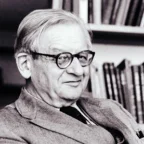
Weitzmann, Kurt
Kleinalmerode (Hesse), 7 March 1904 - Princeton, 7 June 1993
Kurt Weitzmann was the preeminent historian of late antique and Byzantine art in the twentieth century, an intellectual figure of generational significance who redefined the methods and fundamental issues of the discipline. Born in Germany and trained in Berlin under Adolph Goldschmidt, he emigrated to the United States in 1934 due to Nazi persecution and settled in Princeton, where he would spend the next sixty years of his career.
His work ranges from the illustration of papyrus scrolls to icons on wood, from wall mosaics to illuminated manuscripts, with a methodological consistency grounded in the conviction that the art of the Mediterranean Middle Ages constitutes a unified system of cultural transmission.
Weitzmann pursued his university studies through the universities of Munster, Wurzburg, and Vienna, where he studied with Julius von Schlosser, the great historian of art theories. He completed his doctorate in Berlin in 1929 under the guidance of Adolph Goldschmidt, then the leading European scholar of medieval ivory and Carolingian and Romanesque miniatures. Goldschmidt's influence on Weitzmann was decisive both methodologically, through the systematic study of corpora, and thematically. Weitzmann's first major published work was produced in close collaboration with his mentor: the corpus Die byzantinischen Elfenbeinskulpturen des 10. bis 13. Jahrhunderts (2 vols., 1930-34), which remains a standard reference for the study of medieval ivories.
During the same years in Berlin, Weitzmann undertook his first field research trips. Between 1932 and 1934 he visited Mount Athos repeatedly, gaining access to monastic libraries and treasuries and identifying illuminated manuscripts, icons, and codices that had not yet been fully explored in specialist literature. These early surveys opened lines of research he would develop for decades.
In 1934, Weitzmann left Germany for political reasons and moved to the United States. The following year he joined the Institute for Advanced Study in Princeton, founded by Abraham Flexner and already home to figures such as Albert Einstein and Erwin Panofsky. He became a U.S. citizen in 1940. In 1945 he was appointed to a chair at Princeton University, became full professor in 1950, and remained on the faculty until 1972, when he received emeritus status. From 1973 to 1982 he served as consultative curator at the Metropolitan Museum of Art in New York, overseeing medieval art collections.
Thanks in part to Weitzmann, Princeton became one of the world's leading centers for the study of medieval iconography and manuscript history. The Index of Christian Art (now the Index of Medieval Art) embodied an aim shared with his scholarship: a systematic and comparative survey of the figurative repertoire.
Weitzmann's most original and enduring methodological contribution is his theory of illustrative transmission: the hypothesis that image cycles in medieval illuminated manuscripts derive, through chains of copying, from illustrated prototypes of Classical Antiquity, and that the iconographic differences among manuscripts reflect varying degrees and modes of fidelity to the original model. He first articulated this theory in Illustrations in Roll and Codex: A Study of the Origin and Method of Text Illustration (Princeton University Press, 1947), now considered a classic of medieval art history.
A concrete application of this method was the monograph The Joshua Roll (1948), where Weitzmann argued that the famous illustrated Joshua scroll in the Vatican Apostolic Library derived from a late antique prototype and preserved narrative conventions of classical painting. In Greek Mythology in Byzantine Art (1951), he analyzed the survival and transformation of classical myths in Byzantine visual culture, demonstrating continuities between late antique pagan repertories and medieval Eastern workshops.
Perhaps the best-known phase of his career is tied to the Monastery of St. Catherine on Mount Sinai, which he visited repeatedly between 1956 and 1965. Founded by Emperor Justinian around 550 at the foot of the biblical mountain, the monastery preserves the world's oldest library of Greek manuscripts and an icon collection of exceptional chronological continuity. Weitzmann organized a systematic cataloging and documentation project with an international team, resulting in monumental publications including The Monastery of St. Catherine at Mount Sinai: The Icons (1976) and The Monastery of St. Catherine at Mount Sinai: The Illuminated Greek Manuscripts (with G. Galavaris, 1990).
These studies transformed understanding of the icon as an artistic genre. Weitzmann showed that the earliest Sinai panels, including sixth- and seventh-century works predating iconoclasm, were not merely devotional objects but high-quality productions connected to the same artistic milieu that generated Constantinopolitan mosaics and manuscripts. His work also fueled a lasting debate about the stylistic origins of icon painting and its relation to late antique portraiture, including the Fayum tradition.
Alongside manuscript and icon studies, Weitzmann made major contributions to mural painting. In The Fresco Cycle of S. Maria di Castelseprio (1952), he proposed an Eastern, Syriac, or Constantinopolitan background for the painter of the celebrated Castelseprio frescoes near Varese, linking the cycle to late antique Hellenistic traditions. Although the thesis remained debated, its comparative method strongly influenced subsequent scholarship.
He returned late in life to broad questions of visual transmission in The Frescoes of the Dura Synagogue and Christian Art (1990), written with Herbert L. Kessler. There he examined the third-century painted cycles of the synagogue at Dura-Europos as evidence of a Jewish biblical illustration tradition that influenced early and medieval Christian iconography.
In his final years Weitzmann worked on his memoirs, published posthumously in 1994 as Sailing with Byzantium from Europe to America: The Memoirs of an Art Historian. He died on 7 June 1993, ninety-six hours after receiving an honorary degree from Princeton University in a private ceremony held because of his health. In 1995, Princeton published Byzantine East, Latin West: Art-Historical Studies in Honor of Kurt Weitzmann, a tribute volume reflecting his central place in international medieval and Byzantine studies.
Werckmeister, Otto Karl
Berlin, 26 April 1934 - Berlin, 9 June 2023
Otto Karl Werckmeister was born in Berlin on 26 April 1934, the son of the art dealer Karl Werckmeister and the artist Rose Petzold. The specific texture of his Berlin childhood, encompassing the Third Reich, the Red Army's conquest of the city, and the years of de-Nazification, left an indelible mark. He knew Nazism firsthand, witnessed the conquest of the city by the Red Army, and had direct experience of de-Nazification, as he sometimes reminded his friends. This likely explains his impatience with "committed" colleagues who claimed to conduct their struggles in the library. For Werckmeister, Marxism was quintessentially the philosophy of praxis.
Werckmeister studied art history, philosophy, and German literature at the Free University in Berlin, earning his doctorate in 1958 with a dissertation on a major example of Carolingian goldsmith work, the book cover of the Codex Aureus of Saint Emmeram in Regensburg. This first project, focused on the most magnificent surviving example of ninth-century Carolingian metalwork, now in the Bayerische Staatsbibliothek, announced a defining characteristic of his medieval scholarship: the rigorous examination of objects at the intersection of material culture and theological meaning.
Werckmeister's next project was a study of exemplary examples of eighth-century Insular illumination, conducted at the Warburg Institute in London from 1958 to 1961 and supported by a grant from the German Research Foundation. His resulting book, Irisch-northumbrische Buchmalerei und monastische Spiritualitat (Berlin: De Gruyter, 1967), meticulously examines four illustrated pages of three prominent Insular manuscripts, including ornamental pages, which he associates with profound theological-exegetical interpretations. His study of Insular book illumination is now considered a memorable pioneering achievement in the context of studies on the "theology of ornament." The concept itself, that the intricate interlace and zoomorphic decoration of Insular manuscripts are not merely aesthetic but encode specific exegetical and spiritual meanings intelligible within the discipline of monastic lectio, was in 1967 a genuinely novel contribution.
After a travel grant from the German Archaeological Institute (1961-1962), Werckmeister worked at the German Archaeological Institute in Madrid from 1962 to 1965, researching early medieval Spanish book illumination of biblical and conciliar manuscripts. He analyzed the political content of some illustrations with regard to the relationship between northern Spanish Christians and Islam, emphasizing that these images convey an anti-Islamic message by explicitly using Christian pictorial traditions. His 1963 essay on the three prophets in the Biblia Hispalense broke new ground in connecting visual programs to the ideological stakes of the Christian Reconquista, an approach that foreshadowed the more fully developed politicized methodology of his later career.
Also from this period came Three Problems of Tradition in Pre-Carolingian Figure Style: From Visigothic to Insular Illumination (Dublin: Hodges Figgis, 1963), which examined the transmission of figural conventions across the cultural boundary between Iberian and Insular manuscript traditions.
Werckmeister's contributions to research on the manuscripts of the Beatus Commentary on the Apocalypse are among his best known works in medieval studies. He first proposed the now widely held view that Beatus manuscripts were intended for the private reading of monks in the contemplative practice of lectio divina. His second innovative approach concerns the influence of the liturgy of the dead on Romanesque copies such as the Beatus of Saint-Sever and the Silos Beatus. Best known here is his 1973 essay on "Pain and Death in the Beatus of Saint-Sever," where he relates scenes of cosmic catastrophe and human resistance to a responsory of the Office of the Dead describing the Last Judgment. He interprets the victims' attempts to escape as an indication that one could still avoid final damnation by establishing memorials for the soul and endowing the Church.
This double contribution, the lectio divina thesis on Beatus function and the liturgical-eschatological reading of Saint-Sever horror scenes, remains among the most consequential interpretive interventions in Beatus studies since Wilhelm Neuss, operating on a fundamentally different level from Neuss's classificatory and stylistic concerns.
Werckmeister produced pioneering research not only on early medieval illumination but also on Romanesque sculpture in France and Spain. His well-known 1972 essay on the recumbent Eve on the lintel of the north portal of Autun Cathedral overturned the then-standard explanation that her posture merely reflected the narrow format. Instead, he demonstrated multiple layers of meaning, including a striking parallel with the humiliating posture of notorious sinners in the rite of public penance on Ash Wednesday. Eve's sensually rendered body, in this reading, embodies sexual concupiscentia, often cited by theologians as the cause of original sin. The medieval viewer of the penitential portal was thus morally manipulated and disciplined for receptivity to ecclesiastical teaching.
His essay "The Emmaus and Thomas Pillar of the Cloister of Silos" (1990) brought analogous rigor to Castilian cloister sculpture, connecting it to the Easter liturgy and specifically to the Silos antiphonary to explain both subject choice and compositional logic.
Werckmeister moved to the United States in 1965 and joined the faculty at the University of California, Los Angeles, where he became full professor in 1971. In this context he became a central figure in the New Left current that emerged within art history after 1968. In 1976, together with T.J. Clark and David Kunzle, he organized a session on Marxism and Art History at the College Art Association meeting in Chicago; in its aftermath, a Marxist Caucus was founded as an affiliate organization.
That same year he published what became his most widely cited medievalist essay, "The Political Ideology of the Bayeux Tapestry" (Studi Medievali, series 3, 17, 1976). He argued that the imprisoned Bishop Odo of Bayeux commissioned the Tapestry in the hope that it would help secure his release from King William's prison, implying a post-imprisonment date around 1082. This argument, combining close reading of the visual program with structural analysis of political relations between William I and his half-brother, showed that a materialist framework could generate concrete and testable historical hypotheses.
In 1984 Werckmeister became Mary Jane Crowe Distinguished Professor at Northwestern University in Evanston, Illinois, a position he held until retirement in 2002. A Guggenheim Fellowship (1981) and a fellowship at the Wissenschaftskolleg in Berlin (1986) supported his transition toward a new set of problems.
The modern artist to whom he devoted the most sustained attention was Paul Klee. When publishing his Klee studies in English in 1989, he changed the title to The Making of Paul Klee's Career, 1914-1920 and thoroughly revised the work. Against the image of Klee as an aloof sage untouched by material concerns, Werckmeister argued that Klee's breakthrough depended on adaptation to the art market and to the ideals of patrons and friendly critics.
Rather than writing a second book on Klee's later periods, Werckmeister turned to a broader topic: the confrontation between art and political ideologies from the Great Depression to the beginning of World War II, culminating in The Political Confrontation of the Arts in Europe from the Great Depression to the Second World War (arthistoricum.net, 2020). There he compares art and architecture in Nazi Germany, Fascist Italy, and the Soviet Union, while contrasting them with democratic contexts, especially Popular Front France and Spain.
Alongside his art-historical writing, Werckmeister sustained a major parallel career as an essayist and cultural critic. His volumes include Ende der Asthetik (1971), Ideologie und Kunst und andere Essays (1974), Zitadellenkultur (1989; English: Citadel Culture: The Beautiful Art of Decline in the Culture of the Eighties, 1991), Linke Ikonen (1997; English: Icons of the Left: Benjamin and Eisenstein, Picasso and Kafka after the Fall of Communism, 1999), and Der Medusa-Effekt (2001; English: The Medusa Effect: Political Pictorial Strategies since September 11, 2005). Citadel Culture offers a sweeping critique of poststructuralism and postmodernism, charting the transition from the argumentative culture of the 1970s to a politically directionless culture in heavily armed societies.
Across both major phases of his method, Werckmeister remained focused on specific historical context. In his early work he centered religious, exegetical, and liturgical frameworks in medieval art; later he analyzed socio-historical and economic conditions from a clearly Marxist perspective influenced by the Frankfurt School. He believed in democratic socialism and considered Leninism discredited by historical experience. Unsentimental toward the relics of international communist culture, he was untroubled by minority or unfashionable positions. He could be a fearsome protagonist in debate, yet earned deep loyalty from colleagues and graduate students whose projects and careers he helped shape.
In 2002 he retired and relocated to Berlin, which he called "my hometown." Werckmeister was married to the Spanish literary historian and medievalist Eukene Lacarra Lanz (1944-2023) from 1965 to 1983. He was survived by three children and six grandchildren. He died in Berlin on 9 June 2023, aged eighty-nine.
For scholars of illuminated manuscripts and Romanesque art, Werckmeister occupies a singular position: he brought to the field both exceptionally rigorous textual and liturgical scholarship and, later, a political and ideological reading with little precedent in the discipline as it was then practiced. His theology-of-ornament framework opened Insular manuscripts to new spiritual interpretation; his Beatus studies imposed a coherent liturgical and eschatological logic on imagery previously described but rarely explained; his Autun essay demonstrated that the sculpted body in Romanesque art could be read as a site of institutional coercion as well as theological vision; and his Bayeux Tapestry analysis showed that art-historical objects could be interpreted as instruments of a specific, recoverable political moment. Whether one accepts his methodology or not, the empirical quality of these interventions secures their lasting place in the field.
Whitworth, Victoria (née Victoria Thompson)
b. London, 1966
Victoria Whitworth is a British archaeologist, art historian and writer whose work concentrates on Britain and the North Atlantic world in the later first millennium AD. She has published under three names — Victoria Thompson for her earliest academic work, V. M. Whitworth for her first novels, and Victoria Whitworth since — which is worth knowing when searching catalogues.
She grew up in Kenya, where she developed her interest in the deep past and the natural world. She read English at St Anne's College, Oxford, specialising in medieval languages, literature and archaeology, then took an MA and a D.Phil. at the University of York. Between degrees she worked and travelled in Greece and qualified as a Blue Badge Guide with the London Tourist Board. Her doctorate concerned the origins of medieval Christian ideas of landscape, burial and commemoration — the basis of her first book, Dying and Death in Later Anglo-Saxon England (Boydell & Brewer, 2004), published as Victoria Thompson.
From 2012 to 2016 she was a lecturer at the Centre for Nordic Studies on the Orkney campus of the University of the Highlands and Islands; she lived and worked in Orkney for about a decade. Her research has focused principally on Pictish, Scottish and Anglo-Saxon stone sculpture, and on death, burial and memory in early medieval Britain. She is a Fellow of the Society of Antiquaries of London and of the Society of Antiquaries of Scotland.
Her most substantial recent contribution is The Book of Kells: Unlocking the Enigma (Apollo / Head of Zeus, 9 October 2025). The book confronts the manuscript's persistent anomalies — the disputed number of scribes and artists, the unresolved question of its purpose, the peculiar ordering of its contents and apparatus, and the erratic quality of its Latin — and argues that these oddities are not carelessness but bear on the book's conception. Its most discussed claim, reported in The Guardian in September 2025, is a challenge to the Iona hypothesis: Whitworth proposes that the display capitals of Kells find their closest analogues in the sculpture of the Pictish monastery at Portmahomack in Easter Ross, and that the manuscript may derive from there rather than from Iona. Christopher de Hamel reviewed it warmly in the TLS.
Alongside her scholarship she has written three historical novels set in Viking-Age England — The Bone Thief (Ebury, 2012) and The Traitors' Pit (Ebury, 2013), both as V. M. Whitworth, and Daughter of the Wolf (Head of Zeus, 2016) — as well as Swimming with Seals (Head of Zeus, 2017), a memoir of life, death and cold-water swimming in Orkney interwoven with the islands' history, folklore and archaeology, and Dust and Pomegranates: How Greece Changed Me Forever (Apollo, October 2024). She has previously worked as a tour guide, artist's model and teacher, and now writes full time.
She was one of 58 signatories to a letter published in the Sunday Times on 27 September 2020 in support of J. K. Rowling over her position on transgender issues.
Wilkins, David G.
Battle Creek, Michigan, 12 September 1939 -
David George Wilkins is an American art historian specializing in the painting and sculpture of Trecento and Renaissance Florence, and long the leading scholarly authority on Maso di Banco, a Florentine contemporary of Andrea Orcagna whose small and disputed body of work has made questions of workshop attribution — the same questions that surround panels merely "genaamd Orcagna" — a recurring feature of the literature Wilkins helped establish.
Wilkins took a B.A. at Oberlin College in 1961, followed by an M.A. (1963) and a Ph.D. (1969), both from the University of Michigan. His doctoral dissertation, Maso di Banco: A Florentine Artist of the Early Trecento, became the foundation of his subsequent career: he expanded and published it as the monograph Maso di Banco (Garland, 1985), still the standard reference work on the painter, in which he set out the documentary evidence, established a chronology for the frescoes attributed to Maso and his circle, and worked through the attributional confusions that link Maso's name to Orcagna's in the literature on mid-Trecento Florentine painting — precisely the connection cited in the Rijksmuseum's bibliography for the Amsterdam triptych.
He joined the Department of the History of Art and Architecture at the University of Pittsburgh in 1967 and remained there for the whole of his teaching career, retiring in 2004 as professor emeritus after serving two terms as department chair (1989-1992 and 1998-2004). He also taught for the University of Michigan's program in Florence and for the Semester at Sea program, keeping his teaching, like his research, oriented toward direct encounters with the Italian material. His teaching was recognized with the University of Pittsburgh's Chancellor's Distinguished Teaching Award (1987) and the College Art Association's National Award for Distinguished Teaching of Art History (2005).
Beyond Maso di Banco, Wilkins's publications range across Florentine Renaissance art and its patronage: he co-authored, with Bonnie A. Bennett, a study of Donatello (1984); with Frederick Hartt he co-authored the widely used textbook History of Italian Renaissance Art, which he continued to revise through multiple editions after Hartt's death; he edited the essay collection The Search for a Patron in the Middle Ages and the Renaissance (1996); and he served as general editor of The Illustrated Bartsch, volume 53. He also co-authored the broader survey textbook Art Past/Art Present. Since retiring, he and his wife and frequent collaborator Ann Wilkins have continued teaching in Rome, including for Duquesne University's Italian campus.
Williams, John Wesley
Memphis (Tennessee), 25 February 1928 - Pittsburgh, 6 June 2015
John Wesley Williams was born on 25 February 1928 in Memphis, Tennessee, the only child of Anna C. Williams and Wesley A. Williams. His path to the academy was shaped by postwar America. After high school he served in the Marines for two years. The G.I. Bill then enabled him to attend university, first Duke, then Yale, and finally the University of Michigan.
He earned a bachelor's degree in history at Yale in 1952, a master's degree in history at Michigan in 1953, and a PhD in art history at Michigan in 1959. This trajectory from military service through history training to art-historical specialization produced a scholar with unusually strong grounding in historical evidence, documentation, and empirical rigor. In 1955 he met and married Mary Ellen Schmidt, with whom he had six children.
In 1960 the family moved to Swarthmore, Pennsylvania, where Williams taught medieval Spanish art history and served as department chair. During the early 1960s his sustained engagement with medieval Spanish monuments took definitive shape. Fulbright-Hays awards supported work in Madrid in 1963-64 and 1968-69, giving him prolonged access to manuscripts, architecture, and sculpture, and establishing the scholarly relationships in Spain that underpinned his later authority.
After twelve years at Swarthmore, Williams moved to the University of Pittsburgh in 1972. He served as chair of the fine arts department from 1979 to 1984. His thirty-five years at Pittsburgh became a sustained effort to establish medieval Spanish art as a serious field in North American scholarship.
The intellectual atmosphere he cultivated at Pittsburgh was notably international. His first doctoral student, David Raizman, later recalled that Williams brought Peter Klein and Serafin Moralejo Alvarez as year-long postdoctoral fellows to the Frick Fine Arts Department. Together with Carl Nordenfalk on the faculty, this made Pittsburgh in the early 1970s one of the most dynamic environments for medieval Iberian and manuscript studies.
Williams received two National Endowment for the Humanities grants, a Guggenheim Fellowship in 1984, and election as Fellow of the Medieval Academy of America in 2008. Following retirement in 1996, he served as visiting Andrew W. Mellon Professor in History of Art and Architecture from 1997 to 2000. A Festschrift in his honor, organized by Pamela Patton, appeared in 2005.
His first major synthesis, published by George Braziller in New York, introduced early Spanish illuminated manuscripts to an English-speaking audience in accessible but scholarly form, and established his long-term commitment to treating Iberia not as a periphery but as a center of original medieval artistic production.
A Spanish Apocalypse: The Morgan Beatus Manuscript (1991) presented the Morgan Beatus (MS M.644, c. 940-945) with extensive commentary and demonstrated Williams's command of stylistic, codicological, and contextual analysis within Asturian-Leonese monastic and political culture.
He also served as principal authority for the Metropolitan Museum of Art catalogue The Art of Medieval Spain, A.D. 500-1200 (1993), the first English-language museum publication to present medieval Iberian art comprehensively and on its own terms.
The work with which Williams is permanently identified is The Illustrated Beatus: A Corpus of the Illustrations of the Commentary on the Apocalypse, five volumes (London: Harvey Miller, 1994-2003). With nearly two thousand illustrations, it documents the Apocalypse cycles of thirty-two manuscripts and fragments from the ninth to the thirteenth century.
Volume I (1994) offers the introductory framework: Beatus's biography, textual transmission, classification, and the competing hypotheses on compilation, function, and development of the illustration cycles. Volumes II-V (1994, 1998, 2002, 2003) present the manuscripts century by century. The project required almost a decade of cataloguing, comparative analysis, and historical contextualization, with no equivalent elsewhere in medieval manuscript studies for a single tradition of comparable scale.
From the pioneering work of Wilhelm Neuss to the studies of Peter K. Klein, Beatus scholarship already represented one of the strongest chapters in manuscript historiography. Williams's corpus was an indispensable further step that made the field materially and methodologically more precise.
As editor of Imaging the Early Medieval Bible (1999), Williams helped reframe debates on picture-cycle transmission, emphasizing manuscript specificity and fresh analysis of the choice and interpretation of images. The volume also showed that his interests extended beyond Beatus to broader questions of biblical visualization in the early medieval West.
His 2003 Art Bulletin article, "Meyer Schapiro in Silos: Pursuing the Iconography of Style," won the Bishko Prize for best article on medieval Iberian history by a North American scholar. The essay revisited Schapiro's famous interpretation of the cloister capitals of Santo Domingo de Silos with revisionary rigor.
Williams's scholarship ranged across Spanish Romanesque art and architecture, including San Isidoro in Leon, Santo Domingo de Silos, and Santiago de Compostela. His edited volume on The Codex Calixtinus and the Shrine of St. James (1992) placed him at the center of debates on pilgrimage culture, while his essay "Leon: the Iconography of a Capital" in Thomas Bisson's Cultures of Power (1995) linked detailed iconographic analysis with broader political and urban history.
Even after retirement, his output remained substantial. He advanced a persuasive attribution to Goya for an oil sketch of the San Antonio de la Florida dome frescoes in the Carnegie Museum, previously held in storage as a workshop product.
Williams also collaborated with filmmakers Murray Grigor and Hamid Shams on the documentary Beatus: The Spanish Apocalypse, premiered at the Morgan Library in October 2014. The film captured his direct engagement with monuments, manuscripts, and landscapes across Spain.
He continued working during illness, completing Visions of the End in Medieval Spain with Therese Martin. Published posthumously in 2017, the book assembled all twenty-nine known illustrated Beatus manuscripts and included an extended study of the Geneva Beatus, one of only three copies produced outside Iberia.
Former students described him as both demanding and deeply encouraging: skeptical by temperament, but ready to revise his views when confronted with convincing visual or textual evidence. He welcomed controversy and viewed art history as a shared enterprise oriented toward solving problems.
Williams is recognized as the leading authority on Beatus of Liebana. He died at his home in Point Breeze, Pittsburgh, on 6 June 2015, aged eighty-seven, survived by his wife of sixty years, Mary Ellen, their children Max, Cy, Kate, Sarah, Elena, and Amelia, and thirteen grandchildren.
Williamson, Paul
active late 20th-21st century
Paul Williamson is an English historian of medieval sculpture and one of the foremost living authorities on ivory carving. He spent thirty-seven years at the Victoria and Albert Museum, from 1979 to 2016, joining as one of the youngest curators the museum had appointed; he became Chief Curator in 1989, Keeper of Sculpture, Metalwork, Ceramics and Glass, Director of Collections from 2004 to 2007 and Acting Deputy Director in 2013. He is now Keeper Emeritus and Honorary Senior Research Fellow of the V&A and an Honorary Research Fellow of the Courtauld Institute, a director and trustee of The Burlington Magazine, and a member of the editorial boards of the Walpole Society and the Journal of the British Archaeological Association. He is a Fellow of the Society of Antiquaries and of the Royal Historical Society, and was appointed OBE in 2016 for services to medieval art; a volume of essays in his honour, A Reservoir of Ideas, marked his retirement.
His books include Gothic Sculpture 1140–1300 (Yale, 1995), Netherlandish Sculpture 1450–1550, and the two volumes in which he recatalogued the whole of the V&A's ivory collection: Medieval Ivory Carvings: Early Christian to Romanesque (2010) and, with Glyn Davies, Medieval Ivory Carvings 1200–1550 (2014). Since retiring he has been publishing the multi-volume catalogue of the Wyvern Collection — Medieval and Renaissance Sculpture and Metalwork (2018) and Medieval and Later Ivory Carvings and Small Sculpture (2019) among them.
For the Codex Aureus of Lorsch he is the curator of record. The five plaques of the front cover have been in the Victoria and Albert Museum since 1866 (inv. 138-1866), and it was Williamson who published them afresh in the 2010 catalogue — the first authoritative survey of the museum's early ivories since Margaret Longhurst's of 1927, and the source of the modern description on which most subsequent accounts depend. On the question of whether book and binding were conceived together he takes the unitary view, with Adrian Papahagi, Giuseppa Zanichelli, Anne-Orange Poilpré and Lawrence Nees, against the caution of Hermann Fillitz.
Wilson, Ian
Clapham (London), 30 March 1941
Ian Wilson is a British writer, historian, and investigative author, one of the most prolific and internationally recognized voices working at the intersection of religious history, biblical archaeology, and medieval studies. Born in Clapham, south London, on 30 March 1941, he came from a modest family background: his father, William Thomas Wilson, worked as a clerk, and his mother, Doris, as a school secretary.
Wilson graduated with honors in Modern History from Magdalen College, Oxford, in 1963. During his formative years at Oxford, he developed the empirical yet open-minded approach to historical evidence that would define his career. His interest in the Shroud of Turin, however, predates his university education: as a teenager in the mid-1950s, he encountered it through an illustrated article by Group Captain Leonard Cheshire. The negative image of the Shroud made a lasting impression on him and set him on a lifelong investigative path.
In 1972, Wilson converted to Roman Catholicism. This turning point deepened his conviction that questions surrounding the Shroud and other religious relics deserved serious historical inquiry. In 1973, he attended a rare private showing of the Shroud in Turin, which prompted him to begin writing his first major work on the subject. After struggling to find a British publisher for what was seen as a marginal topic, a 1976 article in the Catholic Herald brought him to the attention of the American publisher Doubleday.
Wilson's landmark book The Shroud of Turin: The Burial Cloth of Jesus Christ? (1978) established his international reputation. It proposed a reconstruction of the Shroud's historical journey from Jerusalem to Edessa, then Constantinople, and later France and Italy, in parallel with scientific and material evidence. One of his most debated contributions was the hypothesis identifying the Shroud with the Mandylion of Edessa, the legendary cloth bearing Christ's image venerated in Byzantium. Although challenged by scholars such as Andrea Nicolotti, the thesis became highly influential and framed debate in Shroud studies for decades.
The television documentary Wilson co-scripted to accompany the 1978 book won a BAFTA, extending his impact beyond academic circles. His later volume Jesus: The Evidence (1984) became a best-seller on both sides of the Atlantic and was adapted into a three-part Channel 4 series in Britain. This combination of documentary rigor, accessible prose, and media presence made Wilson one of the most widely read writers on religious history of his generation.
Wilson's position on the Shroud was strongly challenged in 1988, when radiocarbon dating placed the cloth between 1260 and 1390. In response, he published The Blood and the Shroud: New Evidence That the World's Most Sacred Relic Is Real (1998), arguing that bacterial contamination of the fibers could have distorted the carbon-14 results. Critics, including Charles Freeman, disputed his conclusions, but even opponents often recognized the breadth of his documentation and his willingness to engage counterarguments directly.
His output extends beyond Shroud studies to reincarnation, stigmata, the Exodus, biblical archaeology, and life after death, generally applying the same investigative method: assembling physical, archaeological, and documentary evidence to test claims commonly accepted or dismissed too quickly. His 1999 book The Bible Is History pursued this method by comparing biblical narratives with archaeological and secular historical records, though some critics considered parts of its argument overstated.
In 1995, Wilson emigrated with his wife Judith from England to Queensland, Australia, settling in Brisbane. He continued his research and writing career there while traveling internationally for archival and field investigations. He and Judith have two sons, Adrian and Noel.
Wilson's legacy is that of a tireless popularizer of historical mysteries who brought rigorous, though often contested, scholarship to a global readership. His reconstruction of the Shroud's medieval history, from the first documented public exhibition in Lirey in the 1350s back through Byzantine Christendom, remains a foundational narrative for those who argue for the cloth's authenticity. Whether accepted or rejected, his Mandylion hypothesis opened a broad iconographic and documentary inquiry central to the study of Byzantine and Western medieval religious culture.
Winfield, David Crampton
London, 1930 – 28 September 2013
David Crampton Winfield MBE, art historian and archaeologist, was born in Hendon, London, in 1930, the son of a civil servant, and died on 28 September 2013, aged 83. He was educated at Bryanston School and, after national service, at Merton College, Oxford, where he read Modern History, graduating in 1954. In his obituary in The Times he was described as "an investigative archaeological explorer cast in the mould of the great 19th-century scholar-travellers." Having acquired a taste for Byzantine art and architecture on a student motorcycle road trip across Europe to Istanbul via Mount Athos, Winfield, on the advice of Gervase Mathew and David Talbot Rice, applied for and won a British Council Scholarship and devoted his subsequent career to the exploration and restoration of Roman and Byzantine remains in Turkey, Cyprus, and the surrounding region.
Winfield's first major fieldwork assignment took him to the church of Hagia Sophia at Trebizond (modern Trabzon), on the Black Sea coast of Turkey. In 1957 the British Institute at Ankara, in collaboration with the Walker Trust of the University of St. Andrews, began restoration work on the church under Winfield's archaeological survey; many well-preserved frescoes were uncovered beneath plaster. The Winfields — David and his wife June, whom he met on the Trebizond project — restored the church from 1959 to 1963 in a project masterminded by David Talbot Rice. Their photograph and drawing archives from Trebizond are held in the Conway Library at the Courtauld Institute of Art, the same institution where Ioanna Kakoulli would later take her master's degree.
From Trebizond, Winfield moved to Cyprus, where he worked directly alongside Ernest Hawkins in the series of Dumbarton Oaks field campaigns that constituted the golden age of Byzantine conservation on the island. With June he worked with Hawkins at St John Chrysostomos at Koutsovendis, at the Enkleistra of St. Neophytos, and at the Panagia Phorbiotissa at Asinou, then as director of the work at the Panagia tou Arakos at Lagoudera and the churches of Panagia Amasgou and St George in Monagri, 1970–1974. This sequence maps almost exactly onto the sequence of this biographical series: Koutsovendis, the Enkleistra, Asinou, Lagoudera, Monagri — the Winfields were present at all of them, with Hawkins as colleague and then Winfield as director.
Winfield's directorship of the Lagoudera conservation campaign produced the fieldwork record on which the church's entire subsequent scholarly literature depends. He oversaw the restoration and conservation of the paintings during 1968–73 while June Winfield analysed the images and made drawings. The resulting findings were published three decades later as The Church of the Panaghia tou Arakos at Lagoudhera, Cyprus: The Paintings and Their Painterly Significance (Dumbarton Oaks, 2003). In this work the Winfields discuss the language of Byzantine church decoration, methods of plastering, proportional rules, system of colouring, and the working methods of the Byzantine painter, demonstrating the chronological order of fresco construction and providing refined statements concerning the Lagoudhera Master and his atelier — three or four assistants who completed the programme from March or April to December 1192. This assessment rests on the attentive examination of the giornate — the sequences of plaster-laying whose physical joins allow the working schedule of the atelier to be reconstructed from the walls themselves. A particularly striking finding was that Winfield was able to locate all but the most opulent of Lagoudera's colours in the terrain of the Lagoudera Valley itself, showing that Theodoros Apseudis worked largely with materials sourced from the immediate landscape around the church.
Before the 2003 monograph, Winfield published what became one of the foundational technical papers in the study of Byzantine painting technique. "Middle and Later Byzantine Wall Painting Methods: A Comparative Study," Dumbarton Oaks Papers 22 (1968): 61–139, drew on his direct field experience to establish, comparatively across multiple monuments and regions, the technical procedures of Byzantine wall painters: the preparation of plaster grounds, the application of paint layers, the use of underdrawing, and the relationship between sinopia and finished surface. It remains a standard reference cited in technical studies of Byzantine painting to this day, including in the work of Kakoulli and Fischer.
In 1973 Winfield took up a visiting fellowship at All Souls, followed by a senior research fellowship at Merton, Oxford — acknowledgements of the scholarly weight of his field publications that gave him institutional standing despite his lack of a postgraduate research degree in art history. He was awarded an MBE in 1974 for his conservation work in Cyprus. He was subsequently appointed the first Surveyor of Conservation for the National Trust in 1981, and later worked at Canterbury Cathedral. On retirement, he and June took up farming on the Isle of Mull. His photograph and drawing archives from both Trebizond and Cyprus reside at the Conway Library of the Courtauld Institute of Art, placing them alongside the holdings of Ernest Hawkins. Together, these archives constitute the primary visual and documentary record of the great era of Byzantine conservation fieldwork in Turkey and Cyprus from the 1950s to the 1970s — the era that made possible everything Nicolaïdès, Kakoulli, and Fischer would later bring to the same monuments.
Wolohojian, Stephan
active 20th–21st century
Stephan Wolohojian is an American museum curator specialising in European paintings and drawings, with a particular interest in French and Italian art of the Renaissance and nineteenth century. He began his museum career at the Fogg Art Museum, part of the Harvard Art Museums, where he served as chief curator and organised a range of exhibitions drawing on the university's collections.
Wolohojian subsequently joined the Metropolitan Museum of Art, New York, as the John Pope-Hennessy Curator in Charge of the Robert Lehman Collection. He co-edited, with Joanna Cannon and Caroline Campbell, the catalogue accompanying Siena: The Rise of Painting, 1300–1350, shown at the Metropolitan Museum and the National Gallery, London, in 2024–25, an exhibition and publication that placed the pre-plague generation of Sienese painters at the centre of the story of early Italian Renaissance art.
Wood, Ian N.
active late 20th-21st century
Ian N. Wood is a British historian, Professor Emeritus of Early Medieval History at the University of Leeds, and one of the leading authorities on the history and historiography of the early medieval West, particularly Merovingian Gaul and the modern scholarly traditions through which the early Middle Ages have been understood and reconstructed. His work combines primary historical research with a sustained, reflexive interest in the history of the discipline itself.
Wood's Jarrow Lecture of 1995, The Most Holy Abbot Ceolfrid, remains the standard treatment of the Northumbrian abbot who commissioned the Codex Amiatinus and its two lost sister pandects, and of the way the Wearmouth-Jarrow community subsequently remembered his career. With Christopher Grocock, Wood edited and translated Abbots of Wearmouth and Jarrow in the Oxford Medieval Texts series (Oxford: Clarendon Press, 2013), the modern critical edition of Bede's Historia abbatum and the anonymous Vita Ceolfridi that now supersedes earlier editions and underlies virtually all current scholarly citation of these two foundational sources for the manuscript's commissioning and its journey toward Rome. See the essay on the Codex Amiatinus in this database for the fuller account of Ceolfrith's career and of the primary testimony this edition makes available.
Wordsworth, John
Barkham, 21 September 1843 - Salisbury, 16 August 1911
John Wordsworth was a British biblical scholar and churchman, Bishop of Salisbury from 1885 until his death, and a great-nephew of the poet William Wordsworth. Before his elevation to the episcopate he was Oriel Professor of the Interpretation of Holy Scripture at Oxford, and it was in that capacity that he undertook the project for which he is chiefly remembered by textual scholars.
In 1878 Wordsworth began preparing what became the great critical Oxford edition of the Latin New Testament, Novum Testamentum Domini Nostri Iesu Christi Latine, secundum editionem Sancti Hieronymi, a project formally launched in 1889 and continued after Wordsworth's death by his collaborator Henry Julian White, who brought it to completion. The edition remains one of the principal critical apparatuses for the Latin New Testament, and the Codex Amiatinus — as the earliest surviving complete witness to Jerome's Vulgate — was a foundational manuscript for its textual base, cited throughout as one of the edition's most important authorities. See the essay on the Codex Amiatinus in this database for the fuller discussion of the manuscript's place among the major critical editions of the Vulgate.
X
Xyngopoulos, Andreas
Athens, 1891 – Athens, 22 April 1979
Andreas Xyngopoulos was born in Athens in 1891 and died in the same city on 22 April 1979. His entire life was devoted to the systematic study of Early Christian and Byzantine art and architecture — two fields that, during his formative years, were undergoing a profound methodological transformation across Europe.
Xyngopoulos studied at the School of Philosophy of the University of Athens, graduating in 1924. Concurrently with his studies, he joined the Greek Archaeological Service in 1920, and that dual engagement — academic and fieldwork — would leave an indelible mark on his approach to research: rigorous in its philological grounding, yet always rooted in the direct observation of monuments. In 1937 he completed his doctoral dissertation at the École Pratique des Hautes Études in Paris, working under Charles Diehl and Gabriel Millet. Both mentors were among the most authoritative figures in European Byzantine studies of the time: Diehl had transformed the understanding of Byzantine civilisation and art, while Millet had established the systematic method for studying medieval Greek wall paintings and mosaics. His Parisian training equipped Xyngopoulos with the methodological tools to tackle the major questions of chronology and style in the sacred art of the medieval Greek-speaking East.
Xyngopoulos continued his work within the Greek Archaeological Service, focusing primarily on the region of Macedonia and eventually rising to become supervisor (ephor) of Byzantine monuments — a role in which he exercised a crucial function for decades in the protection and study of the monumental heritage of a region of exceptional richness for scholars of Late Antique and medieval art, owing to its density of Early Christian churches, wall mosaics, and monastic architecture. In 1940 he left the Archaeological Service to take up the chair of Byzantine Archaeology at the University of Thessaloniki, from which he retired in 1956. His years in Thessaloniki represented the most productive period of his scientific career, spent in one of the world's most important laboratories for the study of Early Christian and proto-medieval art.
Xyngopoulos's most celebrated contribution to art history is bound up with his discoveries at two great mosaic ensembles in Thessaloniki. At the church of Hosios David — the ancient katholikon of the Latomos Monastery — he identified and studied the late fifth-century apse mosaic: a Theophania depicting a youthful, beardless Christ surrounded by the symbols of the four evangelists, with the figures of the prophets Ezekiel and Habakkuk on either side, one of the most enigmatic and captivating Early Christian mosaics in the entire Eastern tradition. His research on this monument, published in the pages of the Archaiologikon Deltion, remains a fundamental reference point in the scholarly literature. For the Church of the Holy Apostles — a masterpiece of fourteenth-century Palaiologan art — he presented his observations on the style and character of the mosaics at the proceedings of the VIII International Congress of Byzantine Studies (Rome, 1953), making a decisive contribution to the debate on the origin and training of the craftsmen who worked at that site.
Beyond his work on monuments, Xyngopoulos devoted a substantial part of his career to the study of illuminated manuscripts. He was among the supervisors of the Catalogue of the Illuminated Byzantine Manuscripts of the National Library of Greece, published by the Academy of Athens from 1978 onwards — a collective work of great importance for the systematic inventory of the Greek miniature heritage. As a testament to his enduring passion for post-Byzantine pictorial arts, Xyngopoulos bequeathed to the Benaki Museum in Athens his collection of preparatory drawings for icons, now known as the Xyngopoulos Portfolio: 452 loose sheets, mostly pricked cartoons (anthivola) intended for the production of portable icons. The largest known collection of such workshop materials, some of these sheets can be linked to the great Cretan painters of the sixteenth and seventeenth centuries — Michael Damaskenos, Emmanuel Tzanes, and Theodoros Poulakis — and to icons produced by them, many of which are preserved in the Ionian Islands and on Corfu in particular.
Andreas Xyngopoulos belongs to that generation of art historians trained between the two World Wars who helped establish Byzantine studies as an autonomous discipline with its own methods. His formation under Diehl and Millet, his long fieldwork experience in Macedonia, and his Thessaloniki chair made him a central reference point for generations of Greek and international scholars. His discoveries concerning the mosaics of Thessaloniki — today a UNESCO World Heritage Site — remain among the most enduring contributions to the understanding of medieval sacred art in the eastern Mediterranean.
Y
Yarza Luaces, Joaquín
Ferrol (La Coruña), 16 August 1936 - Barcelona, 6 March 2016
Joaquín Yarza Luaces was born on 16 August 1936 in Ferrol, in the province of La Coruña, Galicia, and died on 6 March 2016 in Barcelona, at the age of seventy-nine. Over five decades of scholarship, he established himself as the defining authority on Hispanic medieval art and illuminated manuscripts, leaving a legacy of extraordinary breadth and methodological rigour.
Yarza Luaces came from a family with a long tradition in the naval world. His grandfather, José Joaquín Yarza Albea, was a distinguished naval figure in Spain, and Joaquín was accordingly expected to become a naval engineer, initially enrolling at the Polytechnic University of Madrid. During his first year, however, he recognised that his true passion lay elsewhere, in art history, and made the decisive break from his family's expectations to follow that calling.
He studied History of Art at the Complutense University of Madrid between 1961 and 1965, completing a doctoral thesis entitled Iconography of the Miniature of the Eleventh and Twelfth Centuries in the Kingdoms of Castile and Leon, a work that announced the twin themes of manuscript illumination and Iberian medieval culture that would define his entire career.
For several years Yarza combined teaching positions at the Universidad Complutense de Madrid (1965-1969) and the Universidad Autónoma de Madrid (1968-1974). From 1974 to 1981 he was professor of art history at the University of Barcelona, and subsequently at the Autonomous University of Barcelona, where he held the chair of art history.
At the University of Barcelona (Bellaterra) he co-directed the journal D'Art, one of the leading art history publications in Spain. From 1995 he also directed the journal Locus Amoenus, published by the Department of Art History at the Autonomous University of Barcelona.
From 1982 to 1988 he was a member of the Spanish Committee of the History of Art, and from 1990 he served on the Junta de Museus de Catalunya and the Junta de Qualificació, Valoració i Exportació de Béns del Patrimoni Cultural de Catalunya, bodies responsible for the protection and assessment of Catalonia's cultural heritage. He also contributed to the scholarly journals Cuadernos de Historia de España and Artigrama, and collaborated actively in creating the catalogue of the medieval collection at the Museu Frederic Marès in Barcelona.
Yarza Luaces dedicated the greater part of his research and writing to the study of Hispanic medieval art and Byzantine art. His approach was at once iconographic and deeply contextual, always attentive to the interplay between theology, patronage, and visual culture. His method was characterised, as his In Memoriam in the scholarly literature noted, by a "committed, nonconformist and passionate" engagement with art history that challenged received orthodoxies.
His most celebrated contribution to manuscript studies was his sustained research on the illuminated Beatus codices, the illustrated copies of the eighth-century Commentary on the Apocalypse by Beatus of Liebana. Professor Yarza provided an in-depth analysis of twenty-two of the surviving codices, now preserved in libraries, museums, and archives across the world, including the Gerona Beatus, which he studied alongside other key monuments such as the Antiphonary of Leon and the Burgos Bible.
His research also examined the relationship between the Beatus manuscript tradition and Cistercian monasticism, exploring the revival of Beatus copying in the twelfth century in connection with female Cistercian houses such as Lorvao in Portugal, Las Huelgas in Burgos, San Andrés de Arroyo, and Santa María de Huerta.
He served as the principal scholarly contributor to several facsimile editions produced by the prestigious publisher M. Moleiro, including the magisterial volume Beato de Liebana: Manuscritos Iluminados, and wrote the analytical essay on the illustration of the Facundus Beatus (c. 1047), the extraordinary manuscript produced for Ferdinand I and Dona Sancha of Castile and Leon, now preserved at the Biblioteca Nacional in Madrid.
His major essay Apocalipsis en Espana. La iluminacion de los Beatos was published in 2003 as part of the Biblioteca Mundo Hispanico series of the Fundacion Iberdrola.
He also edited the scholarly volume La miniatura medieval en la Peninsula Iberica (Murcia: Nausicaa, 2007), a comprehensive collective work that brought together leading specialists on Iberian illumination from the Romanesque through to the late medieval period.
Yarza's interest in the iconography of the medieval imagination is vividly expressed in his monograph Formas artisticas de lo imaginario, a compilation of earlier studies, and in El Diablo y el mundo del mal medieval, which explored diabolic imagery and the visual culture of evil in the Middle Ages.
He contributed to popular and pedagogical works including Pintura gotica (1987) and Arte gotico (1991), as well as co-authoring and directing a textbook on Art History for secondary-school students (1978).
Renaissance Excursions
Although almost exclusively dedicated to the medieval period, Yarza also made explorations in the history of Renaissance painting, with studies dedicated to Navarrete el Mudo and Alonso de Herrera, and within sculpture, to Pedro Berruguete.
A selection of his most significant publications includes: Iconografia de la miniatura castellano-leonesa. Siglos XI y XII (doctoral thesis, 1965); Arte y arquitectura en Espana, 500-1250 (1987); La Edad Media (1988); Pintura gotica (1987); Arte gotico (1991); Formas artisticas de lo imaginario; El Diablo y el mundo del mal medieval; Apocalipsis en Espana. La iluminacion de los Beatos (2003); Beato de Liebana: Manuscritos Iluminados (M. Moleiro); and La miniatura medieval en la Peninsula Iberica (ed.) (Nausicaa, 2007).
Joaquín Yarza Luaces occupies a position in the history of Spanish art historiography analogous to that held by scholars such as Meyer Schapiro in the Anglo-American tradition or Otto Pacht in the German-speaking world: a figure who combined meticulous iconographic analysis with a broad cultural vision, and who raised the scholarly study of Iberian medieval art to international standing. His work on Romanesque and Gothic illumination in the Iberian Peninsula remains indispensable for any researcher engaging with the visual culture of medieval Spain and Portugal. The academic journal Locus Amoenus and the festschrift Imagenes y promotores en el arte medieval (2001) stand as lasting monuments to his influence on generations of students and scholars.
Z
Zanardi, Bruno
Parma, 1948
Bruno Zanardi is an Italian restorer and art historian, born in Parma in 1948. He is one of Italy's leading authorities on methodological approaches to restoration and on art criticism as applied to medieval and Renaissance heritage.
Zanardi was a direct student of Giovanni Urbani and trained at the Istituto Centrale del Restauro (ICR) in Rome in the 1970s, entering the Italian restoration tradition grounded in rigorous scientific and historical analysis of the artwork's "construction site."
Since 1983, he has worked as a freelance professional, undertaking restorations of major technical and historical significance on key monuments of Western figurative art, including the Baptistery of Parma (1986-1992), a project considered the first "executive restoration project" in the history of art restoration according to his own documentation.
He taught "Theory and Technique of Restoration" at the "Carlo Bo" University of Urbino, helping define educational approaches that integrate restoration practice, art history, and museology. In 2003, he won the competition for Associate Professor of Museology and Art Criticism and Restoration, and in 2013 became the first, and still the only, Italian restorer to pass the competition for Full Professor, a recognition the committee linked to the innovative nature of his approach and his role in opening new areas of study and interpretive frameworks for works of art.
Over the years, he has developed a method centered on material knowledge of the work (pictorial composition, execution techniques, workshop organization) as the key to criticism and attribution, as well as to restoration. In particular, in his work on the Franciscan cycle in Assisi, where he offers a new perspective on the frescoes of the Upper Basilica, he argues that the monument should be conceived as the product of a complex workshop rather than the work of a single "hand," thereby re-evaluating the idea of a Giottesque totality without diminishing its grandeur.
Zanardi is the author of extensively documented volumes, such as Il cantiere di Giotto (edited by Federico Zeri), which contributed to a reinterpretation of the genesis of modern Western painting based on an analysis of medieval workshops.
He has also published broader essays on heritage and conservation, such as Un patrimonio artistico senza Italia, in which he analyzes the structural and political shortcomings of the Italian conservation and restoration system, denouncing institutional delays and methodological confusion.
Zanichelli, Giuseppa Z.
b. Parma
Giuseppa Z. Zanichelli — Giusi Zanichelli — is an Italian historian of medieval art and one of the leading Italian specialists in the history of illumination. She took her degree in classical letters at Bologna, the diploma of the school of specialisation in art history at Parma, and her doctorate in the first national cycle run jointly by Florence, Parma and Rome. She began her academic career at the University of Parma, becoming associate professor there and teaching medieval and Byzantine art history in the cultural heritage degree and in the school of specialisation, before moving to the University of Salerno as professore straordinario; she took the chair in 2010–11 and retired on 1 November 2019.
Her early work, formed in the orbit of Arturo Carlo Quintavalle, was on the architecture and sculpture of northern Italy between the eleventh and thirteenth centuries, and she took part in the exhibitions Romanico padano: strada, città, ecclesia (Parma, 1977–78) and Benedetto Antelami (Parma, 1990) and in the conferences on Nicolò and on the Franciscans in Emilia organised by Angiola Maria Romanini. Her doctoral thesis on the codices of the scriptorium of San Benedetto al Polirone, published in the catalogue of Wiligelmo e Matilde: l'officina romanica (Mantua, 1991), turned her decisively toward the illuminated book. She identified more than fifty largely unpublished manuscripts produced in the scriptoria of Parma, presented in Luminatum et ligatum fuit de manu mea (1994) and I conti e il minio. Codici miniati dei Rossi 1325–1480 (1996), and went on to work on Pavia, Bologna, Mantua, Reggio Emilia, Piacenza, Genoa and Casale Monferrato, and later on the illuminated codices of the Museo Diocesano "San Matteo" at Salerno. Among the exhibitions she has contributed to are Il Gotico a Piacenza (1998), Calligrafia di Dio (Praglia, 1999), Il Medioevo delle cattedrali (Parma, 2006), Matilde e il tesoro di Canossa (Reggio Emilia, 2008–09) and the Cluny millennial exhibition of 2010. She sits on the scientific committee of the Rivista di Storia della Miniatura.
Two strands of that work bear on the Codex Aureus of Lorsch: her sustained attention to the monastic scriptorium as a system of production, and her studies of the symbolic use of the book as an instrument of legitimation by aristocratic and civic patrons — the frame within which a gold-written Gospel book bound in ivory becomes intelligible as an object of imperial argument rather than of liturgical convenience. On the specific question of the Lorsch covers she is among those who, with Adrian Papahagi, Paul Williamson, Anne-Orange Poilpré and Lawrence Nees, argue for a unitary conception of manuscript and binding.
Zappasodi, Emanuele
active 21st century
Emanuele Zappasodi is an Italian art historian based in Florence who specialises in medieval painting and visual culture in central Italy, particularly in Umbria and Tuscany. He completed his doctoral dissertation in 2015 at the Università degli Studi di Siena, with a thesis entitled Sorores reclusae: spazi di clausura e immagini dipinte in Umbria fra XIII e XIV secolo — a study of enclosed female religious spaces and the devotional images painted for them in Umbria between the thirteenth and fourteenth centuries. This dissertation immediately signals the two axes that define his scholarship: the intersection of religious institutional life and visual art, and the geography of medieval Umbria. He obtained the Abilitazione Scientifica Nazionale (national qualification to teach as Professore Associato) in the sector 10/B1 (Storia dell'Arte) in October 2018.
Zappasodi's university career has unfolded entirely at the Università per Stranieri di Siena. He taught there as Professore a contratto from October 2020 to September 2021, before being appointed Ricercatore a tempo determinato di tipo B (the Italian equivalent of a tenure-track researcher) in the sector L-ART/01 — Storia dell'Arte Medievale — from December 2021. He was promoted to Professore Associato di Storia dell'Arte Medievale in August 2024, the post he currently holds in the Dipartimento di Studi Umanistici. Since July 2022 he has served as Vice-Coordinator of the doctoral programme in Art History of the Università degli Studi di Siena, demonstrating his early commitment to the formation of the next generation of medieval art historians. He is also a member of the governing council of CADMO, the interdisciplinary research centre for archaeology, diversity, and pre-Roman mobility at the Università per Stranieri di Siena.
Zappasodi's central scholarly contribution is a sustained, rigorous investigation into the painting of Umbria between the Duecento and the Quattrocento. His essay Il lungo percorso della pittura umbra del Duecento, noted on his Academia.edu profile, reflects his deep engagement with the slow, complex evolution of stylistic currents in medieval Umbria — a territory that has often been overshadowed by the more celebrated Florentine and Sienese traditions but which, as Zappasodi demonstrates, produced works of remarkable originality. His article Sulla prima maturità di Allegretto Nuzi, published in the prestigious journal Prospettiva (no. 188, October 2022), exemplifies his connoisseurship: Allegretto Nuzi was a Fabriano-born painter active in the mid-Trecento whose early career had received insufficient scholarly attention, and Zappasodi's study advances new proposals on the formation and chronology of his mature style.
A further dimension of Zappasodi's scholarship is his interest in the fortuna — the persistence and afterlife — of Romanesque forms in later medieval painting, as signalled by his essay Persistenze romaniche, published by the Università degli Studi di Firenze. This kind of study, which traces how archaic visual formulae were consciously preserved or revived in later centuries, places him in a productive dialogue with the historiography of stylistic continuity and rupture in Italian art. He has also engaged with technical art history: his article Descrivere la tradizione, codificare l'avanguardia: Cennino e la lavorazione dell'oro in tavola tra Trecento e Quattrocento, published in the journal Predella, examines how Cennino Cennini's famous Libro dell'arte codified goldwork techniques in panel painting, placing the treatise in the wider context of workshop practice at the turn of the fifteenth century.
Beyond his specialist research, Zappasodi is visibly committed to the public communication of medieval art history. In December 2025 he gave a lecture on the Beato Angelico at the Istituto Sangalli in Florence alongside Marco Campigli, an event that attracted considerable attention. His teaching at the Università per Stranieri di Siena — an institution whose mission is explicitly the promotion of Italian language and culture to international audiences — further reflects this orientation toward wide accessibility.
It is worth noting the remarkable institutional and scholarly parallel between Zappasodi and Elvio Lunghi. Both hold the rank of Professore Associato in L-ART/01 at one of Italy's two Università per Stranieri — Lunghi at Perugia, Zappasodi at Siena. Both focus on medieval painting in Umbria and central Italy, and both have contributed to understanding the same geographical and chronological territory — the painting of Umbria from the Duecento to the early Renaissance. Zappasodi represents, in many ways, the next generation of the tradition of which Lunghi has been the dominant figure for four decades.
Zarnecki, George
Stara Osota, 12 September 1915 – London, 8 September 2008
George Zarnecki CBE FBA FSA — in Polish Jerzy Żarnecki — was the scholar who, more than any other single figure, created the study of English Romanesque sculpture as a serious art-historical field. Deputy Director of the Courtauld Institute of Art for thirteen years, he combined an exceptional visual memory with a taste for systematic documentation, and the framework he built for the regional schools of twelfth-century English carving has structured the subject ever since.
He was born on 12 September 1915 at Stara Osota, near Chyhyryn in what is now Ukraine, to a Polish family; his father was of Jewish descent, a fact that would later place him in mortal danger. He read art history at the Jagiellonian University in Kraków, taking his MA in 1938, and served from 1936 to 1939 as a junior assistant in the university's Institute of Art History.
The German invasion of Poland ended that career abruptly. Zarnecki joined the Polish forces, fought in France, and was captured in 1940; he escaped twice and was recaptured both times, and came close to deportation to a concentration camp on account of his paternal ancestry. He was subsequently interned in Spain, and reached Britain in 1943 with the Free Polish Forces. He was decorated with the French Croix de Guerre and the Polish Cross of Valour with two bars. In 1945 he married Anne Leslie Frith; their son John Zarnecki became a distinguished space scientist.
He joined the Courtauld Institute in the mid-1940s, and remained there for the whole of his working life. He completed his doctorate in 1950 with a thesis on the regional schools of English sculpture in the twelfth century, served as librarian of the Conway Library from 1949 to 1959 — a post that gave him command of one of the great photographic archives of medieval art — and rose through Reader to a professorship in 1963. He was Slade Professor of Fine Art at Oxford in 1960–61 and Deputy Director of the Courtauld from 1961 to 1974, retiring in 1982. He was elected a Fellow of the British Academy in 1968 and appointed CBE in 1970.
His two foundational volumes, English Romanesque Sculpture 1066–1140 (1951) and Later English Romanesque Sculpture 1140–1210 (1953), imposed order on a body of material that had previously been treated as a miscellany of antiquarian curiosities, establishing chronologies, workshop groupings and lines of transmission that remain broadly in place. Romanesque Sculpture at Lincoln Cathedral (1963) and Romanesque Lincoln (1988) concentrated that method on a single site, while Art of the Medieval World (1975) addressed a general readership without any loss of precision.
His most conspicuous excursion outside England was Gislebertus, sculpteur d'Autun (1960; English edition 1961), written with the Autun canon Denis Grivot for Arnold Fawcus's Trianon Press. Zarnecki supplied the comparative apparatus — the placing of the Autun carvings in relation to Cluny, Vézelay and the wider Burgundian workshops — while Grivot supplied unrivalled local knowledge. Their attribution of the bulk of the programme to a single named master, and their reading of the tympanum inscription as a sculptor's signature, made Autun the classic instance of individual artistic identity in Romanesque art. The thesis has since been vigorously contested, but the book's catalogue and photographic record remain standard.
Retirement was, in his case, merely a change of instrument. In 1984 he directed English Romanesque Art 1066–1200 at the Hayward Gallery, the exhibition that brought the material to a large public and whose catalogue is still consulted as a reference work. In 1988, with Neil Stratford of the British Museum, he secured British Academy funding for the Corpus of Romanesque Sculpture in Britain and Ireland, a volunteer- based project to photograph and record every surviving piece of stone sculpture carved in the islands between about 1066 and about 1200; Peter Lasko served as its first chairman. It was an early and unusually far- sighted attempt at a searchable digital archive of a whole sculptural corpus.
He died in London on 8 September 2008, four days before his ninety-third birthday. The judgement most often repeated of him — that he almost single-handedly established English Romanesque sculpture as a subject worthy of study — is unusual in being close to literally accurate.
Zeri, Federico
Rome, 12 August 1921 - Mentana, 5 October 1998
Federico Zeri was one of the most formidable and intellectually irreverent art historians of the twentieth century, a scholar of extraordinary visual memory, a passionate connoisseur, and a polemicist who never shied away from controversy. Born in Rome on 12 August 1921 in a house on Via Nazionale, just a few steps from the Quirinal Palace, he grew up surrounded by a cultural atmosphere that shaped his early and intense vocation for art and classical antiquity. His father, Agenore Zeri, was a professor of medical pathology at the University of Rome, and Federico inherited both his father's analytical rigidity and his scientific rigor, qualities he would later apply with devastating precision to the attribution of paintings.
Zeri studied art history at the Sapienza University of Rome under the guidance of Pietro Toesca, one of the greatest Italian art historians of the early twentieth century, graduating in 1945. From his earliest years as a student, he cultivated relationships with the leading connoisseurs of his era: Bernard Berenson at Villa I Tatti, Roberto Longhi in Florence, and internationally, Denis Mahon and John Pope-Hennessy in Britain. These encounters forged in him a method rooted in careful visual analysis and comparative looking, the classical connoisseurship tradition descending from Giovanni Morelli and Berenson himself.
In 1948 he was appointed director of the Galleria Spada in Rome, a prestigious early post that placed him at the center of the Roman art world. However, in the early 1950s he made the radical decision to abandon his positions within the state sector and reinvent himself as an independent scholar, a choice that gave him total intellectual freedom but also distanced him permanently from the Italian academic establishment. This independence allowed him to work without institutional constraints, but it also meant he remained a somewhat isolated and controversial figure within Italian cultural circles.
Zeri's mastery of attribution rapidly made him indispensable to the world of collectors and antiquarians. He served as advisor to major international collectors such as Vittorio Cini, Daniel Wildenstein, Alessandro Contini Bonacossi, and John Paul Getty, for whom he played a key role in forming the collections of the Getty Museum in Malibu. His relationship with American institutions was particularly close: beginning in 1948, he corresponded regularly with the Metropolitan Museum of Art in New York, contributing to the scientific cataloguing of their Italian paintings collection. He also assisted with major museum catalogues in the United States, and lectured extensively at American universities, where he was received with the recognition that Italy, somewhat unjustly, denied him.
His analytical instrument of choice was the photograph, not as mere illustration, but as a scholarly tool for comparison and attribution. Starting in the 1940s, Zeri began building what would become the world's largest private photographic archive dedicated to art history, an extraordinary apparatus of over 300,000 images organized with obsessive precision by region, artist, subject, and iconographic type. This archive, combined with his library of 46,000 art history volumes and 37,000 catalogues, formed the intellectual backbone of all his research.
Zeri's bibliography, though not vast in terms of monographs, was exceptionally dense in quality and influence. His first major scholarly book, Pittura e Controriforma (1957), remains a pioneering study of late Mannerism in Rome and the emergence of a deliberately "without time" devotional painting in the wake of the Council of Trent. The work was groundbreaking in identifying a coherent stylistic and theological phenomenon that had previously escaped systematic treatment. Due dipinti, la filologia e un nome (1961) was a brilliant detective exercise in attribution, tracing the identity of the anonymous painter known as the Master of the Barberini Panels, whom Zeri convincingly identified as Fra Carnevale of Urbino.
Over the decades, Zeri published a vast number of articles in scientific journals, later collected into five volumes entitled Giorno per giorno nella pittura (1988–1998), which cover an extraordinary range of attributions and rediscoveries across Italian painting from the thirteenth to the sixteenth century. He also contributed regularly to newspapers and the weekly press, with collected essays such as Mai di traverso (1982) and Inchiostro variopinto (1985) reaching a broad popular audience while maintaining rigorous intellectual standards. His writing was celebrated for its unusual combination of encyclopedic erudition and vivid, often caustic, prose style.
From the 1980s onward, Zeri became increasingly visible on Italian television, where his charismatic and uncompromising personality made him something of a cultural celebrity. He wrote a weekly column for La Stampa, one of Italy's most prestigious newspapers, and used it as a platform to denounce the degradation of Italy's artistic and environmental heritage, the failures of museum management, and the incompetence of cultural institutions. His positions were often unpopular in establishment circles, and he could be savage in his assessments, but they were backed by an unimpeachable depth of knowledge.
He was equally fierce about the misguided restoration practices that he believed were destroying the very works they claimed to protect, and his 1996 conversation with Bruno Zanardi on preservation and restoration became a landmark document of Italian heritage debate. Zeri believed that the scholarly and civic responsibility to protect Italy's patrimony was inseparable from the historian's vocation itself.
In the last months of his life, the University of Bologna awarded Zeri an honorary doctorate on 6 February 1998, and in his will dated 29 September 1998, just days before his death on 5 October 1998 at his villa in Mentana, he bequeathed to that university his entire photo archive, art library, and the villa itself. These collections now form the basis of the Fondazione Federico Zeri at the University of Bologna, which has digitized the photographic archive and made it available online as a free research tool for scholars worldwide.
To the Accademia Carrara in Bergamo, he left his personal collection of forty-six sculptures, filling a significant gap in the museum's holdings. These two bequests encapsulate his legacy perfectly: a prodigious intellectual instrument placed at the service of future scholarship, and a refined collector's eye expressed in objects chosen for their beauty and historical significance.
Zeri's contribution to the study of Italian painting, particularly of the thirteenth, fourteenth, and fifteenth centuries, remains fundamental. His identifications and attributions, many of which upended the received canon, are still debated and cited, and his photographic archive continues to be one of the essential resources for anyone working on Italian art. He was, in the fullest sense, the last of the great independent connoisseurs, a tradition he both inherited and transformed.
In the catalogue of the Museo Regionale of Messina (1992, with Francesca Campagna Cicala, pp. 55–56) he assigned the triptych of the Madonna and Child between Saints Agatha and Bartholomew to the Master of the Sterbini Diptych and proposed that the master's workshop was active on the eastern coast of Sicily.
Zimmermann, Max Georg
1861 – 1919
Max Georg Zimmermann was a German art historian whose scholarly career spanned the Wilhelmine period and whose engagement with Italian medieval and Romanesque art places him among the generation of German-speaking scholars who, in the decades around 1900, produced the first systematic monographic studies of northern Italian Romanesque sculpture and architectural decoration. Born on 1 June 1861 in Elbing (now Elbląg, Poland), he studied art history and classical archaeology in Berlin and Munich, completing his doctorate in Munich in 1885. From 1888 he taught as a lecturer at the Kunstakademie Düsseldorf, where he received the title of Professor in 1892. In 1893 and 1894 he undertook an extended research journey to Italy — the formative period for his direct engagement with Italian medieval monuments — before settling first in Bonn and then, in 1896, in Berlin. In 1900 he was appointed Privatdozent at the University of Berlin and, in the same year, full professor of art history at the Technische Hochschule Berlin (now the Technische Universität Berlin), the chair he held until his death on 10 July 1919. In 1912 he received the honorary title of Geheimer Regierungsrat and was appointed director of the Schinkelmuseum und Beuthsammlung in Berlin.
Zimmermann's scholarly output belongs to the tradition of German art-historical Denkmalkunde — the close descriptive and typological study of monuments — that flourished in the late nineteenth and early twentieth centuries alongside the more theoretical approaches of Alois Riegl and Heinrich Wölfflin. His Italian journey of 1893–94 gave him direct access to the Romanesque sculptural programmes of the Po valley, including the portals of Ferrara, Piacenza, and Verona, and it is from this engagement that his observations on the Ferrara Cathedral lintel derive. Among his published works is the topographical study Sizilien (Leipzig: E.A. Seemann, 1905), which demonstrates his broader interest in the art and architecture of the Italian peninsula. His critical observations on the lintel reliefs of Ferrara Cathedral — in particular his remark on the rendering of the infant Jesus in the Nativity scene, which he described as conveying a quality of deep, natural sleep with rare sculptural conviction — are characteristic of his method: close formal description attentive to the human and naturalistic registers within an otherwise hieratic Romanesque programme. Such observations anticipate the later interest of German and Italian scholarship in the specifically naturalistic strand within Nicholaus's œuvre, a strand that would be more fully theorized by subsequent historians of Romanesque sculpture.
Zimmermann worked at a moment when the systematic attribution of northern Italian Romanesque sculpture to named masters was still in its early stages, and his contributions to the study of Nicholaus and the Ferrara programme form part of the larger German-language effort — shared by contemporaries such as Arthur Kingsley Porter and, slightly later, Wilhelm Pinder — to map the geography of Romanesque sculptural workshops across Europe. Though his work has been largely superseded by twentieth-century monographic studies and the documentary reassessments of scholars such as Geza de Francovich and Roberto Salvini, it retains historical value as an early formulation of the critical vocabulary used to describe Nicholaus's formal language.
Zurli, Loriano
b. Sinalunga, 1950
Loriano Zurli is an Italian classical philologist, professor of Latin philology at the University of Perugia and the leading modern editor of the Anthologia Latina, the late antique collections of Latin poetry transmitted in the Codex Salmasianus and the Vossian manuscripts. For students of the Fontana Maggiore he is the co-author, with Attilio Bartoli Langeli, of the critical edition of the fountain's great verse inscription.
Born at Sinalunga, in the province of Siena, in 1950, he trained in Latin philology under Nino Scivoletto and Luigi Pepe, and his method owes much to the Italian school of textual criticism represented by Sebastiano Timpanaro and Scevola Mariotti. From 1984 he taught Latin language and literature at the Facoltà di Magistero of the University of Perugia; in 1990 he was appointed to the chair of Latin grammar at the University of Sassari, where he also directed the Institute of Classical Philology, and in 1993 he returned to Perugia as full professor of Latin philology. There he organised the Biblioteca di Studi Umanistici at the rector's request, running it from 2002 to 2008, and directed the Department of Greek and Latin Philology and Tradition from 2003 to 2005.
His research centres on textual criticism and the technique of the critical edition, applied above all to the manuscript transmission of Latin poetry. His first major edition, the anonymous late antique epyllion Aegritudo Perdicae, appeared in the Bibliotheca Teubneriana in 1987. He edited the medieval verse fables of the Novus Avianus of the so-called Poeta Astensis (Genoa, 1994), and then turned to the Anthologia Latina, producing a sequence of editions — the Anthologia Vossiana (2001), individual pieces and groups of the Anthologia Salmasiana, most with translations by Scivoletto — and studies of its transmission, among them Apographa Salmasiana (2004), Unius poetae sylloge (2005) and The Manuscript Transmission of the Anthologia Latina (Weidmann, 2017), with later monographs on conjecture and restitution (Il limen (sottile) tra congettura e restituzione, 2016, enlarged 2020) and on the titles of Luxorius (Tituli Luxoriani, 2024). He completed and published Scivoletto's third edition of the Satires of Persius (2010). In 2010 he founded AL. Rivista di studi di Anthologia Latina, which he co-directs with Lucio Cristante, and he directs the Centro Studi sull'Anthologia Latina and two series of the Olms and Weidmann imprints devoted to the collection.
His work on the Fontana Maggiore is a single, decisive intervention. With Bartoli Langeli he published L'iscrizione in versi della Fontana Maggiore di Perugia (1278) (Rome, Herder, 1996), which re-established the text of the Leonine hexameters on the upper basin on secure palaeographic and metrical grounds. The book's emblematic result is the correction of the first verse: the long-current iocundum vivere fontes gives way to iocundo murmure fontes, a reading that both scans and makes sense. Zurli himself describes the work as the philological restoration of the inscription, and for it the City of Perugia awarded him its highest civic distinction, the Baiocco d'oro.