Margarito d'Arezzo
( 25% )
Margarito d’Arezzo, more commonly called Margaritone in early modern historiography, was an Aretine painter whose documented activity falls broadly between about 1250 and 1290 within the Italo-Byzantine current of central Italian art. Modern scholarship accepts a conventional birth around 1240 in or near Arezzo, derived from stylistic considerations and later biographical tradition rather than from contemporary documentation. The only securely attested document that names him is a record of 1262, in which he appears simply as “Margarito,” a painter resident in Arezzo, underscoring how fragmentary the archival base for his life remains.
Despite this documentary poverty, a relatively compact but significant corpus of signed panels allows historians to reconstruct his stature as one of the principal interpreters of mid‑thirteenth‑century painting in the Aretine area. His career is now generally framed within the decades from about 1250 to 1290, even though some works have been proposed, especially in older literature, for earlier dates in the third quarter of the century. The traditional date of death around 1290, again based on later tradition rather than direct records, situates the end of his activity before the full emergence of Giottesque naturalism in Tuscany. No source records the circumstances of Margarito’s last years or the cause of his death, and any more precise claim would therefore go beyond the available evidence.
His posthumous reputation oscillated sharply, from the admiring emphasis of Vasari—who also reshaped his name into “Margaritone”—to the dismissive judgments of nineteenth‑century critics who saw his work as paradigmatically “barbarous.” Twentieth‑ and twenty‑first‑century studies have re‑evaluated him instead as a key figure in the transformation of Tuscan painting, mediating between rigid Byzantine formulas and a more narrative, emotionally inflected visual language. Within the narrowed temporal focus of 1250–1290, Margarito emerges as an artist deeply rooted in his Aretine milieu yet responsive to wider Tuscan and Mediterranean currents, especially in his altarpieces of the Madonna and Child and of Saint Francis.
Family background
Direct information about Margarito’s family—parents, siblings, marital status, or descendants—is entirely absent from surviving thirteenth‑century documentation, so no concrete names or relationships can be cited with certainty. The conventional designation “Margarito di Magnano,” found in some later Italian biographical entries, suggests a patronymic identifying his father as Magnano, but this remains a retrospective construct rather than a securely dated contemporary record. The recurrent specification “d’Arezzo” in early‑modern and modern sources primarily marks his geographic origin rather than a noble lineage, placing him within the urban community of a thriving Tuscan commune rather than among itinerant court artists.
Given the professional status of painting in mid‑Duecento Tuscany, most historians infer that Margarito probably emerged from an artisan background in which craft training, workshop life, and guild structures were more decisive than aristocratic connections. In the absence of notarial contracts that might link him to a documented workshop dynasty, scholars instead rely on stylistic comparison and signatures to trace a coherent group of works that could plausibly stem from a family‑based bottega centered in Arezzo. The consistency of his signed panels, and the presence of close variants often attributed to “Margarito and assistants,” have led to the hypothesis of a small, tightly organized workshop in which kinship and apprenticeship were likely interwoven, as was typical in central Italian cities.
Such a family‑workshop model would also explain his capacity to respond to commissions across a fairly wide territory—from the Aretine contado to sites such as Monte San Savino and, possibly, Ancona—without abandoning his stylistic coherence. Later legends transmitted by Vasari, which turn him into a versatile painter‑architect‑sculptor and implicitly into a kind of proto‑Renaissance “master builder,” are now read critically as humanist constructions rather than reflections of authentic family or social status. Modern biographical dictionaries therefore treat Margarito’s familial milieu as essentially unknown, restricting themselves to the safest inference that he belonged to the artisan strata of Aretine society and that his professional identity was anchored in his role as pictor. The silence of the documents regarding heirs, wills, or property transfers after his probable death around 1290 further underlines how his family, whatever its precise composition, left no discernible imprint on the written record beyond the survival of his signed works.
The social and cultural setting of thirteenth‑century Arezzo nevertheless offers a framework within which Margarito’s family background can be cautiously contextualized, even if not individually reconstructed. Arezzo in these decades was marked by intense communal politics, investment in ecclesiastical building campaigns, and the presence of religious orders, especially the Franciscans and various monastic communities, all of which relied on artisan families for artistic services. In such a milieu, painters’ households typically combined domestic and professional spaces, with apprentices and younger relatives sharing both living quarters and bench work under the guidance of a senior master.
The fact that Margarito was one of the first Aretine painters to sign his panels suggests a heightened sense of individual authorship that would have resonated within his immediate family and workshop circle, where his name became a recognizable artistic “brand.” This emerging self‑awareness, evident in inscriptions such as “MARGARIT° DE ARITIO ME FECIT” on the Madonna of Montelungo, implies that his relatives and close collaborators inhabited a professional world in which the master’s name carried increasing symbolic capital. Although one cannot specify whether any sons or nephews continued his activity, the existence of works attributed to his “school” or “bottega” indicates that his stylistic legacy was transmitted within a smaller circle, plausibly sustained by familial ties. The relative homogeneity of his œuvre over several decades may hint at a conservative workshop culture where adherence to inherited formulas was valued, a trait that contemporary observers would have recognized as a mark of reliability and orthodoxy.
In later centuries, when Vasari retrospectively appropriated Margarito into a teleological narrative of Aretine artistic greatness, the painter’s family disappeared behind the figure of a single emblematic master, further effacing whatever modest social profile his household once had. For present‑day historians, this double process—first the silence of the medieval record, then the heroizing filter of Renaissance biography—means that Margarito’s kin remain essentially invisible, even as his signed works continue to structure discussions of the Aretine Duecento. Consequently, any invocation of his “family” in modern scholarship tends to function less as a reconstruction of specific persons and more as a shorthand for the workshop networks through which his style and professional identity were maintained.
The collaboration between Margarito and the monk‑artist Restoro d’Arezzo on the Vertighe dossal offers one of the few glimpses into the relational world surrounding his workshop, even though it does not directly illuminate his blood family. Restoro, known from his treatise La composizione del mondo of 1282, belonged to an educated monastic milieu rather different from the typical artisan household, yet their joint signature on the Vertighe panel implies an intense and sustained professional interaction. This partnership, usually dated between about 1269 and 1283, suggests that Margarito’s workshop was capable of integrating external collaborators into its routines, a capacity that may mirror patterns of alliance and patronage extending beyond strict familial boundaries.
Given the centrality of religious commissions within his corpus, it is plausible that some members of his wider family—brothers, cousins, or in‑laws—were affiliated to confraternities or lay religious groups that mediated between artists and ecclesiastical patrons. Such affiliations would have reinforced the social embeddedness of the workshop in the devotional fabric of Arezzo and its contado, without however producing the kinds of high‑profile records that survive for elite patrons and major contractors. The co‑presence in the Aretine museum today of the Madonna of Montelungo and signed Saint Francis panels from Sargiano and elsewhere allows scholars to imagine the workshop’s circulation between urban and rural religious communities that likely included kinship‑based contacts.
Yet even these material juxtapositions cannot substitute for lost familial documents, and careful historians consistently refrain from naming hypothetical relatives or attributing specific assistant works to unrecorded sons. Instead, the emphasis falls on describing patterns—of collaboration, repetition, and variation—that would have structured both family life and workshop practice in an artisan household of the period. From this perspective, Margarito’s “family” becomes analytically significant less as a set of individuals than as the human infrastructure that sustained a recognizably coherent pictorial language over several decades. That coherence, which later critics alternately praised and condemned, is one of the strongest indirect witnesses to the stability and continuity of the social unit that lay behind his signed name.
The historiographical treatment of Margarito’s biography also shapes how scholars speak about his family, often privileging questions of style and chronology over social reconstruction. Nineteenth‑century critics, eager to chart the “decline” and “revival” of Italian art, focused on his supposed primitivism, using his altarpieces as evidence for a pre‑Giottesque barbarity, and in this polemical context any exploration of his domestic milieu appeared irrelevant. Twentieth‑century reassessments, by contrast, have sought to anchor him more firmly in the specific conditions of Aretine society, thereby encouraging broader, if necessarily speculative, reflections on his familial and workshop environment. The scarcity of direct records has, however, made art historians particularly wary of conflating Margarito’s case with better documented patterns from cities such as Florence or Siena, where painter families are known from guild and tax registers.
Instead, recent studies emphasize how his insistent self‑identification as “de Aritio” should be read as a claim to local rootedness, which his family likely shared and which would have shaped the geography of his early patronage. By foregrounding this rootedness, scholars implicitly construct an image of a household deeply interwoven with the civic and religious topography of Arezzo, even though the particular stories of its members are lost. Such reconstructions, grounded in comparative social history rather than anecdotal narrative, respect the limits of the evidence while still recognizing that Margarito’s artistic identity cannot be detached from a familial matrix. In this sense, the family functions as a necessary but largely invisible support for the artist’s career, its contours dimly traced by the survival and distribution of his works. The methodological caution that governs these reconstructions is itself a response to the distortions introduced by Vasari’s biographical rhetoric, which tended to assimilate earlier masters into Renaissance ideals of individual genius. Awareness of those distortions reinforces the modern consensus that, beyond a probable artisan origin and local embeddedness in Arezzo, nothing precise can be asserted about the personal ties that shaped Margarito’s daily life.
Finally, the very theme of family highlights the asymmetry between what the material record preserves and what it erases in the case of a thirteenth‑century painter. Altarpieces like the Madonna of Montelungo or the Vertighe dossal endure as monumental witnesses to collective devotion, whereas the intimate structures of kinship that helped to bring them into being vanish almost entirely from view. This imbalance reminds us that the history of medieval art is often written on the basis of objects whose makers’ private worlds are only intermittently accessible. For Margarito, whose signed works survive in several museums and sanctuaries but whose household left no trace, the family must therefore be approached primarily through inference from workshop practice, local context, and patterns of commission. Such an approach does not recover lost biographies, but it does situate his artistic personality within the broader networks of labor, piety, and sociability that typically centered on extended families in Duecento Tuscany. By reading his surviving panels as products of a collective enterprise rather than isolated expressions of an abstract “genius,” historians implicitly acknowledge the likely participation of unnamed relatives in tasks ranging from panel preparation to pigment grinding.
The fact that these contributions cannot be individually credited reflects structural features of medieval record‑keeping rather than the insignificance of the persons involved. Consequently, Margarito’s family figures in modern accounts as both essential and unknowable, a necessary horizon for understanding his career that nonetheless resists concrete description. This tension is particularly acute in his case because his signed works give him such a strong individual profile while the archival silence deprives us of any complementary domestic portrait. The result is a biography marked by vivid artistic presence and profound personal opacity, a combination that typifies many non‑elite figures in medieval Italian cultural history.
Patrons and commissions
Although no contracts or dedicatory inscriptions identify specific named individuals who commissioned Margarito’s panels, the typology and iconography of his works indicate that his principal patrons were ecclesiastical institutions in Arezzo and its surrounding territories between about 1250 and 1290. Many of his surviving pieces are altarpieces or dossals with the Madonna and Child enthroned, such as the Madonna of Montelungo and the Vertighe panel, which were clearly conceived for Marian churches that addressed broad local congregations. The Madonna of Montelungo originates from the church of Santa Maria a Montelungo near Terranuova Bracciolini, a rural site associated with the Guidi counts, suggesting that local seigneurial power and parochial structures jointly underwrote the commission. Its later transfer to the Museo Nazionale d’Arte Medievale e Moderna in Arezzo reflects modern museum practices rather than medieval patronage, but the original context points to close ties between Margarito’s workshop and the ecclesiastical network of the Aretine contado. Similarly, the Vertighe dossal, created with Restoro d’Arezzo and now connected to the sanctuary of Santa Maria delle Vertighe near Monte San Savino, presupposes a community of worshippers for whom the elaborated Marian cycle functioned as a focal point of devotion.
Contemporary reports emphasize that this sanctuary has long been a site of intense pilgrimage and Marian veneration, circumstances that would have attracted a commission of high prestige for the later phase of Margarito’s career. The strong Marian orientation of these patrons accords with broader thirteenth‑century trends, in which devotions to the Virgin, supported by local elites and confraternities, reshaped church interiors and visual programs throughout central Italy. By aligning his workshop output with these demands, Margarito secured a steady stream of commissions that reinforced both the liturgical and social centrality of Marian shrines in and around Arezzo. His consistent signing of such panels further suggests that the institutional patrons accepted, and perhaps valued, a visible assertion of artistic authorship within the sacred image, an innovation with implications for status on both sides of the patronage relationship. Within the 1250–1290 horizon, then, Margarito appears as a preferred supplier of large‑scale painted images to local ecclesiastical patrons seeking to articulate their devotional identity through authoritative Marian imagery.
In addition to Marian altarpieces, Margarito’s oeuvre includes panels of Saint Francis of Assisi1 that point to a second, more specific patronage milieu linked to the Franciscan movement. A signed Saint Francis panel from the former convent of Sargiano, now in the Museo Nazionale d’Arte Medievale e Moderna in Arezzo, is considered one of the earliest independent images of the saint and thus suggests close ties to Franciscan communities keen to disseminate his cult. The panel presents the saint frontally, marked by the stigmata, and would have functioned both as an object of veneration and as a didactic reminder of Francis’s exemplary life within a friary or affiliated space. Documentation of the painting’s later movements records its entry into the municipal collection after the suppression of the convent in the nineteenth century, but the work’s origin in a Franciscan context is uncontested. Other images of Saint Francis, attributed to Margarito or his workshop and now in various collections, reinforce the impression that his patrons included not only parish clergy but also mendicant orders concerned with shaping new models of sanctity. The repeated choice of Francis as subject, in tandem with his Marian altarpieces, situates Margarito’s patronage network at the intersection of older parochial structures and newer religious movements that were transforming central Italian spirituality in these decades. Such commissions likely brought him into contact with patrons who were intellectually engaged with recent hagiographic and theological developments, even if their names have not survived in extant charters. The strong doctrinal and pastoral interests of these circles may also help explain the prevalence of narrative scenes—episodes from the lives of saints, miracles, and martyrdoms—on his most ambitious dossals. Through such imagery, Margarito’s patrons could integrate visual catechesis into the liturgical and communal life of their institutions, using painted panels to instruct and move both friars and lay visitors. The Franciscans thus emerge as an important, if largely anonymous, group of commissioners whose spiritual agenda left a clear imprint on Margarito’s iconographic choices in the later part of his active years.
A third dimension of patronage appears when one considers the London altarpiece, The Virgin and Child Enthroned, with Scenes of the Nativity and the Lives of the Saints, now in the National Gallery. Scholars generally agree that the panel, probably painted around 1263–1264, was made for a church dedicated either to Saint John the Evangelist or Saint Nicholas, most likely the church of San Niccolò in Arezzo. The selection of narrative scenes—two each for John and Nicholas, and single episodes for Catherine of Alexandria, Benedict, Margaret, and the Nativity—fits such a dedication and probably also reflects the personal devotions of donors whose identities remain unknown. The work’s scale, original thirteenth‑century engaged frame, and elaborate iconographic program all point to a patron of considerable means, possibly a wealthy confraternity or a coalition of clerical and lay donors associated with the church. The altarpiece’s subsequent removal from its original setting and acquisition by the National Gallery in the nineteenth century, where it was initially valued for illustrating a supposed “barbarous” stage of Italian art, reflects a second history of institutional patronage in the modern museum. Within the medieval frame, however, its commission exemplifies how urban churches in mid‑Duecento Tuscany could mobilize substantial resources to secure monumental painted images that synthesized local devotions and broader hagiographic traditions.
Margarito’s ability to design and execute such a complex program made him an attractive collaborator for these institutions, which needed both technical competence and iconographic reliability. The signed inscription on the central field underlines the reciprocal advantages of this relationship: the church obtained a prestigious and orthodox image, while the painter secured enduring visibility within a prominent sacred space. From the vantage point of 1250–1290, the London altarpiece stands as a particularly telling witness to the mutual shaping of artist and patron in the communal church environment of Arezzo. It shows how Margarito could adapt his established Marian formula to the specific hagiographic emphases requested by an individual institution, thereby deepening his integration into the civic religious landscape.
Possible attributions in Ancona, including sculptural reliefs on the Palazzo degli Anziani and architectural features of the cathedral dome and portal, have long suggested that Margarito may have worked for communal or ecclesiastical patrons beyond the Aretine region, although these attributions are now subject to serious doubt. From the sixteenth century onward, local tradition in Ancona credited him with the façade reliefs of the Palazzo degli Anziani, some of which are now preserved in the Pinacoteca Civica, indicating a remembered association between the artist’s name and the city’s civic imagery. Later art‑historical scrutiny, however, has questioned both stylistic and chronological grounds for these assignments, leading scholars to treat them with greater caution and to distinguish more clearly between documented paintings and conjectural architectural work. If he did participate in such projects, his patrons would have included not only church authorities but also civic councils, which commissioned monumental ensembles for public buildings and urban cathedrals. Yet in the absence of definitive evidence, these Ancona connections are best regarded as part of his historiographical reception rather than as secure data for reconstructing his patronage network between 1250 and 1290. More broadly, the persistence of these attributions in local memory underscores the prestige attached to his name in later centuries, when cities sought to anchor their monumental heritage in recognizable artistic personalities. For modern scholars, this dynamic reveals how patronage histories can be retroactively rewritten, folding artists into narratives of civic identity that may only tenuously correspond to medieval realities. In Margarito’s case, the contrast between securely attributed panel paintings and doubtful architectural assignments sharpens the focus on his verifiable ecclesiastical patrons in the Aretine region. Those patrons, though mostly anonymous, left clearer imprints in the form of surviving artworks whose provenance and liturgical function can be more reliably traced. Thus, while the Ancona tradition forms an intriguing chapter in his posthumous fortune, it plays only a marginal role in reconstructing his actual patronage during the active years under consideration.
Across this spectrum of commissioners—parish churches, sanctuaries, mendicant friaries, and perhaps confraternities—Margarito’s patrons shared a concern to articulate doctrinal orthodoxy and devotional intensity through easily legible images. The prevalence of hieratic frontal figures, combined with narrative predella‑like scenes or flanking episodes, suited congregations that needed clear visual cues to structure their contemplation of sacred history and saintly intercession. By adopting and refining this format, Margarito aligned his workshop’s production with institutional patrons whose pastoral strategies were oriented toward an expanding lay public. The choice of bold drawing, saturated color, and abundant gold ground not only reflected Byzantine prototypes but also resonated with patrons who valued visual splendor as an index of honor due to the Virgin, Christ, and the saints. In this sense, the stylistic profile of his works constitutes an index of patronal expectations as much as of individual artistic preference. The geographic clustering of his surviving panels in Arezzo, Monte San Savino, and nearby locales further suggests that many patrons sought out a master already embedded in regional devotional networks rather than importing talent from more distant centers like Florence or Pisa. At the same time, the later presence of his works in Washington, London, and other major museums, though the result of early modern and modern collecting, testifies to the long‑term value these medieval commissions acquired in new regimes of art patronage. For contemporary researchers focusing on the 1250–1290 period, however, it is the original institutional relationships that remain central, even when the specific individuals behind them cannot be named. These relationships help explain both the thematic consistency and the occasional innovations observable across his corpus, especially in the integration of complex narrative cycles into otherwise conservative Italo‑Byzantine schemas. Thus, Margarito’s patrons were not passive recipients of his style but active partners in shaping the devotional images that still define his artistic identity today.
Painting style
Modern scholarship characterizes Margarito’s painting style as a distinctive variant of the Italo‑Byzantine idiom, marked by forceful linearity, vivid but relatively flat color, and a pronounced taste for clear, static compositions. His figures, whether the Madonna, Christ, or saints, are typically rendered frontally or in very shallow three‑quarter views, emphasizing hieratic presence over spatial interaction. Gold ground dominates the backgrounds of his altarpieces, sometimes supplemented by modest architectural or landscape elements in the narrative scenes, but never organized into a fully coherent perspectival setting. The drapery of his figures tends to be articulated through incised or painted lines that define angular folds, producing a sense of ornamental complexity without convincingly modeling underlying volume. Within this ostensibly rigid framework, however, one can detect subtle efforts to introduce expressive nuance, especially in facial expressions and small gestures such as the Madonna’s touch of the Child’s foot in the Montelungo panel. These details soften the otherwise impassive Byzantine prototypes and invite viewers into a more affective engagement with the sacred figures. In his narrative scenes, Margarito often adopts simplified yet dynamic arrangements, compressing essential actors and actions into narrow registers that read almost like sequential vignettes. Such vignettes, particularly in the London altarpiece, have been compared to the brevity and clarity of a medieval “comic strip,” an analogy meant to capture their episodic, didactic character rather than to diminish their seriousness. The overall effect of his style is thus one of simultaneous conservatism in formal vocabulary and liveliness in narrative invention. This combination has played a central role in recent reassessments of his place within the visual culture of central Italy between 1250 and 1290.
Technically, Margarito worked in egg tempera on wooden panels, most likely poplar, prepared with gesso and often integrated structurally with their frames, as the London altarpiece vividly demonstrates. The National Gallery’s examination of that work shows an engaged thirteenth‑century frame carved from the same structural unit as the painted surface, covered with canvas, gesso, gold leaf, and polychromy. The frame’s chamfered inner edge was originally painted red‑brown with delicate white scrollwork, only faintly visible today, demonstrating the importance of painted ornament in articulating the boundary between image and architectural space. Convex roundels spaced along the frame’s flat surface introduce a rhythmic punctuation that echoes similar features on other Tuscan panels of the period, linking Margarito’s practice to a broader regional tradition of integrated frame design. His use of gold ground, applied over carefully prepared bole and then punched or incised for decorative effect, aligns with standard techniques of the time but also underscores the liturgical and symbolic value of light in his compositions. Pigment analysis on related works of the Aretine Duecento indicates a palette rich in azurite, vermilion, and organic lakes, which in Margarito’s hands are deployed in flat, saturated fields that heighten the contrast with the shimmering gold. The technical sophistication implied by such materials suggests access to well‑supplied urban markets and a workshop capable of handling demanding commissions for important ecclesiastical settings. At the same time, the relatively limited modeling and insistence on contour reflect a prioritization of legibility over illusionism, consistent with the didactic functions of his images. Within the 1250–1290 time frame, these technical choices place Margarito in a generation that had not yet embraced the more naturalistic volumetric modeling associated with later Trecento masters, but that nonetheless experimented within inherited conventions. Consequently, his style has come to be seen as a crucial witness to the possibilities and constraints of Italo‑Byzantine panel painting on the eve of Giotto.
The Madonna of Montelungo, traditionally dated around 1250, offers a paradigmatic instance of his manner in a relatively early phase. The Virgin is shown rigidly frontal, seated on a throne indicated by minimal architectural cues, while the Child, also frontal, belongs iconographically to the type of the divine infant holding a sceptre and blessing, with little concession to infantile naturalism. The drapery of the Madonna’s mantle falls in finely patterned, almost textile‑like folds that emphasize decorative surface over corporeal weight. Yet the gentle gesture by which she touches the Child’s foot introduces a tender note, slightly destabilizing the purely hieratic character of the scene. The two figures appear almost suspended before the gold ground, with only the throne’s front plane establishing a tenuous spatial anchoring. Inscribed at the base with “MARGARIT° DE ARITIO ME FECIT,” the panel also makes style serve authorship, as the bold linearity and chromatic intensity become visual emblems of the named master. The image’s long association with the rural church of Santa Maria a Montelungo, in a territory once controlled by the Guidi counts, reinforces its dual identity as both high art and object of local devotion. This interplay between formal austerity and affective detail, typical of Margarito, emerges clearly when the panel is viewed alongside later works from the same workshop. Within the narrower 1250–1290 chronology, the Montelungo Madonna can thus be read as an early crystallization of elements that he would rework in more complex narrative contexts. Its persistent critical prominence attests to its exemplary status in discussions of his style.
The London Virgin and Child Enthroned, with Narrative Scenes illustrates how Margarito extended his stylistic vocabulary to encompass multi‑scene dossals without abandoning his characteristic formal language. At the center, the Virgin sits on a richly detailed throne with leonine protomes, holding the Christ Child on her lap within an almond‑shaped mandorla, flanked by angels and the symbols of the four Evangelists. The figures retain their frontal dignity, but the combination of mandorla, throne, and heavenly attendants constructs a dense iconographic statement of Mary’s royal and intercessory status. Around this core, eight smaller panels narrate episodes from the Nativity and the lives of saints John the Evangelist, Nicholas of Bari, Catherine of Alexandria, Benedict, and Margaret, each compressed into a visually economical yet legible scene. The stylistic handling of these episodes mirrors the main panel: bold contours, simplified architecture or landscape, and strong color contrasts organize the action without recourse to deep space. For example, in the Nativity scene, the reclining Virgin, the Child in the manger, and the attending animals are tightly grouped, while angels and shepherds occupy flanking positions on a schematic hillside. Similarly, the martyrdom of Catherine or the boiling‑oil trial of John is rendered through a few emphatic gestures and attributes that immediately communicate the drama to informed viewers. Technical studies of the panel and frame reveal meticulous preparation and coordination between painted and carved elements, underscoring the sophistication of Margarito’s workshop by the early 1260s. Yet even here, he resists the emerging naturalism found in slightly later Tuscan works, adhering instead to an austere, hieratic mode that modern critics once misread as purely “barbarous.” Contemporary scholarship instead interprets this aesthetic as a deliberate, contextually meaningful choice that served specific devotional and didactic aims.
The Vertighe dossal, signed by Margarito and Restoro and probably executed between about 1269 and 1283, belongs to a later phase and shows his style at its most elaborated. Here the central Madonna and Child enthroned are flanked by four scenes from the life of the Virgin—Annunciation, Nativity, Adoration of the Magi, and Assumption—creating a tightly integrated Marian cycle. The central figures remain frontally imposing, their drapery treated with the familiar linear patterns, but the narrative scenes display greater complexity in grouping, gesture, and architectural framing. In the Annunciation, for instance, the spatial relation between Gabriel and Mary is more nuanced than in earlier panels, with architectural elements structuring their interaction. The Nativity and Adoration scenes juxtapose human and divine actors in ways that invite viewers to contemplate both doctrinal content and affective responses. Throughout, Margarito’s line retains its crisp authority, yet there is a noticeable tendency toward more varied facial expressions and bodily postures. These refinements should not be exaggerated into a full stylistic “progress,” but they do show how the artist could subtly adjust his Italo‑Byzantine idiom to accommodate more ambitious narrative programs in the later 1270s and early 1280s. The collaboration with Restoro, a learned monk, may have encouraged this enrichment of iconographic and compositional detail, as the panel needed to convey complex theological themes to a diverse audience. Within the 1250–1290 framework, the Vertighe dossal stands as a culminating instance of Margarito’s capacity to coordinate monumental central images with surrounding story panels. Its stylistic features thus offer a benchmark for assessing other works attributed to his late career.
Taken together, these panels display a stylistic consistency that has both facilitated and complicated modern attribution. On the one hand, the recurrence of specific formulas—frontal Madonnas, similarly proportioned saints, comparable narrative framing devices—makes it relatively straightforward to identify works by his hand or workshop. On the other hand, this very consistency means that establishing a fine‑grained chronology within the 1250–1290 span remains difficult, since dated works are rare and stylistic differences are often subtle. A fragmentary date on the Vertighe dossal has been variously read as 1269, 1274, or 1283, and scholars differ on how to align it with panels such as the London altarpiece or the Washington Madonna. Technical investigations, including close analysis of panel construction, underdrawing, and paint stratigraphy, have begun to refine this picture but have not yet yielded a universally accepted sequence. Despite these uncertainties, the broad outline remains clear: within the narrowed 1250–1290 window, Margarito maintained a stable formal language while incrementally elaborating his narrative and iconographic repertoire. Such stability reflects not artistic stagnation but a conscious adherence to a visual code that his patrons and audiences recognized as authoritative and orthodox. In this sense, his style must be read not in isolation but in relation to the devotional practices and expectations of the communities that commissioned and used his works. The reassessment of his painting over the last decades has thus shifted attention from teleological narratives of “progress” to a more nuanced appreciation of stylistic choice and function. Margarito’s art now appears less as a dead end than as a rich articulation of one possible path for Tuscan painting in the later thirteenth century.
Artistic influences
The most obvious source of Margarito’s pictorial language is the Byzantine tradition as mediated through central Italian contexts, particularly the Italo‑Byzantine painting current that flourished in Tuscany during the first half of the thirteenth century. His frontal Madonnas, rigidly enthroned and set against gold grounds, belong to iconographic types well established in Byzantine icons, including the Theotokos in maiestas, which emphasized Mary’s role as Mother of God and heavenly intercessor. The hieratic Christ Child, often depicted more as a miniature adult ruler than as an infant, likewise echoes Byzantine conventions that privileged theological symbolism over naturalistic depiction. Linear drapery patterns, the schematic handling of anatomy, and the use of strong contours all point to training or exposure within this broader Italo‑Byzantine milieu. Contacts with imported icons, particularly through monastic centers and ports such as Pisa, may have mediated these influences into inland cities like Arezzo. Within this tradition, Margarito’s contribution lies less in innovation at the level of basic types than in the ways he deploys them within narrative structures and local devotional contexts. He thus stands as a representative of how Byzantine visual models could be appropriated, stabilized, and gradually reinterpreted within a specifically Tuscan framework. The Italo‑Byzantine character of his work, once used as a mark of backwardness, is now recognized as a historically grounded choice that situates him within complex trans‑Mediterranean exchanges of images and ideas.
Romanesque influences also play a role, particularly in the ornamental aspects of his frames and in the stylized architectural features that punctuate his narrative scenes. The convex roundels and punched decorative motifs on the London altarpiece’s engaged frame recall sculptural and architectural ornament familiar from Romanesque portals and capitals in central Italy. Similarly, the simplified buildings that appear in some narrative panels, with their emphatic outlines and schematic roofs, evoke the vocabulary of Romanesque façade articulation rather than later Gothic complexity. This blending of Byzantine figural types with Romanesque ornamental schemes reflects the hybrid environment of thirteenth‑century Tuscany, where artists moved between mural painting, panel work, and, at times, minor architectural decoration. Even if modern scholars doubt Margarito’s direct involvement as an architect or sculptor in major projects such as the Arezzo cathedral or Ancona’s Palazzo degli Anziani, as Vasari had claimed, his paintings nonetheless register the ambient presence of Romanesque forms. These forms provided him with a repertoire for framing figures, organizing narrative spaces, and enriching the surface of altarpieces that would integrate visually with contemporary church interiors. Thus, Romanesque influence should be understood less as a separate stylistic layer than as part of the cultural atmosphere within which his Italo‑Byzantine figure style was deployed. In the 1250–1290 context, this hybridization reveals how local visual traditions persisted even as newer currents began to emerge elsewhere in Tuscany.
Within the realm of panel painting, Margarito’s style shares affinities with other mid‑thirteenth‑century masters such as the so‑called Master of the Bigallo Crucifix and Berlinghiero of Lucca, as noted by modern scholarship. These affinities include comparable handling of Christ’s body in crucifixion scenes, similar facial types, and analogous architectural motifs in narrative panels. At the same time, Margarito’s work is distinguished by an especially strong emphasis on clear narrative sequencing and an almost graphic reduction of scenes to essential gestures and attributes. This has led some scholars to characterize his panels as possessing a “vividness and lucid brevity” that set them apart from more densely populated or elaborately modeled contemporary works. The comparison with other Tuscan masters underscores that his influences were not limited to abstract Byzantine or Romanesque sources but included concrete exchanges within regional networks of painters and workshops. Such networks would have facilitated the circulation of patterns, cartoons, and technical knowledge, even if formal documentation of these interactions is lacking. Within these networks, Margarito emerges as both a recipient and a transmitter of stylistic formulas, adapting shared models to the specific liturgical narratives demanded by his patrons. The narrow temporal window of 1250–1290 thus contains a dense web of mutual influences among central Italian panel painters, of which Margarito’s surviving works form an important strand.
The collaboration with Restoro d’Arezzo on the Vertighe dossal further complicates the question of influence by introducing a learned monastic interlocutor into the creative process. Restoro’s treatise La composizione del mondo shows him to have been deeply engaged with cosmology and natural philosophy, suggesting that his approach to images may have been informed by broader intellectual concerns. Their joint work at Vertighe thus likely reflects not only shared iconographic sources but also a dialogue about how best to visualize theological and devotional themes in a format accessible to varied audiences. In this context, Restoro may have influenced Margarito’s selection and organization of Marian episodes, while Margarito’s established stylistic language would have shaped how these themes were materially realized. The result is an altarpiece that appears intellectually and compositionally more complex than some of his earlier works, even though it remains recognizably within his stylistic orbit. This kind of collaboration exemplifies how artistic influence in the Duecento could operate across professional boundaries, linking painters and monastic scholars in shared projects. It also reminds us that iconographic innovation often arose in institutional contexts where theological reflection and visual practice converged. Within Margarito’s 1250–1290 career, the Vertighe dossal stands as the clearest evidence of such cross‑disciplinary influence.
Finally, it is important to acknowledge that Margarito’s work also exerted influence on subsequent artists, particularly in the Aretine region, even if that influence has been less systematically traced than his own debts. The signed Saint Francis panel from Sargiano and its workshop replicas appear to have served as prototypes for numerous images of the saint, suggesting that his iconographic solutions were widely imitated. Similarly, the Madonna of Montelungo and related panels provided a repertory of Marian poses and gestures that later painters could either adopt or subtly modify. The persistence of his types in regional visual culture indicates that his influence operated not only through stylistic nuances but also through the stabilization of widely recognized holy images. Thus, even as Tuscan painting moved in more naturalistic directions in the decades after his probable death around 1290, echoes of his Italo‑Byzantine idiom continued to shape local devotional imagery. Modern exhibitions that assemble his works alongside those of contemporaries and followers have made this legacy more visible, underscoring his role as both heir and transmitter within a chain of artistic influence. In this sense, Margarito occupies a nodal position in the network of Duecento painting, mediating between Eastern prototypes, regional traditions, and later developments. His art thus condenses multiple trajectories of influence into a distinctive, historically situated style.
Travels and geographical sphere
The distribution of Margarito’s securely attributed works suggests that his primary sphere of activity lay in Arezzo and its immediate territories, with commissions in the city itself, in nearby rural churches such as Montelungo, and in sanctuaries like Santa Maria delle Vertighe near Monte San Savino. The Madonna of Montelungo, originating from a church in the Valdarno controlled by the Guidi counts, indicates that his workshop was prepared to serve patrons in the Aretine contado as well as within the urban center. The Vertighe dossal, tied to a major Marian sanctuary south‑west of Arezzo, further demonstrates his mobility within the region, as such a commission would likely have involved site visits and close coordination with the local religious community. Within the city, the now‑dispersed panels once housed in churches such as San Niccolò or Santa Margherita, including the London altarpiece, attest to his presence in Aretine ecclesiastical life over a sustained period. These works collectively define a compact geographical orbit in which most of his documented career unfolded between approximately 1250 and 1290. Rather than extensive long‑distance travel, this pattern suggests repeated movements along well‑established routes linking the city to its sanctuaries and dependent parishes. Such mobility was typical for artisan workshops serving both urban and rural clients in medieval Tuscany. It reinforced the integration of local devotional centers into a shared visual culture anchored in Aretine artistic production. Within this framework, Margarito appears less as a peripatetic court artist than as a regional specialist whose influence radiated outward from a stable base. The emphasis on local rather than transregional travel is consistent with both the documentary silence about distant journeys and the stylistic coherence of his oeuvre.
Claims that Margarito worked in Ancona, if accepted, would imply travel from inland Tuscany to the Adriatic seaboard, extending his geographical range considerably, but modern scholarship treats these attributions with skepticism. The long‑standing tradition that credits him with the façade reliefs and architectural design of the Palazzo degli Anziani in Ancona testifies to a remembered connection between his name and that city’s civic monuments. However, stylistic and chronological objections have led many art historians to question whether these works can genuinely be assigned to him, especially in the absence of corroborating documents. If the attributions were correct, they would suggest that Margarito traveled eastward along trade and pilgrimage routes linking Tuscany to the Adriatic, possibly in response to communal or ecclesiastical invitations. Yet given current doubts, such travel remains hypothetical and cannot be firmly integrated into a biography restricted to the 1250–1290 period. The story of Ancona thus belongs more securely to his historiographical afterlife than to the secure reconstruction of his movements. It does, nonetheless, underline how later communities on the Adriatic coast sought to affiliate their monuments with recognized Tuscan masters, thereby inscribing imagined journeys into collective memory. From a methodological standpoint, the Ancona case illustrates the need to distinguish carefully between actual artistic mobility and later attributions that project desired connections backward in time. In the absence of decisive evidence, the safer conclusion is that Margarito’s documented travels remained largely within central Italy. This more modest geography accords with the observed concentration of his authenticated works in and around Arezzo.
Within central Italy itself, other scattered attributions, such as a crucifix in the Monte dei Paschi collection in Siena or Saint Francis panels now in Rouen and the Vatican, raise questions about how his works and perhaps his person circulated beyond the Aretine zone. Some of these works may have been produced for export or for patrons with connections that extended to other cities, rather than requiring the artist to relocate for long periods. Alternatively, they may reflect later movements of objects through the art market, religious transfers, or political upheavals, which make it difficult to determine whether Margarito himself traveled widely. The Washington Madonna and Child Enthroned with Four Saints, for example, now far from its original context, was likely created for a Tuscan ecclesiastical setting despite its present location. In each case, therefore, geographic dispersal of works cannot be simply equated with artist’s travel. Nonetheless, the presence of panels attributed to him or his school in multiple centers attests to a reputation that transcended a single city, whether through direct commissions or through the circulation of workshop patterns. If he did travel to supervise such commissions, those journeys would still have unfolded within the relatively dense network of Tuscan and central Italian routes, rather than encompassing distant courts. This pattern matches what is known for many contemporaneous painters whose careers were embedded in regional systems of patronage and movement. For Margarito, however, the lack of explicit travel records means that these inferences must remain cautious and provisional. The safest statement is that his professional world, and therefore his probable travels, were concentrated in central Italy during the decades around 1250–1290.
One further, more speculative, dimension of “travel” concerns the possible contact zones through which Margarito could have encountered Eastern icons and other Italo‑Byzantine works that shaped his style. Even if he did not journey personally to maritime centers like Pisa or to more distant Eastern locales, imported icons and mobile artists carried Byzantine visual culture into Tuscan cities, including Arezzo. Monastic networks, especially those tied to the Benedictine and other orders, also facilitated the movement of images and ideas across regions. In this sense, his stylistic indebtedness to Byzantine prototypes testifies to a form of mediated travel, in which objects and models moved more than individuals. The regional circulation of his own works, in turn, ensured that his Italo‑Byzantine idiom was available as a reference point for other artists who might never have left their home territories. Within the constrained geography of his documented activity, Margarito thus participated in a much wider economy of artistic exchange that depended on multiple forms of mobility. Understanding his “travels” therefore requires attention not only to physical displacement but also to the movements of panels, patterns, and stylistic repertoires. Such an approach aligns his case with broader studies of artistic exchange in the Mediterranean world of the thirteenth century. It makes clear that even relatively rooted regional masters could be deeply implicated in translocal flows of imagery. Margarito’s biography, narrowed to 1250–1290, thus remains geographically modest yet culturally expansive.
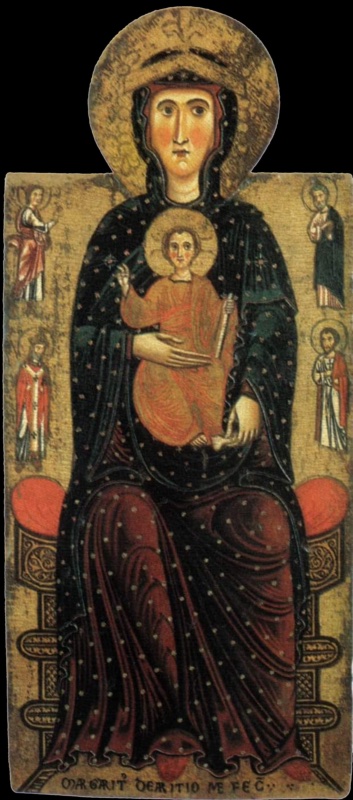
The Madonna di Montelungo, originally painted for the rural church of Santa Maria a Montelungo and now in the Museo Nazionale d’Arte Medievale e Moderna in Arezzo, presents a monumental enthroned Virgin and Child in strict frontal pose. As noted earlier, the Child’s sceptre and blessing gesture mark him as a divine ruler rather than a naturalistic infant, while the Madonna’s slight touch of his foot introduces a rare moment of tenderness within the otherwise hieratic composition. The throne is indicated by simple yet authoritative forms, and the entire ensemble stands before a gold ground that emphasizes the transcendence of the figures. Signed by the artist, the panel bears witness to his self‑conscious assertion of authorship at a moment when such signatures were still relatively uncommon. Its patronage context—linked to a castle of the Guidi counts and a local Marian cult—suggests a commission rooted in seigneurial and parochial structures rather than in mendicant or communal institutions. The panel’s current location in the Aretine museum reflects modern curatorial choices, but its iconography and style remain deeply tied to its original thirteenth‑century rural setting. Within Margarito’s oeuvre, the Madonna of Montelungo represents a kind of foundational statement of his Marian type, combining Byzantine frontality with modest gestures of intimacy. It thus provides a crucial baseline for measuring developments in his later, more complex works. From the standpoint of 1250–1290, it can reasonably be treated as an early yet mature articulation of the visual language that would dominate his career.
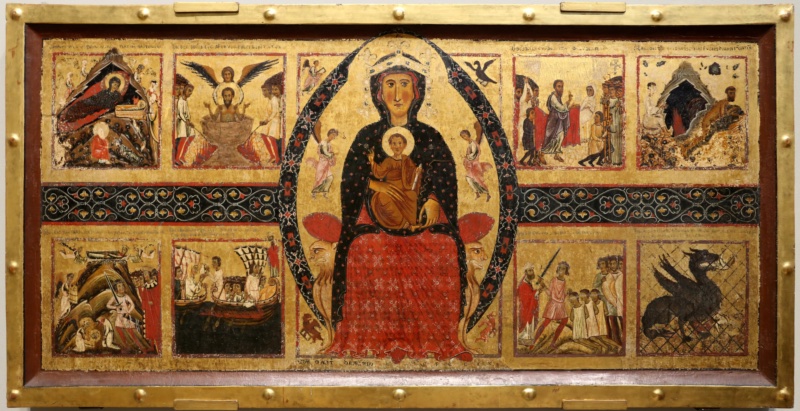
The Virgin and Child Enthroned, with Scenes of the Nativity and the Lives of the Saints in the National Gallery, represents a different but equally ambitious kind of altarpiece, integrating Marian, Christological, and hagiographic concerns. The central Madonna and Child, enthroned within a mandorla and flanked by angels and the Evangelist symbols, share with Montelungo and Vertighe the core Byzantine‑derived iconography of Mary in majesty. However, the surrounding scenes here focus less on the Virgin’s life and more on episodes from the lives of particular saints—John the Evangelist, Nicholas, Catherine, Benedict, Margaret—as well as the Nativity of Christ. This selection likely reflects the dedication of the original church, probably San Niccolò in Arezzo, and perhaps the personal devotions of donors whose patron saints are represented. Margarito organizes these episodes in a clear, almost diagrammatic fashion, each confined to its own rectangular field yet visually coordinated with the central image through consistent color and line. Narrative economy is evident in scenes such as John in boiling oil or the miracle of Nicholas saving three men from unjust execution, where a few well‑chosen gestures and attributes suffice to communicate complex stories. Technical analysis of the panel and its original engaged frame has revealed careful planning and high craftsmanship, underscoring that this was a prestigious commission for an important urban church around 1263–1264. In the modern period, the altarpiece gained notoriety when the National Gallery’s 1858 report invoked it as evidence of the “barbarous state” of pre‑Renaissance Italian art, a judgment now thoroughly revised. Today it is valued instead as one of the earliest and most informative Italian paintings in the London collection, offering a rare, well‑preserved example of a mid‑Duecento Aretine dossal. As such, it stands alongside Montelungo and Vertighe as one of the three works most frequently cited in scholarly discussions of Margarito.
Another significant work contributes to the picture of his activity within the 1250–1290 period, even if it ranks slightly lower in terms of art‑historical prominence.
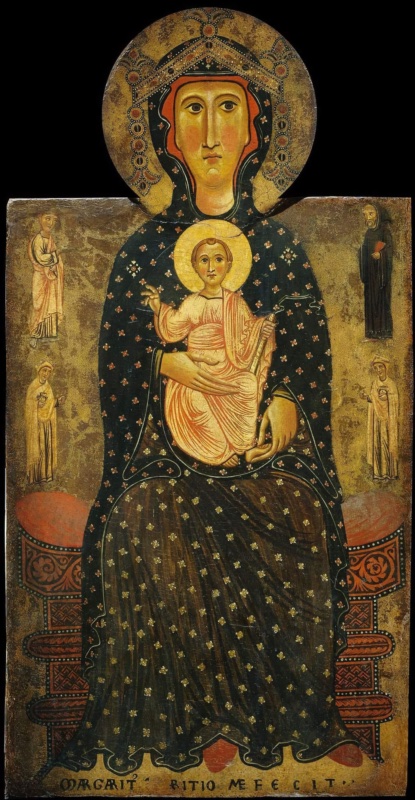
The Washington Madonna and Child Enthroned with Four Saints, part of the Samuel H. Kress Collection at the National Gallery of Art, closely relates to the Montelungo type but introduces flanking saints that expand the intercessory context of the central Madonna. Treccani notes that this panel is similar to the Madonna of Montelungo yet somewhat less plastic and expressive, suggesting either a later date or stronger workshop participation.
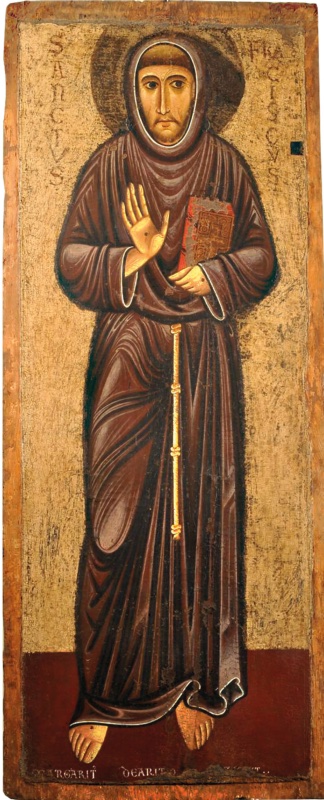
Saint Francis panels from Sargiano and other contexts, now in the Aretine museum and elsewhere, document Margarito’s role in disseminating one of the earliest independent image types of the Poverello, a type that enjoyed wide replication.
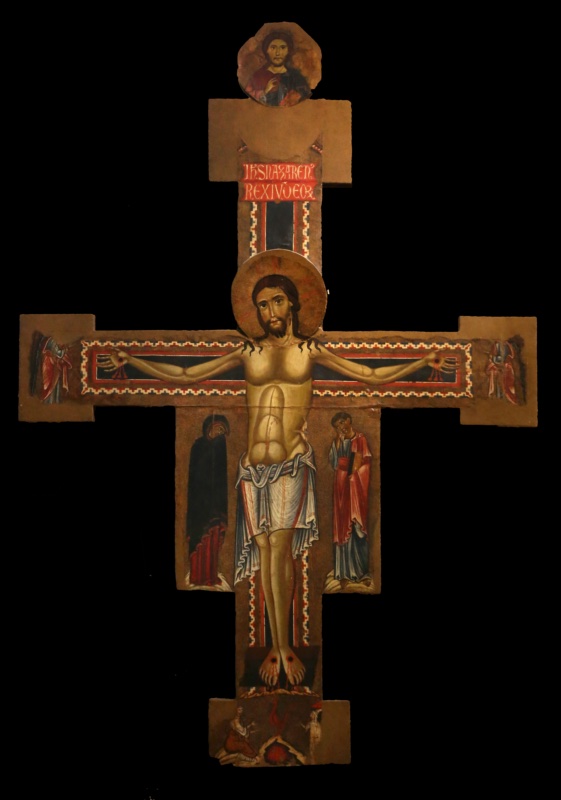
The Crucifix attributed to him in the Pieve of Santa Maria in Arezzo presents a Christus triumphans with open eyes and serene expression, aligning with Byzantine conventions and reinforcing his integration into established iconographic patterns.
Narrative scenes from the London altarpiece, such as the Nativity, the martyrdom of Catherine, or the miracles of Nicholas, have acquired independent interest in recent scholarship for their contributions to the visual elaboration of specific hagiographic themes. Collectors, curators, and historians have increasingly treated these panels not merely as “primitive” curiosities but as sophisticated vehicles for articulating doctrinal and devotional content in a pre‑Giottesque key. Exhibitions devoted to Margarito and his circle, such as those held in Arezzo, have brought these various works into new juxtapositions that highlight their internal variations and continuities. Within the broader field of Duecento painting, these altarpieces and panels collectively secure Margarito’s reputation as a central, if once maligned, figure in the visual culture of central Italy before 1300. While many aspects of his personal biography, including his exact birth and the cause of his death, remain unknown, his works themselves provide a richly textured record of artistic practice and patronage in the decades between about 1250 and 1290.